Hood design-Week 2
Hood design Using NX CAD
Aim: To Design Hood outer panel, inner panel and reinforcements by using the Master section with the design parameter and Hinge,Striker.
Pedestrian -Vehicle Collision:
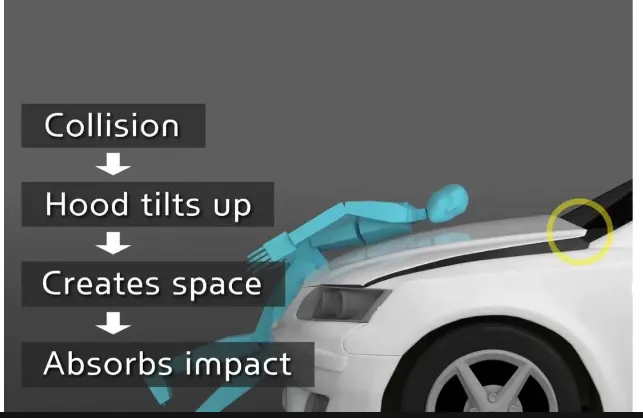
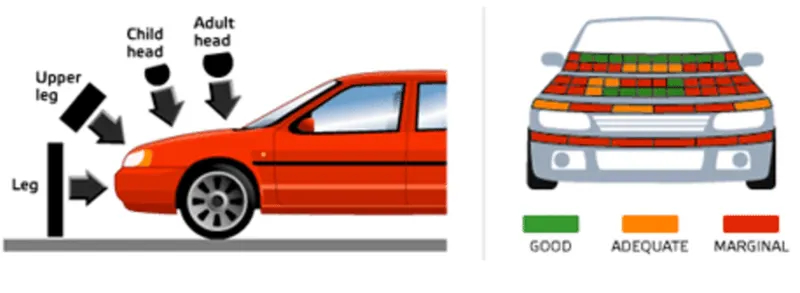
When the front bumper of a vehicle first contacts with the lower extremities of a pedestrian, the legs are rapidly accelerated up to the speed of the vehicle while the head and torso of the pedestrian remain relatively still . As the vehicle continues to move forward, the lower extremities begin to wrap around the contour of the front end of the vehicle . The pelvis and torso of the pedestrian then begin to rotate and wrap around the front end and hood of the vehicle until the head strikes the vehicle Typically, head strike occurs on the hood or windshield, but the exact impact location depends on variables such as pedestrian height, vehicle geometry, and impact speed.
Pedestrian accident studies indicate that more than half of vehicle-pedestrian collisions involved the application of brakes at some point during the initial impact phase. The extent of braking, type of driver avoidance maneuver, area of impact on the vehicle, and relative vehicle-pedestrian geometry all influence the pedestrian’s trajectory. Four general types of vehicle interactions occur as a result of the impact: forward projection, roof vault, fender vault, or dragging/run-over.
MasterSection
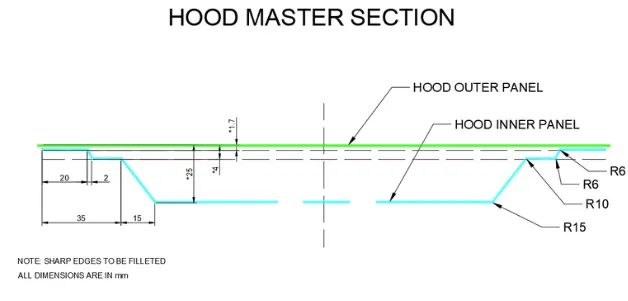
Hood Thickness Information and dimension are provided we are using this requirement to build a hood.
Design Methodology
1. Inner panel
- Embossing (with minimum 7 Degrees Draft)
- Mastic Points
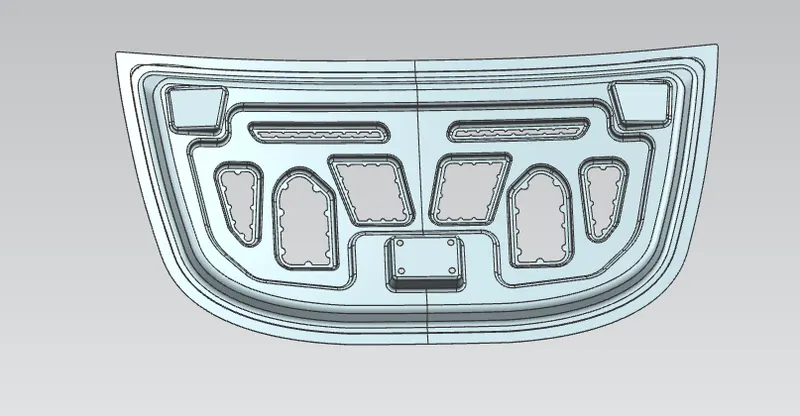
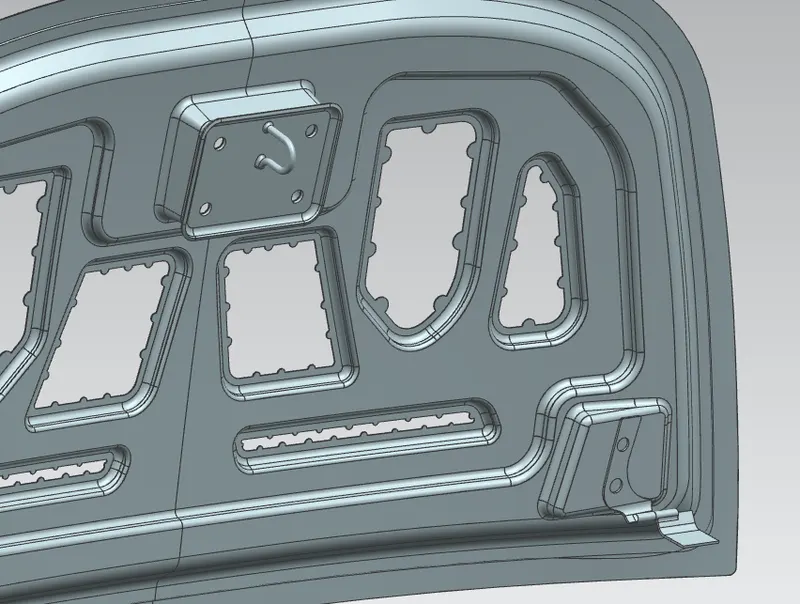
The inner panel of the hood is not visible to the customer but this is the engineering feature of the outer panel. The outer panel has the aesthetic look to it but on its own is very weak and not capable of handling force during impact
Features:
- Datum Pane
- Sketch
- Projected Curve
- Offset surface
- Offset curve in face
- Bridge Curve
- Trim sheet
- Through curves Mesh
- Through curves
- Law extension
- Trim and extend
- Extend sheet
- Face blend
- Edge blend
- Emboss
- Mirror geometry
- Sew
- Thicken
2. Outer Panel
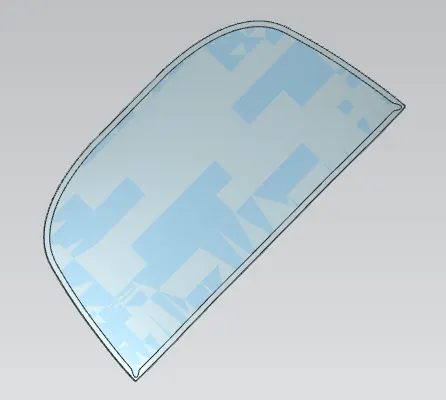
Hemming is a sheet metal forming process in which sheets are joined by bending it usually to 180°. Automotive body panels and automotive parts such as deck-lids, trunk-lids, doors, hoods and tailgates are formed by hemming process Hems are commonly used to reinforce an edge, hide burrs and rough edges, and improve appearanc
- Offset surface
- Offset curve in face
- Face bend
- Curve on Surface
- Trim sheet
- Law extension
- Mirror geometry
- Thicken
3. Positioning the reinforcements
- Hinges
- Striker for Latch
Assembly:
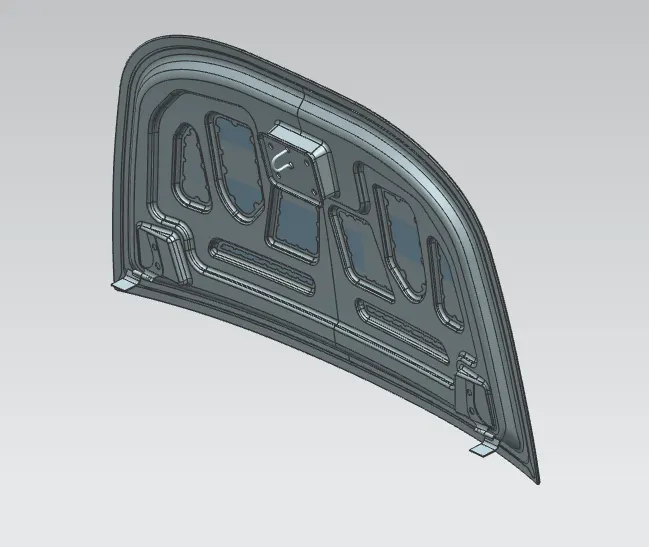
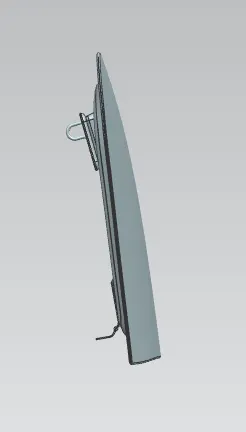
Insert all the parts and add them with the proper geometric by usin Move Component and assemble constraints.Create a latch trajectory so that the hood can closes and opens in the particular axis.The axis select the points on the two hinges respectively and join the points by line option, Then with respect to the axis create a datum plane on the centre of the axis and draw a circle which represents the latch axis. By using various constraints like Fixed, align and parallel.
Views of Final Assembly
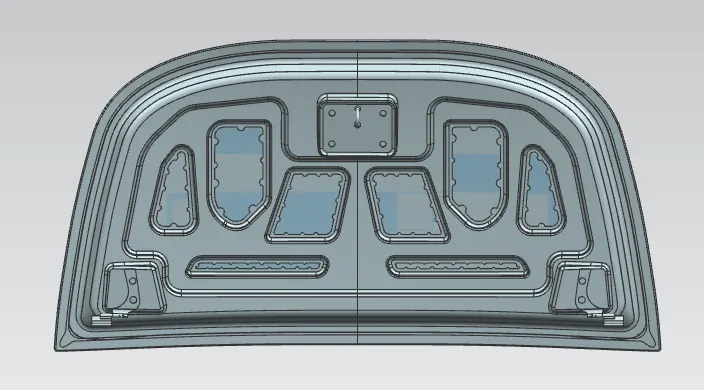

Conclusion:
I have designed the hood or Bonnet according to the given parameters and standard which defines the automative safety and regulations, Using NX CAD Software.