Hood design-Week 2
HOOD:
Hood is a component which is place on top of the engine compartment to protect it from the environment and to protect the pedestrians against accident's. The hood is also designed in a way that to ensure the aerodynamics features while driving the vehicle. It is also used to access the engine, radiator, battery for service kind of querries.
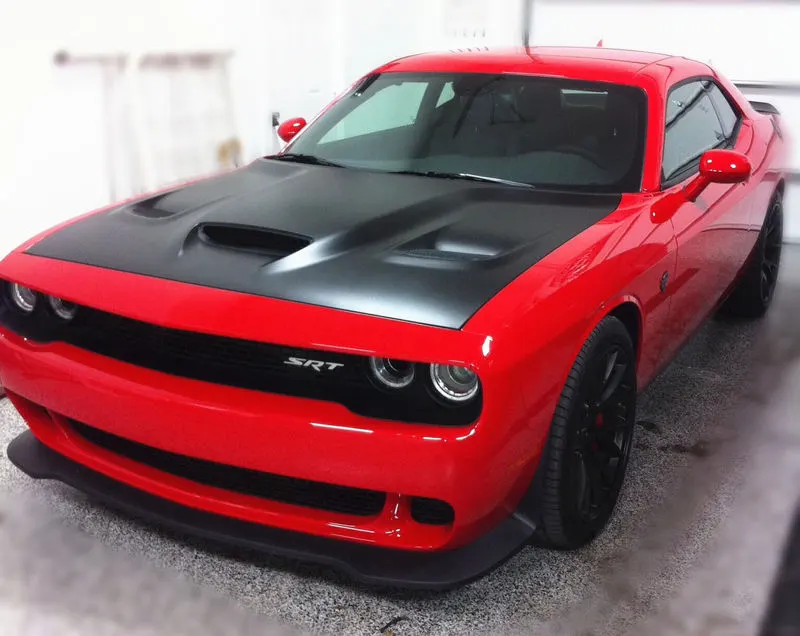
Hood is basically supported by a supporting rod to hold it by resting the hand gesture. The type of the rods are mentioned as below,
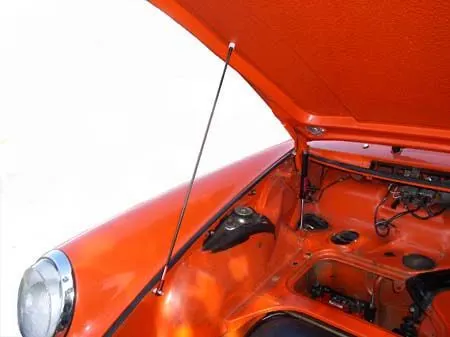
Support Rod
The support hood rod which is used to support the hood hassle free while performing work with the engine compartments. It's to be ensured that the rod placing inside the hood should not cause any trouble while driving or in rest mode. The hood clip is placed in the sense that the performance of the supporting rod should get the work done without any distractions.
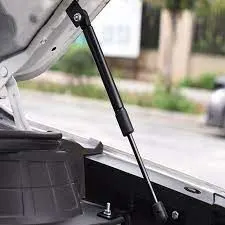
Gas Rod
The gas support rod is used in case to reduce the force provided while opening the hood, little push can automatically open the hood. Thesse kind of rods are available in High-end cars.
Operations used in manufacturing of Hood
- Deep drawing
- Embossing
- Hemming
- Sealant
- Piercing & Blanking
Deep drawing
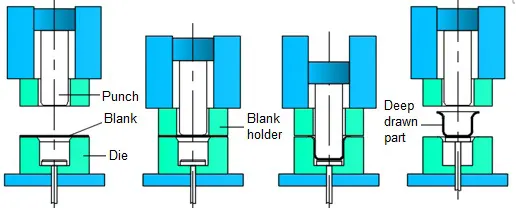
Deep drawing is a sheet metal formation process. This process takes place in such a way that a die placed and on top of that a sheet metal is placed and with a punch from the top/male punch rod an impression is made in the sheet from the die/mould of the male die.
Embossing
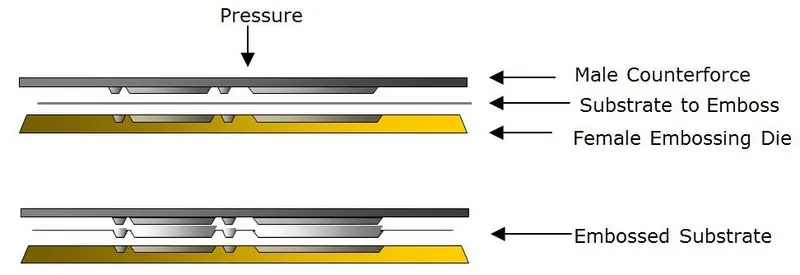
Sheet metal embossing is a stamping process for producing raised or sunken designs or relief in sheet metals. The inner panel of the hood has more embosses of improving the strength of the panel. This process can be made by means of relavant male and female roller dies, or by using sheet or a strip of metals between rolls of the desired pattern.
Hemming
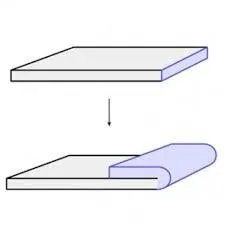
Hemming is a process of forming operation in which the edges of the sheet are folded over another part in order to achieve a tight fit. Normally hemming operations are used to connect parts together, to improve the appearance of a part and to reinforce part edges.
Sealant
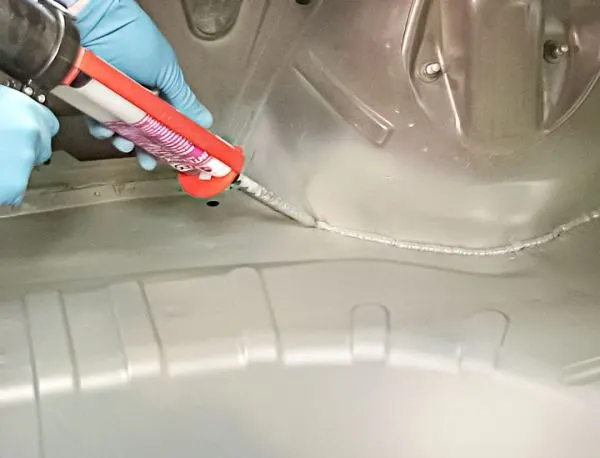
These are applied on the mastic points inbetween the inner panel and outer panel of the hood by using a sealant glue. To fix the outer panel, processes like bolting, riveting or welding is used, it will lose all its features. So sealant is used which is elastic compound and acts like rubber. It is placed between both the panels.
Peircing & Blanking
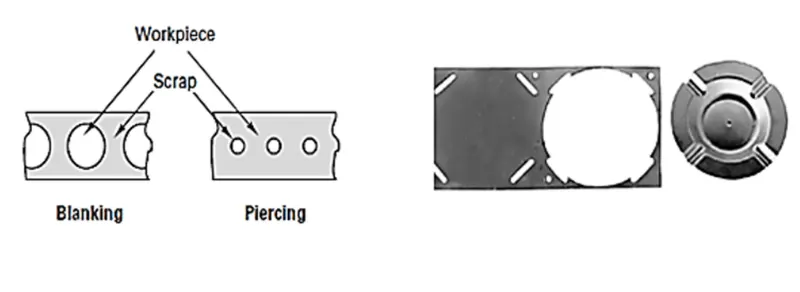
Piercing & Blanking are a process in which both of them act in a way of punch and produce features. In Blanking process the outside piece is produced which in case used as workpiece, whereras in Piercing the punch hole created is termed as scrap/slug.
Components of Hood
- Hood outer panel
- Hood inner panel
- Striker & Hinge Assembly
- Reinforcements
Hood outer panel
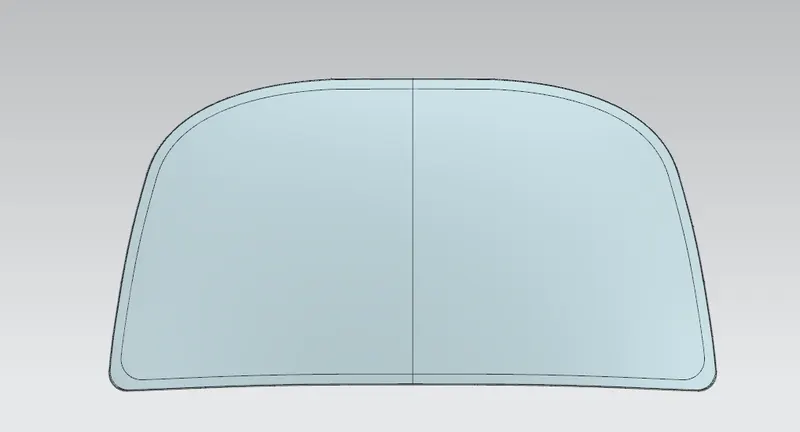
Hood outer panel is the most important part of the hood to makes the car look in a very good aesthetic proportion. The outer panel is used to be on top of the inner panel since it provides more damage resistant from outer environment and protect the inner panel and the engine compartment. Based on the master diagram the hood outer panel thickness is provided with 0.75mm.
Hood Inner panel
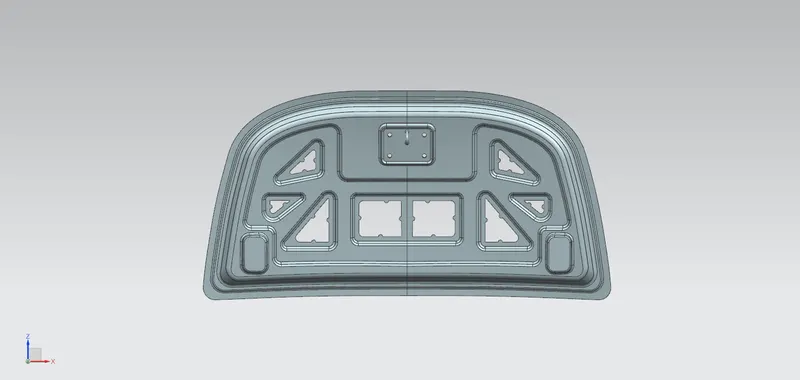
Hood inner panel is the major part of the hood design since most of the changes are made through the inner panel to control the damage to pedestrians and to safe guard the engine in the same manner. Hence, lot of design changes and researches are done and being carried out in the inner panel only to achieve the pedestrain safety and the passenger safety to make the standards. From the master design the thickness maintained for inner panel is about 0.75mm thickenss.
Striker and Hinge assembly
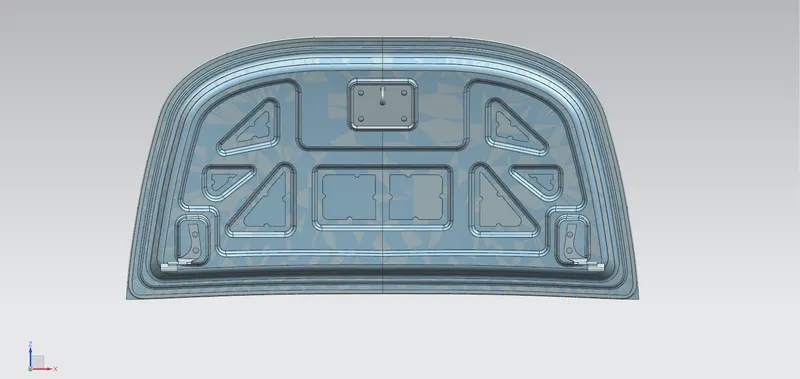
Striker part is acted in the hood assembly as a lock kind of system for outer panel and inner panel to lock on to the chasis while on motion. Latch will be provided on bottom of the inner panel for support of the hood.
Hinge part where it is fixed with the hood and the engine compartment for open and close features using axis orientation. One end will be fixed on to hood and another with engine compartment.
Reinforcements
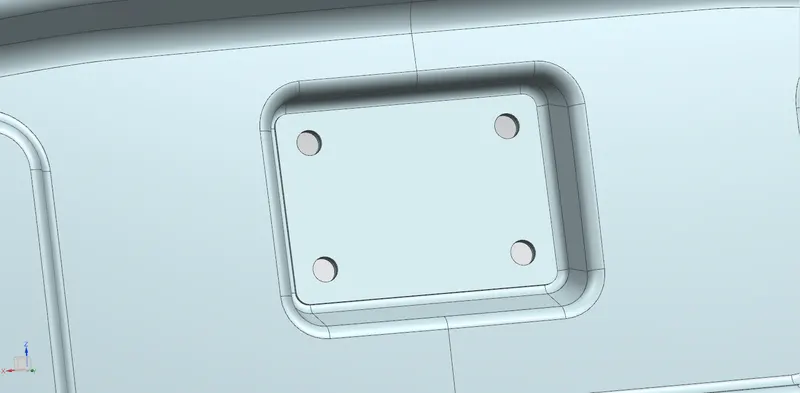
It can able to reduce to deformation and strengthening the inner panel at that particular region. Hence the striker and hinge are placed at lower side of the inner panel.
Conclusion
The hood design is completed by using the criteria and dimensional aspects from the master design.