Hood design-Week 2
What is the Hood in Automobile?
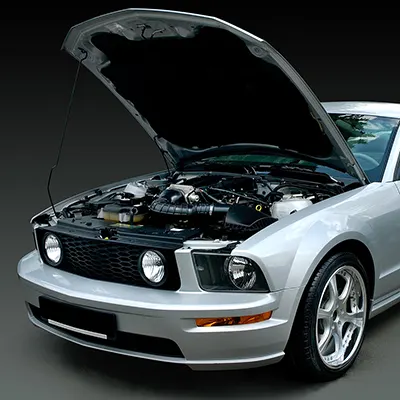
The hood or a bonnet is the hinged cover over the engine of motor vehicles. The hood can open to access the engine compartment or trunk on the rear engine and some mid-engine vehicles for maintenance and repair. The car’s hood consists of an inner and outer panel. The inner panel provides strength while the outer panel is just a metal cover. The underside of the hood is often covered with sound-absorbing material.
Design consideration for Hood,
The first thing that comes into the design of the hood is the opening angle of the hood according to its region of running like which country the design is produced.
In Japan and Europe, regulations have come into effect that places a limit on the severity of pedestrian head injury when struck by a motor vehicle. This is leading to more advanced hood designs, as evidenced by multicore hood inner panel designs
We also need to design a hood that withstands the European Enhanced Vehicle-Safety Committee (EEVC), and European New Car Assessment Program (euro NCAP).
Hood components are:-
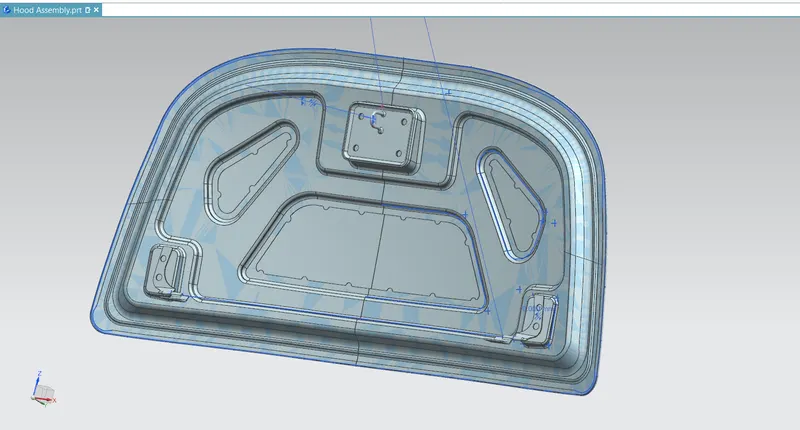
1. Hood inner panel:- The inner panel of the hood is not visible to the customer but this is the engineering feature of the outer panel. And also provide strength to the hood during impact.
2. Hood outer panel:- The outer panel gives the aesthetic look to the cars but on its own is very weak and not capable of handling force during impact.
3. Latch:- Latch is a device that is used to lock and unlock the hood of the car.
4. hinge and the reinforcements:- These help to open the hood at a fixed point.
Data to be used:
Hood Thickness Information
- Outer Panel Thickness = 0.75mm
- Inner Panel Thickness = 0.75mm
- Reinforcement Thickness = 1.5mm
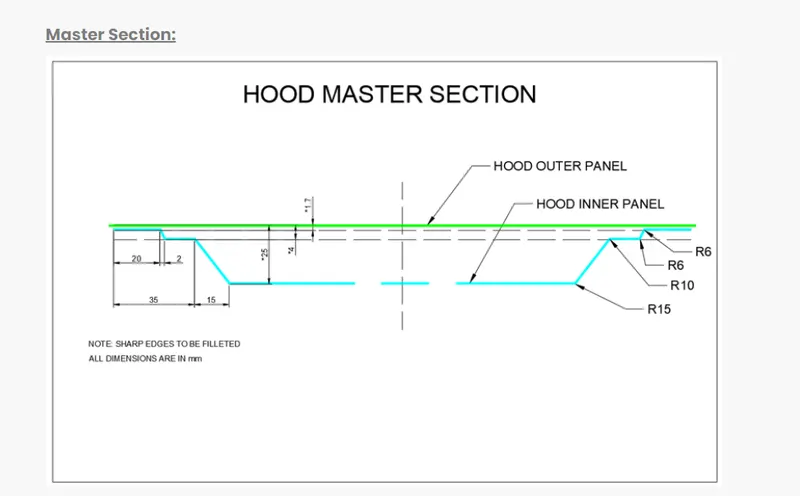
Master Section
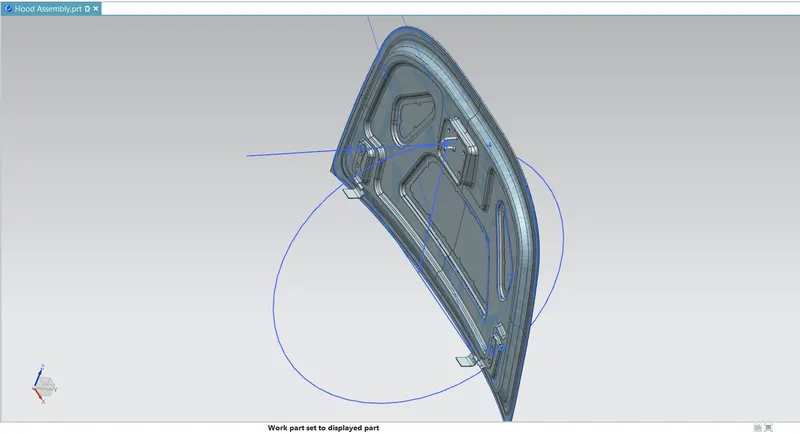
Latch Trajectory:- The latch must be completely aligned to the fastening or striking point when opening or shutting the hood. The latches' path must be perpendicular to the hinge axis to achieve this.
Mastic:- It is an organic glue made from a sticky resin. It is available in the form of thin liquid, thick glue, or sticky paste. Each mastic can improve the strength locally and spread in a 60-80 mm surrounding area. It will also provide better NVH.
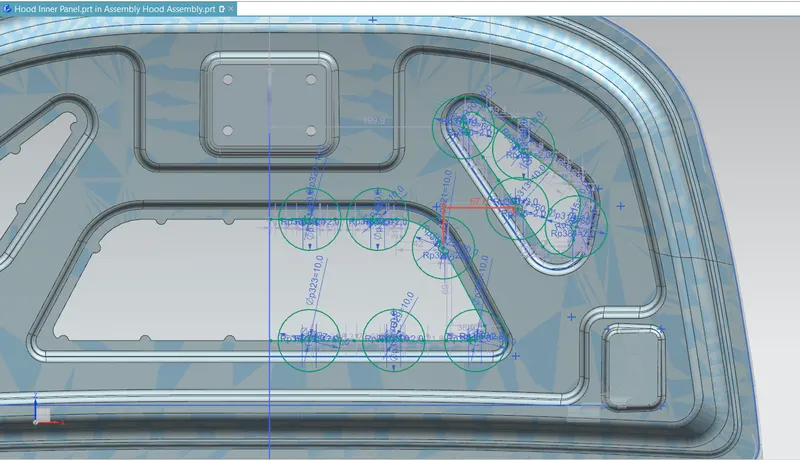
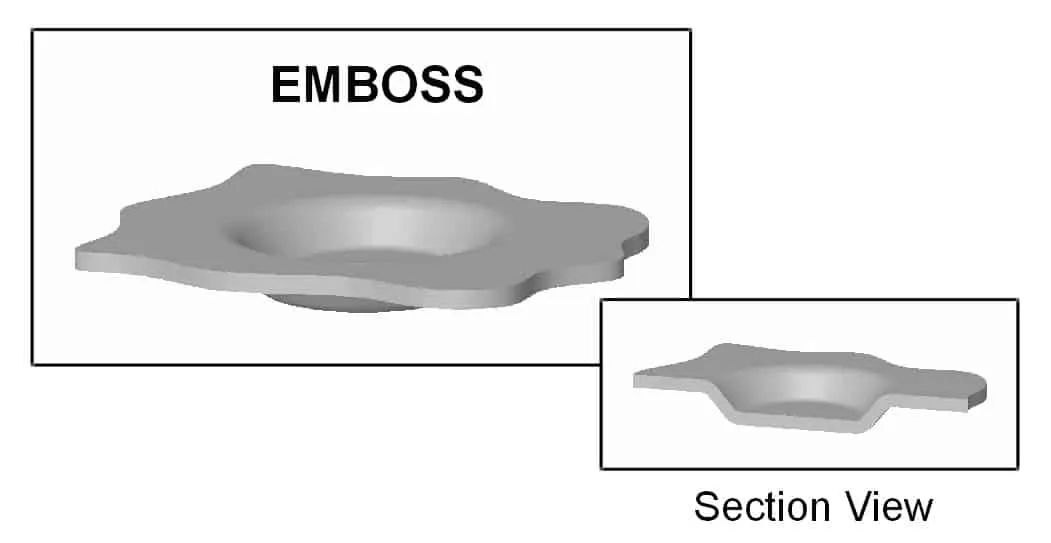
Embossing:- Embossing is a metal forming process for producing raised or sunken design or relief in sheet material by roller dies with no change in metal thickness or passing sheet or a strip of metal between rolls of the desired pattern.
Deep-Drawing:- Deep drawing is a sheet metal forming process in which a sheet metal blank is radially drawn into a forming die by the mechanical action of a punch. It is thus a shape transformation process with material retention. The process is considered a "deep" drawing when the depth of the drawn part exceeds its diameter.
Hemming:- Hemming in sheet metal operations refers to the bending of the sheet metal edge onto itself. It is very similar to edge stitching in clothes. Similar to how an edge stitch strengthens the edge and makes it more durable, a hem imparts strength to the metal edge and improves its appearance. The edge of one part may also be folded onto another part to create a joint.
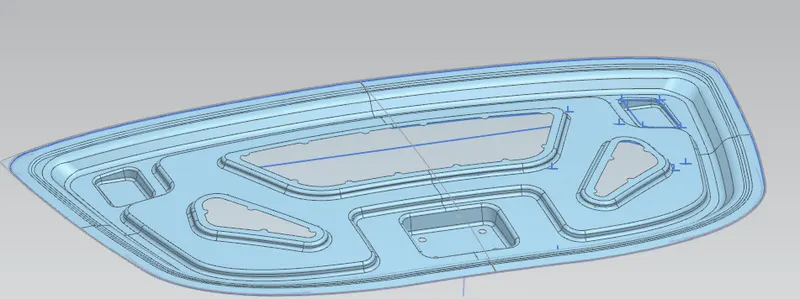
Isometric view of the hood
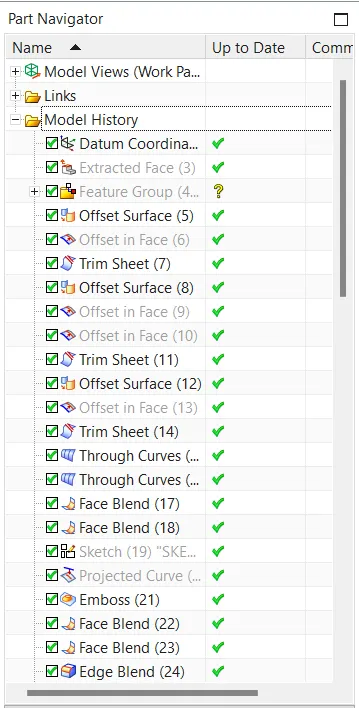
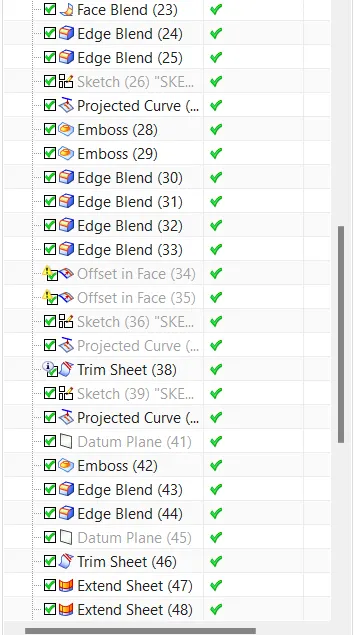
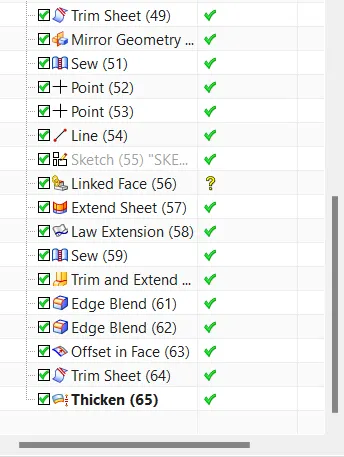
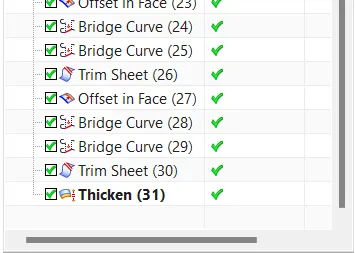
Tree image of the hood inner panel
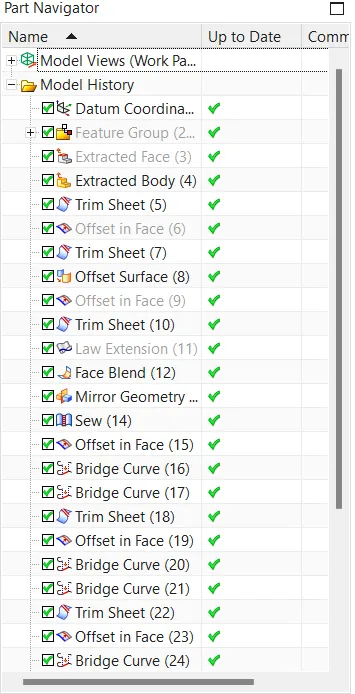
Tree image of Outer Panel
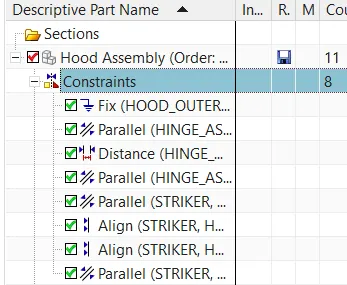
Assembly Constraints