Fender Design
Objective: The aim of this project is to design the front fender of a car by taking into account all the design considerations required in the design of the front fender.
Introduction: Fender is the American English term for the part of an automobile, motorcycle, or other vehicle body that frames a wheel well (the fender underside). Its primary purpose is to prevent sand, mud, rocks, liquids, and other road sprays from being thrown into the air by the rotating tire. Fenders are typically rigid and can be damaged by contact with the road surface. Sticky materials, such as mud, may adhere to the smooth outer tire surface, while smooth loose objects, such as stones, can become temporarily embedded in the tread grooves as the tire rolls over the ground. These materials can be ejected from the surface of the tire at high velocity as the tire imparts kinetic energy to the attached objects. For a vehicle moving forward, the top of the tire is rotating upward and onward and can throw things into the air at other vehicles or pedestrians in front of the vehicle.
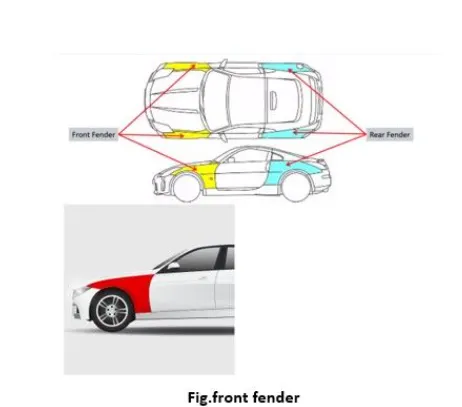
Types of Fenders
The fender can be classified into two types
1) Fullbumper type
2) Half bumper type
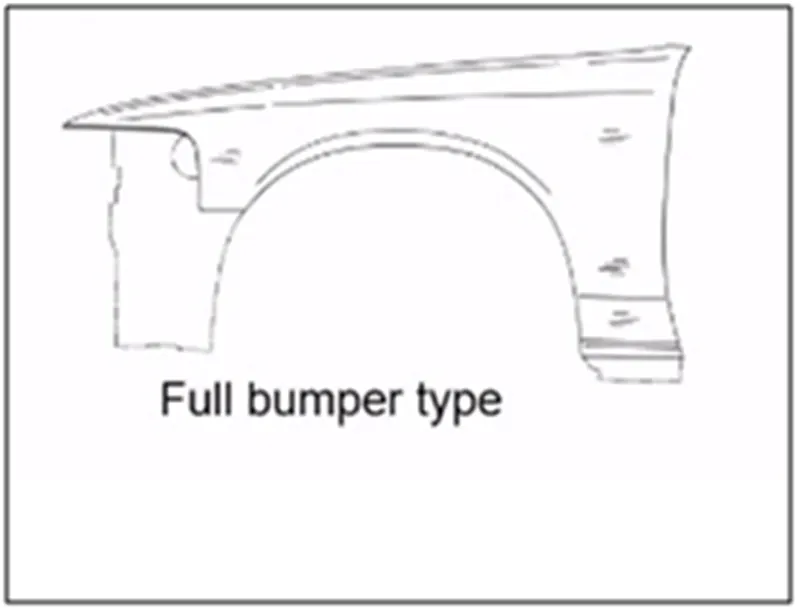
1) Full bumper type:
This type of car fender was utilized for old cars which were having a long bonnet size and to match up with this a full bumper fender was used. These fenders cover a large portion of the wheel and thereby not allowing the road to spray to get off the road surface, but the disadvantage of this was the weight of the fender and also the material consumed to prepare it. But as we move on further and with advancement in the automobile industry we have come up with another type of car fenders and full bumper-type fenders have become absolute.
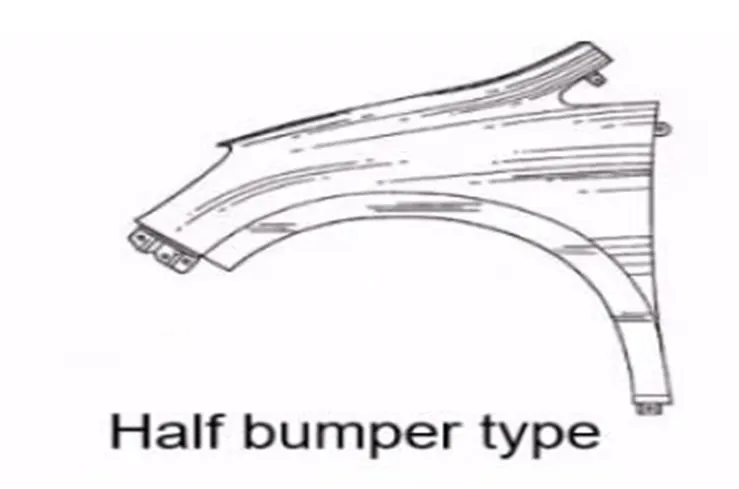
2) Half bumper type:
This type of fender is now tremendously used in all modern cars as this fender consumed half material than that required in the full bumper type i.e. we can produce two fenders in the same material which reduces the weight of the fender and also the cost required to manufacture it.
Design considerations for a Fender:
While designing a fender several design parameters are to consider such as how to decide the portion required for drip area, sill mounting, bumper Mounting, and A-pillar Mounting. How much thickness should be given to it the angle consideration in the design of the drip area and the minimum radius value for the fender, etc.
Master Section of Drip Area
Types of mounting provided on the fender:
1. Drip Mounting
2. Bumper Mounting
3. Sill Mounting
4. A-Pillar Mounting
5. Splash and Baffle mounting
1) Drip Area Mounting: This is the main portion of the fender which provided the stability to it while designing the fender, position of this area is to be calculated from the master section 200mm space cowl mounting and wiper motor mounting is needed so, so that much portion should be left while designing fender furthermore 150 mm for headlamps units is to take into account.
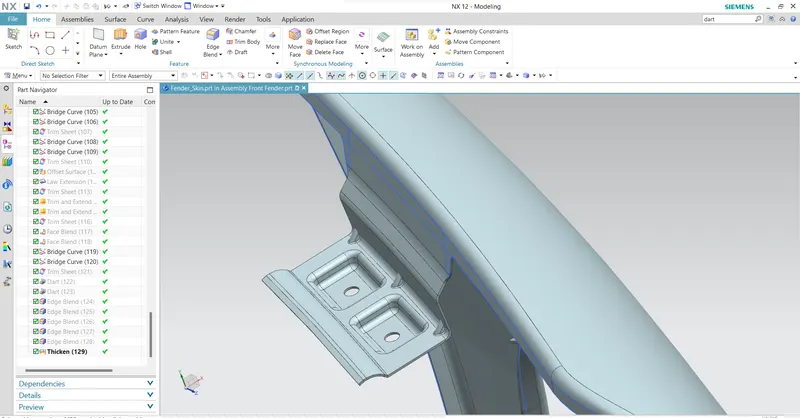
2. Bumper Mounting: This is the mounting where the fender connects with the bumper. The bumper mounting region must be rigid in order to withstand the force acting upon it during a collision. So the mounting space can be larger.
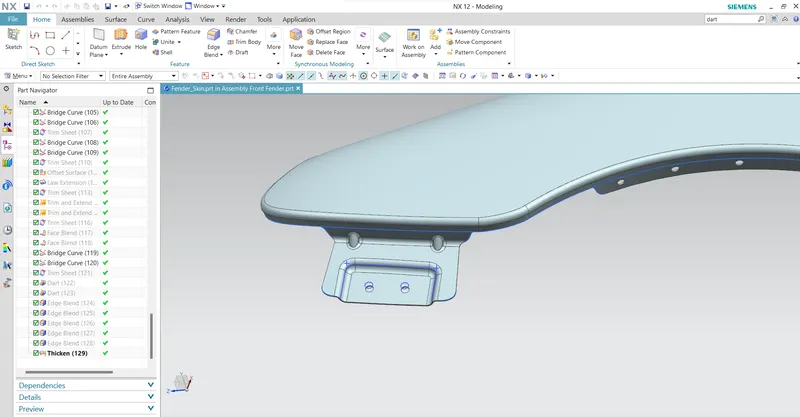
3. Sill Mounting area: The sill mount area is at the bottom of the fender. It is mostly get connected to the door region of the car. Here proper embossing and holes for the fasteners are provided. The ribs are provided to improve strength.
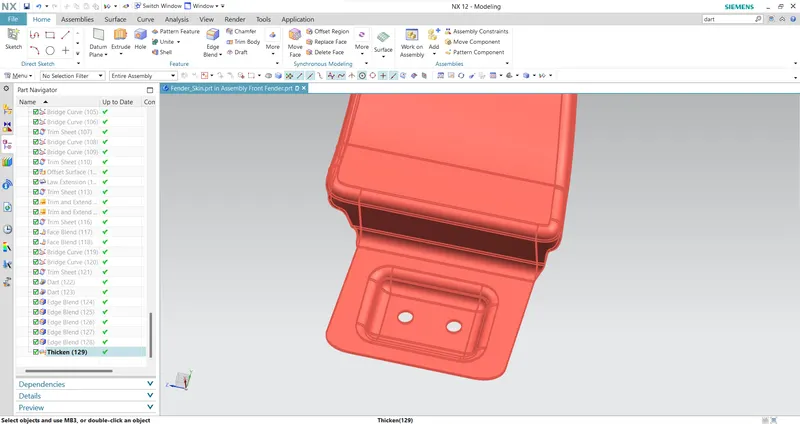
4. A-Pillar Mounting area: The body of an automobile is made of a structure that is just the same as that of a house. it has similar components, which include roof pillars and floor.
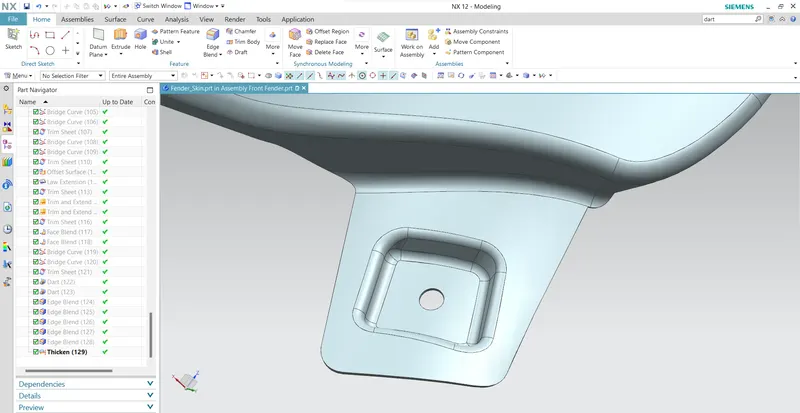
5. BAFFLE AREA: A plastic unit is placed which is called baffle/splash fender linear mounting is placed. These mountings are created for fixing the baffle/splash mounting. The holes are created at the baffle area with a 5mm diameter.
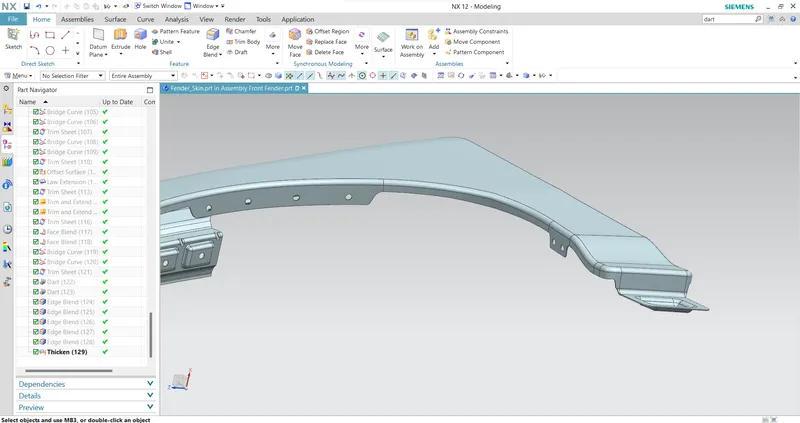
Conclusion:- Hence, we completed our front fender by designing all the mounting of the fender by using skin data provided as per the master section of the fender and learned about the various design considerations which are to keep in mind while designing the fender and the importance of each mounting provided on the fender