Hood design-Week 2
REPORT ON DEVELOPMENT AND DESIGN OF HOOD..
OBJECTIVE.
DESIGN OF HOOD IN UG NX.
Hood is is designed with refrence to given outer panel skin.
objective is to Design inner panel, hood outer panel, and reinforcements.
information.
- A car hood, also referred to as a “bonnet” in some countries, is the hinged cover that rests over the engine bay of a front-engine vehicle.
- The car hood protects the engine and connected parts from the elements while providing easy access for repairs and maintenance.
- hood is designed undertaking seafty consideration of passenger and pedestrian seafty.
- keeping it under design rules followed by govt.and for effective performance in crash test.
- A typical hood assembly consist of hood outer panel, inner panel, latch and striker, hinge, hood stay.
- Hood stay is an apparatus for supporting the engine hood of a moto vehicle in its open position.
- Common types of hood stays are Support Rod and Gas Stay. Support rods are manually operated and
they are cost effective and simple to design whereas gas stays require no man power but they are costly. - Hood are typically made out of the same material as the rest of the bodywork. This may include steel and aluminium.
- sheet metal operations that are used is Deep drawing, hemming, blanking and piercing for hood.
Design parameters.
thickness
1)inner panel thickness is 0.75mm
2)outer panel thickness is0.75mm
reinforcement thickness 1.5mm
clearence between outer and inner panel is 0.2mm
destance between the embosses should be 8mm.
distance between inner hood and engine componant should be 90-100mm.
face blend radius should be 3+thickness i.g 3.75and above.
draft angle for emboss should be 7 and greater.
Design Consideration
- hood plays a critical safety function in an automobile, not only for the occupants of the vehicle but also for the pedestrian.
- European New Car Assessment Programme, also know as EuroNCAP, was followed to understand the consideration and standards one must follow while designing a hood.
pedestrian body hit test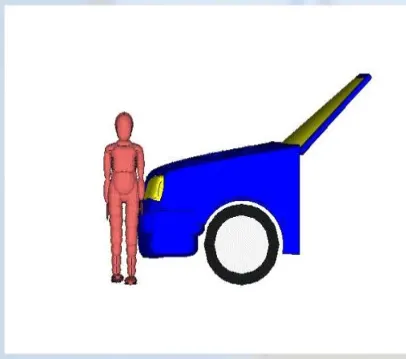
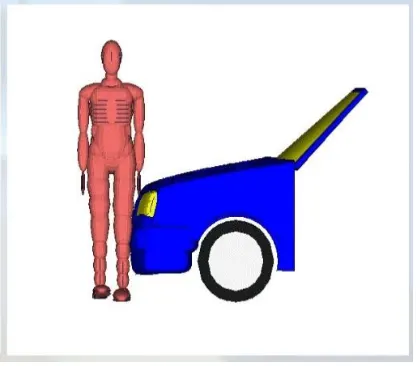
figure.pedestrian body child figure. pedestrian body adult
according to hiting area of adult and child the mastic point and cut outs of inner panel is to be designed to cause least damage to pedestrian body.
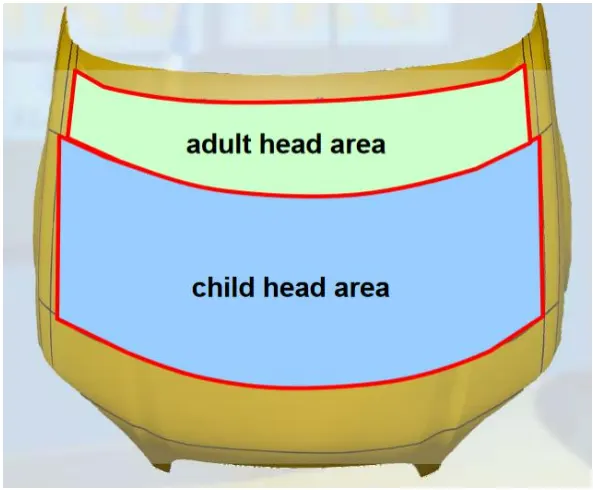
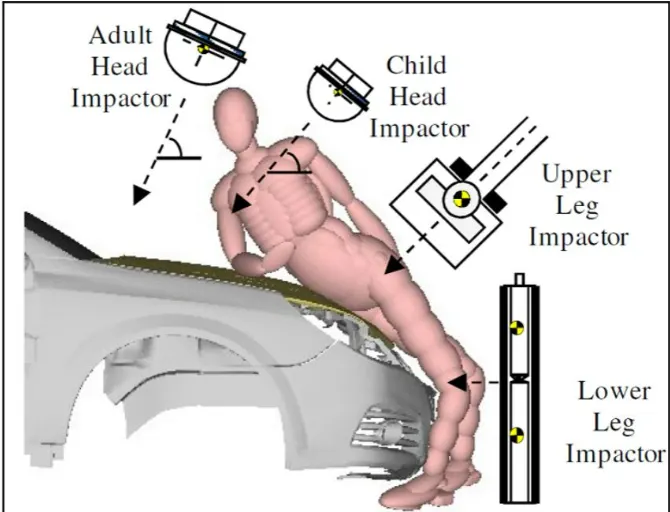
figure. hit area for collision figure. collision of body and impact
Designing of hood.
componants:-
outer panel
inner panel
hinge
striker
striker,hinge reenforcements
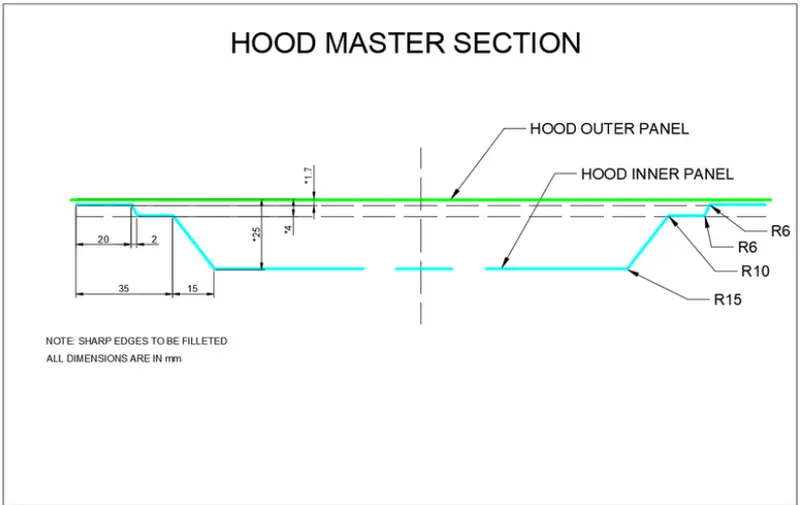
master section of hood.
HOOD OUTER PANEL.
it outer most body and aestheti of an automobile.
it holds inner panel by hemming process.
outer panel is the skin for designing other components with refrece to provided outer panel.
designed hood should satisfy safety norms.
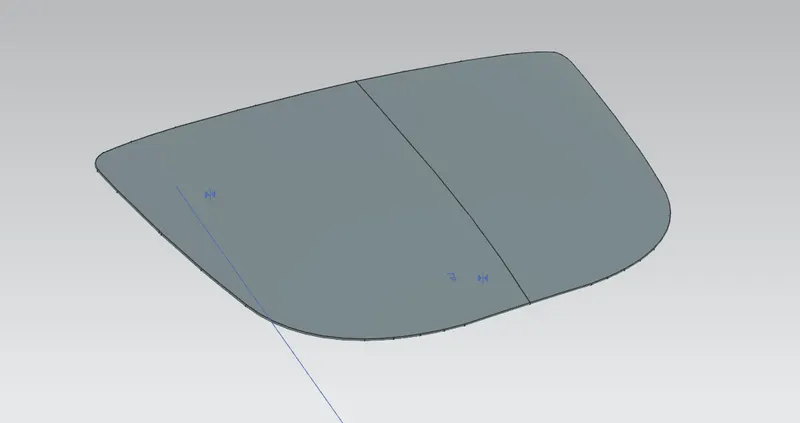
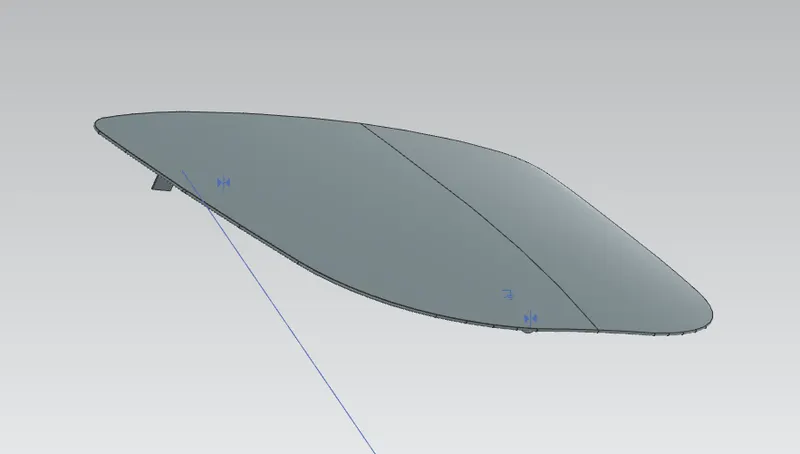
figure 1.outer panel figure 2. outer pannel
HOOD INNER PANEL.
inner panel is most important part od hood design as it has to be designed under several design considerations as mentoined in design parameters.
inner panel consist of emboss, hinge emboss, striker emboss, mastic points, cutouts for strength,
Inner panel gives strength and helps to deviate the forces towards A PILLER OF A CAR. while collision to ensure pssenger safety.
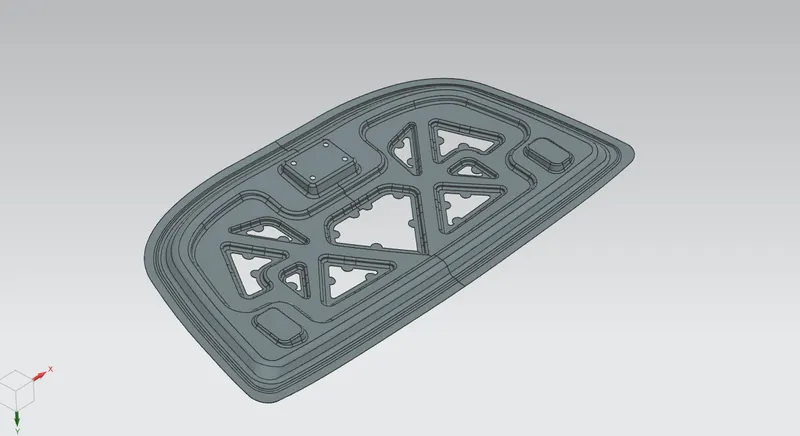
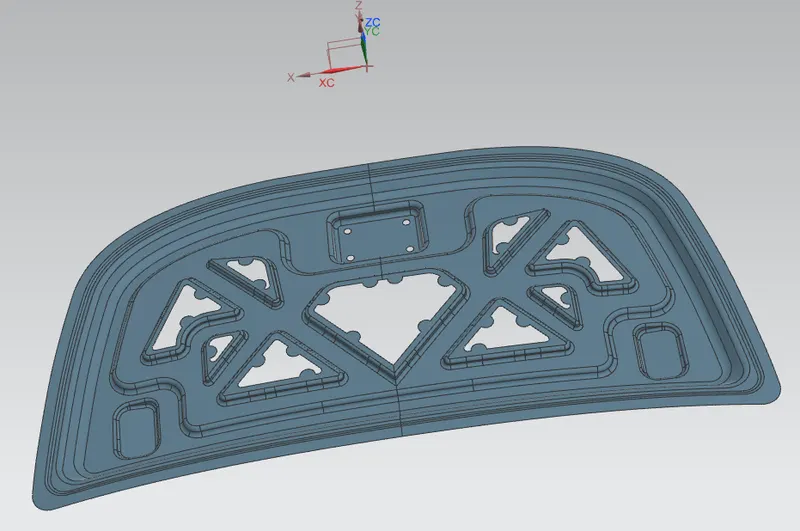
figure 3.hood inner panel figure 4.hood inner panel
HINGE ASSEMBLY
hinge is used for opening purpose of hood to access the engine componant for any reason.
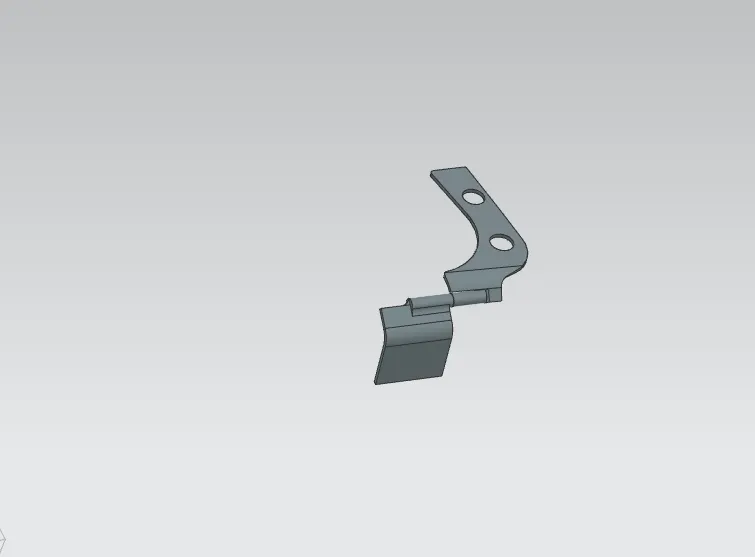
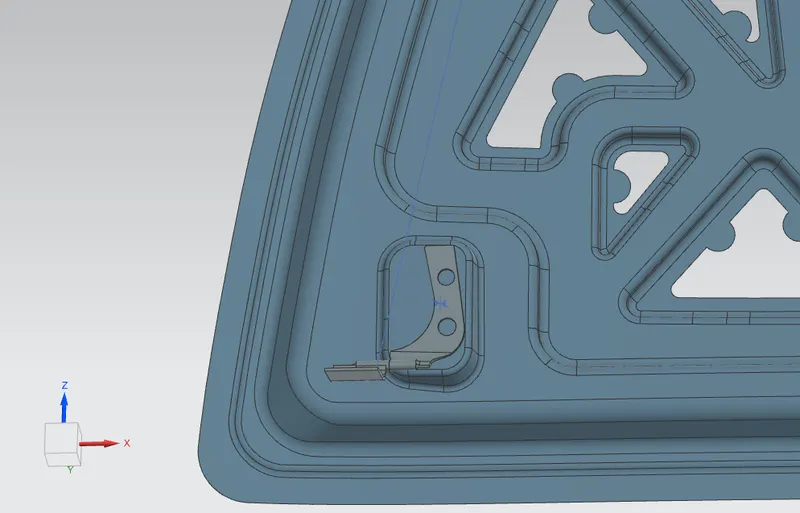
figure 5.HINGE ASSEMBLY figure 6.HINGE ASSEMBLY ON INNER PANEL
STRIKER
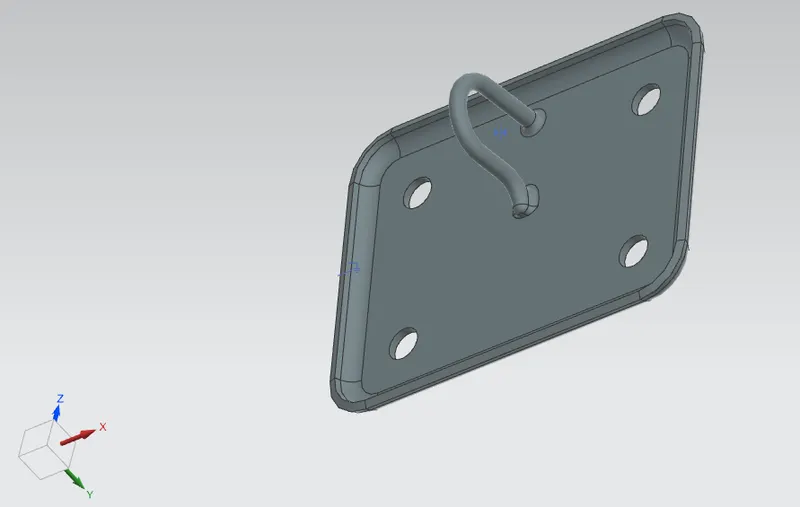
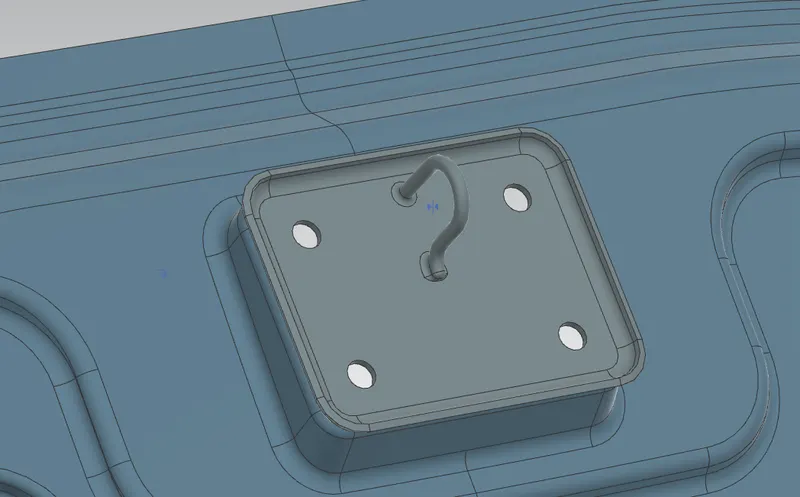
figure 7.striker figure 8.striker constraned with inner panel
striker,hinge reenforcements
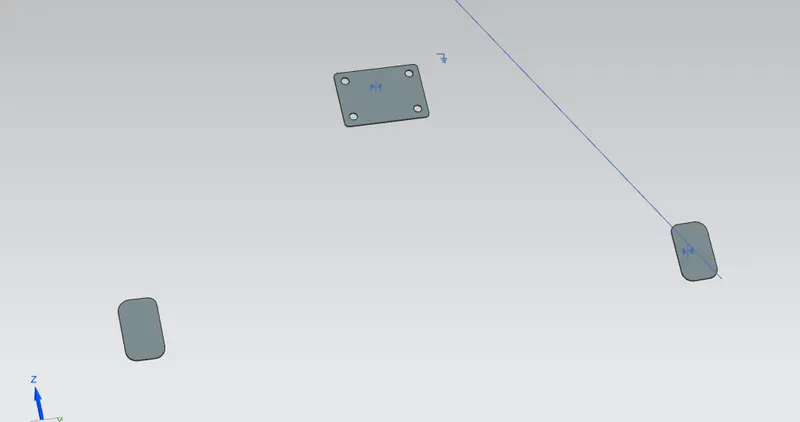
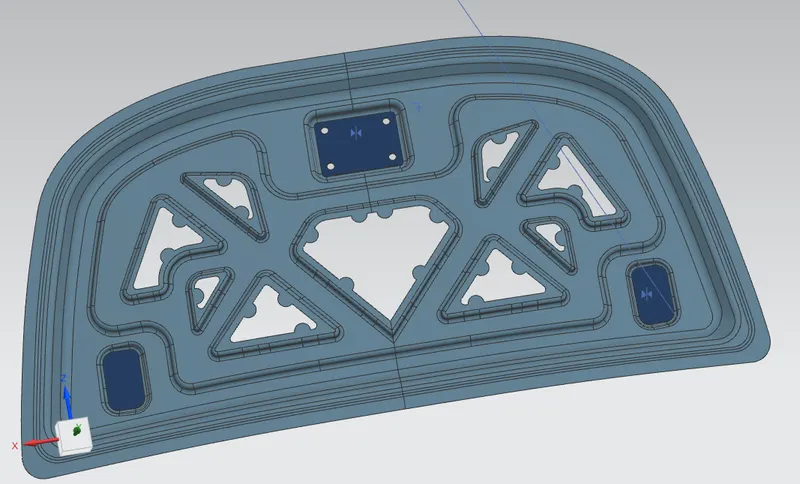
figure 9.striker & hinge reinforcement figure 10.striker & hinge reinforcement
Latch Trajectory
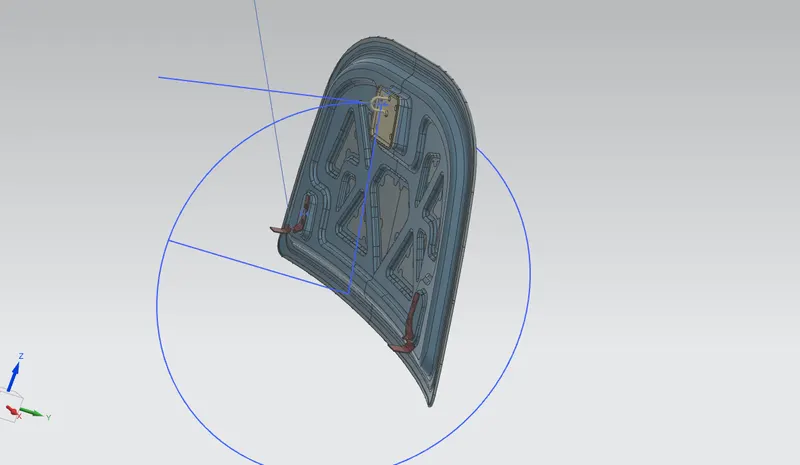
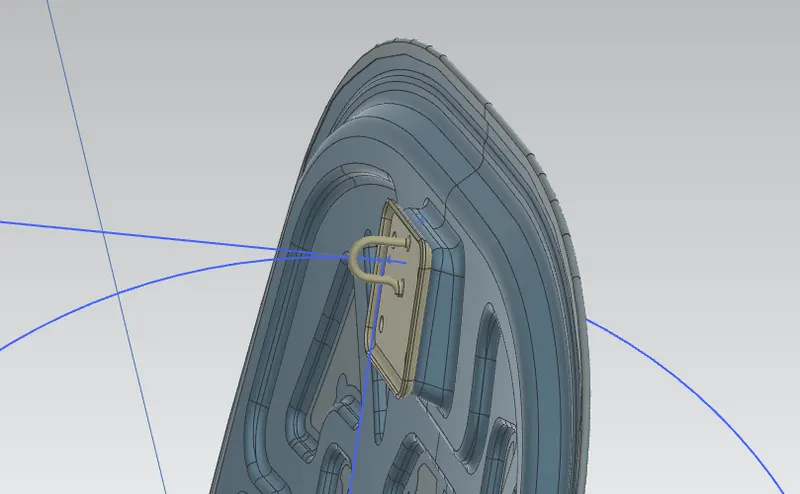
figure 11.Latch Trajectory figure 12.Latch Trajectory
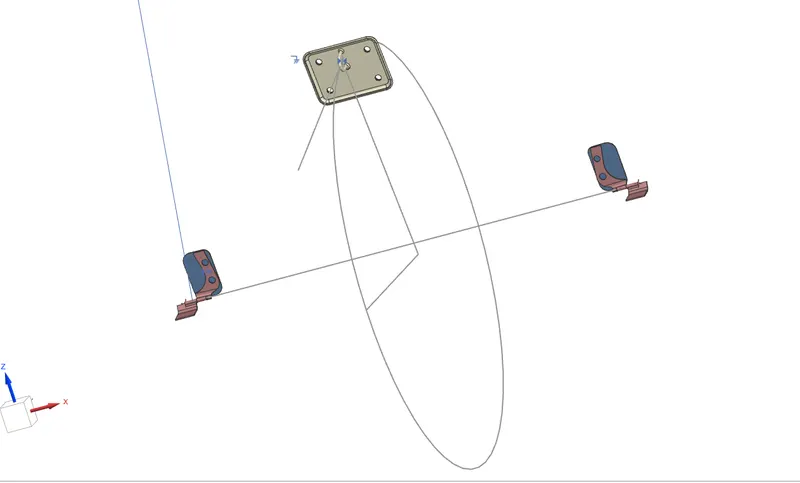
figure.Latch Trajectory
Emboss definitions
- The shape and size of the embosses also determines the direction of the force distribution resulted from frontal collision.
- The force should be always distributed away from the passengers.
- Here in the figure the embosses are designed in such a way that the force is deviated to words A PILLER OF A CAR.
- this feture works as strengthning for the plane sheet of metal.
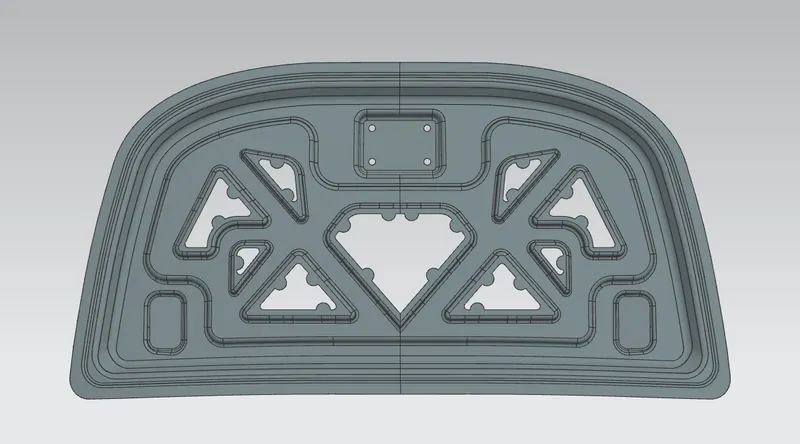
figure 13.Emboss
Mastic Point Data
- It is applied between the inner and outer panels at specified spots.
- Each spot of mastic sealants has its effect around a circular region of 80mm diameter and it expands vertically up to 5cm.
- using mastic points we strengthen th hood.
- the mastic points are arranged in such a way that it covers the areas away from the hemming which are more vulnerable to vibrate.
- We cannot use other joining like welding, riveting etc because they leave marks on the outer panel which spoil its aesthetic appearance.
- mastic sealants are used to stick the inner surfaces of outer panel and inner panel Mastic sealants are elastic compound that behave like rubber.
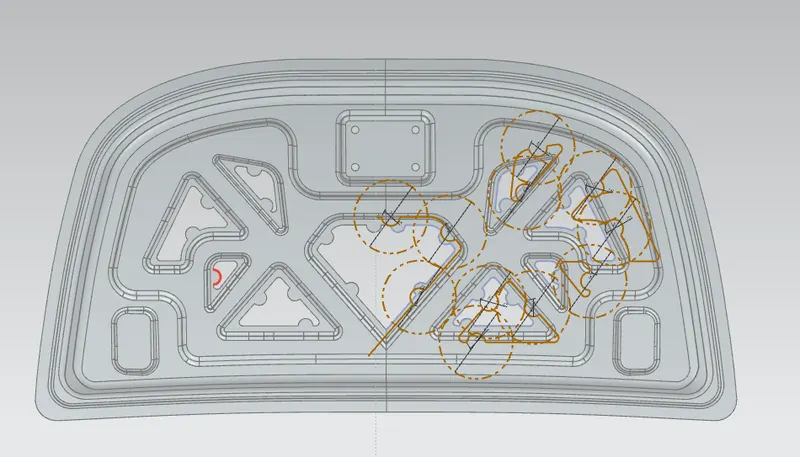
figure 14.Mastic Data
Deep Drawing
- Deep drawing is a sheet metal forming process in which a sheet metal blank is radially drawn into a forming die by the mechanical action of a punch.
- It is thus a shape transformation process with material retention.
- The process is considered "deep" drawing when the depth of the drawn part exceeds its diameter.
- Deep drawing manufacturing technology is the stretching of sheet metal stock, commonly referred to as a blank, around a plug.
- Common shapes for deep drawn products include cylinders for aluminum cans and cups for baking pans.
- Irregular items, such as enclosure covers for truck oil filters and fire extinguishers, are also commonly manufactured by the deep drawing method.
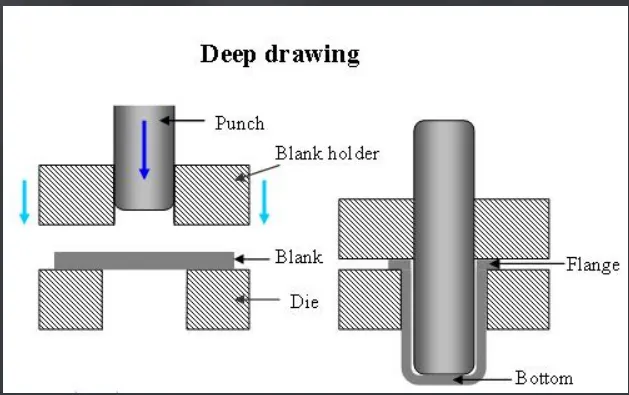
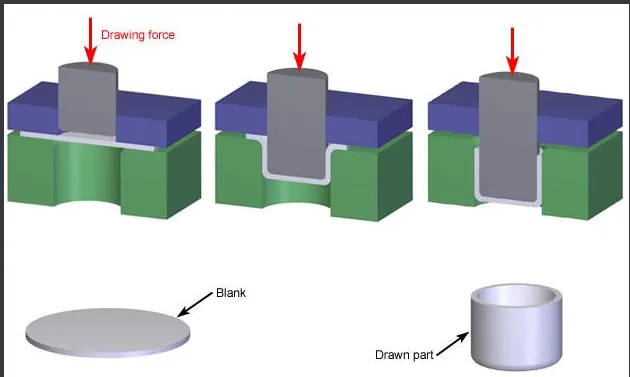
figure 15.Deep Drawing process figure 16.Deep Drawing process
Hemming
- Hemming is a manufacturing strategy during which the edge of a sheet of metal is folded over itself meets the surface of the sheet.
- Unlike seaming, a similar process used to join separate edges of a sheet, hemming entails the bending of a single edge over itself.
Conventional die hemming - Conventional die hemming is the one suitable for mass production.
- In die hemming, the flange is folded over the entire length with a hemming tool. Usually, the actual hemming happens as a result of a forming operation where the flange is formed with a hemming tool, after completing the drawing and trimming operations.
- This formed flange is then hemmed through several process steps, including the pre-hemming and final hemming stages for instance.
- This depends on the respective opening angle of the flange.
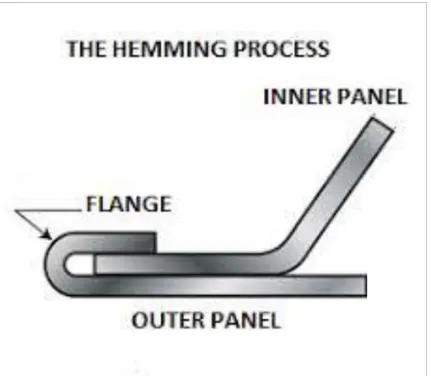
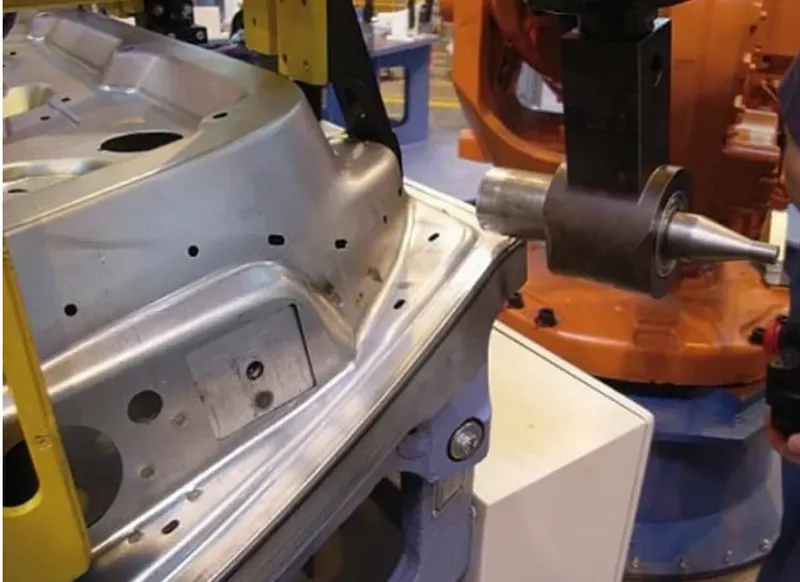
figure 17.Hemming figure 18.Hemming
Final Assembly
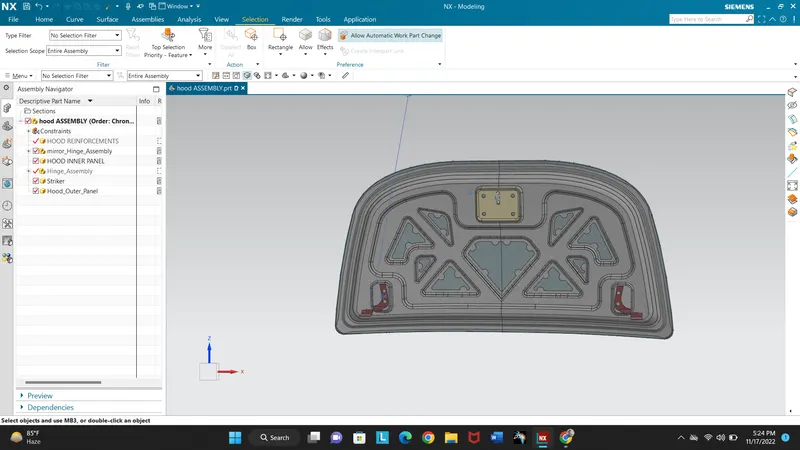
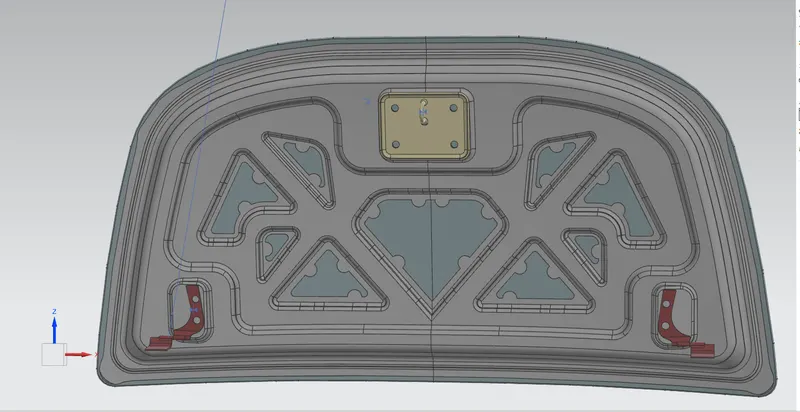
figure 19.entire hood figure 20.entire hood
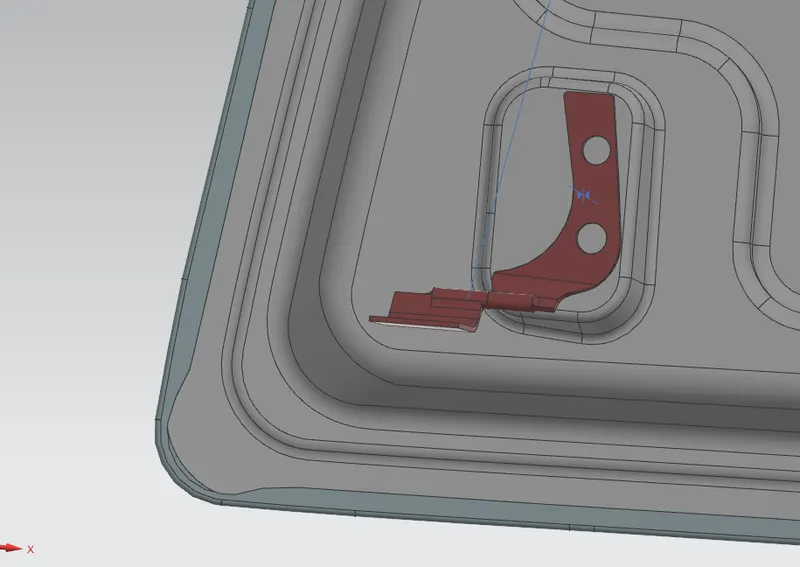
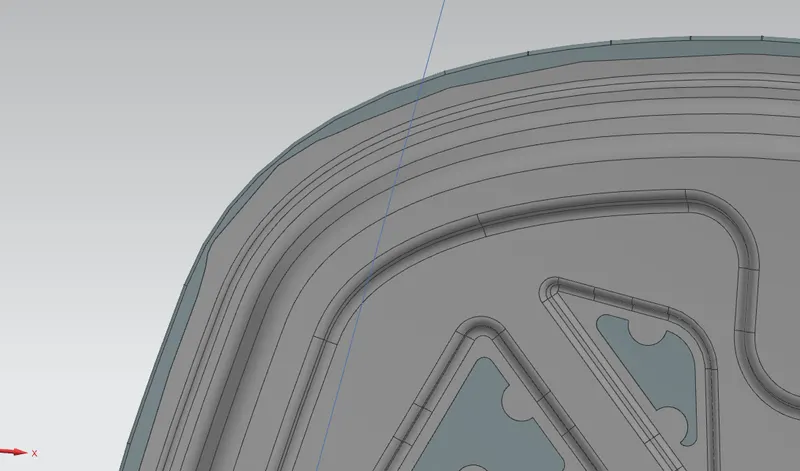
figure 21.corner relief rear section figure 21.corner relief frontal section
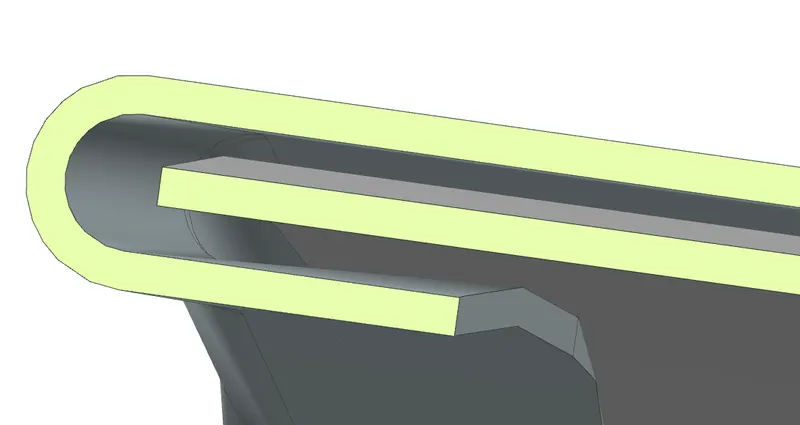
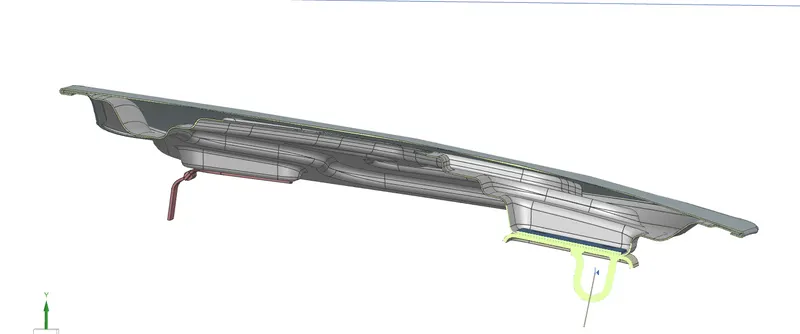
figure 22.Hemming figure 23.Hemming
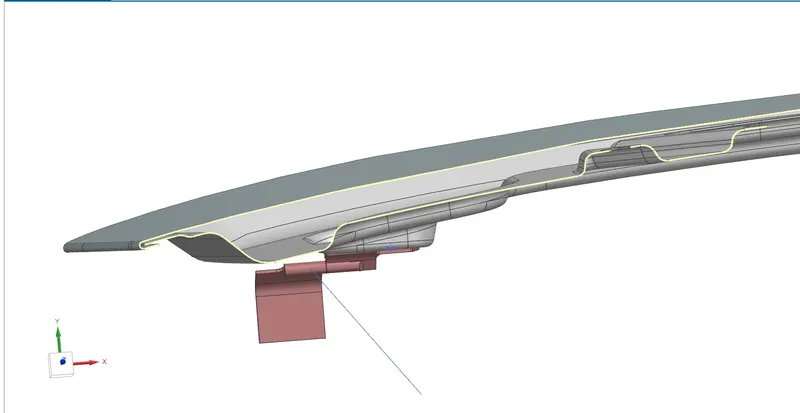
figure 24. cut section view
DESIGN PARAMETERS TAKEN IN HOOD DESIGN.
THICKNESS OF OUTER PANEL 0.75mm.
THICKNESS OF INNER PANEL 0.75mm.
CLEARENCE BETWEEN INNER AND OUTER PANEL 0.2mm.
Conclusion:-
With the completion of the design and analyzing it for successful manufacturability,we can conclude that this can be utilized for a vehicle. Also, the design was executed
under the EuroNCAP safety standards and hence satisfies hood safety both for occupants and the pedestrians.