Hood design-Week 2
A REPORT ON HOOD DESIGN
INTRODUCTION
The car hood protects the engine and connected parts from the elements while providing easy access for repairs and maintenance. Car hoods are typically constructed from steel and sometimes from aluminium. Aftermarket car hoods may be constructed from various other materials, including carbon fibre, fiberglass, or dry carbon.
A concealed latch is typically used to lock the hood in place while driving. A release for the mechanism can be accessed from the dash below the steering wheel. On race cars and vehicles with an aftermarket hood, exposed pins may be used to secure the car hood.
Hoods sometimes contain a hood scoop or a power bulge to allow for greater engine capacity and airflow to increase the car’s performance output.
QUESTION –
Design Hood Outer Panel, Inner Panel and the necessary reinforcements by following the Master Section mentioned with the Design parameters explained in the videos
INPUT –
Hood Thickness Information
- Outer Panel Thickness = 0.75mm
- Inner Panel Thickness = 0.75mm
- Reinforcement Thickness = 1.5mm
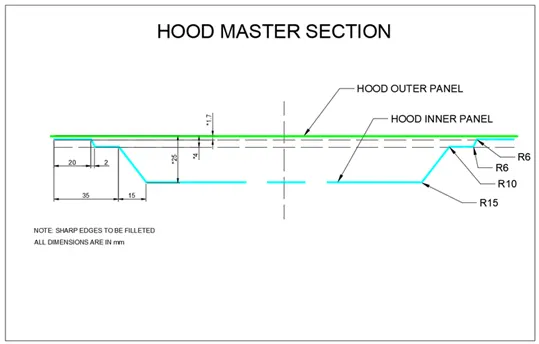
Master Section:
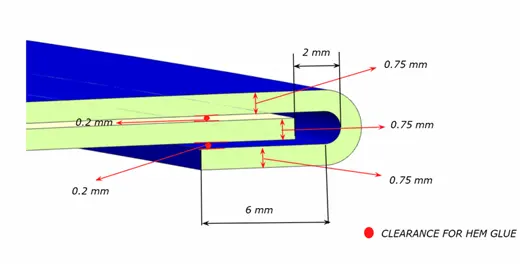
Hemming Data:
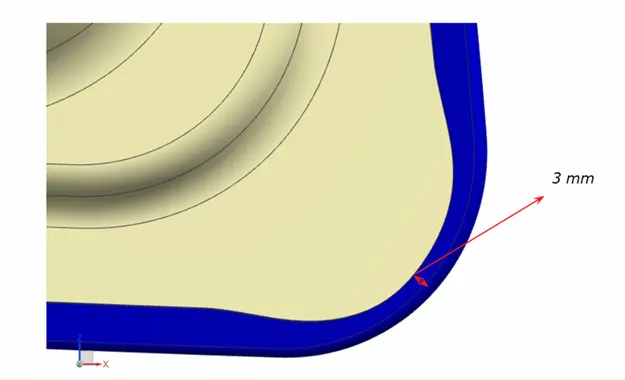
Relief rear section:
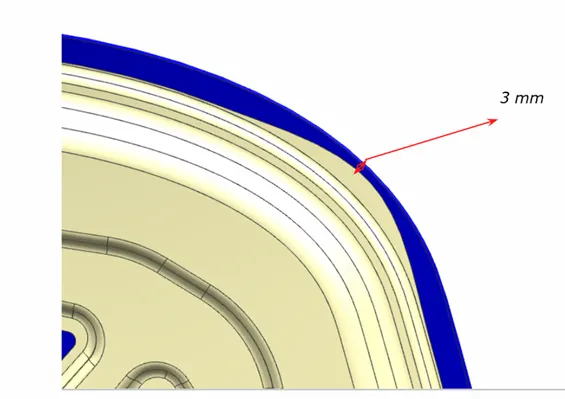
Front relief:
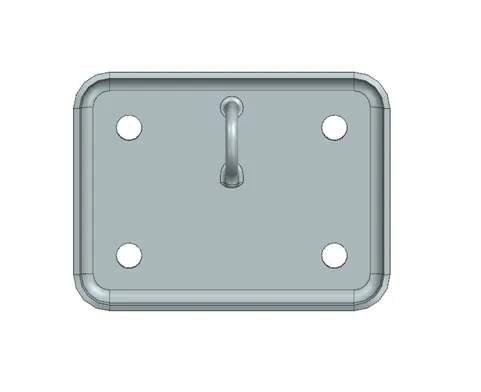
Latch And Striker
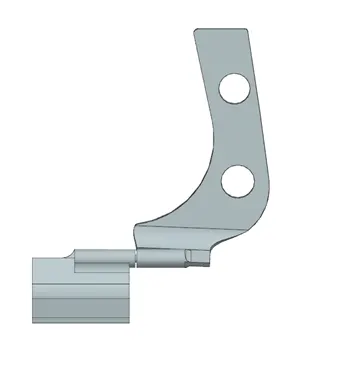
Hinges
DESIGN CRITERIA FOR HOOD DESIGN
Angle Of Opening-
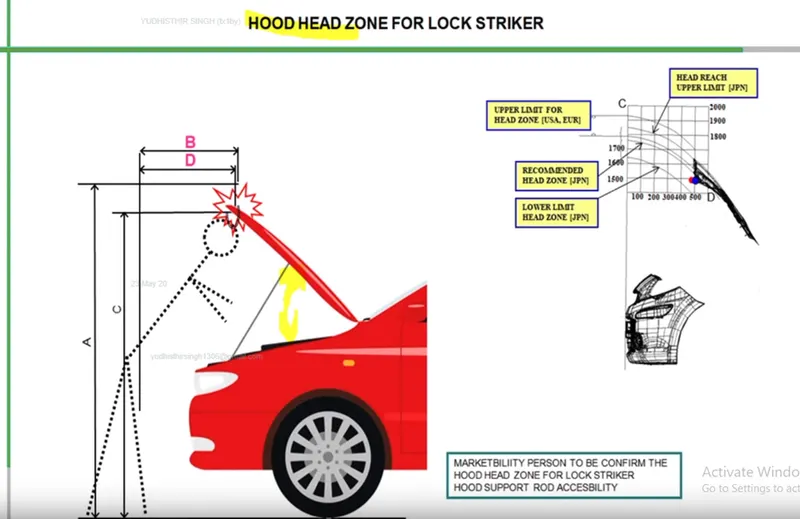
Head Zone- Head Zone is the clearance such that the hood Is fully open in condition that may not injury who stand in front of hood or work in engine compartment. So this controlled when we consider angle of opening. Angle of opening is depend on people average height we follows 5.5ft is average height in our region so deciding the right opening angle for the hood is an important criteria. . Below figure shows head zone criteria
Hood Stay -
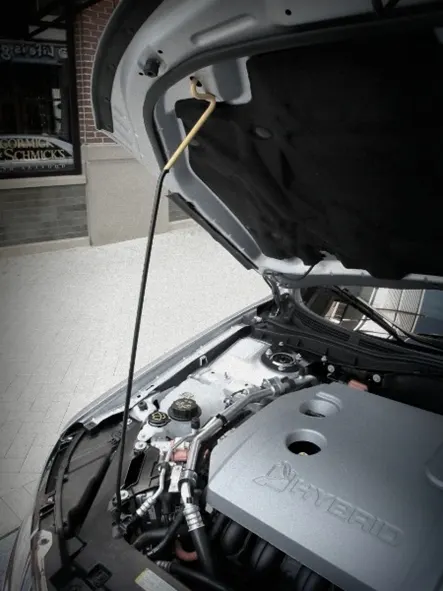
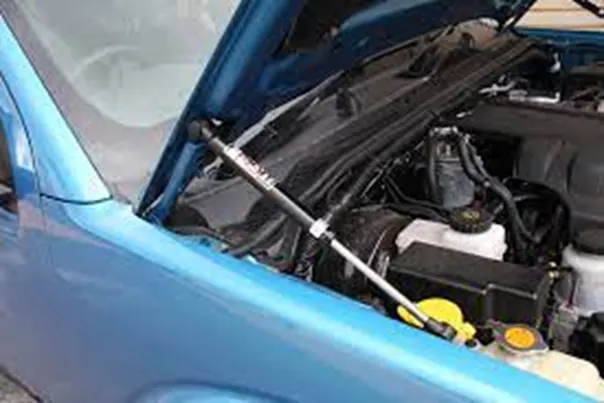
A hood stay is an device which is used to keep the hood in an open position . The Hood is Balanced on Hood Stay or Support rod. there are two types of hood stays which are given below.
Support Rod –
Support rod is usually inside the engine compartment , when we open the hood and keep it in open condition IN actual condition support is curve in nature because of increase in rigidity of it also the bend or curve is can not be give more than 35mm. The support is located always be in opposite to a battery location it rest on engine compartment with the help of grommets.
Gas Stay-
A gas stay is used to open the hood , keep it in a opened state and then closing the hood . this is a automatic process , that is the gas stay uses an actuator to open and close the hood . one side of gas stay is mounted on body side and other side is mounted on the hood . gas stay for the front hood are mainly used in high end performance cars .
Pedestrian safety-
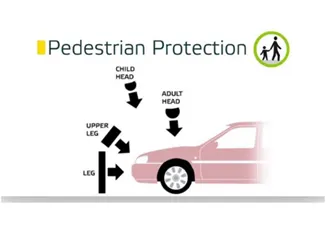
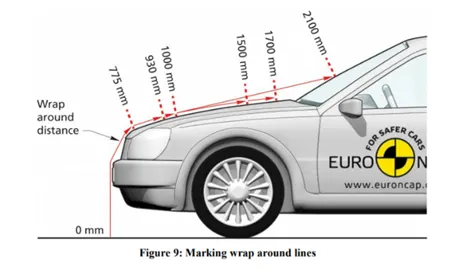
Pedestrian safety is also another important factor that is to be considered while designing a hood .EURO NCAP (New Car assessment programme ) has devised some regulations . It carries out test on the car to check if it passes those regulations.
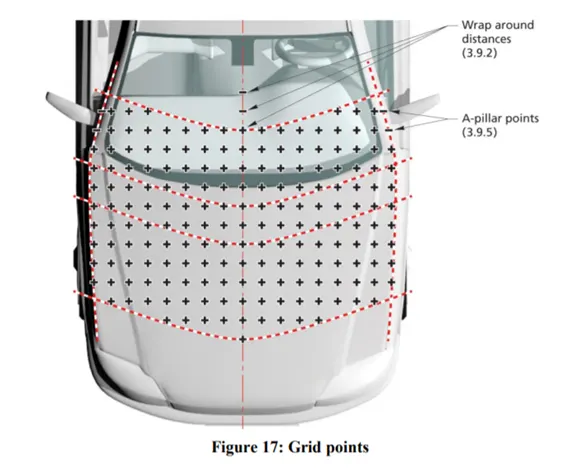
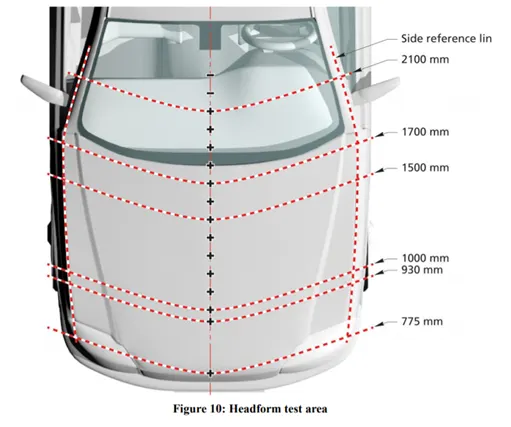
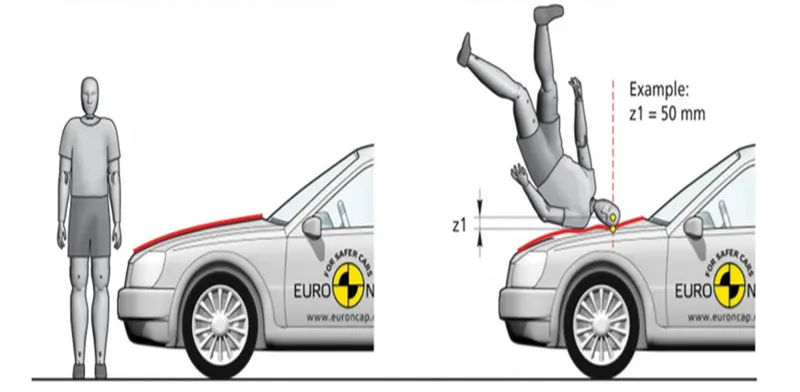
So , in the above image it can be seen that there are some points marked on the hood of the car , so this are the regions of head impact area of a pedestrian on the hood of car . if the pedestrian gets hit very badly , he may cause a very terrible or a fatal concussion on head , this can even lead to the pedestrians demise . so our hood is designed in a way such that it has some cutouts on structure of inner panel of hood where there is high possibilty of pedestrian head hitting on the hood .
Noise Vibration Harshness (NVH) -
NVH plays an important role in car design . the noise and vibration produced by the car should be minimized. in the hood , to avoid vibrations stiffner pads are provided . mastic sealants also reduce the nvh . stiffnerpads and mastic are added between inner and outer panel of the hood.
Considering all those points we design a hood of car
Outer Panel-
We receive outer panel skin and thickness of panel (ClassA Surface) as shown in input so we create outer panel having 0.75mm thk also hemming and corner relief on it. Hemming is process is used to join inner and outer panel. In which the outer panel sheet is bent over inner panel with the help of roller but for joining here maintain clearance between those panel and this clearance is filled with hem glue.
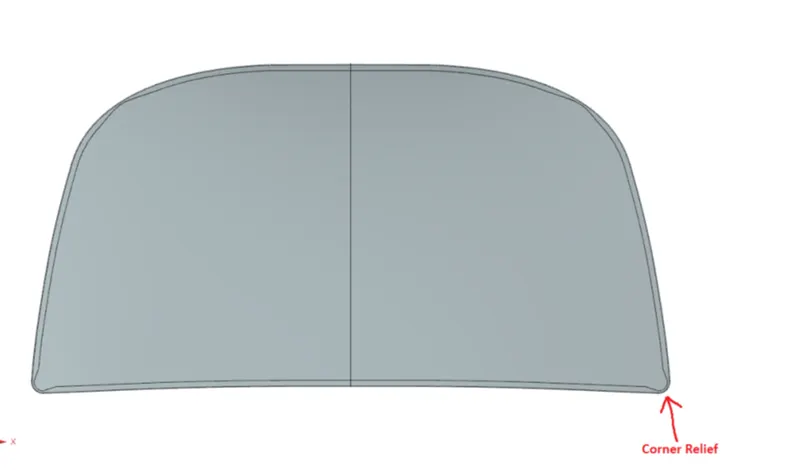
Above fig shows outer panel having 0.75mm thk. and corner relief .
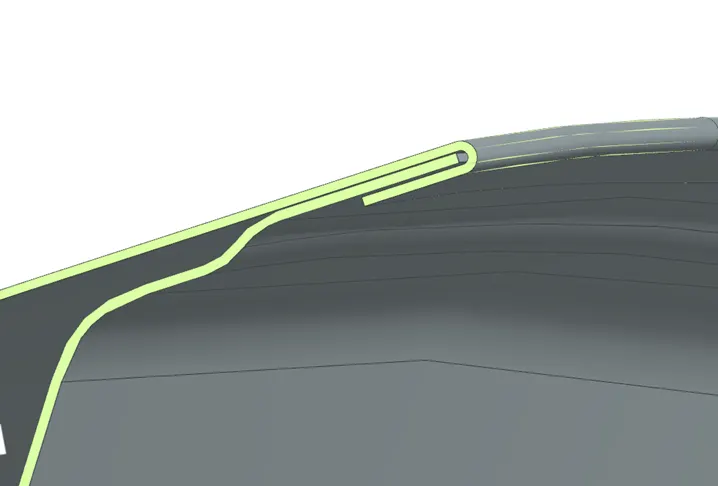
Above Fig shows Hemming process
Inner Panel –
The inner panel created as per given master section. In this inner panel emboss is created in such way that when front crash of hood happened that time force is transfer to outward direction on hood through cut-out on its also it having empty section on it for pedestrian safety. The inner panel having mastic point for reducing NVH and joining purpose of inner panel and outer panel
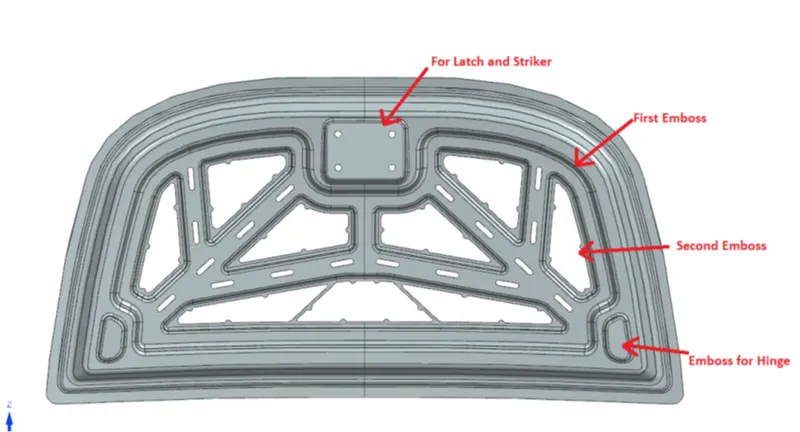
Above Fig Shows First Emboss it having 10mm depth and Second emboss having 8.5mm depth also noted emboss for latch striker and hinge assembly.
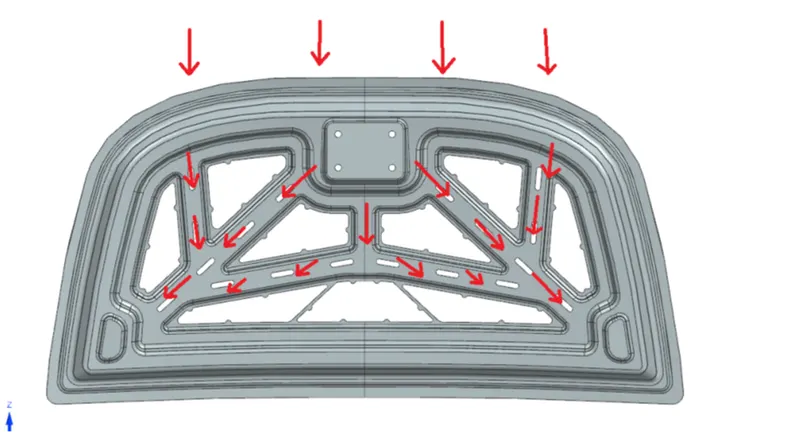
Above fig shows force transfer outward direction of panel.
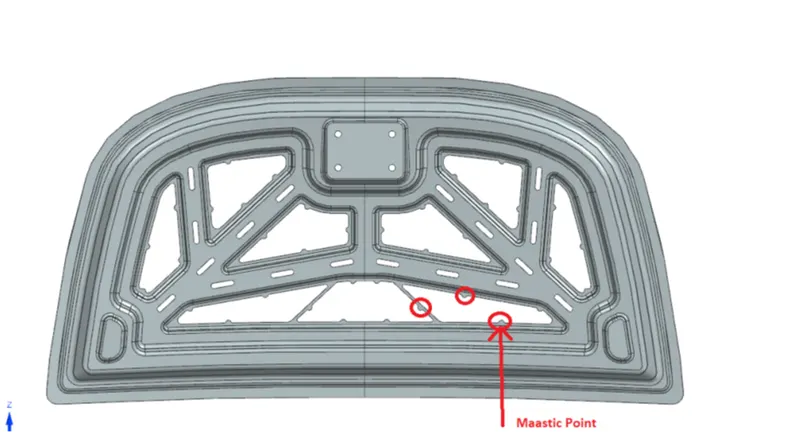
Above Fig Shows Mastic point on its
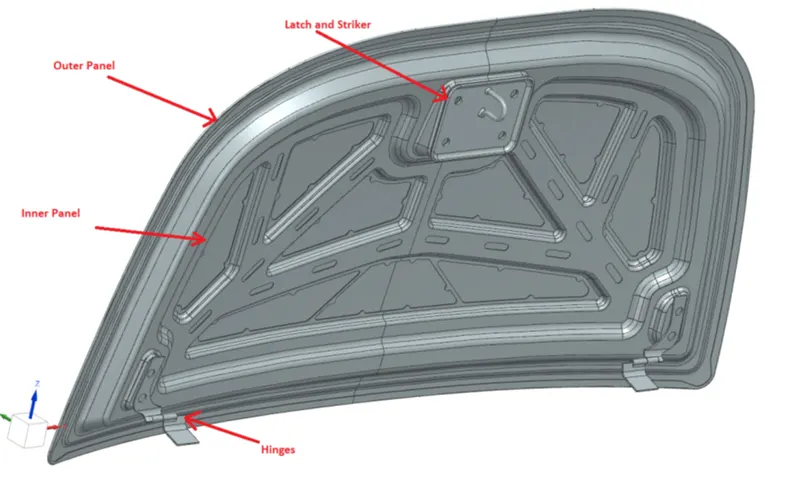
Above Fig Shows Final Assembly Of Hood.
CONCLUSION -
We have designed the outer panel and inner panel following the master section and the skin provided to us . we have also created reinforcements for the hinge and latch.
Please find attached zip file