Flow over a cylinder
Objective - Simulate the flow over a cylinder
Theory
Reynolds number:-
- Ratio of internal force to viscous forces
- It is dimensionless number
- helps predict flow patterns in different fluid flow situations.
- At low Reynolds numbers, flows tend to be dominated by laminar (sheet-like) flow, while at high Reynolds numbers flows tend to be turblent flow
The Reynolds number is defined as

- ρ is the density of the fluid (SI units: kg/m3)
- u is the flow speed (m/s)
- L is a characteristic linear dimension (m)
- μ is the dynamic viscosity of the fluid (Pa·s or N·s/m2 or kg/(m·s))
- ν is the kinematic viscosity of the fluid (m2/s).
Laminar flow R < 2000
Transition flow 2000 < R > 4000
Turbulent flow R > 4000
Inputs
Cylinder Dia = 40mm = 0.04m
Air density = 1.2kg/m3
Dynamic viscousity = 1.825 x 10^(-5) N·s/m2
Reynolds number calculation
Re =(ρ x u x d)/μ
we have taken cylinder dia(d) instead of length L
As per given equation
ρ , d and μ are constant becouse we use Cylinder dia and air same for differnent simulation.
so
(ρ x d)/μ = K (constant)
now
Reynolds number is directly proportion to Velocity of air.
We have taken velocity is 10m/s
Re = 10K=26300
Now if Re increase Re by 20%
Re = 12K = 31560
velocity = 12m/s
then 40%
Re = 14K =36820
velocity = 14m/s
then 100%
Re = 20K = 52600
velocity = 20m/s
This show that if we increaes Re the velocity is also increase.
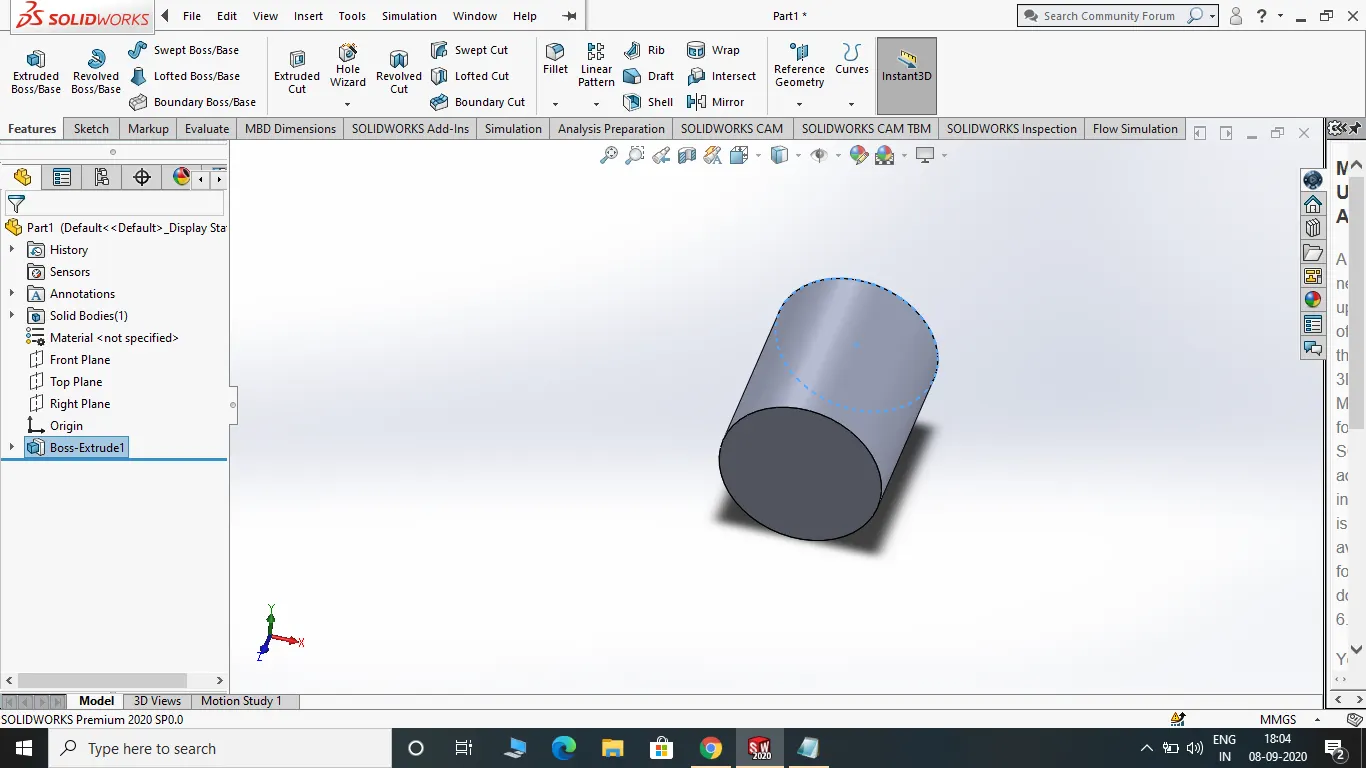
CYLINDER
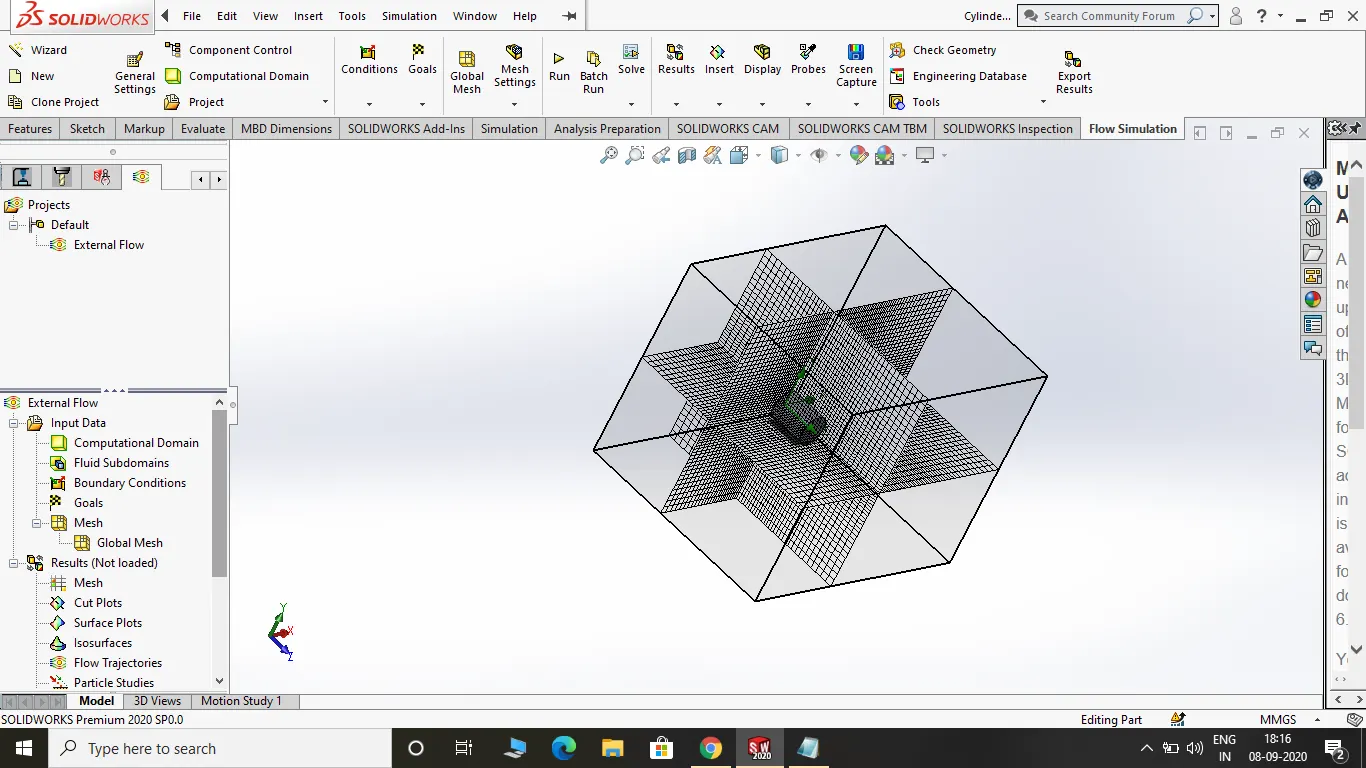
Mesh
Simulation
1. Velocity = 10 m/s
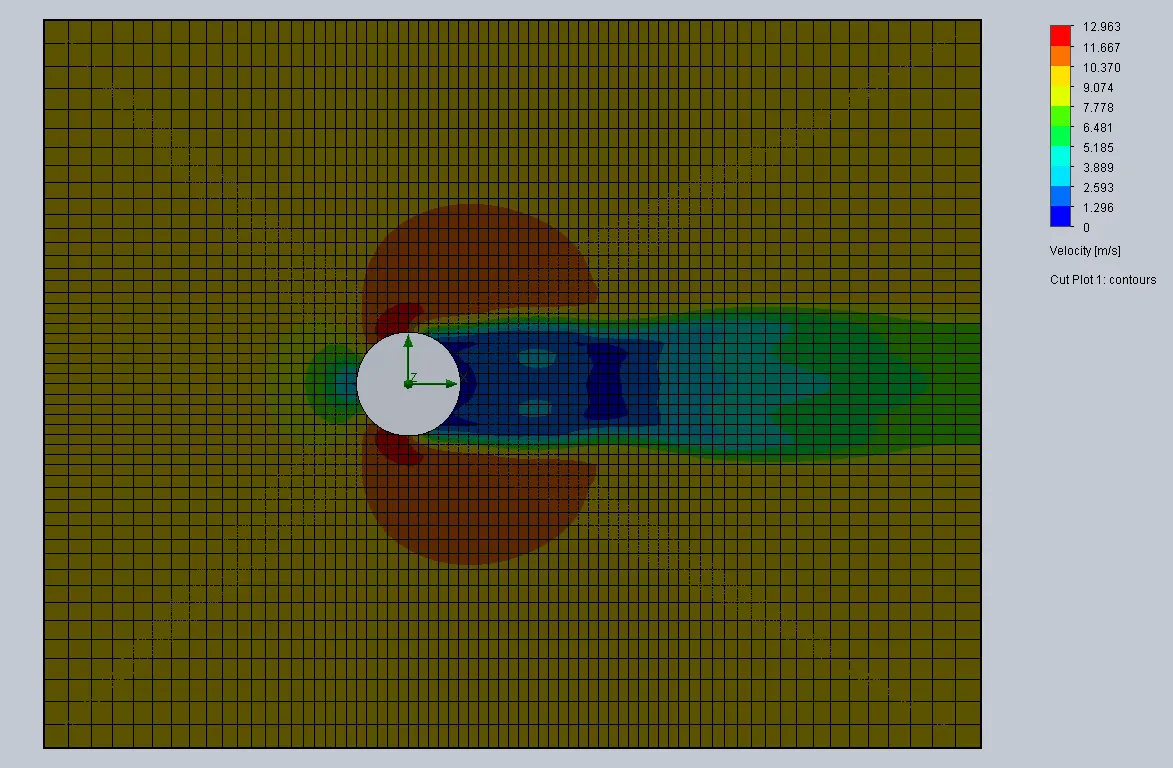
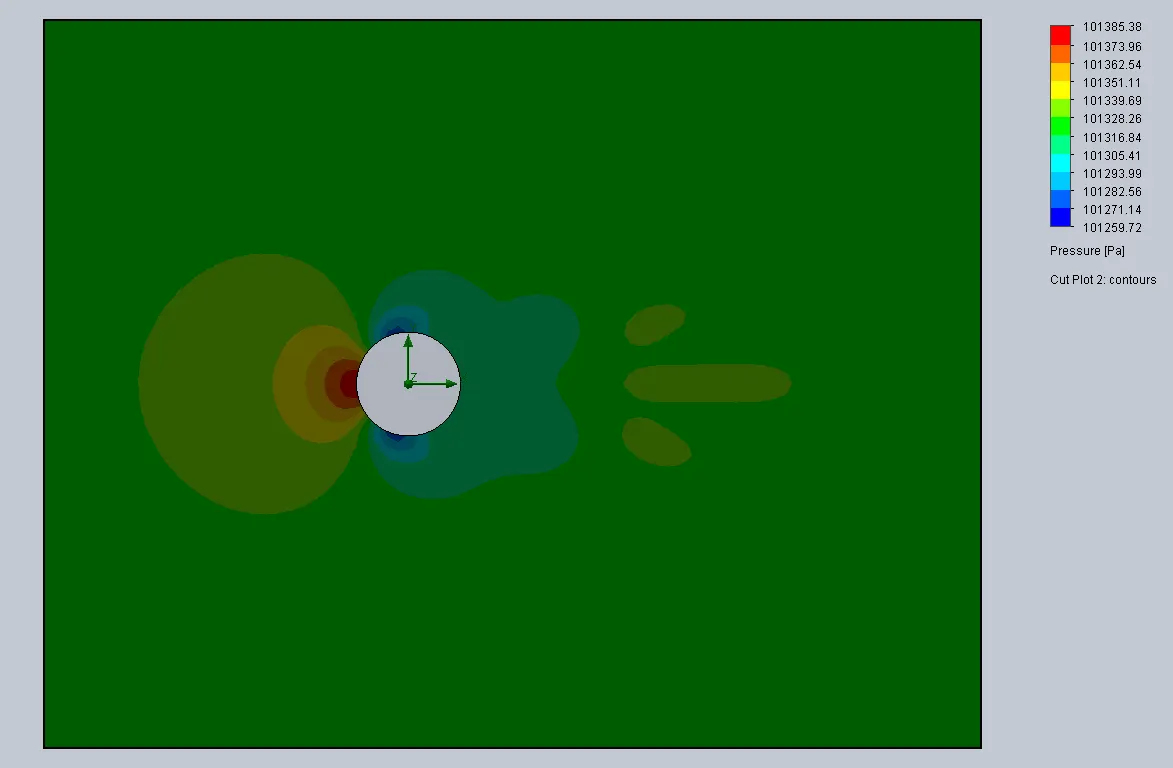
2. Velocity = 12 m/s
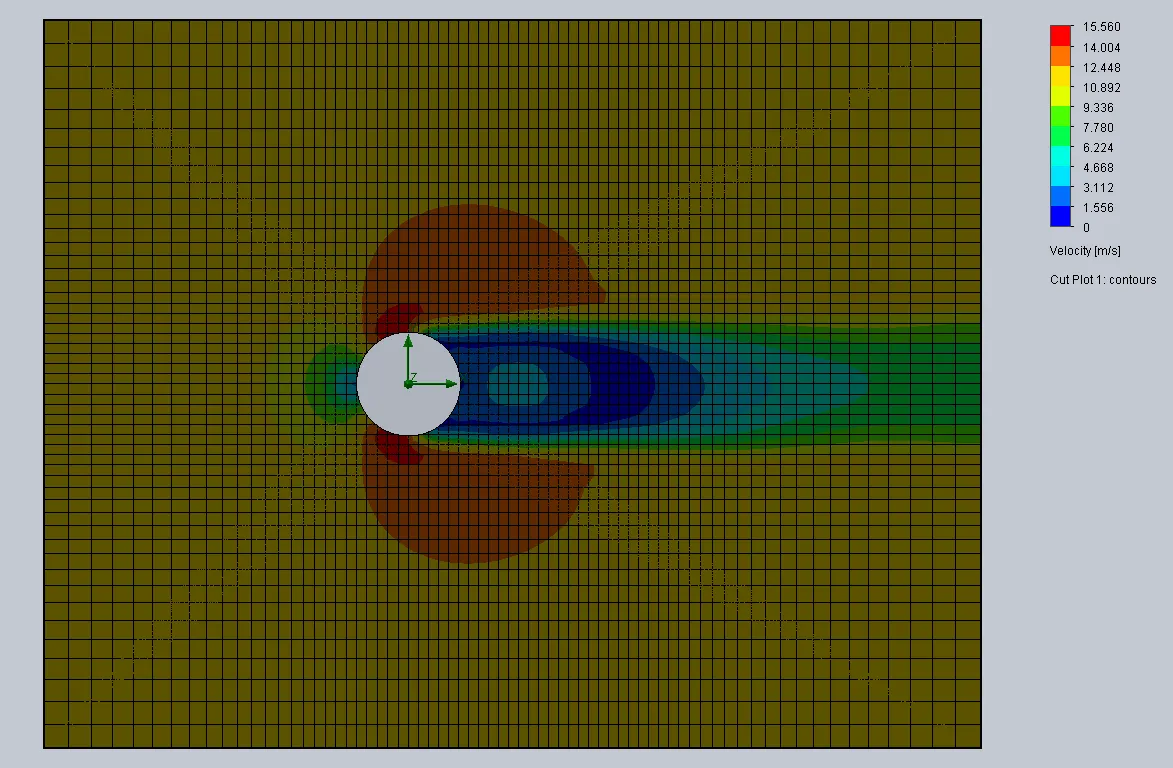
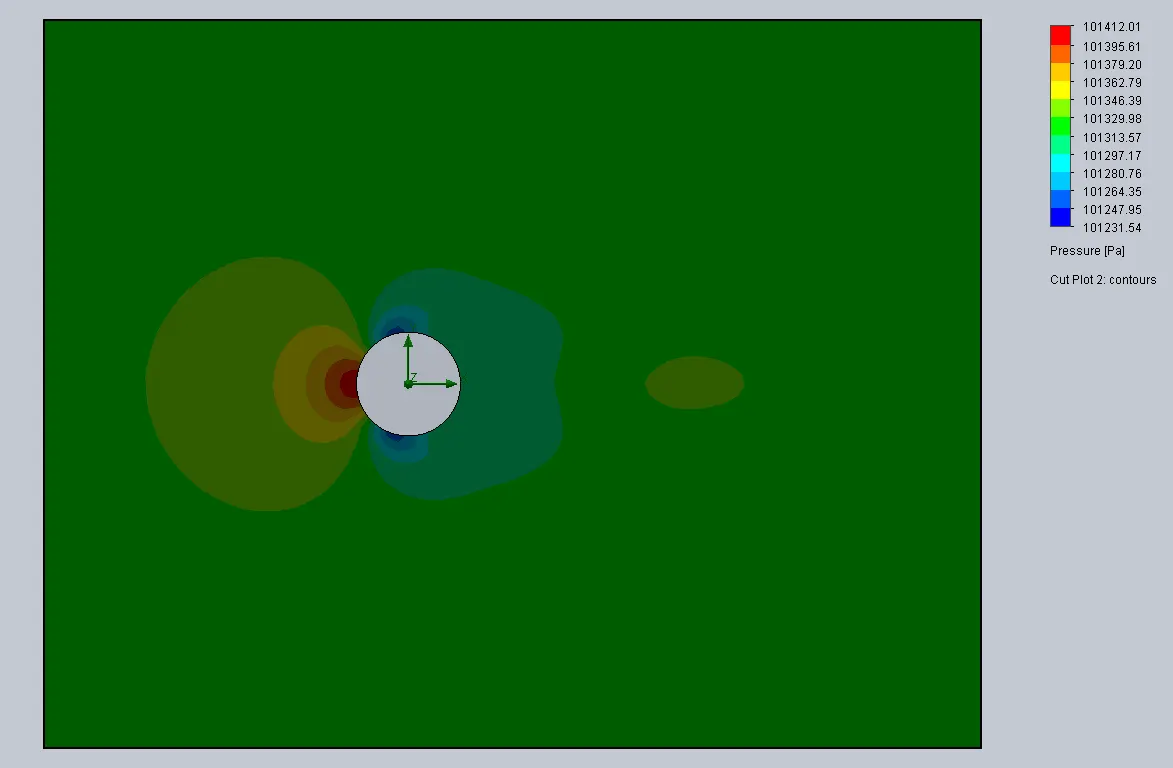
3. Velocity = 14m/s
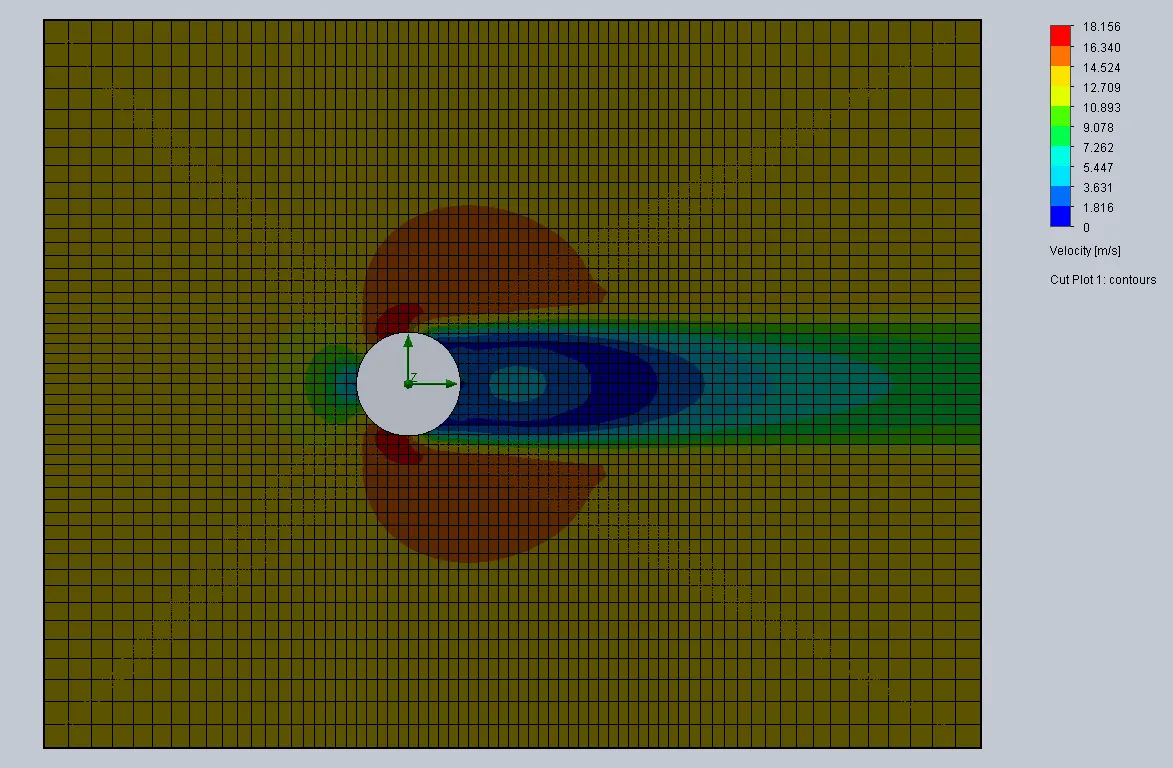
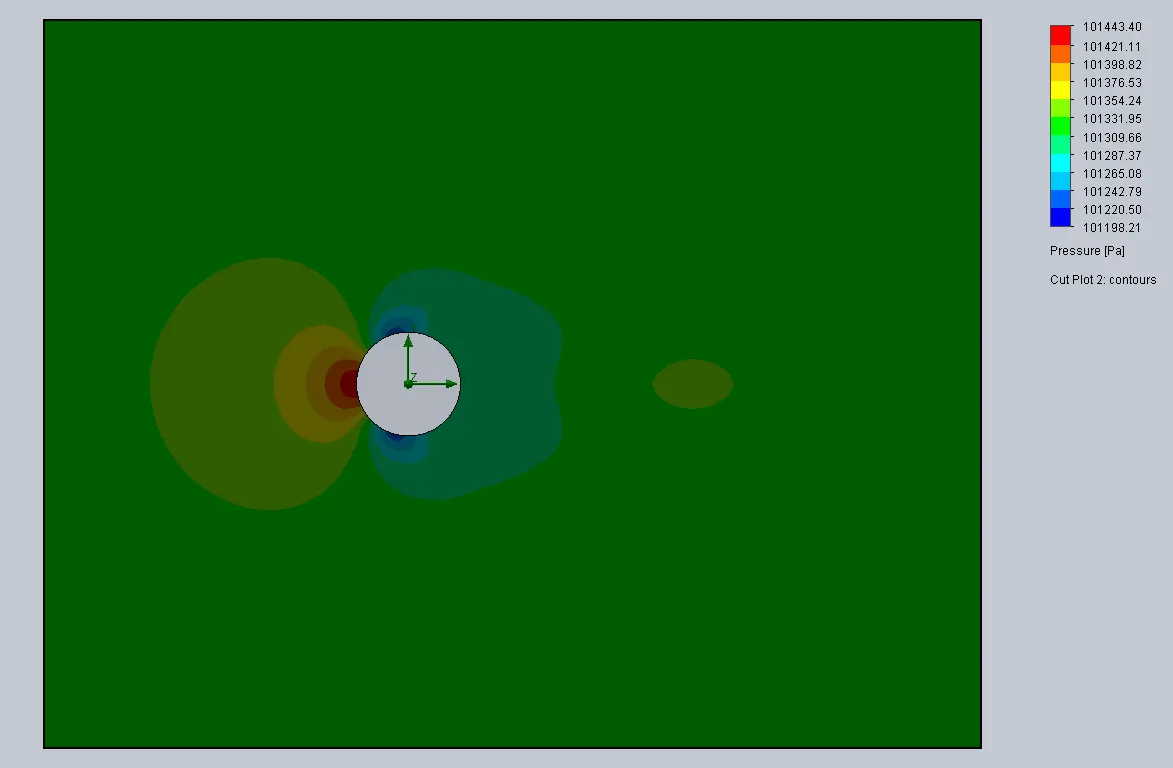
4. Velocity = 20 m/s
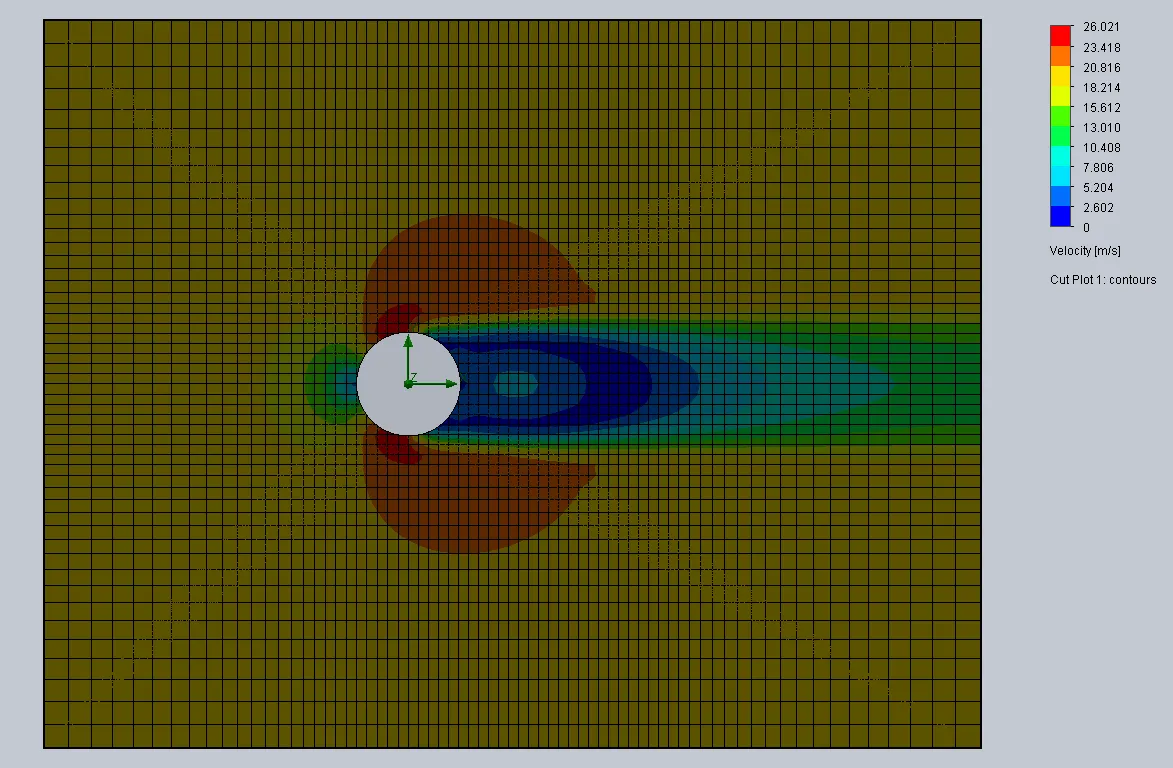
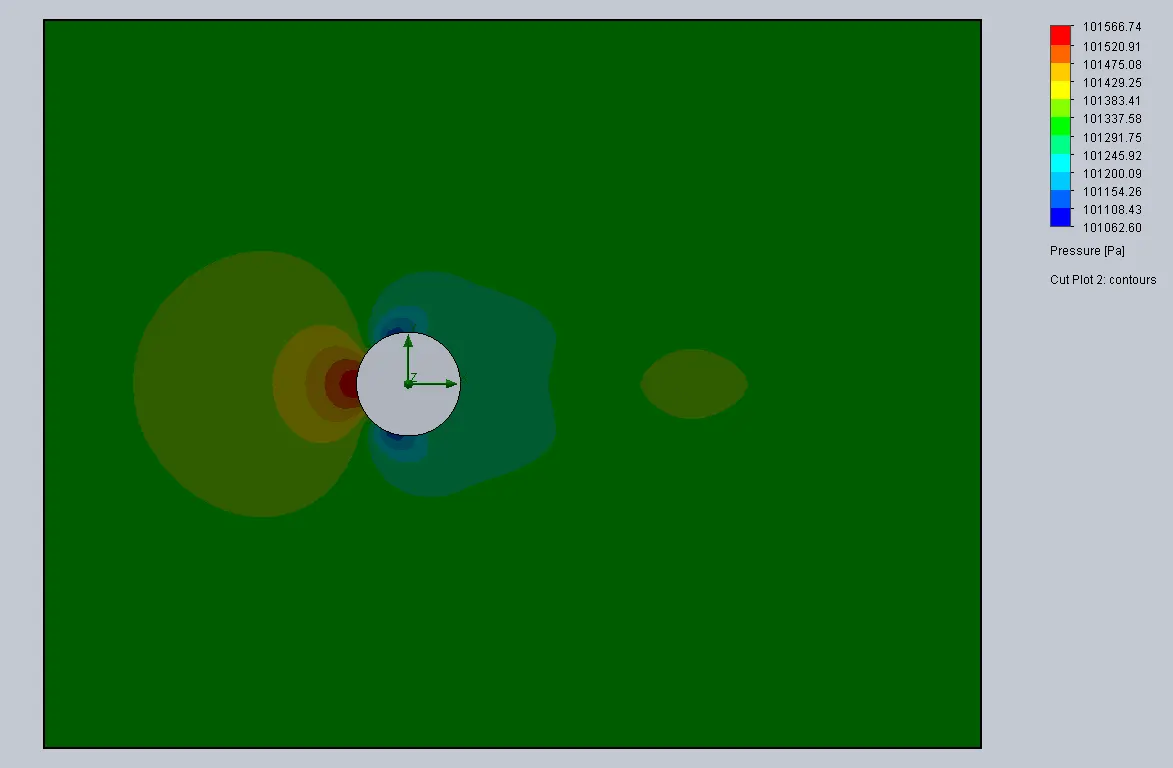
Conlusion
As you see by increasing the Renolds number
- Hardly change in pressure .
- vortices produce.