Final Project: Design of an Electric Vehicle
Aim :-
Create a MATLAB model of electric car which uses lithium ion battery and induction motor. Choose suitable blocks from Powertrain block set. Prepare a report about your model including following:
Objectives:
1. System level configurations
2. Model parameters
3. Results
4. Conclusion
Solution :-
(Reference : https://www.youtube.com/watch?v=tM9Akdo8QeA )
Abstract: This report outlines the creation of a MATLAB model for an electric vehicle (EV) using a lithium-ion battery and an induction motor. The model is developed within the SIMULINK environment and utilizes various blocks from the Powertrain block set. The objective of this model is to simulate the performance of an electric car, including speed, state of charge (SOC), and battery characteristics during a drive cycle. The report provides insights into system-level configurations, model parameters, simulation results, and conclusions.
Introduction: Electric vehicles (EVs) have gained prominence as eco-friendly alternatives to conventional internal combustion engine vehicles. EVs use electric motors powered by various sources, such as batteries, generators, or collectors, eliminating emissions and reducing environmental impact. This report focuses on modeling an EV equipped with a lithium-ion battery and an induction motor, using MATLAB and SIMULINK for simulation and analysis.
MATLAB model of electric car which uses lithium ion battery and induction motor. Choose suitable blocks from Powertrain block set :
To Model and Simulate an electric vehicle with SIMULINK.
Let us consider a model in this report, an electric vehicle with a Induction motor and battery system using the SIMULINK . In modelling this EV for a drive cycle and to check performance parameters : to measure speed, SOC , and the current characteristics of its battery system etc
Components
The main components of modelling an EV are:
- Vehicle body
- Motor & motor controllers
- Power converters
- Batteries
- Drive cycle
Brief Description: The MATLAB model of the electric car encompasses several key components:
-
Vehicle Body: This component represents the vehicle's body in motion, accounting for factors like mass, aerodynamic drag, grade, and center of gravity. It receives inputs such as wind velocity and grade angle and outputs velocity and normal forces on the axles.
-
Tires: The tire model simulates tire behavior based on longitudinal characteristics. It considers the normal force acting on the tire and calculates slip relative to the tire's contact surface.
-
Gear: The gear block connects the motor to the rear axle, representing the gearbox's functionality. It accounts for gear ratio, efficiency, and meshing losses.
-
Motor & Power Converter: This section includes the motor control and power conversion components. The H-Bridge controls the power input, and the DC motor serves as the power source for the wheels.
-
Controlled PWM Voltage: This block manages modulated pulses to ensure smooth operations. It receives acceleration and deceleration commands and delivers PWM signals to the H-Bridge.
-
Battery Source: The battery serves as the power source for the entire system. Its parameters include nominal voltage and internal resistance.
-
Driver Model: The driver model receives velocity reference signals, grade information, and acceleration/deceleration commands. It interfaces with the Controlled PWM Voltage block to control vehicle speed.
-
Drive Cycle: The drive cycle represents the vehicle's driving pattern and provides inputs to the driver model.
DETAILED MODEL STUDY:
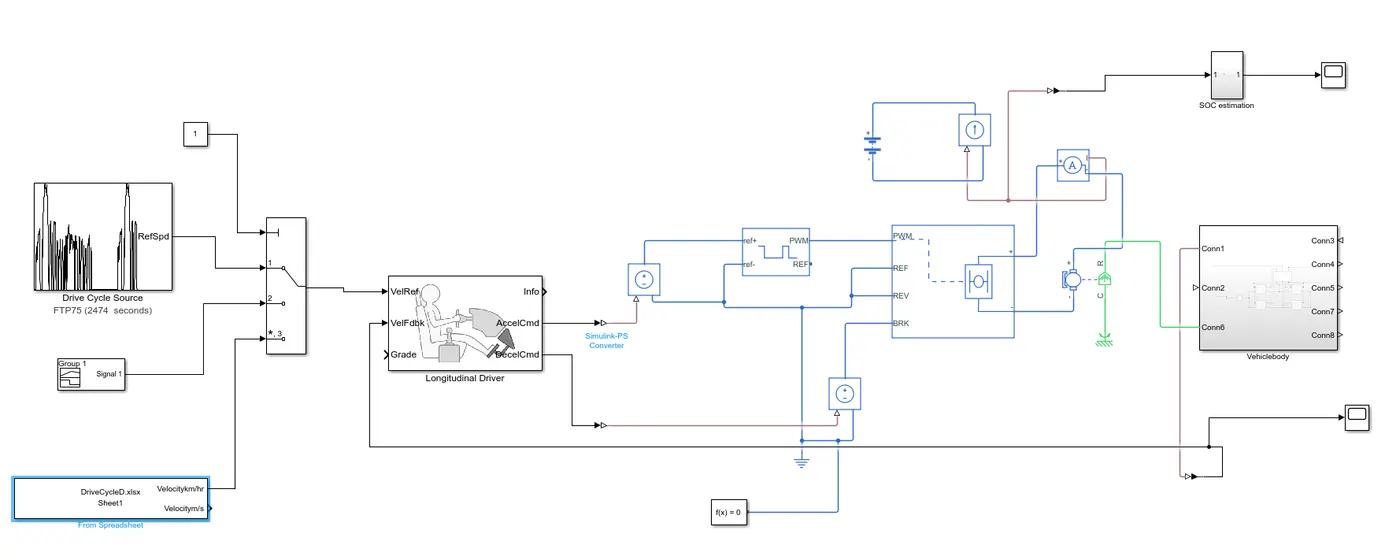
Sub -systems :
.Vehicle body
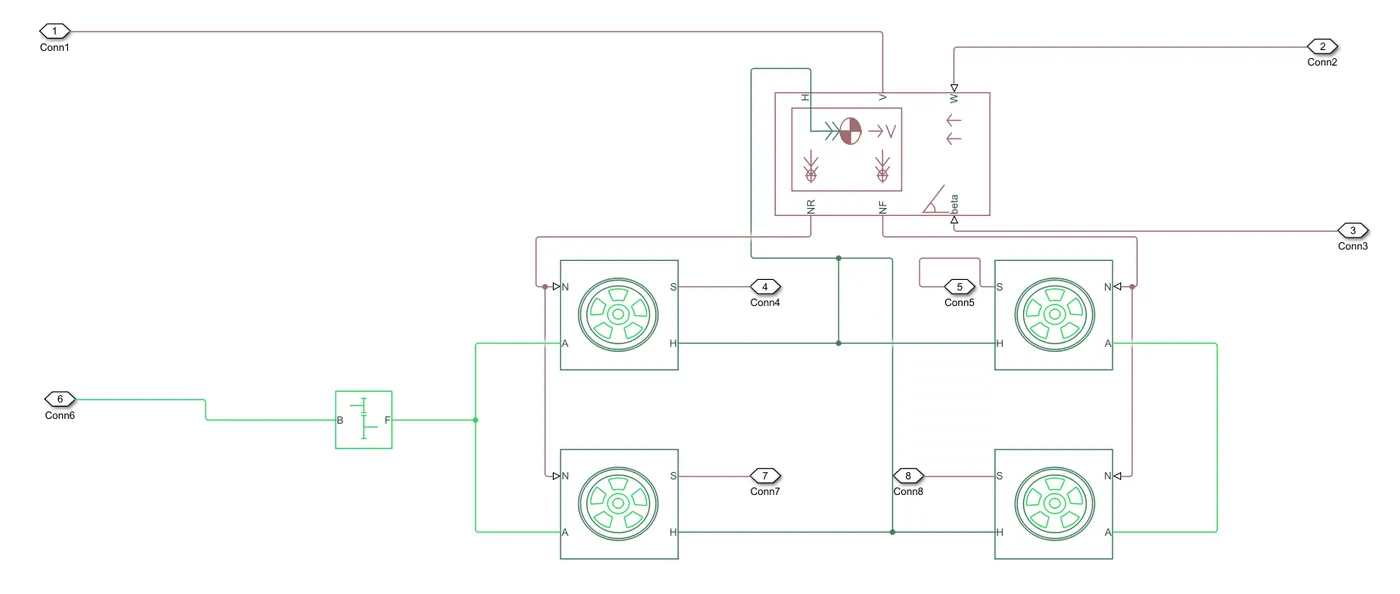
- represents a two-axle vehicle body in motion.
- accounts for body mass, aerodynamic drag, grade,externally-defined mass and center of gravity of the vehicle body.
Input Ports:
- W - Wind Velocity in m/s
- beta - Grade angle in radians
Output Ports:
- V - Velocity in m/s
- NR - Normal force on Rear Axle (N)
- NF - Normal Force on Front Axle (N)
Vehicle Body Parameters:
- Vehicle body mass, Centre of gravity distance values and aerodynamic drag variables are modified.
- Pitch dynamics are kept ON with other variable values as default values.
Tires
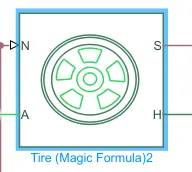
- used to model a tire with longitudinal behavior given by equation based on four fitting coefficients.
- The block can model tire dynamics under constant or variable contact surface conditions.
Input Port:
- N - Normal force acting on tire, positive when force is acting downwards/towards the contact surface,
Output Port:
- S - Slip value relative to tire and surface of contact.
Conserving Ports:
- H - represents wheel hub which transmits thrust generated by the wheel to the body of the vehicle.
- A - represents axle on which the tires are mounted.
Gear
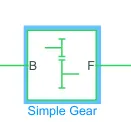
- A simple gear block is used to connect the motor to the rear axle of the vehicle.
- It represents the gearbox which connects the input shaft to the base gear and ouput from the foller gear.
Conserving Ports:
- B - port associated with input shaft (motor shaft)
- F - port associated with ouput shaft (axle / differential)
Simple Gear Parameters:
- Gear ratio and output direction is modified.
- Meshing loss is kept constant and gear is having a constant efficiency throughout the simulation.
- Viscous losses and faluts are kept at default conditions.
. MOTOR & POWER CONVERTER:
The motor & its control block is as shown below:
H-Bridge
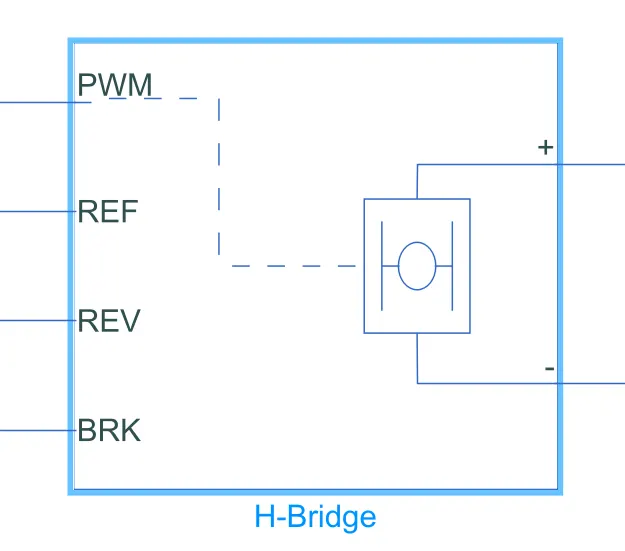
The H-Bridge helps in controlling the power that is input according to the requirement. The output provided are converted voltage as per the controlled parameters.
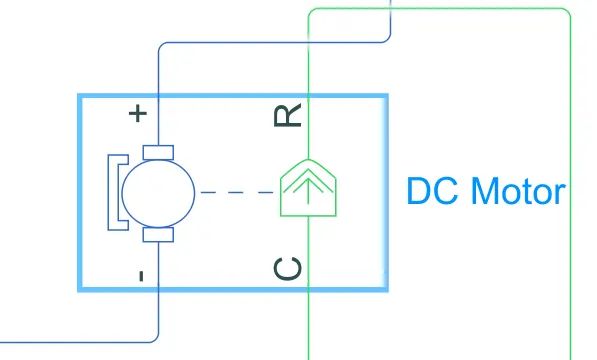
. DC Motor
This is the DC Motor which would give the rotational power to the wheels and become the sole power generation source.
The DC Motors terminals are connected as mentioned below,
+ = Electrical signal to the motor Positive Terminal
- = Electrical signal to the motor Negative Terminal
R = Casing of the Motor connected with the Mechanical Rotational Reference Block
C = Rotor Case connected to the Mechanical Rotational reference
The parameter considered are, The Armature inductance is as default, varied the changes in the No-Load Speed @ 8000 rpm, the rated speed @ 5000 rpm, the Rated Load at 50kW, and the Rated DC Supply Voltage @ 300 V. All other parameters are as default.
. Controlled PWM Voltage
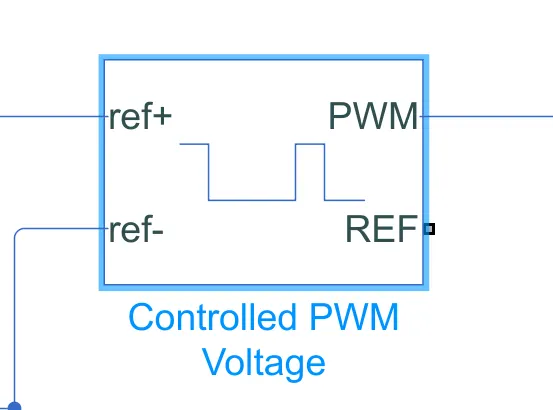
The Controlled PWM Voltage Block helps in keeping the Modulated Pulses as per the required pulses. So that the operations happens smooth and higher variations are not observed.
The Ports are connected as follows,
ref+ = Reference Positive connected with the Acceleration Commands from the Driver Model
ref- = Reference Negative connected with the Deceleration Commands from the Driver Model
PWM = PWM connected directly to the H-Block
REF = REF connected directly to the H-Block
Note :The parameters are set as default.
. Battery Source
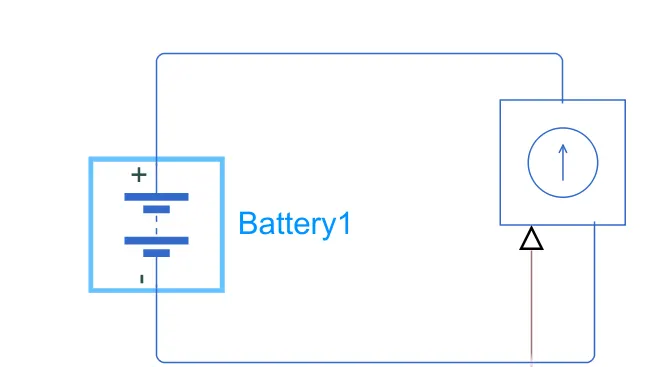
The battery is connected as the power source to the model so that the power could be generated and the same power is transmitted accordingly to all the operating sources.
The terminals connected are to,
+ = The positive terminal of the operating sources
- = The negative terminal of the operating sources.
Components of battery block is depicted below:
The paramters considered of the battery are -
The battery Nominal Voltage is rated as per 300 Volts,
The internal resistance is as per 0.5 Ohms and others set as default.
. Driver Model
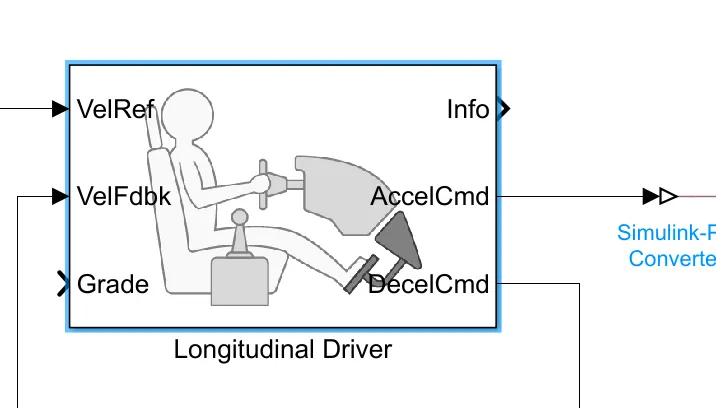
The Driver Model has the Input and Output Ports which are connected to the following,
Velocity Reference - Drive Cycle
Velocity Feedback - Distance Calculation
Grade - Constant 0
Info - Not Connected
Acceleration Command - Controlled PWM Source
Deceleration Command - Brake in H-Bridge to maintain the speed according to the Drive Cycle.
. Drive Cycle :
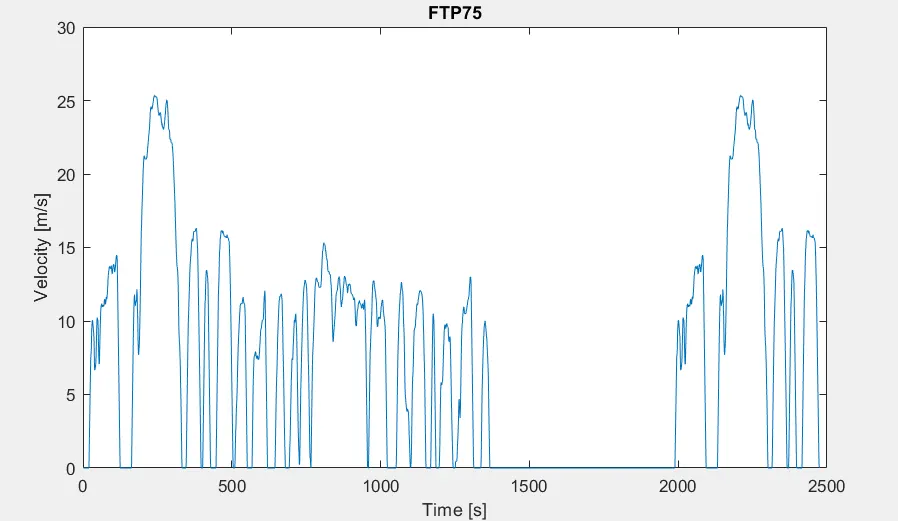
Outputs
Distance covered
Battery SOC
Conclusion: The MATLAB model of the electric car equipped with a lithium-ion battery and an induction motor allows for the simulation of various performance parameters. Through this model, we can analyze speed profiles, SOC variations, and battery behavior under different driving conditions. This modeling approach provides valuable insights for the development and optimization of electric vehicles, contributing to the advancement of sustainable transportation solutions.