Fender Design - Wheel Arch Challenge
AIM
To calculate the Wheel Arc area and prove whether the car will pass the standards
FENDER
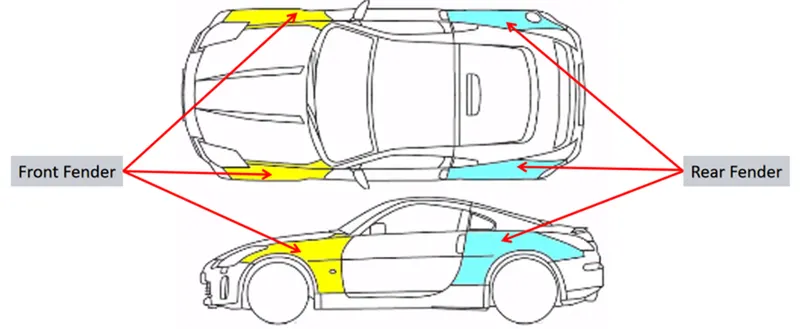
Fender is the American English term for the part of an automobile, motorcycle or other vehicle body that frames a wheel well (the fender underside). Its primary purpose is to prevent sand, mud, rocks, liquids, and other road spray from being thrown into the air by the rotating tire. Fenders are typically rigid and can be damaged by contact with the road surface
Fender is a part of an automobile, motorcycle or other vehicle body that frames a wheel well (the fender underside). Its primary
purpose is to prevent sand, mud, rocks, liquids, and other road spray from being thrown into the air by the rotating tire. Fenders are typically rigid and can be damaged by contact with the road surface. The main purpose of fenders on cars is that they shield the wheels and they protect the passengers, the pedestrians, and the other vehicles from stones, mud, liquid, and other debris that can fly in the air because of the speeding rotating wheels while the car is
running.
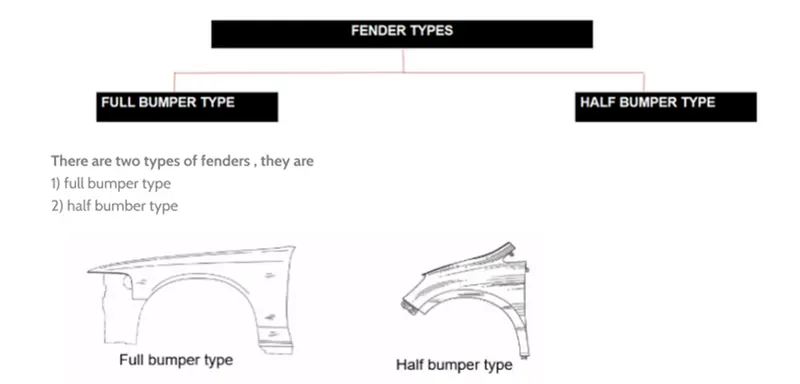
WHEEL ARCH:
- Wheel Arch is the semicircular curve on the fender just above the wheels of the car
- It has some standard specifications
- For a vehicle to has its use permit in different countries, the wheel arch of the fender must compliant with the standards set by the respective countries
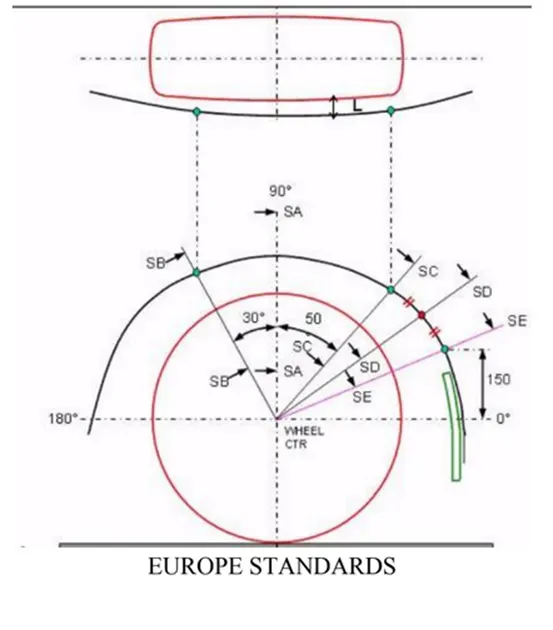
European Regulation Standard:
The clearance value will be more than 10mm at 30 degrees at forward and 50 degree at backward and line 150mm above X-axis and Mid-point between 50 degree and line above 150mm. US Regulation Standard: Make clearance check details on all position from -10 to 180 degrees.
Japan Requirements for fender wheel arch:
As per Japanese regulation, the clearance between tyre and fender must be greater than 5mm The projected points to be measured are at an angle 30° forward & 50° rearward respectively.
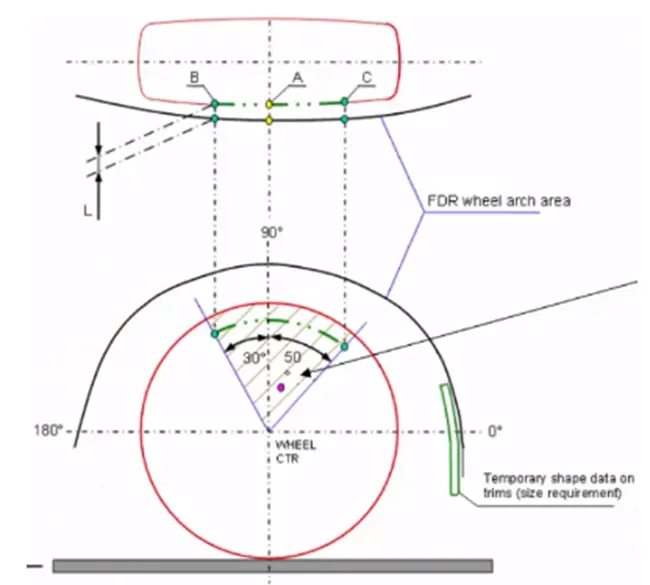
As per Japanese regulation, the clearance between tyre and fender must be greater than 5mm The projected points to be measured are at an angle 30° forward & 50° rearward respectively. Thus at point c, the clearance value is in negative value which denoted interference and hence the modifications are to be carried out.
USA REGULATIONS REQUIREMENTS:
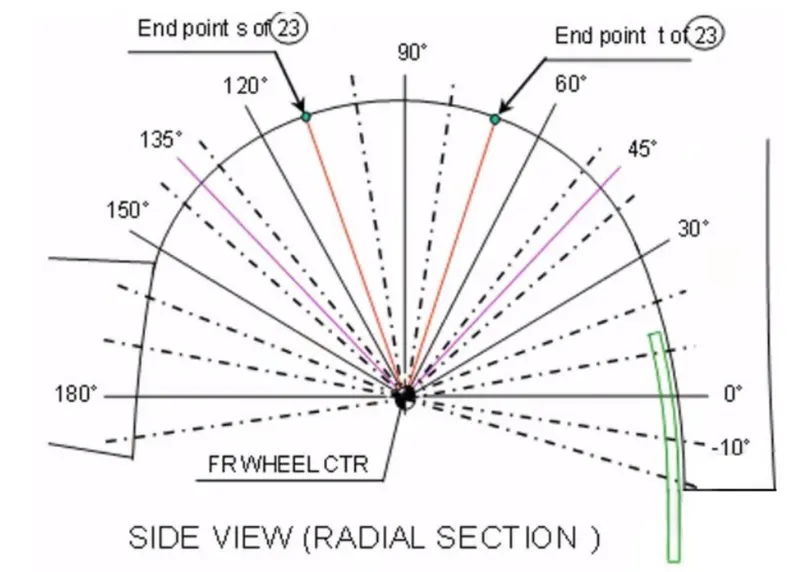
- Clearance "L" is to be checked at all positions from -100degree to 100degree and create clearance check chart to validate.
- The value of L should be greater than 5mm to satisfy the regulations.
- Wheel guard requirement : The value of "a" should be more than 5mm at line 30degree forward and 50degree rearwards from the central vertical axis of the wheel.
Wheel Arc Calculation
This is carried out for pedestrian safety of the car, here by using the European regulations requirement to define the design given for calculation.
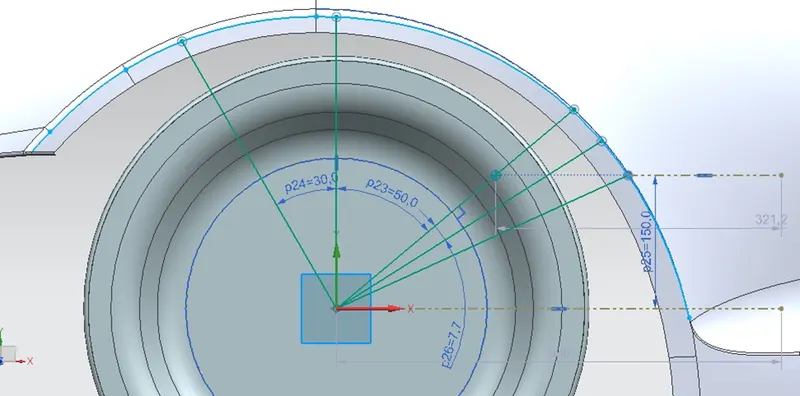
the following coordinates SB, SB, SC, SD and SE are plotted using the angles and dimensions according to the requirement standard.
Next the points are checked if they provide a gap of 10mm from the outer part of fender to the outer most part of the tier, if it is more than 10mm it meets the safety requirement if it is below 10mm it doesn’t meet the standard.
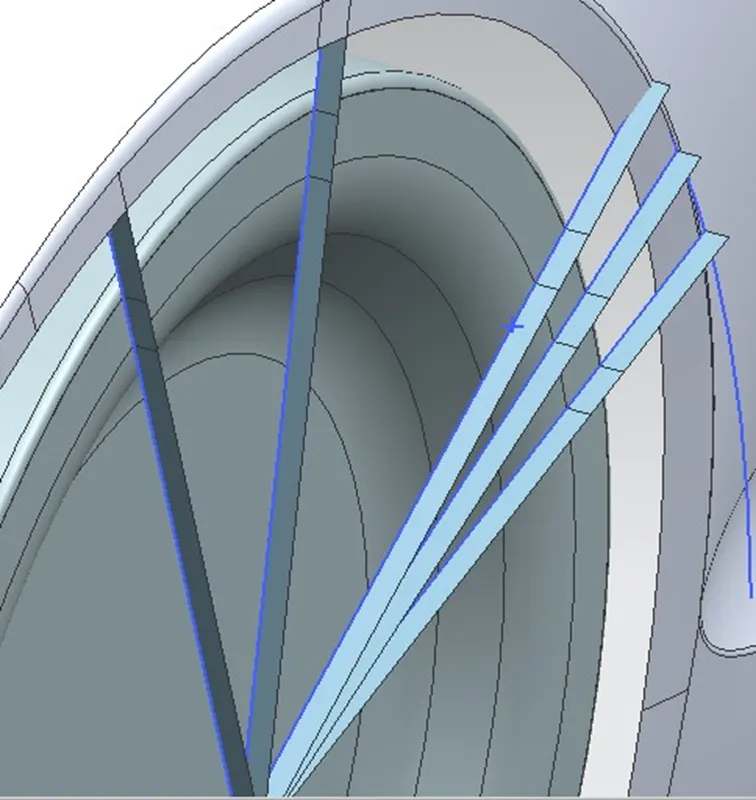
you can see the law extension of 10mm towards the fender is done, we can see that SA, SB have a clearance more than 10mm whereas remaining check points doesn’t meet the standard.
The above figure shows the following result
- SB plot satisfies the 10mm distance
- SA plot satisfies the 10mm distance
- SC plot doesn’t satisfy, there is 3mm clearance which doesn’t go with the standard.
- SD plot doesn’t satisfy, there is 0.25mm clearance which doesn’t go with the standard.
- SE Plot doesn’t satisfy, there is -3.4mm clearance which doesn’t go with the standard.
Conclusion :
From the above results we can conclude that the Fender does not pass the European Regulations as the minimum clearance between the fender arch wheel to the outer most wheel is 10 mm and this design does not meet the this minimum clearance so this fender design is fail for the European Regulation standard.