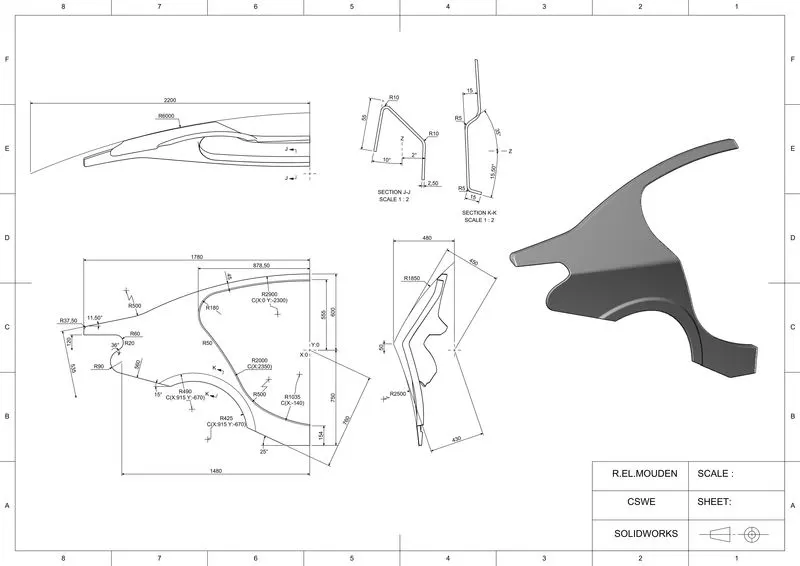
Fender Design - Wheel Arch Challenge
DESIGN OF CAR FENDER : Fender is the part of an automobile, motor cycle or other vehicle body that frames a wheel well (the fender underside). Its primary purpose is to prevent sand, mud, rocks, liquids, and other road spray from being thrown into the air by the rotating tire.
Holistic approach to fender system design
The road from designing the compound for a rubber fender with the desired properties to a mixing and manufacturing procedure that adheres to the highest quality standards is a complex one. It appertains to a holistic approach that a fender system is treated as one, starting from source materials over design to the manufacturing process. Only when all components are designed in the correct balance and work together properly, the fender system will perform as expected. When fender systems fail or do not work properly due to low quality or incorrect designs, then there is a cost to the port in terms of repair, downtime, or even accidents which should not be underestimated. In order to avoid increased maintenance and replacement cost or additional losses for downtime, a holistic approach to fender system design should be advocated throughout the marine industry. The entire project-specific process from calculations and design to creating and producing high-quality, durable fenders, fully committing to international standards and norms, and a clear sense of responsibility should be key to all manufacturers.
Fender Design
Being a crucial component of the system, the rubber unit’s raw material, compounding and the mixing process is a very pivotal and sensitive part of rubber manufacturing. The first part of the SFT White Paper Series on fender manufacturing focuses on the raw materials used in rubber production, the physical properties of a fender and their correlation with the compound’s composition and can be downloaded in several languages.
Calculating the berthing energy of vessels is the first and most important step in the fender design process. If something goes wrong here, the entire waterfront design could be at risk. ShibataFenderTeam’s Berthing Energy Calculation Tool support clients during the berthing energy calculation process.
Types of fender design :
Ship to Berth (STB) Fendering
Marine fenders are used at ports and docks on quay walls and other berthing structures. They absorb the kinetic energy of a berthing vessel and thus prevent damage to the vessel or the berthing structure. There are 2 major categories of fenders for port applications: Fixed and Floating.[3] Fixed fenders are mounted to the berth structure and compose of buckling fenders such as cell fenders, V-type fenders, and non-buckling fenders such as cylindrical fenders. Floating fenders are placed between the berth structure and ship, and include pneumatic fenders and foam-filled fenders.
Fender spacing should be determined by the smallest ship using the berth, as well as the design ships' hull radius of curvature. To ensure all ships can be accommodated at the berth, fender spacing should be about 5–10% of the ship's length for vessels up to 20,000 dwt. Berths handling larger ships can should have a fender spacing of about 25–50% of the ship's length.
Design life of port fenders will vary by ship type, berthing frequency, temperature, saltwater content, and other environmental factors. Fender manufacturers recommend a design life of 5–15 years on berths accepting general cargo, while 10–20 years for more specialized berths such as those accepting tanker ships.
Damaged fendering equipment is the responsibility of either the port owner or ship owner. Port owner responsibility includes damages by ordinary wear and tear by ships, weathering, faulty mounting, incorrect fender type, etc. Ship owner responsibility includes any damages to the fendering system caused by the ship, such as crashing into the berth structure during berthing.
Ship to Ship (STS) Fendering
For bunkering operations between two vessels, floating fenders such as pneumatic or foam elastomer fenders are typically used.
Fender shape, function and application
Cylindrical fenders
Cylindrical fenders are commonly used fenders that ensure safe and linear berthing for different kinds of vessels. Cylindrical (extruded) fenders are an economical solution to protect most berthing structures and offer ease of installation. In France, professional mariners call them "bougnafles."
Arch fenders
Arch fenders were introduced to improve upon the performance of Cylindrical fenders. Arch fenders have a better Energy / Reaction force ratio and are recommended for all types of applications. The shape of these fenders helps to dissipate the stresses evenly. These extruded fenders are very easy to install and are maintenance-free. They are generally preferred for small to medium range vessels.
Cone fenders
Cone fenders are an improved version of Cell type Fender recently introduced and recommended for all types of applications, including high tidal variation sites. This advanced feature of the lesser height of fenders improves the material handling capabilities of Deck / Vessel Cranes, which reduces the overall cost of the project. Due to the geometrical shape of the fenders, it can deflect more, and it can absorb more energy from any direction. Maintaining reaction force but doubling energy absorption can be achieved by using two identical cone fenders in a back-to-back arrangement. To distribute the reaction force, cone fenders are typically supplied with large fender panels, which keeps the hull pressure low.
Pneumatic fenders
These fenders are extensively used for ship to ship transfers at mid seas, double banking operations, and as vessel-to-berth at dock/jetties. The unique property of a pneumatic fender is its low reaction force at low deflection. This property of pneumatic fenders makes them the most suitable fender for liquid cargo vessels and defense vessels with sensitive equipment. These fenders have excellent energy absorption characteristics and linear load-deflection characteristics. Pneumatic fenders should comply to the ISO 17357 standard.[4] The pneumatic fender is also known as the Yokohama fender or floating fender. Four basic types of pneumatic fenders comply with the international standard: Type I (Chain&Tyre Net Type), Type II (Sling Type), Type III (Rib Type), and Type IV (Rope Net Type). It has become an ideal ship protection medium used extensively by large tankers, LPG vessels, ocean platforms, etc. The most appropriate type will depend on its application and the requirements of the equipment.[5]
Hydro-pneumatic fenders
The submarine hydro-pneumatic fender (SHPF), first developed in the 1980s, is a unique fender system designed to provide minimal hull pressure loads and soft compression during berthing and a large stand-off to accommodate the sizeable bulbous shape of the submarine. Its pneumatic fenders body is more robust than standard pneumatic fenders and is equipped with a specially designed counterweight to keep the fender vertical in the water. Each SHPF system is customized specially for each type or class of submarine, depending on its water-air ratio, the shape of the hull, berthing-type, energy absorption, and jetty design.
Foam elastomer fenders
These fenders are typically made of a closed-cell Polyethylene foam core, which is encapsulated in nylon or Kevlar reinforced Polyurethane skin. The performance of foam elastomer fenders is comparable to that of a pneumatic fender, but the fenders will not lose their function in case the skin gets punctured. Foam elastomer fenders cannot deflate.
D fenders
D-type fenders are commonly used on vessels as well as small jetties. D fenders are commonly extruded in solid rubber (hollow and solid sections) in water and weather resistant EPDM compound. Similar to that of D fenders, Double D fenders (or known as B fenders) are also extruded and provided with steel inserts if required.[1] D fenders are relatively simple to install onto vessels, ensuring that the surface is cleaned and free of any reminances of past fenders.[6]
Corner fenders
45 degree shaped fenders are commonly used on docks to protect incoming vessels.[7] They are typically compression-molded with steel inserts if required.
Square fenders
Square fenders are commonly used on vessels as well as small jetties. They are compression-molded fenders generally used on tugs, boats, and ships. Do have excellent seawater resistance and resistance to ozone aging and ultraviolet rays.
Keyhole fenders
Keyhole fenders are the most versatile bow, stem fenders used on tugboats, and small port craft/ferries. They offer maximum protection to tugs/ferries with their typical profile and load-absorbing capabilities.
Tugboat fenders
Tugboat fenders are made of high-abrasion-resistance rubber with good resilience properties. They are very popular with small port craft owners and tug owners. These fenders are compression molded in high-pressure thermic-fluid-heated molds and have excellent seawater resistance. Tugboat fenders are also called beards or bow pudding. In the past, they were made of rope for padding to protect the bow.
Solid rubber fender
Solid rubber fenders have a long history and come in a wide range of anti-collision equipment. They operate by managing shear, rotation, and compression forces depending on the fender structure. Designs include D type, cone type, drum type, fan-shaped, rectangular, and cylindrical. Solid rubber fenders have high energy absorption and reaction force, are low cost, have a long service life, and are easy to install and maintain. In addition to their use on vessels, they are often found protecting docks as well.
Floating rubber fender
Floating rubber fenders made of solid rubber are newer protective shipboard equipment. They feature sizeable compressive deformation energy absorption, low reaction force, ability to sail, and easy installation. They can adapt to changes in the tide for dockside installations. Types of floating rubber fender include pneumatic fender and foam filled fender. There is a slight difference between the two types in structures, materials, price, and applications.[8]
Fender design
There are a number of different standards used worldwide to design fender systems. The most commonly used one, is the PIANC "Guidelines for the design of fender systems, 2002",[9] which is the update of its predessecor from 1984. In Japan the Japanese Industrial Standards (JIS) are commonly used, whereas in the United Kingdom and the United States of America, the British Standard BS 6349:part 4 still used quite regularly.[10]
Designing a fender system basically is determining what the berthing energy of a vessel or range of vessels will be, then determine what capacity the fender needs to have to absorb that kinetic energy and finally how to find a way to avoid the reaction force creating too much hull pressure. In principle, a berthing energy calculation is a simple kinetic energy calculation, adjusted for specific behaviour of a berthing vessel or the specific characteristics of the berthing location or structure
What is a Fender Bender and How to Handle One
- by: Sibora
- June 11, 2021

You have most likely heard the term “fender bender” before but let’s take a deep dive into what it really means, what to do if you get into one, and how it may affect your insurance and driving record.
Fender Bender Meaning
A fender bender is a minor car accident that usually occurs at low speed, which causes little or no damage to either car. An example would be a “rear-ender” where someone stopped at a light fails to go when the light turns green, but the person behind them steps on the gas and hits the back of their car. The reason it is called a fender bender is that the damage usually involves the fender area.
Another example may be when someone in front of you stops quickly, and you cannot stop fast enough without hitting their vehicle. When someone backs out of a parking space in a parking lot and hits another car, that too would classify as a fender bender. If someone hits a parked car, that would be another example.
What Happens if You are in a Fender Bender?
Even though a fender bender may cause only minor damage, you should treat it like any car accident and take the exact same steps you would take with a regular accident. To avoid any legal hassles down the road, it is best to involve the police and alert your insurance company as soon as possible.
Typically, in a fender bender, due to low speeds, there are rarely any injuries, although someone could sustain a head or neck injury such as whiplash.
What to Do When You Get in a Fender Bender?
Even a minor fender bender is no fun and you should take a few specific steps to ensure that you, your car insurance company and your vehicle are covered. Review the list of things to do during a fender bender and after a fender bender.
What to Do in Fender Bender?
The first step is to try and remain calm. You may be unnerved and even angry if someone hits and damaged your car. But it will not help the process if you are screaming or worked up. Take a few slow deep breaths to calm down.
Next, assess whether you or anyone else is hurt even superficially. If you are, get medical attention immediately by calling 911. Pay close attention to your head, neck, arms, and legs.
If you can, safely pull off to the side of the road while dealing with the situation.
Once you know that you and everyone else is okay, exchange information with the other driver. Be sure to get their full name, address, phone number, license plate number, and driver’s license information. You should also ask them for their car insurance information. Do not apologize, even if you are the one who hit their car. You could later be sued, and you do not want to provide any evidence until the matter has been resolved. Instead, simply ask them if they are okay.
Is a Fender Bender a Big Deal?
Take notes and take as many photographs of the accident scene as possible. When it comes to legal battles or car accidents, you cannot be too careful. You will want to have as much information as possible. If there were any eyewitnesses, get their contact information and record their statements using your phone. Be sure to document the damage as quickly as possible. Your insurance company may also need to come and assess the situation.
Remember to write down street names, the exact location, and the make, model, and color of the other vehicle. Take a picture of their license plate for police should you need it later. You can also sketch out a diagram of the incident and roads and how you perceive that it happened.
Contact your insurance company as soon as possible. They will need to send out an adjuster to evaluate the damage so you can file an insurance claim and get your vehicle fixed. Some auto insurance companies have apps where you can contact them directly through your cell phone.
Call the police and file a police report. An officer will come to the scene and take statements and photos. In some states, it is the law, and no matter how small the accident, you must contact the police. To have the accident documented properly, it’s always best to contact the police and let them file a report. It may also help in the case of fraud or insurance issues. Cover yourself by having the police involved.

What to Do After a Fender Bender?
Once you return home, you should keep an eye on any injuries to be sure you are not hurt seriously.
If your state requires it, you may also have to contact the Department of Motor Vehicles (DMV) and report the accident. Driving records often contain information about accidents. Some accidents will incur points on your driver’s license.
After your insurance company assesses the damage, you can call the repair shop to schedule to get your car fixed. Wait until you provide them with an estimate, and they approve it, or they may not pay. You will be stuck paying out of pocket. Keep in mind that the accident may affect your insurance policy and your insurer may increase your rates. You will have to pay your deductible before any claims are paid out.
If you were hit by a distracted driver and suffered any serious injuries, you might have a legal case, you may also contact your personal injury lawyer. Some law firms specialize in these types of situations.
Tips to Prevent a Fender Bender
With a little careful planning and mindful driving, most fender benders are avoidable. Follow these tips below to try to avoid fender benders and all other types of vehicle accidents.
- One of the biggest reasons that accidents happen is distracted driving. Turn off your cell phone and make sure you keep your eyes on the road and be aware of all other motorists around you. state laws prohibit distracted behavior while driving.
- Pay close attention to traffic lights and signs. Follow all road rules and do not try to beat a yellow light.
- Do not tailgate other vehicles or follow anyone too close. If they need to stop quickly, you need at least one car length between you to safely stop, also depending on speed.
- When the weather is poor road conditions could worsen, take extra caution and drive slower and farther away from other cars. If there is ice and snow, you may have less control over the vehicle.

Also, make sure your vehicle is up to date with recalls, safety issues, and regular maintenance. Have a certified auto mechanic evaluate it for any problems that may cause accidents.
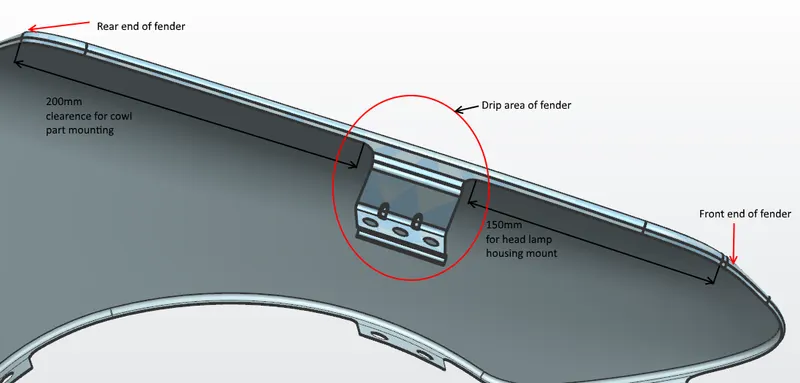
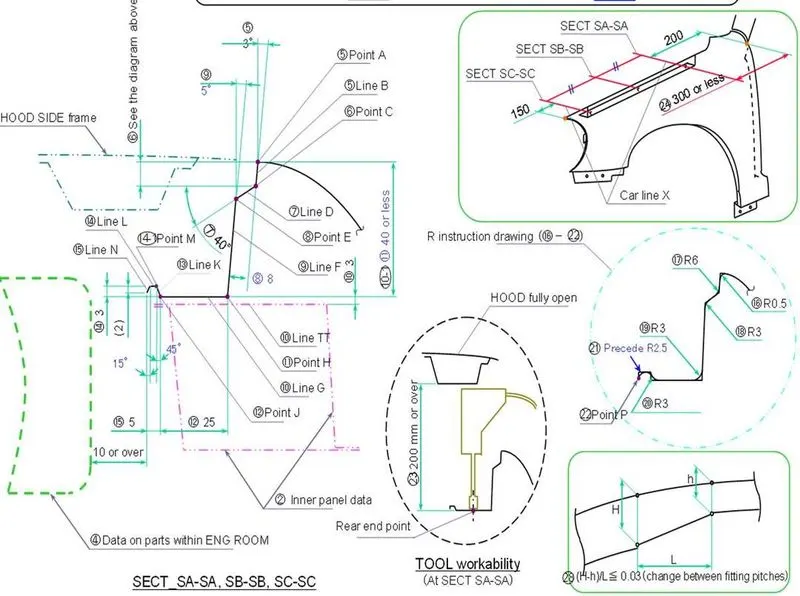
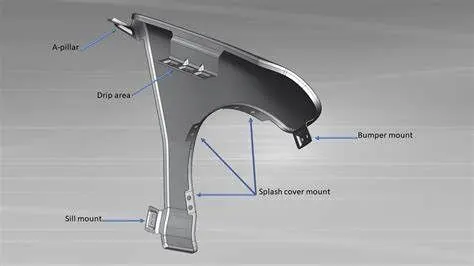
Calculate the Wheel Arch gap at required points and check whether the car passes the European standard.