Fender Design - Wheel Arch Challenge
Fender:
A fender is the part of a car, truck, motorcycle, or other vehicles that frames or covers a wheel well. Its main purpose is to prevent debris, rocks, mud, liquids, sand, and other road debris from getting thrown in the air while the tires rotate.
The “fender” typically refers to the front panel that covers the front wheels, and the “quarter panel” typically refers to the rear panel that covers the wheel that also includes the roof pillar. The “bumper” is the front and rear ends of a motor vehicle to absorb impact in a minor collision.

Types of fender:
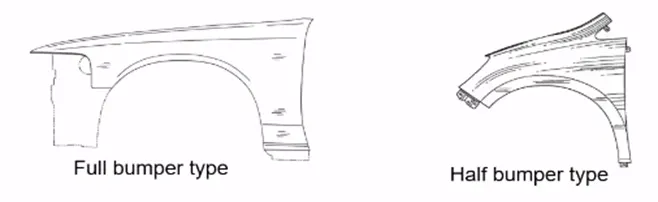
The type of fender is based upon the area covered i.e. full fender type and half fender type.
Full bumper type :
Half bumper type :
There are many factors that need to be considered during designing the fenders of the vehicle. One of them is the wheel arch area.
In a fender, the wheel arch is the semicircular part that is positioned above the wheel of the vehicle. While designing the fender care must be taken that the wheel arch of the fender meets the required standards.
Some of the different standards followed are:
- Japanese standards.
- European standards.
- US standards.
- TYPES OF WHEEL ARCH REGULATIONS:
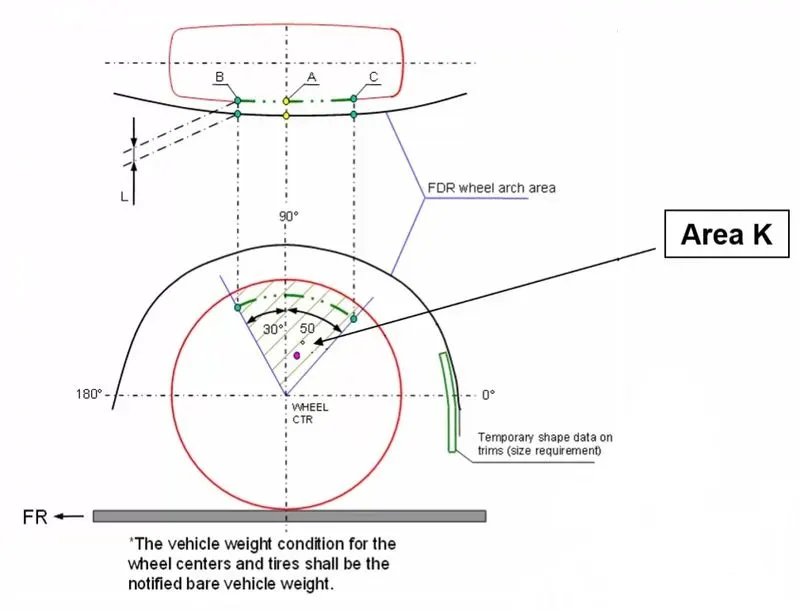
- JAPAN REGULATIONS:
- Measure clearance L of tire ,hub, cap & fender in three different positions within area K and produce clearance check chart to validate.
- Clearance must be greater than 5 mm in all the three positions.
- Wheel guard reqmt: The value of a shall be more than 5 mim at a line 30" forward and 50 rearward from the central vertical axis of axis of wheel.
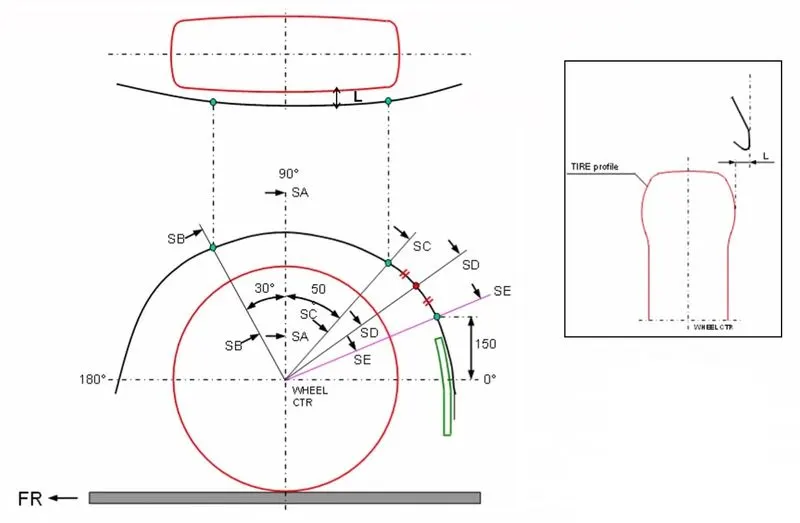
- EUROPEAN REGULATIONS:
- Measure CL L at sections SA-SA SB-SB SC-SC SD-SD SE-SE and produce CL check chart to validate.
- At all five sections the CL L value should be greater than 10 mm to satisfy the European regulations.
- Wheel guard regmt: The value of 'a shall be more than 5 mm at a line 30* forward and 50* rearward from the central vertical axis of axis of wheel.
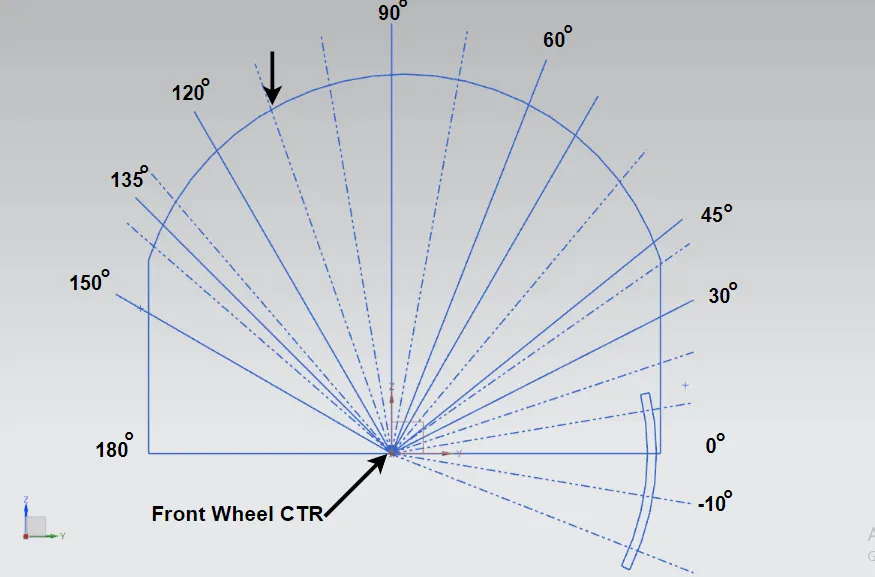
- US REGULATIONS:
- Make clearance check details on all positions from -100* to 100* & make the clearance check table.
- All values should be greater than 5 mm to satisfy the regulations. The value of 'a' shall be more than 5 mm at a line 30* forward and 50*.
- rearward from the central vertical axis of axis of wheel.
- JAPAN REGULATIONS:
- ANALYSIS:
- There are different regulations in this regard based on different regions. This analysis has been done according to European Regulations.
- The part file was opened using NX CAD and the points were plotted on the wheel arch after taking the required measurements from the wheel centre.
First insert the cad part file.
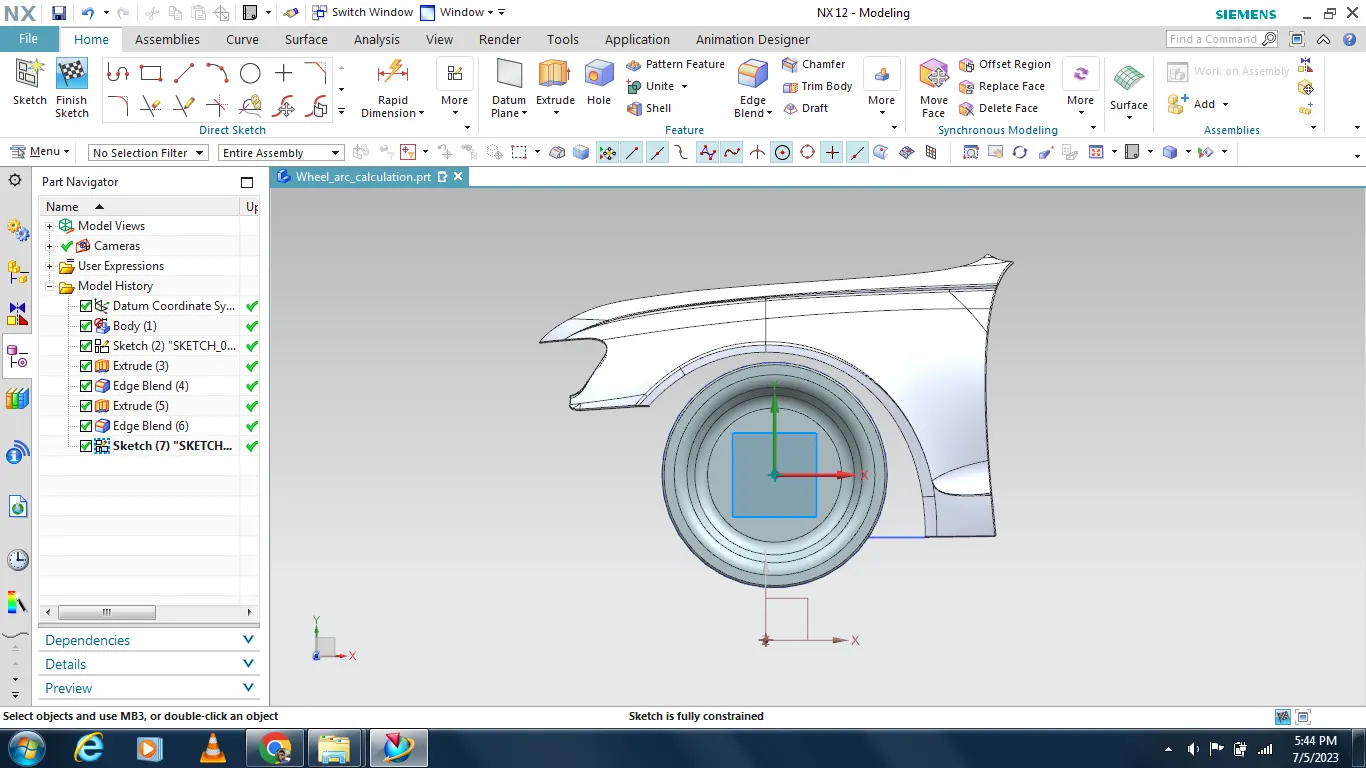
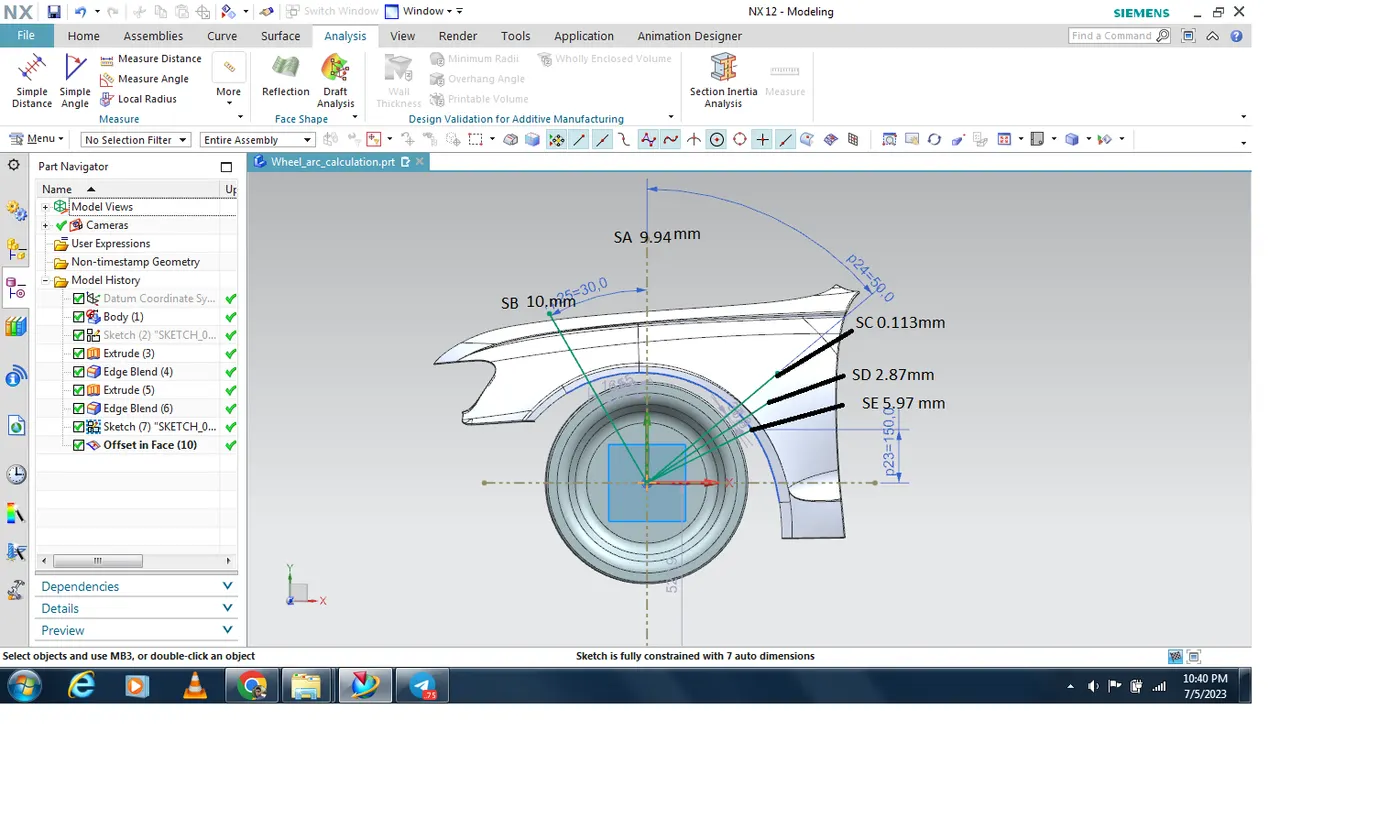
sections SB:
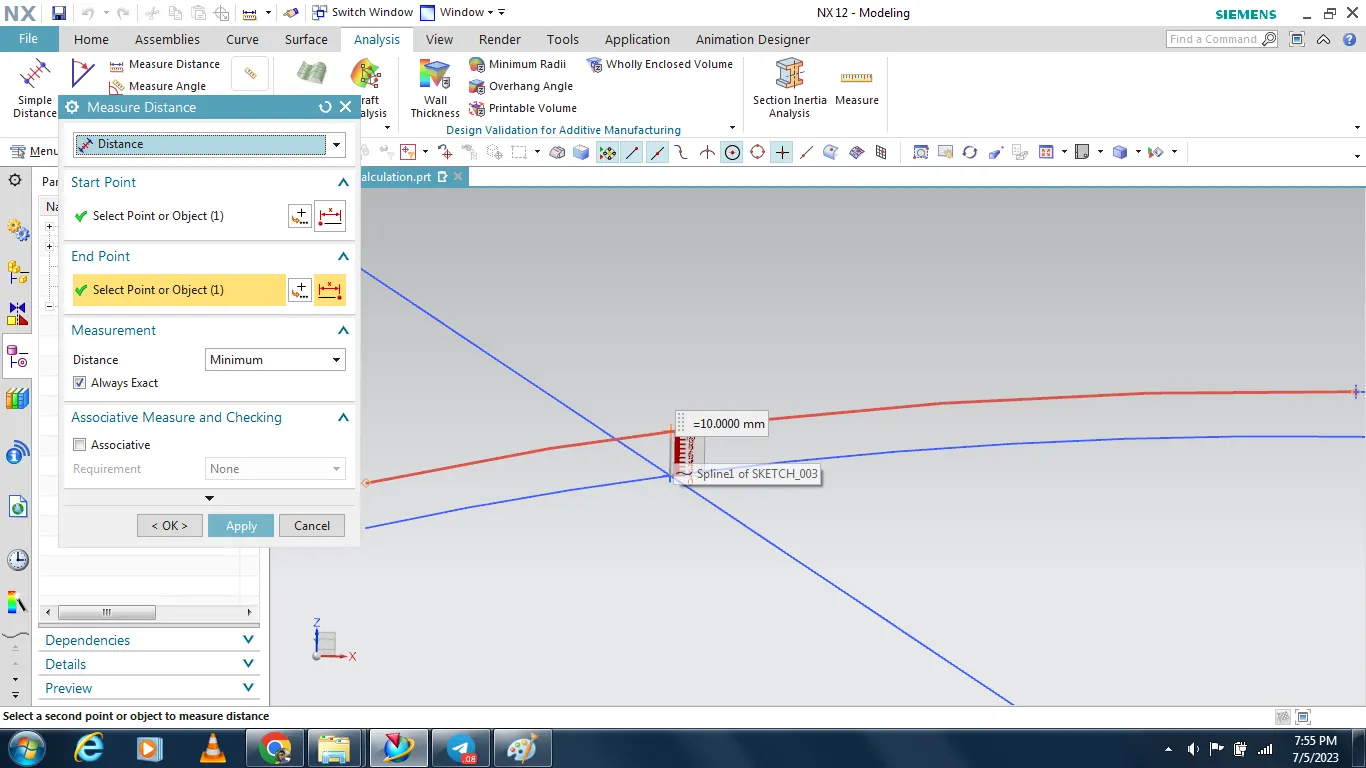
- CLEARANCE L at sections SB is =10 mm from wheel to wheel archer.
Section SA:
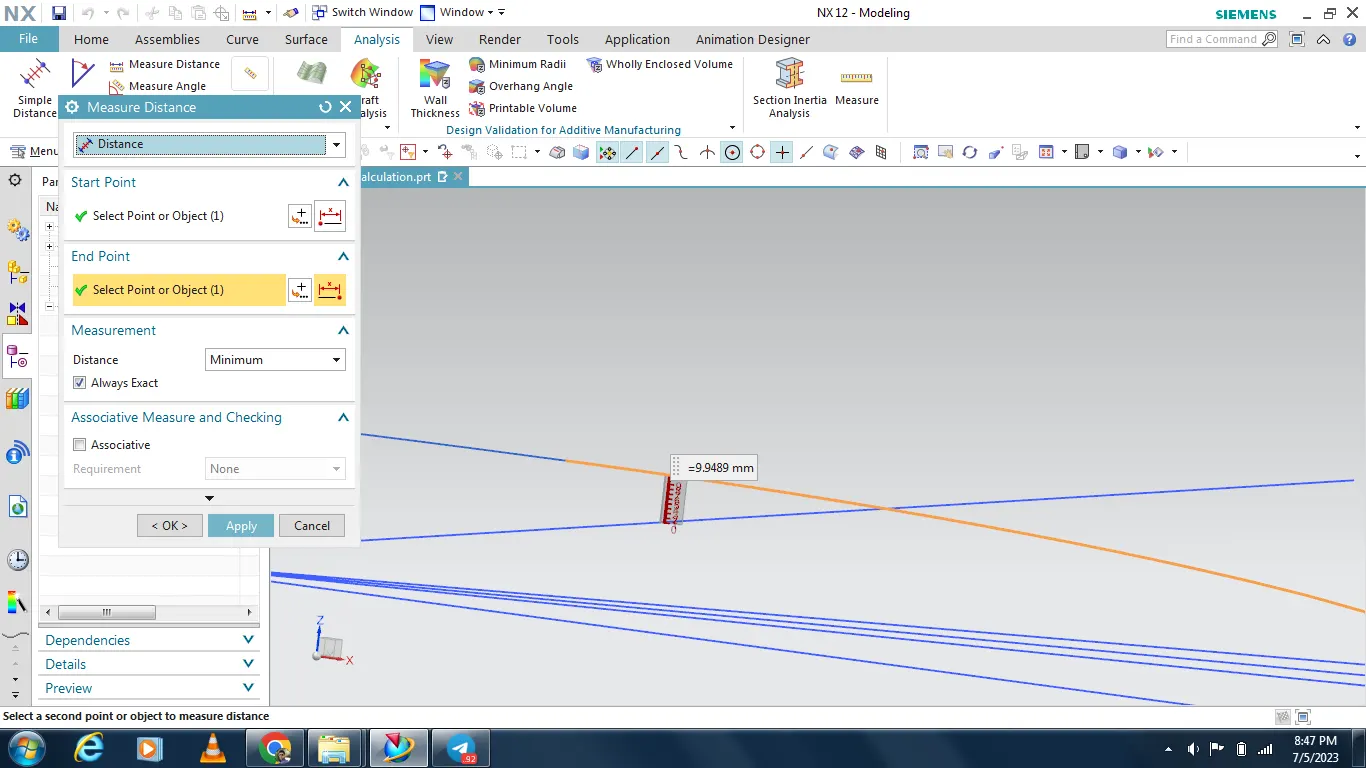
- CLEARANCE L at section SA is 9.94mm from wheel to wheel archer.
Section SC:
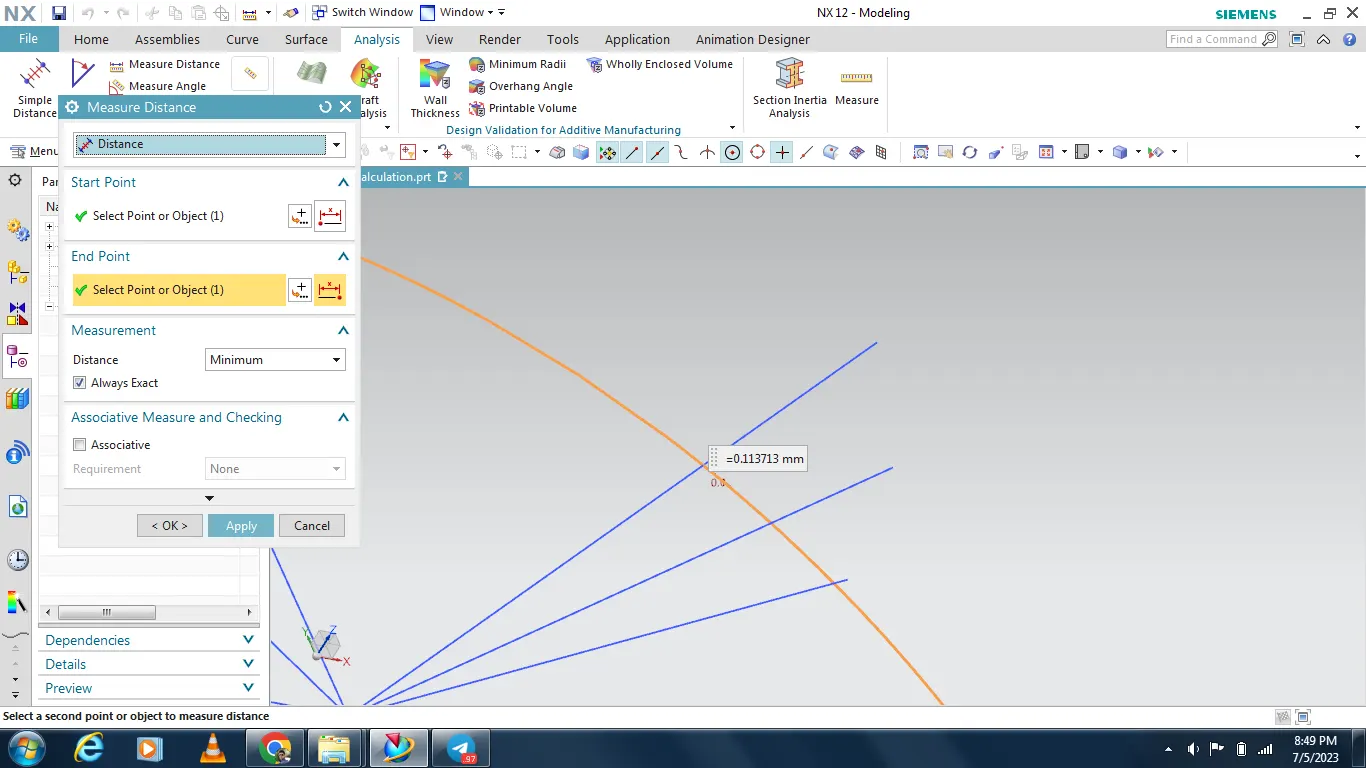
- CLEARANCE L at section SC is 0.113mm from wheel to wheel archer.
Section SD:
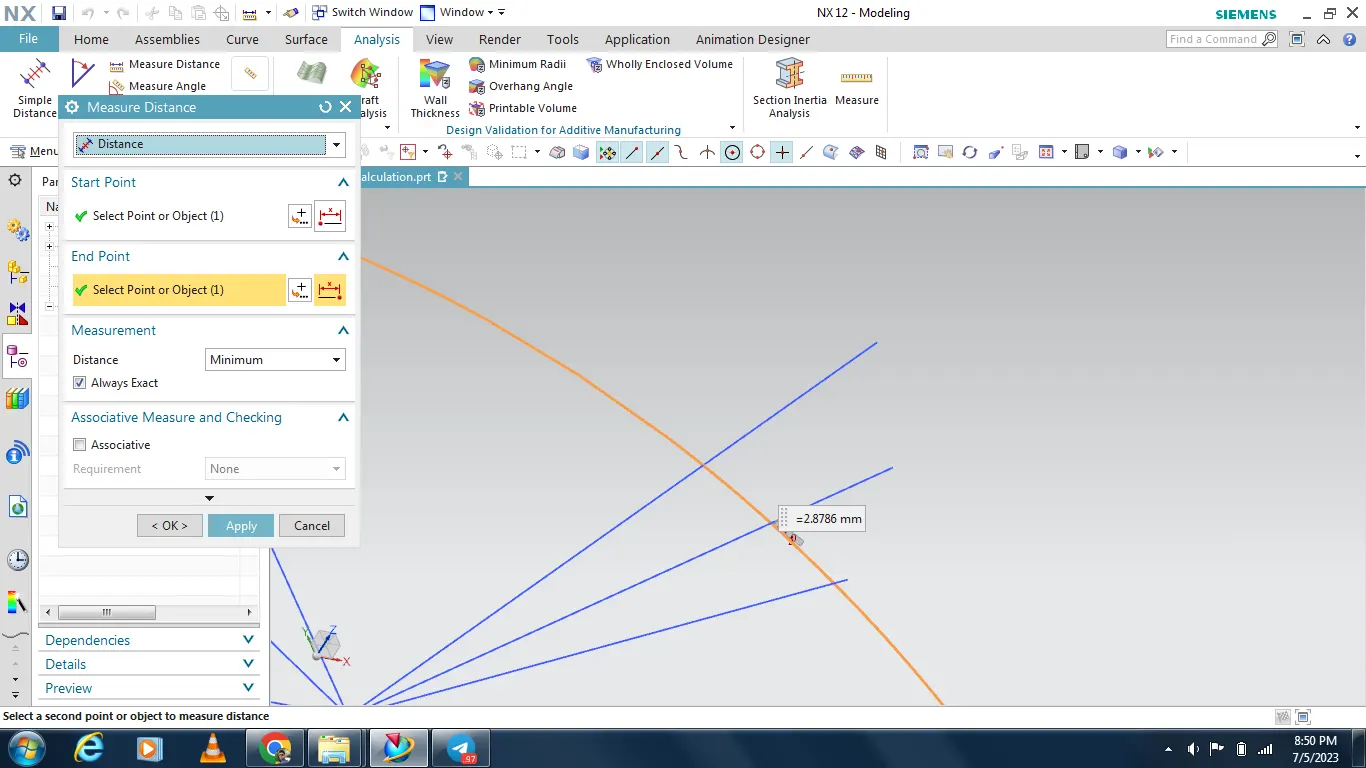
- CLEARANCE L at section SD is 2.87mm from wheel to wheel archer.
Section SE:
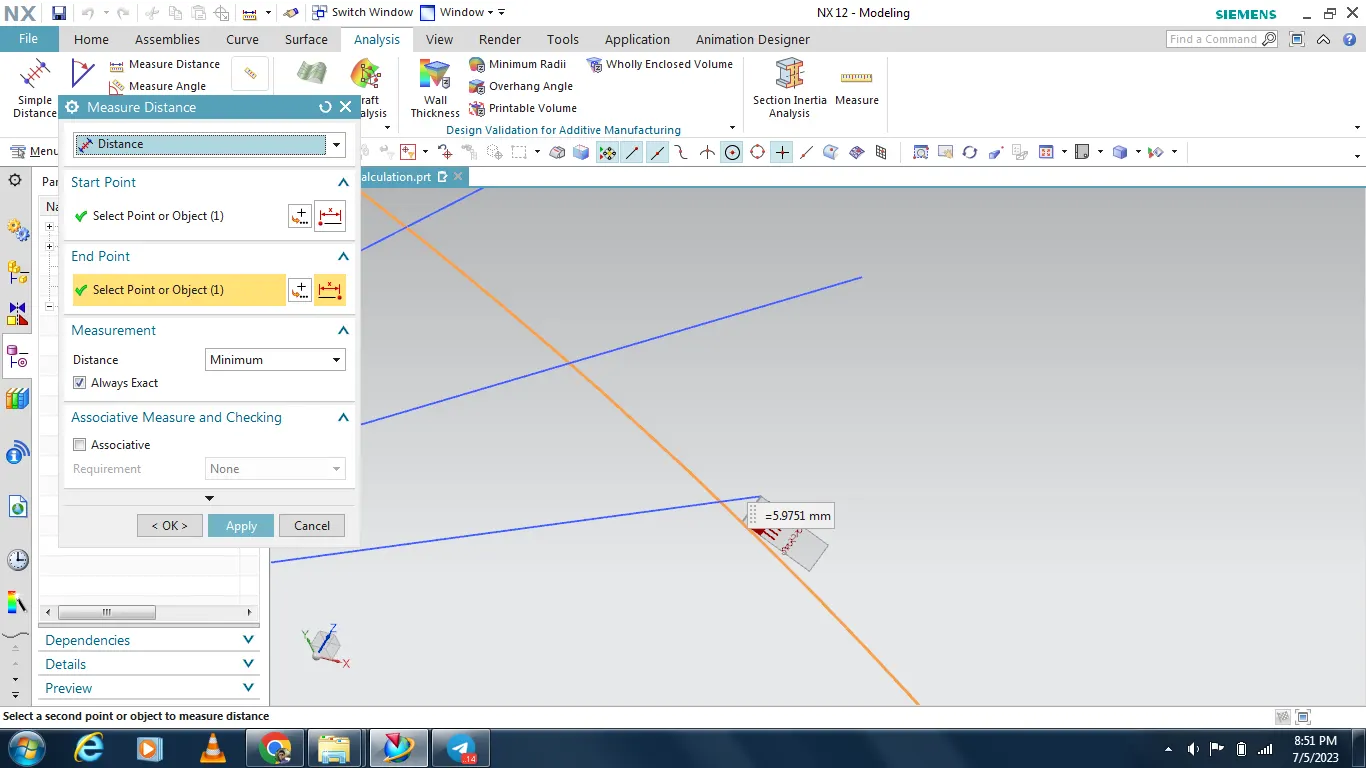
- CLEARANCE L at section SC is 5.97mm from wheel to wheel archer.
-
- The clearance value 'L' was measured and found to be as follows:
Section Required Clearance (mm) Measured Clearance (mm) Remarks
SB 10 10mm Pass
SA 10 9.94mm Fail
SC 10 0.113mm Fail
SD 10 2.87mm Fail
SE 10 5.97mm Fail
-
-
From the above observations, the positions SA SC SD SE are less than 10mm which is necessary to pass the European standards. Hence, the front fender wheel arch does not pass the European standard.
-
- SUGGESTIONS TO STYLING TEAM:
- The styling team is required to modify the styling surface of the fender such that the clearance "L" at sections SA, SC, SD and SE is equal to ar greater than 10 mm by increasing the curvature at those sections towards the outside.