Fender Design - Wheel Arch Challenge
FENDER WHEEL ARC
Objective
To create a report on fender regulation and to calculation the wheel arc area and prove whether the car will pass the standards or not by using the European standards.
Fender
Fender is the American English term for the part of an automobile, motorcycle or other vehicle body that frames a wheel well (the fender underside). Its primary purpose is to prevent sand, mud, rocks, liquids, and other road spray from being thrown into the air by the rotating tire. Fenders are typically rigid and can be damaged by contact with the road surface.
Sticky materials, such as mud, may adhere to the smooth outer tire surface, while smooth loose objects, such as stones, can become temporarily embedded in the tread grooves as the tire rolls over the ground. These materials can be ejected from the surface of the tire at high velocity as the tire imparts kinetic energy to the attached objects. For a vehicle moving forward, the top of the tire is rotating upward and forward, and can throw objects into the air at other vehicles or pedestrians in front of the vehicle.
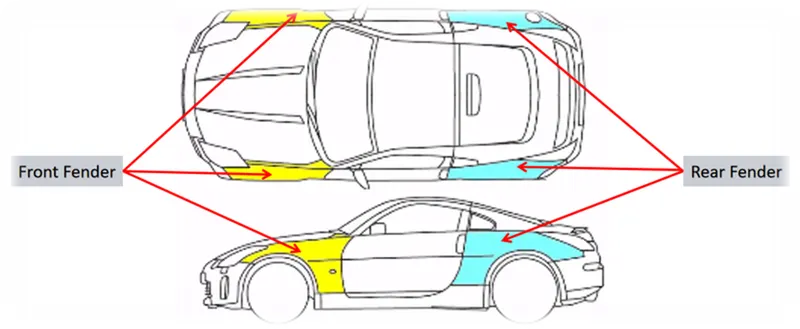
Types of fender
- Full bumber type
- Half bumer type
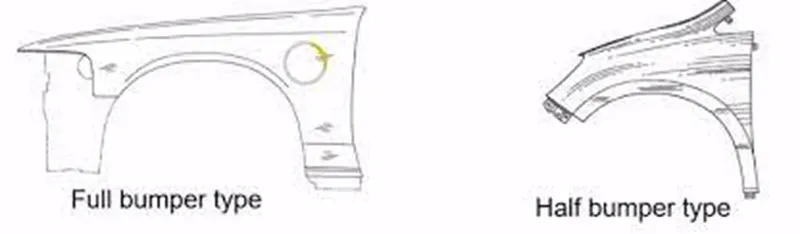
Full bumber type
The full bumper type is the traditional type of fender where more material consumption is observed. This type is used in the old designs of automobiles where it increases the overall weight and thus reduces performance. The maintenance also relatively more due to more surface.
Half bumber type
Half bumper fender is used because the waste of material is less & can produce two fender at the same time by slightly increare the raw sheet. and to reduce the weight & cost mostly bumper fender are been produced
Types of Standards
- Japanese standard
- US standard
- European standard
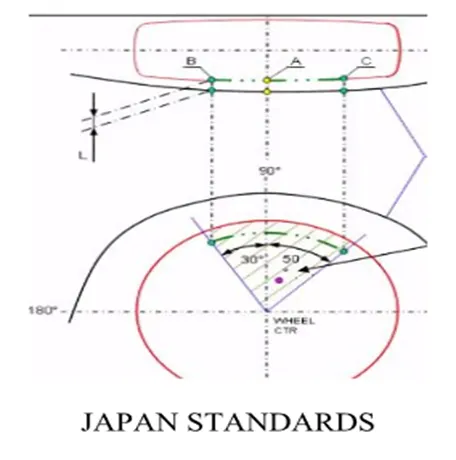
According to the japan standards the distance between the wheel and the fender should be the minimum 5mm distance. in the above image, the distance between the wheel and the arch should be 5mm all around the arch at some sections it fails.
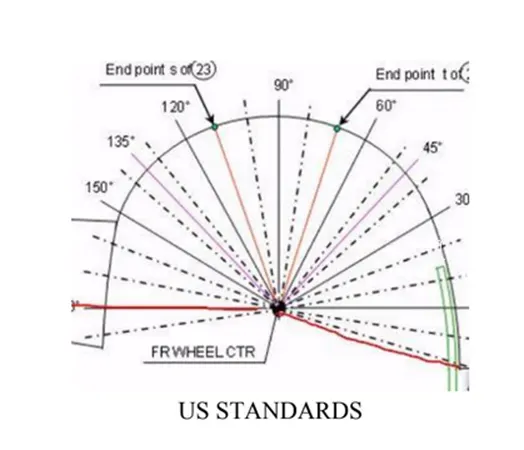
The American Standard requires the fender to be at a minimum distance of 10mm from the outer surface of the wheel at points at every 10 degrees from the -20degrees to 180degrees of the wheel center
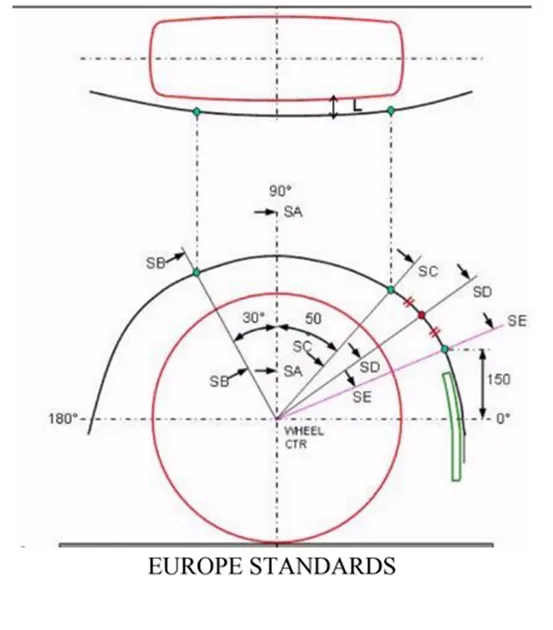
To meet the European standards the fender should be redesigned to get at least 10.1139 mm more clearance at section SC. Here also we got negative clearance. So we need 11.7926 mm more clearance at section SD. This much negative clearance results in a big safety issue.
Calculating wheel arc in european standards
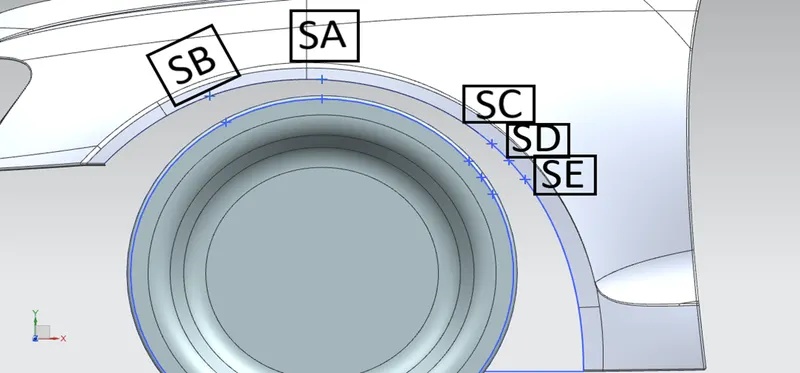
Section SB
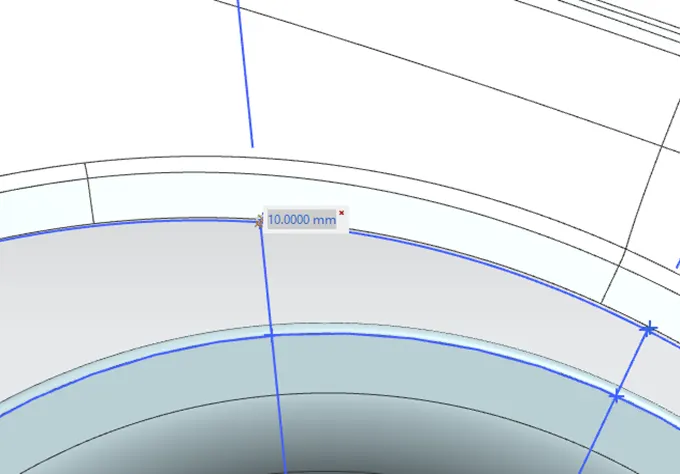
L=10.00MM
Section SA
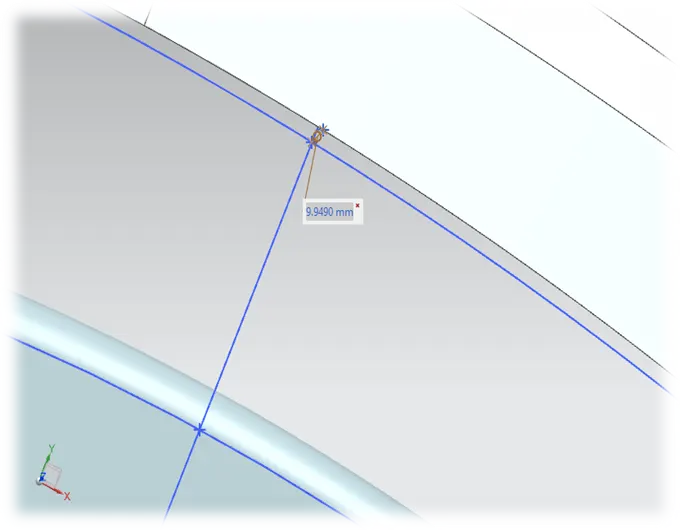
L=9.94MM
Section SC
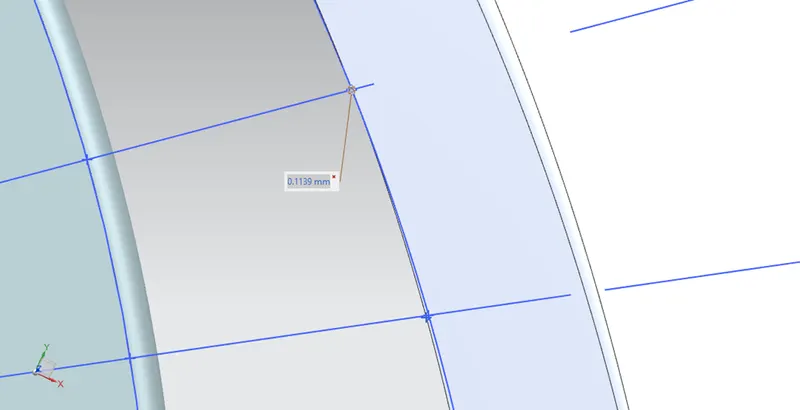
L=0.113MM
Section SD
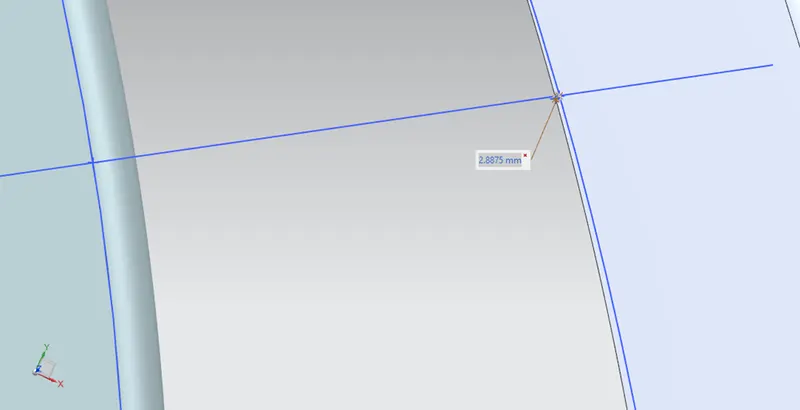
L=2.88MM
Section SE
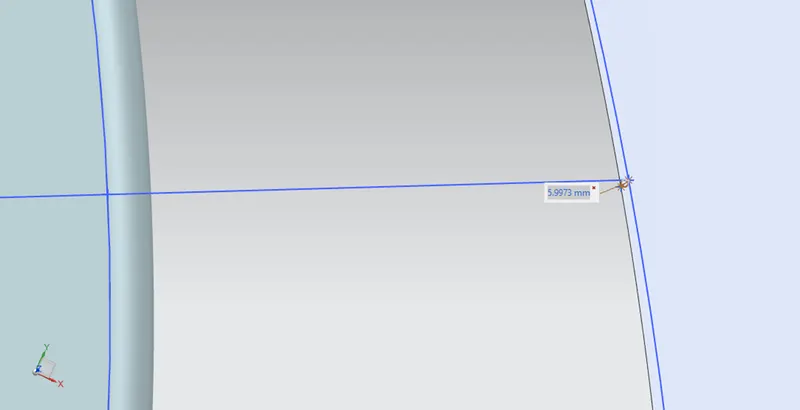
L=5.99MM
RESULT
|
SECTION |
L(<10mm) |
RESULT |
|
SA |
9.94mm |
FAIL |
|
SB |
10.00mm |
PASS |
|
SC |
0.11mm |
FAIL |
|
SD |
2.88mm |
FAIL |
|
SE |
5.99mm |
FAIL |
CONCLUSION
- We calculate the ‘L’ value in European standard.
- This case Section ‘ SB’ only have pass section others are fail.
- We tell styling team to modify the surface of fender.