Fender Design Challenge
Fender
Objective: To design a fender in NX CAD using the given master data.
Introduction
Fender is the American English term for the part of an automobile, motorcycle or other vehicle body that frames a wheel well (the fender underside). Its primary purpose is to prevent sand, mud, rocks, liquids, and other road spray from being thrown into the air by the rotating tire. Fenders are typically rigid and can be damaged by contact with the road surface.
Sticky materials, such as mud, may adhere to the smooth outer tire surface, while smooth loose objects, such as stones, can become temporarily embedded in the tread grooves as the tire rolls over the ground. These materials can be ejected from the surface of the tire at high velocity as the tire imparts kinetic energy to the attached objects. For a vehicle moving forward, the top of the tire is rotating upward and forward, and can throw objects into the air at other vehicles or pedestrians in front of the vehicle.
Types of fenders
- Full bumper
- Half bumper
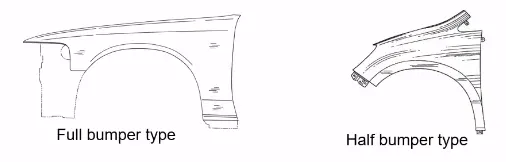
Functions of the fender
- Fender’s primary purpose is to prevent sand, mud, rocks, liquids, and other road spray from being thrown into the air by the rotating tire.
- The fender will also help to keep debris off of the rest of the car as well, which be useful when a car throws up a rock or stick from the road.
- Depending on the design, fenders can also act to make a car more aerodynamic. Many sports cars have very sleek fenders for this reason, and they may have additional features such as grooves or grillwork which are designed to enhance the car's performance at high speed.
- It also adds to the aesthetics of the car.
Fender material
- Car manufacturers use a variety of plastics to make bumpers. The most common include polycarbonates, polypropylene, polyamides, polyesters, polyurethanes, and thermoplastic olefins or TPOs.
- many bumpers contain a combination of these different materials. Manufacturers mix these plastics with glass fibers or other materials to strengthen the bumper.
- This allows them to provide the same impact resistance that metal has, but at a lower cost and with less weight. Many of these plastic materials are also recyclable.
- A large portion of TPO bumpers, for example, are made from material taken from previous bumpers, increasing the sustainability of automotive production.
Design methodology
| 1 | Creation of necessary flanges on the fender as per given master data |
| 2 | Creation of embosses and holes for all the mounting points of the fender. |
Master data
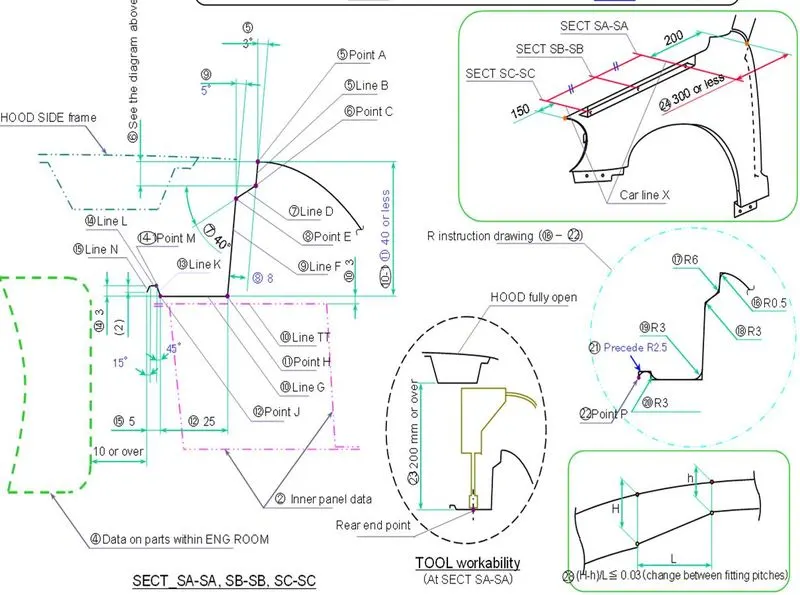
Mounting points of a fender
- Drip area - – The drip area is acritical mounting area. It is located inside the engine compartment and acts as a major mounting region of the fender. The drip area is designed as per the given master sections. Gussets, embosses are provided to improve the strength and stiffness of the fender.
There are a few considerations to be taken into account while designing the drip area:
- A minimum gap of 200mm from the rear end of the fender must be provided to accommodate the viper assembly unit.
- Minimum gap of 150mm from the front end to accommodate the headlight unit.
- The remaining area will be drip area which will be assembled to the engine compartment of the car.
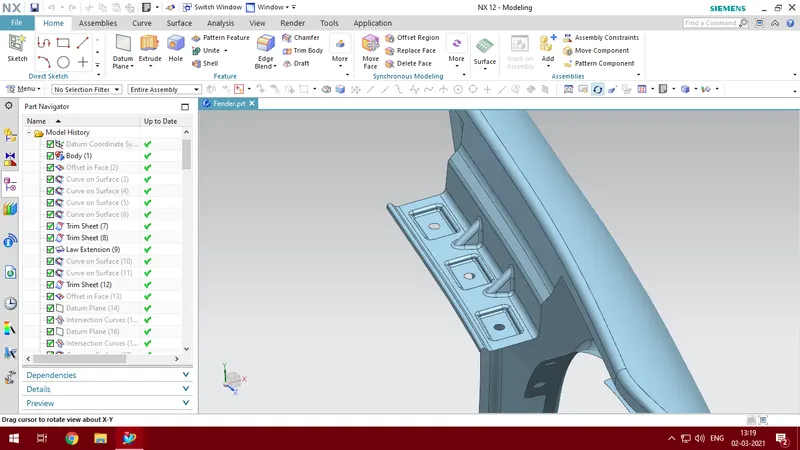
- Sill area - It located on the bottom end of the fender which is used to mount the sill panel. Reliefs are provided to reduce stress concentration.
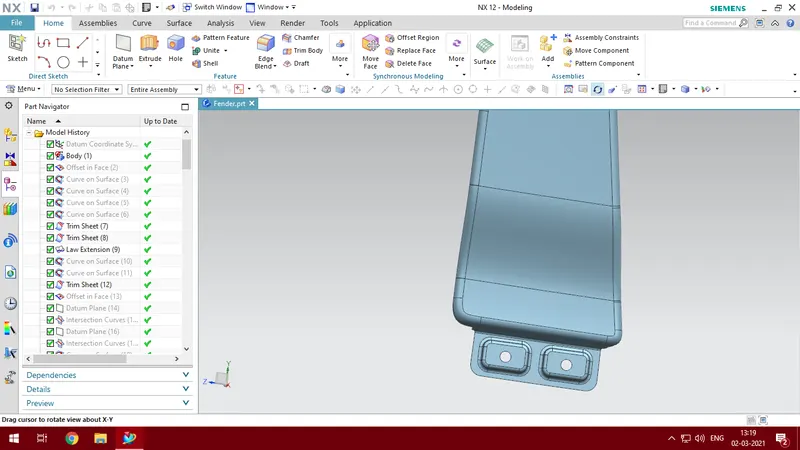
- A - pillar mount - The fender is connected to the A- pillar which holds the windshield in place.
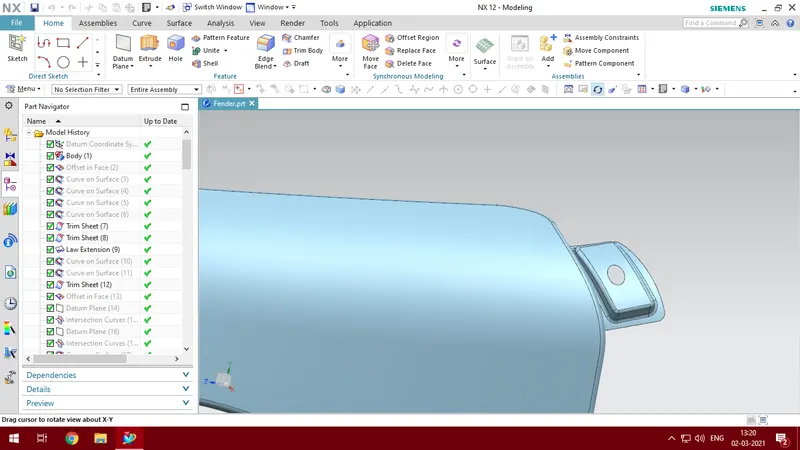
- Bumper mount - This region is fastened to the front bumpers.
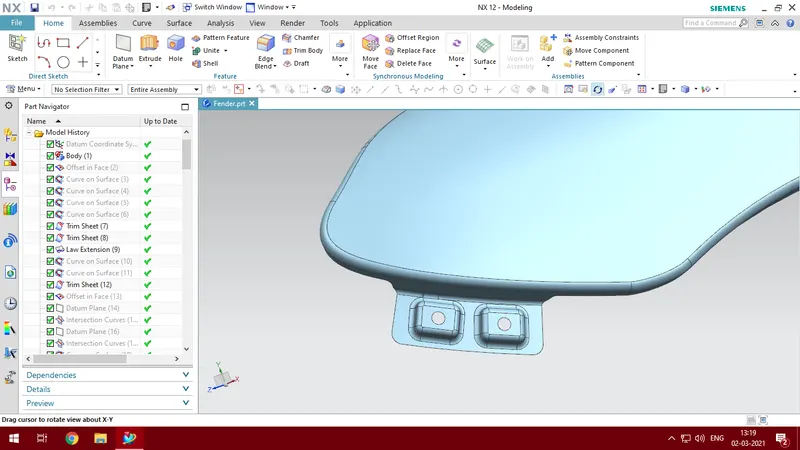
Baffle area
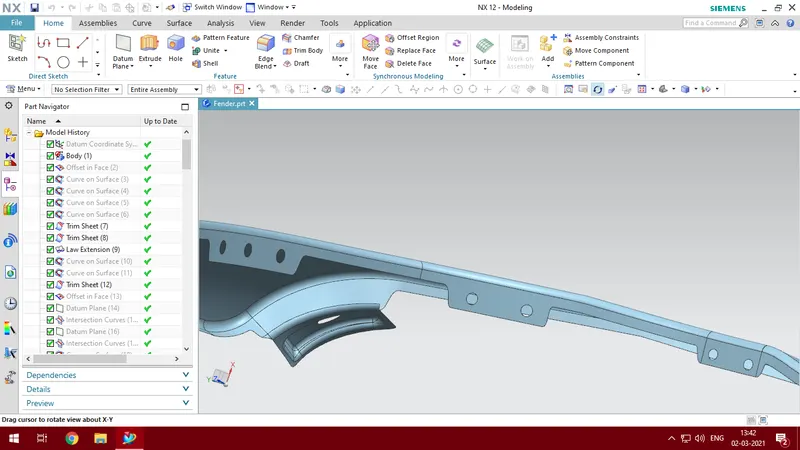
Holes are provided on the fender to support baffle which covers the metallic part of the fender. It also prevents foreign particles from entering into the fender and engine compartment.
Conclusion
The front fender of a car is created as per the design requirements.