Fender Design Challenge
FENDER DESIGN
Fender is the American English term for the part of an automobile, motorcycle or other vehicle body that frames a wheel well (the fender underside). Its primary purpose is to prevent sand, mud, rocks, liquids, and other road spray from being thrown into the air by the rotating tire. Fenders are typically rigid and can be damaged by contact with the road surface.
Sticky materials, such as mud, may adhere to the smooth outer tire surface, while smooth loose objects, such as stones, can become temporarily embedded in the tread grooves as the tire rolls over the ground. These materials can be ejected from the surface of the tire at high velocity as the tire imparts kinetic energy to the attached objects. For a vehicle moving forward, the top of the tire is rotating upward and forward, and can throw objects into the air at other vehicles or pedestrians in front of the vehicle.
In British English, the fender is called the wing. (This may refer to either the front or rear fenders. However, in modern unibody vehicles, rear fenders may also be called quarter panels.) The equivalent component of a bicycle or motorcycle, or the "cycle wing" style of wing fitted to vintage cars, or over tires on lorries which is not integral with the bodywork, is called a mudguard in Britain, as it guards other road users – and in the case of a bicycle or motorcycle, the rider as well – from mud, and spray, thrown up by the wheels.
In modern Indian and Sri Lankan English usage, the wing is called a mudguard. However, the term mudguard appears to have been in use in the U.S. at one point. The American author E.B. White, in his October 1940 Harper's essay "Motor Cars", refers to "...mudguards, or 'fenders' as the younger generation calls them."[1]
In the United States, a minor car accident is often called a "fender bender".
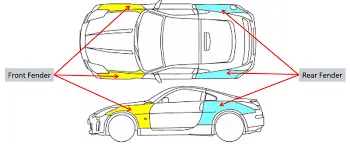
Types of Fender
There are two types of Fender
1.FULL BUMPER TYPE
2.HALF BUMPER TYPE
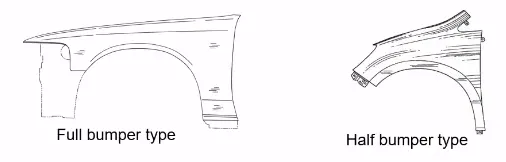
- Presently we are using the half bumper type , the reason for choosing the half bumper type is that when we choose the full bumper type the blank used for creating it is very large and also has the lot of wastage , but in the case of the half bumper type we have the possibility to reduce the scrap . This is what we called as scrap management
In half bumper type we reduce the usage of the steel material and uses the lots of plastic on the bumper which in term decreases the cars weight and increases the performance
Purpoes of Fender :
Cleanliness : Protect the car, occupants and passers by from items, water, mud, snow, ice, thrown off the tires as you drive.
Safety : Protects pedestrain from the wheel, e.g. its better to be it by a laterally moving fender than a rolling tire, keeps loose, streaming items from being wrapped up in a rolling wheel.
Aerodynamics : Smooths the car profile so you don't get a lot of drag off the uncovered wheels. Some fenders are enclosed on the side for this.
General Appearance : Looks better with fender, gives a finished look, looks more streamlined.
Design Parameters
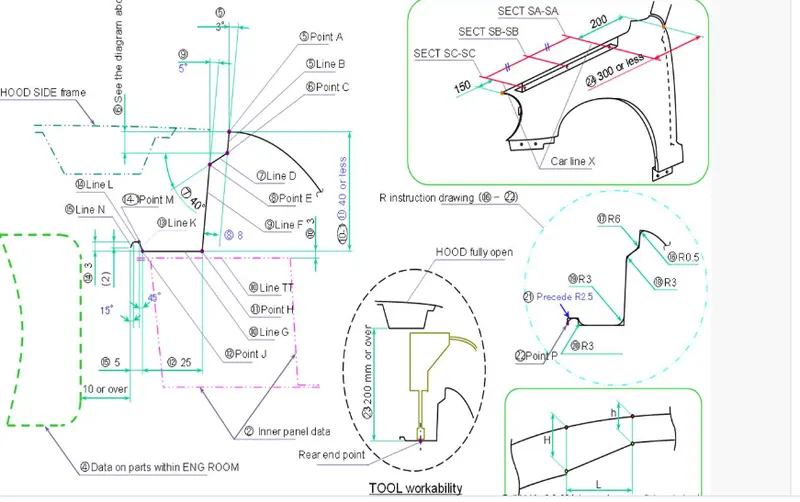
A master section and a Skin Data is given according to we are going to Design our Fender
Front Fender Design :
- A Pillar Mount
- Drip Area
- Sill Mount
- Bumper Mount
- Baffle Mount
Design Criteria :
- Embosses are provided to increase the strength.
- Smooth curves are designed for easy manufacturing of panel.
- Ribs are provided to drip area mount to give structual support and extra strengh.
- Maintain extra 10mm from the flat surface for the fastner holes.
- All fillets should maintain 2 or 3mm radius in most regions.
- Thickness of fender is 0.75mm.
A Pillar Mounting
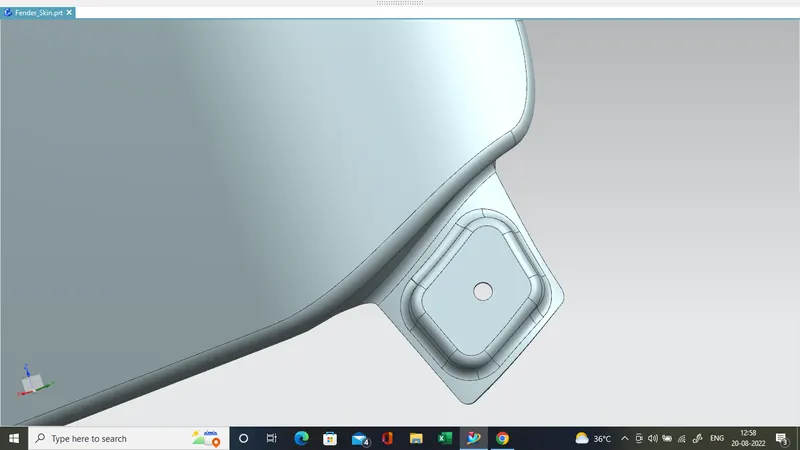
Drip Area
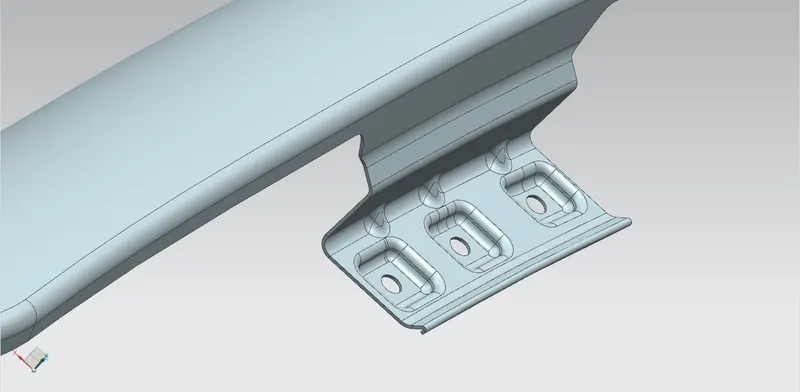
Sill Mounting
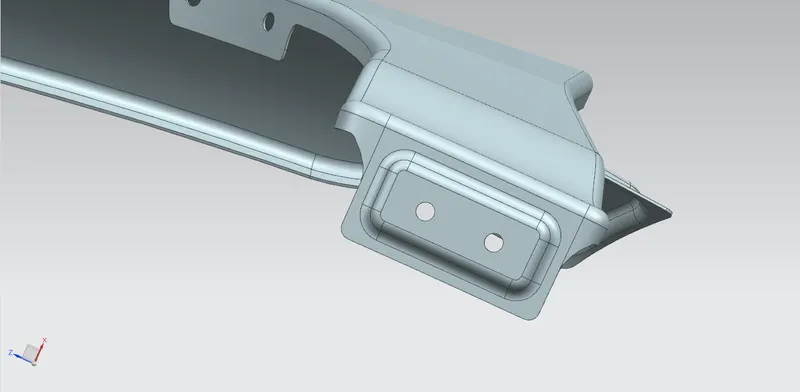
Bumper Mounting
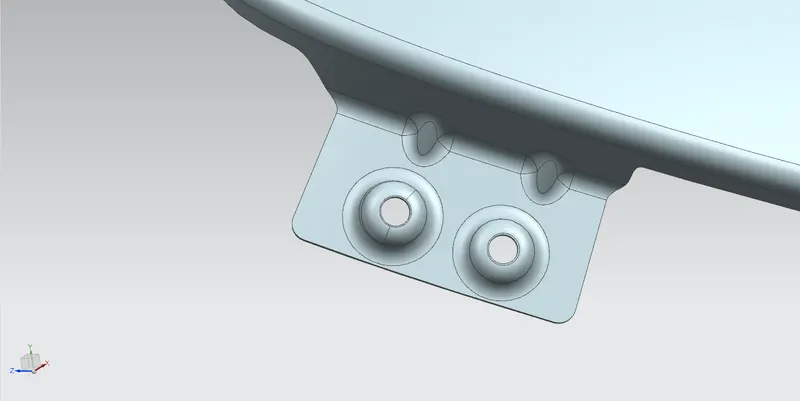
Baffle Mounting
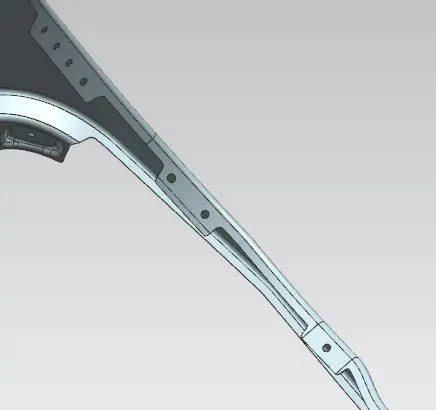
Different Views Of Fender
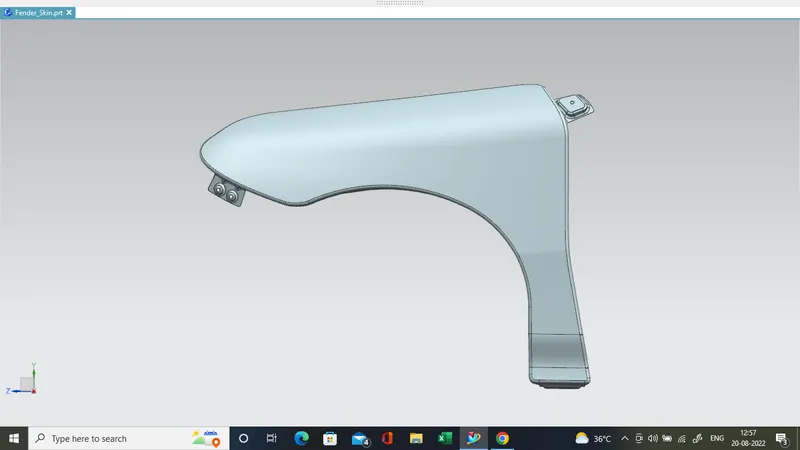
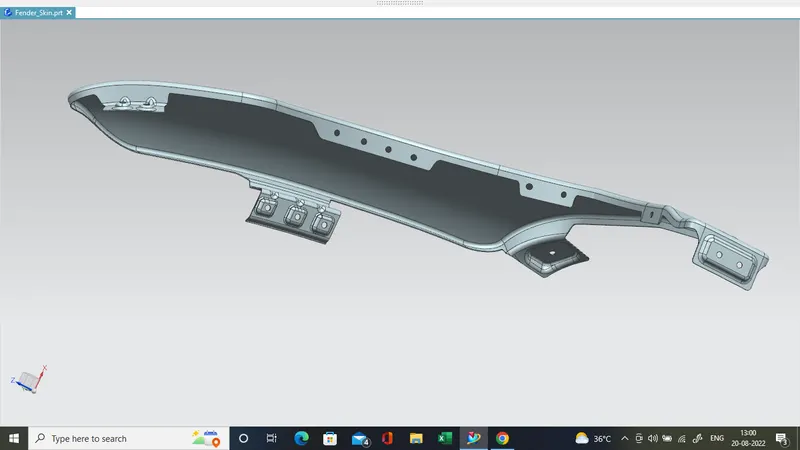
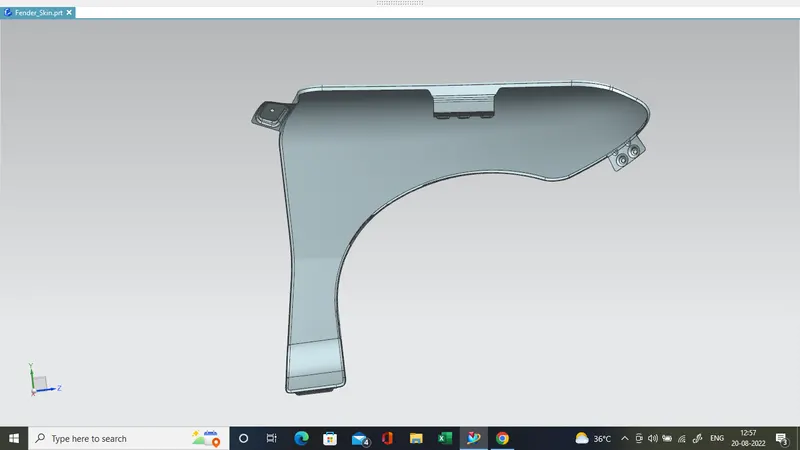
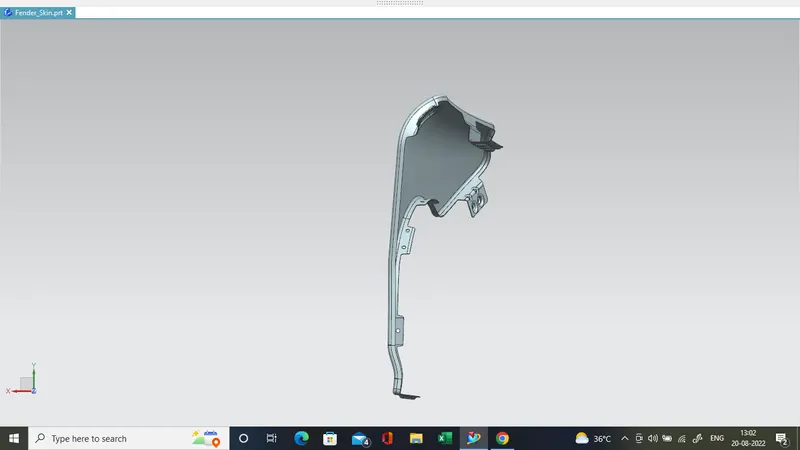
Conclusion
Thus we Have Designed the Fender using the given Master Section and the given skin data