Fender Design Challenge
Objective
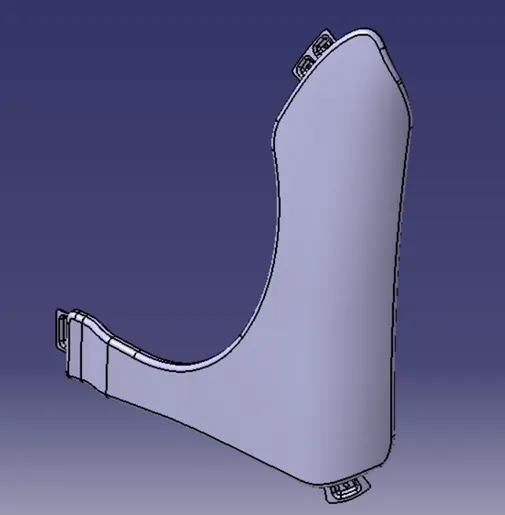
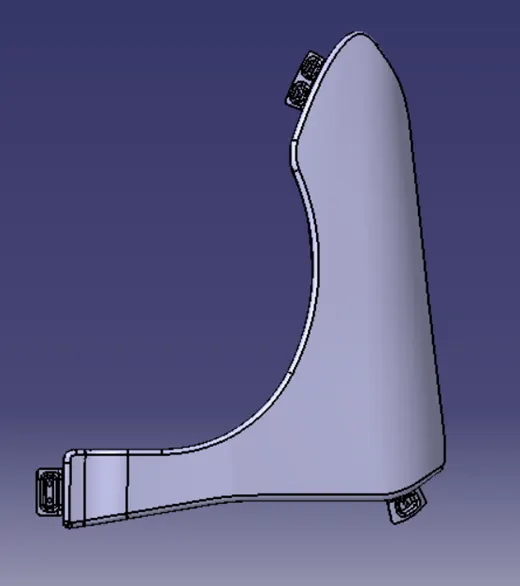
Designing a fender and providing mounting areas as dripping area, bumper mounting, baffle mount, Sill Mount, A-pillar mount and providing beads for dripping area to provide stiffness as per design standard
Fender is a component of an automobile body that frames as wheel wall, its primary purpose is to prevent sand, rocks and other foreign materials being throw away from rotating tire, while smooth and loose objects which are sticked in to the tire grooves, on movement of automobile these can be ejected at high velocity as the tire imparts kinetic energy to the attached foreign particles these will affect the pedestrians or other vehicles.
Types of Fenders:
- Full Bumper type- It covers the full are from the wheel well surrounding the tire to the front lighting. Due to large surface are the weight of the component is higher.
- Half Bumper type- Its covers only the wheel area and will minimise the weight.
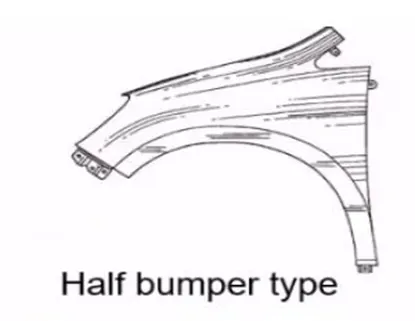
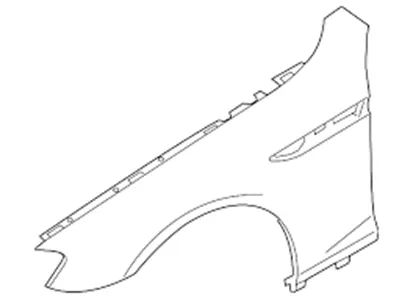
Functions of Fender
- Fenders will limit the exposure of engines components to external elements.
- They provide safety to the driver and passengers.
- They will be aerodynamic to avoid wind resistance.
Design Procedure of Fender and Mounting areas
Engineering Standard Data:-
- During designing of front fender the angle gap between Hood and fender is minimum 10 degree
- The fender part is mounted to car body only by fasteners.
- Proving emboss to add strength.
- While designing Drip area providing the 150mm gap for head light housing from front of fender and also providing enough clearance of about 300mm or less
from back of fender for easy installation of component in engine bay. - Providing the relief at sharp edges using command like curve in surface.
Effect of Principal axis direction and shear centre position
In the vehicle bending case, in which the loads are symmetrical, any tendency for twist or lateral deflection of the inner fenders can be balanced by tension or compression in these members. In the pure vehicle torsion case, the loads, and hence the distortions of the fender assemblies, are anti-symmetric so that more than simple tension or compression is needed in these cross-rails. A horizontal simple structural surface is required between the rails to resist the lateral deflection by its shear stiffness. The inner fender side rails and the added frontal cross-rails can form part of this if the corner joints are sufficiently stiff.
An alternative is to include diagonal ‘strut brace’ tubular members from the tops of the suspension towers to an anchor point on the vehicle centreline at the parcel shelf/bulkhead junction.
Mounting areas provided on fender are:
- Dripping area:
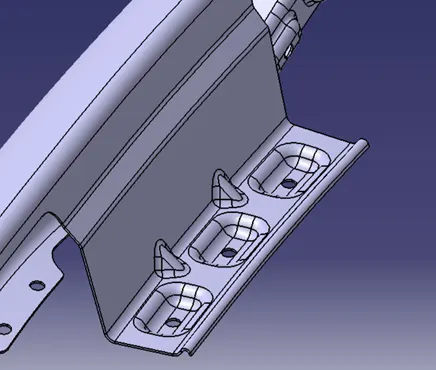
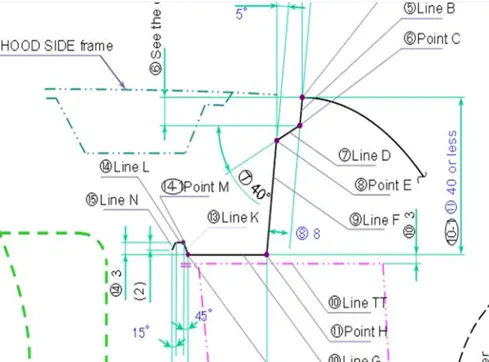
- Dripping area is the mounting where fender is connected to engine cabin using fasteners.
- For dripping area creation some design considerations should be followed as given in the master section.
- A minimum gap of 200mm from A-pillar mounting and 150 mm gap from lamp mounting area.
Procedure:
- Considering the above design considerations and by following the master section dripping area is created by using the swept option using reference surface.
- Embosses are created to provide stiffness.
- Fillets are provided to the edges which will make a smooth surface.
- Beads are provided to provide strength to the dripping area.
- A-pillar:
This is the area where fender is connected with the side of windshield area to the A-pillar.
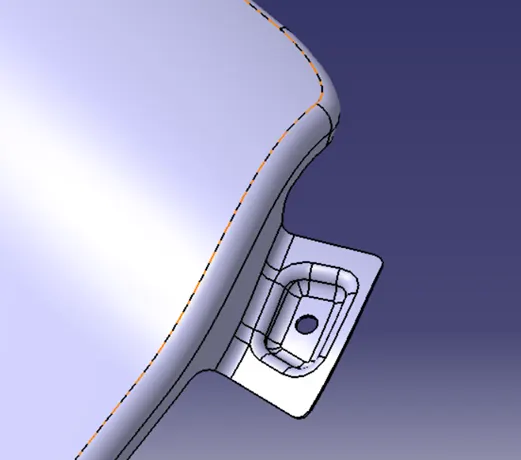
Procedure:
- A-pillar is created towards the side that it.
- Embosses are created to provide stiffness.
- Fillets are provided to the edges which will make a smooth surface
- Baffle Mount:
This is the area where baffles are connected to the fender.

Procedure:
- Baffle mount is created in an area of wheel arc..
- Embosses are created to provide stiffness.
- Fillets are provided to the edges which will make a smooth surface
- Sill Mount:
This is the area where fender is connected with the body of the car and it will be at the bottom portion of fender.
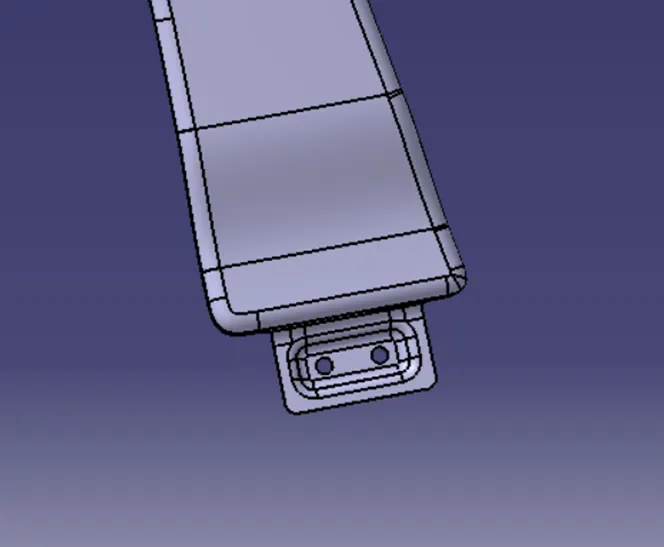
Procedure:
- Sill mount is created to the bottom of fender.
- Embosses are created to provide stiffness.
- Fillets are provided to the edges which will make a smooth surface
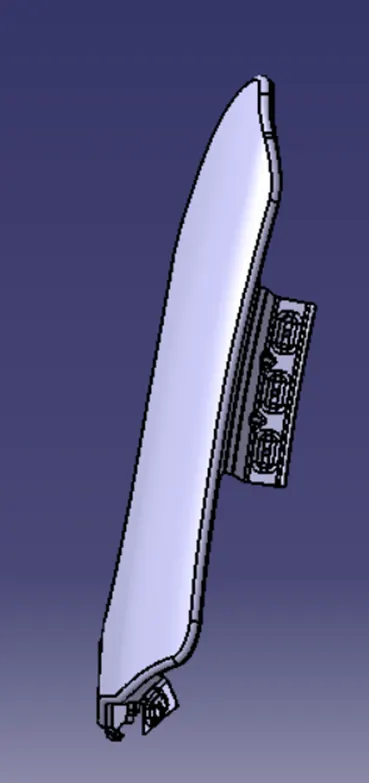
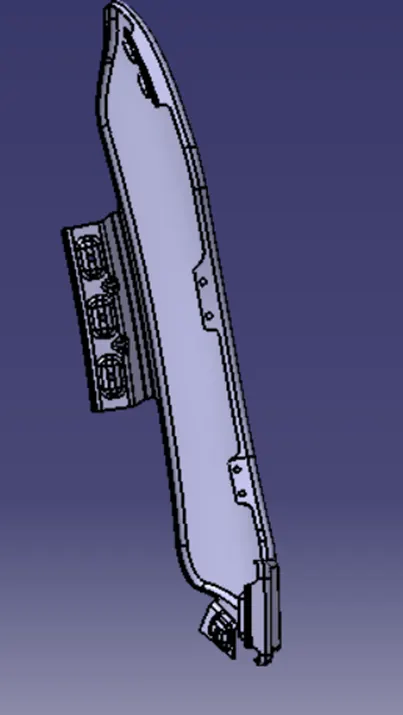
VIEWS: