Fender Design Challenge
FENDER DESIGN
OBJECTIVE
- To design the car front fender with the help of using skin data shared by the styling team.
- The main objective is to design the mountings in different parts of the fender and make them ready for manufacturing.
INTRODUCTION
FENDER
Fender is the American English term for the part of an automobile, motorcycle, or other vehicle body that frames a wheel well. Actually, it is a part that is in contact with the different parts of the vehicle like the A-pillar, sill, etc. typically fenders are rigid and house the wheels, inner body parts both at the front and back sides of the vehicle.
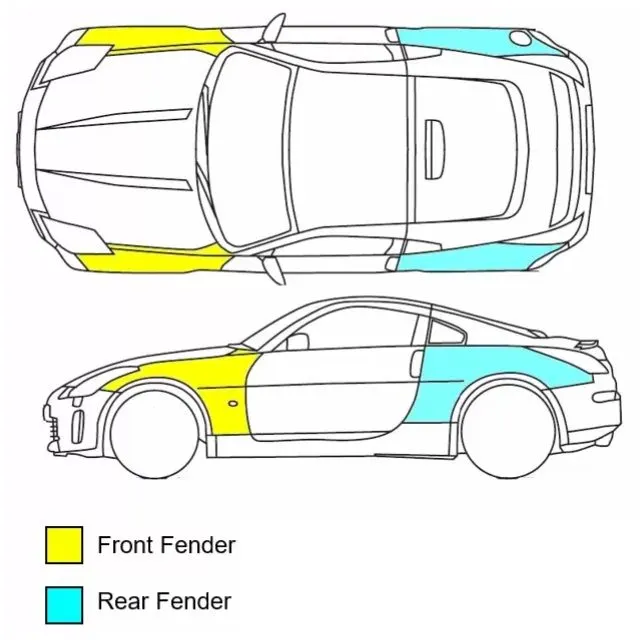
This fender plays a major role in pedestrian safety while a car is in motion. When it is in motion the wheel carryover the small stones, mud particle and throw away which may harm the pedestrians. So while designing these considerations are to be taken into account.
TYPES
Actually, there are two different types of fenders with a small difference between them.
They are (1) Full bumper type
(2) Half bumper type
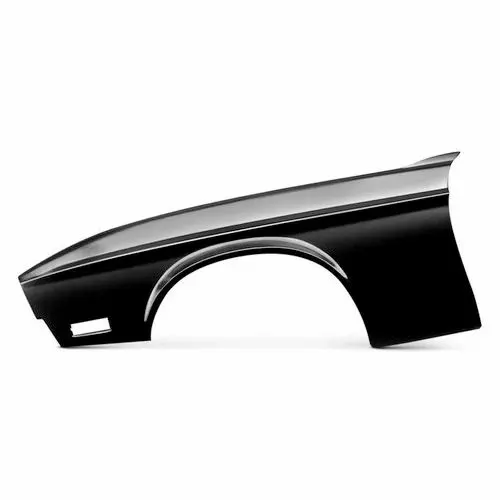
- Full bumper type
These are the fenders that cover the entire wheel of a vehicle and mainly it is used in earlier manufacturing as shown in the figure below.
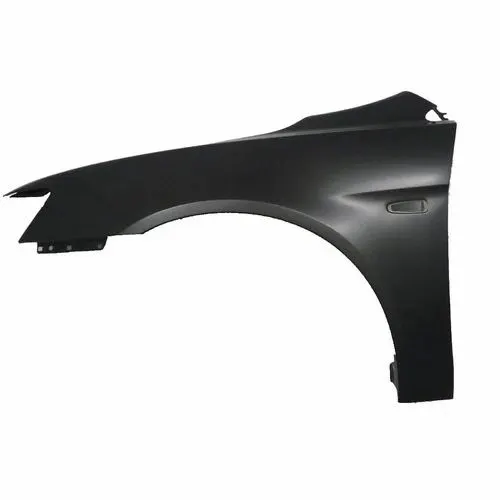
- Half bumper type
This fender is also the same as the above but with slight modifications by putting the cost and weight into consideration is changes were implemented and made the fender aesthetically good as shown in the figure below.
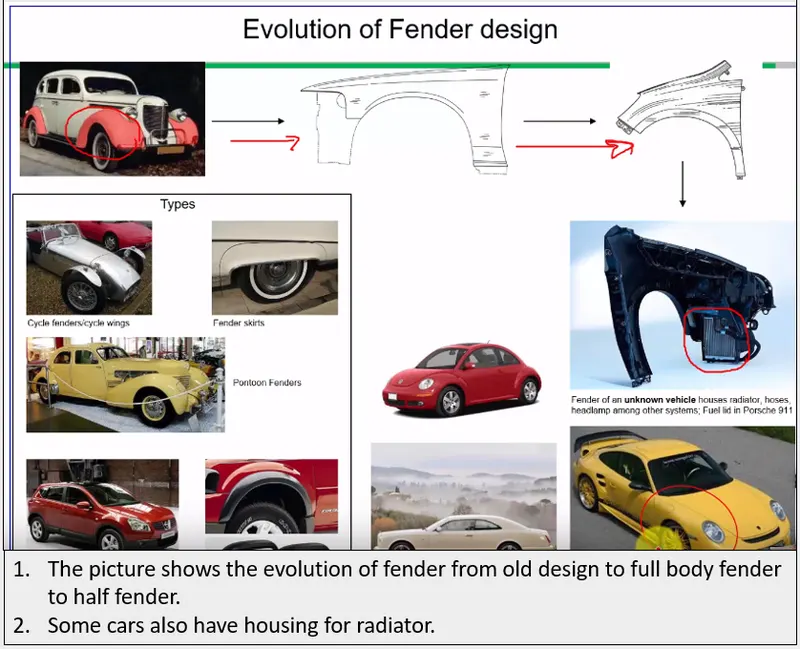
EVOLUTION OF FENDER-
PURPOSE
The purpose of the fender is to put the car aesthetically good by covering the engine compartment and also to prevent the debris such as small stones, mud particles from being thrown out words the vehicle while it is in motion which may cause damage to the beside vehicles while it is in motion, which may cause damage to the beside vehicles and also pedestrians.
Steps that are used to complete the manufacturing process
- Blanking
- Piercing or blanking
- Bending and restriking
- Trimming
- Emboss
- Burring
PROCESS
- As per the design plan for tools to make ready the product for assembly.
- Snipping or blanking operation should be done for taking the piece of a sheet from
- Bending and striking are performed to get the desired shape.
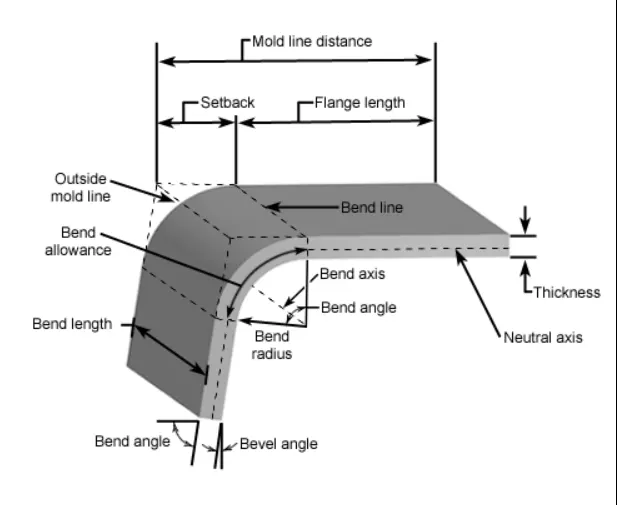
- Trimming is performed to trim the unwanted sections from the working sheet.
- Piercing should be performed to make the required holes on the sheet.
- Emboss are created by doing the deep drawing by considering the good draft angle.
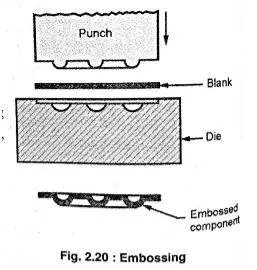
- Burring is the process of clearing the burrs and edges like sharp corners after operations.
Different mountings of fender
- Body mount
- Drip mount
- Bumper mount
- Sill mount
- A-pillar mount
- Splash covermount
- Design procedure
(1) Skin data (CLASS-A surface)
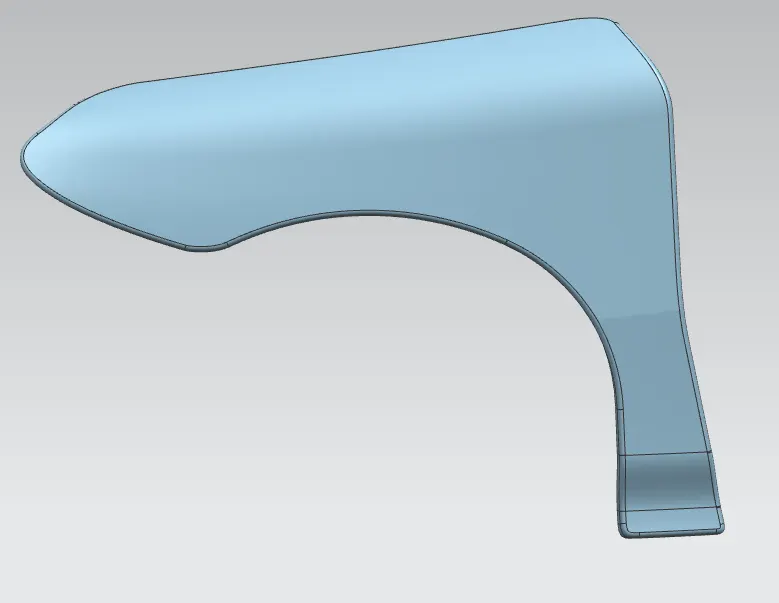
This obtained from the styling team as skin data, by using this we have to prepare the fender and different mountings of fender.
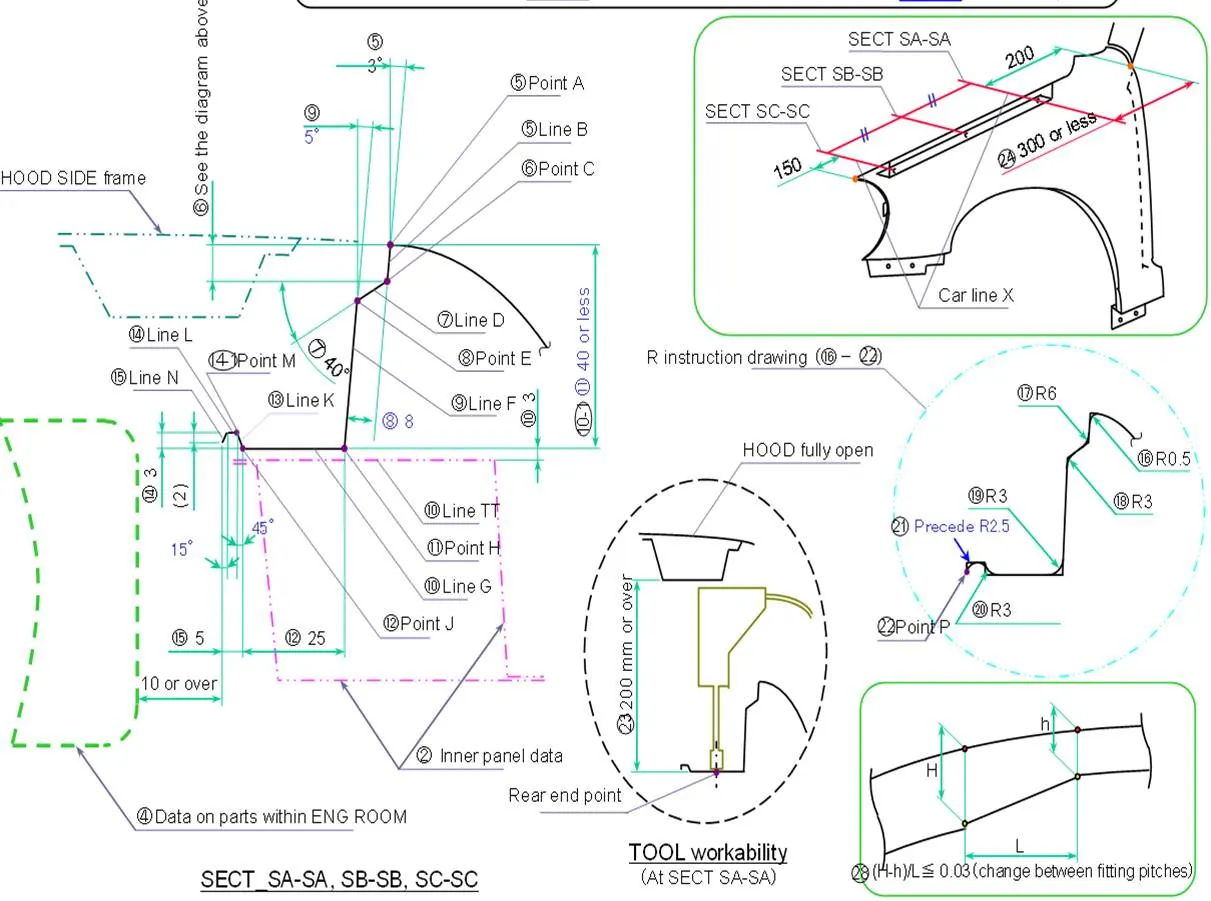
(2) Drip area mounting
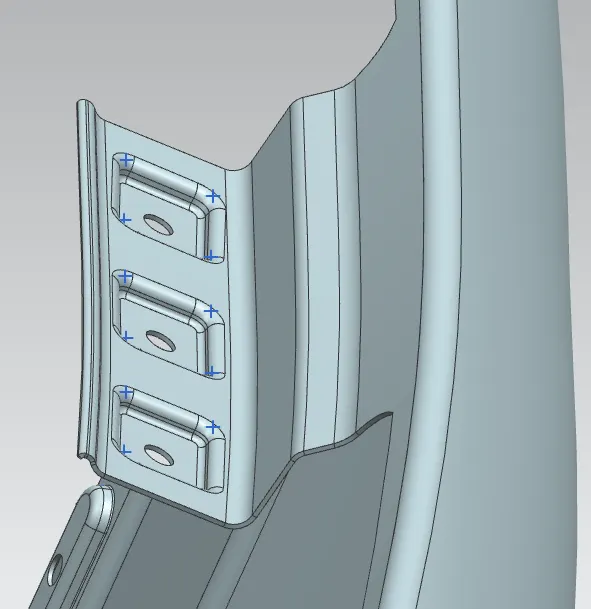
It is the most important mount of fender which is attached to the car body and near the engine compartment this is designed by following the consideration such as the distance between the fender and engine room, clearance length between the hood, and the base area of the drip.
Master section of Drip mount Area
(3) Bumper mounting
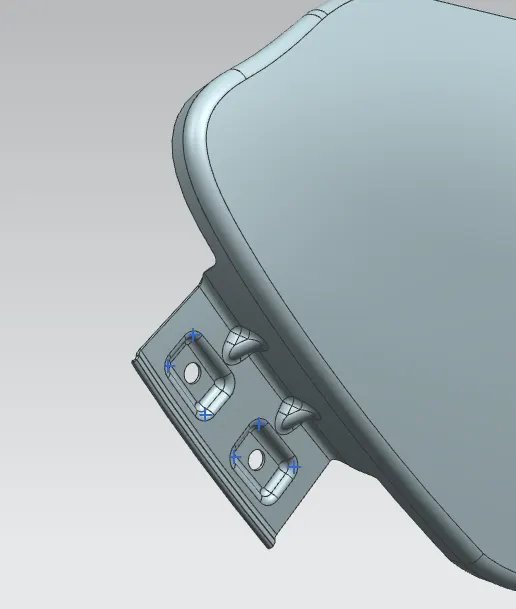
- It is used to mount the front bumper.
- This is designed by consulting the bumper design team to share the model of assembly techniques.
(4) Baffle Area or Splash covermount
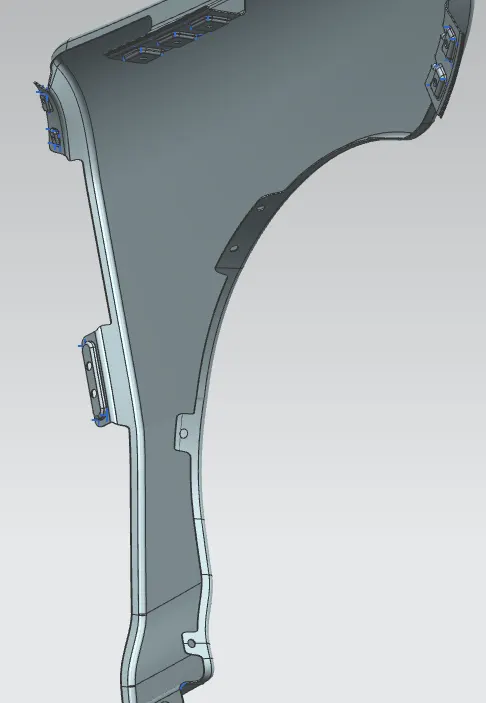
It is used to mount the baffle which protects the inner part from the debris that comes from the road.
In this section, holes are created which allow the baffle to be fitted with good tolerances.
(5) A-pillar mounting
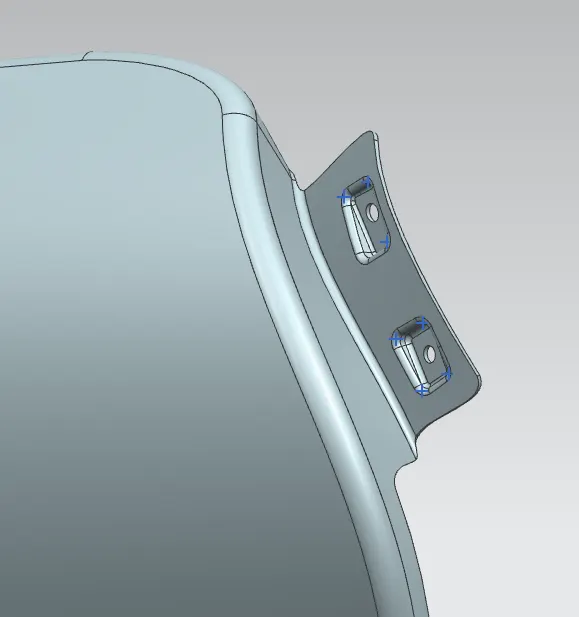
It holds the fender in its desired position and angle which is to be fixed with the A-pillar.
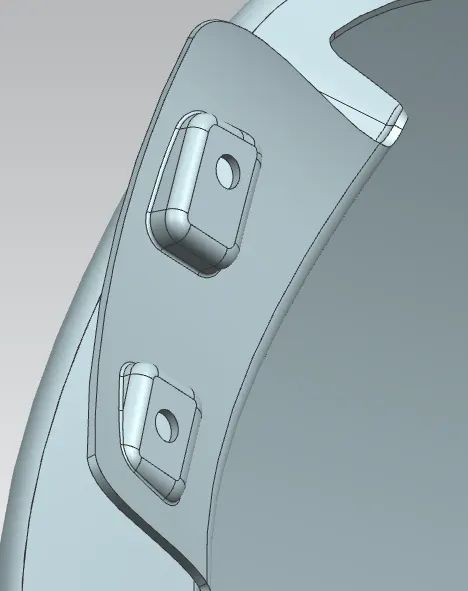
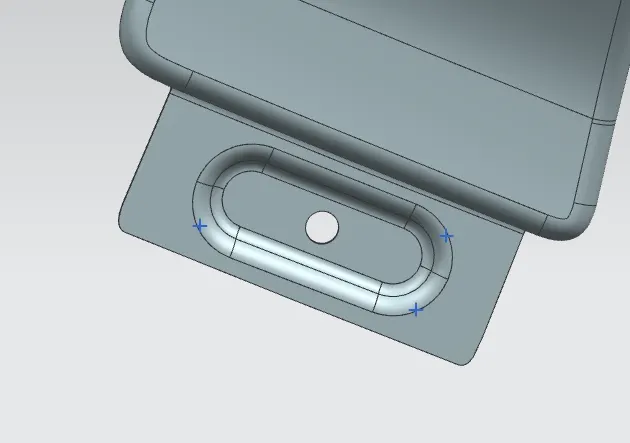
(6) Sill area mounting
This mounting is attached to the sill.
It is designed according to the data shared by the sill assembly technical team.
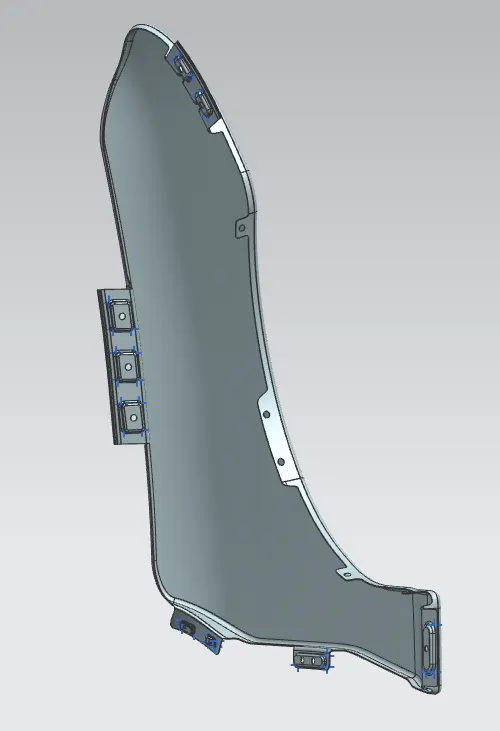
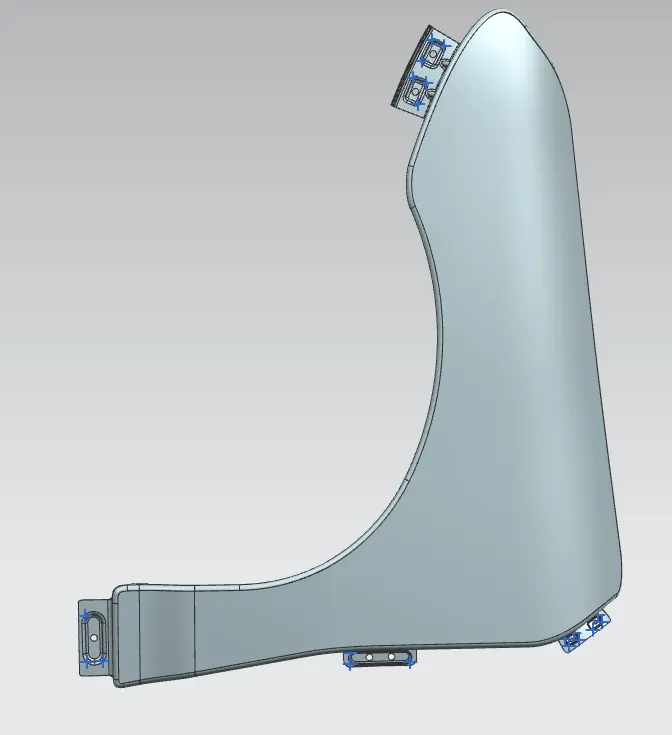
Final picture
Conclusion
The fender of the automobile is checked for the wheel arch radius as per European regulation and designed the front half fender of a car by following pedestrian safety and in order to guard the engine compartment and beside the vehicle.