Fender Design Challenge
FENDER DESIGN
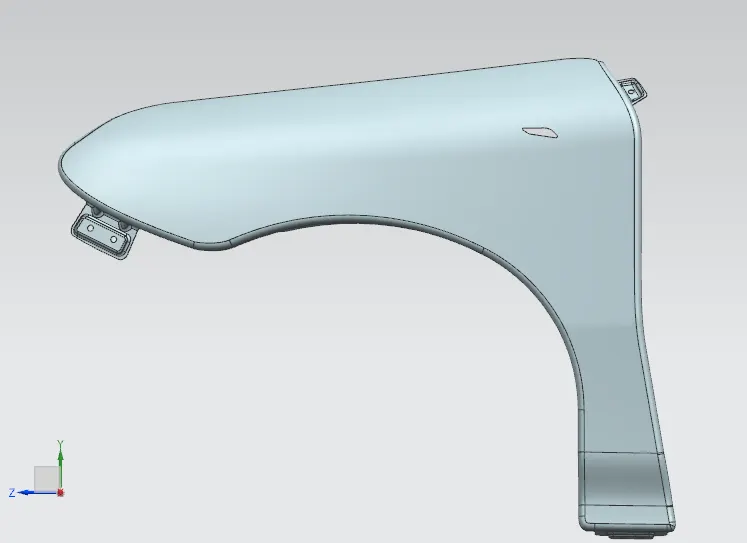
INTRODUCTION
Fender is the American English term for the part of an automobile, motorcycle or other vehicle body that frames a wheel well (the fender underside). Its primary purpose is to prevent sand, mud, rocks, liquids, and other road spray from being thrown into the air by the rotating tire. Fenders are typically rigid and can be damaged by contact with the road surface. It also protects the engine from the surrounding environment by acting as a cover. The pedestrian safety is assured by proper designing of the fender to minimize the injuries. Therefore enders on modern cars are now smooth and curved and collapsable in nature.
Types of Bumpers
1. Full Bumper Type 2. Half Bumper Type
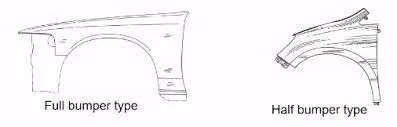
Because of ease of manufacturing, installation and replacement, the half bumper type is used in current car models.
MANUFACTURING PROCESSES
- Embossing
Embossing is a metal forming process for producing raised or sunken design or relief in sheet materials using matched male and female roller dies, theoretically with no change in metal thickness, or by passing sheet or a strip metal between rolls of the desired pattern.
- Bending
Metal bending is a process by which metal can be deformed when applying force to the subject, which causes it to be bend at an angle and form the anticipated shape, which often results in it being "V" or "U" shaped. This is done through the application of forces on a workpiece. The force on the workpiece can be mechanical, pneumatic or hydraulic.
- Cutting and Blanking
Cutting processes are those in which a piece of sheet metal is seperated by applying a great enough shearing force to cause the material to fail. Blanking is a sheet manufacturing process in which a flat, geometric shape is created by feeding a coil of sheet metal into a press and die. In this process, the blank is punched out from the large metal sheet.
DESIGN PARAMETERS
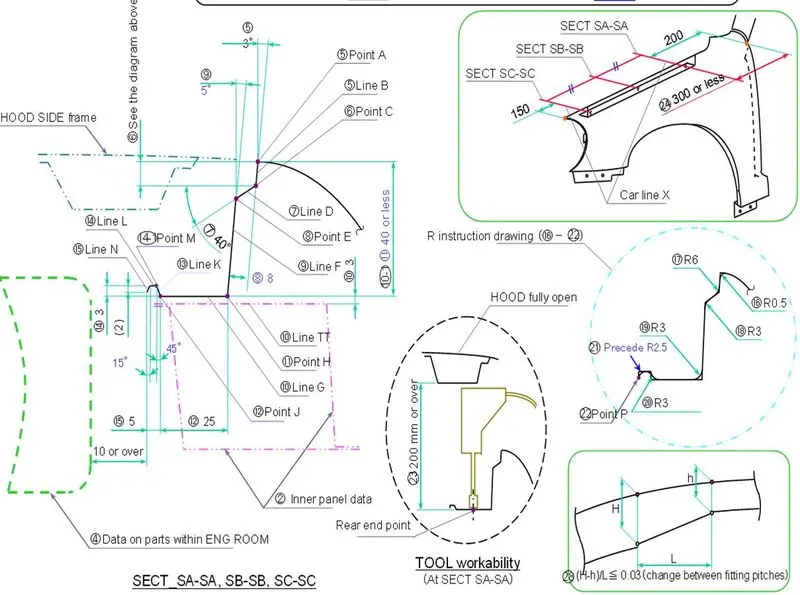
The above provided design parameters for positioning the mountings are based on the positioning of the engine, cowel, body, sill, A-pillar, baffel, bumper and the headlamp unit.
FENDER MOUNTINGS
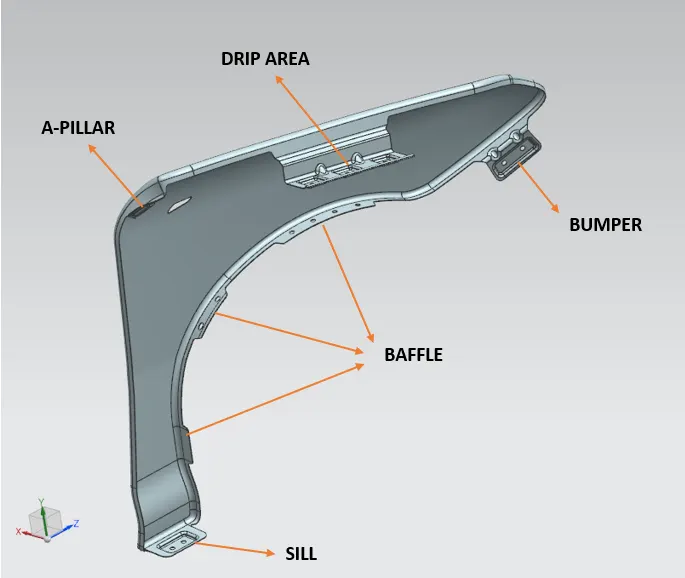
Fender has 5 important mountings,
- Drip Area Mounting
- A-Pillar Mounting
- Sill Mounting
- Bumper Mounting
- Baffle Mounting
DRIP AREA MOUNTING
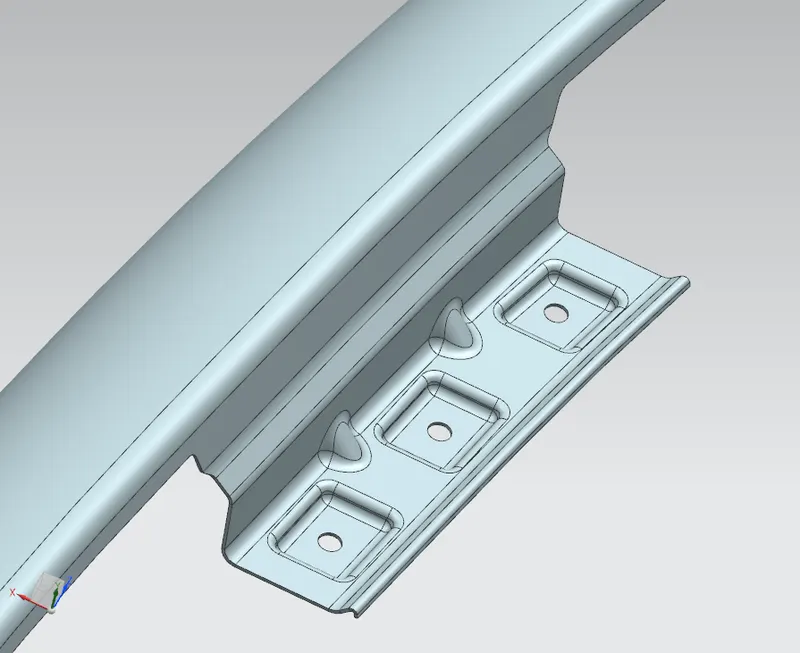
The area at which the fender gets attached to the engine housing through fasteners. It is the major mounting for the fender. Mountings at the drip area are designed after leaving a clearance of 200mm from the back of the fender for the cowel setup and a clearance of 150mm from the front of the fender for a headlamp housing unit. Darts (ribs) are provided at the bends to stiffen the sheet metal at that region.
A-PILLAR MOUNTING
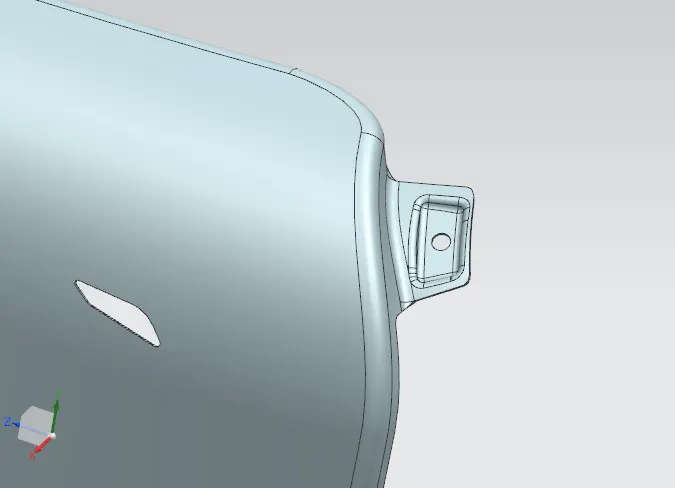
This mounting region is located near the cowel of the vehicle where the fender is fastened with the bottom edge of the windshield. This mounting is covered with the side rear-view mirror.
SILL MOUNTING
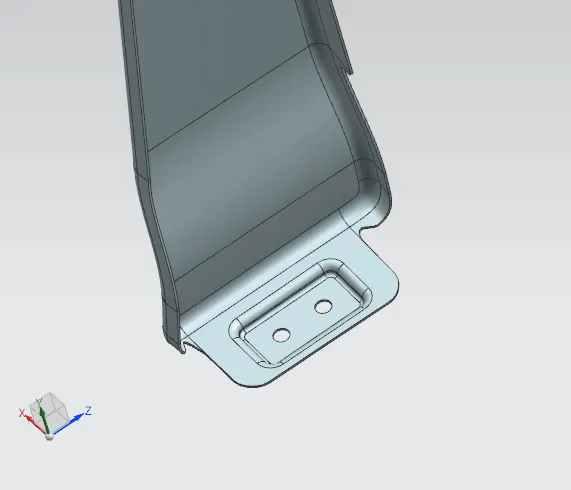
The area at which the bottom of the fender gets connected to the floor near the bottom edge ot the door. The embossed sill mounting of the fender is attached with the fasteners.
BUMPER MOUNTING
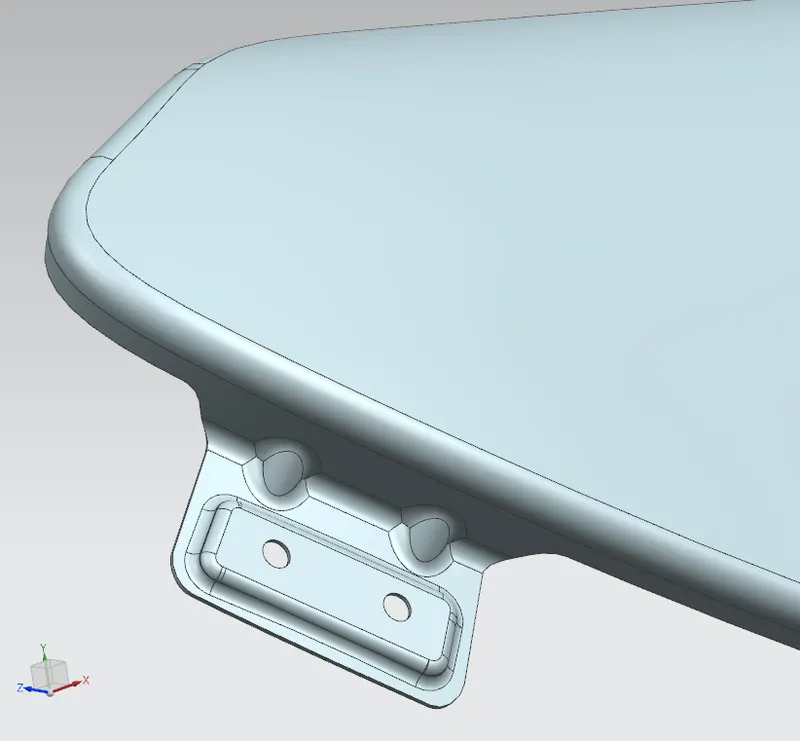
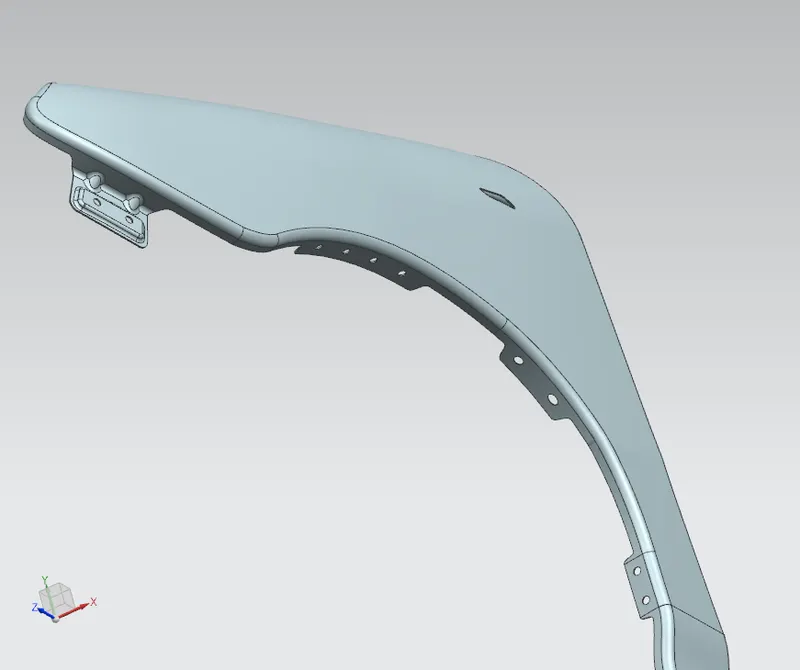
The bumper mounting region is located beneath the bumper. The fender attached before the installation of the bumper. After fixing the fender with fasteners the bumper will cover the bumper mounting. Here also darts (ribs) are provided at the bends to stiffen the sheet metal at that region.
BAFFEL MOUNTING
In this region, the baffle gets installed to the fender with the help of clips which holds the baffle with the fender along the whell arch.
INDICATOR LIGHT HOUSING CUTOUT
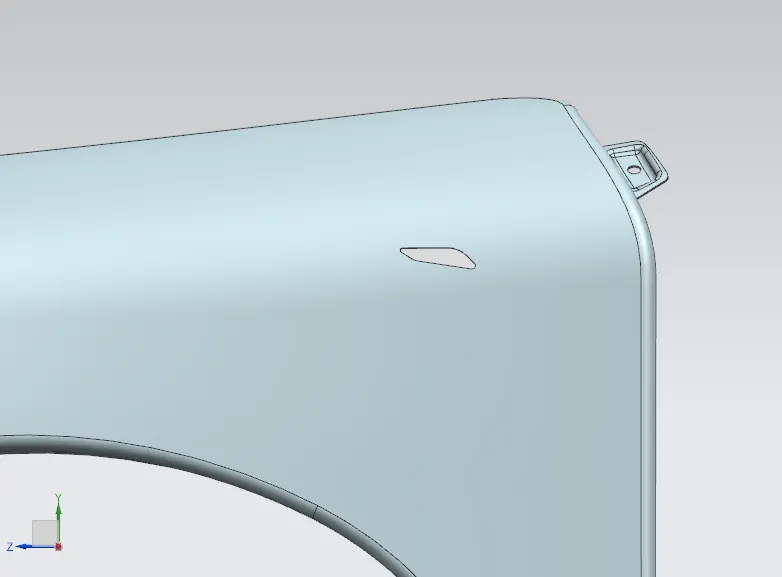
In some vehicles the indicator might be on the fender or the ORVM's, considering its on the the fender proper cut out is given.
CONCLUSION
The design of the front fender has been completed by following the guidelines, dimensional parameters for the mountings.