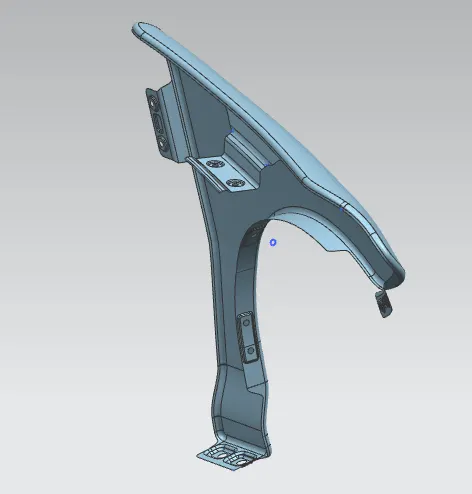
Fender Design Challenge
DESIGN OF CAR FENDER
Fender is the part of an automobile, motor cycle or other vehicle body that frames a wheel well (the fender underside). Its primary purpose is to prevent sand, mud, rocks, liquids, and other road spray from being thrown into the air by the rotating tire. Fenders are typically rigid and can be damaged by contact with the road surface.
Sticky materials, such as mud, may adhere to the smooth outer tire surface, while smooth loose objects, such as stones, can become temporarily embedded in the tread grooves as the tire rolls over the ground. These materials can be ejected from the surface of the tire at high velocity as the tire imparts kinetic energy to the attached objects. For a vehicle moving forward, the top of the tire is rotating upward and forward, and can throw objects into the air at other vehicles or pedestrians in front of the vehicle.
TYPES OF FENDER
- Full Bumper type
- Half Bumper type
MOUNTING
- Bumper
- Drip
- A Pillar
- Sill
- Cowl
Data given for Designing Fender
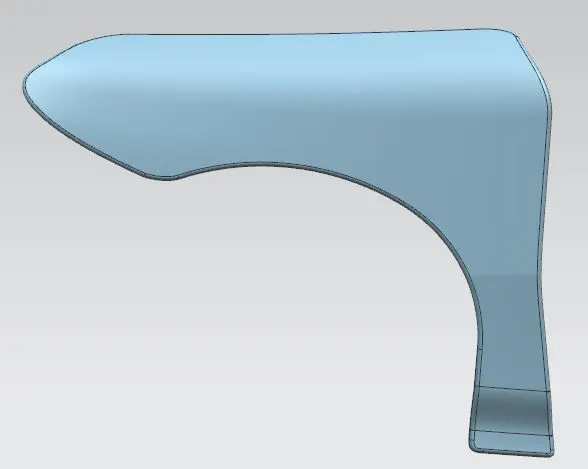
Fender Skin for Drip area Development
Theory -
- Fenders are sided panels mounted on the automobile to provide protection from dirt, water and stones pelted by rotating tyre. Fender is an important feature and is crucial to pedestrian safety and aesthetics of the automobile. generally, Plastic or metal materials are used to manufacture the fenders.
Types of automobile Fenders -
- Full Fender
- Half fender
Full Fenders used a large blank size resulting in a large amount of Scrap metal which accounts for increased manufacturing costs. On the other hand, if we increase the size of the blank slightly we can manufacture 2 half Fender from the same sheet metal blank. This result in a low cost of the material. This is the reason half Fenders are used in automobile these days.
- In this project, we have performed Wheel arch study on the styling part first to check if the part follows the EURO NCAP standards.
- After checking the part for required standards we have developed the mounting points and Drip area for the part.
EURO NCAP Standard for Wheel Arch Study -
According to Euro NCAP standard, the wheel should be at least 10 mm inside from the outer edge of the arch on the fender to avoid damages from chipping to the vehicles and the pedestrians.
The study is done by marking 5 points on the wheel arch and measuring the distance from the points to the wheels outer surface. The points are named SA, SB, SC, SD, SE in the study. Each point should be at least in the range of minimum standard limit.
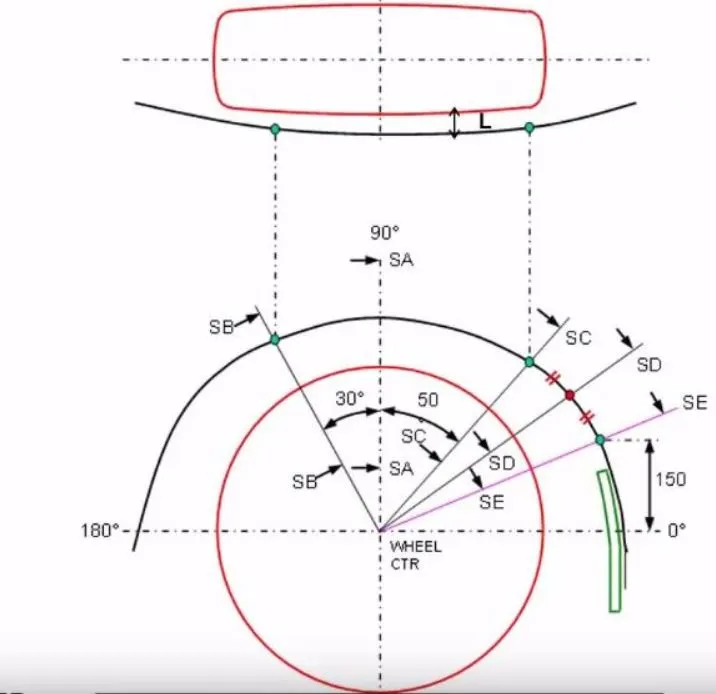
Data for Wheel Arch Study
- Results of Wheel Arch Study -

- From the results, the part is not suitable. The styling team should be notified about results.
- Designing of Mounting points and Drip area for the hood panel -
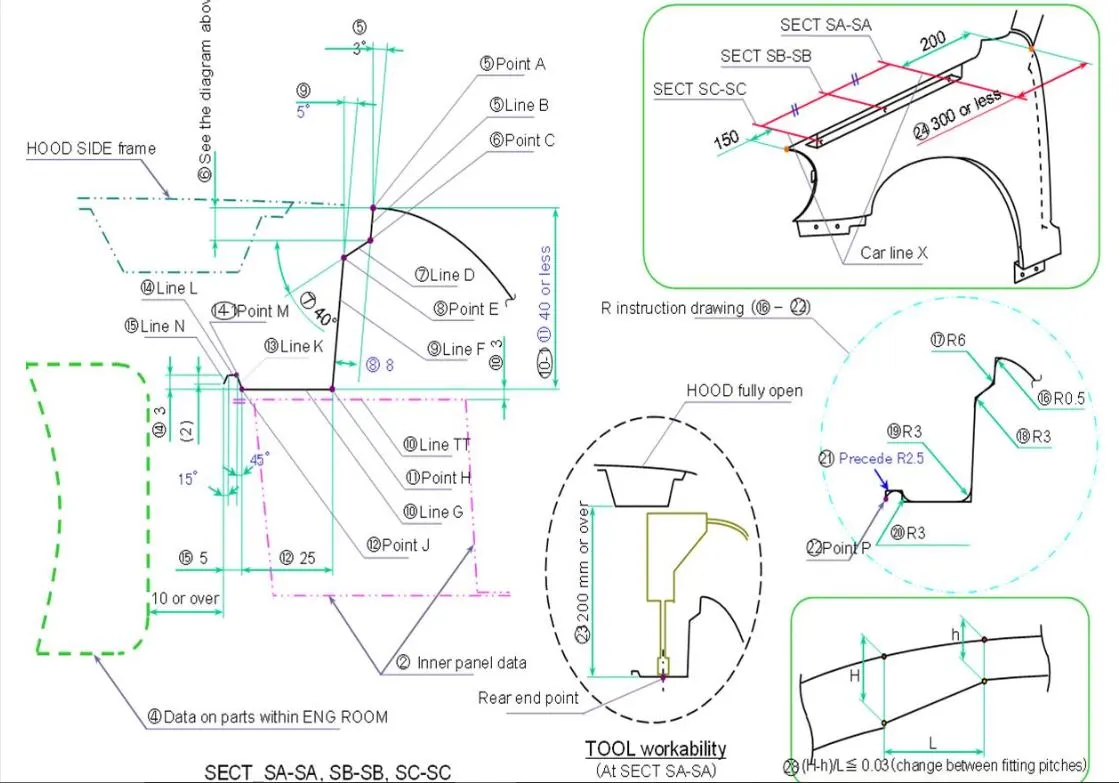
Master Section data for drip area design
- Design -
i. Drip area design -
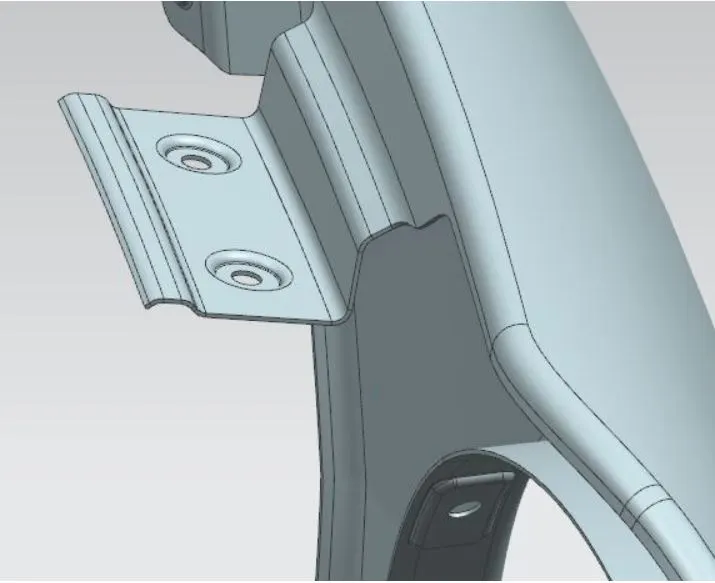
- The thickness of the part is 0.75 mm.
- Embosses are provided to provide strength to the part.
- master section is used to develop the drip area section.
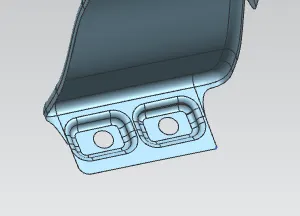
ii. Bumper Mounting points -
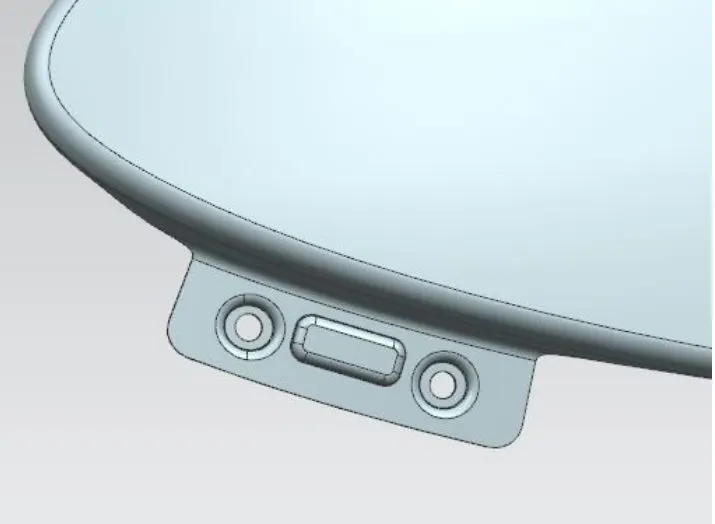
- The points are used to connect the part with the front bumper.
- Embosses were provided to strengthen the part.
iii. A-pillar Mounting points -
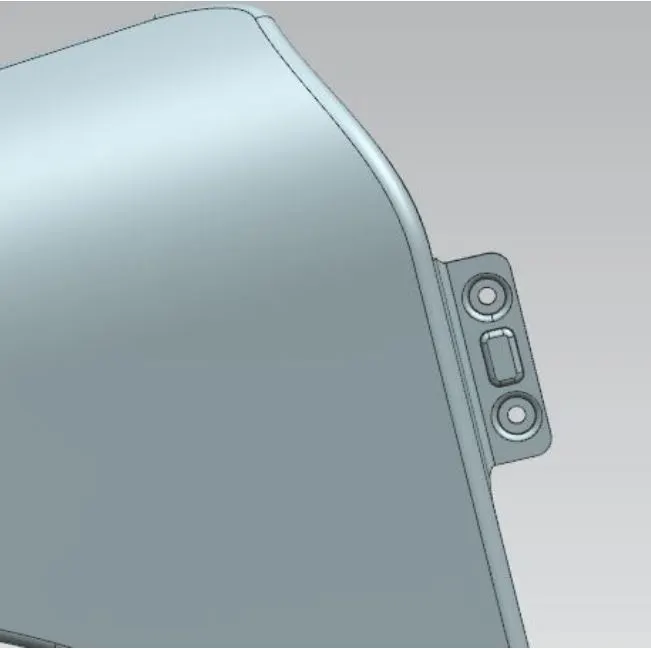
- the mounting points are used to connect fender with A-pillar of the car body
- embossed were provided for the stiffness of the part.
iv. Splash Cover Mounting -
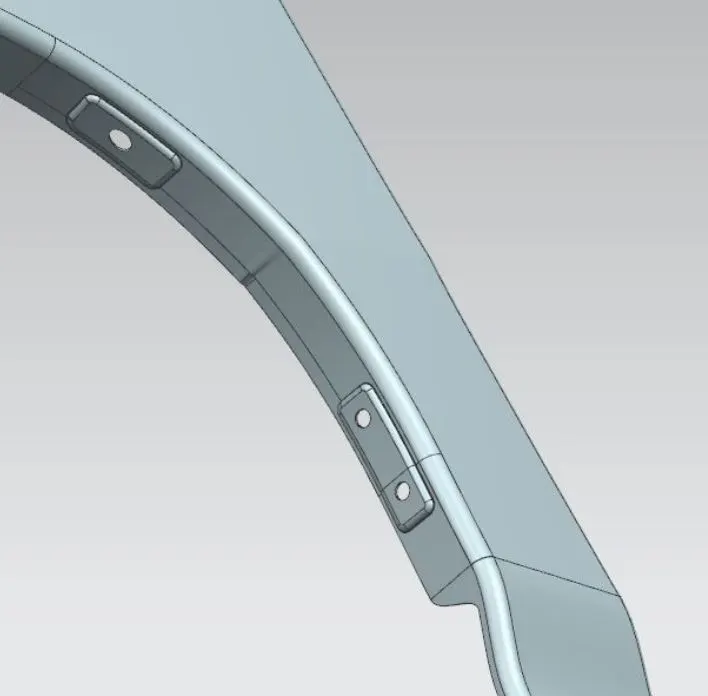
- The mounting points were used to connect splash cover with the fender.
v. Sill Mounting points -
Isometric view -