Challenge

Fender Design Challenge

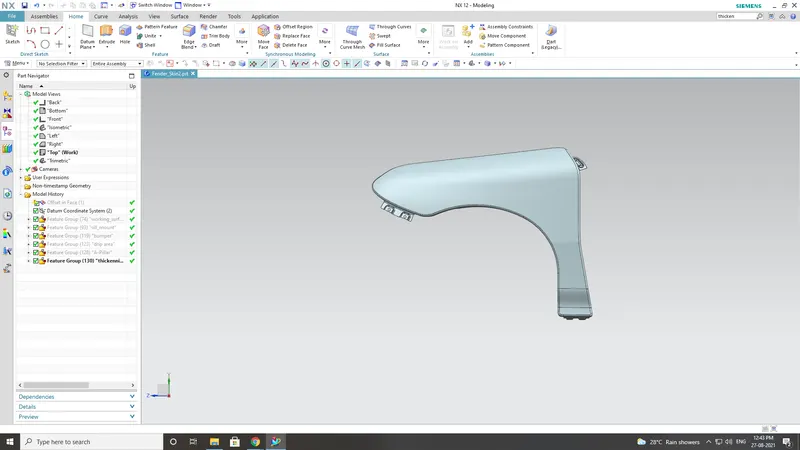
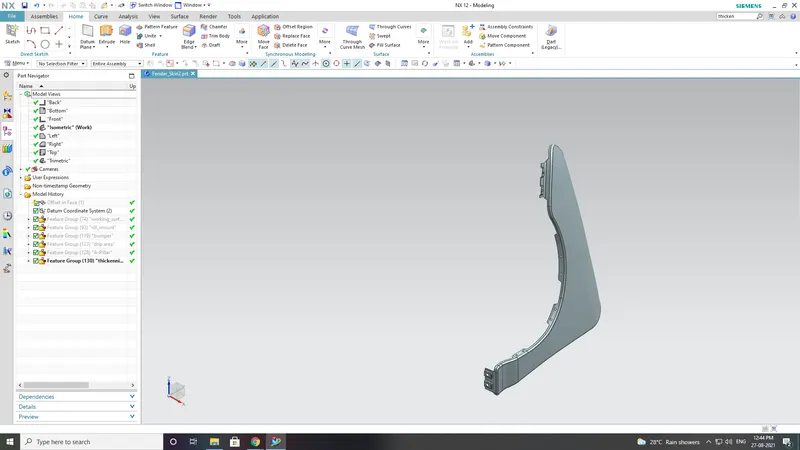
AIM : To design a car front fender with thn help of skin data.
OBJECTIVE :

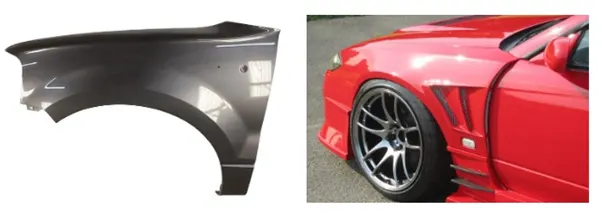
Fender is a part of a vehicle which frames a wheel and prevents from the sticky and hard substance such as mud, sand, rock, etc. Sticky materials such as mud may adhere to the smooth outer tire surface, while smooth loose objects such as stones can become temporarily embedded in the tread grooves as the tire rolls over the ground. These materials can be ejected from the surface of the tire at high velocity as the tire imparts kinetic energy to the attached objects. For a vehicle moving forward, the top of the tire is rotating upward and forward and can throw objects into the air at other vehicles or pedestrians in front of the vehicle. Fenders are typically rigid and can be damaged by contact with the road surface. Instead, flexible mud flaps are used close to the ground where contact may be possible.

FULL BUMPER TYPE :
Sticky materials, such as mud, may adhere to the smooth outer tire surface, while smooth loose objects, such as stones, can become temporarily embedded in the tread grooves as the tire rolls over the ground. These materials can be ejected from the surface of the tire at high velocity as the tire imparts kinetic energy to the attached objects. For a vehicle moving forward, the top of the tire is rotating upward and forward, and can throw objects into the air at other vehicles or pedestrians in front of the vehicle

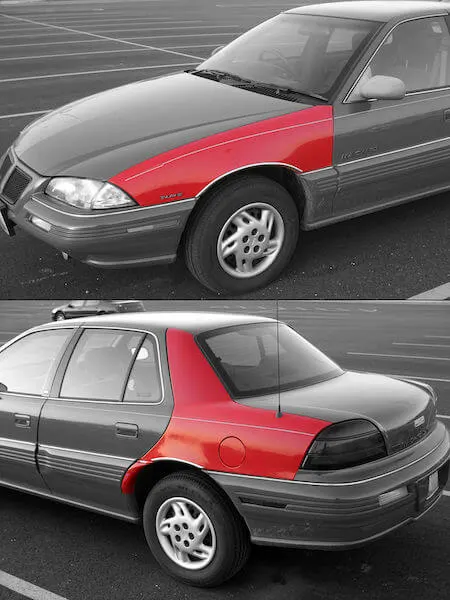
Half bumper type :
The fender car part is the body kit or body part installed on the left and right sides of the vehicle. Manufacturers usually attach fenders to the wheel arches. There are different reasons why they are a requirement in vehicles. One obvious reason is to improve the aesthetics of the vehicle.
Consideration :
MOUNTING OF FENDER :
  • DRIP MOUNT
  • BODY MOUNT
  • SILL MOUNT
  • BUMPER MOUNT
  • A-PILLER MOUNT
DRIP AREA :
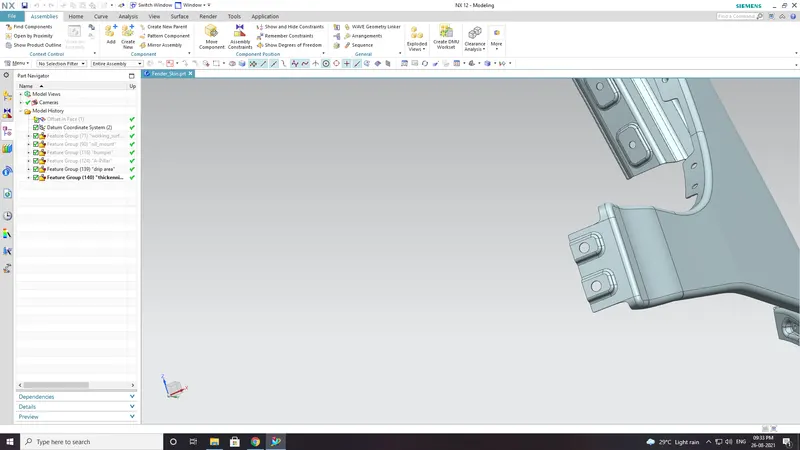
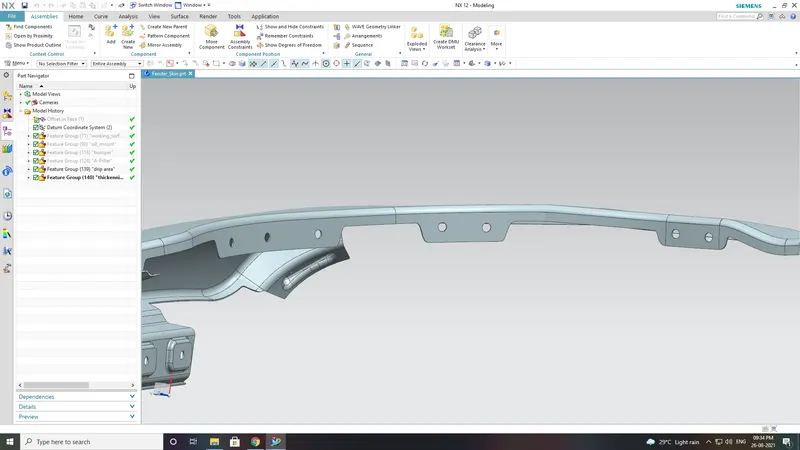
This is sttached to the car body amd near to the engine compartment. This designed by following the consideration such as the distance between the fender and engine room,clearance length between the hood and the base asre of the drip. And it is important mounting in the fender. While designing the drip area consider or leave 200 - 300 mm for cowl top. for placing the headlamp should 150 mm at the front.
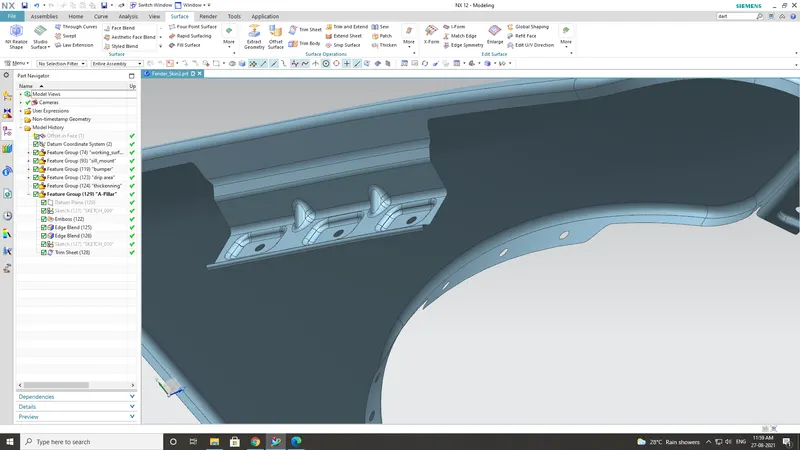
Two darts are added on the longer side of the dtip area in oder to provide stiffness and add strength to the parts. This helps the fender to not to vibrate and impact the force outside os the fender during in the motion of the vehicle.
Embossing are provided on the mounting to strengthen them.
A-Pillar :
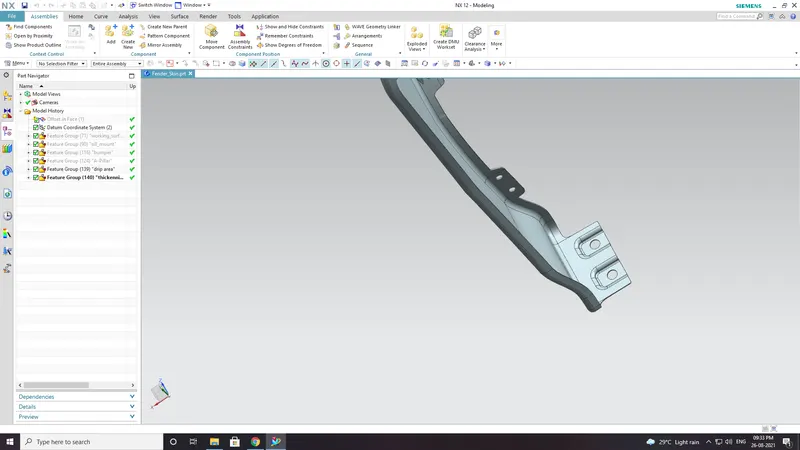
The A- pillar is the structural pillar that combines the body to the roof. This makes the sides of the windsield rest. Front fender are fastened to the A-pillar to form a robust structure.
Bumper side :
Bumper mounting area is used to fix the plastic bumper to the fender with the help of fasterners.This is the design by consulting the bmper dsign team shared the model of assembly tech.
Sill mounting :
Sill is the panel directly below the bottom of the door supportingthe floor and may be used to combine the floor and blody.The bottom end of the fender is mounted on the sill body for reinforcement of the fender panel, thus the sill mounting poistion is designed with holes and emboss. This area is created by applying the emboss according to the data shared by sill assembly team.
Baffle mounting :
In this baffle areas the holes are created which is allow the baffle to be fitted with good tolerance.Baffle mounting are clip type of mounting on the inner side of the fender arch over the tyre.
It protect the car engine components and pedestrians from causing injuries.They are mounted on the fender using a special type of locking clip which are made up of plastics.
Thickness to the surface :
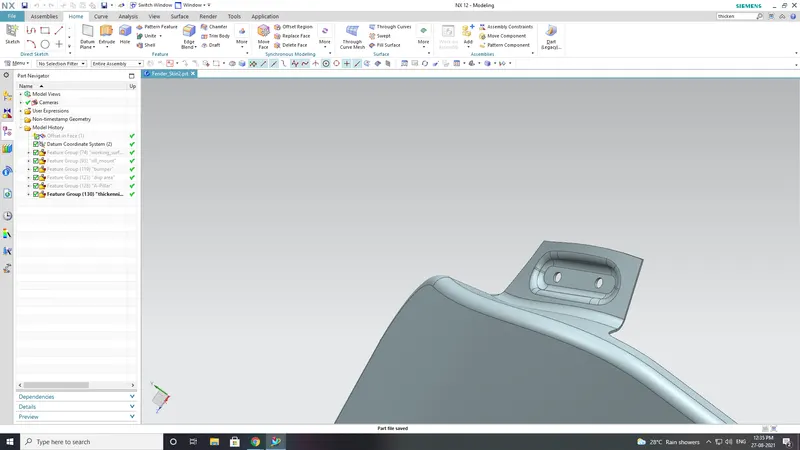
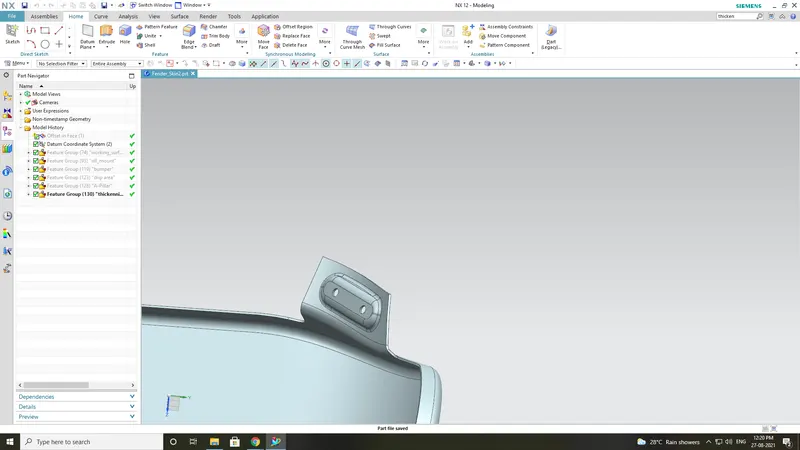
The thickness of 0.75 mm inward on the final surface to the sheet meatla parameters.
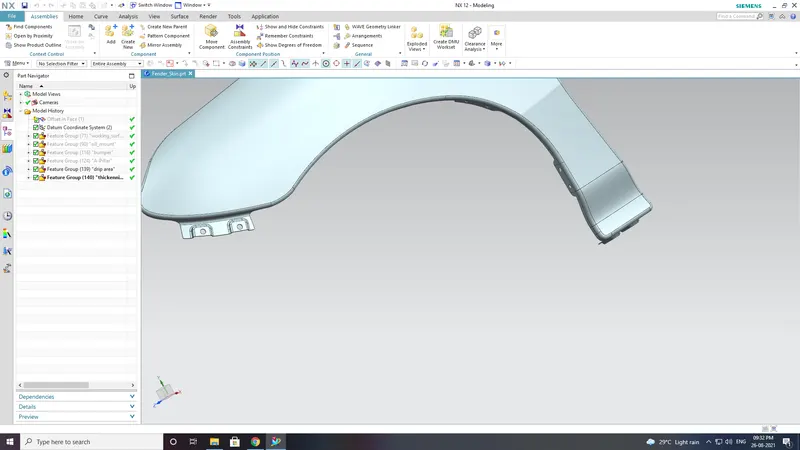
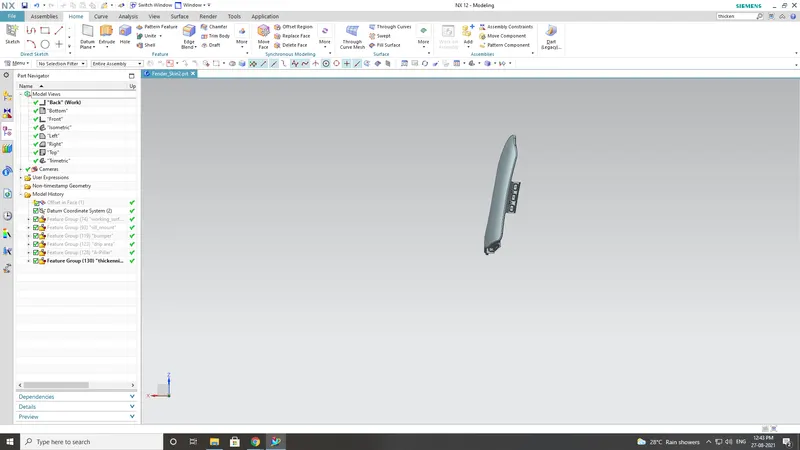
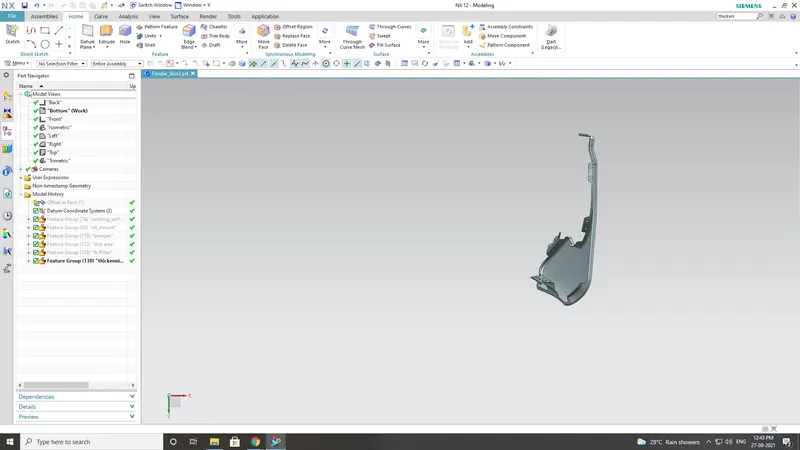
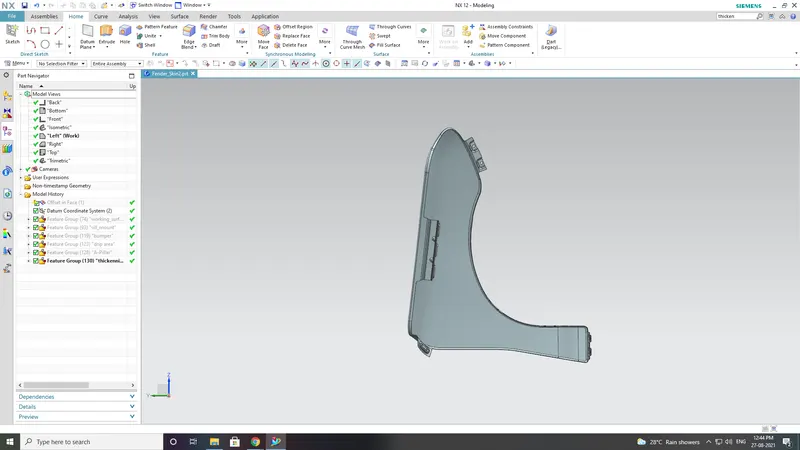
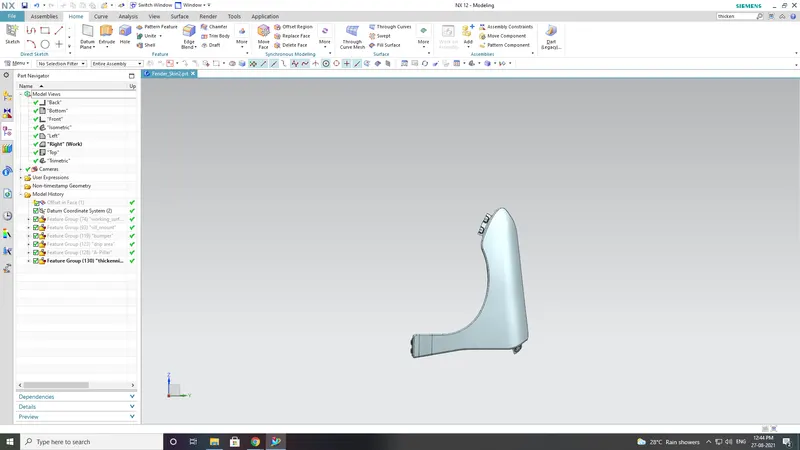
Diiferent views of fender :
Your portfolio, next

Ship work like this
in your own course.

Talk to a career counsellor

Free 20-minute call. We'll map the right course to where you want to work.

By submitting you agree to our Terms and Privacy Policy.

Talk to a career counsellor

Free 20-minute call. We'll map the right course to where you want to work.

By submitting you agree to our Terms and Privacy Policy.