Fender Design Challenge
FENDER DESIGN USING NX CAD
OBJECTIVE
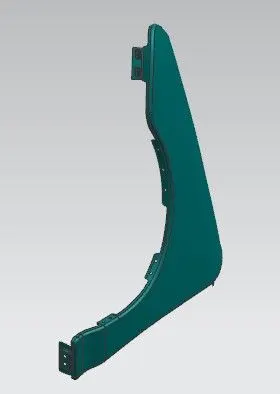
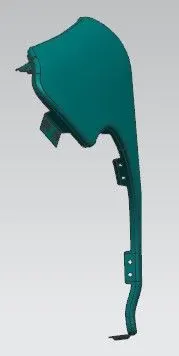
The aim of this project is to design the BIW of a Fender using the fender skin data as the input data and then attach mountings on the fender(i.e, to design the Drip Area, Bumper Mount, Cowl Mount, Sill Mount, and A-Pillar Mount) for attaching it with the surrounding BIW bodies.
WHAT IS A FENDER?
- Fender is the American English term for the part of an automobile, motorcycle or other vehicle body that frames a wheel well. Its primary purpose is to prevent sand, mud, rocks, liquids, and other road spray from being thrown into the air by the rotating tire.
- Fenders are typically rigid and can be damaged by contact with the road surface. Sticky materials, such as mud, may adhere to the smooth outer tire surface, while smooth loose objects, such as stones, can become temporarily embedded in the tread grooves as the tire rolls over the ground.
- These materials can be ejected from the surface of the tire at high velocity as the tire imparts kinetic energy to the attached objects.
- For a vehicle moving forward, the top of the tire is rotating upward and forward, and can throw Objects into the air at other vehicles or pedestrians in front of the vehicle.
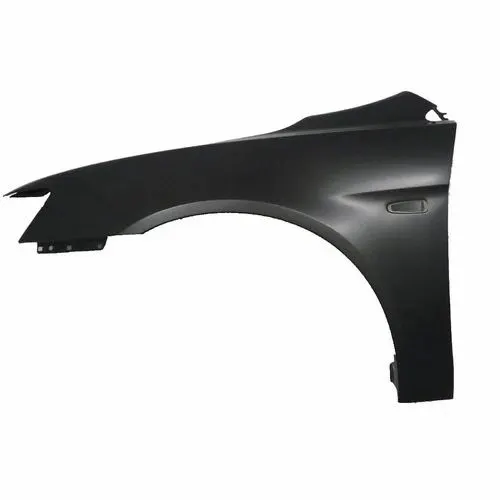
- Fender is a front outer side member of a car, which covers the wheel side. It has so many small features with ups and downs.
NEED FOR FENDERS
- Fenders are an intricate sheet of metal covering the wheel well of your car.
- Fenders are designed in a manner to provide resistance against wind and other roadside debris.
- When you travel on rough terrains your vehicle might get minor scratches and dents which look no better. Frequent road bumps can cause your cars paint to chip off which needs a paint job done.
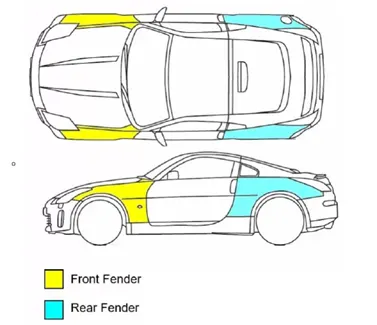
- The car fenders are located on either side of the front and rear wheels. The front car fenders begin where the front door hinges run and end just before the bumper. The rear car fenders begin where the back doors close and terminate before the back bumpers.
TYPES OF FENDERS
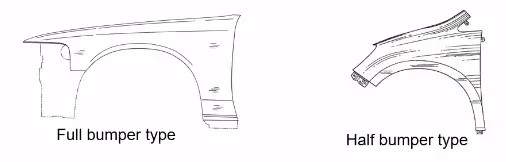
- Full bumper type
- Half bumper type
Full bumper type
This type of bumper is not commonly used because this design is more scrap producing one during manufacturing. The blank of steel or aluminum used to produce this type has more wastage. This type is not economically good to manufacture. Also it increases the material cost unavoidably. If we use full bumper type the material has to be either aluminum or steel, since these materials were generally used for fenders. This extension of material usage in bumpers might increase the proportion of weight and consequently reduce the performance of vehicle. Nowadays plastic material components are in use for bumper making. Plastics have high tendency in absorbing the shock and impact loads. And being light in weight it is easy to mount them on chassis.
Half bumper type
This is the most commonly used typed of fender. The con’s of full bumper type is satisfied in this design, and the blank area of wastage while producing the part is drastically reduced by scrap management. In this type by slightly increasing the blank size 50% of wastage is reduced by making two fenders on a same single blank of steel or aluminum. Also this design provides space for using plastic components in the bumper. Thus facilitating way for reducing a high proportion of weight and increase the vehicle’s performances significantly.
PURPOSE OF FENDERS
1.Cleanliness
Protect the car, occupants and passersby from items, water, mud, snow, ice, thrown off the tires as you drive.
2.Safety
Protects pedestrians from the wheel, e.g. its better to be it by a laterally moving fender than a rolling tire, keeps loose, streaming items from being wrapped up in a rolling wheel.
3.Aerodynamics
Smooth’s the car profile so you don't get a lot of drag off the uncovered wheels. Some fenders are enclosed on the side for this.
4.General appearance
Looks better with fenders, gives a finished look, looks more streamlined.
MOUNTINGS
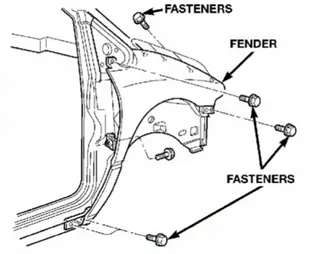
There are generally 5 mountings on a fender;
1.Drip Area
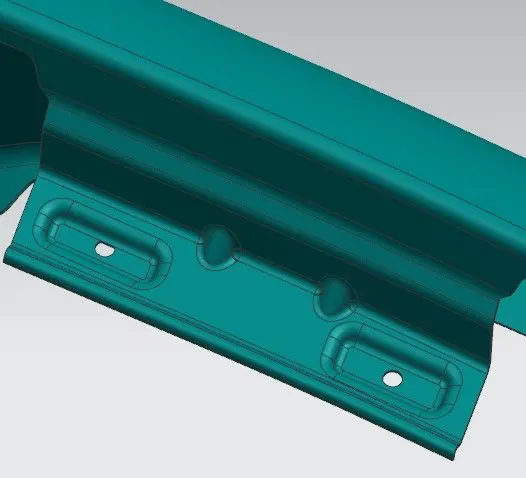
2.Sill mount
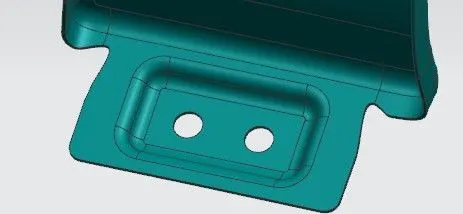
3.Bumper mount
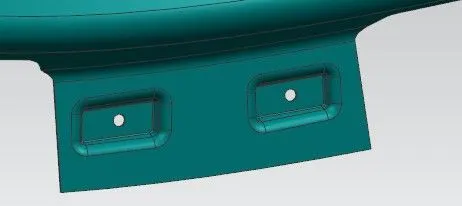
4.A-pillar mount
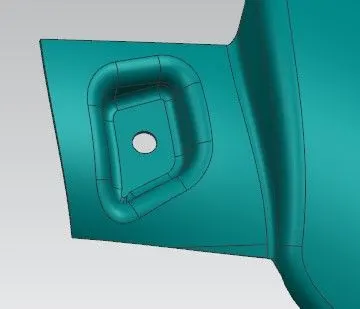
5.Cowl mount
These are joined using fasteners, thereby improving the NVH factor.
1.DRIP AREA
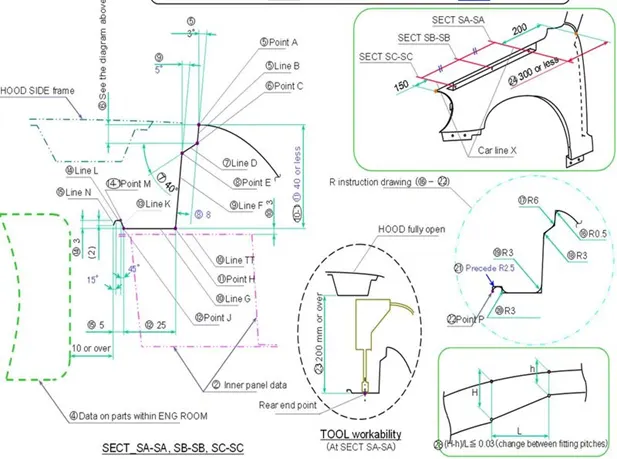
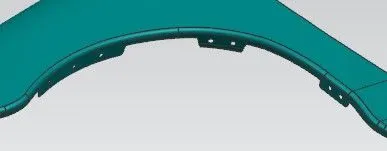
It is the most important mounting unit of a fender. It is connected with the engine compartment and therefore a lot of design constraints are to be followed while designing the drip area.
It should have sufficient clearance from the front and rear end of the fender to accommodate the Cowl mounting region and the Headlamp housing unit respectively.
Master section for drip area
2.SILL MOUNT
3.BUMPER MOUNT
4.A-PILLAR MOUNT
5.COWL MOUNT
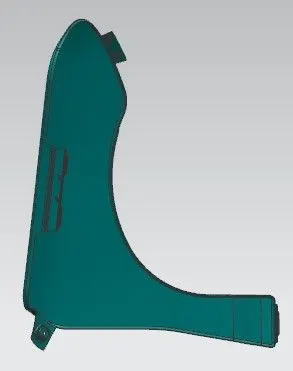
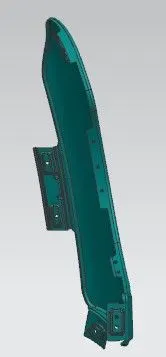
IMAGES OF FENDER IN VARIOUS VIEWS
CONCLUSION
The drip area was created using the master section and the other four mountings were created according to the Engineering standard.