Fender Design
Title: Fender Design and its Components
Aim: To prepare a report by explaining about Fender Design and its different mounts, manufacturing process and its design parameters.
Introduction
Fenders are critical components in the automotive industry and play a crucial role in protecting vehicles from damage caused by collisions and road debris. This report will provide an in-depth understanding of fender design, its various mounts, the manufacturing process, and the key design parameters involved.
Fender Design
Fenders are an essential part of a vehicle's exterior, designed to shield the wheel wells and prevent debris, water, and road spray from being thrown into the air or onto the vehicle itself. The design of a fender typically includes its shape, size, and material composition.
1. Shape and Size: Fenders come in various shapes and sizes to accommodate different vehicle designs and styles. They may be more rounded for compact cars or have a broader, more angular design for trucks and SUVs.
2. Material Composition: Fenders are often made from lightweight but durable materials such as steel, aluminum, or composite materials. The choice of material impacts the fender's weight, strength, and corrosion resistance.

Types of Fenders
There are two types of fenders in a car body; front fender and rear fender as shown.
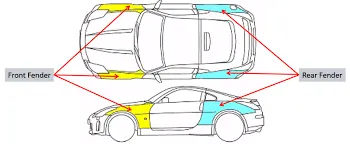
Fenders can be of two types:
-
Full bumper type
-
Half bumper type
Nowadays, Half bumper type fenders are typically used. The cost of sheet metal blank is reduced as we can produce two half bumper type fenders in a single blank. This also leads to reduction of scrap.
Fender Mounts
Fenders are mounted onto the vehicle structure using various methods. The type of mount can influence the fender's durability and ease of replacement.
1. Bolt-On Mounts: This is a common method where fenders are attached using bolts and fasteners. It allows for easier replacement in case of damage.
2. Welded Mounts: In some cases, fenders are welded directly to the vehicle body, providing a more secure attachment.
3. Clips and Fasteners: Modern vehicles often use clips and fasteners that simplify the installation and replacement of fenders.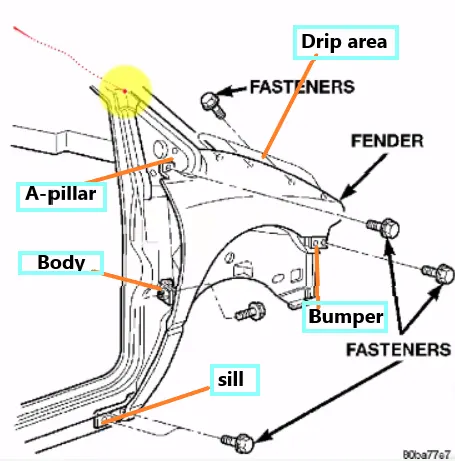
Mounting Areas on fenders:
-
Drip Area mounting
-
A-pillar mounting
-
Sill Area mounting
-
Bumper Area mounting
-
Baffle(Body) Area mounting
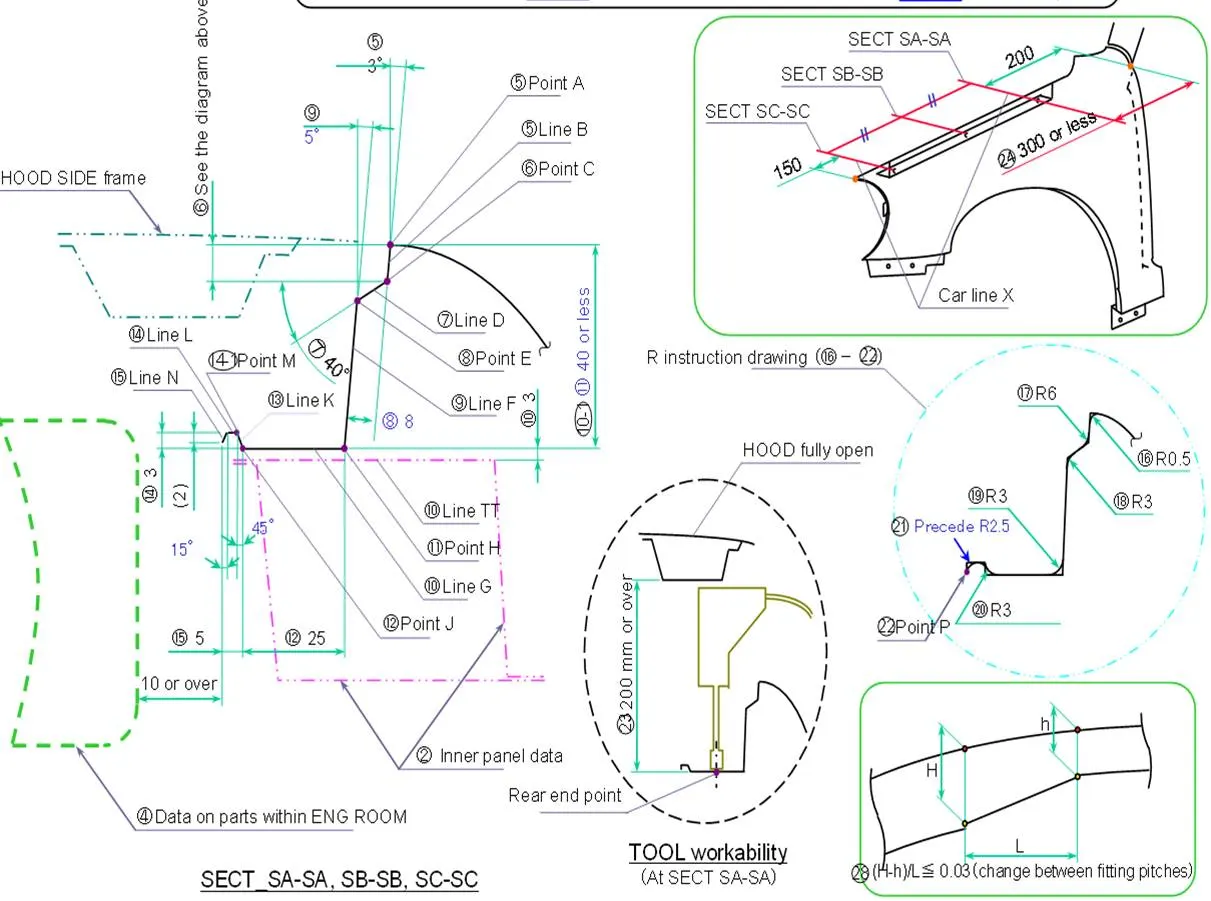
Master Section
-
Design of DRIP AREA MOUNTING :
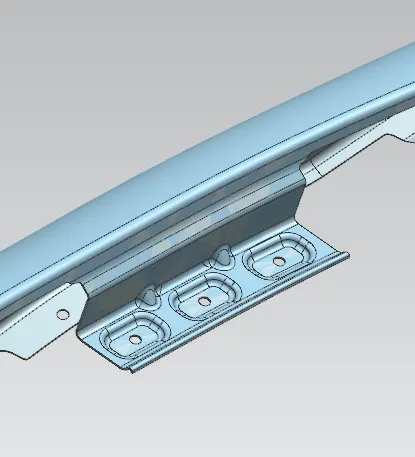
-
This portion is connected with the engine compartment so, a lot of design constraints should be considered while designing the fender.
-
While designing the drip area we initially have to leave 200-300 mm for the cowl top.
-
For placing the headlamp we have to at least leave 150mm from the front while designing the fender.
-
The Cowl top consists of a wiper motor and its instruments.
-
Two darts are added on the longer side of the drip area in order to provide the stiffness which adds strength to the part. This helps the fender to not to vibrate and impact the forces outside of the fender during motion of the vehicle.
-
Embossing is provided on the mounting to strengthen them while fastening.
-
Design of A-PILLAR MOUNTING :
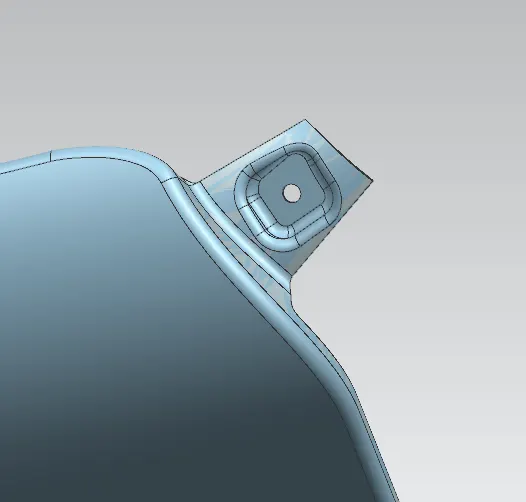
The A-pillar is the structural pillar that combines the body to the roof. This makes the sides of the windshield rest. Front fenders are fastened to the A-pillar to form a robust structure.
-
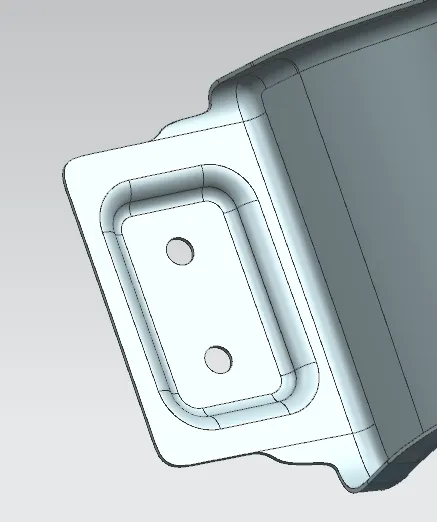
Design of SILL MOUNTING AREA :
-
Sill is the panel directly below the bottom of the door supporting the floor and may be used to combine the floor and the body.
-
The bottom end of the fender is mounted on the sill body for reinforcement of the fender panel, thus the sill mounting position is designed with holes and emboss.
-
M5 fasteners are used to fix the fender on the sill body.
-
Design of BUMPER MOUNTING AREA :
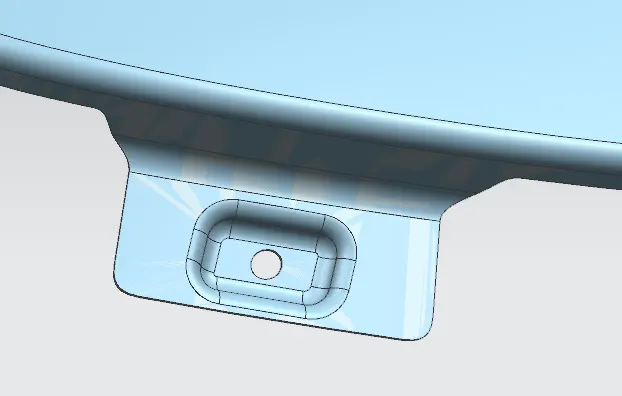
Bumper mounting area is used to fix the plastic bumper to the fender with the help of the fasteners
-
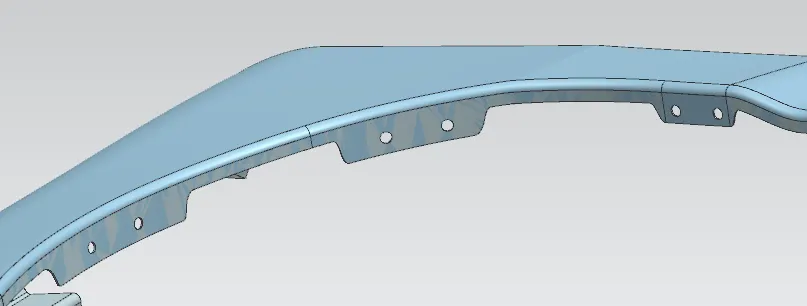
Design of BAFFLE MOUNTING AREA :
-
Baffle mounting or mudguard are clip fit types of mounting on the inner side of the fender arch over the Tyre.
-
It protects the car engine compartment and pedestrians from causing injuries from chip out debris on the road when the car is in motion.
-
They are mounted on the fender using a special type of locking clips which are made of plastics.
A thickness of 0.75 mm inward on the final sewed surface of the fender to the sheet metal parameters.
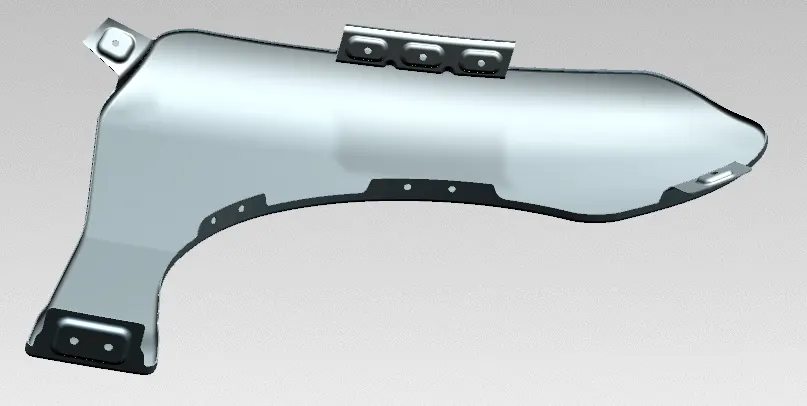 Views of Fender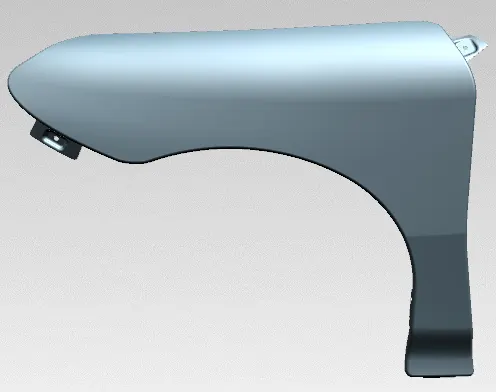
Manufacturing Process
The manufacturing of fenders involves several key steps:
Material Selection : Choosing the appropriate material based on factors like weight, strength, and cost.
Stamping and Forming : Fenders are typically stamped from large sheets of metal and formed into the desired shape using hydraulic presses.
Surface Treatment : This includes processes such as painting, coating, or applying protective layers to enhance durability and aesthetics.
Quality Control : Rigorous quality control checks are carried out to ensure the fender meets safety and design specifications.
Embossing : Embossing is a manufacturing process that involves creating raised or depressed patterns on the surface of materials like paper, metal, or plastic. High pressure is applied uniformly to the material using the die, causing the material to deform and take on the pattern of the die.
Bending : Bending is a manufacturing process that involves deforming a material, typically a sheet or a tube, to change its shape by applying force. This can be done through various methods, such as press brakes for sheet metal or mandrels for tubes. Bending is commonly used in industries like metalworking to create curved or angular components for various applications.
Cutting : Cutting is the process of separating a material, typically sheet metal or other flat stock, into two or more pieces along a designated path. There are various methods for cutting, including laser cutting, plasma cutting, waterjet cutting, and traditional methods like shearing or sawing. The choice of cutting method depends on the material, thickness, and precision required.
Blanking : Blanking is a manufacturing process that involves cutting a flat shape or blank from a larger sheet or coil of material. The removed piece, known as the blank, is usually the desired final product, and the remaining material is scrap. Blanking is used to produce items like washers, gaskets, or other flat, geometric shapes with precision and efficiency.
Design Parameters
Several critical design parameters influence the effectiveness of fenders:
1. Aerodynamics: Fenders should be designed to minimize air resistance, improving vehicle fuel efficiency.
2. Safety: Fenders must provide adequate protection to passengers and pedestrians during collisions.
3. Aesthetics: Fenders contribute to a vehicle's overall design and should align with its aesthetics.
4. Weight: Keeping the weight of fenders low is crucial to maintain fuel efficiency.
5. Corrosion Resistance: Fenders should be designed to withstand environmental factors that lead to corrosion.
Conclusion
Fender design is a complex process that balances aesthetics, safety, and functionality. Understanding the various mounts, manufacturing processes, and design parameters is essential for creating fenders that meet modern automotive standards while enhancing vehicle performance and aesthetics.