Fender Design
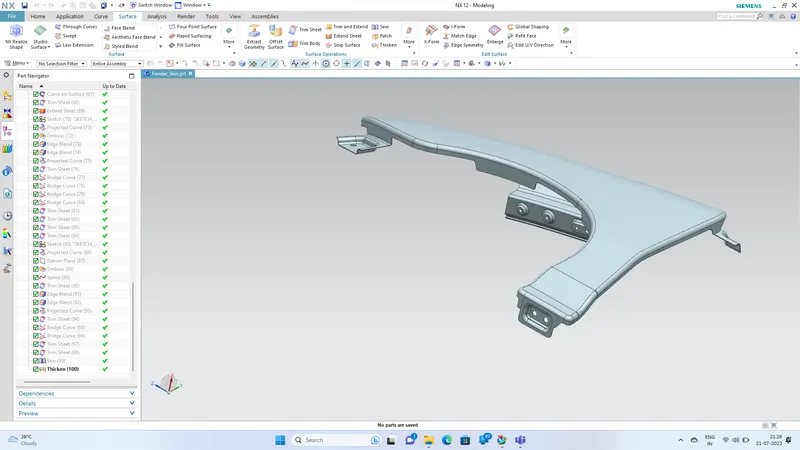
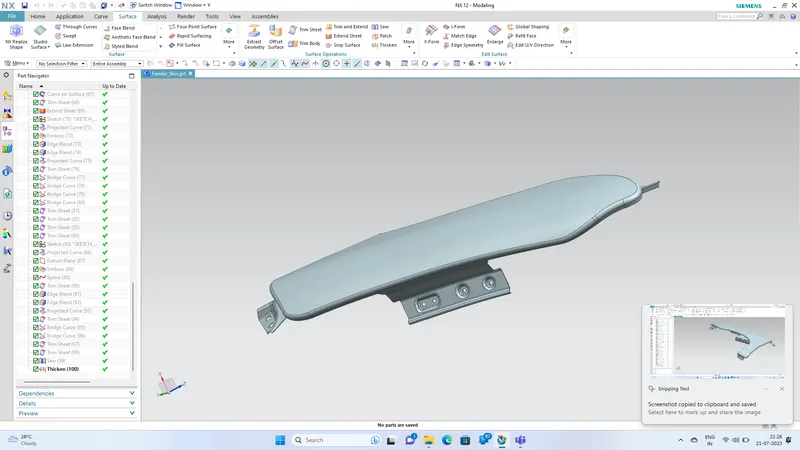
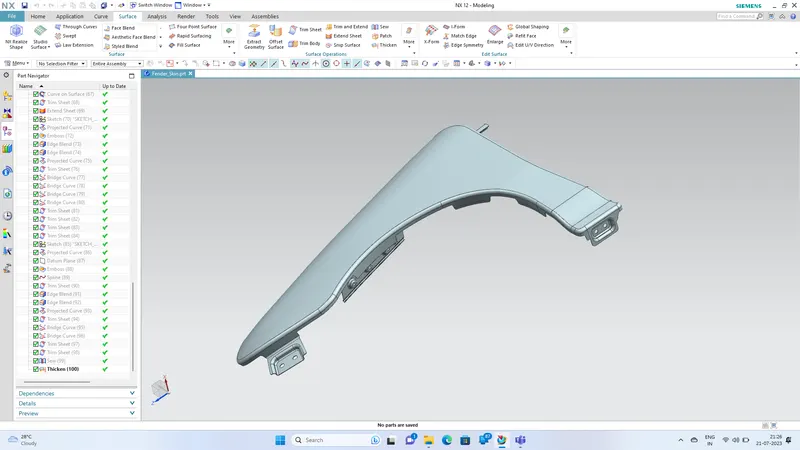
1. Introduction: The fender is an essential component of a vehicle that protects it from debris and enhances its aesthetic appeal. This report aims to explain the design process of a front fender in sheet metal using NX CAD. The focus will be on the different mounts, manufacturing process, and key design parameters involved in creating a functional and visually appealing fender.
2. Design Process: The design process of a front fender involves several stages, including concept development, detailed design, and final validation. Here, we will focus on the key aspects of fender design:
3. Mounts in Fender Design: Mounts are critical elements that attach the fender to the vehicle's body. In the given design, the front fender is equipped with the following mounts:
a) Drip Mounting: Located at the upper edge of the fender, it prevents rainwater from entering the passenger compartment.
b) A-Pillar Mount: Connects the front edge of the fender to the A-Pillar of the vehicle, ensuring structural integrity.
c) Sill Mount: Secures the lower edge of the fender to the vehicle's sill or body frame, providing stability and support.
d) Bumper Mount: Located near the front of the fender, it connects the fender to the vehicle's bumper.
e) Baffle (Splash) Mount: Positioned behind the fender, it reduces water splashing and protects the vehicle's underbody.
4. Manufacturing Process: The manufacturing of the front fender involves several steps, including material selection, sheet metal forming, trimming, and surface finishing. The process can be summarized as follows:
a) Material Selection: High-strength steel or aluminum alloys are commonly used for fenders due to their lightweight and durable properties.
b) Sheet Metal Forming: The fender is shaped using various techniques like stamping, deep drawing, and rolling. Advanced simulation tools in NX CAD can be used to optimize the forming process.
c) Trimming: Excess metal is removed, and the fender is cut to the desired size and shape.
d) Surface Finishing: The fender undergoes surface treatments like painting or coating to enhance its appearance and protect it from corrosion.
5. Design Parameters: Design parameters play a crucial role in ensuring the fender's functionality, manufacturability, and performance. Some key design parameters include:
a) Fender Curvature: The curvature of the fender should be designed to match the vehicle's body contours for a seamless fit.
b) Material Thickness: The thickness of the sheet metal affects the fender's strength, weight, and cost. It should be optimized based on structural requirements.
c) Clearance: Sufficient clearance must be provided between the fender and other vehicle components to avoid interference during suspension movement.
d) Impact Resistance: The fender design should consider impact resistance to protect the vehicle from minor collisions.
e) Aesthetics: The fender's design should align with the overall aesthetics of the vehicle, contributing to its visual appeal.
6. Designing the Front Fender: Based on the given skin data and the master section, the front fender can be designed in NX CAD. The process involves importing the provided data, creating a 3D model of the fender, and incorporating the designated mounts (Drip, A-pillar, Sill, Bumper, and Baffle).
Conclusion: Designing a front fender in sheet metal using NX CAD requires careful consideration of mounts, manufacturing processes, and design parameters. By following a systematic design approach, it is possible to create a functional and aesthetically pleasing fender that meets the required specifications and complements the overall vehicle design.