Fender Design
AIM: To design a Front Fender
OBJECTIVE: To design a Fender mounting on the given model by using Master sketch by considering the safety and manufacturing feasibility for possible mounting region.
Introduction:
Fender: Fender is the US English term for the part of an automobile that frames a wheel well. Its primary purpose is to prevent sand, mud, rocks, liquids, and other road spray from being thrown into the air by the rotating tire.
When the vehicle is moving, tyres pick up syones and others and hurl them in all directions. Fenders are basically present to prevent any injuries to pedestrians and contain the motion of these particals. Most passenger automobiles have four fenders, one over each wheel. For vehices with a narrow car body that exposes the tire, the fender is an exposed curve over the top of the tire. For wide body vehicles that cover the tire, the fender forms the wheel well surrounding the tire, and is not directly visible from above the car boy.
More elaborate designs include fender skins for enclosing the outside edge of the wheel well, and stylized pontoon fenders for exposed fenders.
Sticky materials, such as mud, may adhere to the smooth outer tire surface, while smooth loose objects, such as stones, can become temporarily embedded in the tread grooves as the tire rolls over the ground. These materials can be ejected from the surface of the tire at high velocity as the tire imparts kinetic energy to the attached objects. For a vehicle moving forward, the top of the tire is rotating upward and forward, and can throw objects into the air at other vehicles or pedestrians in front of the vehicle.
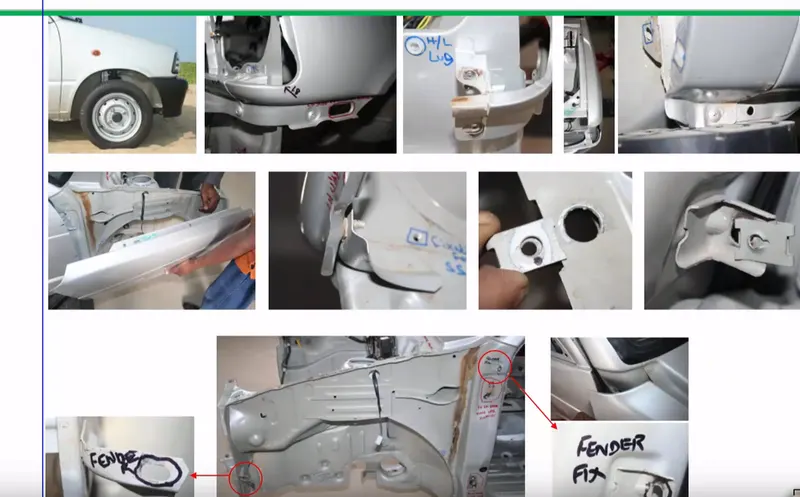
Major role of Automotive fenders
1 - Automotive fenders play a major role in safety of vehicle as it shields the vehicle from unwanted body damage and provide safety to the driver and the passengers at the time of accidents.
2 - It protects the body of vehicle from scratches and damages. Also, it prevents sand, mud, rocks, and liquids from being thrown into the air by the rotating tire, fenders provide protection against liquid spills.
3 - Additionally, fenders ensure that body and engine have minimal contact with corrosive elements.
4 - Also increase overall beauty of car.
5 - And avoid wind resistance and enhance the aerodynamics of the car.
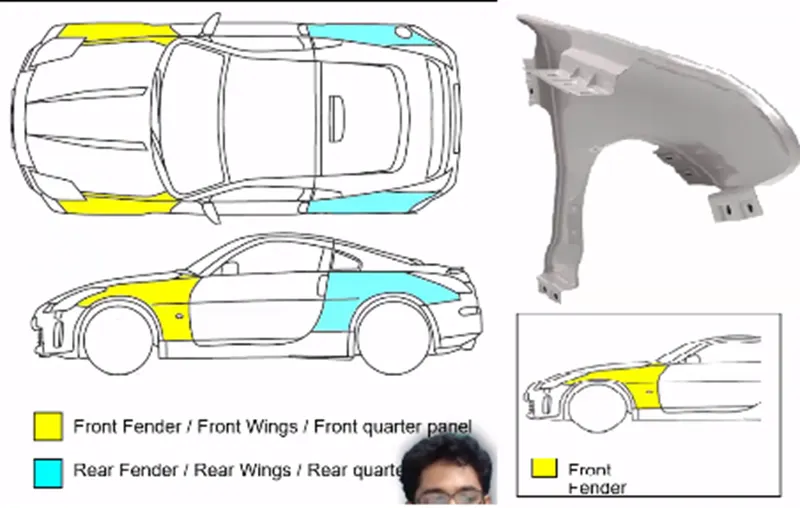
TYPES OF FENDER:
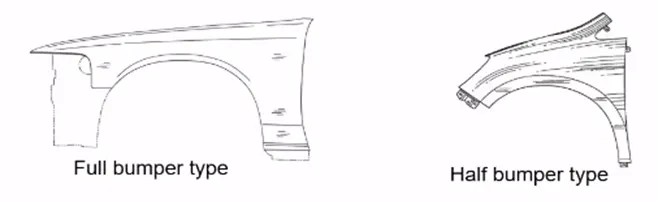
The type of fender is based upon the area covered i.e. full fender type and half fender type.
1.Full bumper type :
2.Half bumper type :
Full Bumper Type: Full Bumper Type is not used now a days because it requires large size of balnk to produce the part and it occupies more space.
Half Bumper Type: Half Bumper Type Half bumper is used because the waste of material is less & can produce two fender at the same time by slightly increase the raw sheet. and to reduce the weight & cost mostly bumper fender are been produced.
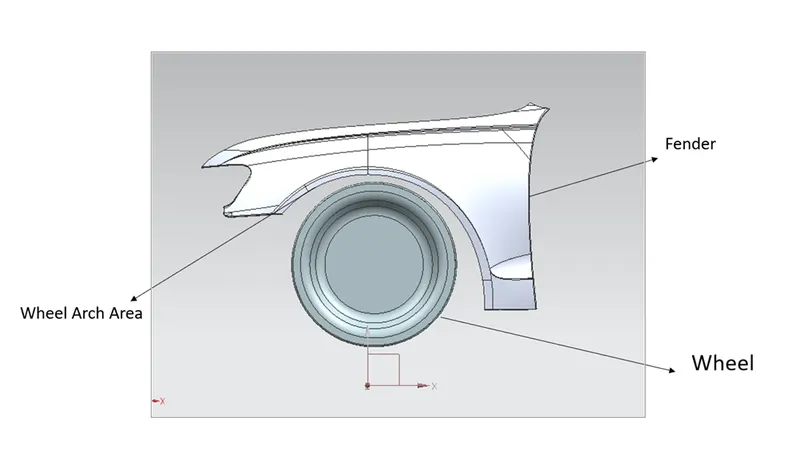
Design considerations -
Master Section-
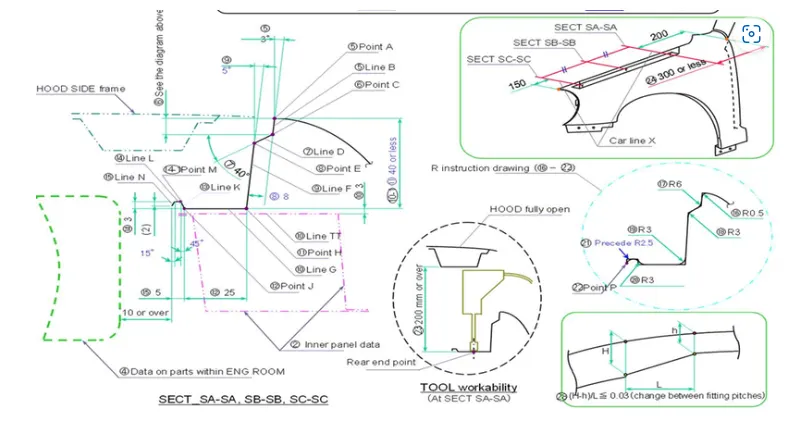
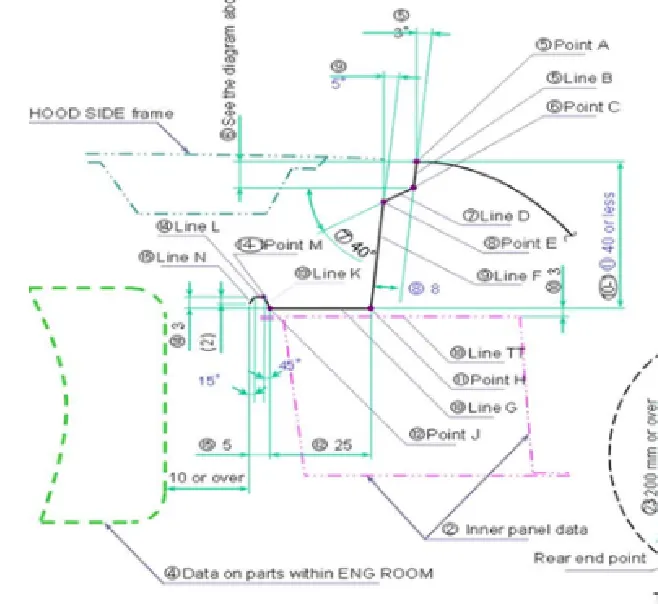
Dimensions should be considered as shown in figure
There are 5 mounting regions on the fender
- pillar mounting
- Body mounting
- Sill mounting
- Bumper mounting
- Drip mounting
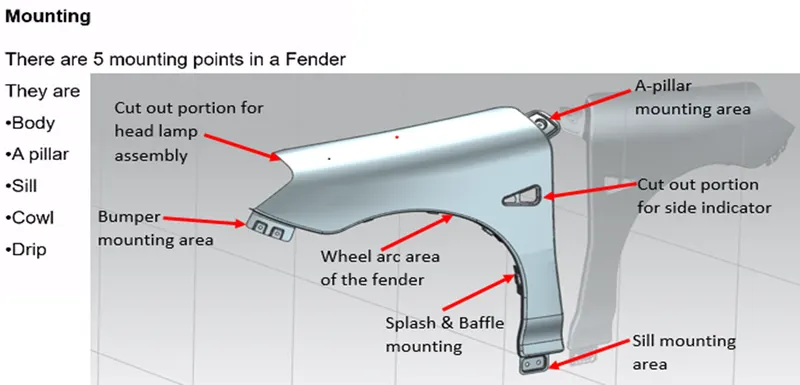
DESIGN OF A-PILLAR MOUNTING:
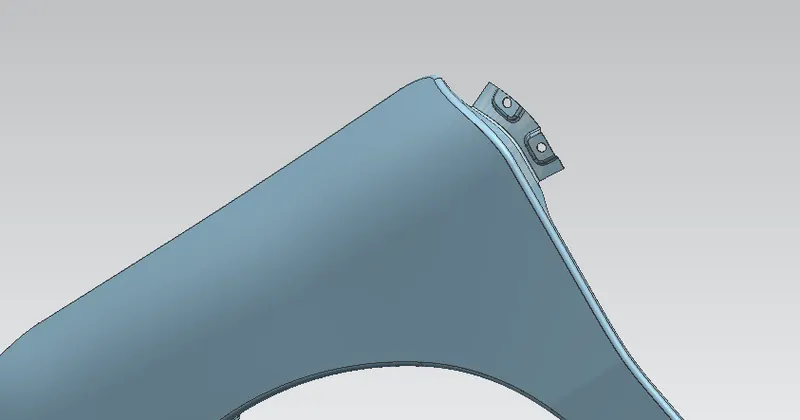
This is a structural pillar that combines the body to the roof. It makes the sides of the windshield at rest and front fenders are fastened,
Design of Sill Mounting:
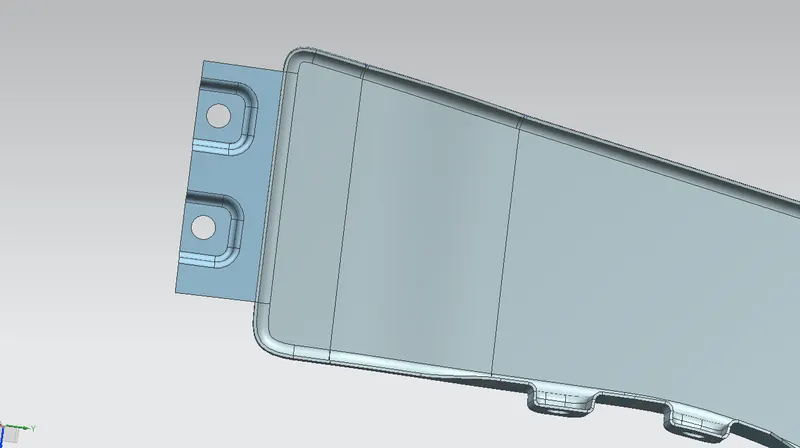
Sill is the panel directly below the bottom of the door supporting the floor and may be used to combine the floor and the body . The bottom end of the fender is mounted on the sill body for reinforcement of the fender
DESIGN OF BUMPER MOUNTING:
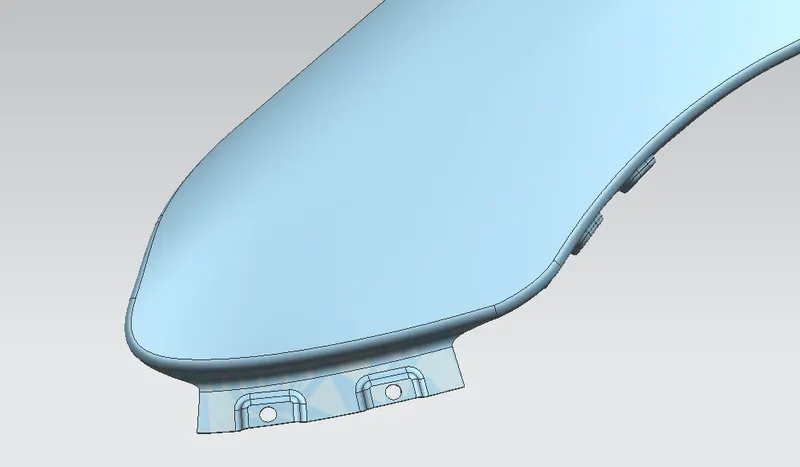
Bumper mounting area is to fix the bumper to the fender with the help of the fasteners or equivalent nuts
DESIGN OF BAFFLE MOUNTING:
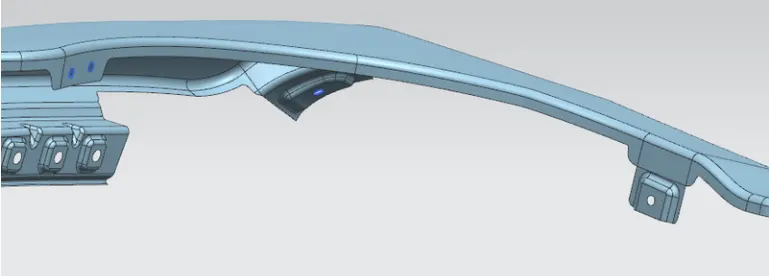
Baffle mounting or mudguard are clip fit type of mounting on the inner side of the fender arch over the Tire. It protects the car engine compartment and pedestrians from causing injuries from chip out debris on the road when the car is in motion. They are mounted on the fender using locking clips.
DESIGN OF DRIP MOUNTING:
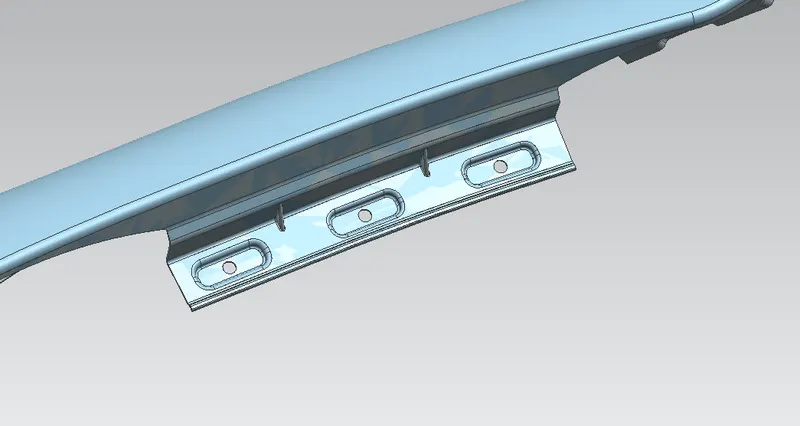
Drip area is one of the most important mount attached to the engine compartments by using fasteners. In design Drip area should be consider the rear end of fender need to leave at least 200mm for cowl top part. Front end of fender area leave at least 150 mm for head lamp and housing unit.
FINAL OUTPUT:
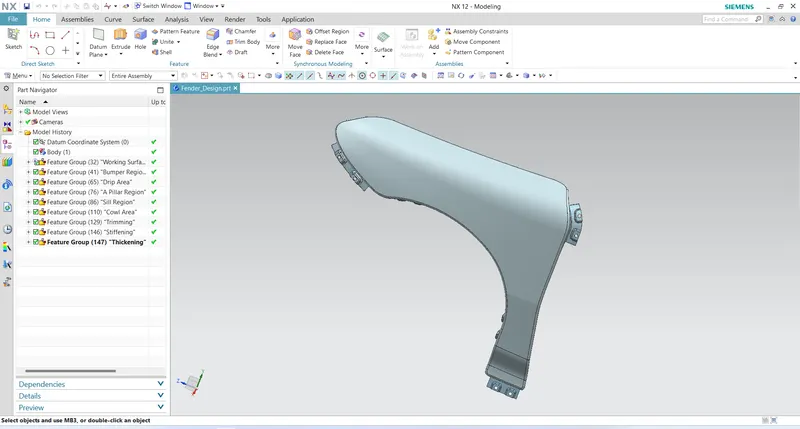
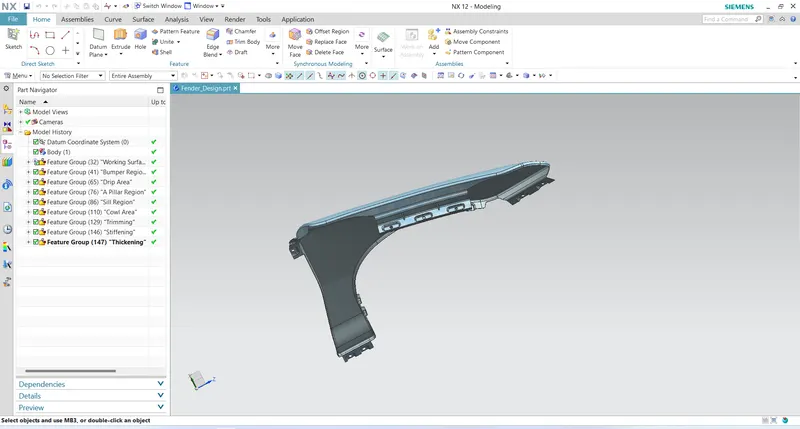
Conclusion: We designed the Front Fender in NX application with proper mountings by using the Master Sketch and Design Parameters.