Fender Design
FRONT FENDERS
Front fenders are an essential component of a vehicle's exterior body design, providing protection against road debris, enhancing aerodynamics, and contributing to the overall aesthetics. This report explores the design, mounts, manufacturing process, and key design parameters associated with front fenders.
INTRODUCTION
This report presents design concepts and mounting points for the Sill, Bumper, Baffle (Splash), and A-Pillar components of a vehicle. The design follows engineering standards and considerations for optimal functionality and structural integrity.
- Sill Mount Design
The sill is a structural component located along the sides of the vehicle. It provides protection, rigidity, and aesthetic appeal. The mounting points for the sill typically include:
(i) Bolt-On Mounts: Bolt-on mounts are commonly used for attaching the sill to the vehicle's body structure. These mounts involve utilizing bolts or screws to secure the sill, allowing for easier removal and replacement during repair or maintenance.
(ii) Welded Mounts: Welded mounts involve permanently attaching the sill to the vehicle's body by welding or similar techniques. Welded mounts provide a rigid connection, enhancing the overall strength and structural integrity of the vehicle.
- Bumper Mount Design
The bumper serves as a protective component at the front and rear of the vehicle. It absorbs impact during collisions and enhances safety. The mounting points for the bumper may include:
(i) Bolt-On Mounts: Bolt-on mounts are commonly employed for attaching the bumper to the vehicle's body. These mounts utilize bolts or screws, enabling easier removal and replacement when necessary.
(ii) Integrated Mounts: Some vehicles have integrated mounts that are designed as part of the vehicle's body structure, allowing for a seamless and integrated appearance of the bumper.
- Baffle (Splash) Mount Design
The baffle, also known as a splash shield, is located underneath the vehicle and helps protect the engine compartment and other components from water, debris, and road spray. The mounting points for the baffle may include:
(i) Clip-On Mounts: Clip-on mounts are often used for the installation of baffles. These mounts involve clips or fasteners that securely hold the baffle in place, allowing for easy installation and removal.
(ii) Bolt-On Mounts: Bolt-on mounts can also be utilized for the attachment of baffles. These mounts involve the use of bolts or screws to provide a secure connection between the baffle and the vehicle's body.
- A-Pillar Mount Design
The A-pillar is a vertical structural component located at the front corners of the vehicle's passenger compartment, providing support and rigidity to the vehicle's roof structure. The mounting points for the A-pillar may include:
(i) Welded Mounts: Welded mounts are commonly used for attaching the A-pillar to the vehicle's body. These mounts involve permanent attachment by welding, ensuring a strong and rigid connection.
(ii)Integrated Mounts: In some vehicle designs, the A-pillar mounts may be integrated into the overall body structure, providing seamless integration and enhanced structural integrity.
- Drip area mounting
Drip area mounting refers to the process of attaching various components, such as weatherstrips or moldings, to the drip area of a car's body. The drip area is the horizontal surface located just below the side windows, where rainwater typically collects and flows off the vehicle. Mounting components in this area serves multiple purposes. Firstly, it helps to prevent water infiltration into the interior of the vehicle by sealing any gaps or openings. Secondly, it contributes to the overall aesthetics of the car, enhancing the sleek and finished appearance. The mounting of drip area components often involves adhesive bonding or mechanical fasteners, ensuring secure attachment and resistance to weather conditions and vibrations. Proper installation and design considerations are essential to ensure functionality, durability, and seamless integration with the vehicle's design language.
FRONT FENDERS
Front fenders are an essential component of a vehicle's exterior body design, providing protection against road debris, enhancing aerodynamics, and contributing to the overall aesthetics. This report explores the design, mounts, manufacturing process, and key design parameters associated with front fenders.
INTRODUCTION
This report presents design concepts and mounting points for the Sill, Bumper, Baffle (Splash), and A-Pillar components of a vehicle. The design follows engineering standards and considerations for optimal functionality and structural integrity.
- Sill Mount Design
The sill is a structural component located along the sides of the vehicle. It provides protection, rigidity, and aesthetic appeal. The mounting points for the sill typically include:
(i) Bolt-On Mounts: Bolt-on mounts are commonly used for attaching the sill to the vehicle's body structure. These mounts involve utilizing bolts or screws to secure the sill, allowing for easier removal and replacement during repair or maintenance.
(ii) Welded Mounts: Welded mounts involve permanently attaching the sill to the vehicle's body by welding or similar techniques. Welded mounts provide a rigid connection, enhancing the overall strength and structural integrity of the vehicle.
- Bumper Mount Design
The bumper serves as a protective component at the front and rear of the vehicle. It absorbs impact during collisions and enhances safety. The mounting points for the bumper may include:
(i) Bolt-On Mounts: Bolt-on mounts are commonly employed for attaching the bumper to the vehicle's body. These mounts utilize bolts or screws, enabling easier removal and replacement when necessary.
(ii) Integrated Mounts: Some vehicles have integrated mounts that are designed as part of the vehicle's body structure, allowing for a seamless and integrated appearance of the bumper.
- Baffle (Splash) Mount Design
The baffle, also known as a splash shield, is located underneath the vehicle and helps protect the engine compartment and other components from water, debris, and road spray. The mounting points for the baffle may include:
(i) Clip-On Mounts: Clip-on mounts are often used for the installation of baffles. These mounts involve clips or fasteners that securely hold the baffle in place, allowing for easy installation and removal.
(ii) Bolt-On Mounts: Bolt-on mounts can also be utilized for the attachment of baffles. These mounts involve the use of bolts or screws to provide a secure connection between the baffle and the vehicle's body.
- A-Pillar Mount Design
The A-pillar is a vertical structural component located at the front corners of the vehicle's passenger compartment, providing support and rigidity to the vehicle's roof structure. The mounting points for the A-pillar may include:
(i) Welded Mounts: Welded mounts are commonly used for attaching the A-pillar to the vehicle's body. These mounts involve permanent attachment by welding, ensuring a strong and rigid connection.
(ii)Integrated Mounts: In some vehicle designs, the A-pillar mounts may be integrated into the overall body structure, providing seamless integration and enhanced structural integrity.
- Drip area mounting
Drip area mounting refers to the process of attaching various components, such as weatherstrips or moldings, to the drip area of a car's body. The drip area is the horizontal surface located just below the side windows, where rainwater typically collects and flows off the vehicle. Mounting components in this area serves multiple purposes. Firstly, it helps to prevent water infiltration into the interior of the vehicle by sealing any gaps or openings. Secondly, it contributes to the overall aesthetics of the car, enhancing the sleek and finished appearance. The mounting of drip area components often involves adhesive bonding or mechanical fasteners, ensuring secure attachment and resistance to weather conditions and vibrations. Proper installation and design considerations are essential to ensure functionality, durability, and seamless integration with the vehicle's design language.
FRONT FENDERS
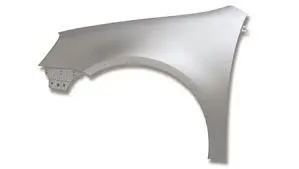
Front fenders are an essential component of a vehicle's exterior body design, providing protection against road debris, enhancing aerodynamics, and contributing to the overall aesthetics. This report explores the design, mounts, manufacturing process, and key design parameters associated with front fenders

INTRODUCTION
This report presents design concepts and mounting points for the Sill, Bumper, Baffle (Splash), and A-Pillar components of a vehicle. The design follows engineering standards and considerations for optimal functionality and structural integrity.
- Sill Mount Design
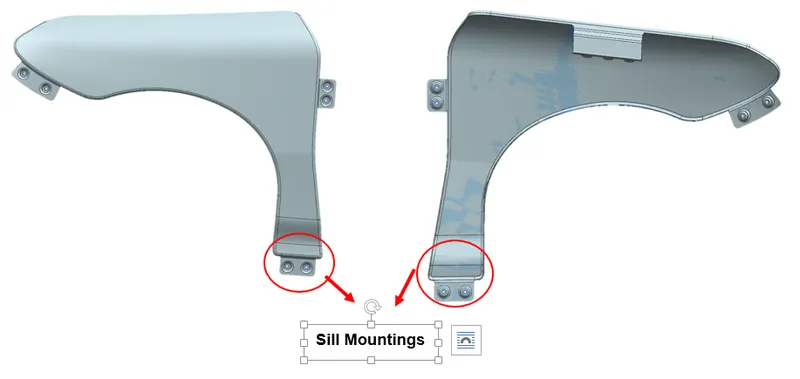
The sill is a structural component located along the sides of the vehicle. It provides protection, rigidity, and aesthetic appeal. The mounting points for the sill typically include:
(i) Bolt-On Mounts: Bolt-on mounts are commonly used for attaching the sill to the vehicle's body structure. These mounts involve utilizing bolts or screws to secure the sill, allowing for easier removal and replacement during repair or maintenance.
(ii) Welded Mounts: Welded mounts involve permanently attaching the sill to the vehicle's body by welding or similar techniques. Welded mounts provide a rigid connection, enhancing the overall strength and structural integrity of the vehicle
2. Bumper Mount Design
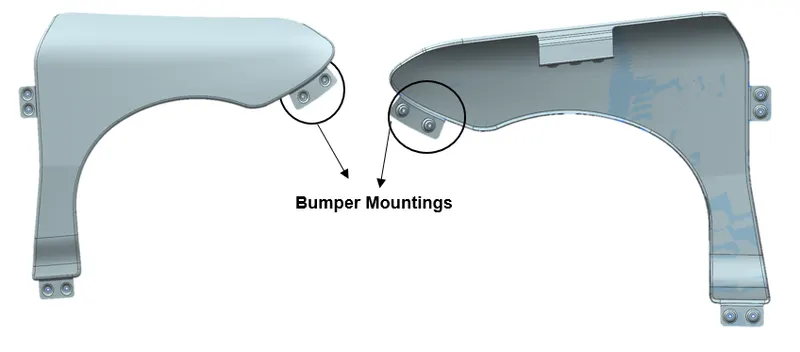
The bumper serves as a protective component at the front and rear of the vehicle. It absorbs impact during collisions and enhances safety. The mounting points for the bumper may include:
(i) Bolt-On Mounts: Bolt-on mounts are commonly employed for attaching the bumper to the vehicle's body. These mounts utilize bolts or screws, enabling easier removal and replacement when necessary.
(ii) Integrated Mounts: Some vehicles have integrated mounts that are designed as part of the vehicle's body structure, allowing for a seamless and integrated appearance of the bumper.
3. Baffle (Splash) Mount Design
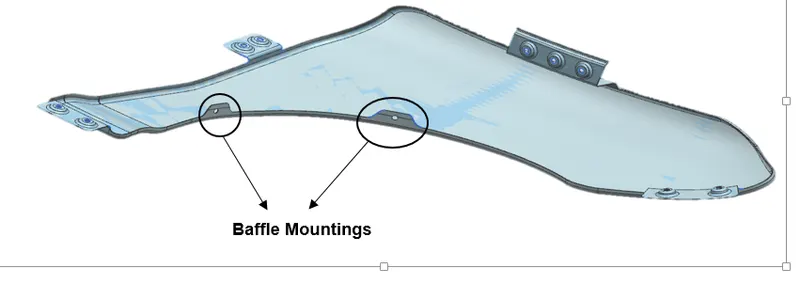
The baffle, also known as a splash shield, is located underneath the vehicle and helps protect the engine compartment and other components from water, debris, and road spray. The mounting points for the baffle may include:
(i) Clip-On Mounts: Clip-on mounts are often used for the installation of baffles. These mounts involve clips or fasteners that securely hold the baffle in place, allowing for easy installation and removal.
(ii) Bolt-On Mounts: Bolt-on mounts can also be utilized for the attachment of baffles. These mounts involve the use of bolts or screws to provide a secure connection between the baffle and the vehicle's body.
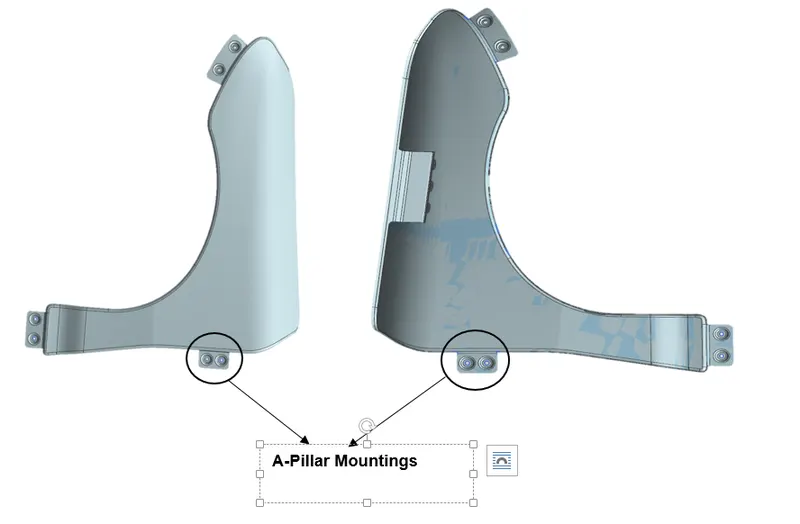
4. A-Pillar Mount Design
The A-pillar is a vertical structural component located at the front corners of the vehicle's passenger compartment, providing support and rigidity to the vehicle's roof structure. The mounting points for the A-pillar may include:
(i) Welded Mounts: Welded mounts are commonly used for attaching the A-pillar to the vehicle's body. These mounts involve permanent attachment by welding, ensuring a strong and rigid connection.
(ii)Integrated Mounts: In some vehicle designs, the A-pillar mounts may be integrated into the overall body structure, providing seamless integration and enhanced structural integrity.
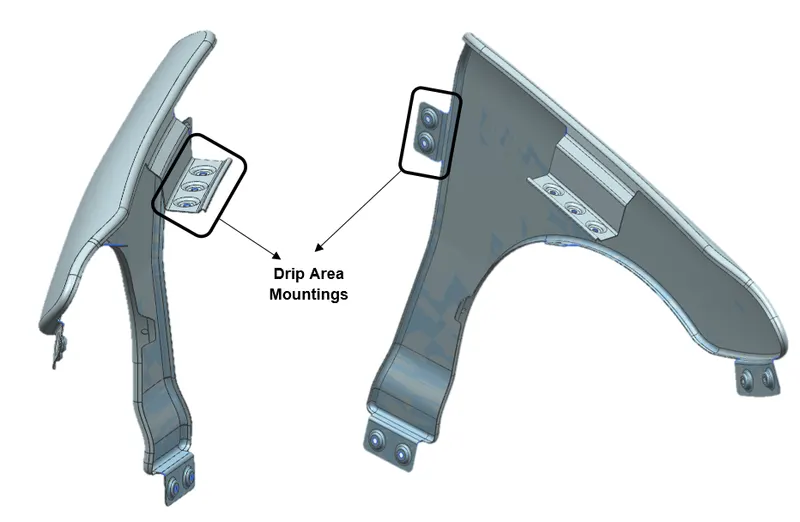
5. Drip area mounting
Drip area mounting refers to the process of attaching various components, such as weatherstrips or moldings, to the drip area of a car's body. The drip area is the horizontal surface located just below the side windows, where rainwater typically collects and flows off the vehicle. Mounting components in this area serves multiple purposes. Firstly, it helps to prevent water infiltration into the interior of the vehicle by sealing any gaps or openings. Secondly, it contributes to the overall aesthetics of the car, enhancing the sleek and finished appearance. The mounting of drip area components often involves adhesive bonding or mechanical fasteners, ensuring secure attachment and resistance to weather conditions and vibrations. Proper installation and design considerations are essential to ensure functionality, durability, and seamless integration with the vehicle's design language.
Conclusion
Designing the mounting points for the Sill, Bumper, Baffle (Splash), and A-Pillar components is crucial to ensure the vehicle's structural integrity, functionality, and aesthetic appeal. By following engineering standards and considering the appropriate mounting methods, these components can be securely attached to the vehicle, providing optimal performance and safety.