Fender Design
Fender Design
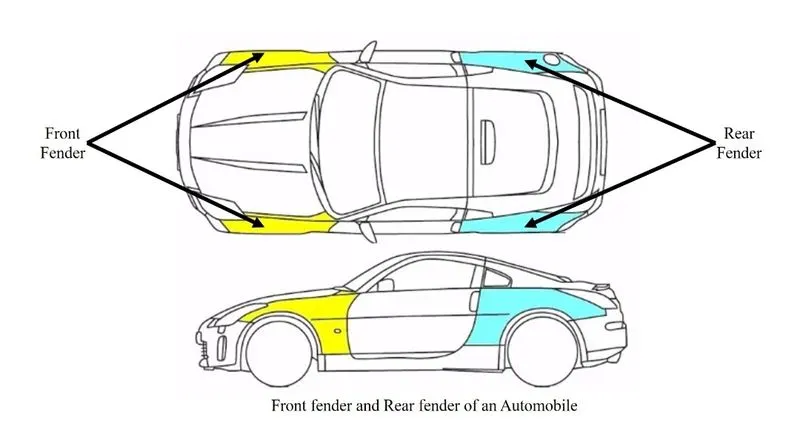
The fender plays a crucial role in the exterior of an automobile as it encompasses the wheel arch that accommodates the vehicle's wheels. For optimal protection, the wheel must be positioned within the confines of the fender to prevent the discharge of harsh particles into the environment, which could potentially damage the car's external components or endanger pedestrians.
In addition to protecting the vehicle's external components, the fender also plays a significant role in pedestrian safety. When the wheel is properly contained within the fender, it reduces the risk of abrasive particles and debris being flung toward pedestrians, which can cause injury or harm.
Furthermore, a properly positioned wheel within the fender also helps to prevent accidents in case of a collision with a pedestrian. The fender acts as a barrier between the vehicle's wheel and the pedestrian, reducing the impact of the collision and potentially minimizing injury to the pedestrian.
Therefore, the fender's role in pedestrian safety cannot be overstated, and proper installation and maintenance of the fender are crucial to ensuring the safety of both the vehicle and pedestrians.
Due to the stationary nature of the fender openings for the wheel wells, they are generally larger than the tire's diameter. This is necessary to enable the tire suspension to move freely within the wheel well, without making contact with its interior.
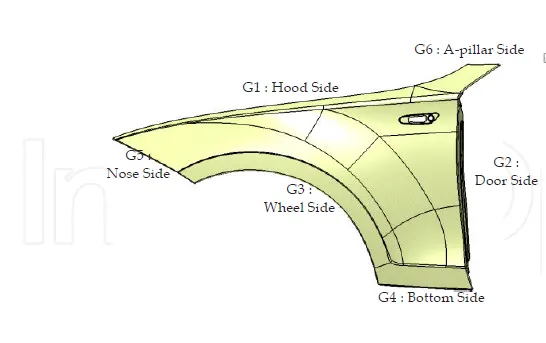
Types of Fenders:
-
Standard Fenders: These are the most common type of fenders found on cars and trucks. They are typically made of sheet metal and cover the entire wheel arch.
-
Bolt-on Fenders: These fenders can be attached to the vehicle with bolts, making them easy to install and remove. They are often used in racing and off-road vehicles.
-
Custom Fenders: Custom fenders are designed specifically for a particular vehicle or purpose, and are often made from high-quality materials such as fiberglass or carbon fiber. They can be used to enhance the appearance of a vehicle or to improve its performance.
-
Flare Fenders: Flare fenders extend beyond the wheel arch, providing additional clearance for larger tires or improving the vehicle's appearance. They are often used in off-road vehicles.
additionally, we go for the two types of Bumper Fenders :
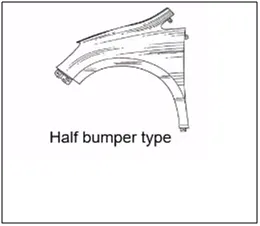
- Half-Bumper type: A half-bumper type, also known as a partial bumper or a half-face bumper, is a bumper that covers only a portion of the front or rear of the vehicle. It is typically smaller and less bulky than a full bumper and is often used in vehicles that are designed for speed and performance. Half-bumper types can provide some protection in case of a low-speed collision but are not as effective as full bumpers. They are usually made of lightweight materials such as carbon fiber or aluminum and may be left unpainted or painted in a contrasting color for aesthetic purposes.
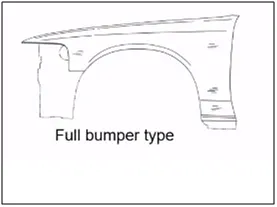
- Full Bumper type: A full bumper type, also known as a complete bumper or a full face bumper, is a bumper that covers the entire front or rear of the vehicle. It is designed to protect the vehicle's bodywork from damage in case of a low-speed collision and also helps to absorb some of the impact energy. Full bumper types are often made of materials such as plastic, fiberglass, or aluminum, and can be painted to match the vehicle's body color.
Advantages of Half-Bumper over Full-Bumper type:
| Advantage | Half Bumper Type | Full Bumper Type |
|---|---|---|
| Weight | Typically lighter, which can improve performance and fuel efficiency | Heavier, which can improve stability and provide more protection |
| Style | Sleeker and sportier look, which can be desirable for some vehicle designs | More traditional look, which can be desirable for some drivers |
| Accessibility | Easier access to vehicle components for maintenance or repairs | Components may be more difficult to access due to the full bumper's coverage |
| Cost | May be less expensive to manufacture and replace | Typically more expensive to manufacture and replace |
| Compatibility | Can be more easily modified to accommodate aftermarket parts or custom designs | May require specialized parts or modifications to ensure compatibility |
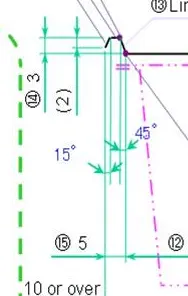
Master section of the Drip Area:
Fender design:
Drip Area
All dimensions are given as per the master section.
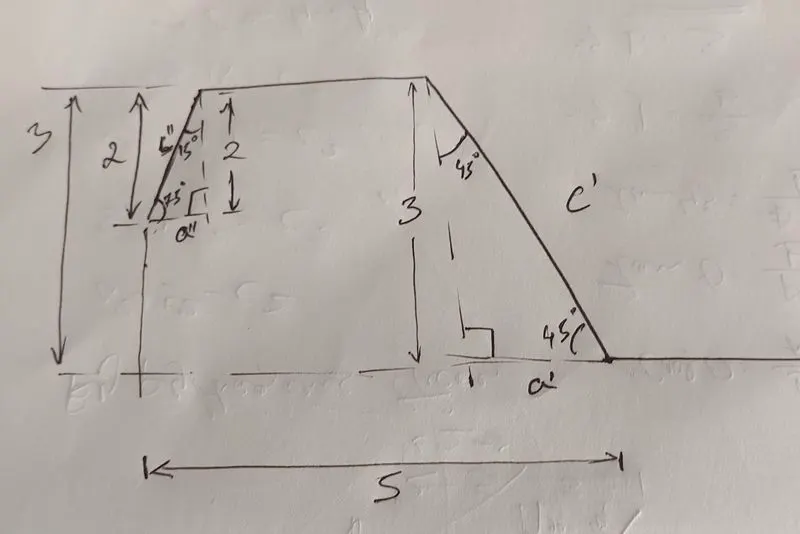
Since only the 5mm length was given in the section above, so I had to apply Pythagoras' theorem,

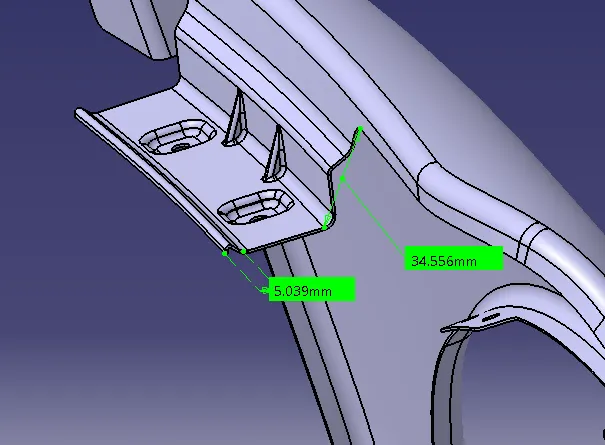
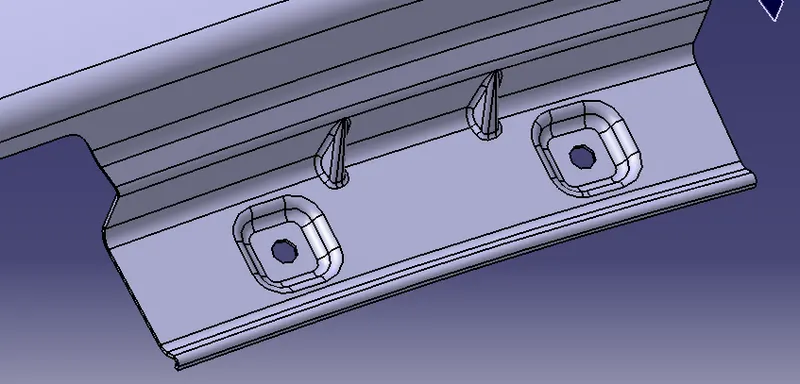
Ribs
A-Piller region
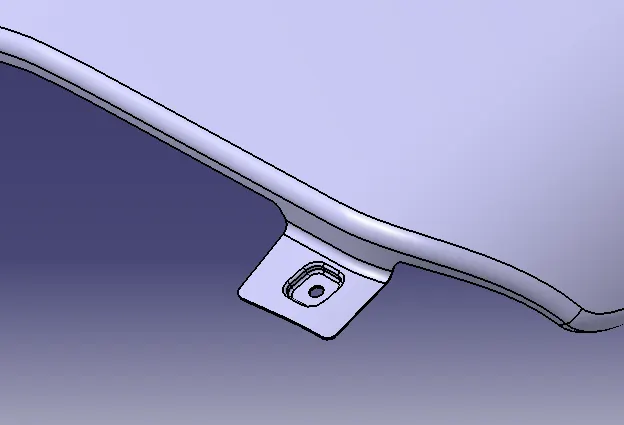
Baffle attachment region
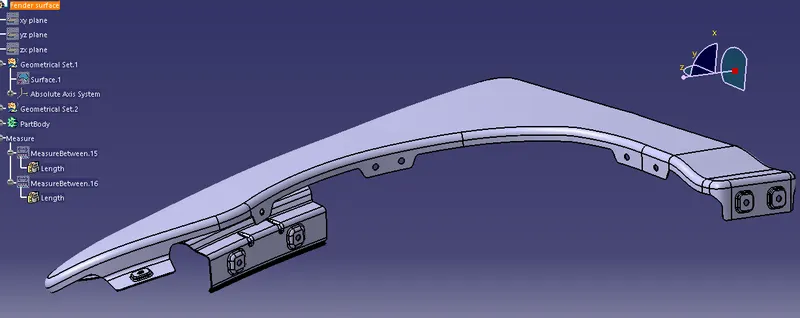
Bumper region
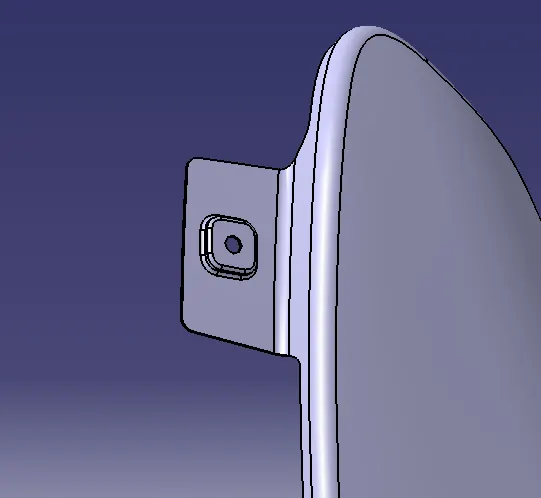
Sill mounting region:
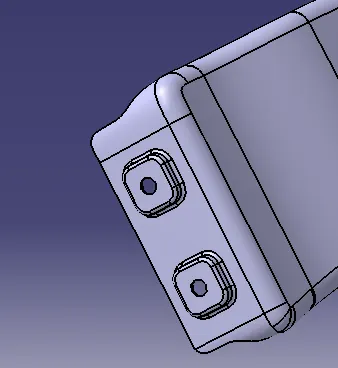
Different views of the Fender:
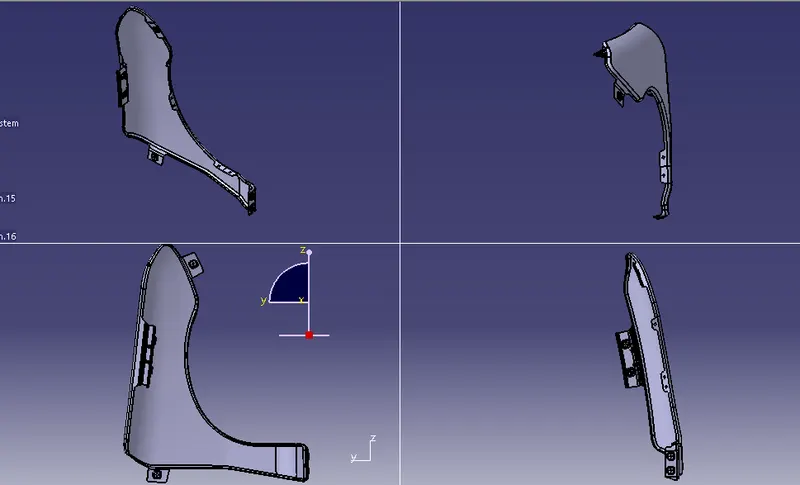
Note: Thickness of the material is taken as 0.75 mm.
Conclusion:
Designing the mounting areas for the fender requires careful consideration of various factors such as the size and shape of the fender, the materials used, and the placement of the mounting points.
Overall, the conclusion is that the mounting areas for the fender have been designed with care and attention to detail, taking into account all relevant design rules and using provided data to ensure the final product meets all necessary requirements.