Fender Design
FENDER DESIGN
Aim:
To design BIW Fender mounting using sheet metal parameter on the Class A surface with given skin data and master section, using NX CAD.
Fender:
- Fender is a part of an automobile, motorcycle or other vehicle body that frames a wheel well (the fender underside). Its primary purpose is to prevent sand, mud, rocks, liquids and other road spray from being thrown into the air by the rotating tire. Fenders are typically rigid and can be damaged by contact with the road surface.
- The main purpose of fenders on cars is that they shield the wheels and they protect the passenger the pedestrains and the other vehicles from stones, mud, liquid and other debris that can fly in the air because of the speeding rotating wheels while the car is running.
- Most passenger automobiles have four fenders, one over each wheel. For vehicles with a narrow car body that exposes the tire, the fender is an exposed curve over the top of the tire. For wide body vehicles that cover the tire, the fender forms the wheel well surrounding the tire, and is not directly visible from above the car body.
- Wheel wells tend to be much larger than the diameter of the tire, because they do not move with the tire suspension and consequently must be large enough to allow the full range of tire motion on the suspension without touching the interior of the wheel well.
- More elaborate designs include fender skirts for enclosing the outside edge of the wheel well, and stylized pontoon fenders for exposed fenders.
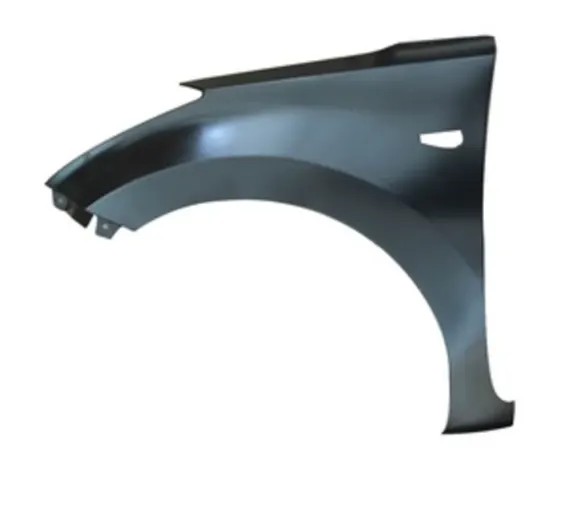
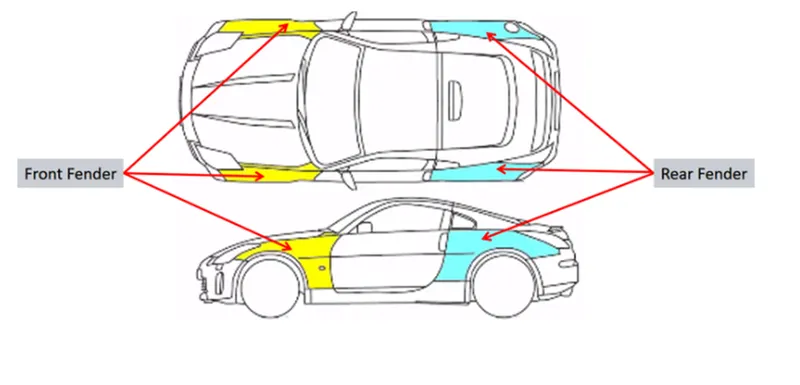
Types Of fenders:
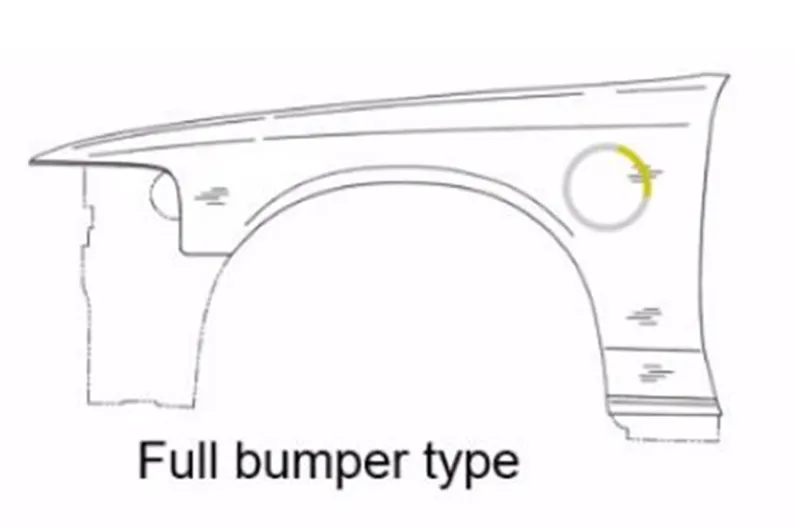
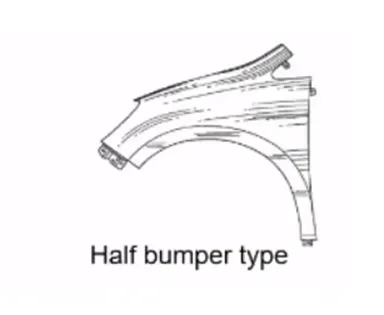
- Full Bumper Type:
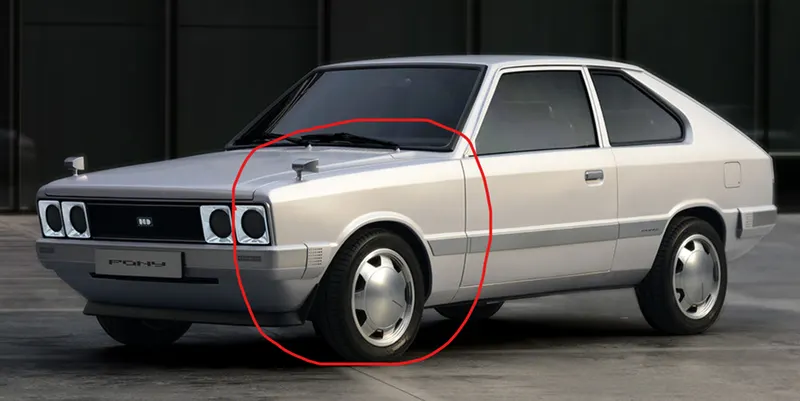
- Half Bumper Type:
Half Bumper Type fenders are widely used now, due to its mini size and the scrap or wastage is less compared to the full bumper type.

Purpose of Fender:
- Car Fender limits the exposure of your car's body and engine to external elements that are harmful.
- Fender flares are attached to ensure that both the body and engine have minimal contact with corrosive elements
- Car Fenders provides safety to the driver and the passengers at the time of accidents or collisions. They are manufactured in a way to provide bend during front and side collisions.
- Car Fenders is designed to avoid wind resistance and make your car more aerodynamic.
- Car Fender enhances the overall look of your cars. Fender flares are available in distinctive designs in the market. Mostly you find universal Fender flares, but you can get customized cars Fenders to fit your car wheels.
Fender Wheel Arch:
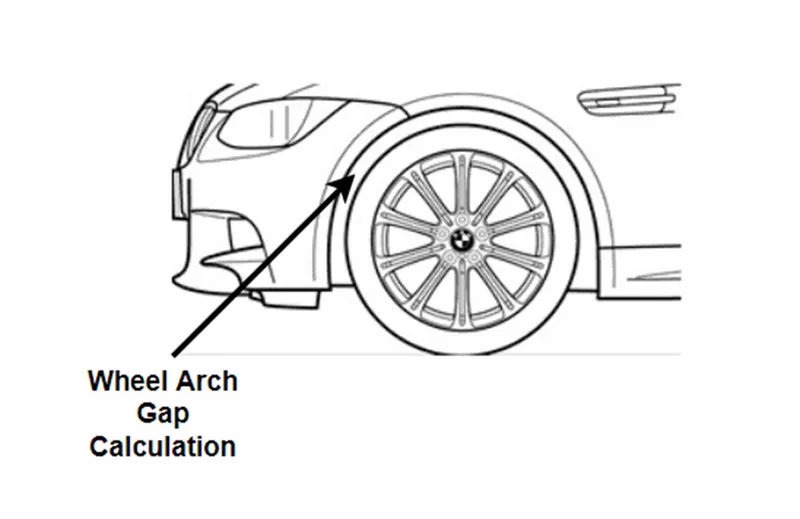
- Fender wheel arch is having some standard specifications, for example if you see the car from the front, if you see the wheel outside fender, it does more chipping and it causes lots of damage to the pedestrians and also to the car.
- In order to maintain the pedestrian’s safety, we have to position the tire wheel inside the fender.
- For the European requirement the clearance between the wheel and the fender outer most skin is 5mm.
- This requirements changes from country to country based up on the road conditions.
Fender is mounted on five important regions with car body:
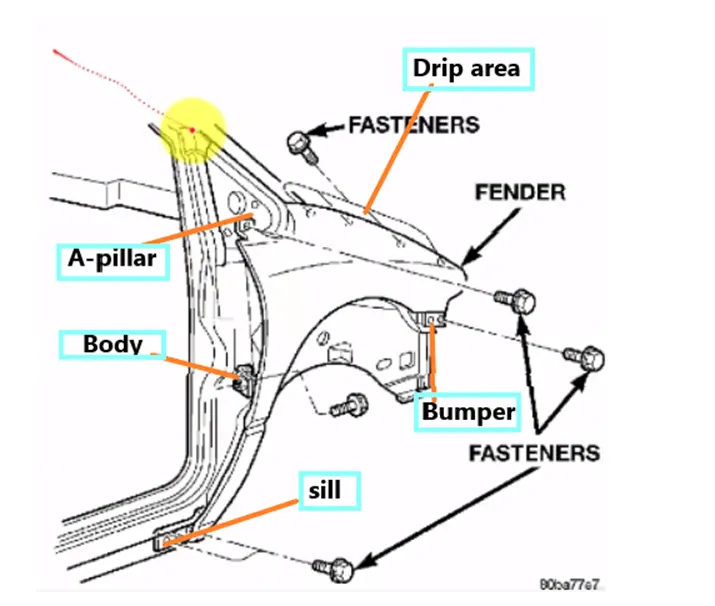
- Drip mounting area
- Sill mounting area
- Bumper mounting area
- A-pillar mounting area
- Splash/ Baffle mounting area
Master Section Data for Fender:
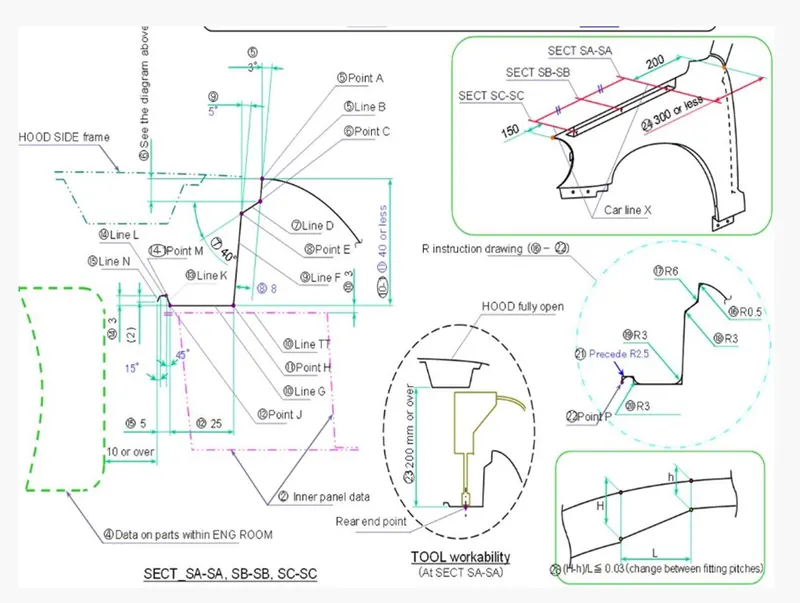
Fender Drip Area Section:
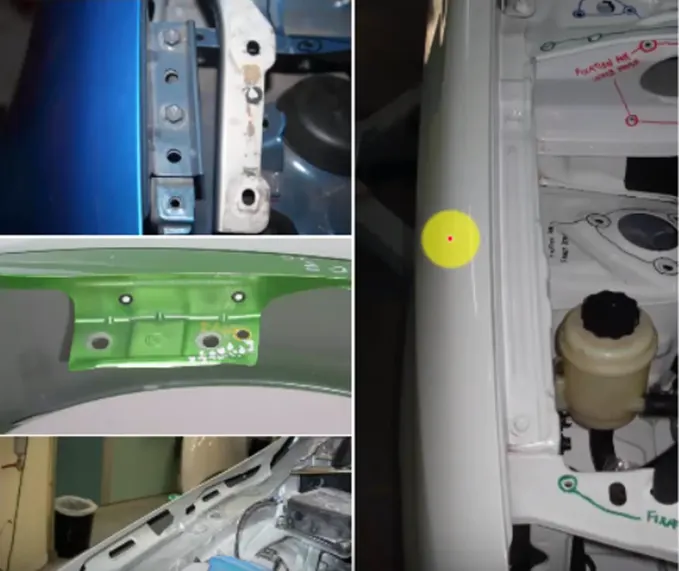
- Considering the above design constrains we have to design the drip area. Embosses are provided to increase strength, corners of the flanges are smoothened to ease of the production. Uniform wall thickness of 0.75mm.
- Design Consideration for drip area are150mm distance from front end of the fender and the gap is filled with headlamp 200mm distance from rear end of the fender and the gap is filled with wiper motor assembly.
- Initially 3-degree angle and 9mm length is given while creating a drip area because the engine component should not be visible from outside.
- The depth of the drift should be between 40 to 60mm. If the depth exceeds from 60mm then forming is not feasible due to spring back and wrinkles.
Design of Sill Mounting Area:
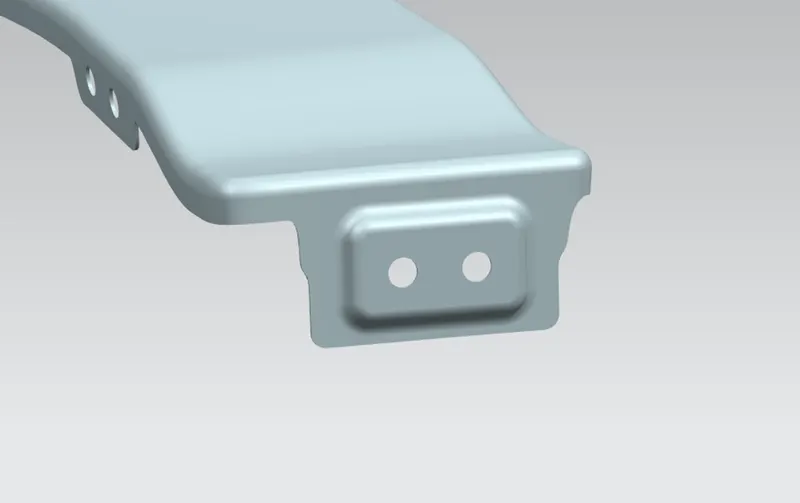
- Sill is the panel (metal plate) directly below the bottom of the door supporting the floor and may be used to combine floor and body. The bottom end of the fender is mounted on the sill body for reinforcement of the fender panel, thus the sill mounting position is designed with holes and emboss. M5 fasteners are used to fix fenders on the sill body.
Design of A-Pillar Mounting Area:
- The A-pillar is the structural pillar that ties the body to the roof. This makes the sides of the windshield rest. Front fenders are fastened to the A-pillar to form a robust structure.
Design of Bumper Mounting Area:
- In the bumper mounting area also darts and embossed surfaces with bolting holes are provided. M5 bolt holes are considered to assemble the bumper and fender on the car
Design of Splash/Baffle Mounting Area:
- Baffle mounting or mudguard are clip fit types of mounting on the inner side of the fender arch area over the tyre. It protects the car engine compartment and waking pedestrians from causing injuries from chip-out debris on the road when the car is in motion. They are mounted on the fender using a special type of locking clips which are made up of Plastic.
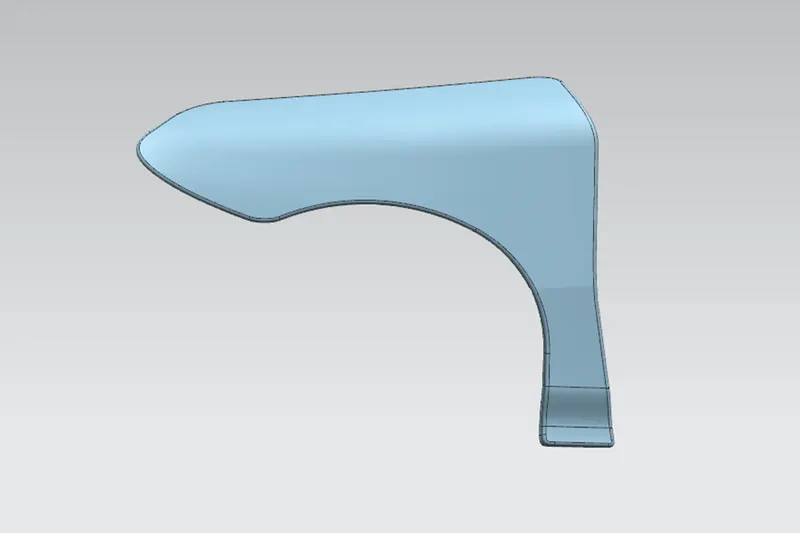
Input skin (Class A surface):
Procedure:
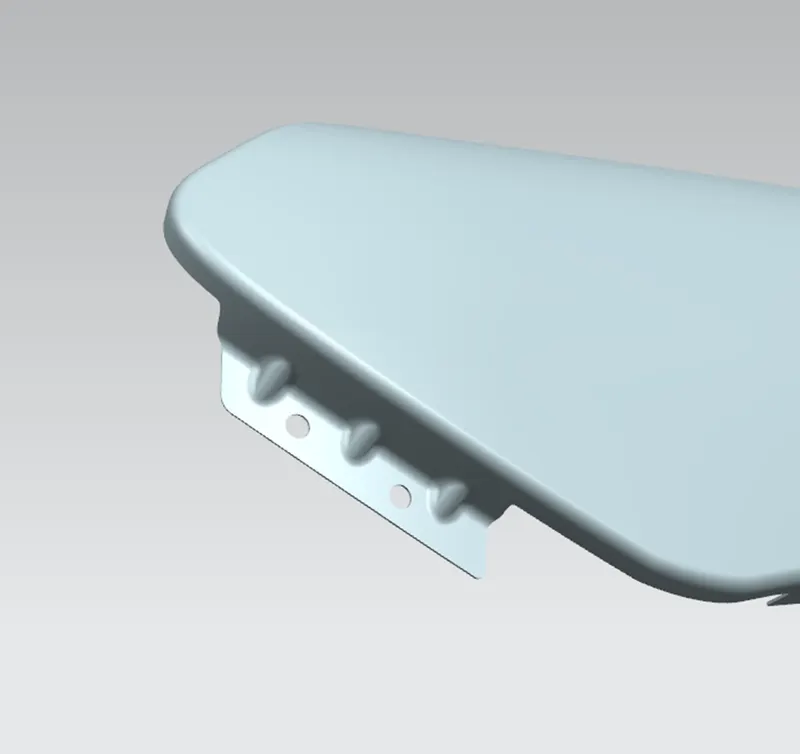
Drip area Design
Drip area mounting is the important part in the fender. This mounting is attached to the engine compartment of the car. Fender drip area is mounted via weldnut to the engine compartment.
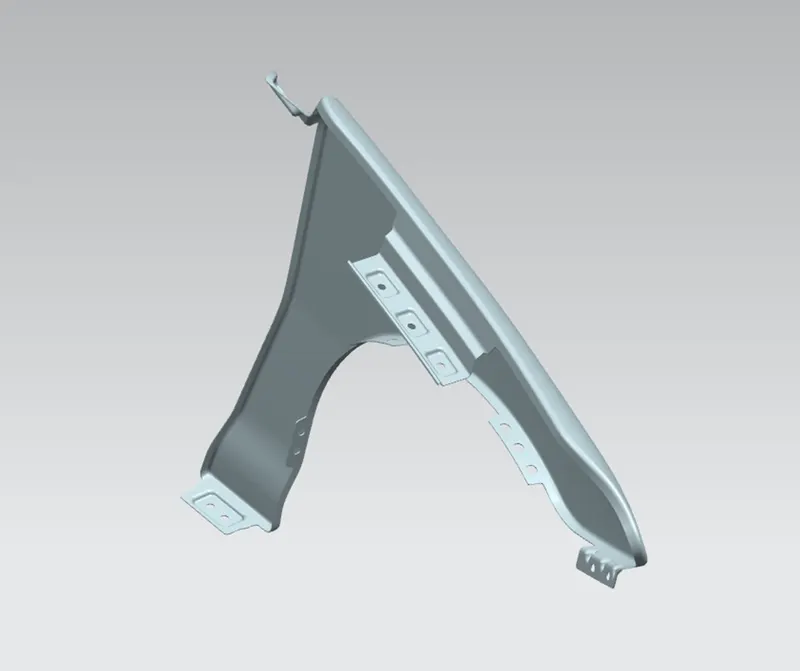
- The height of drip area mounting should be less than 40mm so that it reduces the spring back effect during manufacturing and reduce NVH issues during vehicle movement.
- Mounting screw holes of dia 5mm are and locator pin holes are created for mounting guidance.
- It should be distanced at least 150mm from the front side and 200m from the rear side.
- Ribs are to be provided in order to increase the strength of the mounting part.
- Embosses are created as per design standards for proper fixation.
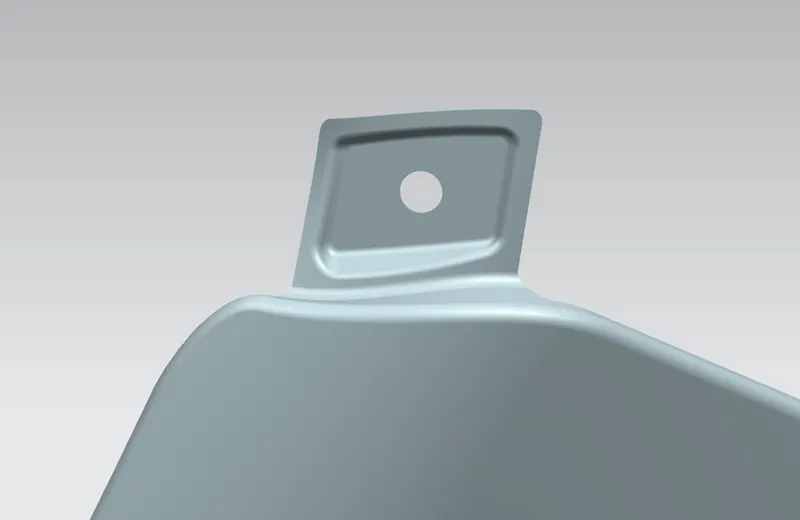
A-pillar design
The A-pillar area mounting depends upon the A-pillar of the car.
Bumper area Design
This is designed by consulting the bumper design team to design the bumper and fender assembly fixation.
Sill area mounting Design
Sill area mounting is also an important mounting part. This mounting point is basically on the bottom of the fender. The mounting part should be created such that the fender is firmly attached to the sill to avoid NVH issues.
Baffle Mounting area Design
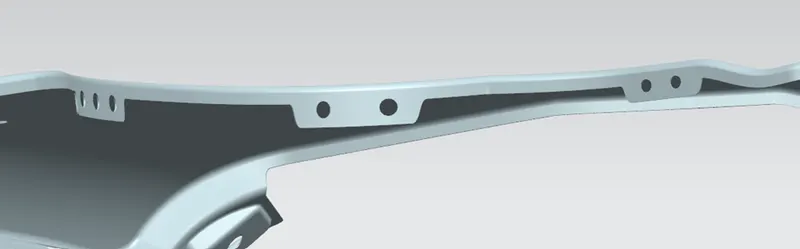
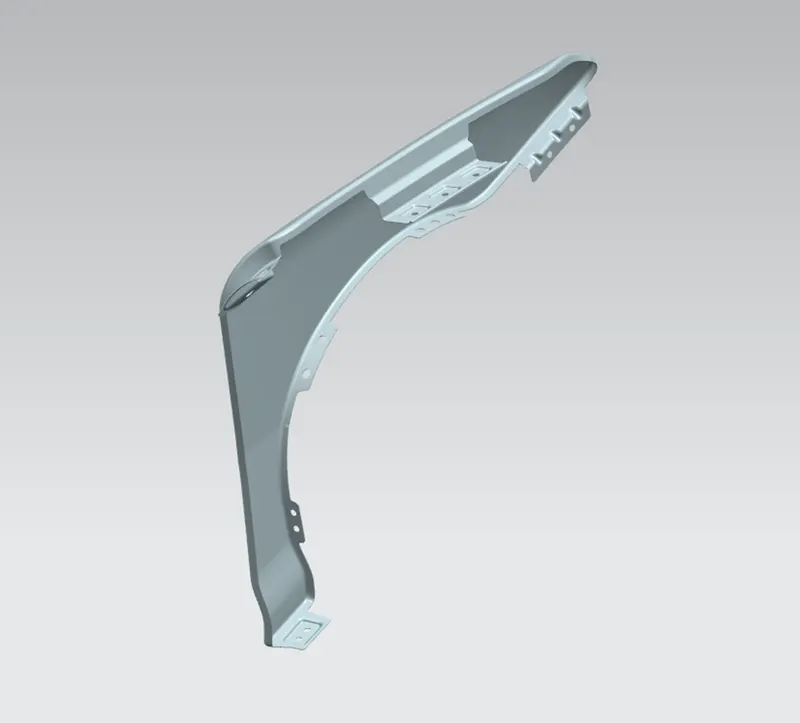
A thickness of 0.75mm is given to the surface to produce solid body
Front View
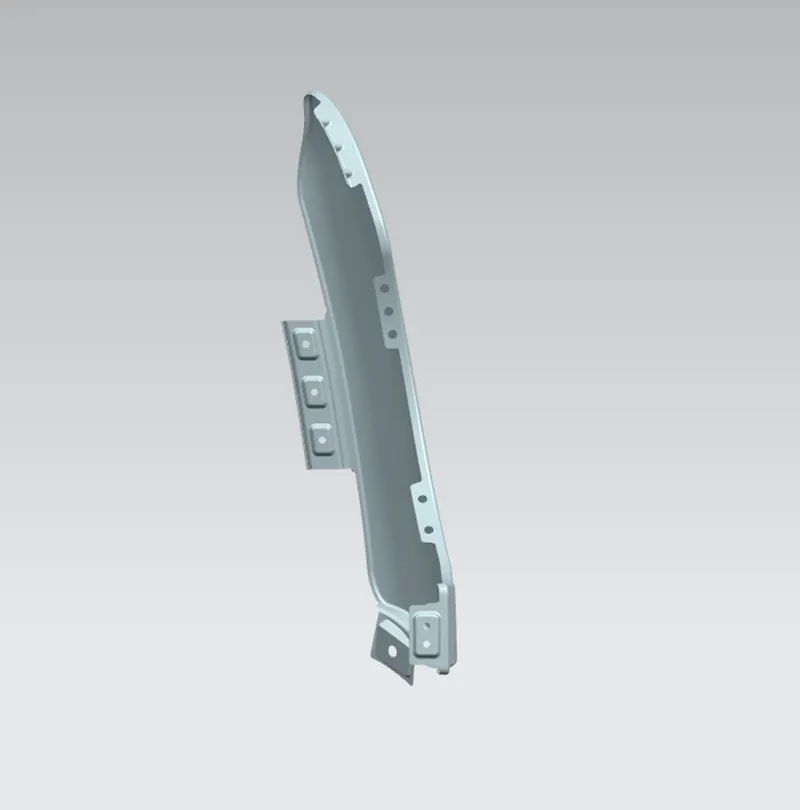
Right View
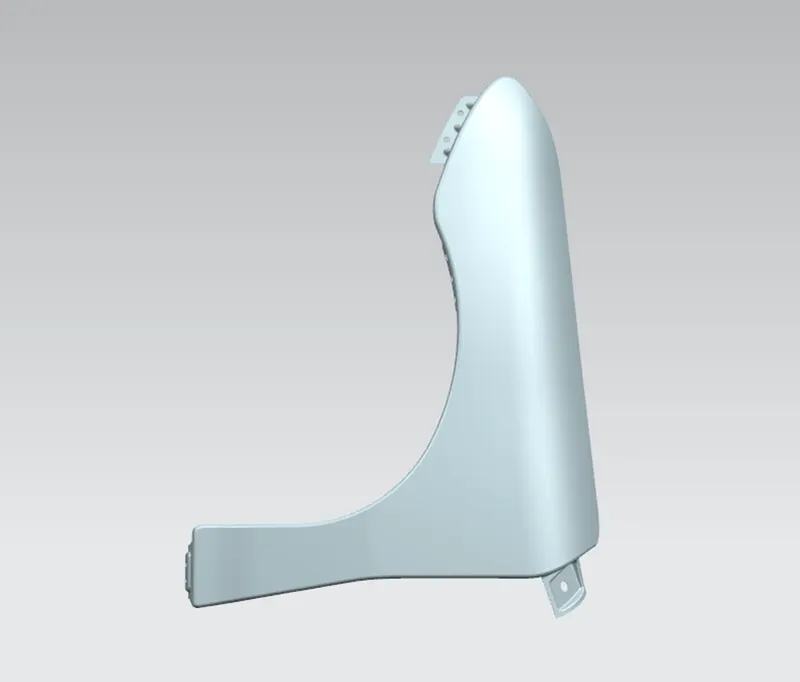
Top View
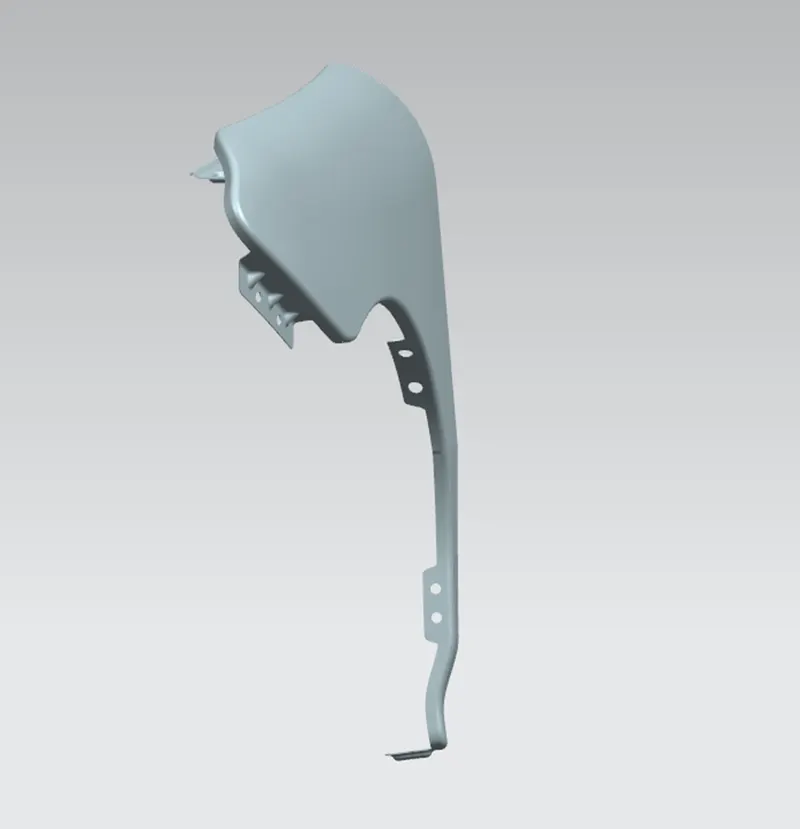
Left View
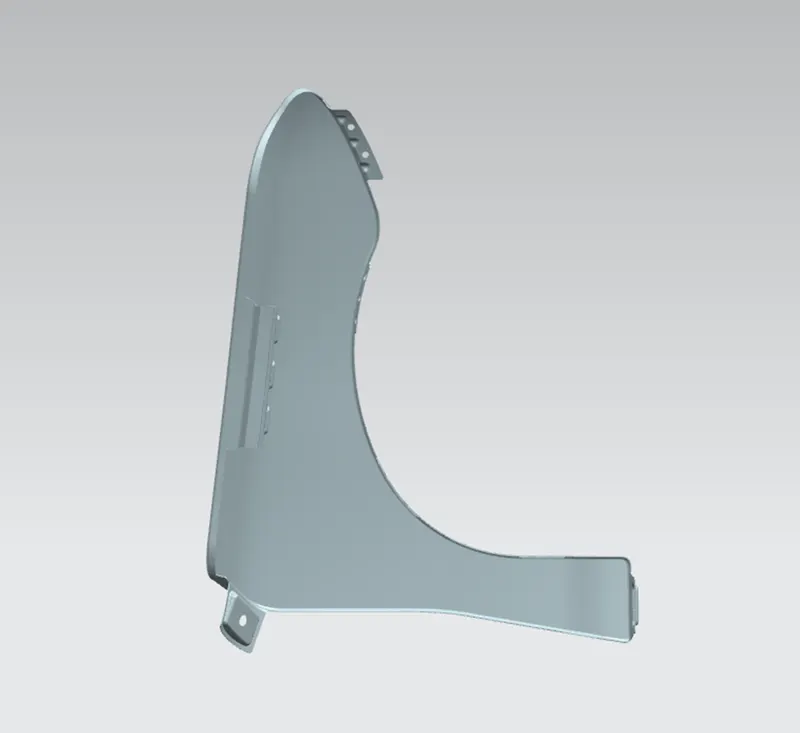
Isometric View
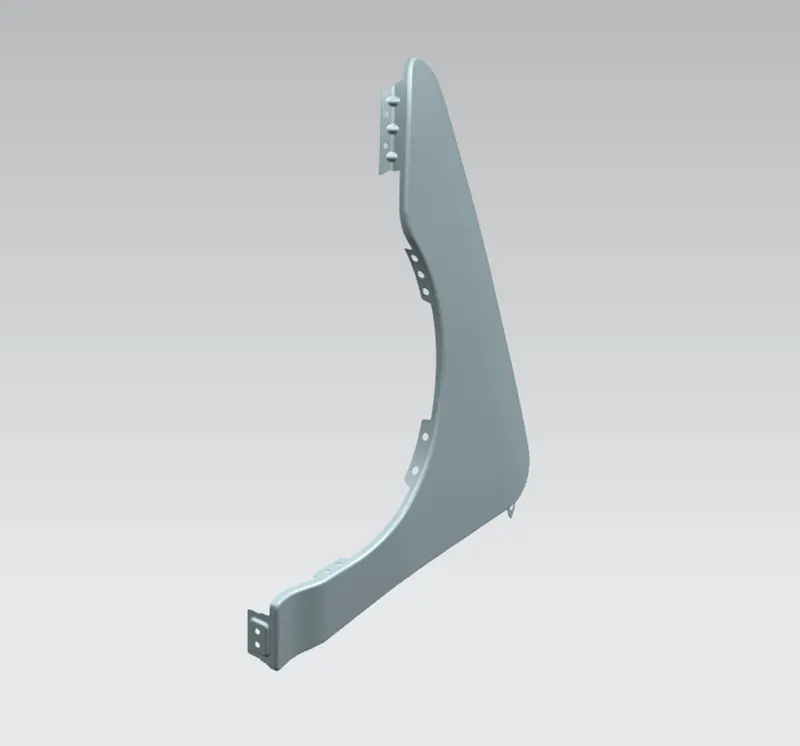
Conclusion:
Thus, all mounting areas for the fender designed from skin data and master section is done by following all design rules.