Week 8 - Challenge 6 - Core & Cavity Design
Core & Cavity Design
Aim:
Create the Core and cavity blocks for the switch bezel designed in the earlier challenge.
Condition:
Thickness of the component = 2.5 mm
Draft angle = 3 deg
Reference:
Here, switch bezel taken from week-8 challenge-2. The switch bezel procedure from class A to creating a solid body explained briefly in week-8 challenge-2.
Solid body draft analysis:
Drafting analysis shows that when component ejected from the mold is removed smoothly without creating any damage or scratch on the component.
The minimum draft angle applied on the component is 0.5°. But it need high precision and it increases cost of the mold.
In industry 3° draft angle is used for optimal solution for component ejection.
Here, draft analysis is done with respect to 3° angle.
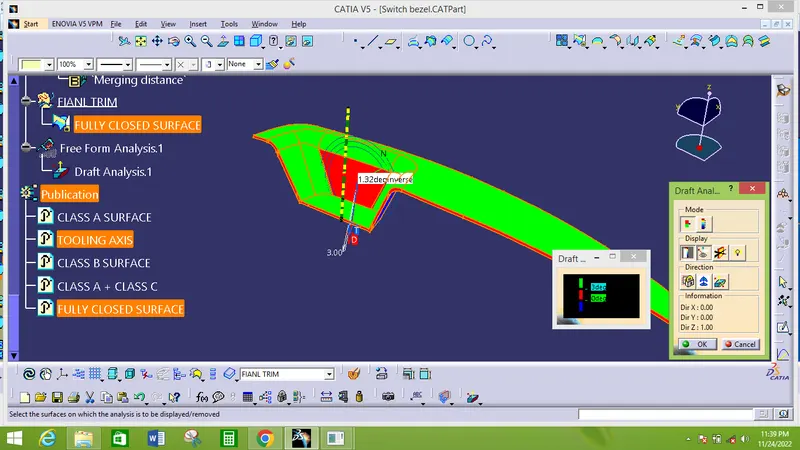
From the above shown image the draft angle of final component has some surfaces not achieved 3°. So, need to modify the component for mold opening.
The draft angle is modified to 2.9° which is nearly equal to three degree.
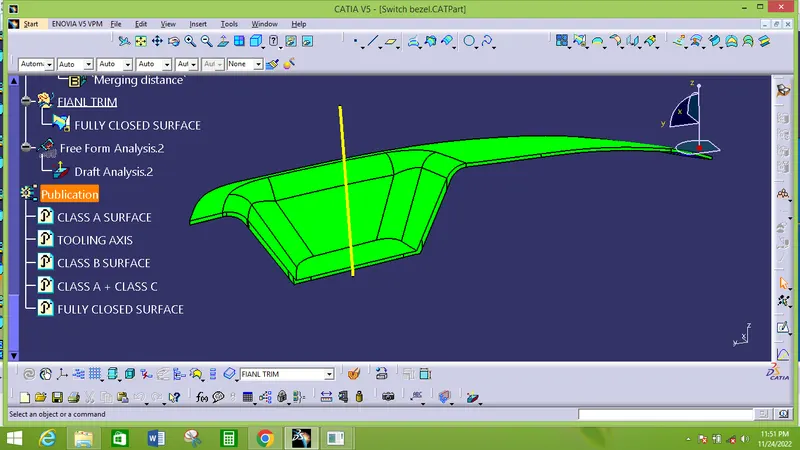
After modifying, the drafting analysis of component shows that all the surfaces on the body clearing the mold ejection condition.
In the shown image green color represent the component inner side has positive draft and the outer blue color represent the component has negative draft.
The final draft analysis shows that all the surfaces in body are applicable for mold opening without wear and tear.
Parting surface:
The parting surface is where the core meets the cavity, and usually locates at the largest section of a product.
When designing a plastic injection mold, the selection of the parting surface is an important design factor. With a reasonable parting surface selection, the mold structure can be simpler, making it easier to mold and release the plastic product, with product quality guaranteed. If the parting surface is inappropriately selected, mold structure becomes complex, making it difficult to mold the plastic product, thus affecting product quality. Therefore, the selection of the parting surface is of great importance to the design of mold structure.
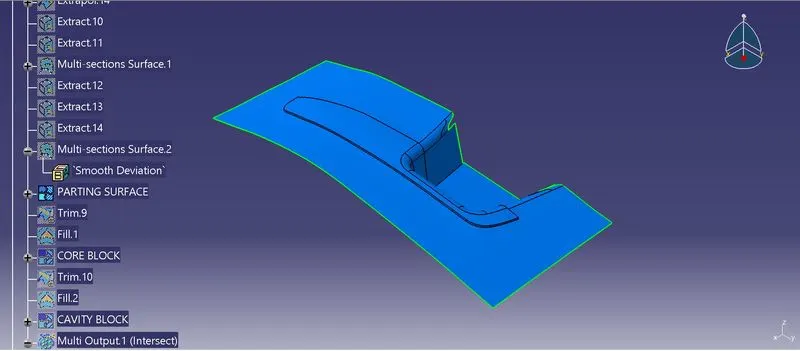
Parting surface created for switch bezel by trimming the class A+C and class B surfaces the below figure shows that,
Mould Core:
The mould core forms the interior of the moulding and is recognizable as the male component which constitutes the impression.
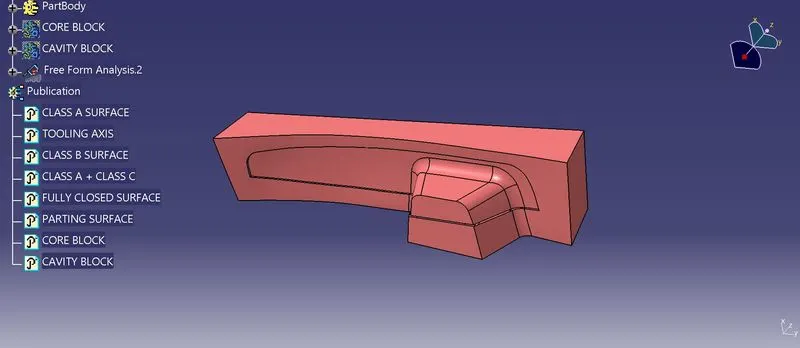
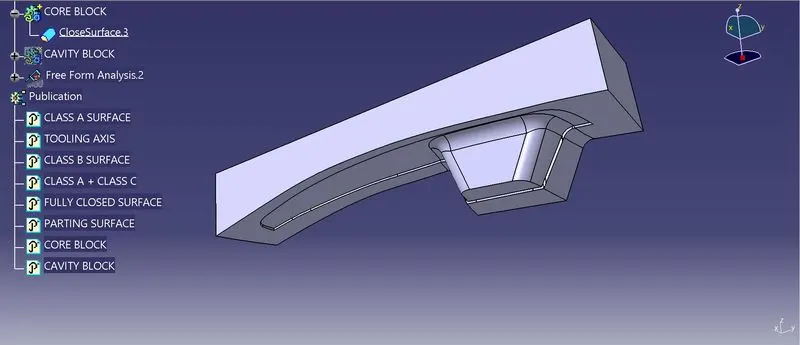
The core section created by trimming the extruded surface and parting surface.
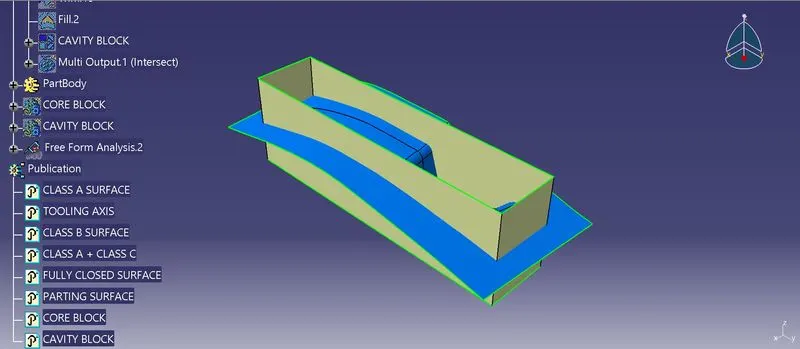
After trimming, fill and join options are used to close the surface. The core closed surface and solid body show below
Mould Cavity:
The mould cavity forms the exterior or presentation face of the moulding and is recognisable as the female component which constitutes the impression.
The cavity section created by trimming the extruded surface and class B surface.
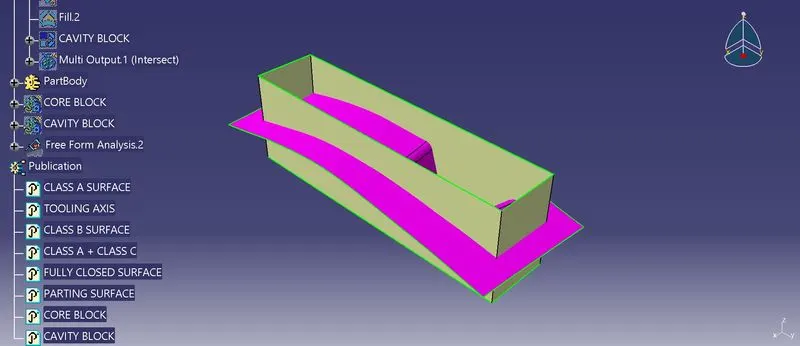
After trimming, fill and join options are used to close the surface. The cavity closed surface and solid body show below
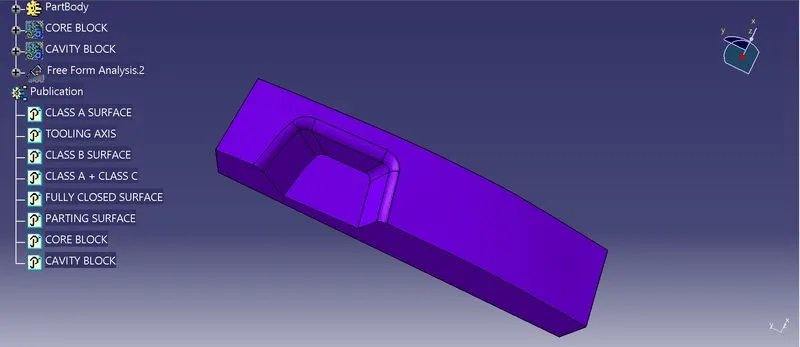
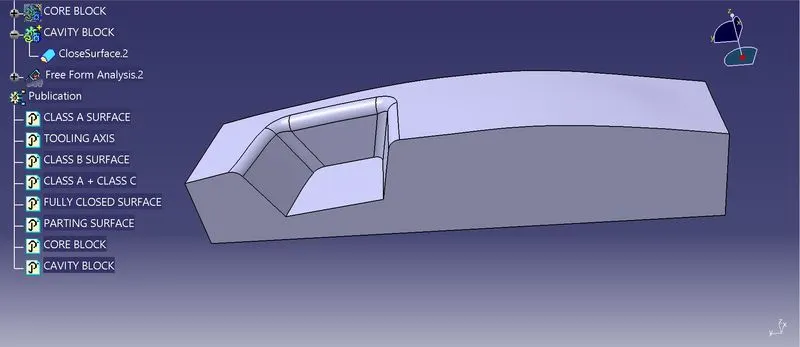
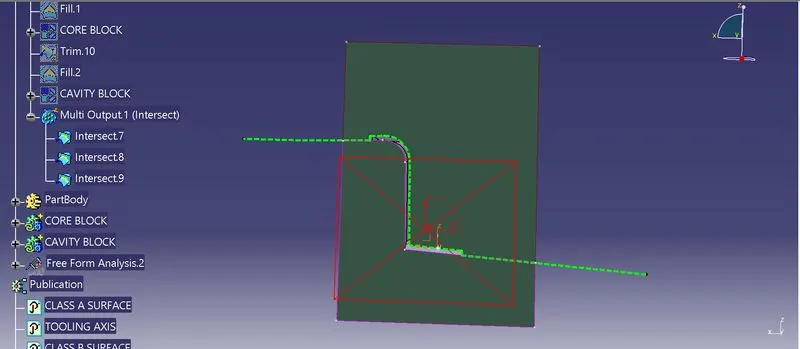
Split Line or Parting Line:
The point at which the core and cavity components interface on mould closure is referred to as the split or part line. Split line position on the moulded component is determined by the complexity of the core and cavity interface. Mould designers often position the split line to simplify the mould design in terms of reducing tool sophistication and easing moulded component ejection.
Parting line of switch bezel component
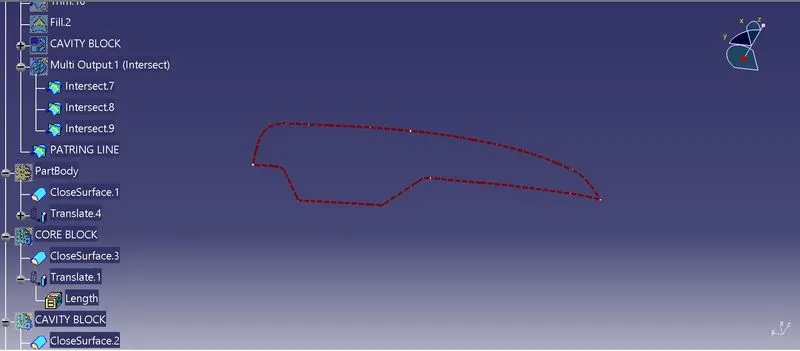
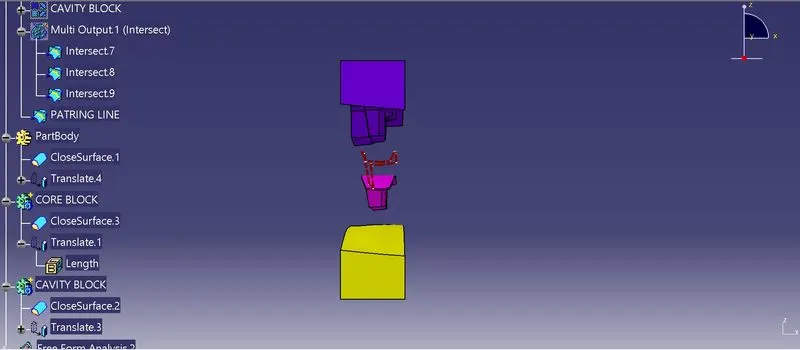
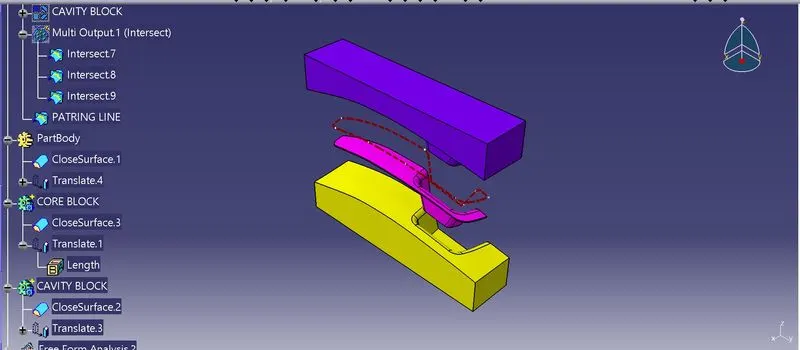
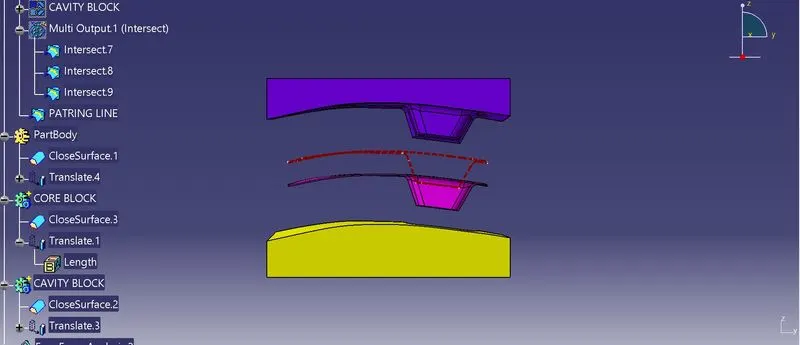
All the closed body intersection with different colour for understanding
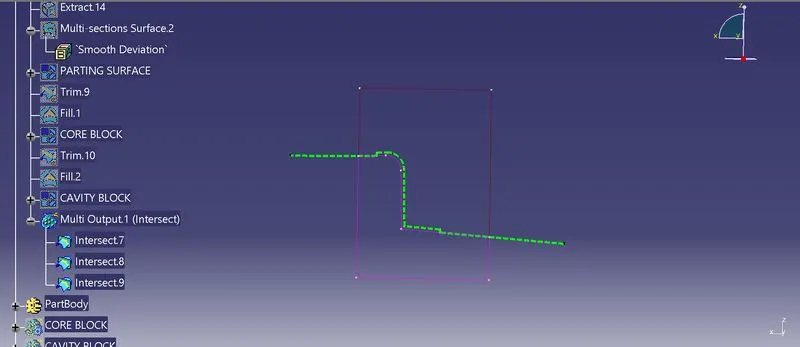
Maroon - Core body
Violet - Cavity body
Green - Parting surface
PUBLICATION:
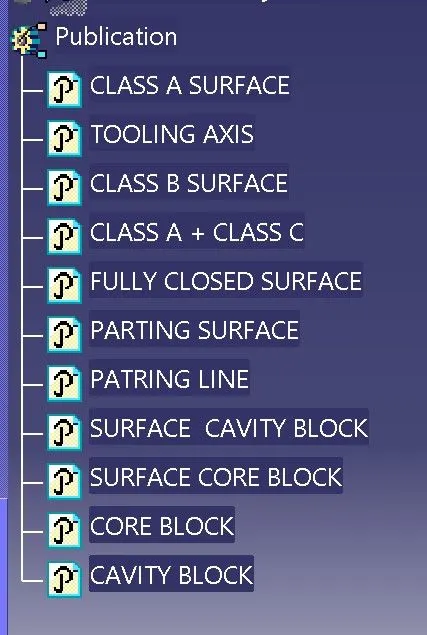
Publication is done to the component to make it visible and navigate easily.
To publish the component go to tools > publications and then select the tooling axis and the class A surface.
A separate tree structure is formed under the main part.
ISOMETRIC VIEW
FRONT VIEW
BACK VIEW
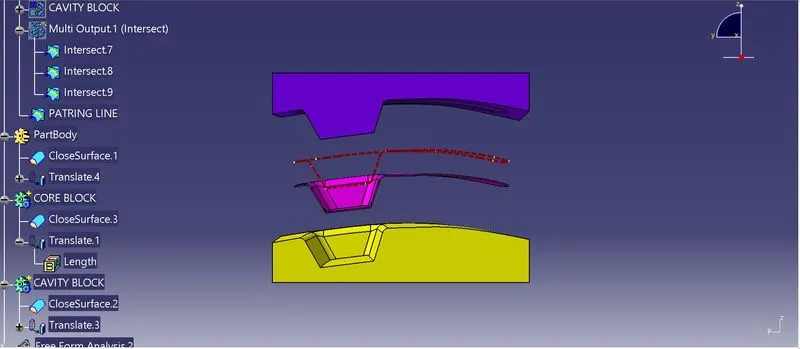
RIGHT SIDE VIEW
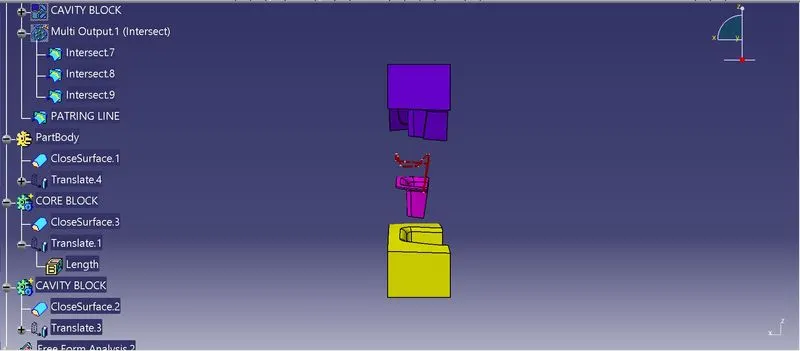
LEFT SIDE VIEW