Fender Design
Objective:
The aim of these project is to design fender and the main design requirements for Drip, Bumper, A pillar and Sill mounting areas.
What is a Fender:
Fender is the term for the part of an vehicle body that frames a wheel well (the fender underside). Its primary purpose is to prevent sand, mud, rocks, liquids, and other road spray from being thrown into the air by the rotating tire. Fenders are typically rigid and can be damaged by contact with the road surface.Sticky materials, such as mud, may adhere to the smooth outer tire surface, while smooth loose objects, such as stones, can become temporarily embedded in the tread grooves as the tire rolls over the ground. These materials can be ejected from the surface of the tire at high velocity as the tire imparts kinetic energy to the attached objects. For a vehicle moving forward, the top of the tire is rotating upward and forward, and can throw objects into the air at other vehicles or pedestrians in front of the vehicle.
Types of fenders
1 full bumper type
2 half bumper type
full bumper type
It is not used now a days because they requires bigger size blank to produce the part and the large scrap is also produced.
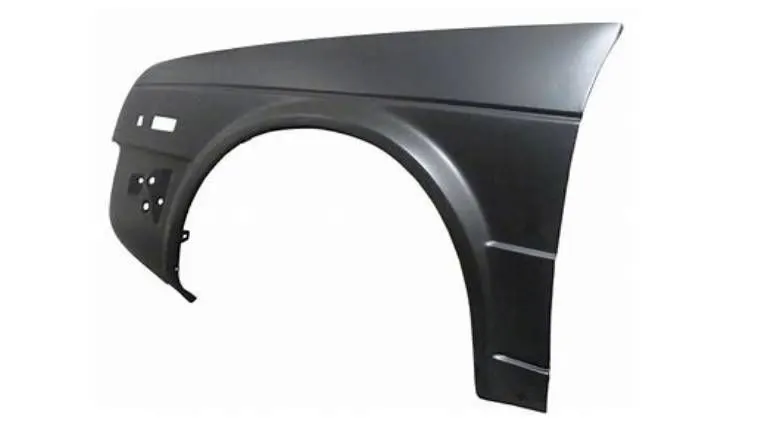
half bumper type
Half bumper types are used in present and future also because the blank size is less and the wastage or scrap is less comparing to full bumper type fenders.
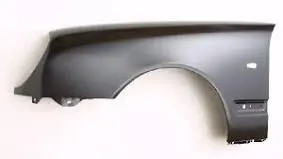
Assembly:
There are two type of assembly
1 bottom- up assembly
2 top-down assembly
bottom- up assembly
Bottom-up assembly modelling is a part-centric modelling method where the assembly design is started with a principal structural or functional element, and individual parts are designed in relative isolation from the overall assembly.
top-down assembly
In top-down assembly design, one or more features of a part are defined by something in an assembly, such as a layout sketch or the geometry of another part. The design intent comes from the top, which is the assembly, and moves down to the parts.
Mountings of a fender
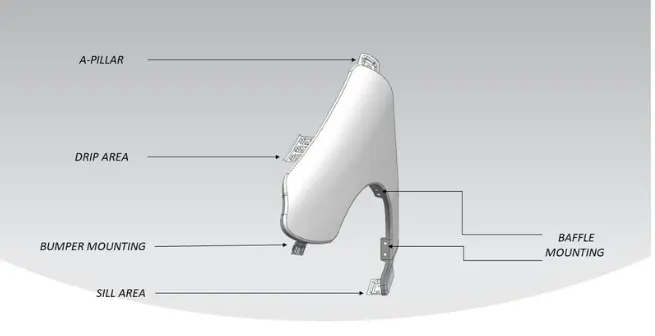
Drip Area :
It is the critical mounting area located inside the engine component. Designed according to the master section provided and
optimal opening angle is maintained to make it look well assembled from outside.
A-pillar area :
It is located at the top area of the fender used to be mounted with the top hoop area.
Bumper mounting area:
In half bumper fenders the bumper is connected with the bumper mounting area of the fender.
Sill Area:
It is located at the bottom area of the fender.
Baffle mounting:
Ist is located at the wheel arch of the fender.
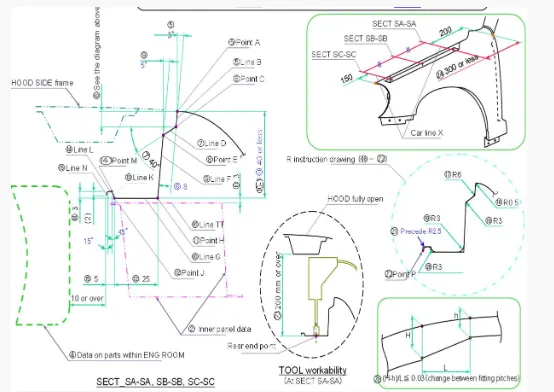
Master section:
Fender skin:
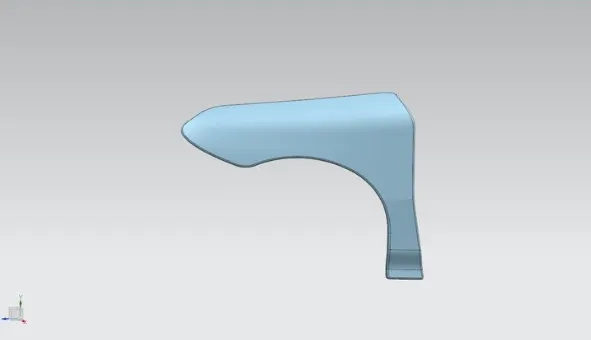
1) Drip area:
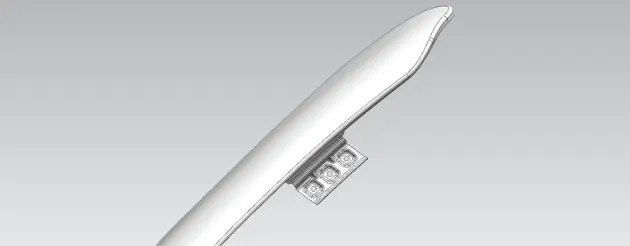
- In drip area mounting , many design aspects should be followed.
- The first criteria is to trim the sheet according to the distance.
- The distance from the bumper side is 150mm and the distance from the A-pillar area is 200mm.
- After creating such a sheet ,from the master section we have to design the drip area in such a way that it should have atleast 10mm or more distance clearance from the engine compartment.
2) A- pillar
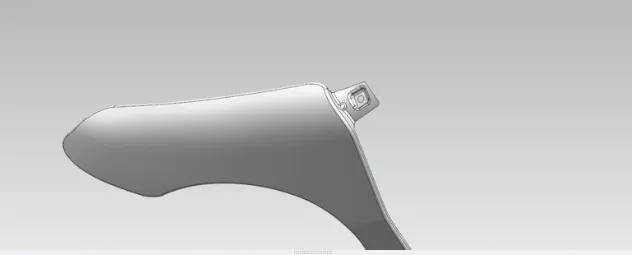
- For the A-pillar region of the Fender design, A-pillar area is located at the top part of the fender.
- We have to make an approximate flat surface for placing the mounting holes.
- Ribs or darts should be designed as to make the A-pillar section more attached to the surfaces it is placed.
3) Sill area design:
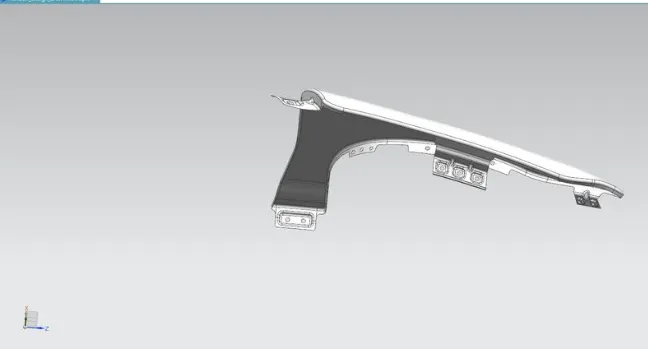
- The sill area is used to connect the floor of the body of the vehicle to the fender.
- It is designed in such a way it make the fender in compact with the vehicle.
- the mounting holes are to be placed in such a way it is according to the dimensions.
Proper belnds should be provided.
4) Bumper Area Design:
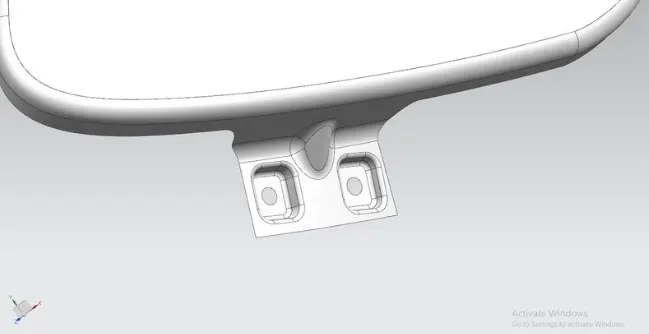
- Comming to the Bumper area design, it connects both the bumper and fender of the vehicle.
- The chances of vibrations on this area is analysed and is provided ribs for compact.
- Mounting areas must be designed accoding to the measurement.
5) Baffle Mounting Area Design:
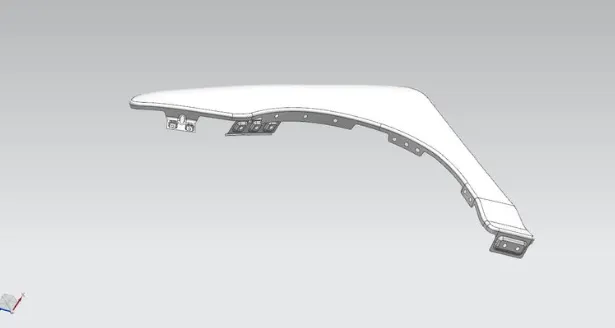
- It is located at the wheel arch area that is the inward area of the fender.
- It is used to protect the fvehicle from dust particles
- It is also used to protect the pederstians from causing from the chips out debris of the car when in motion.
- It is fixed using fasteners and clips.
CONCLUSION:
Thus the design of fender is completed.