Fender Design
DESIGN OF CAR FENDER:
The fender is the part of an automobile, motorcycle, or other vehicle body that frames a wheel nicely (the fender underside). Its primary purpose is to prevent sand, mud, rocks, liquids, and other road sprays from being thrown into the air by the rotating tire. Fenders are typically rigid and can be damaged by contact with the road surface.
Sticky materials, such as mud, may adhere to the smooth outer tire surface, while soft loose objects, such as stones, can become temporarily embedded in the tread grooves as the tire rolls over the ground. These materials can be ejected from the surface of the tire at high velocity as the tire imparts kinetic energy to the attached objects. For a vehicle moving forward, the top of the tire is rotating upward and onward and can throw objects into the air at other vehicles or pedestrians in front of the vehicle.
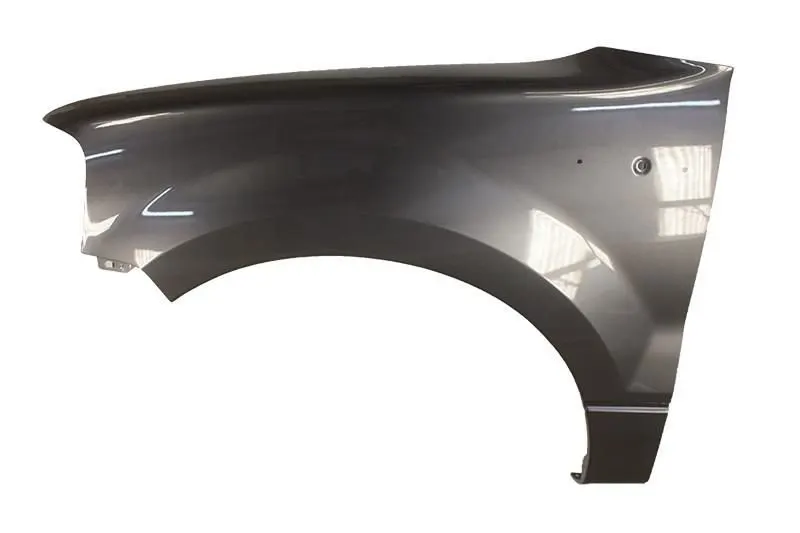
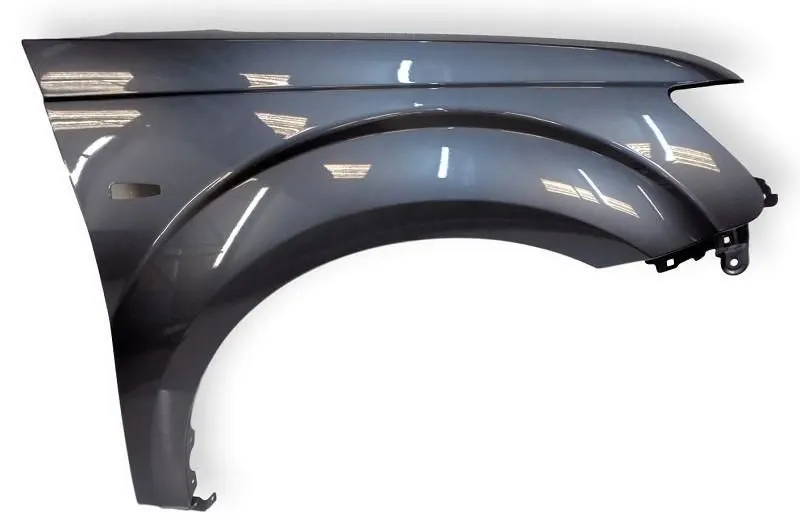
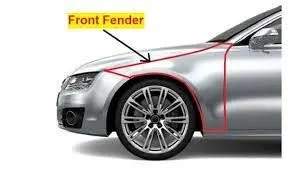
Fenders are classified into two types:
1. FULL :
These types of fenders are longer and were designed in previous modes of vehicles.
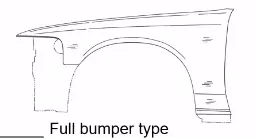
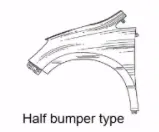
2. Half bumper type:
These types of fenders are smaller in length and are used in the present generation of vehicles.
Advantages of half bumper type fender
1. Lower weight
2. Less cost.
3. Improved aerodynamics.
The manufacturing process of a car fender:
The manufacturing process includes the following steps that firstly, unfolding and shearing are carried out on a plate, wherein a proper cold roll specification is selected at first, a cold roll is unfolded, and then the unfolded cold roll is sheared to an iron plate of the corresponding size according to production material specifications.
Secondly, oil pressing and punching are carried out, wherein the iron plate is extended at first, then side shearing and punching are conducted on the iron plate, folding, and shaping is carried out on the iron plate.
And finally reshaping is carried out on the iron plate; thirdly, the small first parts of the fender are machined, wherein first of all, the iron plate is punched to a needed outer contour blank, then the iron plate completes the outer contour blank is further shaped, and the iron plate is punched at last; fourthly, installation and welding of a metal plate are conducted. The manufacturing process for the car fender is simple and high in production efficiency.
The body of the fender and the small parts can be separately machined, so waiting time is shortened and the working efficiency of production is improved.
DIFFERENT MOUNTINGS IN THE FENDER:
The fender which is designed in this project has mountings attached to it which would help the fender to fix with the adjacent components.
The mountings present on the fender are:
1. Drip Area
2. Sill mounting
3. A-Pillar mounting
4. Baffle Mounting
5. Bumper Mounting
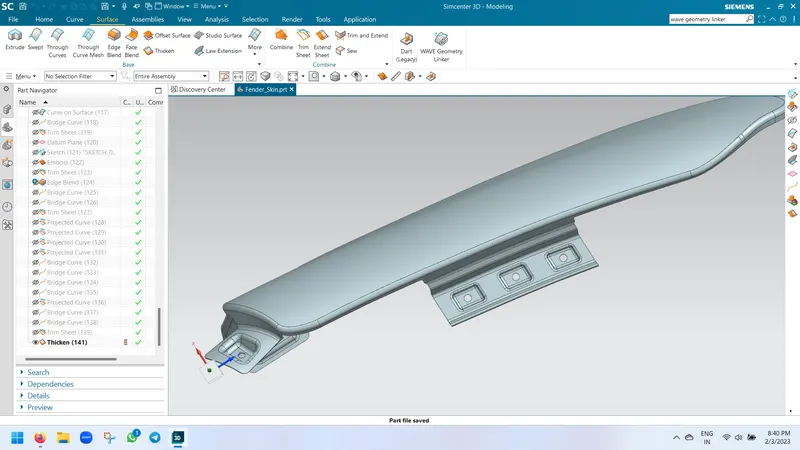
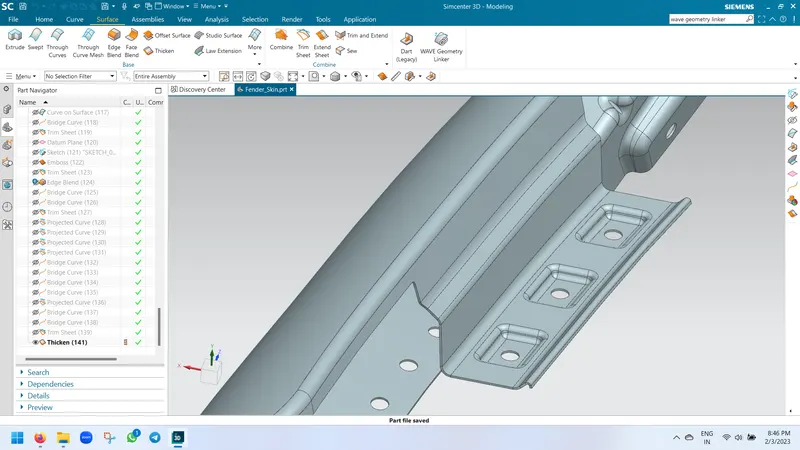
1. DESIGN OF DRIP AREA:-
Master sections to follow to create the Drip Area:
Creating a Drip Area following the given Master Sections, Regulations, and Standards:-
- Giving Draft Angles and Fillets
- Creating Embosses and Ribs
2. DESIGN OF SILL MOUNTING:-
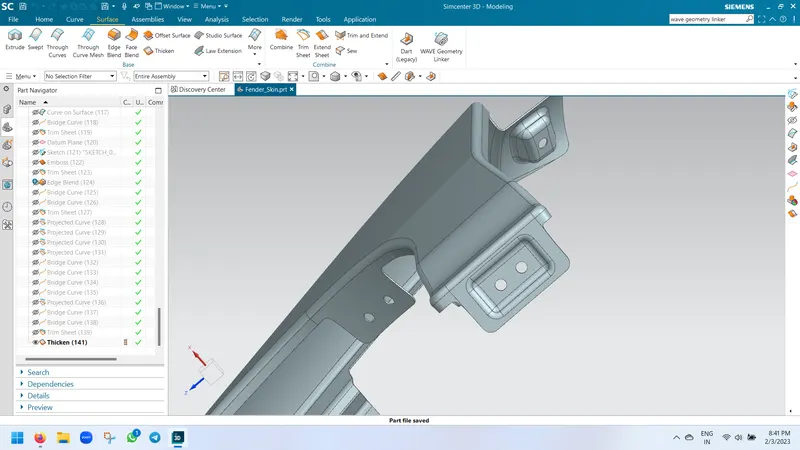
- Giving Draft Angles and Fillets
- Creating Embosses
3. DESIGN OF A PILLAR:-
- Giving Draft Angles and Fillets
- Creating Embosses
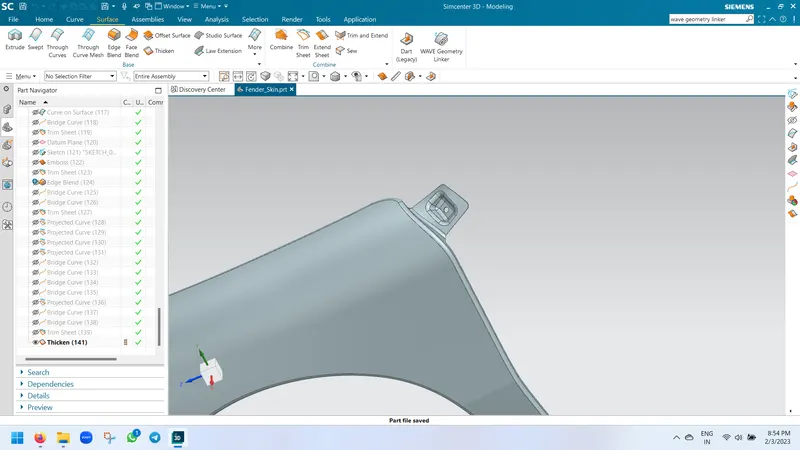
4. DESIGN OF BAFFLE MOUNTING:
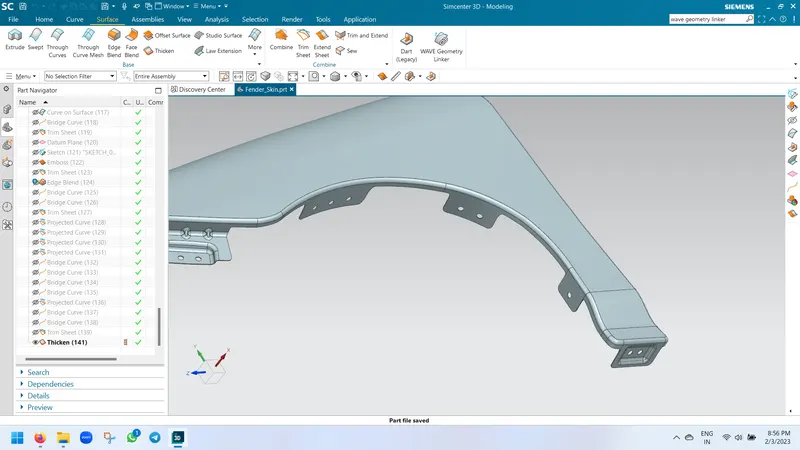
5. DESIGN OF BUMPER MOUNTING:
- Giving Draft Angles and Fillets
- Creating Embosses
- Giving the Dart
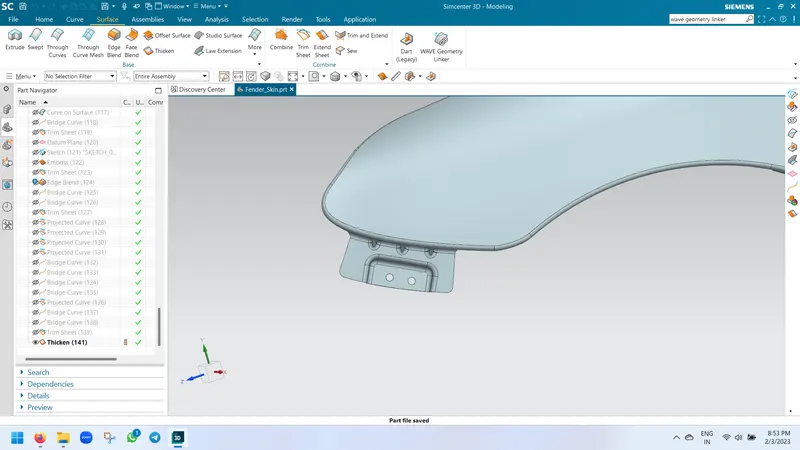
The final thickened part:
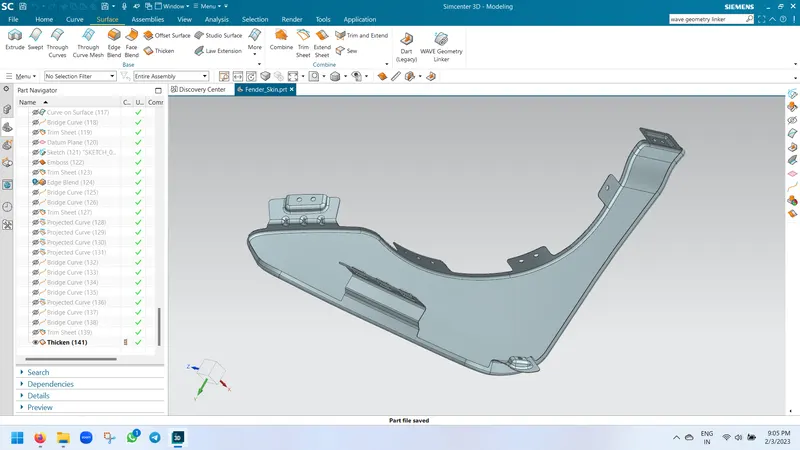
CONCLUSION:
The fender was designed for the vehicle as per the requirement.
All the mountings were placed at appropriate positions.