Fender Design
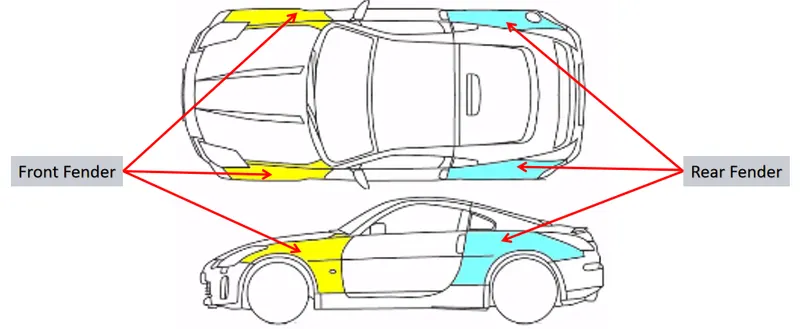
Automotive Fender:-
A vehicle's fender protects a wheel from hard, sticky substances like mud, sand, and rocks, among others.
As the tyre rolls over the ground, sticky substances like mud may stick to the smooth outside tyre surface, while smooth, loose things like stones may momentarily become embedded in the tread grooves.
Due to the tyre giving the connected objects kinetic energy, these materials can be released from the tire's surface at a high speed.
The top of a tyre on a moving vehicle rotates upward and forward and has the potential to launch things at oncoming traffic or pedestrians.
Since fenders are usually inflexible, contact with the road might harm them.
Instead, mud flaps that are flexible are used in areas where possible contact with the ground exists.
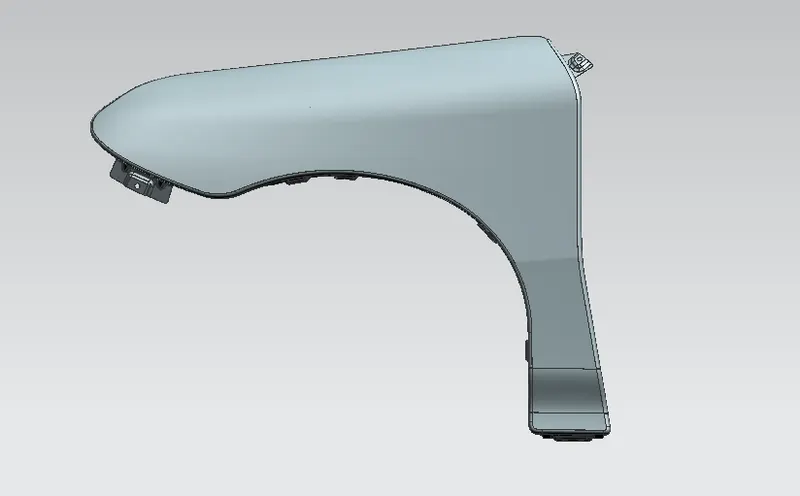
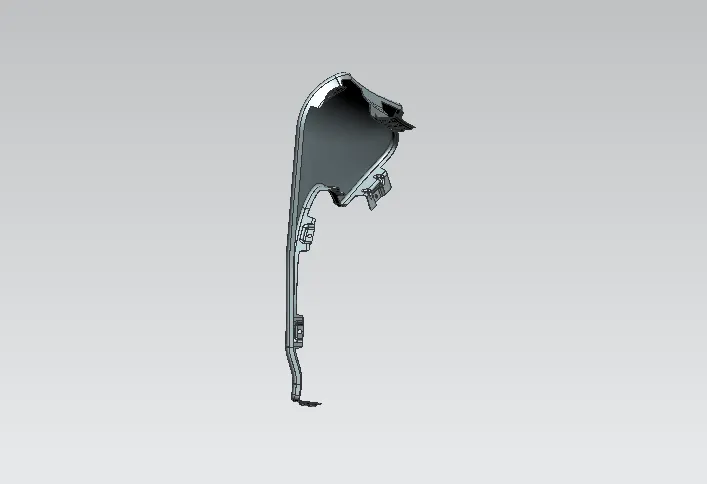
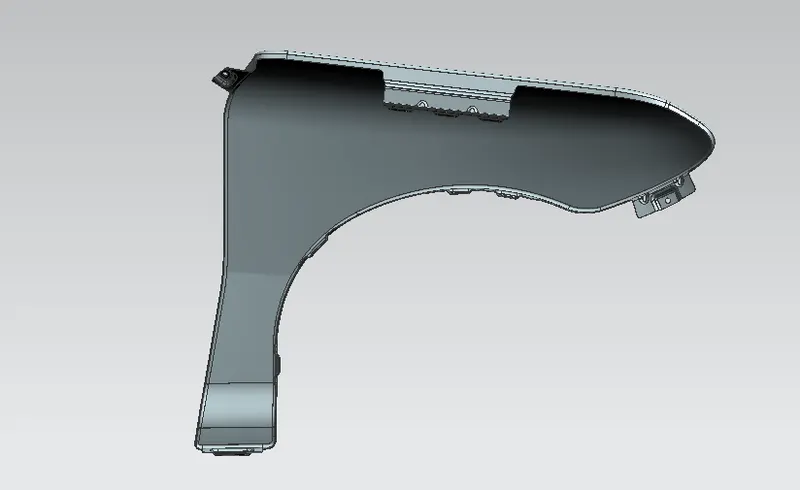
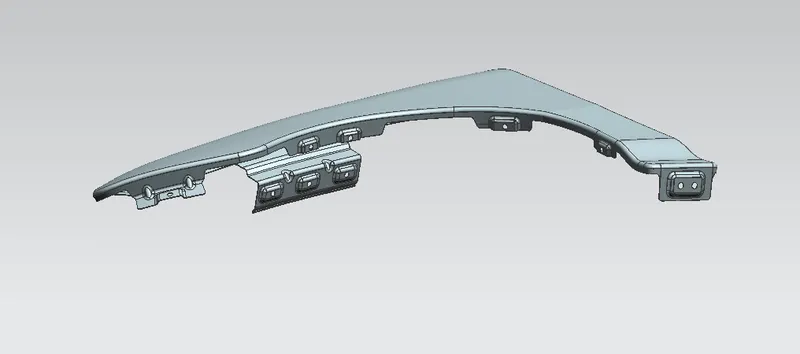
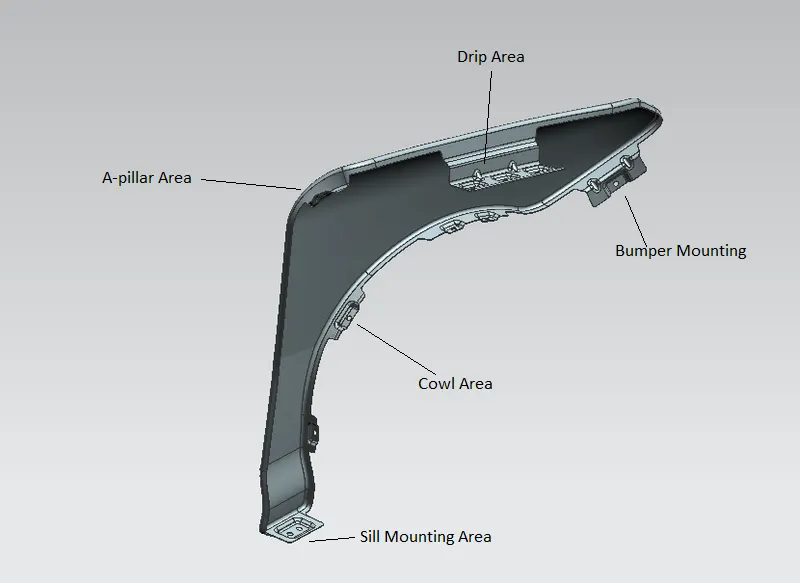
I have properly shown the A-pillar mount region, the bumper mount zone, and the drip area with accuracy.
Types of Fenders: -
Full bumper type
Half bumper type
1. FULL BUMPER TYPE:
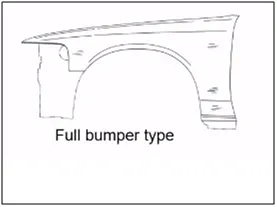
In older cars, the full bumper fender covered the entire area until the front lighting. However, it contains a lot of sheet metal material that is unnecessary and adds weight to the fender. Fenders of this type are no longer used in automobiles.
2. HALF BUMPER TYPE:
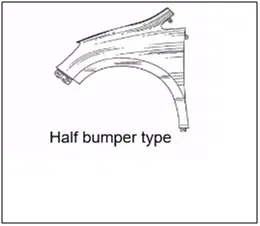
Mainly half bumper type is used in automobiles. It is basically related to scrap management. Half bumper type leads to less wastage of the blank.
To reduce the scrap rate per blank, we switched from full bumper to half bumper type. We can only produce one fender per blank in a full bumper, but two fenders per blank in a half bumper.
MOUNTINGS OF FENDER: -
In order to fix the Fender, mountings were essential. In our design we classified these mountings in 5 areas
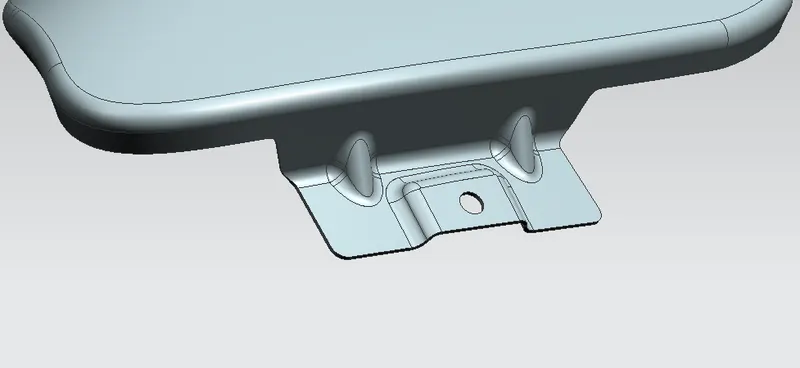
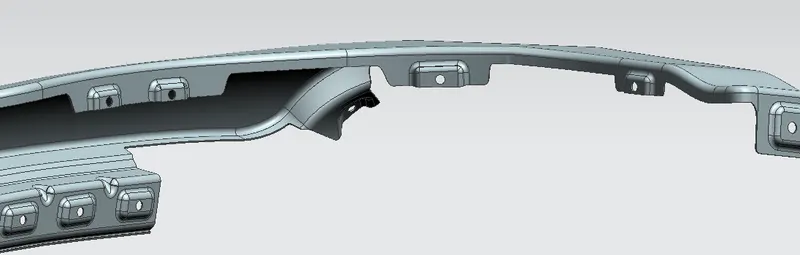
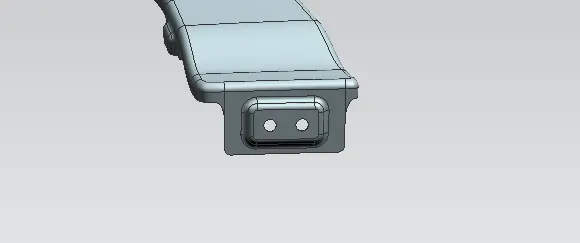
There are generally 5 mountings on a Front Fender-
- A - Pillar area
- Drip Area
- Bumper Mounting Area
- Cowl Area
- Sill Mounting Area
Manufacturing Process: -
-A car Fender bumper is made by a process called reaction injection molding (RIM), which basically consists of making a special polyurethane compound and introducing it into a large fender.
-RIM is a process that conserves raw materials and reduces costs. It is similar to injection molding except thermosetting polymers are used, which requires a curing reaction to occur within the mold. Common items made via RIM include automotive bumpers, air spoilers, and fenders.
Reaction Injection Moulding: -
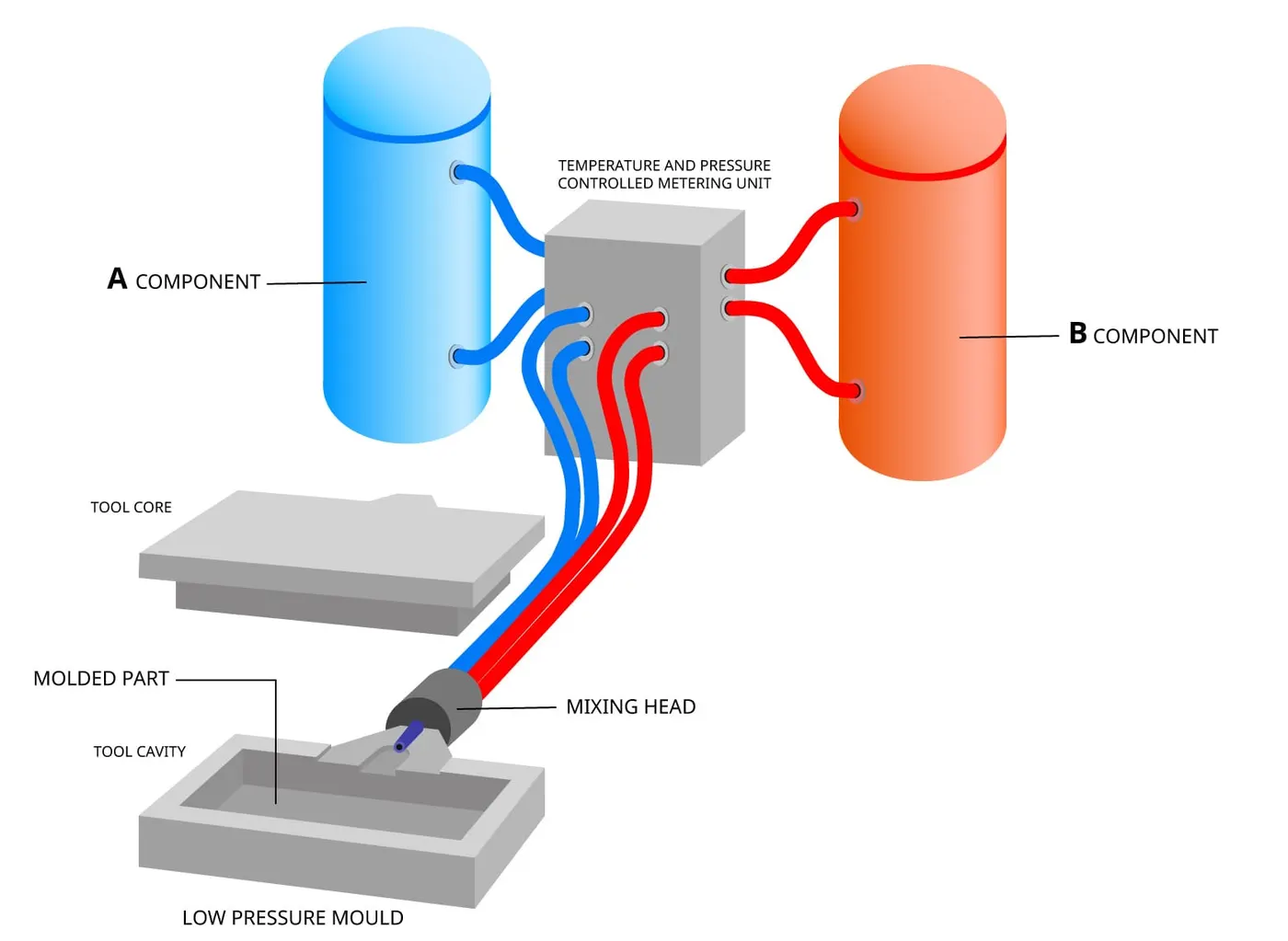
-Reaction Injection Moulding is a low pressure, low temperature process used to mould many types of plastic parts. This process is typically used for the medical, industrial and automotive industries.
-Reaction Injection Moulding (RIM) is often utilized for the moulding of strong, lightweight parts that are easily painted. The rigid materials used by Design Octaves come with a UL94V-0 rating for flammability.
-The RIM moulding material utilized by Design Octaves is a two-component system which consists of polyol and isocyanate liquids that are mixed at a high pressure and then metered into the closed tool at a low pressure. The material then expands to fill the tool and is ejected in about 5 minutes.
Master Section of Fender:-
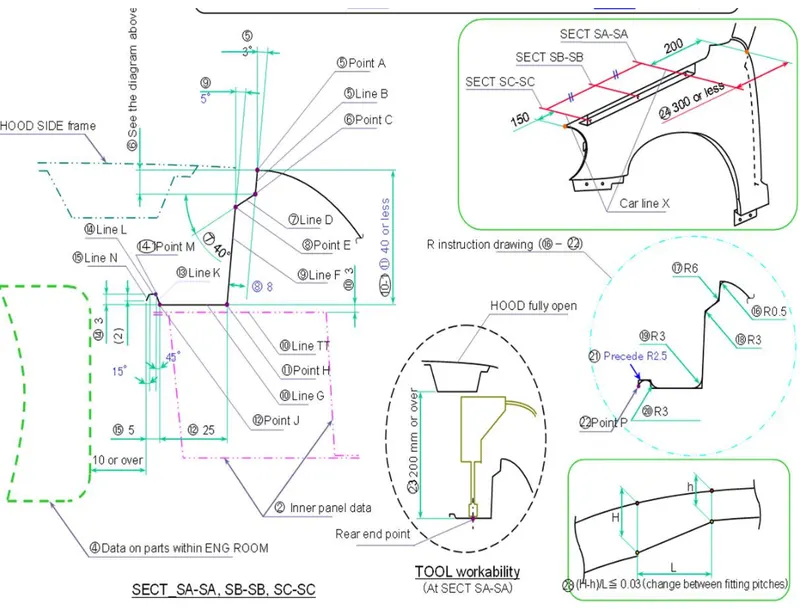
Design Considerations: -
Design considerations for drip area:
1. The headlamps in the bumper are kept 150mm away from the front end.
2. The wiper motor unit is kept 200mm away from the back.
3. Engine parts shouldn't be exposed to the elements. Initially, a 15 degree angle and a 9 mm length are provided for this purpose.
4. The depth ranges from 40 to 60 mm; if the depth exceeds 60 mm, the spring-back effect will also rise.
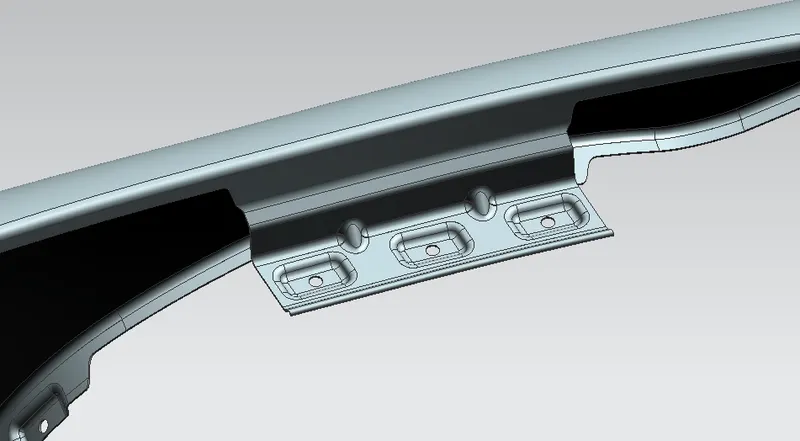
5. To make the drip area stronger, embosses are applied.
1. Drip Area
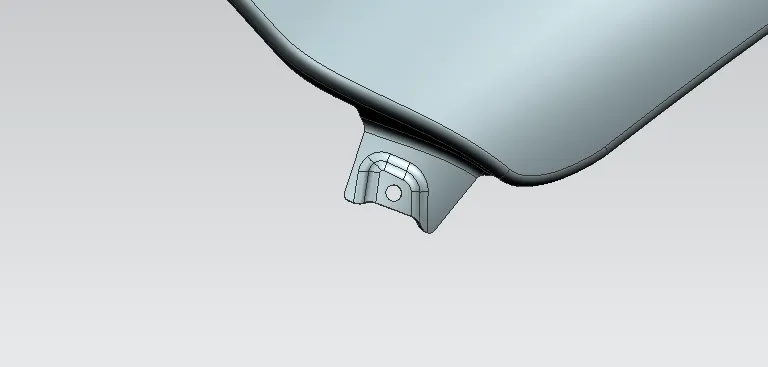
2. A-Pillar area
3. Bumper Mounting Area
4. Cowl Area
5. Sill Mounting Area
Model Images:-