Fender Design
TITLE: Fender Design
-
AIM:
To design a Front Left Fender for a car following the master section to create 1. Dip Area, 2. Sill Mount, 3. Bumper Mounts, 4. Baffle Mount, 5. A-Pillar Mount.
-
INTRODUCTION:
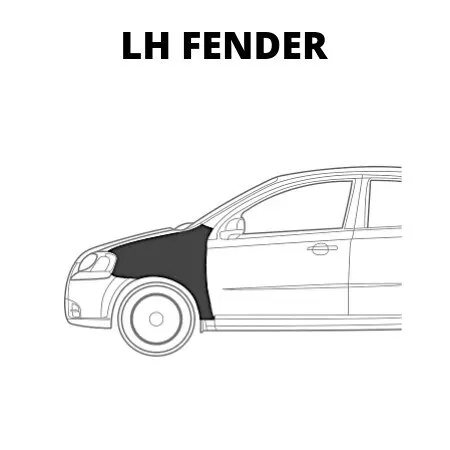
What is a fender?
- Fender is the American English term for the part of an automobile, motorcycle or other vehicle body that frames a wheel well (the fender underside).
- Its primary purpose is to prevent sand, mud, rocks, liquids, and other road spray from being thrown into the air and the engine bay by the rotating tire.
-
-
Design Considerations - MASTER SECTION:
-
There are 5 mounting regions on the fender to design:
- Pillar mount,
- Body mount,
- Sill mount,
- Bumper mount,
- Drip area mounting.
-
DESIGN PROCEDURE:
1. DRIP AREA MOUNT:
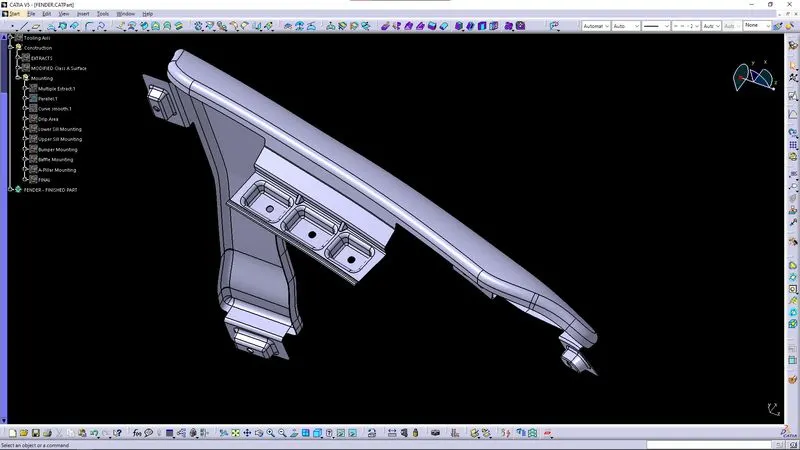
It is the important mounting of the fender. This is connected with the engine compartment, therefore the lot of constraints are to be followed while designing the fender
Note: It should be 150mm apart from the edge, so that it won’t get disturbed by lamp mounting.
- Dart portions are added on the longer side of the drip area in order to provide the stiffness and add strength to the part. It Play a main role by avoiding vibration and forces from outside.
- Embossing are provided on the mounting to strengthen them during fastening, also beads are designed to act as stiffners.
-
2. A - PILLAR MOUNT:
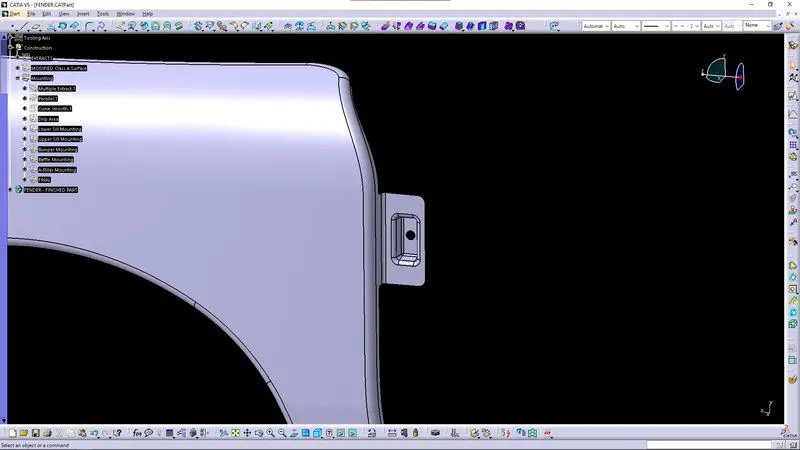
This is a structural pillar that combines the body to the roof. It makes the sides of the windshield at rest and front fenders are fastened.
-
3. SILL MOUNT:
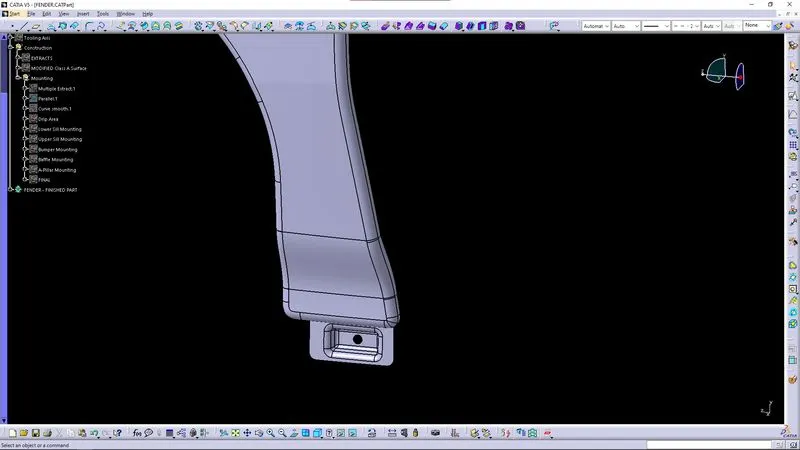
Sill is the panel directly below the bottom of the door supporting the floor and may be used to combine the floor and the body.
The lower end of the fender is mounted on the sill body for reinforcement of the fender.
-
4. BAFFLE MOUNT:
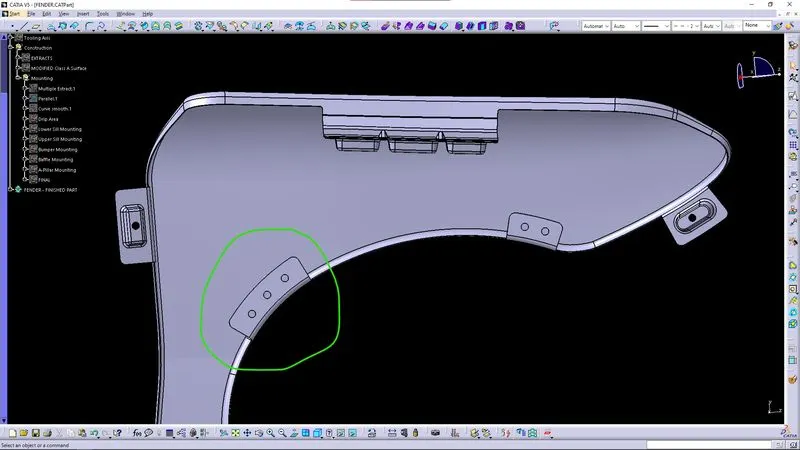
Baffle mount or wheel arch cover or mudguard have clip fit type of mounting on the inner side of the fender arch over the tyre.
It protects the car engine compartment and pedestrians from causing injuries from chip out debris on the road when the car is in motion.
They are mounted on the fender using locking clips.
-
5. BUMPER MOUNT:
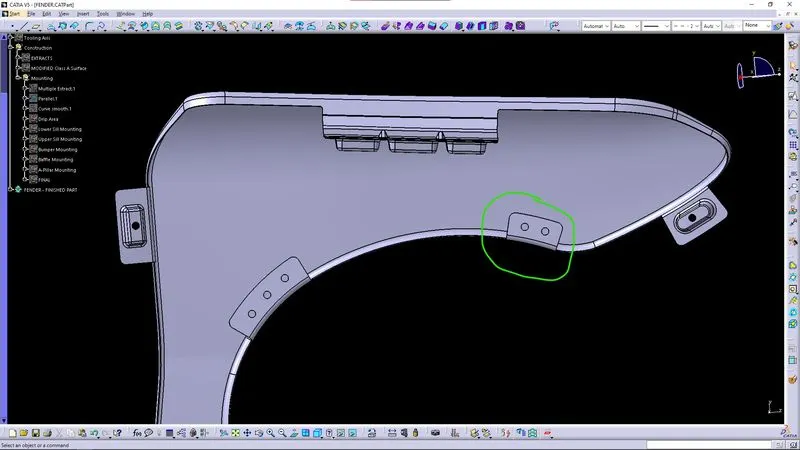
Bumper mount area helps fix the bumper to the fender with the help of the fasteners, attachment features or equivalent nuts.
-
6. HEADLIGHT/BUMPER MOUNT:
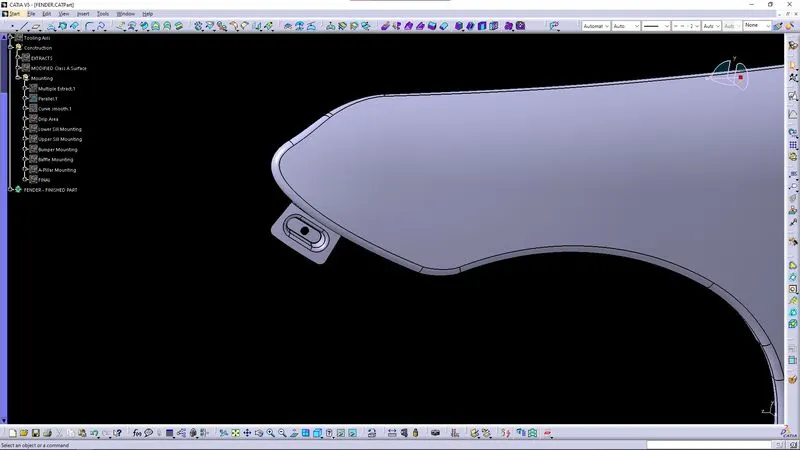
Bumper mount area helps fix the bumper to the fender with the help of the fasteners, attachment features or equivalent nuts.
-
CONCLUSION:
The design for fender with various mounting points following the master section is completed.
- - -