Fender Design
FENDER DESIGN
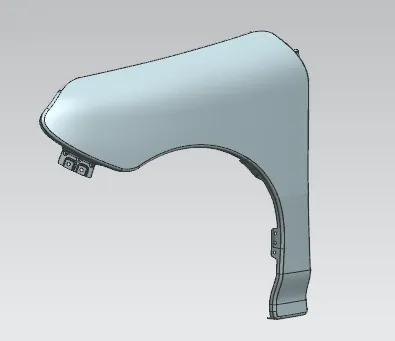
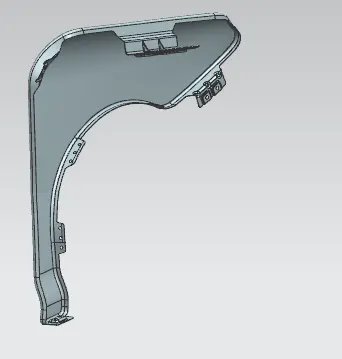
OBJECTIVE: To design automobile front fender and mountings using the styling surface
FENDER
Fender is the American English term for the part of an automobile, motorcycle, or other vehicle body that frames a wheel well. Actually, it is a part that is in contact with the different parts of the vehicle like the A-pillar, sill, etc. typically fenders are rigid and house the wheels, inner body parts both at the front and back sides of the vehicle.
Fender plays a major role in pedestrian safety while a car is in motion. When it is in motion the wheel carryover the small stones, mud particle and throw away which may harm the pedestrians. So while designing these considerations are to be taken into account.
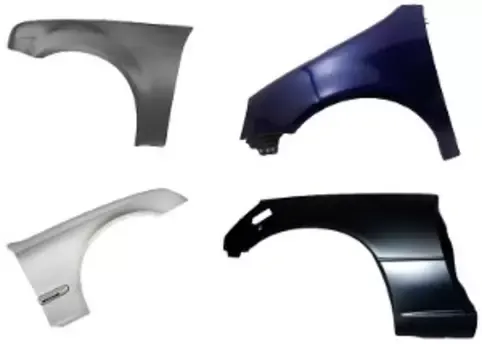
Car fenders are the complex sheet of metal covering the front and the rear wheels of your car. Fenders on a car are panels that extend from the front bumper to the car's doors. Car fenders not just add style to your car but also act as a protective shield for the body of the car.
TYPES OF FENDER:
Generally, there are two types of fenders, they are:
- Half Bumper Type
- Full Bumper type
Mostly Automotive industries prefer Half bumper only why because the full bumper type is huge and involves lots of wastage. and if we slightly increase the blank size for the half bumper type, two fenders can be produced at the same time. Also, plastic can be cooperated into this type thus reducing the steel making it lighter and increasing the performance of the car.
HALF BUMPER TYPE FENDER
Half fender type is a forefront design where less material use is seen, so capability increments by decreasing the indisputable size and giving more presentation. The assistance in like way unassumingly low stood apart from the full guard type.
FULL BUMPER TYPE FENDER.
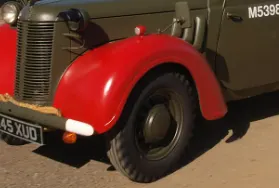
The full fender type is the standard sort of fender where more material use is observed. This sort is utilized in the old designs of vehicles where it manufactures the general weight and suitably lessens execution. The upkeep is besides modestly more because of more surface
FENDER MANUFACTURING PROCESS:
Modern fenders made from steel, aluminium, thermoplastic, and fibreglass. Steel is the most rigid and abrasion-resistant material used in making fenders. They offer the best protection from large debris and are less likely to dent. Aluminium offers the strength of metal without the heaviness of steel.
Mainly fenders are manufactured by following process:
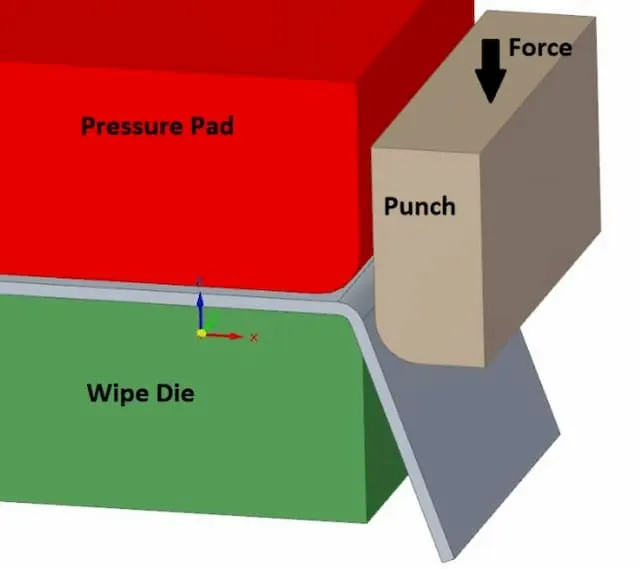
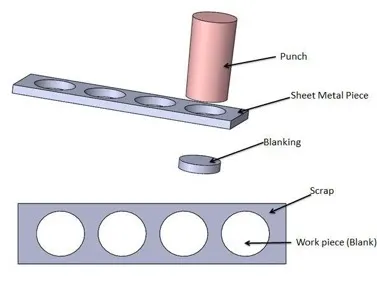
Bending: In bending, force is applied to a sheet metal workpiece to produce a curvature of the surface. Bending is generally used to produce simple curved surfaces rather than complex ones. A mechanically operated press drives a punch against sheet metal, forcing it into a simple die with enough pressure to produce a permanent change in the metal's shape. The amount of pressure is important. If not enough pressure is applied, the metal can simply spring back into its original shape. If too much is applied, it can break.
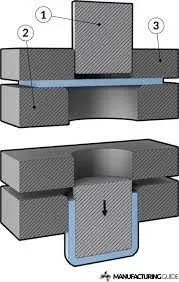
Drawing: In drawing, the sheet metal is forced against a die that has been cut into the three-dimensional, often curved shape that the sheet metal is to take on. In effect, the die is used as a mold for the metal. This technique can produce relatively complex shapes. Once again, pressure is applied to the workpiece using a hydraulically or mechanically operated punch. There are a number of dangers involved, not so much to people (since the process is largely mechanized) but to the metal itself. It can crack from too much pressure or wrinkle from its interaction with the die. Lubricant can be used to make the metal slide more smoothly against the die, avoiding the possibility of wrinkling. Alternatively, the wrinkled edges can be trimmed from the metal in a separate operation.
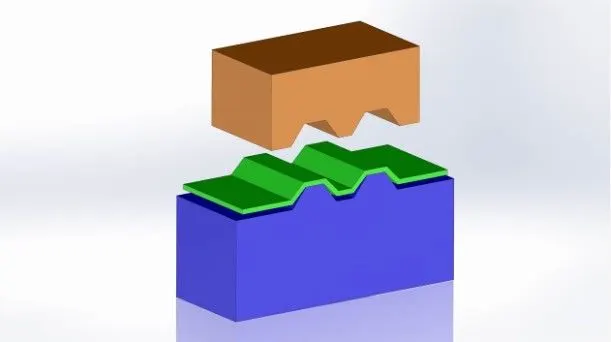
Stamping: In stamping, a device called a stamping press is used with a series of dies to cut and form metal into various shapes. This is commonly used to make auto parts such as hubcaps and fenders.
For plastic manufactring of fender, injection molding is used
Reaction Injection Molding: It is a low squeezing factor, the low-temperature measure used to frame various sorts of plastic parts. This procedure is conventionally used for clinical, mechanical, and auto ventures. Reaction Injection Molding (RIM) is habitually utilized for the moulding of strong, lightweight parts that are easily painted.
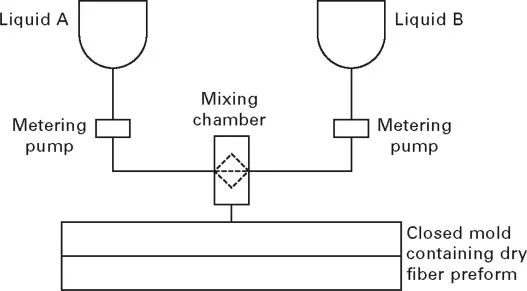
The unbendable materials used by Design Octaves go with a UL94V-0 rating for instability. The material then develops to fill the mechanical assembly and is shot out in around 5 minutes.
DESIGN OF FENDER
The styling surface is provided along with a master sketch for drip area and proper mounting in A pillar, bumper area, sill area, baffle area is to be created.
1) DRIP AREA:
Design of a fender incorporates developing the drip area as it is a huge mounting region and requires certain characteristics that should qualify a fender design. This is designed by following the considerations such as the distance between the fender and engine room, clearance length between the hood, and the base area of the drip and provide ribs to lower springback effect
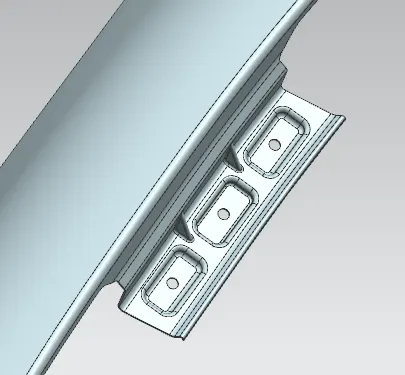
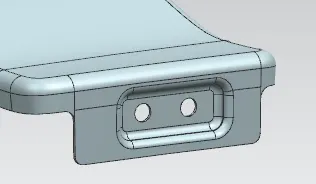
2) SILL MOUNT:
Mounting holes are to be placed according to the data of mounts in sill area
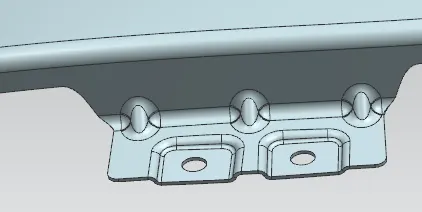
3) BUMPER MOUNT:
The bumper mounting area includes the piece of the fender that covers the sprinkle locale in that of a half fender type. Proper consideration of headlight brackets are to be taken while designing the mounting. Also provide darts to strenghten the structure as well as reduce springback effect
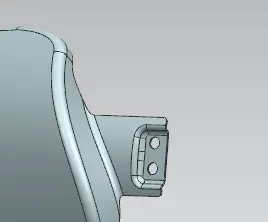
4) A-PILLAR MOUNT:
Pillars are vertical support on a vehicle. They have arranged around all the glass on a vehicle. They are critical for holding the glass set up and adding basic uprightness to a vehicle, primarily the housetop. The part of fender is mounted to A pillar region which then gets covered by mirror bracket
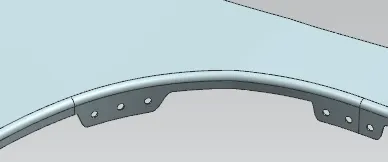
5) SPLASH/ BAFFLE MOUNT:
To stop all the debris going into the engine room and various sections like suspension joints,For certain automobiles, notwithstanding the fender, fender skirts, and guards are submitted in solicitation to give better protection.
Commands used in NX: Law extension, curve on surface, intersection curve, trim sheet, emboss, blends, dart,
sketch, datum plane etc
CONCLUSION
Design of drip area, sill area, A-pillar mount, splash mount, bumper mount for car fender with the reference to the master sketch is successfully completed.