Emission characterization on a CAT3410 engine using Converge
OBJECTIVE:
The aim of this project is to conduct a closed cycle analysis of CAT 3410 Diesel Engine and characterize its Performance and Emissions in Converge CFD. The closed cycle analysis is conducted for two different designs of Piston Bowl.
PRE-REQUISITE KNOWLEDGE:
1) CONVERGE CFD
Converge CFD is a complete CFD package that was initially designed for simulating engines. Now, it has emerged as one of the top software for simulation of a wide range of CFD applications. Some of the prominent features include automatic mesh generation, fully coupled chemistry solver and some Advanced physical models.

2) IMPORTANCE OF PISTON BOWL DESIGN:
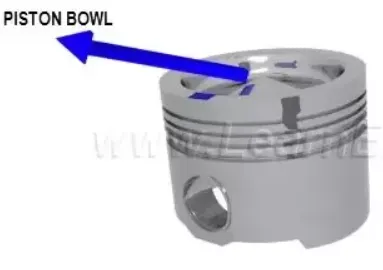
A piston bowl is a recess in the piston crown primarily used in Diesel engines with direct injection, where it forms the combustion chamber. The design and shape of the piston bowl influences the movement of air and fuel during the compression stroke, thereby affecting the air/fuel mixture. A good mixture leads to a more efficient combustion, resulting in more power or better fuel economy. Additionally, using an effective piston bowl shape can reduce the in-cylinder emissions (like NOx and soot) and the cost for after-treatment.
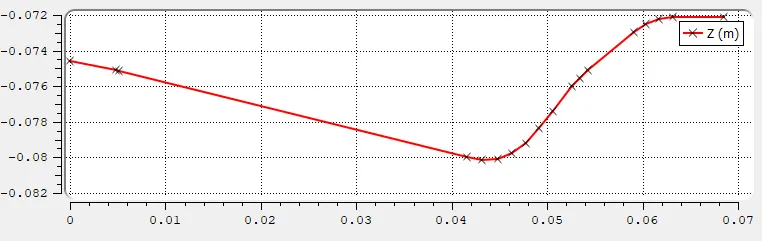
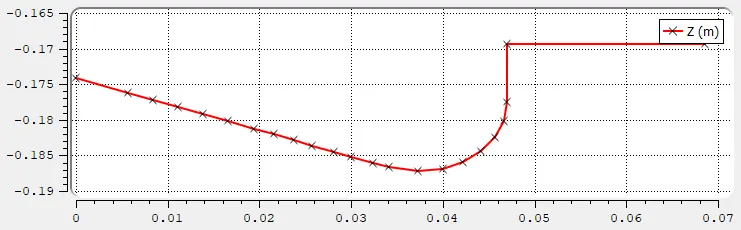
In this project, two bowl profiles are used:
- Open W (or) W type profile
- Omega Profile (or) re-entrant profile
3) CONCEPT OF PARCELS IN CONVERGE
Converge introduces a parcel which is a collection of fuel drops onto the domain at Injector. Each parcel has identical drops in terms of radius, velocity and temperature. Rather than solving equations on droplets, Converge solves the ODE’s on parcels which tremendously reduces the simulation time. Parcels undergo the following physical processes during combustion:
- Primary Breakup
- Secondary Breakup
- Drop drag
- Collision/ Coalescence
- Turbulent Dispersion
- Evaporation
The spray when comes in contact with the air, due to drag, disturbances traverse through it and breaks up the spray into parcels. This is the start of atomization of fuel. This is the primary break-up. When these tiny droplets interact with ambient air, their shapes may change resulting in larger/smaller rate of vaporisation. This is called drop drag. Velocity fluctuations in gas phase may affect the drop. This is turbulence dispersion.
Capturing all these processes is called sub grid modelling.
4) CLOSED CYCLE ANALYSIS OF COMBUSTION CHAMBER
The closed cycle analysis of an engine involves conducting analysis when all the valves are in closed state. Since valves are in closed state, its as good as ignoring the valves in the geometry and thus reducing the complexity of geometry and thereby increasing computational efficiency.
Given below is the image of the 360 degree combustion chamber used in this project for conducting the investigation. There exists piston, liner, cylinder head in the combustion chamber. In diesel engines, Injectors are mostly mounted at the centre of cylinder head and one injector as multiple nozzles.
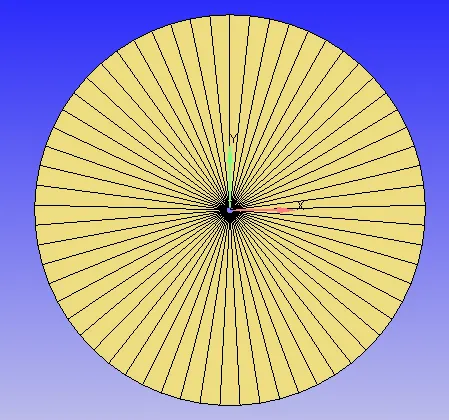
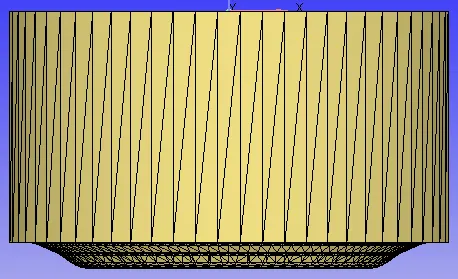
Because of the symmetical nature of the geometry, the geometry is further divided into sectors to further increase computational efficiency. The sector angle is determined from the number of nozzles present in the injector. `360/(no-of-nozzl es)` is the formula for obtaining the sector angle. Hence, in this project, sector angle is 60 degrees.
SETTING-UP GEOMETRY:
In converge, there exists a handy tool called 'Make engine sector surface' which can create this sector surface. Converge `implies` Tools `implies` Make engine sector surface. Inside this window, the bore, stroke, connecting rod length, compression ratio and the bowl profile are loaded as shown below. Finally the 'Make surface' is clicked to obtain the Engine sector with required bowl profile of piston.
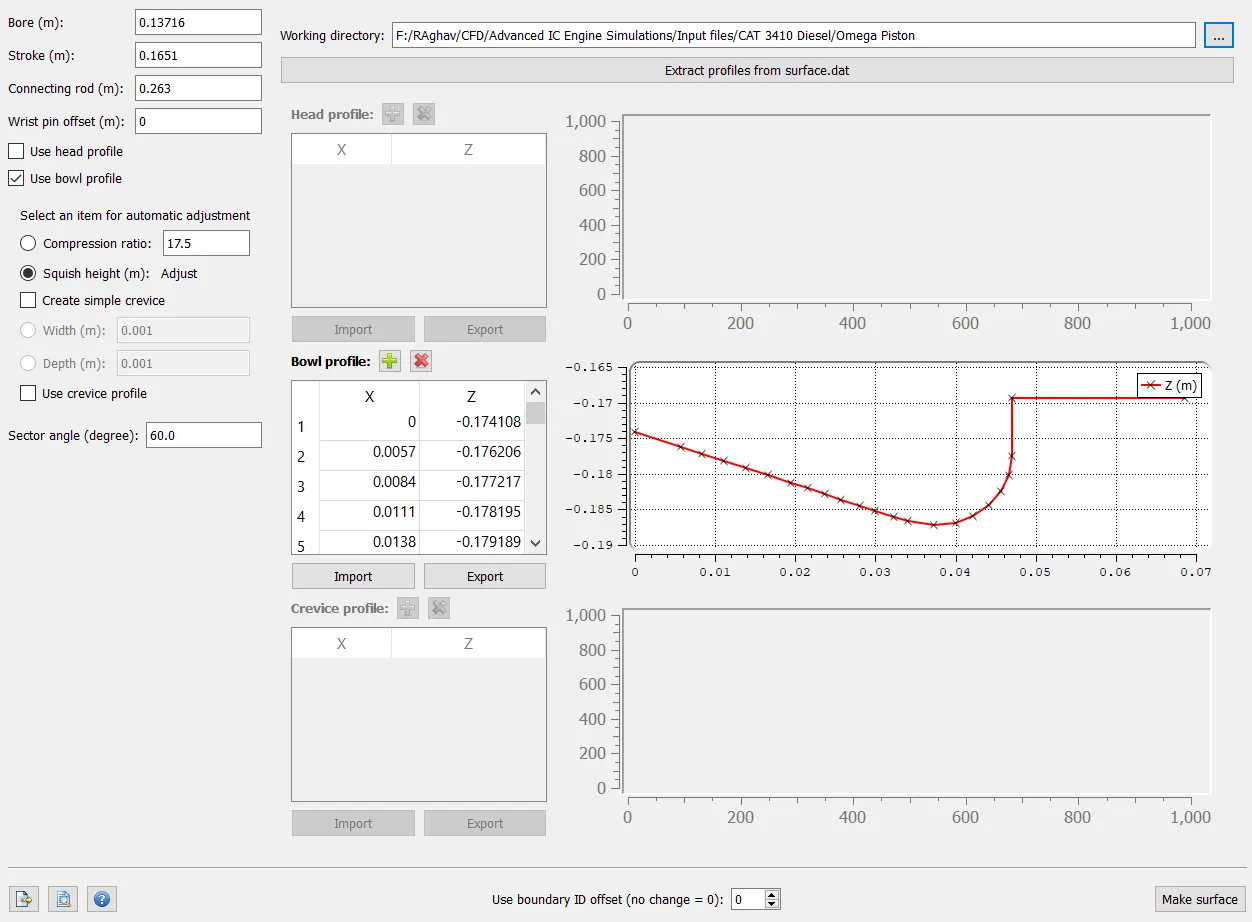
Initially to obtain the bowl profile from the 360 degree combustion chamber, the option ' Extract profile from surface.dat' is used. This option also generates head, forward, reverse profiles as well.
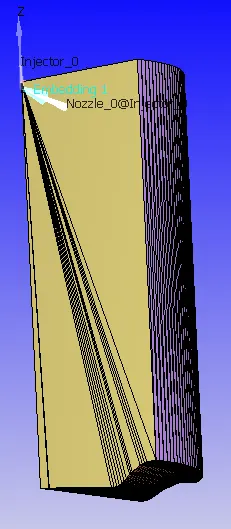
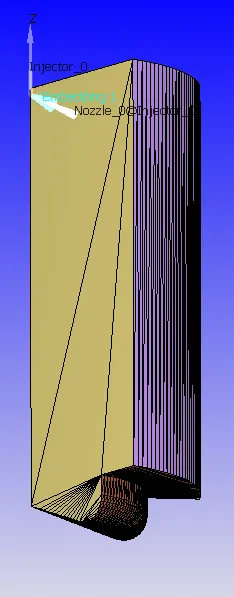
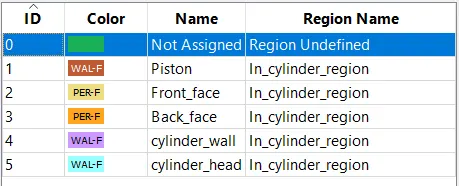
The generated sector for both types of piston are shown below (Left: Open-W type, Right: Omega type): Once the geometry is generated, it is automatically flagged; the user only needs to rename the boundaries and set up the boundary conditions. Thr flagged boundaries are shown. With this, the geometry is setup and the case setup can be initialized.
OPEN-W type OMEGA type
CASE SETUP AND PRE-PROCESSING:
The input files for the entire case setup is given. The same is loaded and the case is run on the solver. A summary of the case setup is shown below:
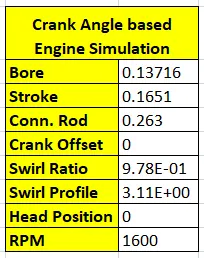
1) APPLICATION TYPE: The following are the engine parameters (all values in meters) used.
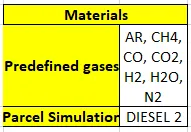
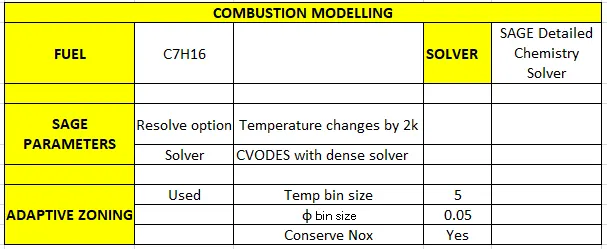
2) MATERIALS: The fuel used is C7H16 (DIESEL 2)
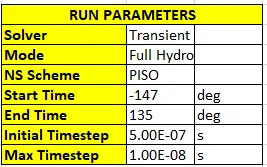
3) SOLVER PARAMETERS: The solver paramaters used are shown in the figure below.
4) BOUNDARY AND INITIAL CONDITIONS:
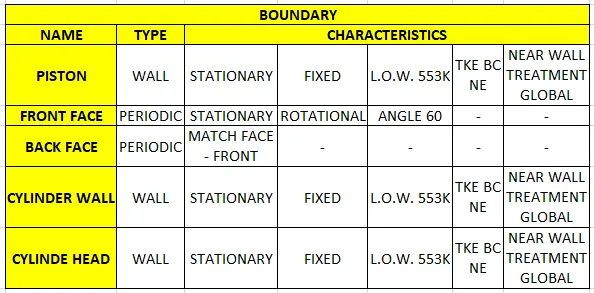
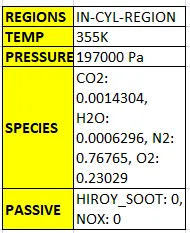
The following parameters are applied on the boundaries (bottom left) and the initial conditions (bottom right). The entire geometry belongs to one region - In_cylinder_region.
5) PHYSICAL MODELS
a) SPRAY MODELLING:
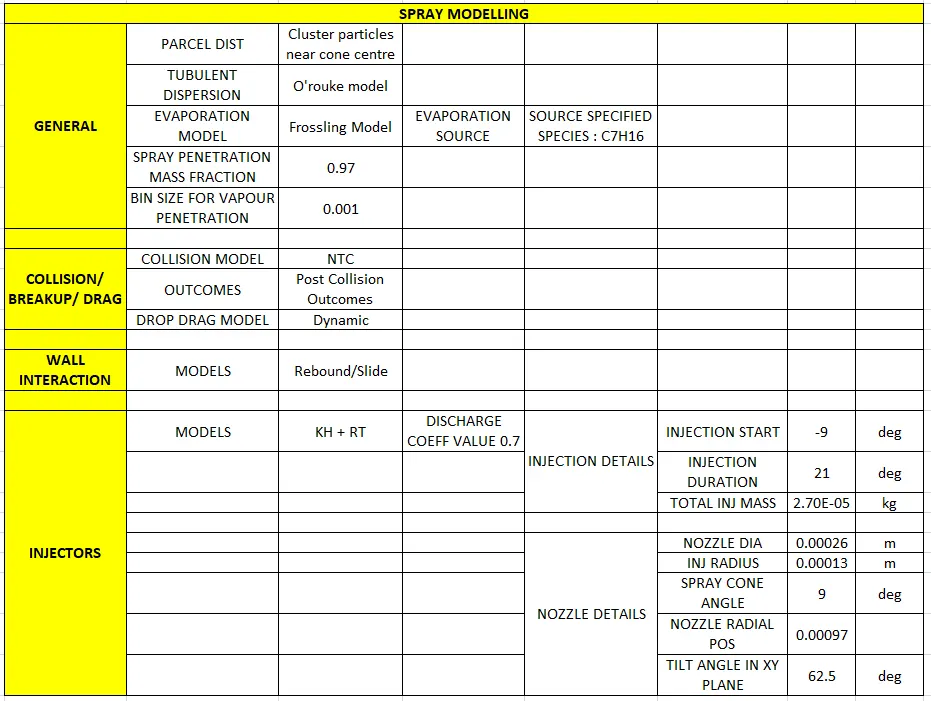
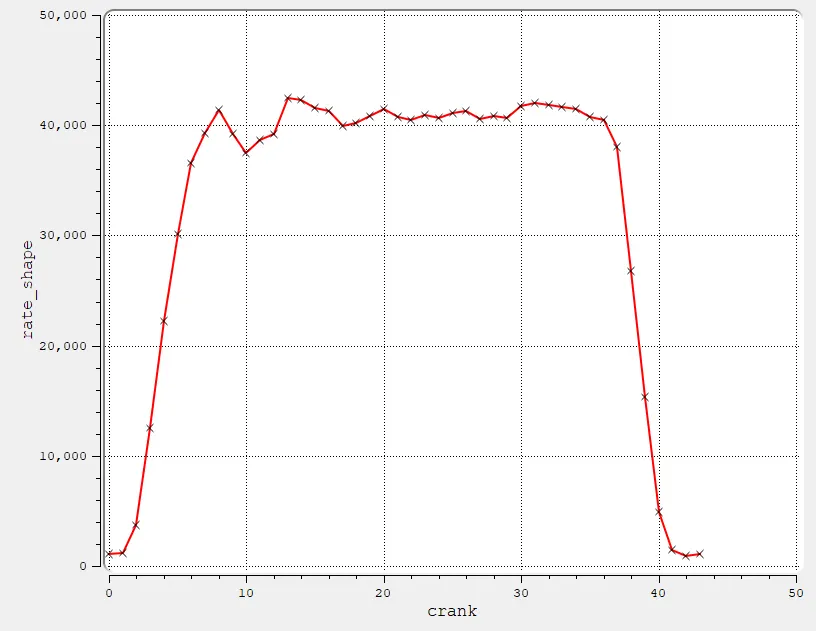
The injection rate shape and the spray parameters are shown:
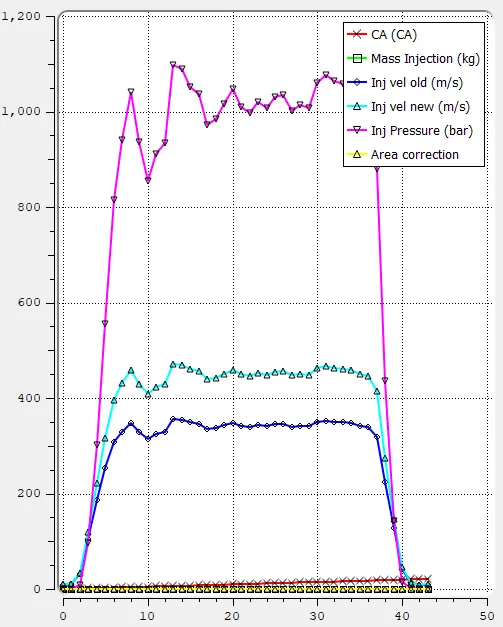
Initial data setup from 'Injector_0'
DIESEL2: interpolated density for 341 (K) is 848 (kg/m^3)
********************************
Inj dur_inject = 21 (CA)
Inj dur_inject = 2.1875 (ms)
Peak Injection Pressure = 1097.05 (bar)
Peak Injection Velocity Old = 356.064 (m/s)
Peak Injection Velocity New = 471.45 (m/s)
********************************
Inj dur_inject = 21 (CA)
Inj dur_inject = 2.1875 (ms)
Peak Injection Pressure = 1097.05 (bar)
Peak Injection Velocity Old = 356.064 (m/s)
Peak Injection Velocity New = 471.45 (m/s)
b) COMBUSTION MODELLING:
c) EMISSIONS MODELLING:
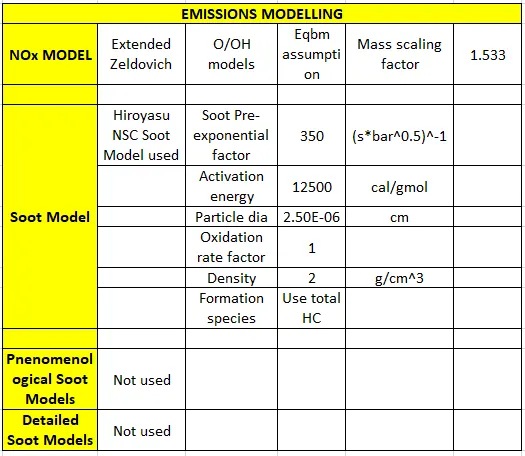
d) TURBULENCE MODELLING: The default turbulence model RNG `k-epsilon` is used.
With this, the physical models have been set up.
6) GRID CONTROL:
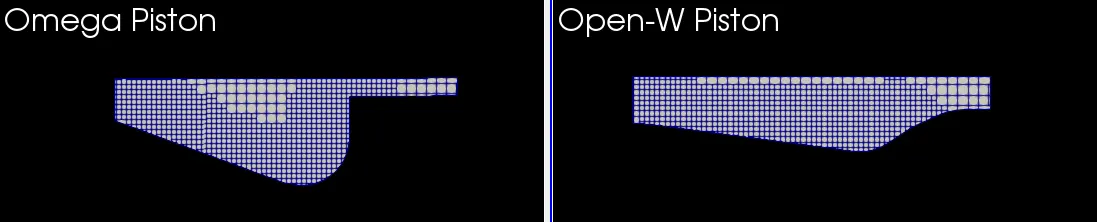
The base mesh used is 4mm in all directions. Additionally, AMR and fixed embedding have been setup in certain areas for accurate solution.
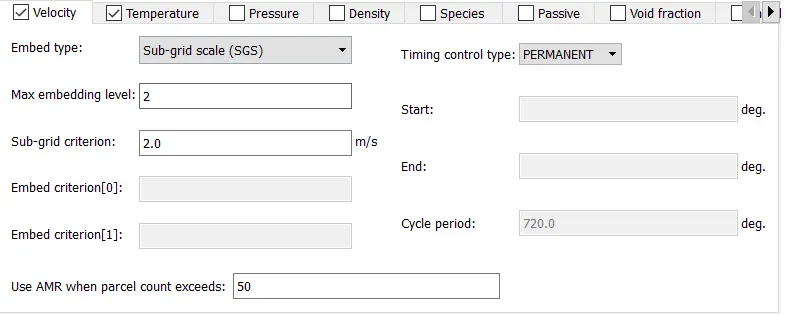
a) ADAPTIVE MESH REFINEMENT (AMR)
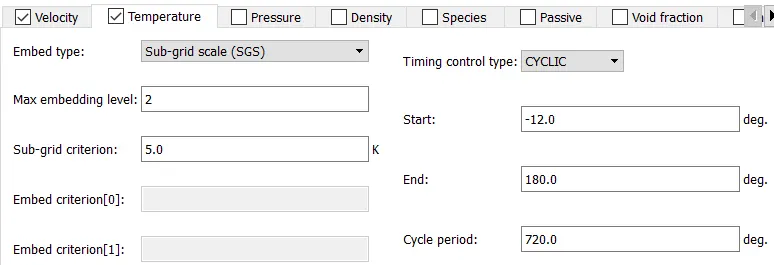
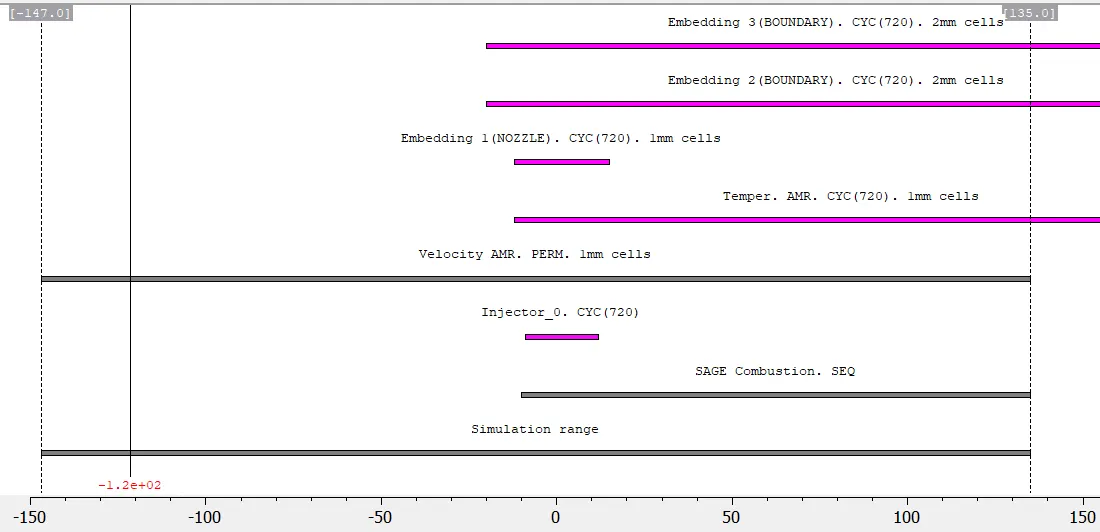
A permanent velocity AMR has been setup in the entire cylinder region with a max embed level of 2 and SGS criteria of 2m/s. A cyclic temperature AMR has been setup in the cylinder region with max embedding level of 2 and SGS of 5K. Temperature AMR ranges from -12deg to 180 deg during combustion. period.
b) FIXED EMBEDDING
A fixed embedding with a level of 1 has been given to the piston boundary and cylinder head boundary a few crank angles before injection till the end of simulation. This means that cells will be finer during both fuel injection and combustion. Another separate embedding with a level of 2 is given for the Nozzle. This embedding starts a few crank angles before the injection and ends after injection duration.
6) TIMING MAP:
The timing map for the entire simuation is given below:
POST-PROCESSING:
After setting up the case, all input files are dumped into a new folder and case is run through the converge solver. After running the case, the text output files are used to generate plots using Converge Line plotting module and 3D Out files are postprocessed using Converge post processing. 3D files are converted to Paraview VTK In-line Binary format. The generated files are then opened from another appliation called 'Paraview' and analysed.
RESULTS:
MESH:
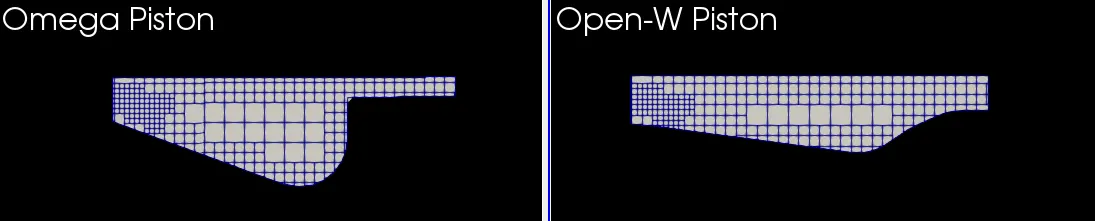
Mesh @ timstep 70 [During Injection]
Mesh @ timstep 72:
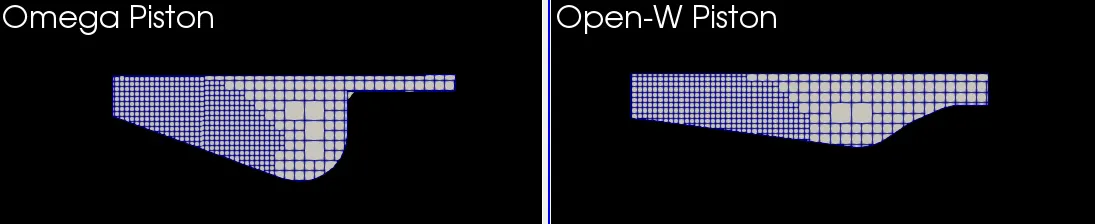
Mesh @ timstep 76:
Mesh during Injection @ Piston boundary and cylinder head:
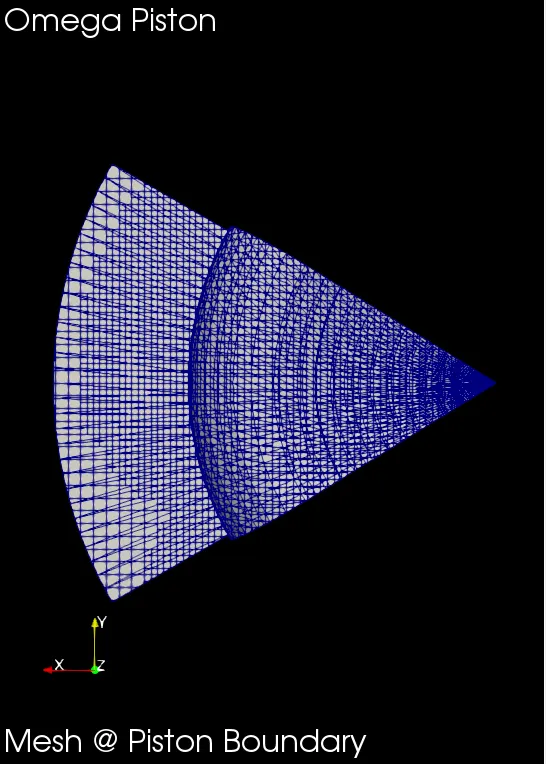
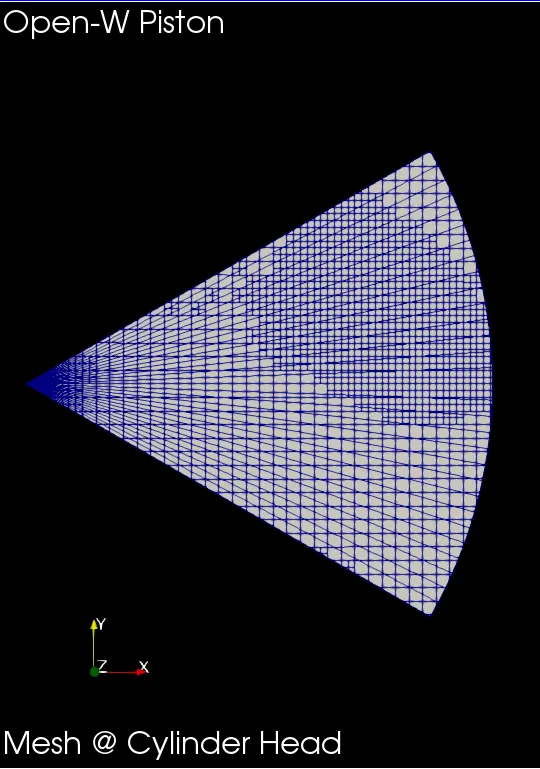
Animation of the entire Mesh generation during the closed cycle analysis of both the piston designs:
COMPARISON OF ENGINE CHARACTERISTIC PLOTS FOR OPEN-W AND OMEGA PISTONS:
- Pressure vs CA
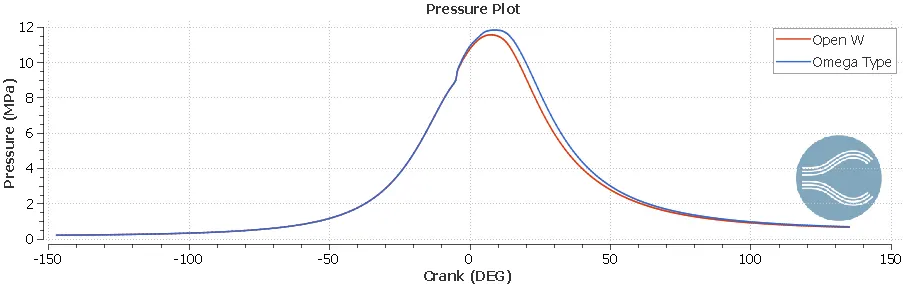
The max pressure obtained in Open W piston is 11.55 MPa
The max pressure obtained in Omega piston is 11.82 MPa
- Temperature vs CA
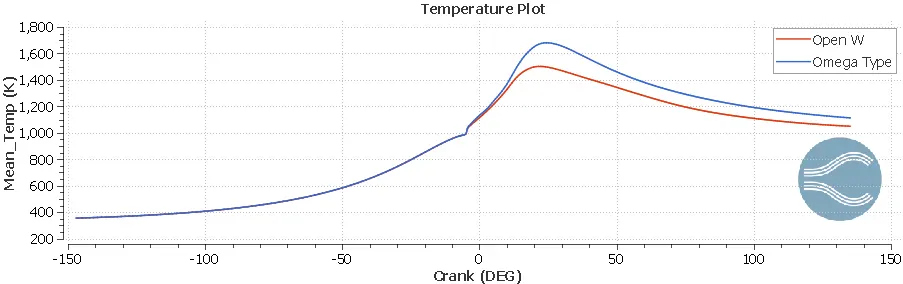
The max temperature obtained in Open W piston is 1500K
The max temperature obtained in Omega piston is 1676K
- Heat Release Rate vs CA
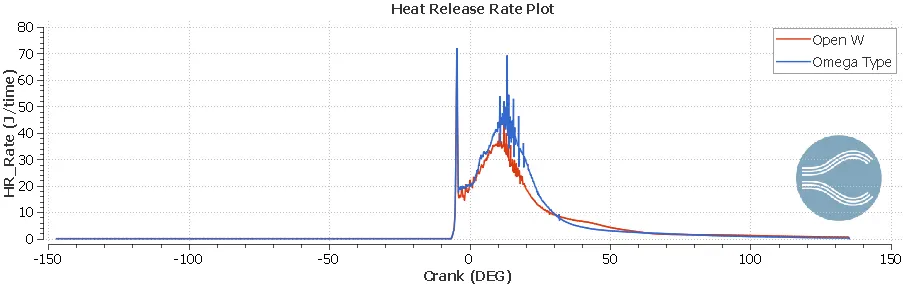
Ignoring the noises in the plots, the heat release rate in Omega piston is comparitively higher than heat release rate in Open W.
- IHR vs CA
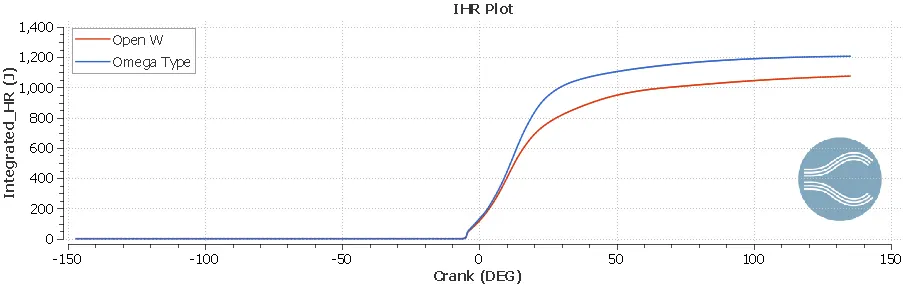
The max IHR obtained in Open W piston is 1074J
The max IHR obtained in Omega piston is 1205J
- Mass of fuel vs CA
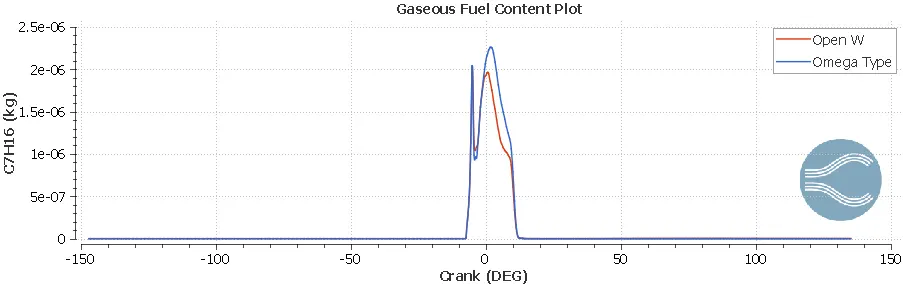
The Omega piston has higher amount of gaseous fuel C7H16 in the chamber which is being burnt late. Even though Omega piston engine has higher amount of gaseous fuel, it catches up with the open W piston.
- Hiroy Soot vs CA
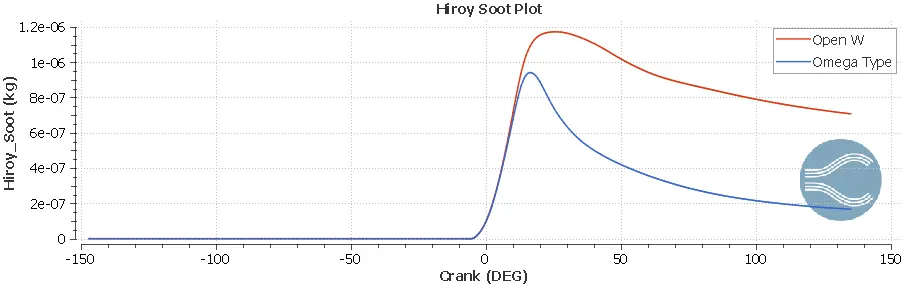
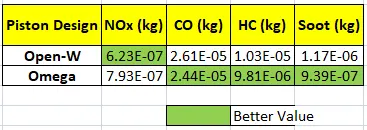
Omega type piston produces significantly lower NOx than the Open W type piston. The max soot produced in Open W piston is 1.172e-6 kg. The max soot produced in Omega piston is 9.393e-7 kg.
- NOx Emissions vs CA
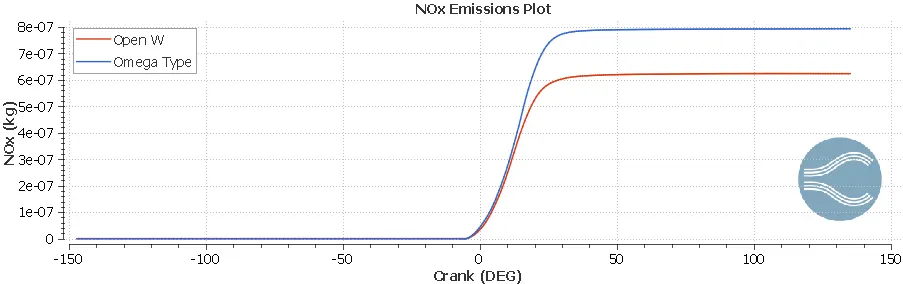
Since the max temperature attained by the Omega piston engine is greater than Open-W engine, the NOx emissions as well is smaller than Omega piston. The max NOx produced in Open W piston is 6.23e-7kg. The max soot produced in Omega piston is 7.930e-7kg.
- CO Emissions vs CA
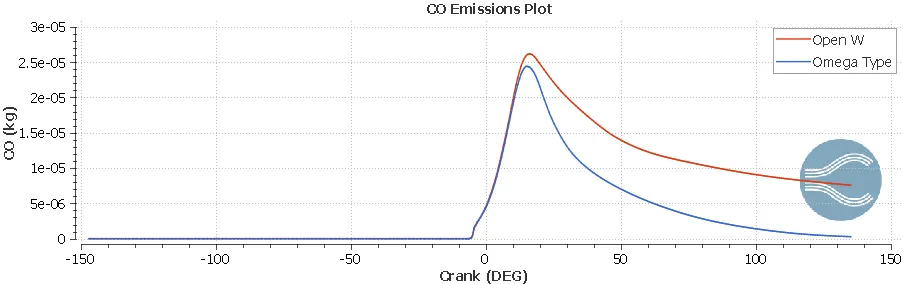
The max CO emission produced in Open W piston is 2.61e-5kg. The max soot produced in Omega piston is 2.442e-5kg.
- HC Emission vs CA
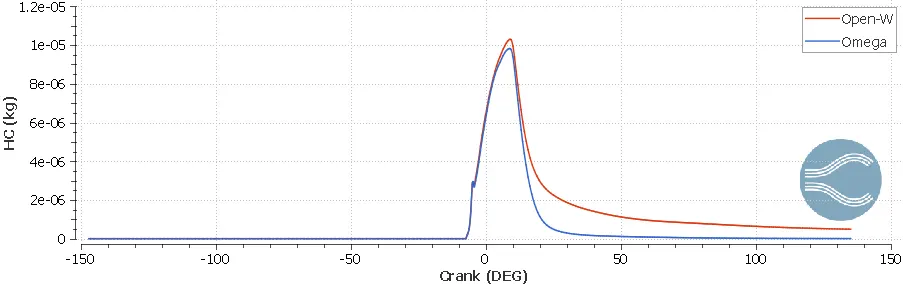
The max value of HC emissions in Open-W Piston design is around 1.030e-5 kg and in Omega piston, it is around 9.809e-6 kg.
- PV Diagram
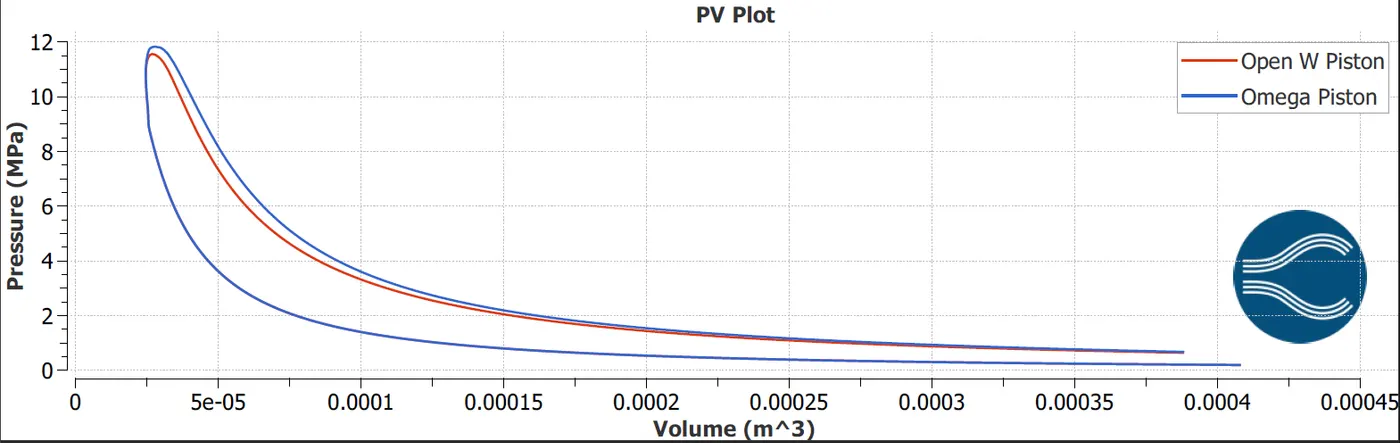
From the PV diagram, it is clear that, area covered by the Omega piston engine is more than Open-W engine and hence, more work is done in Omega piston engine.
EMISSION ANALYSIS:
From the mass of fuel (gaseous C7H16) plot, it can be observed that the amount of fuel vapours is more for Omega type piston and less for the Open W type. In open-W type piston, there are less fuel vapours meaning there are more of liquid fuel. This can as well include unbunt liquid fuel as well. Hence, either the piston design or the spray pattern is causing less vapourisation in open-W piston engine. This is the reason why we get higher values of CO, HC and soot emission for Open-W piston than the corresponding Omega piston values. The 3D part has to be checked to get idea about the spray pattern.
Whereas for NOx emissions, it depends on the max temperature. Since Omega piston contains higher mass of vapour fuel, its max temperature is greater than that of Open-W and hence, NOx emissions of Omega piston engine is higher than Open-W piston engine.
ANIMATIONS:
Spray-Wall Interaction of the fuel in both piston designs:
From the spray-wall interaction,it can be noticed that in the Open-W piston, the spray is directly impinging on the bowl whereas in Omega piston, there is a considerable spray penetration after which it impinges onto the piston bowl. Due to the this impinging of the fuel in Open-W piston, there is a large amount of liquid fuel remaining on the piston bowl which results in delayed vapourization. In Omega piston, due to good amout spray penetration, the liquid fuel injected vapourises without much delay. Hence due to the large ammount of liquid fuel in Open-W, we obtain smaller max temperature in Open-W and more CO, HC and soot emissions.
Other plots such as temperature distribution and pressure distribution are shown as well:
Temperature Distribution during injection in both piston designs:
Pressure Distribution during injection in both piston designs:
CO, CO2, NOx and Soot emissions produced in both piston designs:
SOME PERFORMANCE CALCULATIONS:
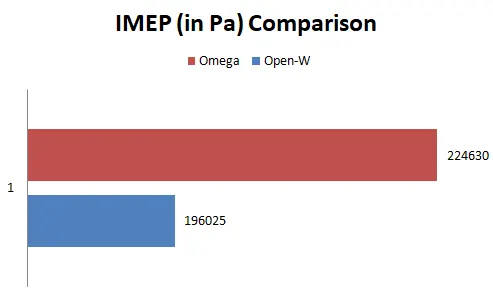
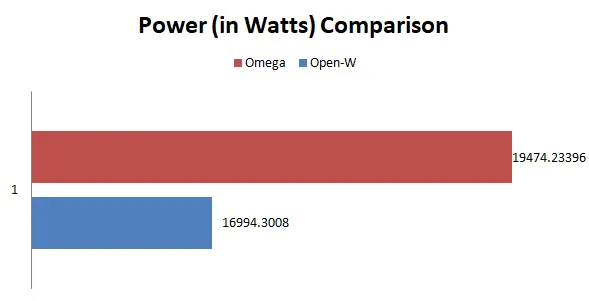
This is the summary of the performance of the engines. Comparison between the IMEP and Power between both the engines are shown in a bar graph. The detailed calculations are shown below:
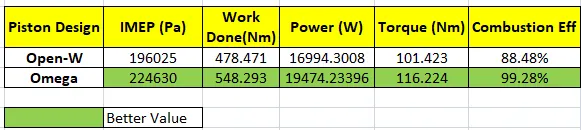
- Combustion Efficiency
Mass of fuel Injected: 2.70167e-05 kg
LHV of C7H16: 44.925 MJ/kg
Total energy content of fuel: Mass * LHV = 1213.7252 J
IHR of Open W Piston: 1074 J
Combustion efficiency = IHR/Total energy of fuel
`implies` Combustion efficiency of Open-W piston Engine = 0.8848 = 88.48%
IHR of Open W Piston: 1205 J
`implies` Combustion efficiency of Omega piston Engine = 0.9928 = 99.28%
- Power, Torque and Work done
For Open-W piston Engine,
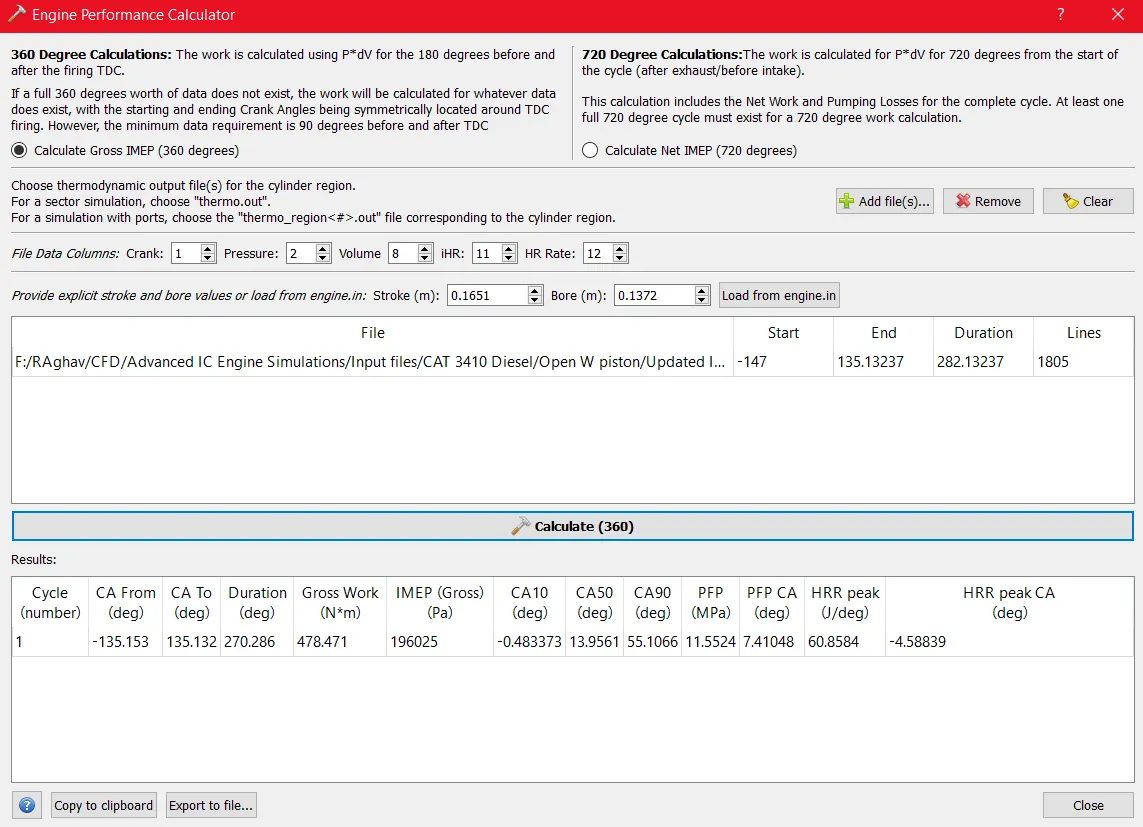
From engine performance calculator in converge,
Gross Work done = 478.471
Combustion duration in CA = 270.286 deg
RPM (N) = 1600 `implies` RPS = 26.67 `implies` time per 1 degree = 0.000104167
Combustion duration in seconds = time per 1 degree * Combustion duration in CA = 0.028154792 sec
Power = WD/time taken = 478.471/0.028154792 = 16994.3008 W
Torque produced = `(P*60)/(2piN)` = 101.423 Nm
For Omega piston Engine,
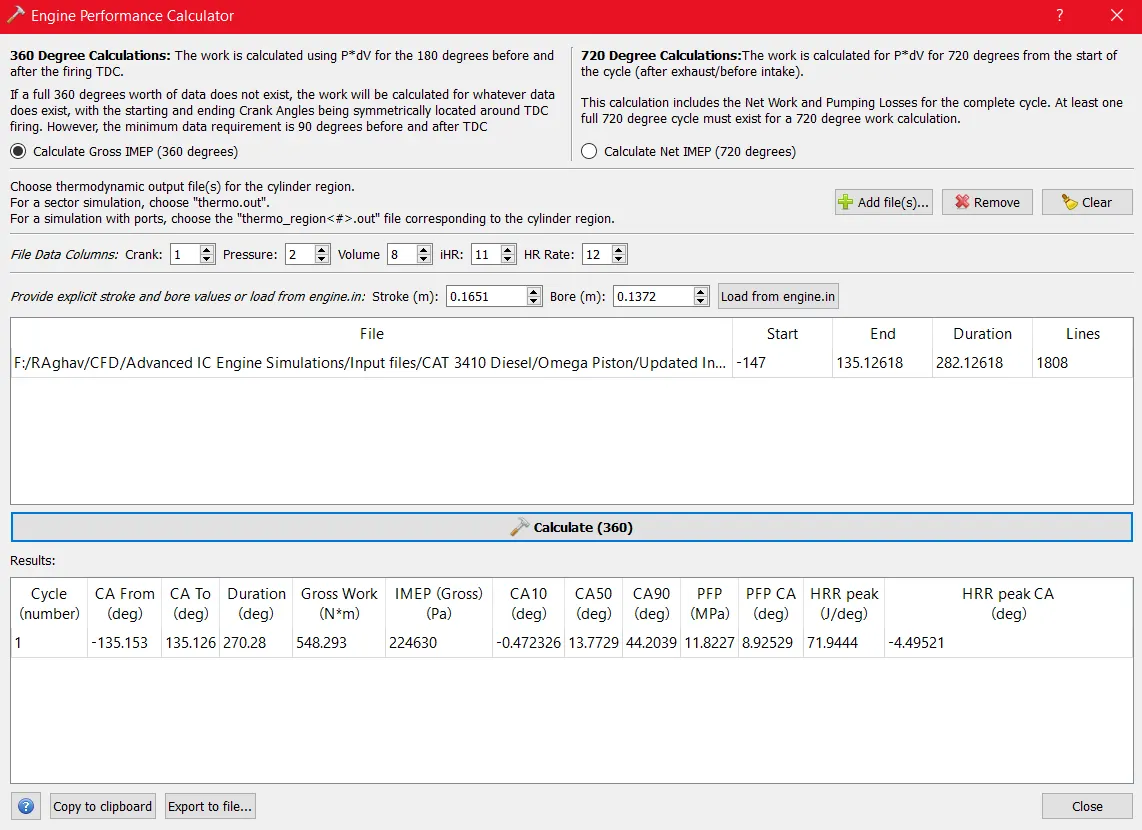
From engine performance calculator in converge,
Gross Work done = 548.293
Combustion duration in CA = 270.286 deg
RPM (N) = 1600 `implies` RPS = 26.67 `implies` time per 1 degree = 0.000104167
Combustion duration in seconds = time per 1 degree * Combustion duration in CA = 0.028154792 sec
Power = WD/time taken = 548.293/0.028154792 = 19474.23396 W
Torque produced = `(P*60)/(2piN)` = 116.224 Nm
Some analysis into the energy expenditure:
The max IHR obtained in Open W piston is 1074J and the max IHR obtained in Omega piston is 1205J.
For the same amount of fuel, the energy gap between max IHR produced by the different pistons is 131 J.
The amount of fuel corresponding to 131 J is `etaunderset(avg)()*mass*LHV = 131 J` where `etaunderset(avg)()` is average combustion efficiency of both the piston engine type = 93.88 %
`implies` mass corresponding to 131 J = 3.106e-6 kg. Now both the IHR and mass that we obtained are values per cycle.
Now, say, the engine runs for 1000 cycles. The correspoding difference in energy will be 131 kJ and the fuel correspoding to the same will be 3.106e-3 kg. Now, there is a significant energy gap between both the engine types. This is a an outcome that must be considered while desining the bowl for the piston. Again, this predition is only theoretical, and we have considered that the energy gap to be the same every cycle. In reality, many other factors can affect the IHR and the difference need not be constant after certain cycles.
INFERENCE:
The final summary of the performance and emissions of both the piston bowl designs are shown below.

Both the pistons designs are able to produce similar max pressure and temperature. The main hinderance of the performance of the Open-W piston is the spray pattern. Some adjustment can be brought into the design of the fuel spray pattern (especially spray angle and spray location) which can significantly boost the Open-W engine performance and reduce emissions as well. At the moment, the Omega piston is a better choice in terms of performance. Even though, it produces more CO, HC and soot emissions, it can be preferred as the energy difference between the two becomes massive when the engine runs for more cycles.
A weighted performance chart can be laid down and the right piston design can be chosen according to application and requirement. Also, an extended study can be done on the same by tweaking the spray parameters for Open-W piston design and then performing the performance and emission analysis.
CONCLUSION:
The closed cycle analysis for the CAT3410 engine was performed in Converge CFD. Important performance parameters such as Combustion efficiency, Work Done, Power and Torque were estimated. Omega type piston was found to give a better results in terms of performance. Emissions were characterised. Open-W gave higher CO, HC and Soot Emissions comparitively. Omega gave higher NOx emissions due to the larger max temperature that it had attained. Also the reason for the poor performance of the Open-W piston was deciphered. It was due to the spray pattern.