DESIGN OF DOOR ARM REST USING CATIA
Week 8 Challenge-Door Arm Rest
Draft analysis:
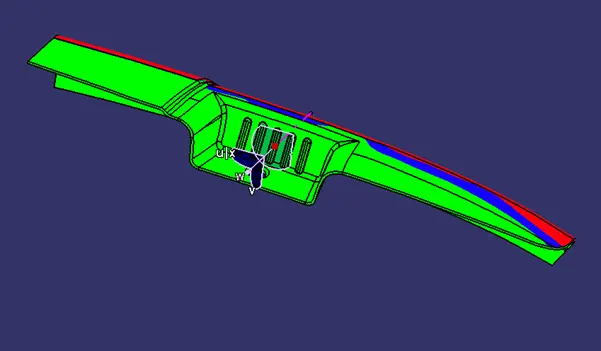
Draft analysis is done to verify whether the part designed can be manufactured or not. CATIA has draft analysis feature where it takes the tooling axis as input and provides the draft analysis results by highlighting the surfaces which has negative draft, and draft between 0 to 3 degrees and the draft above 3 degrees.
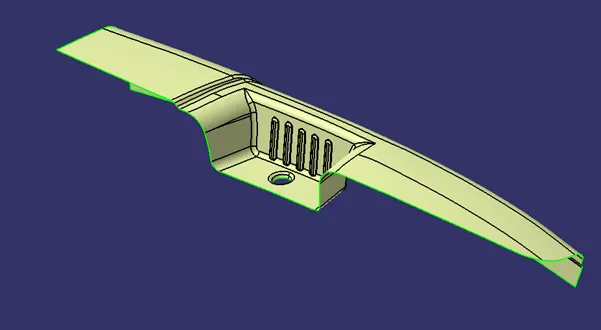
This model cannot be created using single tooling axis as the pocket area has the curved surfaces and will result in negative draft. This can be cleared by introducing the side cores.
Tooling Axis Creation:
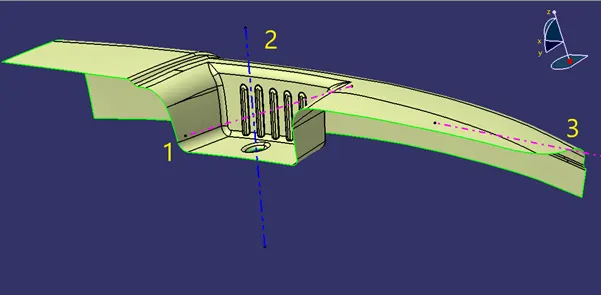
3 Tooling axes will be required to clear the model with one main tooling axis and 2 side core axes. In the image shown below 1 and 3 were the side core axes and 2 is the main core axis.
Main Tooling Axis Creation:
Main tooling axis is created to clear the non-pocketed surface. It is created by creating a line along Z axis and draft analysis is carried out and the compass is adjusted to clear the side walls of the class A surface and the current orientation of the compass is locked orientation is locked. Once the draft clears the side walls then the direction of line should be changed to direction of the compass. Then the position of the compass is reset from View->Reset Compass.
Draft Analysis of the main core axis.
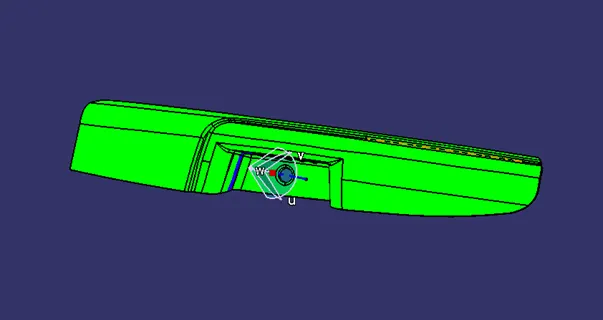
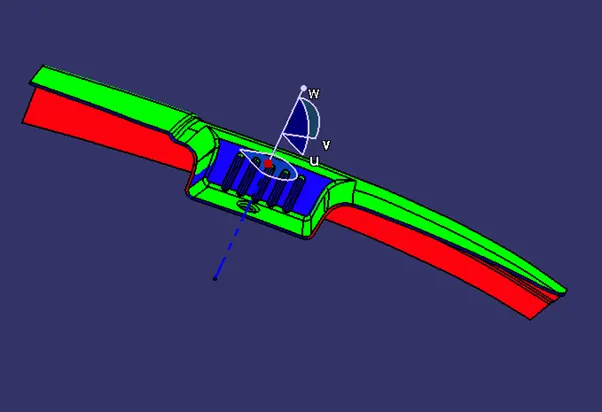
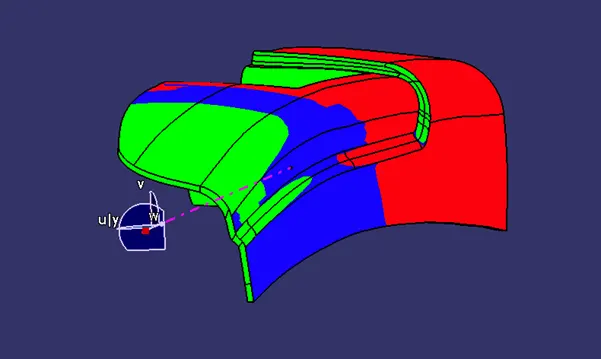
Using the same steps said above side core axes were created along X, Y directions as shown in the image below. The regions of the part which are not cleared by the main tooling axis were cleared with the side core axis.
Draft Analysis of the side core axes.
CONCLUSION:
Thus the part is modelled and draft analysis on all the surfaces were cleared using main tooling axis and side core axes.
Thus the part is modelled and the main tooling axis and the side core axis were created to clear all the surfaces of the draft analysis.