Design of backdoor
Aim: Use the provided styling surface to develop a back door design, use appropriate design methodologies, and provide the necessary reinforcements and embosses.
BackDoor Panel: The back door panel, the d-pillar, is the outermost component of the car and a part of the 5-door hatch. The design is made up is for a tailgate a coin termed for the back door assembly for SUVs' and hatchbacks. The Interior of it is the car speakers, luggage housing facilities, etc while the car exterior has the tail lights, indicator lights, registration plates, gas stay, and the rear windshield.
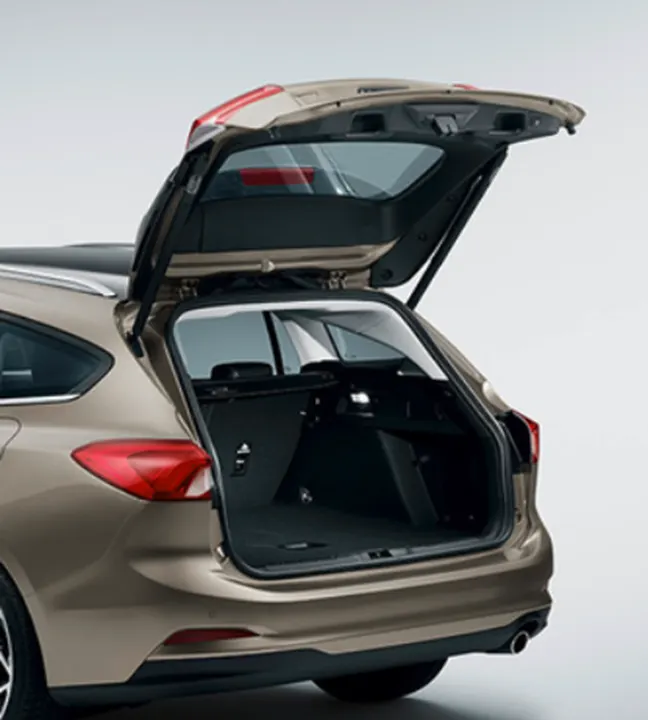
COMPONENTS INVOLVED IN THE DESIGN:
Generally, for any BIW fixture, the rear hatch also has an inner panel and an outer panel. In the inner panel consists of the hinge reinforcement, gas stay locator, mastic addition, latch striker positioning, reinforcement embossed, etc. The inner and outer panels are joined together through a mechanical process, hemming. So in general, there are
- Inner panel
- Outer panel
- Gas stay reinforcement
- Hinge reinforcement
- Latch striker position
- Wiper Motor reinforcements
Class A surface: The class A surface from the styling team is analyzed for any surface corrections to be made and the flatness and surface continuity are inspected and the tooling direction and undercuts if required are carried out initially. In the given inner panel there were some corrections over surfaces carried out to ensure the continuity and intersecting faces.
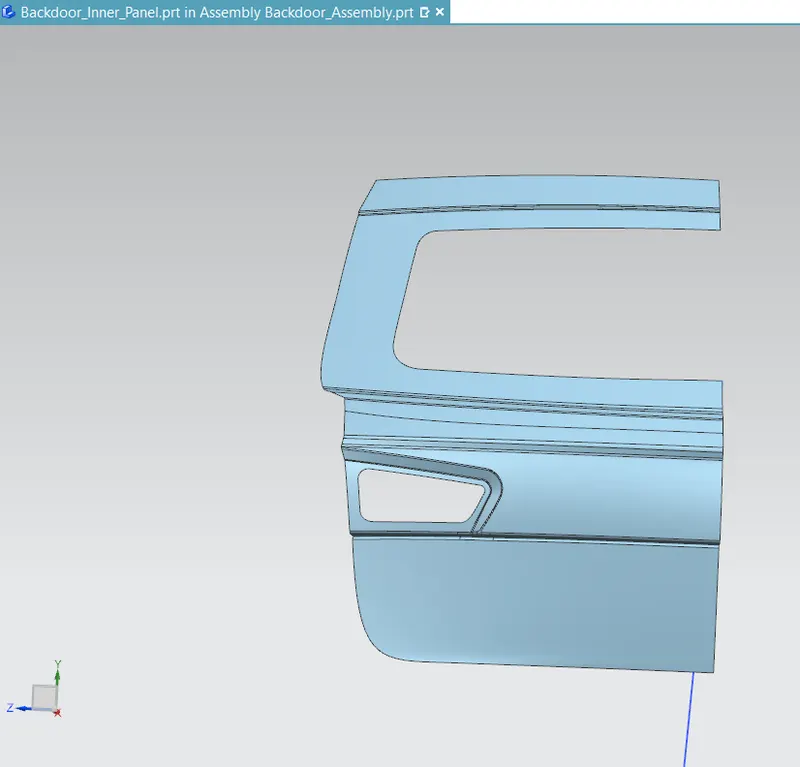
INNER PANEL: The inner panel is provided with reinforcements and embosses and relief areas. The inner panel is designed with its structural rigidity and load-bearing capacity while the outer panel is for styling, look, and feel purposes. Initially, the inner panel is obtained by offsetting the outer panel. Then the sealing flange is created for the inner panel, this flange seals the gaps between the panel and the BIW restricting the micro dust, water splash, and rainwater from entering the car interior.
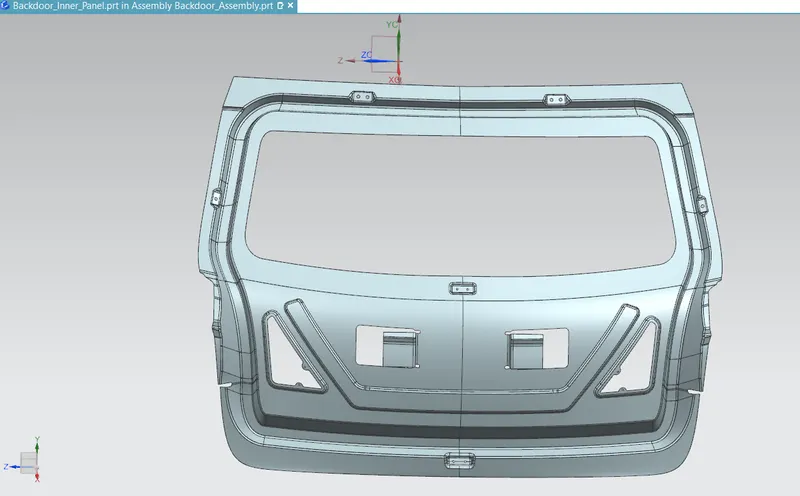
Tooling Direction:
- Before starting to design the inner panel of the back door the tooling direction for Deep Drawing purposes should be created.
- Then the styling surface needs to be checked properly and analyzed since it might have irregularities, hence it must be fixed first.
- The back door was designed using a top-down approach.
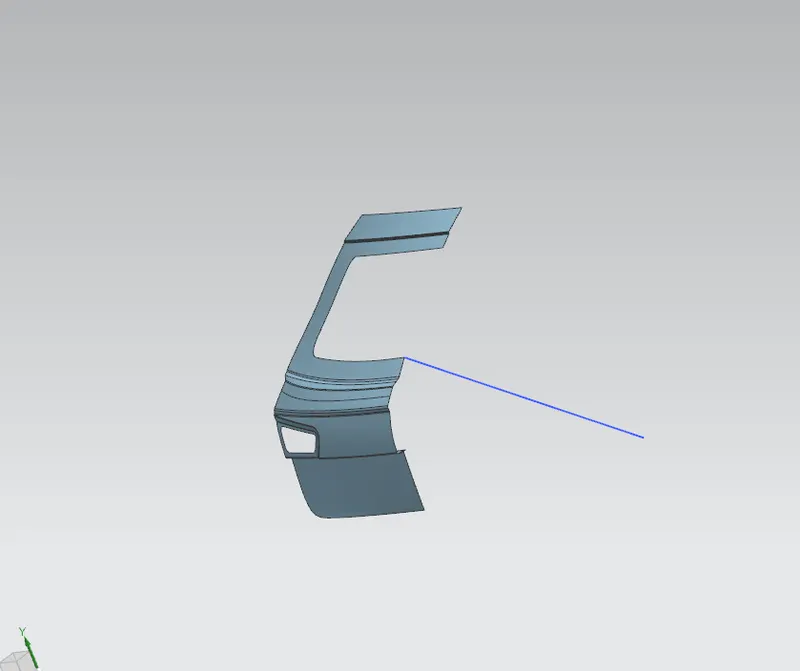
MASTIC SEALANT:
The mastic sealant is used to fix the inner panel and the outer panel which increases the NVH factor & stiffness of the back door.
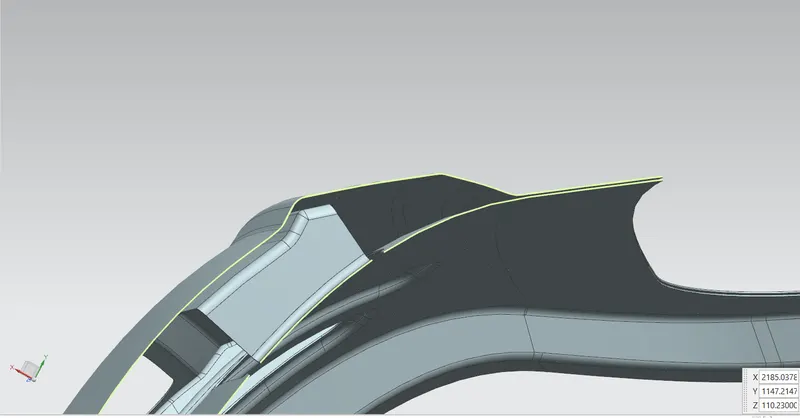
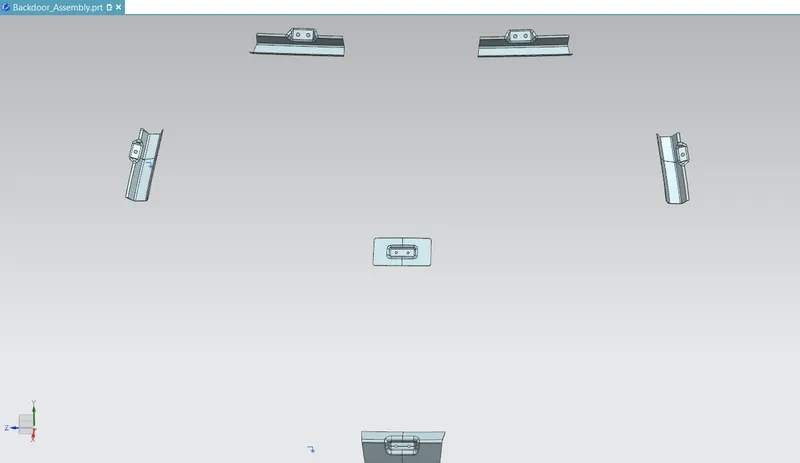
Reinforcements:- Whenever we add any part or weight over another component the component loses strength so to compensate for that lost strength we employ the reinforcements. Reinforcements thickness is generally more than the thickness of the inner or outer panel. In the case of the Aluminium backdoor, we do not need separate reinforcements because aluminum can be cast and at the zones where there will be an additional community attached to it the thickness of the backdoor panel is increased to accommodate the desired strength. In the case of steel there are separate reinforcements for many parts which are as follows:-
- Latch or Striker Reinforcement:- Firstly it needs to be determined among the latch and striker which part is going to be mounted on the tailgate of a car and according to that emboss is created on the tailgate and over that emboss reinforcement is placed to provide the strength. Its thickness can be 0.75-1.5mm
- Wiper Motor Reinforcement:- For the rear windshield wiper is a necessity that is actuated by the motor which is mounted on the tailgate inner panel. So first an emboss is made after that reinforcement is attached to it.
- Gas Stay Reinforcements:- For opening the tailgate and keeping it still in that position gas stays used on both sides. One side of the gas stay is attached to the inner panel and to give that region of the inner panel extra strength we reinforce the gas stay with embosses
- Hinge Reinforcement:- Similar to the hood tailgate of a car is opened and closed in a similar fashion and it is made possible by the hinges. Hinges are mounted over the hinge emboss which is supported by the hinge reinforcement.
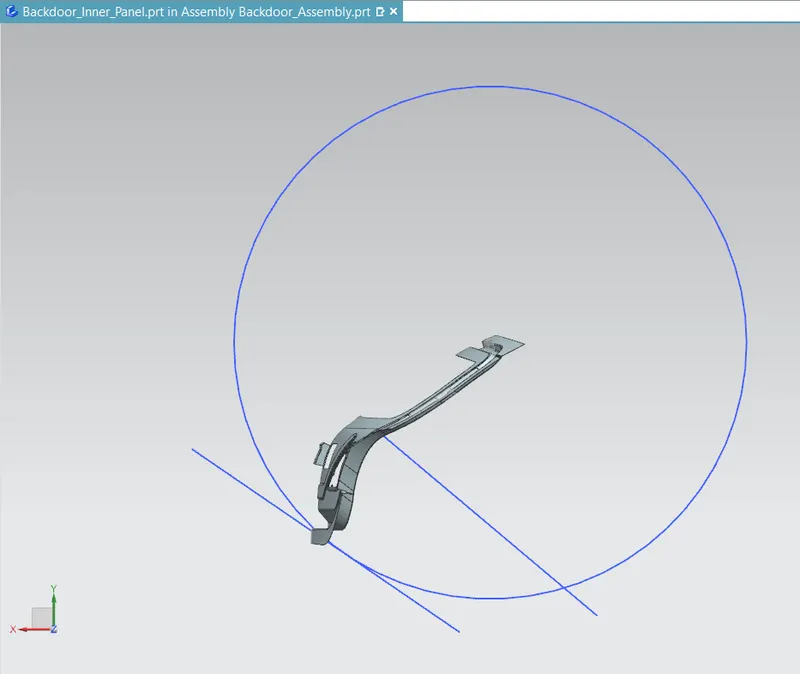
Trajectory: The position of the hinge should be perpendicular to the latch at the time of latch and striker meets. The circle is drawn from the center of the hinge axis to find the path of the striker and perpendicular to the path.
HEMMING: Hemming is a forming operation in which the edges of the sheet are folded or folded over another part in order to achieve a tight fit. Normally hemming operations are used to connect parts together, improve the appearance of a part, and reinforce part edges.
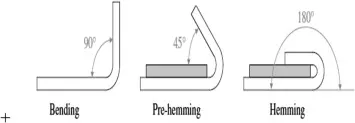
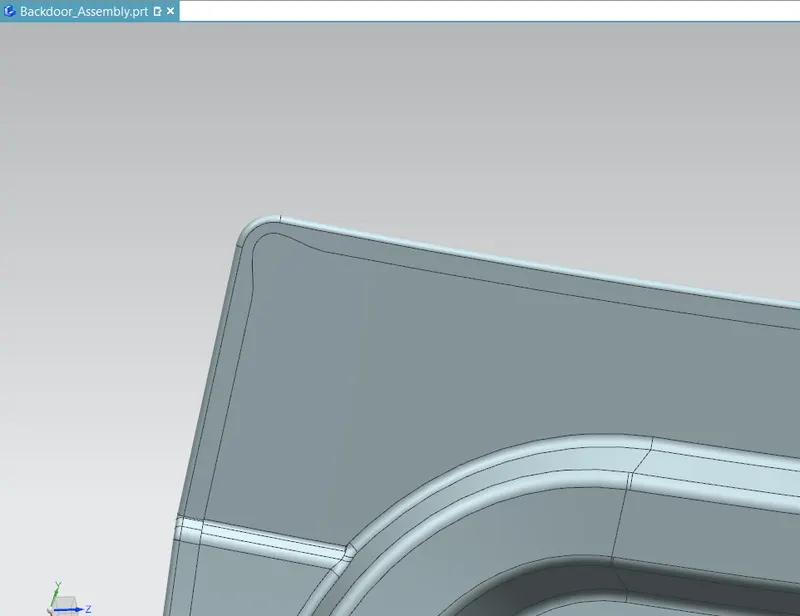
In car part production, hemming is used in assembly as a secondary operation after deep drawing, trimming, and flanging operations to join two sheet metal parts (outer and inner) together. Typical parts for this type of assembly are hoods, doors, trunk lids, and fenders. Relief is done to decrease the stress concentration along with the corners and also to decrease the clumping of metal along with the corners, this is done by trimming the corner by a minimum radius for the rollers to pass along smoothly.