Design of backdoor
BACK DOOR
Introduction:-
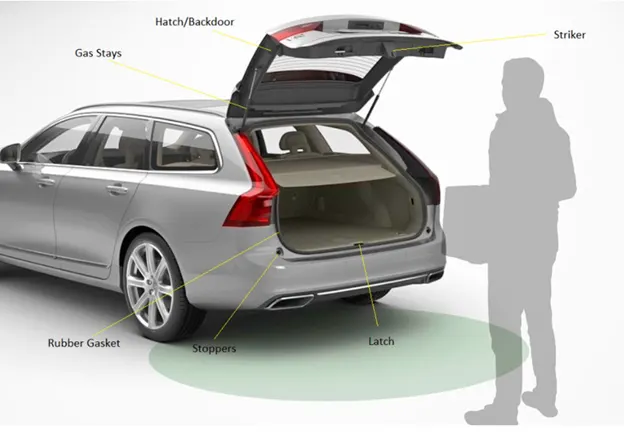
A door is a hinged part that is used for the entry and exit of vehicles. A tailgate is a type of vehicle door that is located next to the passenger seat that provides access to the trunk. In most cars, this rear door is operated by a gas strut, which in turn reduces the effort required to open the door. Some luxury cars have powered tailgates, which in turn are powered by an electric motor. This kind of system is also called a powered tailgate system. The hatchback or station wagon is sold as a 3-door or 5-door model. In this case, the rear hatch is classified as a door because it enters the passenger compartment. The naming is mainly used in European countries. In the case of safety, the designed rear door should meet the safety requirement for rear impact.
Types of Back Door
i.Top mounted.
ii.Side mounted.
iii.Bottom mounted.
i.Top mounted:-
These types of tailgates are used on station wagons, pickup trucks, and some other sport utility vehicles. Today's modern cars use top-mounted tailgate systems that are also gas powered. These rear doors provide better rear visibility compared to other types.
ii.Sided Mounted:-
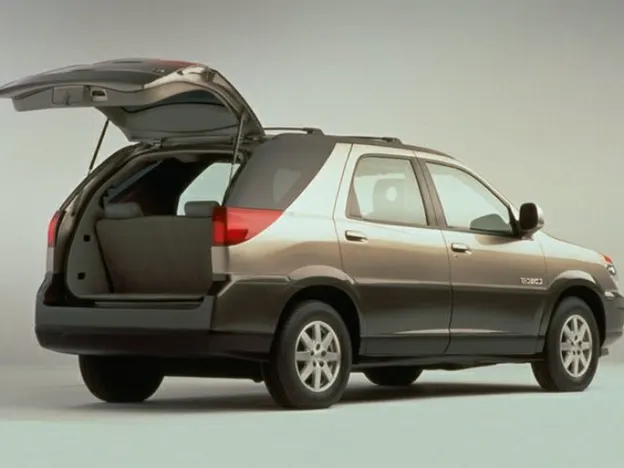
It is generally used in van-type MPVs, SUVs, pickups. This side door/barn is much simpler compared to top mounted doors. These doors are generally small and easily accessible. These doors are more suitable for handlers carrying long objects, long pipes where one door is open. It also saves accidental head impacts. It is much easier to load/unload things in vehicles with side doors.
iii.Bottom Mounted:-
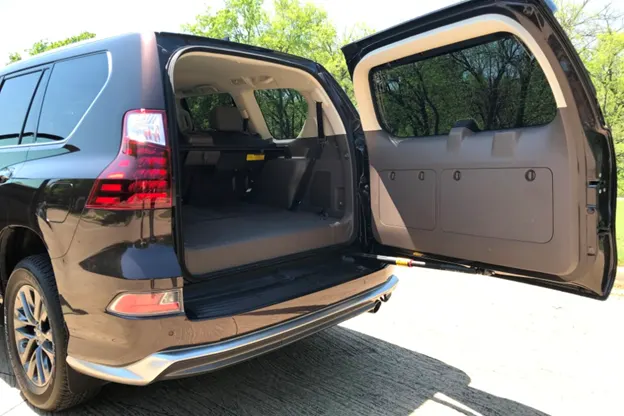
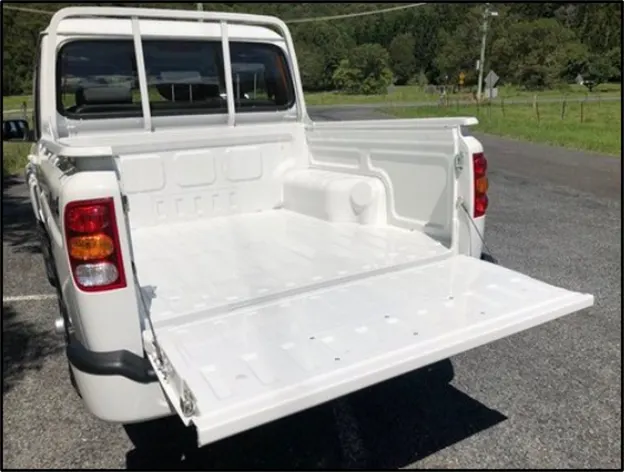
The bottom or split type tailgate system is used on station wagons, pickup trucks, and some luxury SUVs. This is the most convenient type of tailgate, in which the lower division is used as a support or even as a table for passengers.
Types of mechanism of rear door:-
Gas stay:-
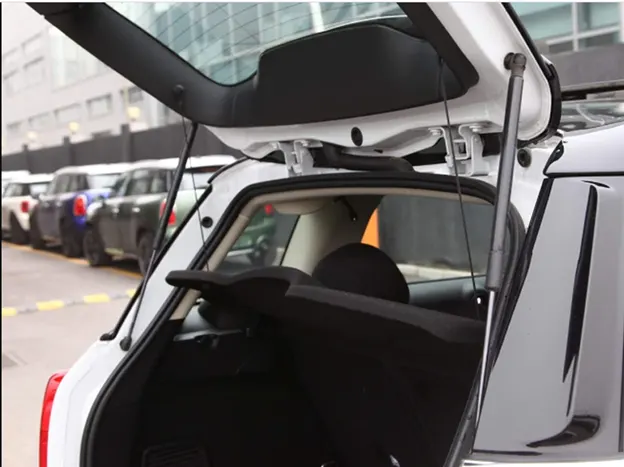
The main purpose of these mechanisms is to open the back door without much effort, because the back door has different parts and the weight of the back door is high, so we are not able to open the back door manually, that's why we introduced these two types of commodities. and they also decide the premium of the car, mostly electric used in premium cars.
Powerd lift operated:-
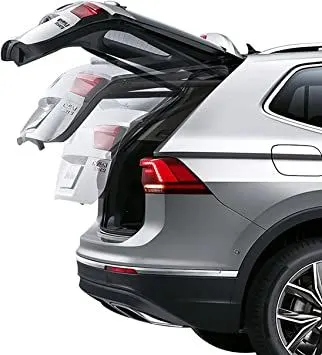
The electric tailgate system is another sophisticated take on the tailgate/tailgate opening mechanism, which automatically opens and closes the trunk/tailgate and releases the latch at the push of a button.
Wiper & Wiper motor mounting:-
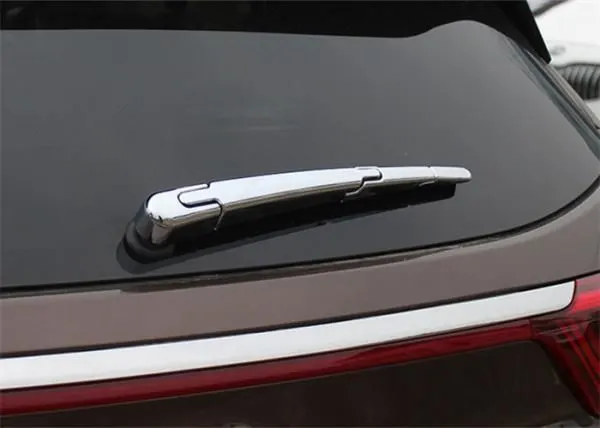
As the name suggests, the wiper is used to wipe dust and water from the rear window of the vehicle.
Hinges:-
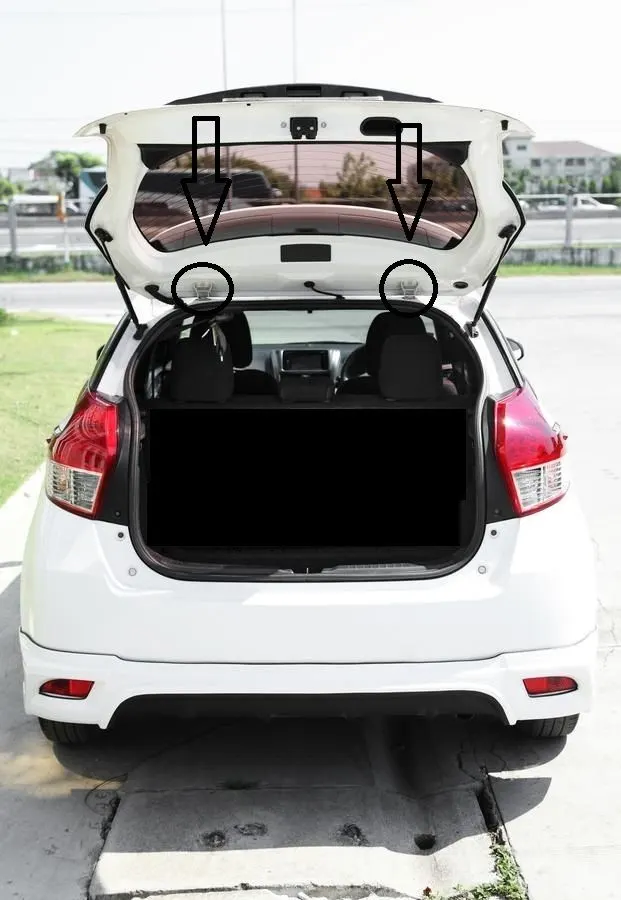
Hinges connect the door to the vehicle body and allow the door to rotate around a fixed axis for opening and closing movement. Generally, the hinges are a 2-part assembly where one part is bolted to the door and the other to the vehicle body.
Material Selection:-
Material selection plays a major role in determining the overall weight of the tailgate. Commonly used materials are steel and aluminum. The density of steel is higher than aluminum, which increases the weight of the door. The material used in making the tailgate depends on the budget of the car, most budget vehicles use steel as it is cheaper compared to aluminium. Another aspect to note is that if cast aluminum parts are used instead of deep-drawn steel parts, there is no need for bracing and the overall weight of the car is reduced by around 5-10 kg, thus increasing the performance of the vehicle. Also, the bevel angle for cast parts is around 3 degrees, while for deep drawn parts it's about 7-10 degrees, which helps increase boot / cabin space.
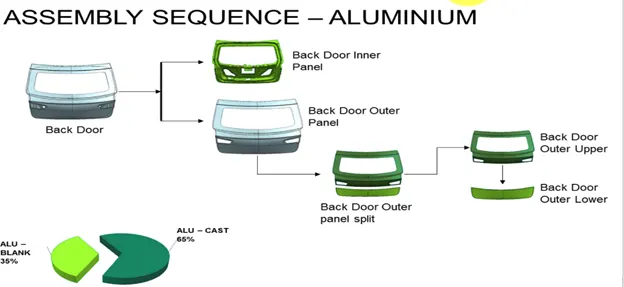
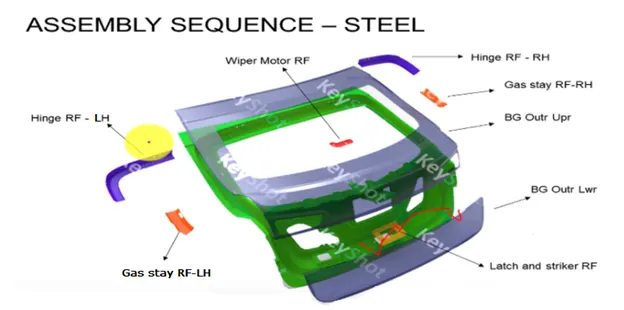
Comprisssion of Steel & Aluminum
|
|
Aluminuim |
Steel |
|
Parts |
Parts are casted. |
Parts are stamped. |
|
Reniforcement |
Renforcemnt can be neglated. |
Reniforcement can be compulsary. |
|
Thickness |
Thicknes can bne varied. |
Thickness should be uniform. |
|
Weight |
Light weight. |
Heaiver Weight. |
|
Cost |
Costly as compared to steel . |
Cheap compared to aluminuim. |
|
No. of Component |
Less |
More |
Manufactring process:-
Deep Drawing:-
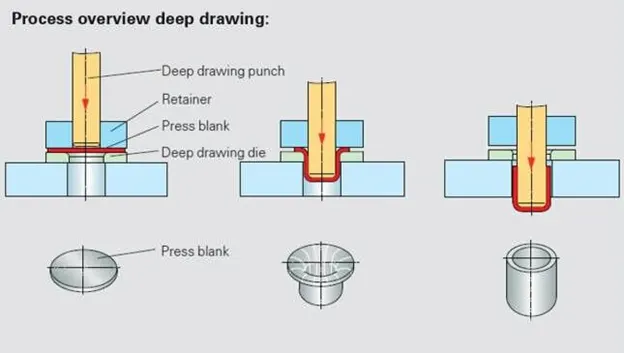
The metal deep drawing process is an efficient way to produce cups, cans and other similar deep drawn products. Deep drawings have two main categories.
i.First – Stage Drawing:-
The shape of the metal blank is placed on the die and is in contact with the punch. When the metal sample is a flat piece of sheet metal used in the shaping and finishing of the product. Initially, the punch moves downwards. The outer edge of the blank is subjected to pure radial pull (pull in vertical axes) between the die and the metal of the blank. The metal bends and slides on the die and also stretches between the die and the punch. Metal near and in contact with the punch head bends and slides over the radii and stretches across the punch head.
ii.Redrawing:-
The parts pulled from the first stage are redrawn and converted to greater depth to create a bowl shape in the die and punch. The second stage of drawing is called redraw.
Embossing:-
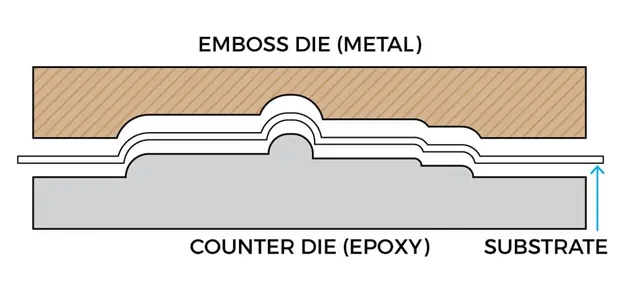
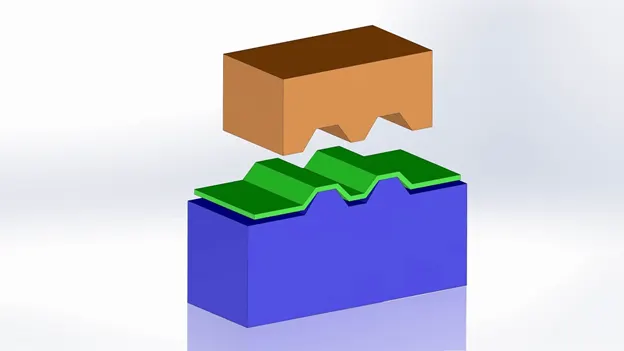
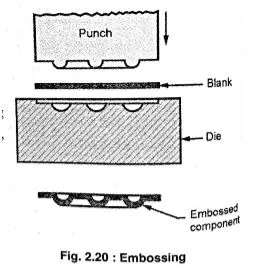
Embossing is a metal forming process for producing raised or recessed patterns or relief in sheet materials using matched male and female roller dies, theoretically without changing the thickness of the metal or wrapping the sheet or strip of metal between the rollers of the desired pattern. The metal sheet is pulled over a male and female roller die, creating a pattern or pattern on the sheet. Depending on the roller dies used, different patterns can be created on the sheet metal.
Material Commonly used in the embossing process include:-
i.Aluminum alloys
ii.Steel alloys
iii.Zinc
iv.Copper
v.Galvanized steel
vi.Brass
vii.Cold rolled steel
Hemming:-
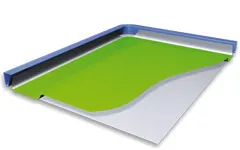
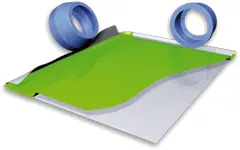
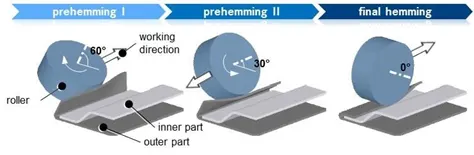
Hemming is a forming operation in which the edges of a sheet are folded or folded over another part to achieve a tight fit. Flanging operations are commonly used to join parts, to improve the appearance of a part, and to strengthen the edges of parts.
In the production of automotive parts, flanging is used in assembly as a secondary operation after deep drawing, trimming and flanging operations to join two sheet metal parts (external and internal). Typical parts for this type of assembly are hoods, doors, trunk lids and fenders.
They are various type of hemming operation:-
Convential Die Hemming:-
In conventional die hemming, the flange is folded along its entire length using a hemming tool.
Roll Hemming:-.
In roll flanging, the flanging roll is guided by an industrial robot to form a flange.
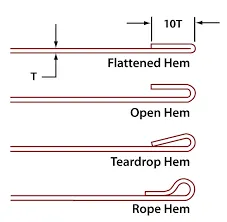
Open hemming:-
The hem has a full round element and a return flange. In the open hem, the bending angle is equal to 180 degrees.
Tear drop Hemming:-
With a tear drop hem, the bend angle is greater than 180 degrees.
Closed hemming:-
Hems without any inner radius are called closed hem. Closed hems are not recommended if the hem geometry is to be painted or if SST or aluminum is used.
Blanking:-
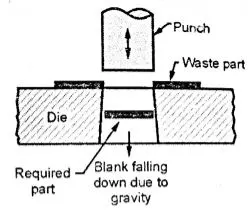
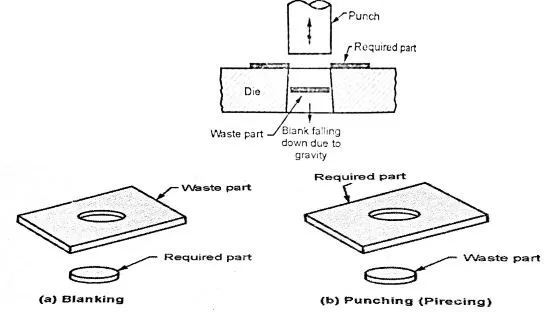
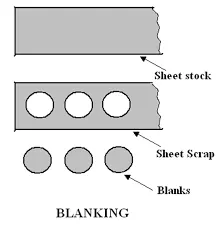
Stamping is the operation of cutting a flat metal sheet, and the stamped product is called a blank. The blank is the desired product of the operation and the remaining metal is considered waste.
Punching:-
It is similar to punching, only the main difference is that the hole is the desired product and the material punched out of the hole is considered waste.
Design of Back Door:-
Outer pannel thickness:-0.75mm
Outer pannel thickness:-0.75mm
Reniforceent thickness:-1.5mm
Back door Design Cosediration:-
i.Rear visibility
ii.Boot space and availability
iii.Sealing flange
iv.Support structures such as hinges and gas struts.
Wiper motor mounts, taillights and other cable loops
Regulations for rear impact
Joining techniques such as flanging, spot welding, etc.
Gap and flush requirements
Modification Of Outer pannel:-
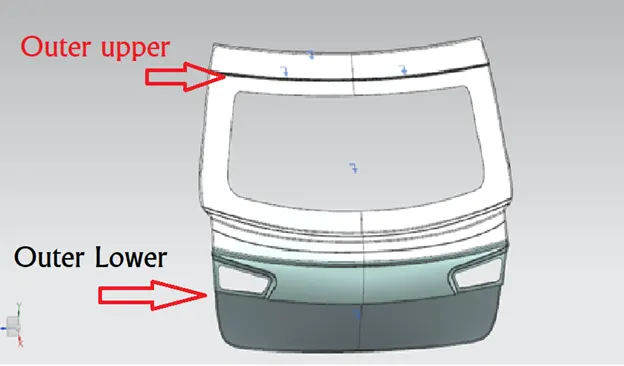
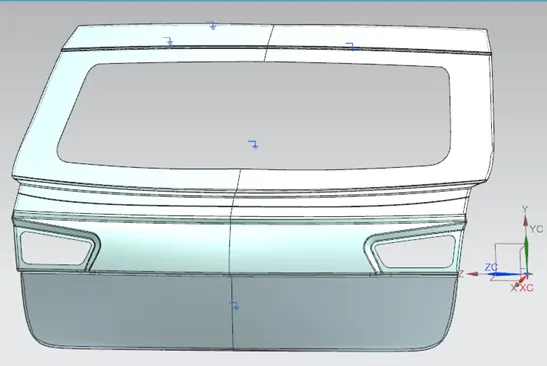
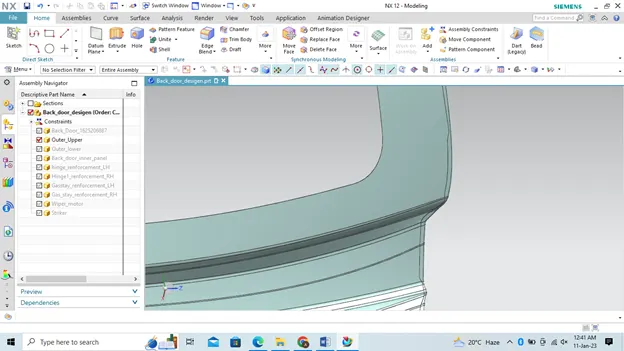
The given surfaces must be repaired according to smoothness. After repairing the surfaces, the door is divided into two parts as Door Outer Upper and Door Lower Panel.
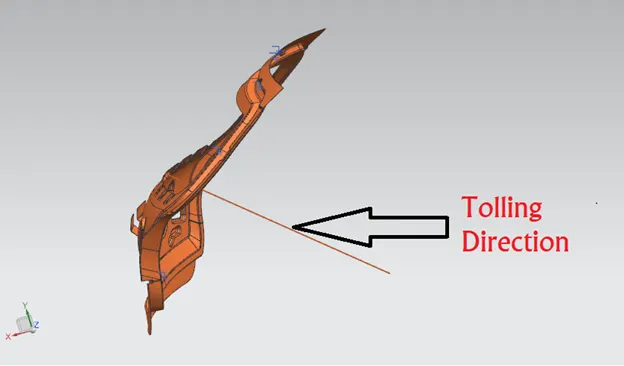
Tolling Axis:-
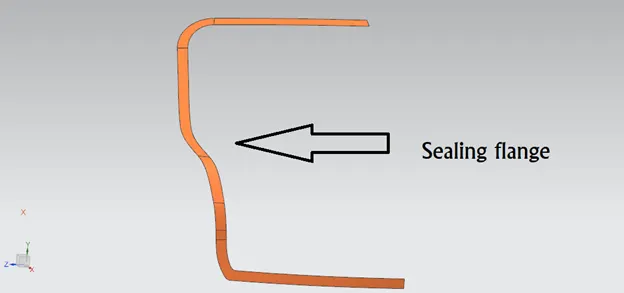
Sealing Flange:-
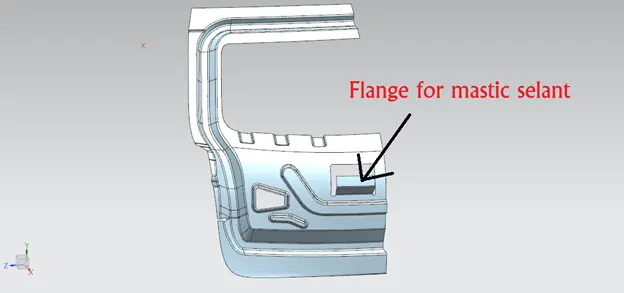
Mastic Selant:-
As we know, the outer panel gives the vehicle an aesthetic appearance, so we can't use bolting or spot welding or any other joining technique that damages the aesthetic appearance of the panel. Sealant sealants are therefore used to connect elements of the inner panel to the outer panel. A maximum gap of 5 mm must be maintained between the parts where the sealant is to be applied.
Reniforcement:-
The stiffeners are generally placed to increase the strength of the panel in localized areas that are relatively small compared to the sheet metal members to absorb the loads applied thereto and disperse such loads throughout the panel assembly to help maintain the stiffness of the panel assembly. The braces are usually 1-1.5mm thick as opposed to the 1.1mm thick panel used in this part.
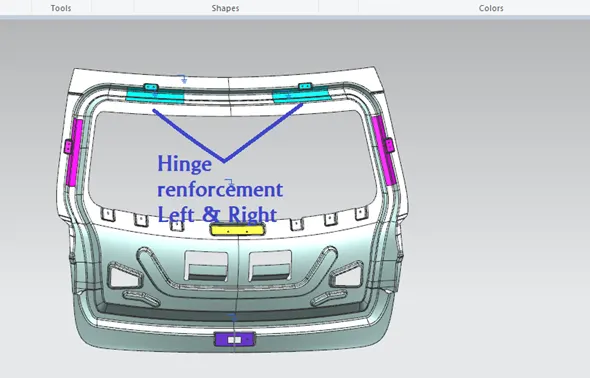
Hinge renforcement:-
A hinge is a mechanical bearing that connects two fixed objects and usually allows only a limited angle of rotation between them.The hinges carry the weight of the entire tailgate. For that reason, reinforcement must be provided there as well. The relief is designed so that the hinge can function freely. The hinge is attached to the rear roof of the car.
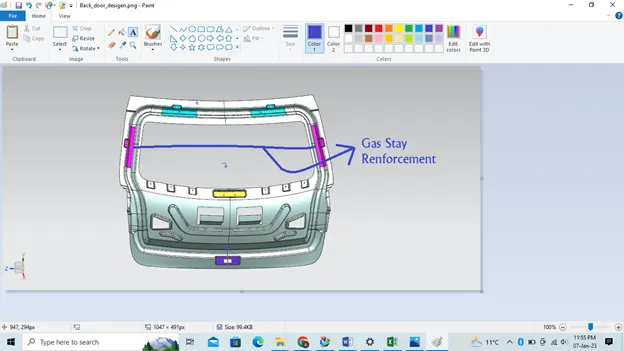
Gas Stay fenforcement:-
A gas strut brace is used to raise the tailgate automatically. There are two types of gas strut, one is semi-automatic type, the tailgate needs a little force to lift, then the tailgate will lift automatically. In the fully automatic version, they have a drive spindle that raises the rear door automatically.
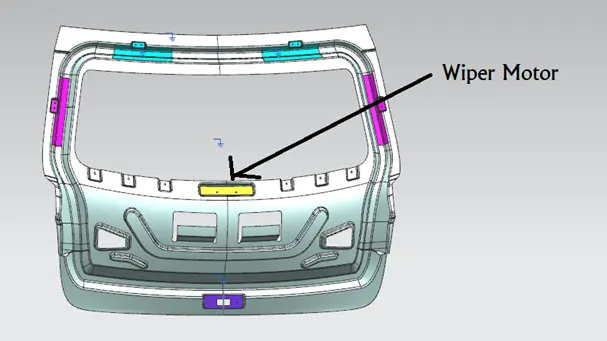
Wiper Motor:-
The wiper is used to wipe off rainwater running down the rear window. It is controlled by a motor which is mounted on the inner panel. Due to vibration and heat generated by the engine. The inner panel where the motor is mounted deforms and the parts attached to the motor start to vibrate, resulting in poor NVH. So we have to provide reinforcement in the place where the wiper motor is located.
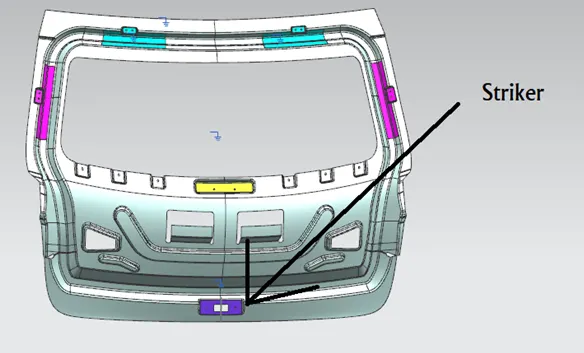
Striker:-
At the bottom of the panel is a brace and relief to accommodate the latch and latch assembly. Generally a key or automatic remote control mechanism is used to keep the door open or closed. Actuators, receivers and other electronic devices are mounted on the inside of the panel only.
Trajectory or Striker:-
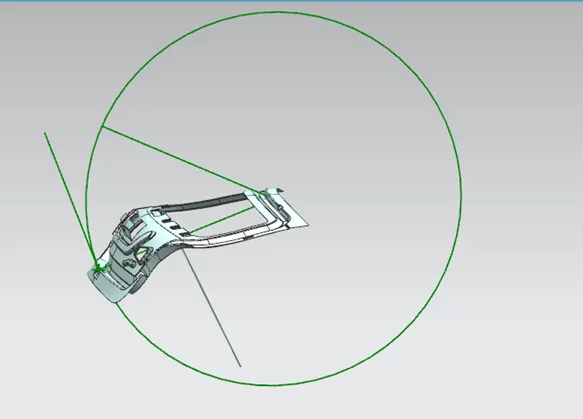
The backdoor is a swinging part that rotates around the hinge axis. The position and orientation of the latch is important for correct opening and closing of the tailgate. Positioning is done by sketching a circle with the center as the axis of the hinge, which passes through the latch at the appropriate position relative to the inner panel.
Outer Pannel upper and lower part :-
The outer panel is a stylish rear door finish. The rear view glass is mounted on the outer panel at the top. The tail light is also mounted on the outer panel at the top. The number plate is mounted on the outer panel at the bottom. Spot welds and other manufacturing process should only be done on the inner panel because the outer panel is a stylish surface that should not have any scratches or welds. Because it affects the style of the car, which leads to a bad impression on the customer.
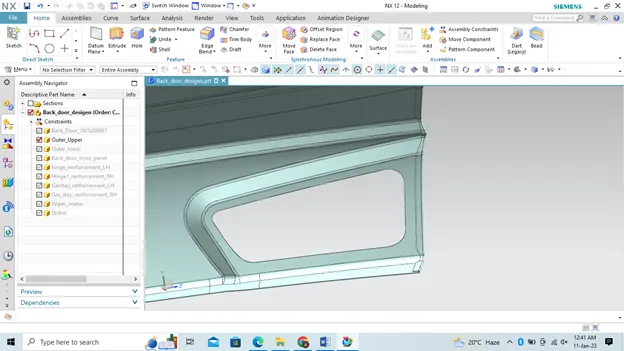
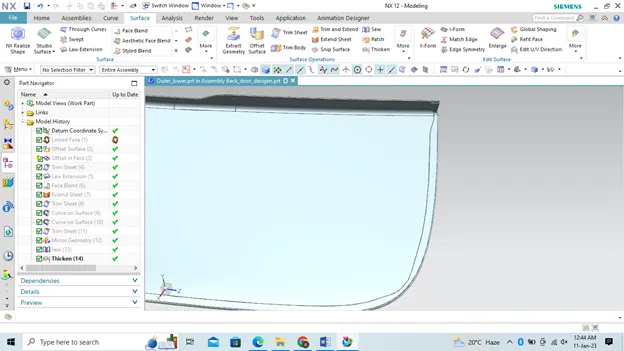
Hemming And Hem Relief:-
Draft Analysis:-
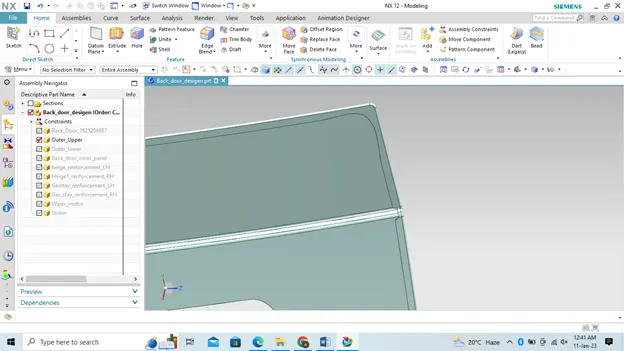
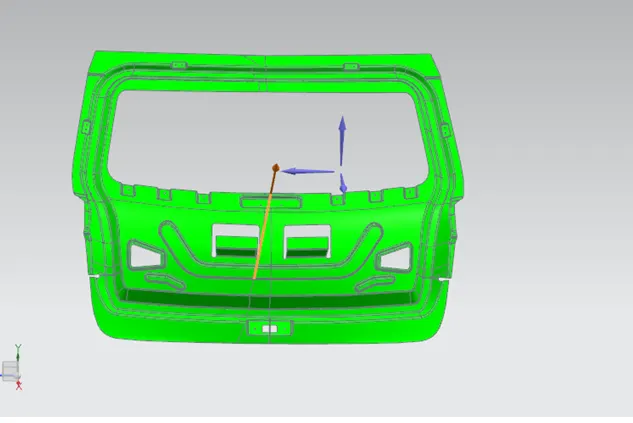
Any part that is made from a press tool or other forming tools requires some positive bevel on surfaces that are parallel to the machining direction. If we do not put a draft (zero draft) or negative draft on these surfaces, it will adhere to the surface of the mold and when the mold is in motion, it will destroy the surface, reducing its finish. So the Bevel Analysis command allows us to see if the part we've drawn can be easily extruded or not. It also provides an overview of critical zones so that appropriate design changes can be made if necessary.
Conclusion:-
The rear doors of the car were designed using the given stylish surface and under the supplied design regulations.