Design of backdoor
OBJECTIVE:
To design a Backdoor (Tailgate) of car by adding reinforcements to its assembly parts using CATIA V5.
INTRODUCTION:
BACK-DOOR/TAILGATE:
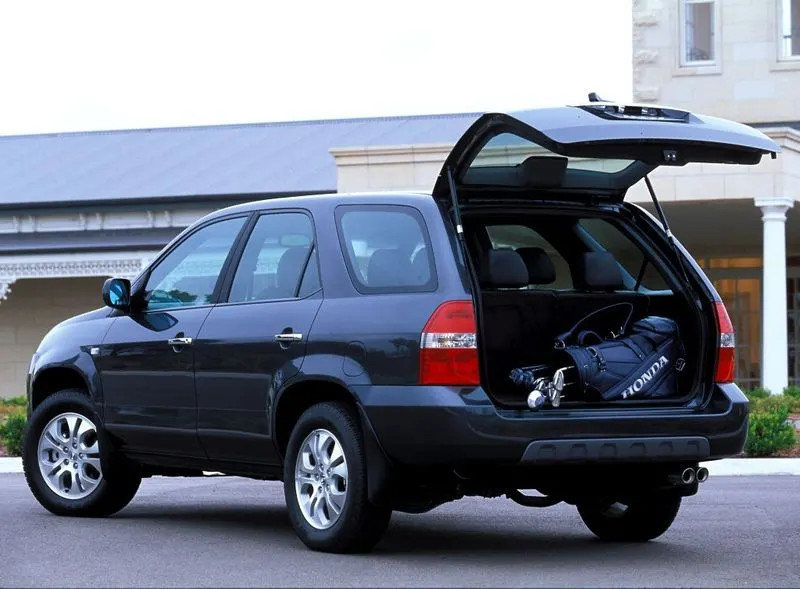
A door is a hinged part used for entry and exit of the vehicle.Back-doors are one of the types of doors which are located next to the passengers seat which provides access to the luggage compartment.This door is mostly used in passenger cars to avail of large amount of luggage space in backside.It is single-stamped part that provides more spavce by bulging out and provides an aesthetic outer appearance.
Actuallly this door is actuated by a motor fot opening and closing which is called a powered trunk lid system hatchback.
TYPES OF BACK-DOOR:
the back-doors are classified according to their positions and design requirements of the vehicle.
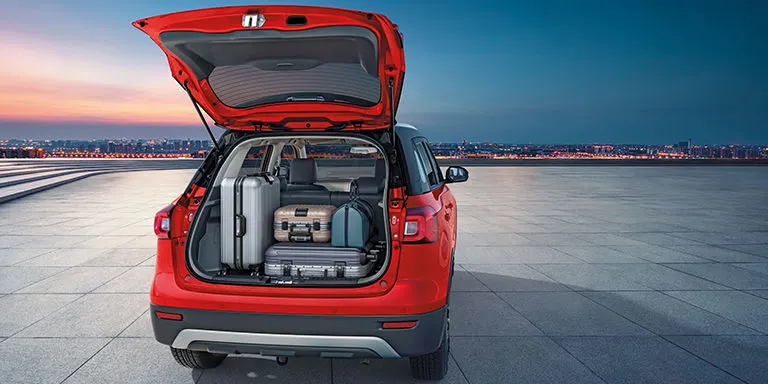
TOP MOUNTED:
these are the reqular type of door model used for modern and luxurous cars,which are both powered and also atay supported.
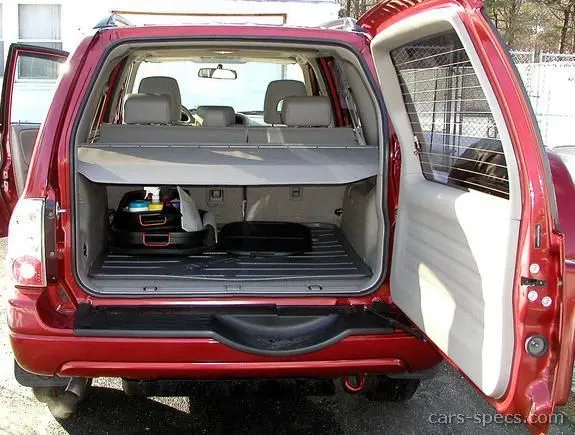
SIDE MOUNTED DOORS:
As the name signifies side-mounted doors are the one which used for SUV's, Pickup trucks,etc. these doors are small in size and easy to handle.Compared to the top mounted door it provides more safety.
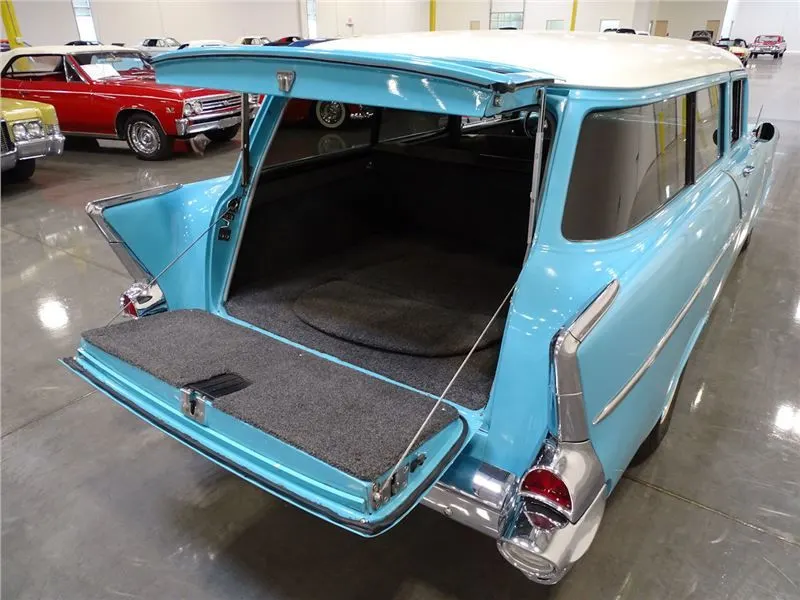
SPLIT TYPE DOOR:
this door system is used in convenient provision for tour vehicles which provides more space for luggage by closing the single door as shown in the figure.
FUNCTIONS
Kinematics and Step Systems:
The liftgate hinges are embedded in the rear roof cross member, closer to the side roof end than to the roof center line. They can be single joint hinges with fixed axis, each half hinge being fastened by one or two screws, when the roof has a small curvature. If the liftgate to roof surface border line has a relevant curvature, that kind of hinge cannot be used, because the liftgate rotation could cause interference with the roof. To avoid this inconvenience, an articulated quadrilateral can be used (also known as pantograph hinge), the rotation center of which moves during liftgate motion These hinges feature a higher obstruction than the simple hinges and therefore are usually located close to the side liftgate end.
WORKING MECHANISM OF BACK DOOR:
- GAS STAY TYPE:
This type is most commonly used and calles an ideal mechanism from base model cars to Top-End models.It is activated manually and holds at its position unless and untill the force is applied closing it.
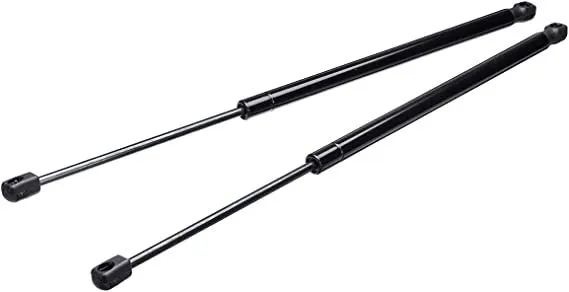
Powered lift system:
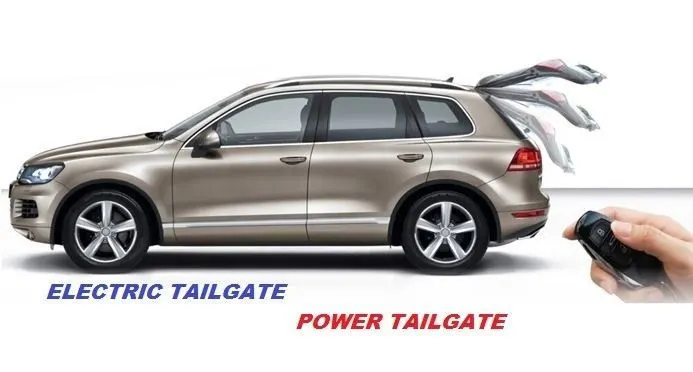
Power trunk lid system is another sophisicated way of trunk/liftgate opening mechanism which is to automatically open and close of the trunk/liftgate and release of the latch by the touch of a button.
Material selection for Manufacturing:-
The selection of material plays a major role in determining the overall weight of the back door. The common materials used are Steel & Aluminum. The density of Steel is higher than Aluminum thus adding more weight to the door. The material used in the manufacturing of the backdoor depends upon the budget of the car, most low cost vehicles use steel as it is cheaper compared to Aluminium. Another aspect to be noted is that, if casted Aluminum parts are used instead of deep drawn steel parts there is no need of reinforcements and the overall weight of the car is reduced by approximately 5-10kg thus increasing the performance of the vehicle. Also the draft angle for casted parts is around 3 degrees while for deep drawn parts is around 7-10 degrees which helps in increasing the luggage/ cabin space.
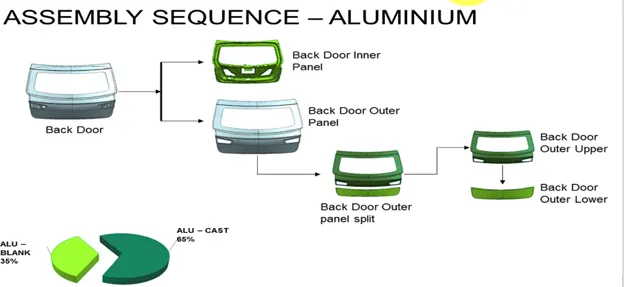
Tailor Welded Blank:
A Tailor Welded Blank is a blank that is compared of two seperate pieces of sheet metal that have been welded together prior to stamping. Tailor Welded Blanks allow the welding of the different grades, different thickness or different corrosion coating together in order to give the properties needed in differeent areas, without increasing the number of tools needed to form the part and eliminating the fit ability concerns. They also allow a high degree of flexibility in designing parts and large blanks can be formed from much smaller sheets. The use of Tailor Welded Blanks would reduce the weight of the car. Having the ability to selectively place different thickness of materrial would result in weight reductions. An example of this production is the door inner panel. The only strength requirement on a door inner is in the region where the hinges attach to the panel.
Design Considerations:
- Rear Visibility Criteria
- Crash requirements
- Amount of space needed
- Accessibility
- Backdoor opening style
- Mountings
- Latch and striker placement
- Wiper motor placement
- Hinge and gas stay placement
- Reinforcements
- Sealing criteria
- Crash requirements
- Clearances
- Reliefs
DESIGN CONSTRAINTS FOR BACK DOOR
1. REAR VISIBILITY CRITERIA:
The driver should be able to see from his seat to the rear side of the car. The visibility is the first and foremost factor which is taken into consideration. so that we need to work on black spots hile designing.
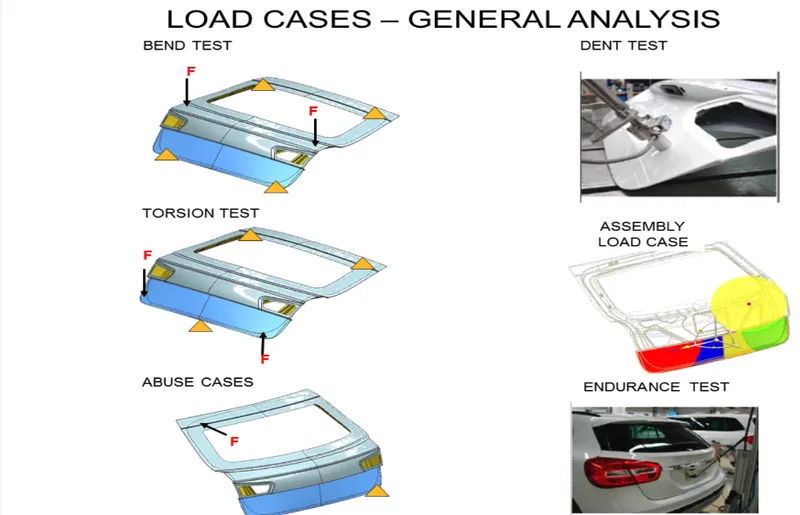
2. REAR CRASH REQUIREMENTS:
So while Designing we should also assume the minimal load analysis that can expect in assembly line while manufacturing and assembly of components. the below figure shows the analysis.
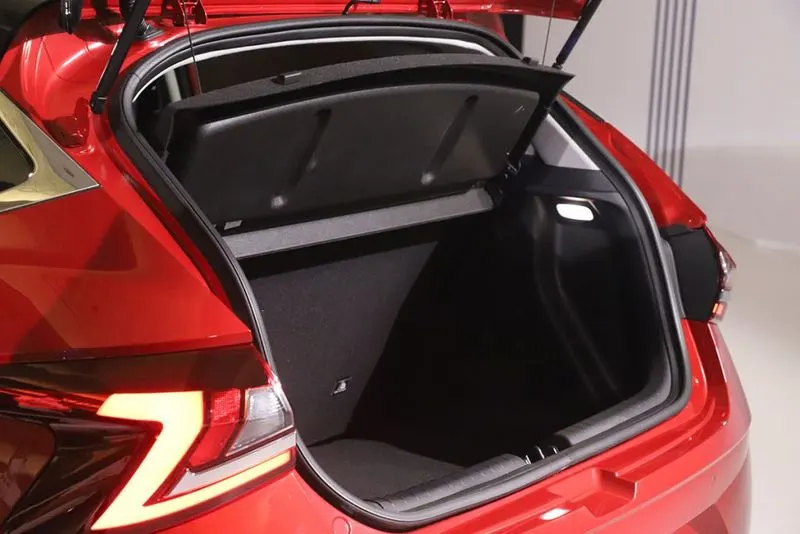
3. BOOT SPACE: The gap between inner and outer panel should be in such a way that, proper section modulus (The factor which controls the stiffness and strength of the Model ) is maintained while giving enough boot space volume inside the car.
4. SEALING AND ITS FUNCTIONS:
To make inside of the rear side of the car, sealing is provided for air and water tight for which sealing flanges are also designed. The width of the sealing flange should be atleast 25mm after blending all its edges. Sealing flanges are connected to the connecting flange to the windshield.
5. JOINING TECHNIQUES
There are many types of joining techniques like Hemming,Spot welding,Mastic sealents
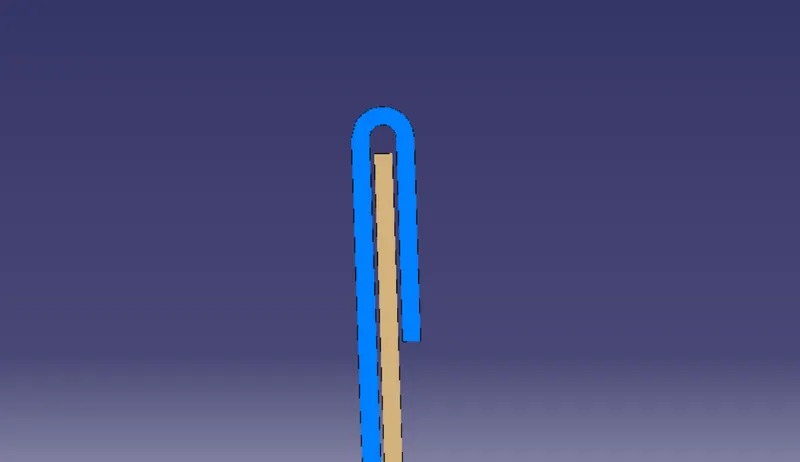
Hemming is used at the edges of the panels for assembly. Mastic seals are provided where spot welding and hemming can't be done. A minimum 5mm depth for mastic is provided between inner and outer panel ideally.
6. MANUFACTURING TECHNIQUE:
Stamping,Punching,Bending,Forming.etc... are used in back door manufacturing.
7. FUNCTIONAL REQUIREMENTS
- HINGE
- GAS STAY / POWER LIFTER
Hinges are provided for easy opening and closing of the back door. Gas stays are used to hold the backdoor. And for these, mountings and reinforcements are provided on the backdoor.
Parts thickness used in current design:
Outer panel: 0.75mm
Inner panel: 0.75mm
Reinforcement: 0.75mm
The Different panels or regions are as follows:
1.Inner Panel.
2.Outer Upper Panel.
3.Outer Lower Panel.
BACKDOOR ASSEMBLY:
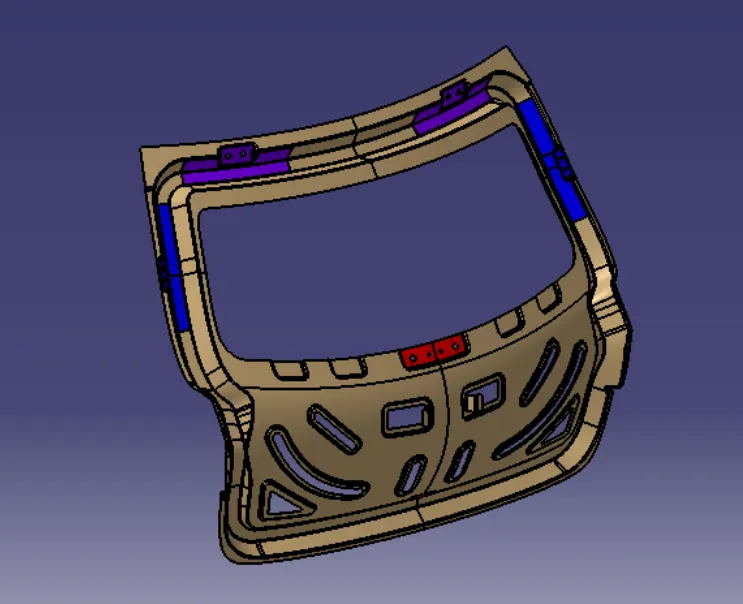
A backdoor is normally manufactured with 1 inner panel and 2 or 3 exterior panels that are hemmed and spot welded together as needed. Depending on the price range of the car, different materials are utilised for the backdoor. The bulk of inexpensive cars are made of steel since it is less expensive, and parts are stamped using moulds. Here, uniform thickness of the panels is maintained throughout.
However, in expensive cars, aluminium is used for the manufacturing of back door which is usually die cast. In such cases, reinforcements are not required and the vehicle is also light in weight. Varying thickness can also be achieved in case of aluminium body back doors.
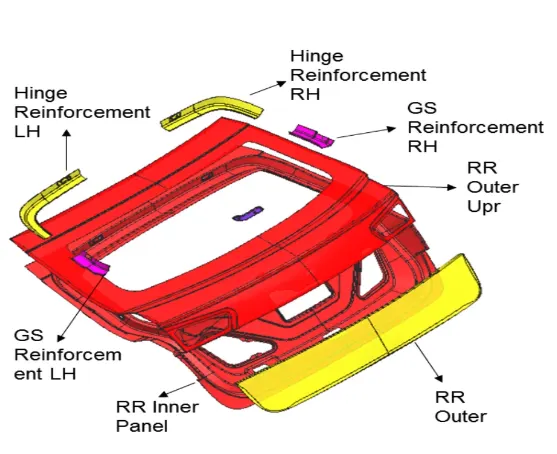
1.Inner Panel
2.Outer Panel
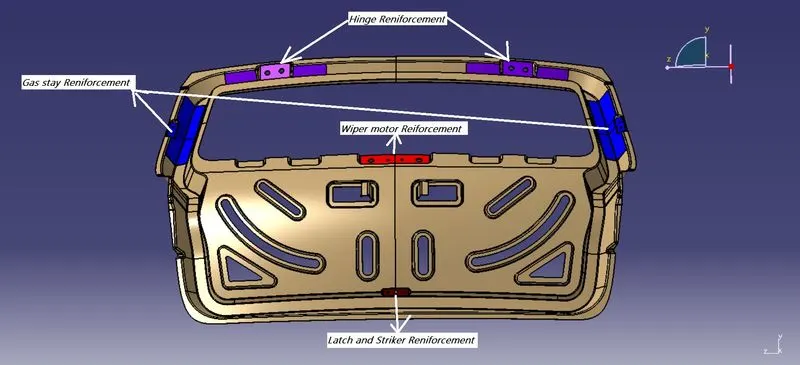
3.Hinge Reniforcement.
4.Gas Stay Reniforcement.
5.Wiper Motor Reniforcement.
6.Latch and Striker Reniforcement.
1. INNER PANEL:
The inner Panel is a component which is used for strengthening the door and it is one of the most important components on which all accessories are mounted like hinges, glass guide channel, mounted trim, latch etc..
The inner panel includes the deep drawing process in which the whole blank is inserted into the mold and perfect drafting angle is provided to the part so that the inner panel can be ejected easily.
The inner panel is designed with embosses and several mounting for the Hinge , Gas-stay, wiper motor and Latch & striker surfaces.
2. OUTER PANEL:
The Outer panel of the back door is similar to other BIW components where it is the aesthetic part of a vehicle. The coating provided is of multi stage which has the property of scratch resistance, rush prevention and smooth and attractive finishes. The Outer panel also has the provisions for the tail lamp, rear fog lamp and also has the provision for lisence plate mountings. Most of the hatch back cars have the provision for wiper motor.
3. HINGE REINFORCEMENT:
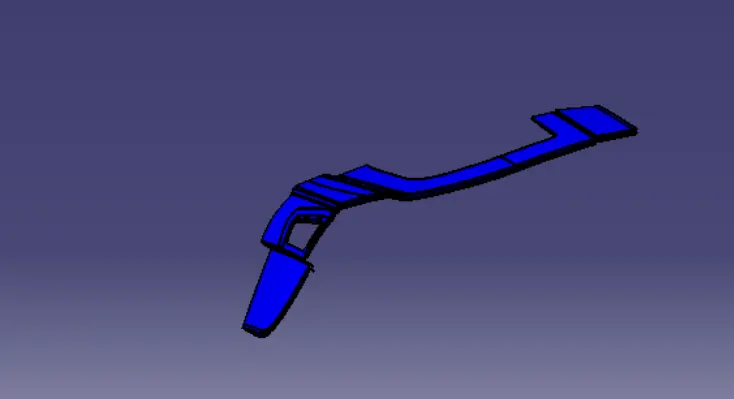
Hinges support the complete weight of the whole backdoor. Hence a hinfe mount reinforcement are provided here too. Embosses is designed such that the hinges should operated freely. The electrical wiring looms are through the holes along the periphery to keep them hidden.So the hinge reinforcements are made with sufficient strength to carry the loads.
4. GAS STAY REINFORCEMENT:
An angled or Diabolic emboss is provided for the gas stay mounts. The angle makes it easy to be machined and stamped.It is reinforcement with a thicker sheet.
5.WIPER MOTOR REINFORCEMET:
A dedicated space near the window is left for wiper motor assembly. A cavity is placed preferably in the middle of the panel to accommodate all the necessary wiper motor components.
The holes or cavities are placed strategically to accommodate wiring looms, tail lamp mount, and other accessories. Embosses help stiffening the panel and act like local reinforcements. Extensions are provided around holes which are attached to outer panels and acts are crumple zone elements in case of rear impacts.
5. LATCH AND STRIKER REINFORCEMENT:
At the bottom of the latch and striker assembly. Generally a key operated or automatic remotely controllable locking mechanism is used to keep the door closed and open. Another purpose of the emboss design is to distribute impact force towards hinges and latch assembly which are reinforced and can absorb them.
DESIGN PROCEDURE AND STEPS:
1. OUTER PANEL
we have to first modify the given skin because the surface not fully cleared so we need to extract the furfaces before modifyling.
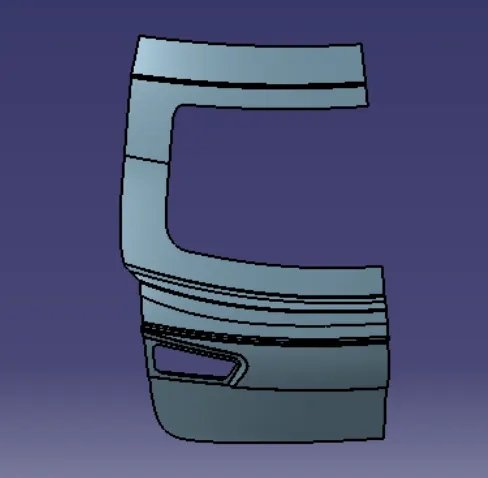
SKIN MODIFICATION:
we need to modify the given skin so that there are no sharp edges in them
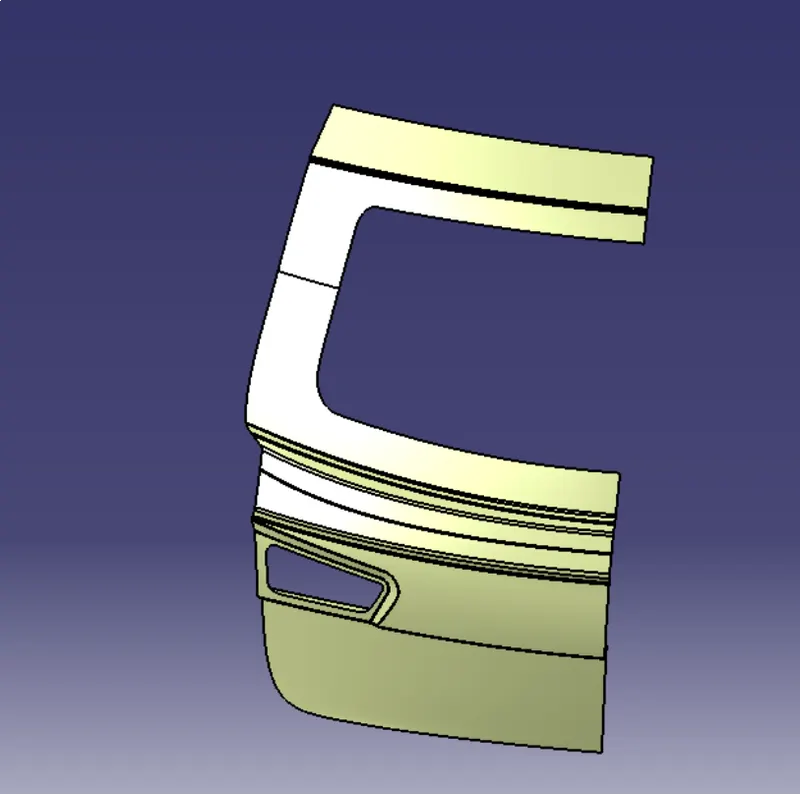
INNER_PANEL
- the first step in inner panel is to create sealing flange as shown in figure.
- for reating flange we need to extract the outer body.
- offset them and create as per our need.
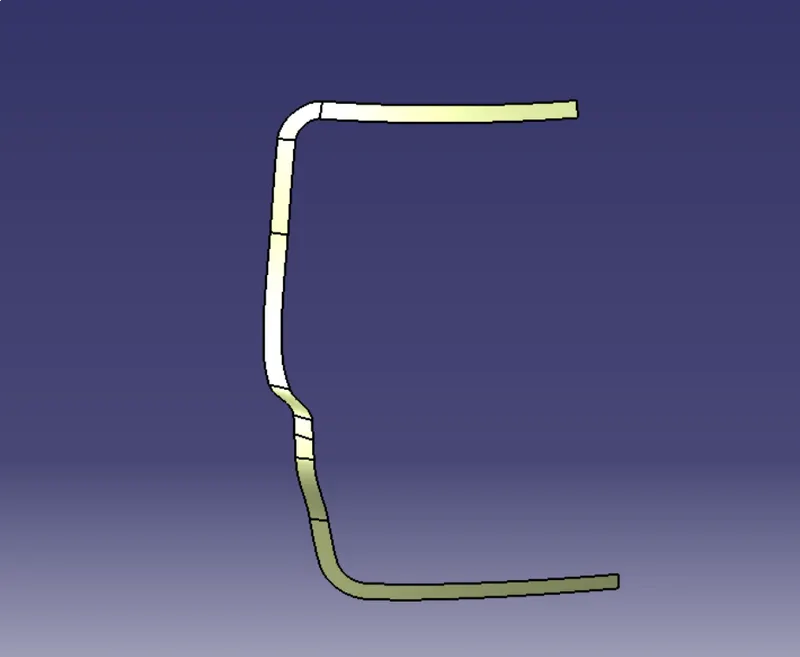
- after creating flange by using sweep we need to sweep at an angle more than 7 deg.
- below figure shows the after sweep.
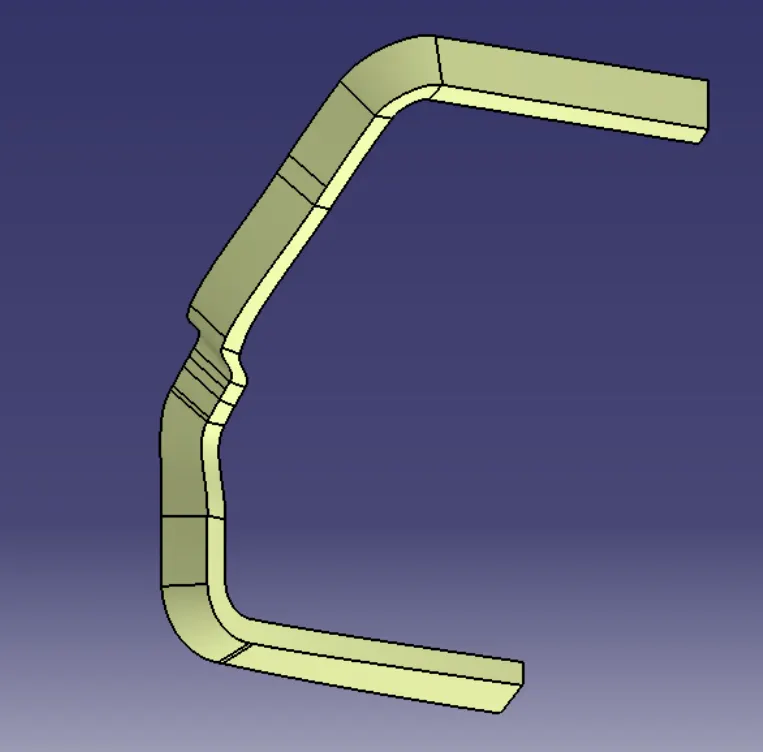
- after sweep we need to off set the outer panel about 1.7mm down wards side.
- by using trim command trim the offset as shown in figure.
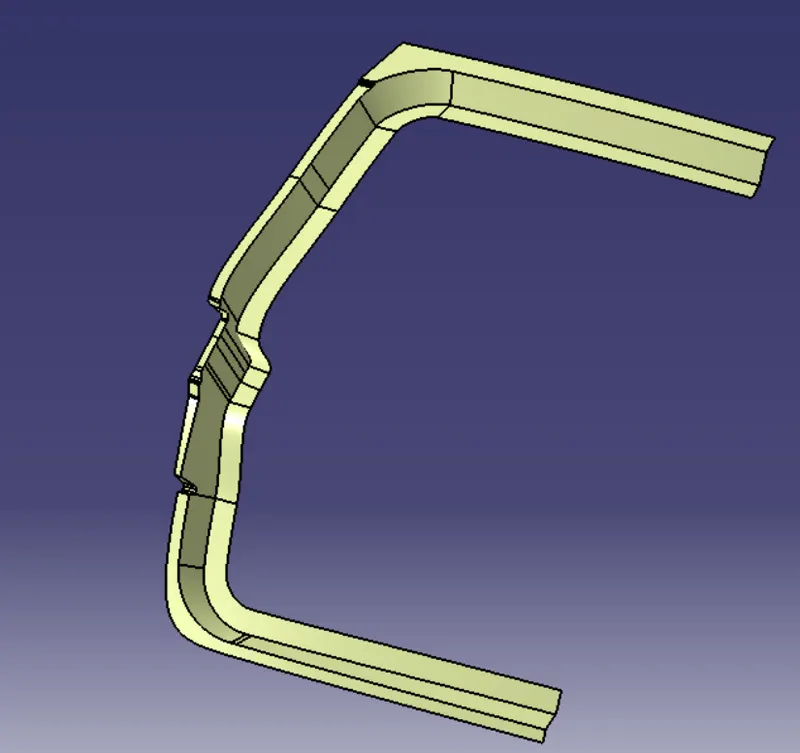
- after this we need to ensure that thickness is applying or not if not then we need to modify the outer model once more .
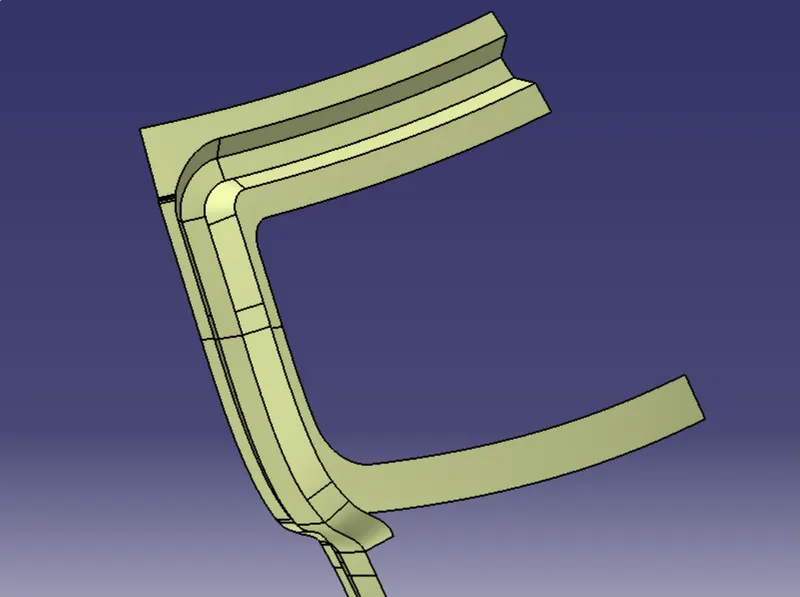
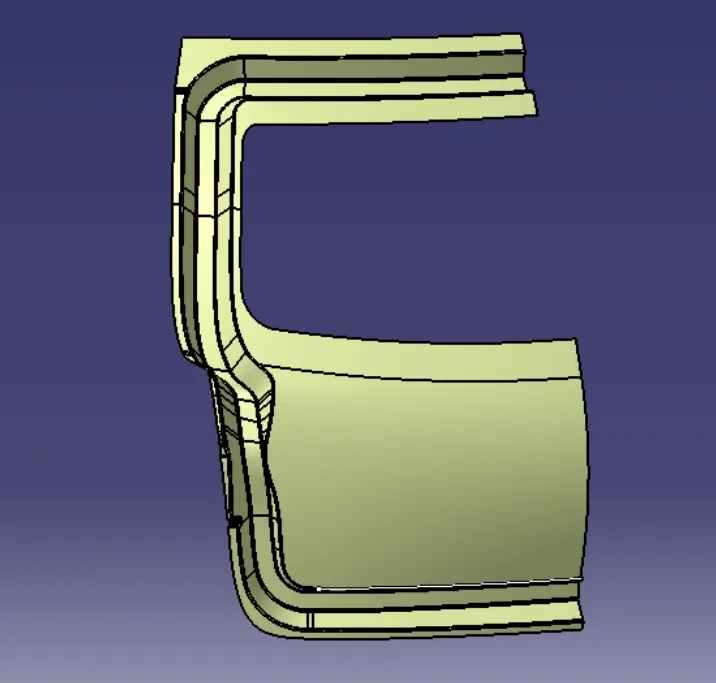
- by using sweep and multisection we need create the next portion of the inner pannel mean while we need to chect the thickness is taking or not...
- below fig shows the inner panel after sweep and multisection...
EMBOSSES
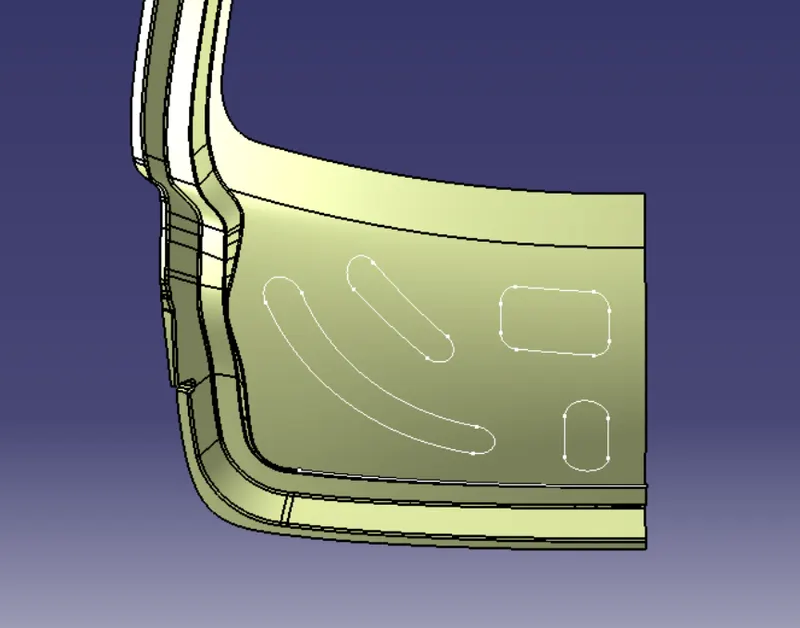
- to give strength to the inner panel we will give emboses so at the time of accidents there will be no injuries to the passengers..
- we need to sketch on plane and project them as shown in the figure.
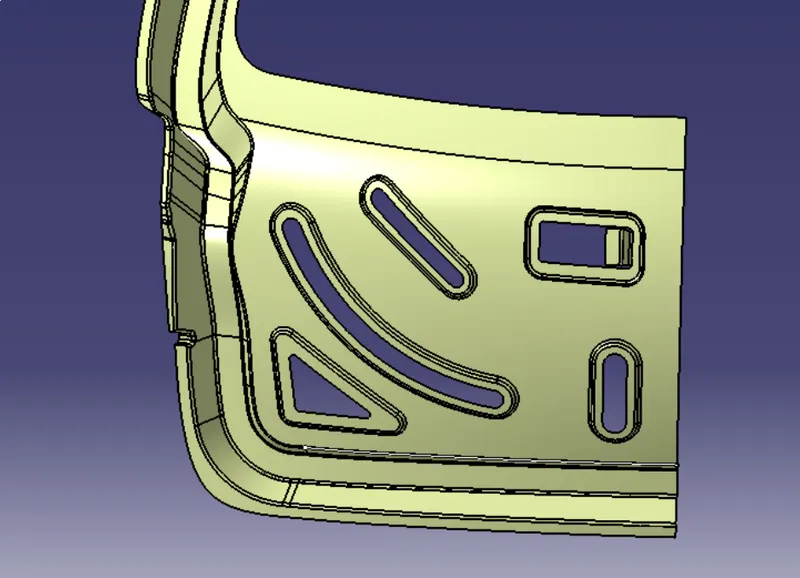
EMBOSES AND REINFORCEMENT SLOTS
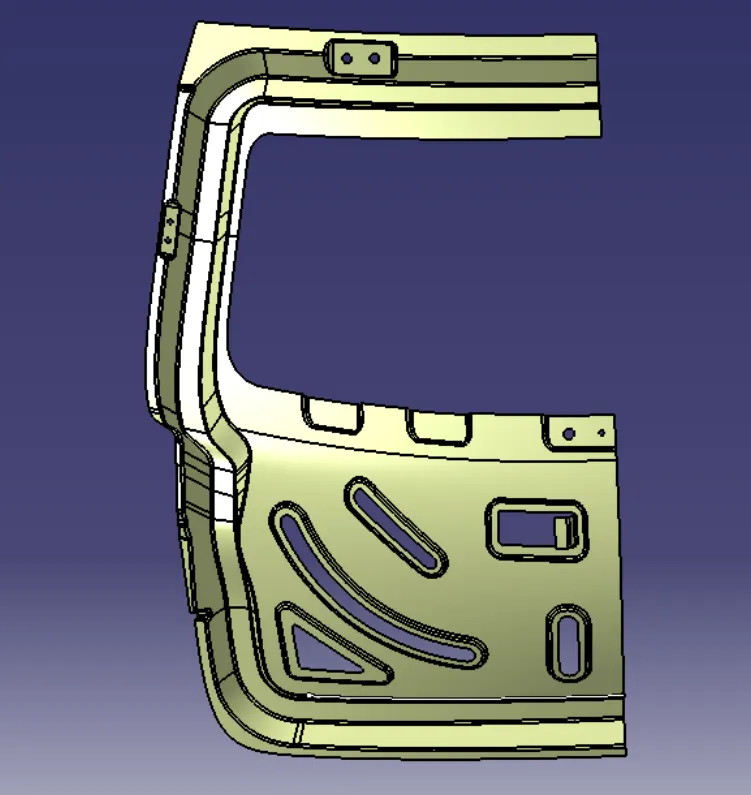
LANSING OPERAION..
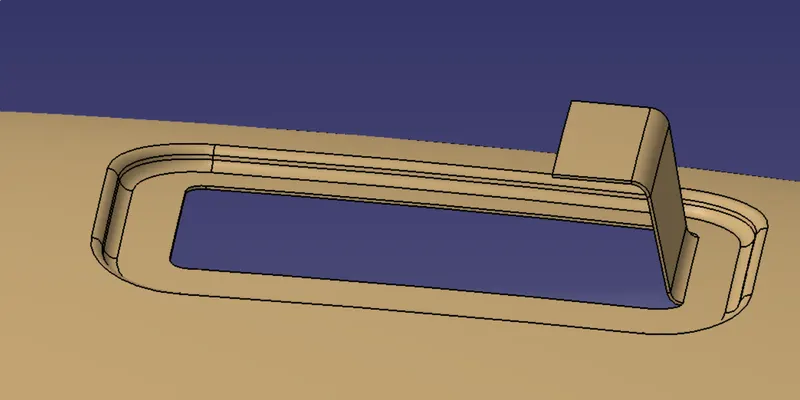
MIRROR
- after creating emboses mirror is given and next is creating Reniforcement.
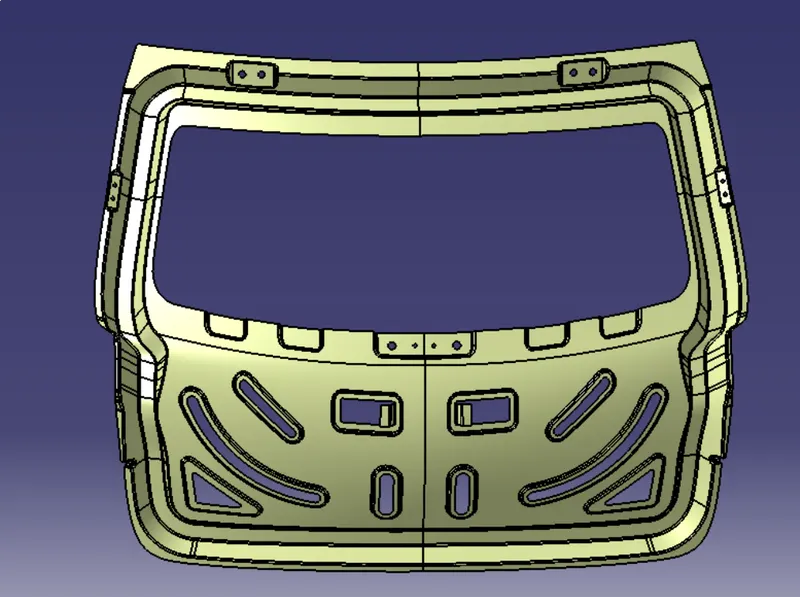
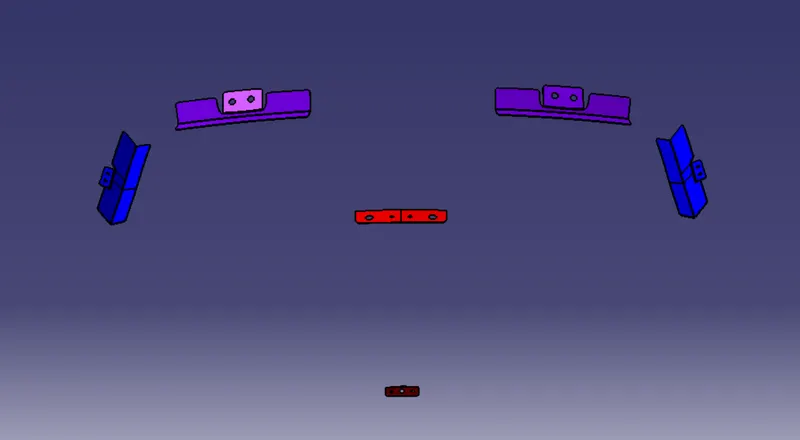
RENIFORCEMENTS
- Hinge Reniforcement
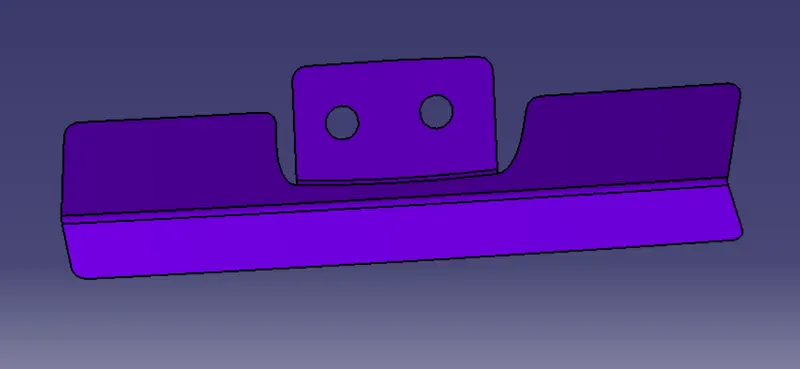
- Gas Stay Reniforcement
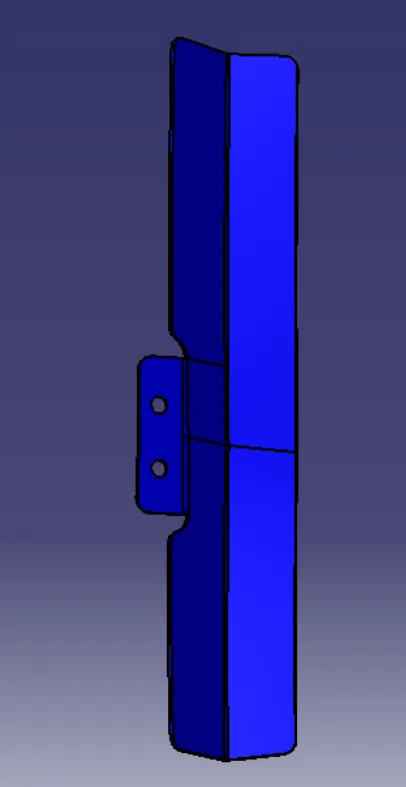
- Wiper motor Reniforcement
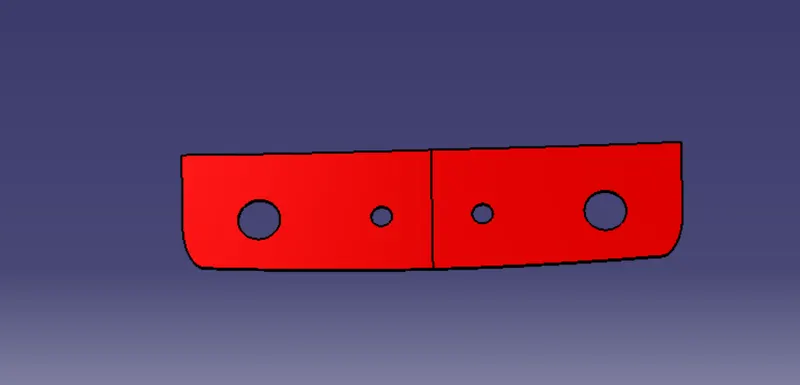
- Latch Reniforcement
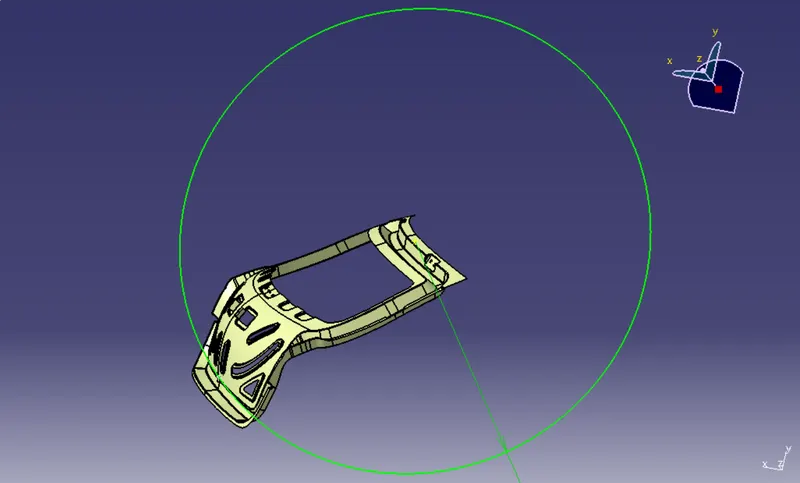
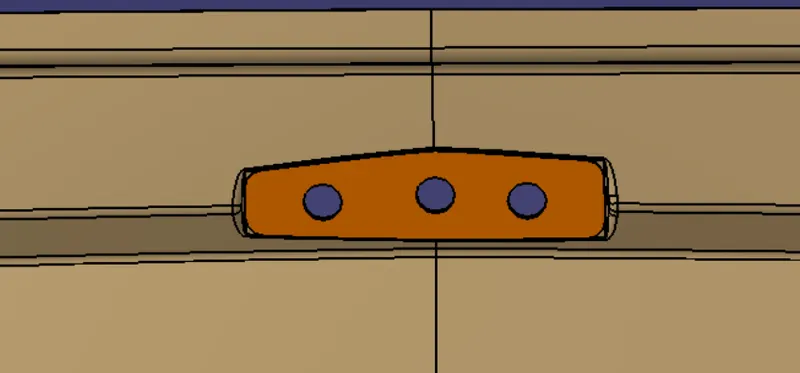
Reniforcement Assembly
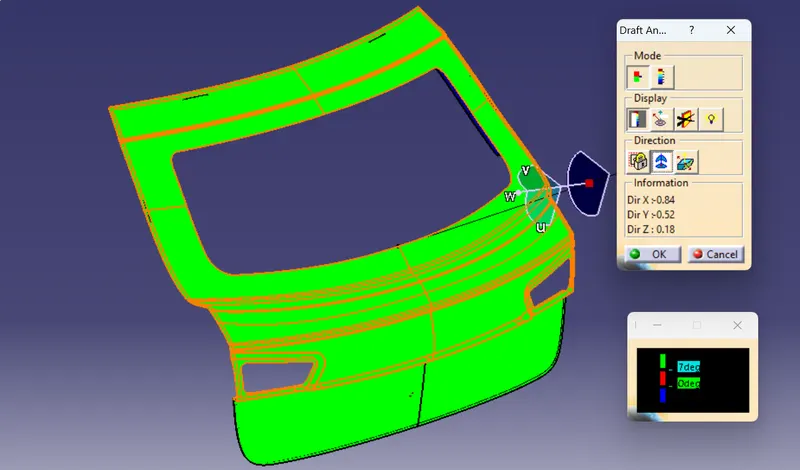
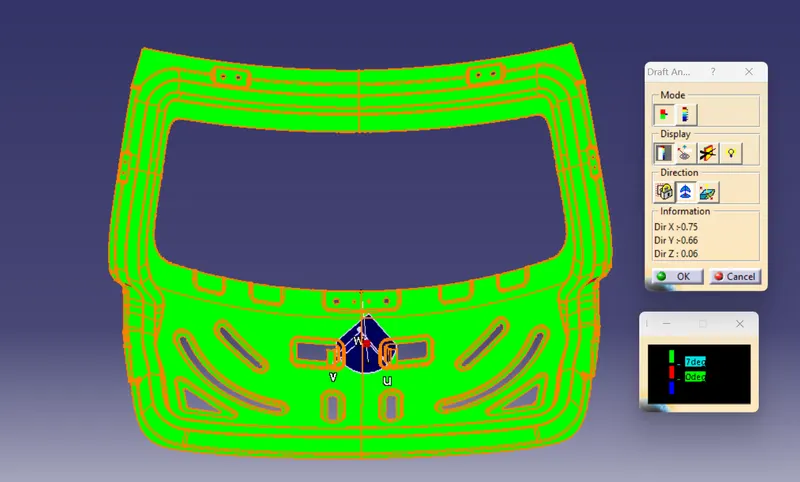
DRAFT ANALYSIS
- OUTEER PANEL
- INNER PANEL
HEMMING
- CORNER RELIEFS
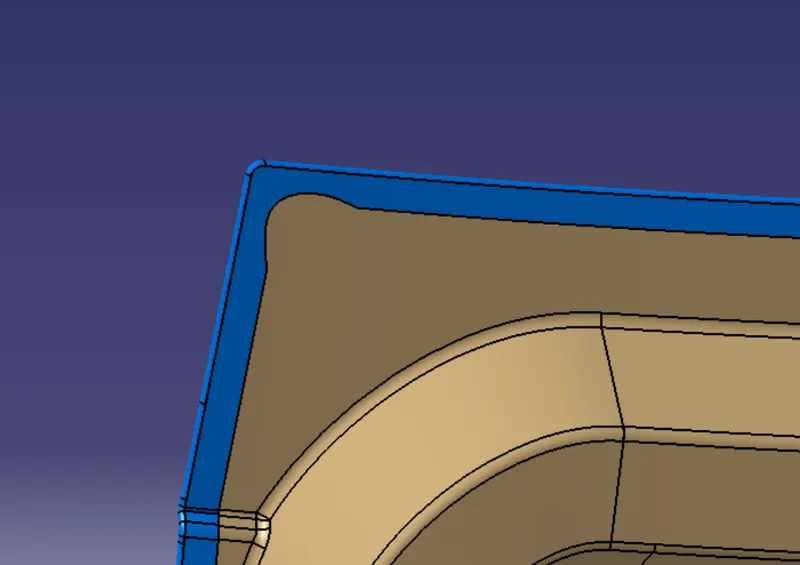
- SECTION OF HEMMING BETWEEN INNER AND OUTER PANEL
VIEWS
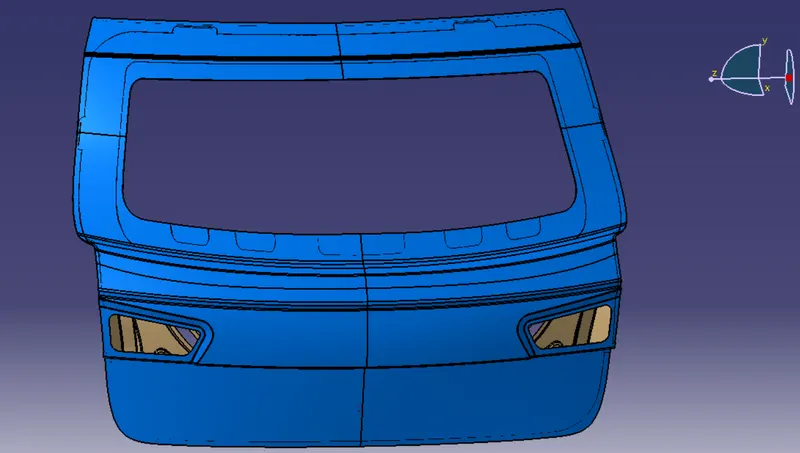
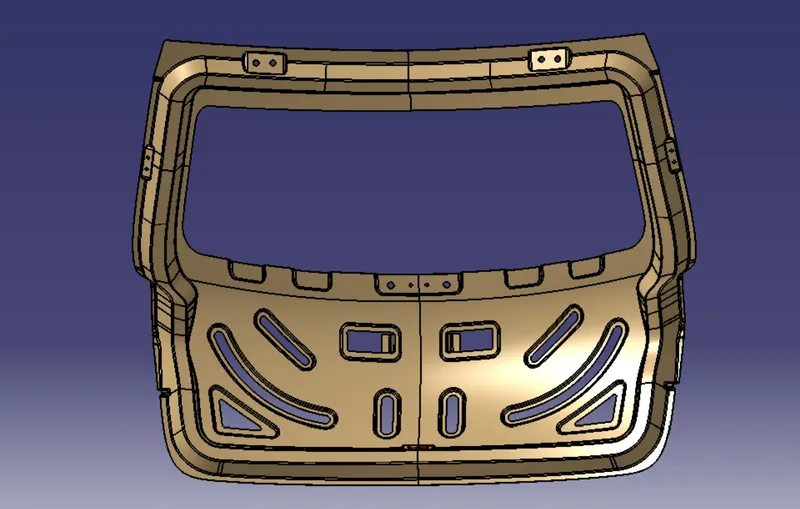
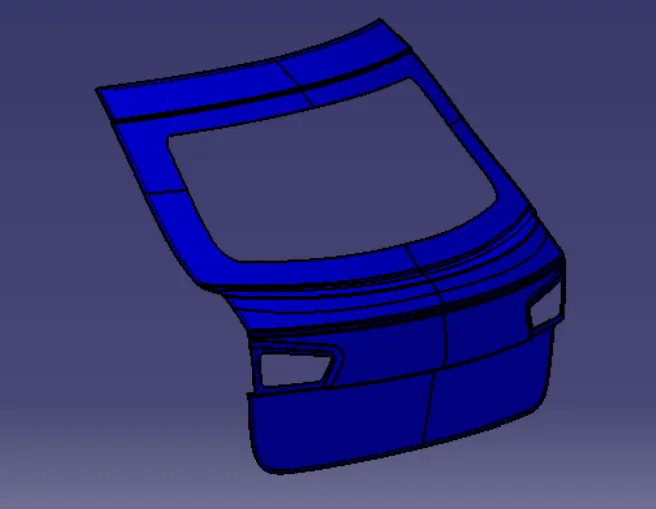
CONCLUSION:
Back Door Assembly is created by considering design parameters , sheet metal operation and by using CATIA V5....