Design of backdoor
Back Door Design
Aim:-
To Design the outer upper and lower panel, inner panel with the necessary reinforcements by following the Master section with the design parameter for the given class A surface.
Introduction:-
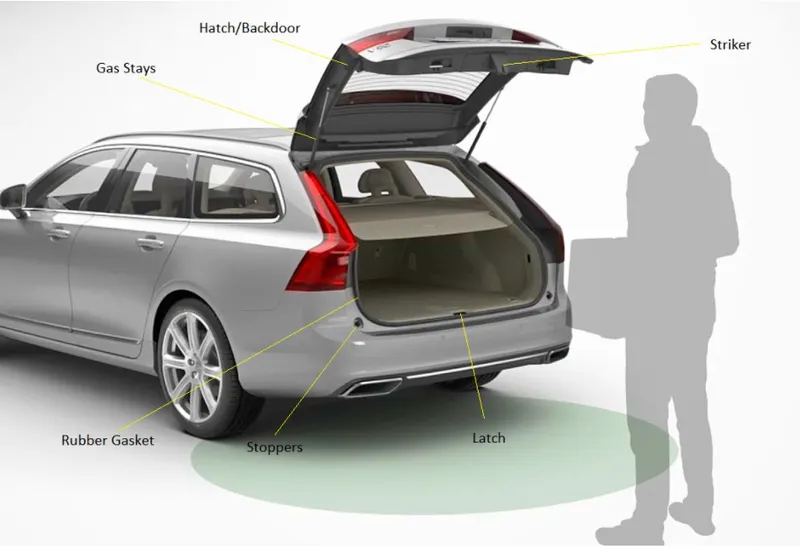
A door is a hinged part which is used for entry and exit of the vehicles. Back doors are one of the type doors of the vehicle which are located next to the passenger seat which provides access to the luggage compartment. In most of the cars, these back doors are operated with the help of gas stay which in turn reduces the effort required to lift open the door. Some luxury cars have powered backdoor which in turn is driven by an electric motor. This kind of system is also called a powered trunk lid system. Hatchback or station wagons are sold as 3 door or 5 door models. In this case, the rear hatch is classified as door this is because it enters the passenger compartment. The naming is mainly used in Europe countries. In case of safety, the back door designed should meet the safety requirement for the rear collision.
Type of back doors:-
- Top-mounted doors
- Side-mounted doors
Top-mounted doors:-
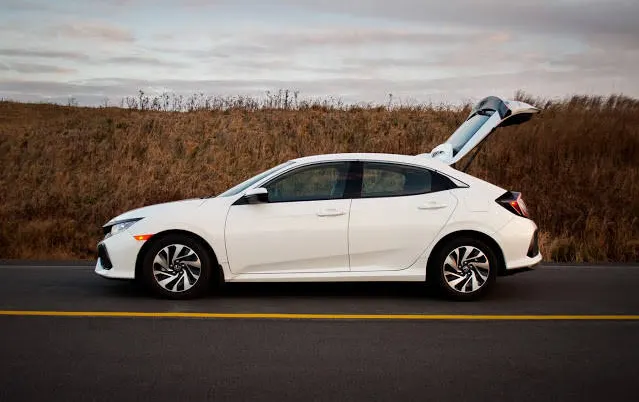
This type of back doors is used in a station wagon, pickup truck and some of the sport utility vehicles. Today’s modern cars use top-mounted tailgating systems which are both powered and also gas stay supported. These top mounted tailgates provide greater rear visibility compared to side-mounted or bar doors which have canter pillars in it.
Side-mounted doors:-
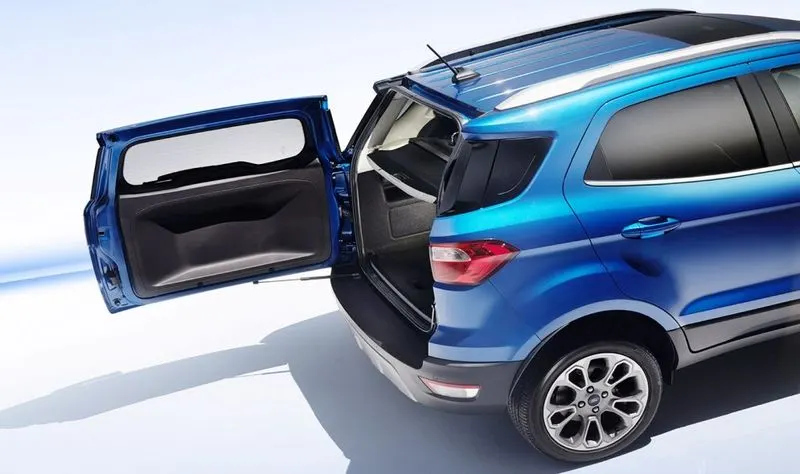
As the name signifies side-mounted doors are the one which is used in the van type MPVs, SUVs, pickup truck vehicles. These side-mounted doors or barn doors are a lot easier compared to top-mounted doors. These doors are generally smaller in size and can be easily accessed.
Design consideration:-
- Rear Visibility for Functionality and Safety.
- Boot Space and Accessibility.
- Type of Backdoor Opening (For individual vehicle requirement).
- Fixing and Support Structures like Hinges and Gas stays.
- Mounts for Wiper Motor, Back Lights/Tail Lamps and Other Wiring loops.
- Fit and Clearance (For Assembly and Aesthetically looks).
- Strength Of Backdoor (Require in collision).
Components of back door:-
- Inner panel
- Outer panel upper
- Outer panel lower
- Hinge reinforcement
- Gas stay reinforcement
- Wiper motor reinforcement
- Latch reinforcement
Inner panel:-
Car backdoor inner panel is made of either steel or alumminium.Most of the luxuary car's inner panel are made of aluminium because of is properties.But the cost of aluminium is high.
| Parts |
Steel (Parts are stamped) |
Aluminium (Parts are casted) |
| REINFORCEMENTS | Necessary | Can be neglated |
| THICKNESS | Constsnt | Can be varied |
| COMPONENTS | More | Less in number |
| WEIGHT | More | Lighter |
| COST | less in cost as compared to Aluminium | More as compared to Steel |
Cost of aluminium is more as compared to steel .TO easiy understand , the cost of aluminium for inner panel is higher than the cost of all parts of backdoor together.
Bechmark between companies who are using steel and aluminum inner panel
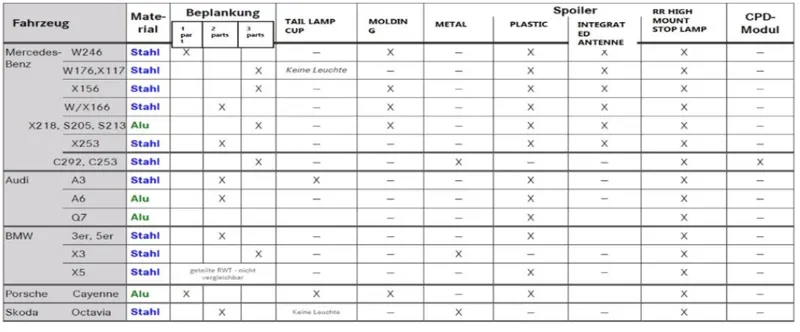
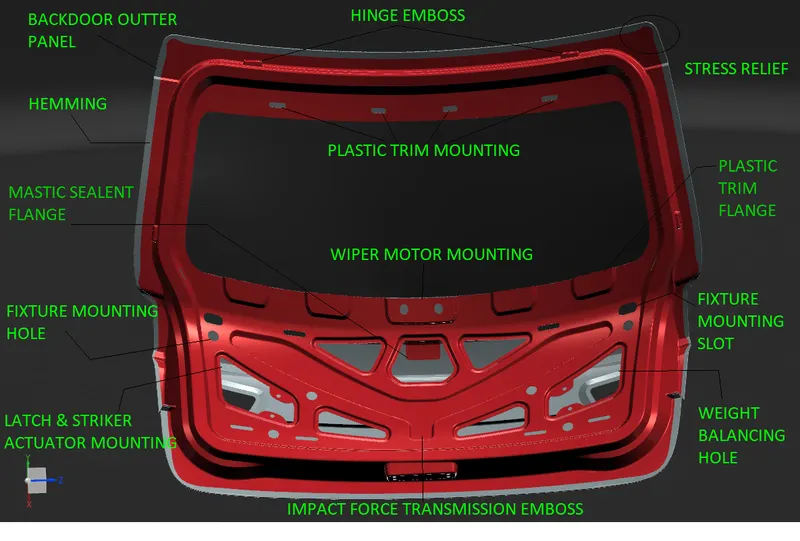
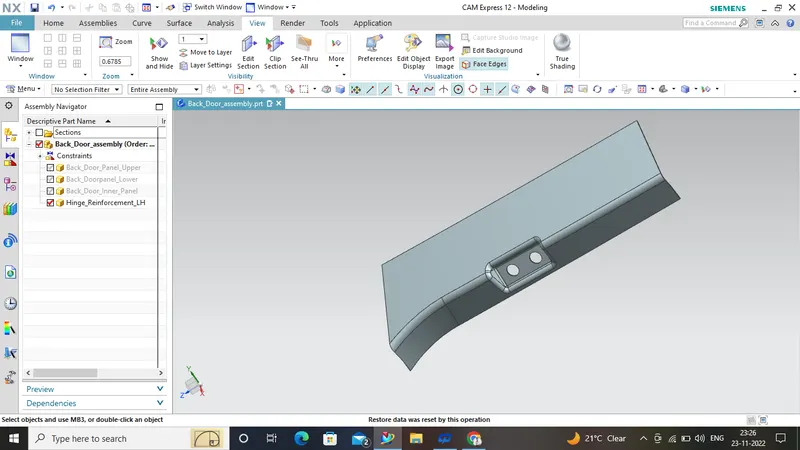
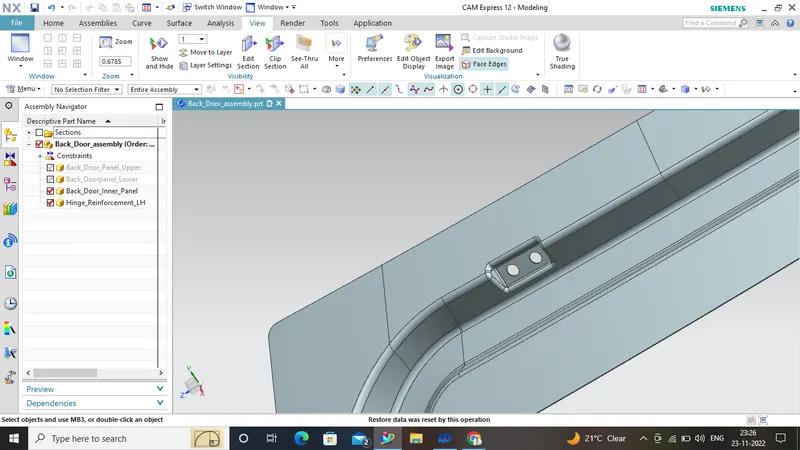
Wiper motor , latch reinforcements,hinge reinforcements and gas stay reinforcements are mounted on the inner panel of the backdoor only.
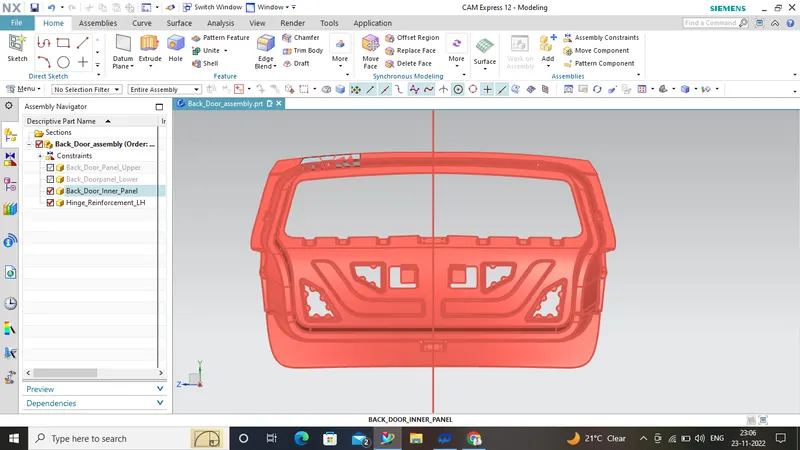
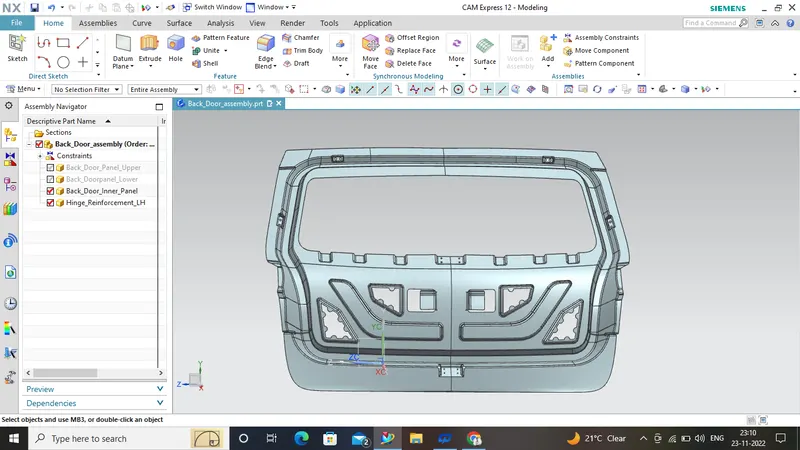
The embosses in the inner panel helps stiffening the inner panel and act as a local reinforcement.Another purpose of giving emboss is to distribute impact forces towards hinges.
Inner panel design:-
The inner panel is produced by either casting or through deep drawn method.Mostly alumininum panel is only casted , steel inner panel is made by deep drawn process only.If it is deep drawn ,then there must be a tooling direction through which that direction the panel is deep drawn.
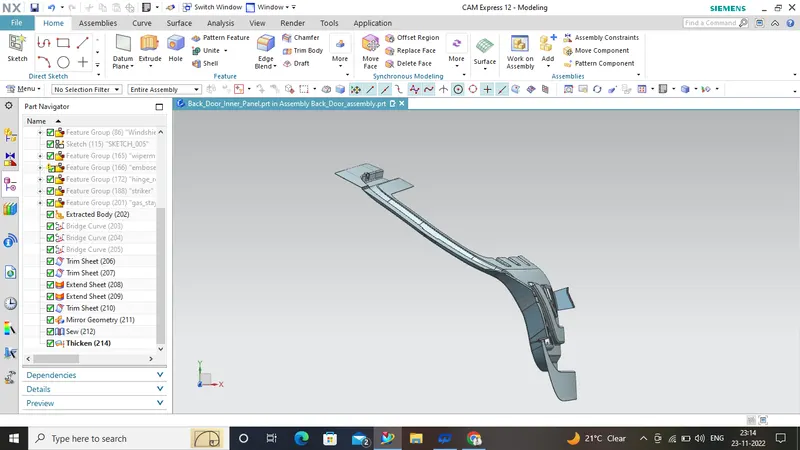
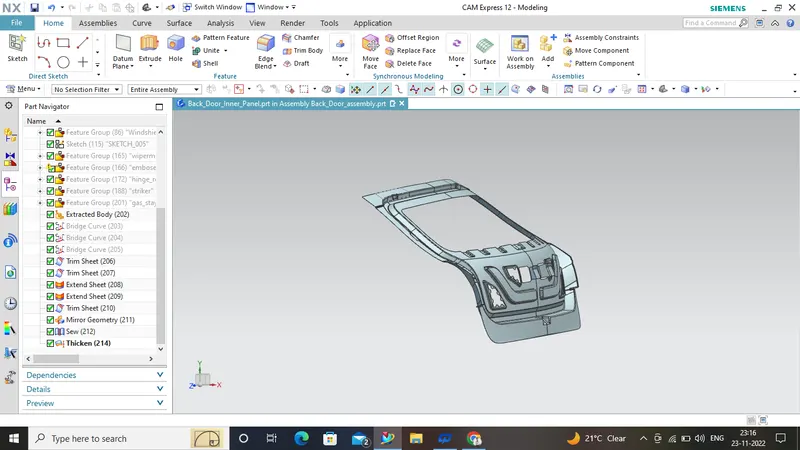
Tooling direction:-
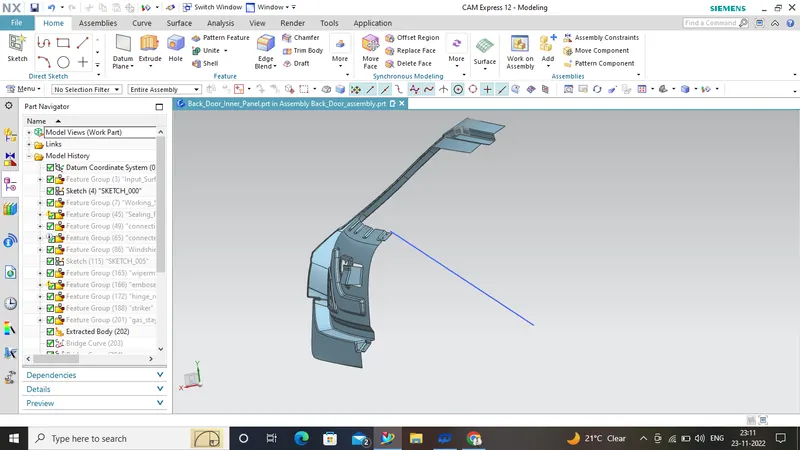
Outer panel design:-
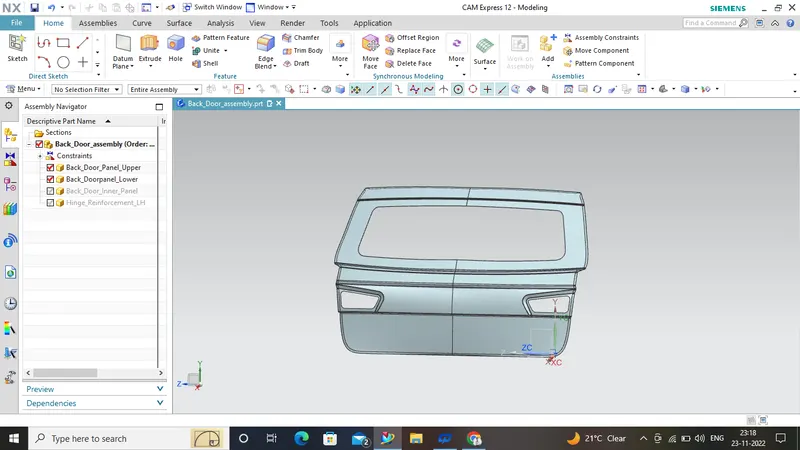
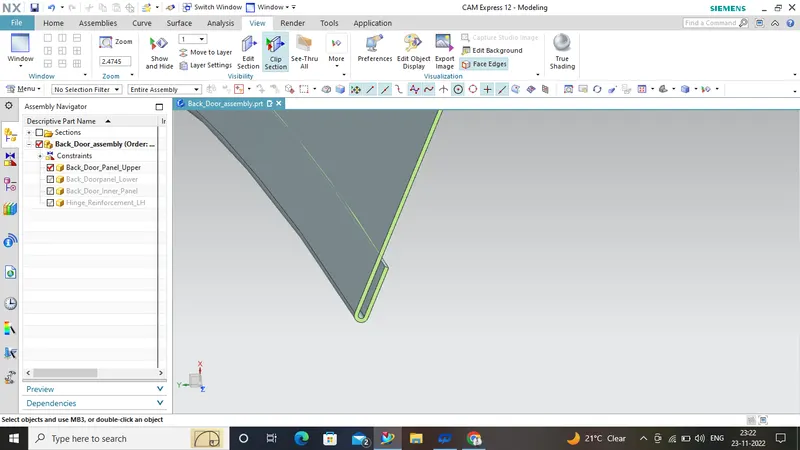
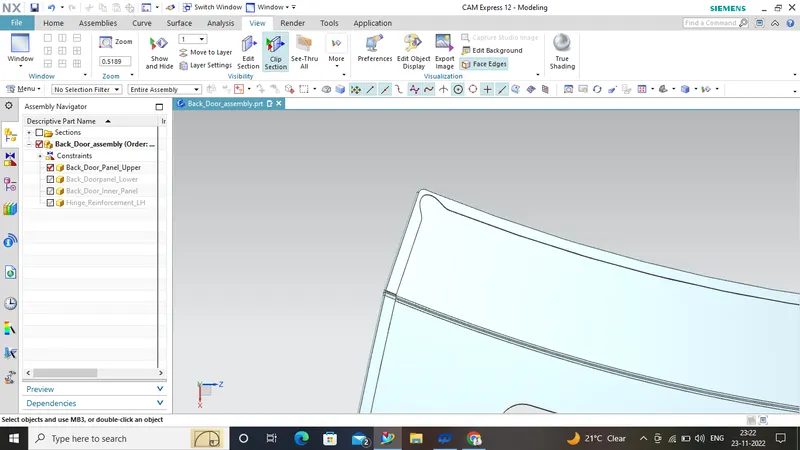
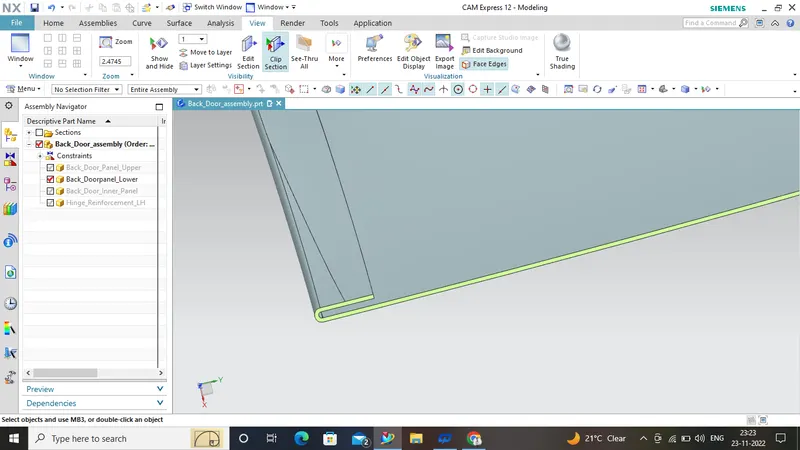
Outer panel hemming and corner relifes:-
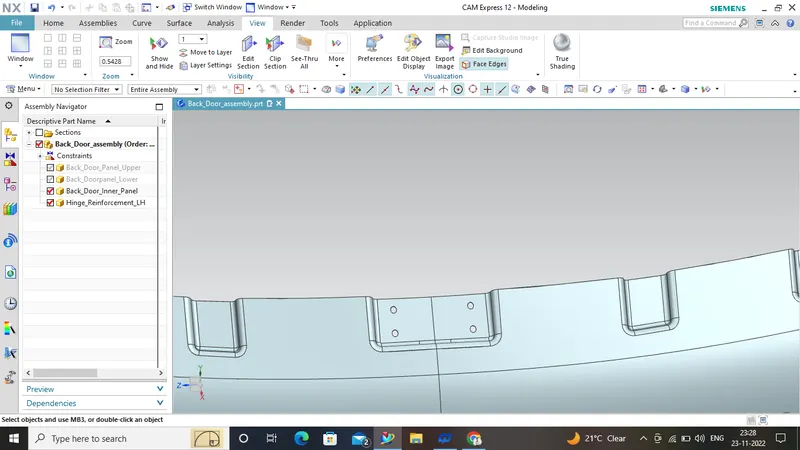
Hinge reinforcement:-
Wiper motor reinforcement:-
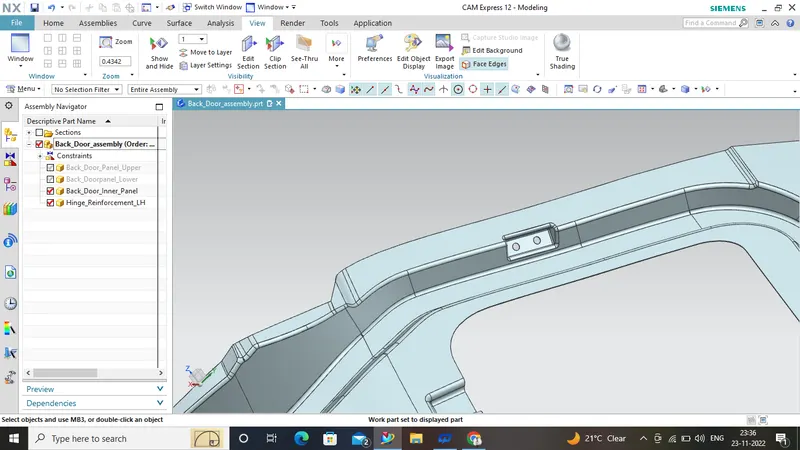
Gas stay reinforcement:-
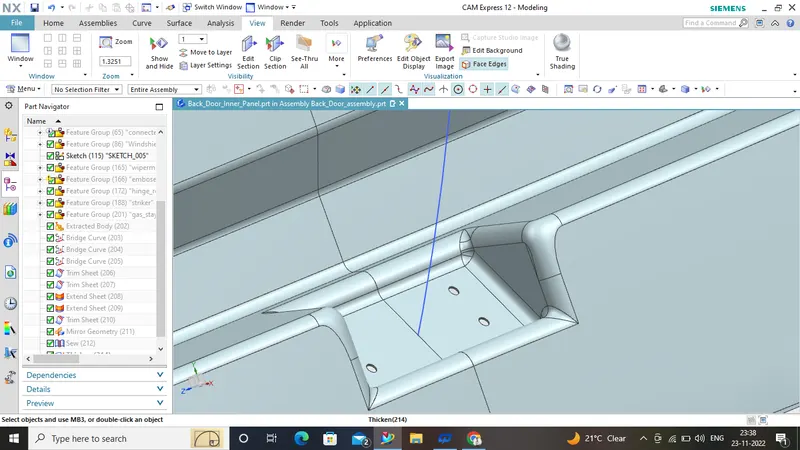
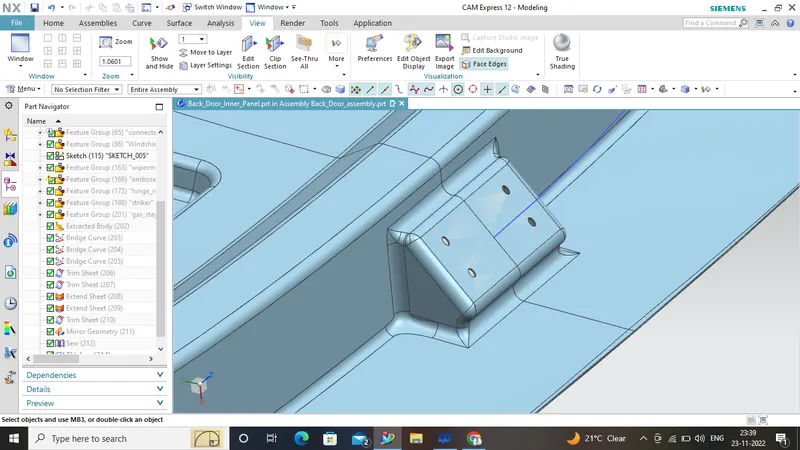
Latch reinforcement:-
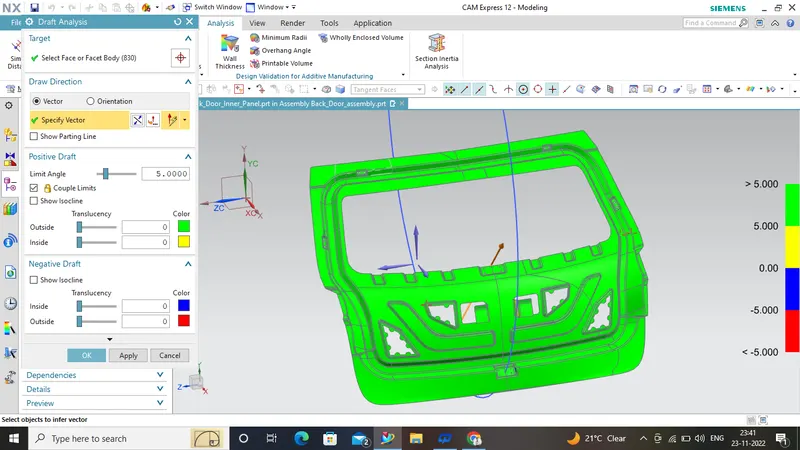
Draft analysis:-
Hemming:-
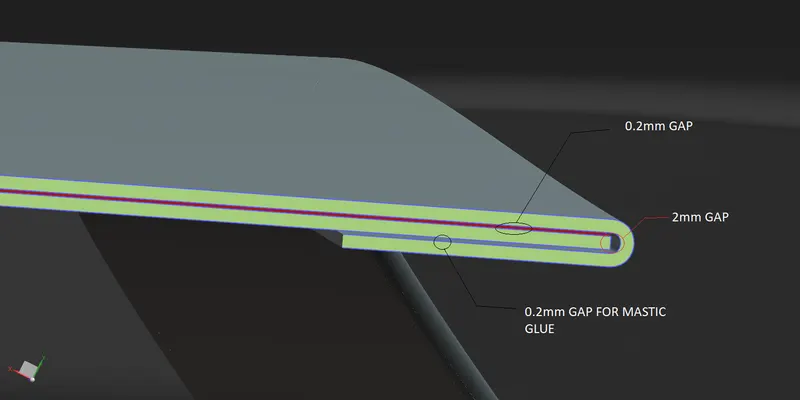
Hemming is the metelworking process in which a sheet metal edge is rolled into itself.The outter surface of the panel is rolled 2 or 3 times over the inner panel.In first roll the panel is bent slinghtly,and in the second roll the shhet matel is rolled even more and in the last roll it completely fits or covered the inner panel.There must be a 0.2mm gap between outter and inner pannel in both upper and lower side.
Spot welding:-
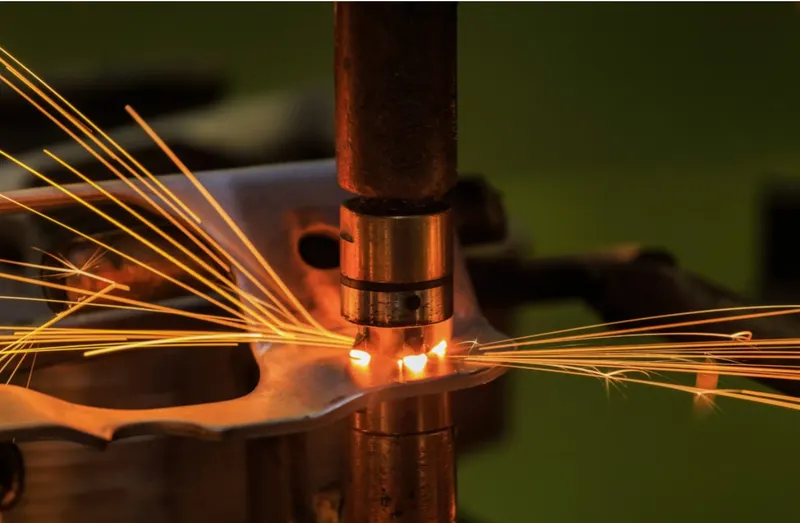
Spot Welding is a form of resistance welding also known as Resistance Spot Welding (RSW). Spot Welding involves using heat produced by resistance to an electrical current to join materials together. The current heats the materials to a point where they become malleable. The use of strong pressure bonds them together.
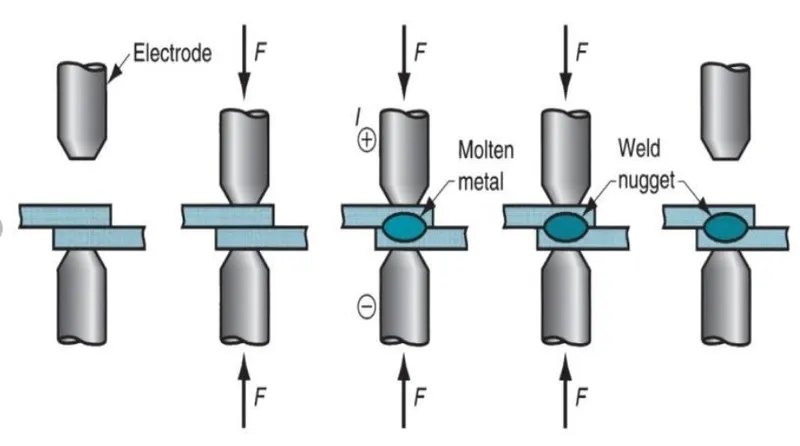
Another form of resistance welding is Projection Welding. This process involves fusing a fastener’s embossed or coined projections to the metal base material to form a weld. As the materials never melt, they do not intermix. This means the resulting weld is more like a forging of the materials.
Spot welding is only suitable for a small selection of base materials. Low carbon steel is the most suitable material for spot welding. This is because it is more resistant to electricity and has a lower thermal conductivity than the copper electrodes used to create the required electrical current.
High carbon steels and aluminium alloys can form brittle welds that don’t last with the spot welding process. Pure aluminium can qualify for spot welding but requires higher current levels. This is because it has a lower resistance to electricity than low carbon steel.
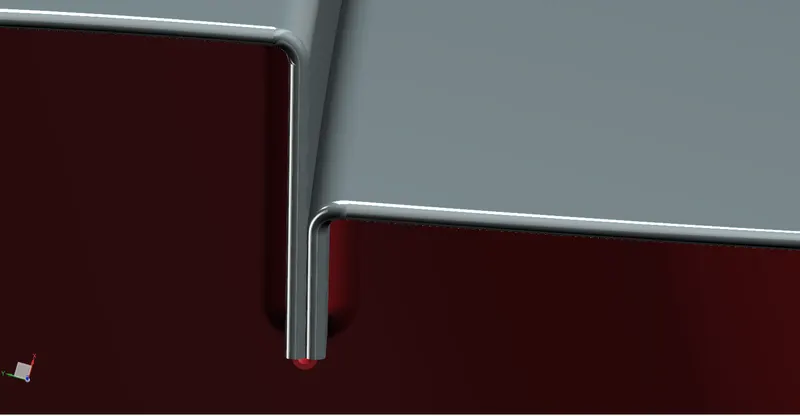
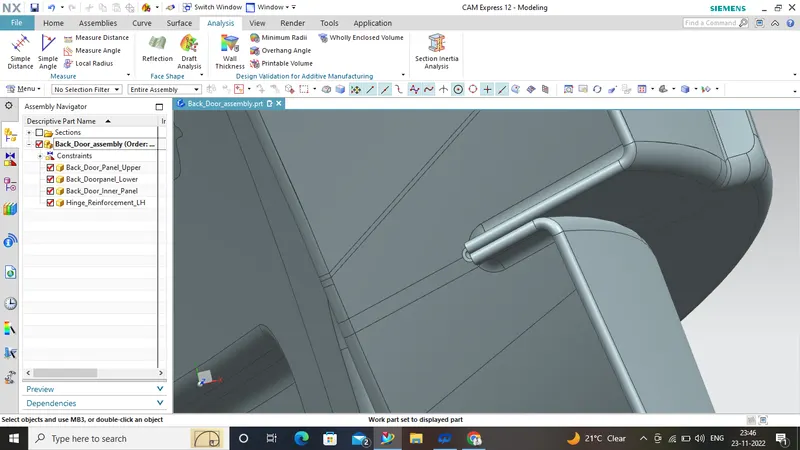
The outter panel upper and outter panel lower are joined through the spot welding .So there must be no gap between the outter panel upper and outter panel lower.
Conclusion:-
Thus the back door was designed from the given styling surface and Draft analysis is also done on the inner panel to check the manufacturing conditions. In this challenge i learned to design the Inner panel, the Outer panel, Wiper Motor reinforcement, Hinge reinforcement, Gas Gtay reinforcements, Latch and Striker reinforcement and its position.