Design of backdoor
OBJECTIVE :-
For the given styling surface to come up with a back door design, use appropriate design methodologies and provide the necessary reinforcements and embosses.
INTROUCTION :-
Backdoor of a car is aso called tailgate. A car backdoor consist of inner pannel, 2-3 outer pannel & reinforcements. Car backdoor is mainly made of steel or aluminium based on the budget of a car. The inner pannel consist of hinge reinforcement, gasstay reinforcement, latch and striker reinforcement & wiper motor housing. Using aluminium improves the strength of the parts as well as reduce the weight of the backdoor& also we can vary thickness in the aluminium parts due to which we can avoid the reinforcement. The only drawback is the cost of aluminium. For steel parts we cannot vary thickness of the parts and theses parts are stamped & more number of parts are added which in turn increse the weight of the backdoor.
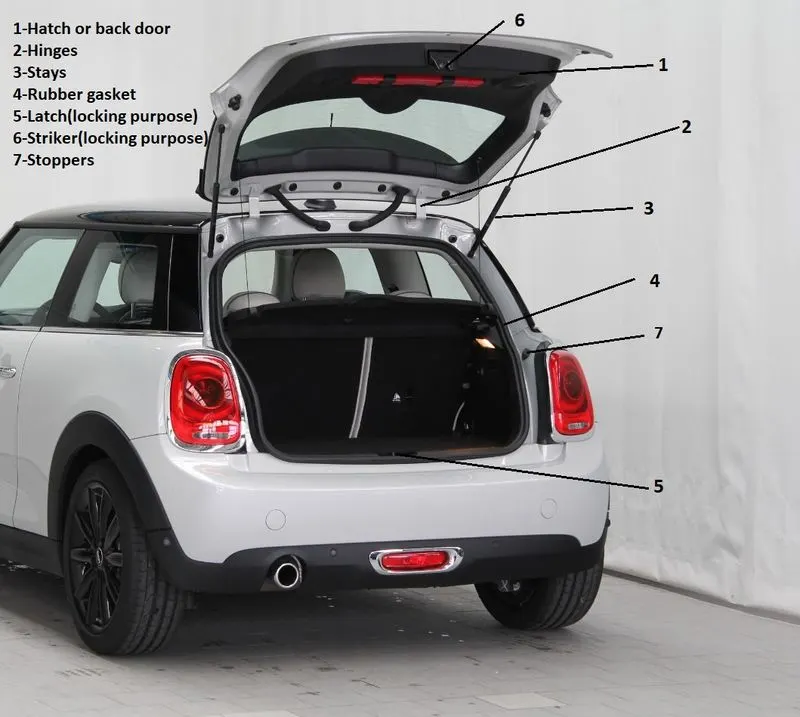
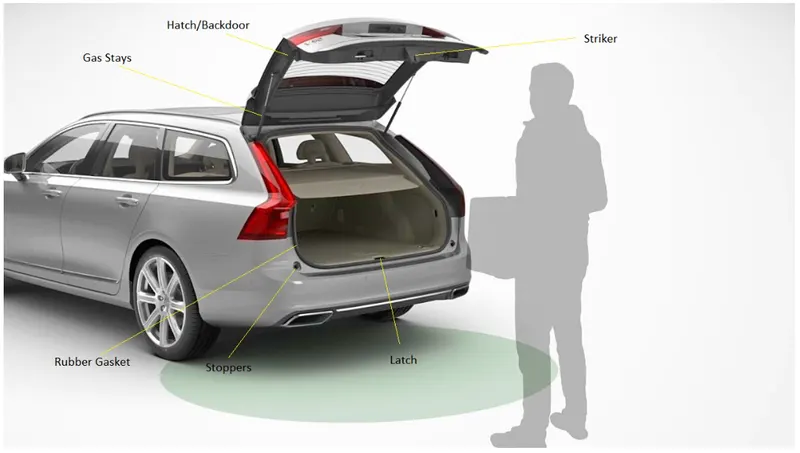
What is Reinforcement :-
Reinforcements are the one which is additionaly given on the parts to improve the strength locally. The thickness of the reinforcement usually vary from 1-1.5 mm.
Pannel thickness vary from 0.65 - 0.75 mm.
DESIGN CONSIDERATIONS :-
- Rear visiblity criteria.
- Lugguage volume.
- Hinge and gasstay reinforcement.
- latch and striker reinforcement.
ASSEMBLY FLOW :-
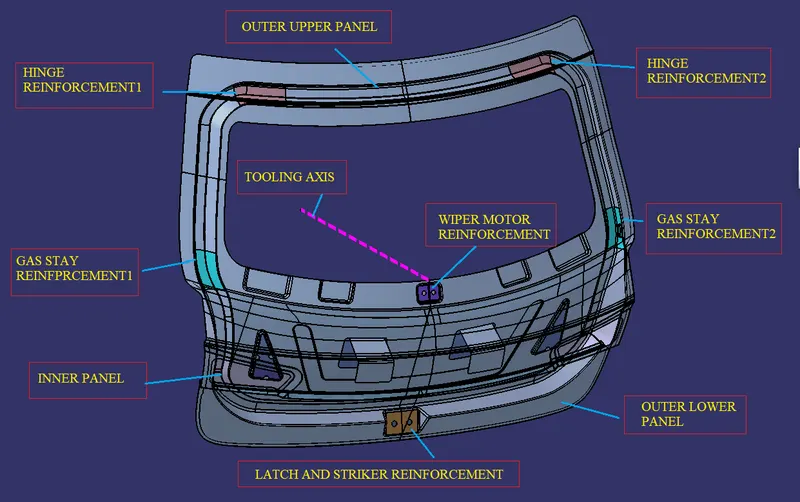
MAIN PARTS IN BACK DOOR :-
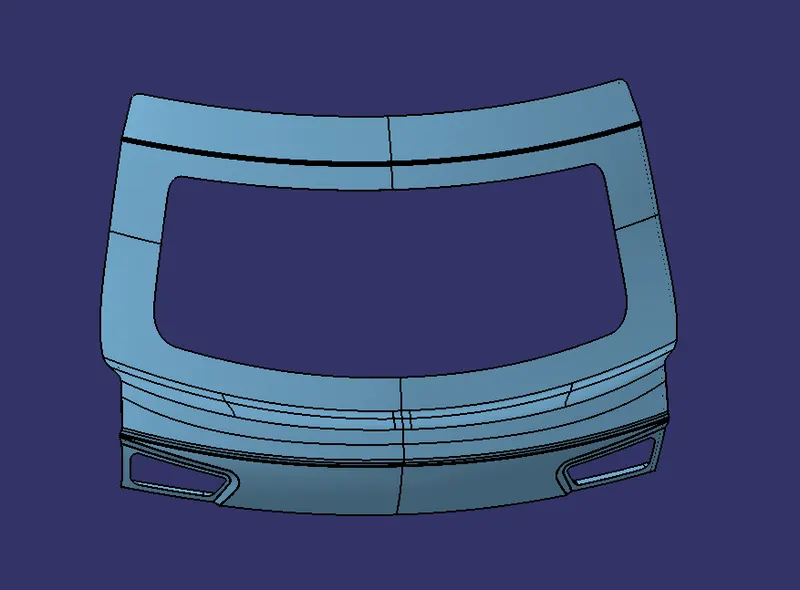
OUTER PANEL :-
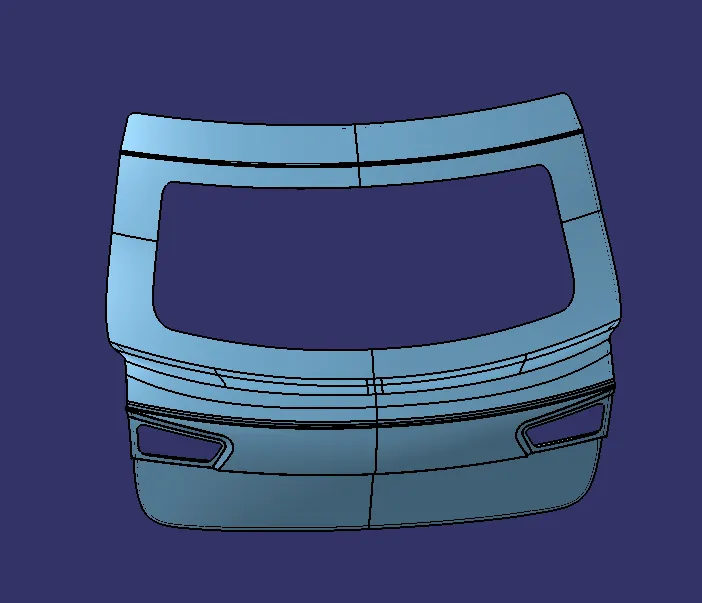
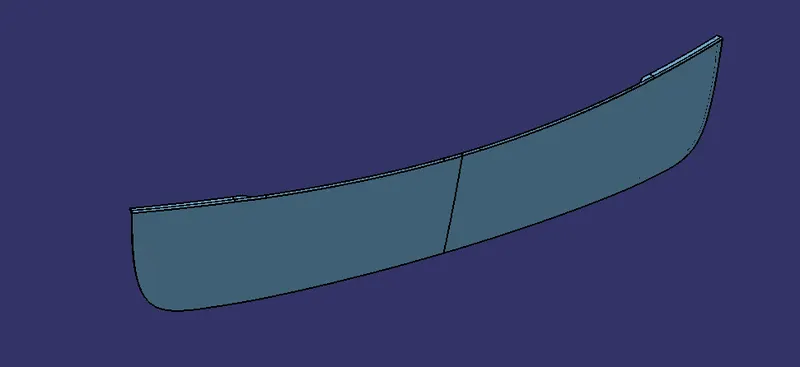
The outer panel of the back door is similar to other BIW components where it is the aesthetic part of a vehicle. The coating provided is of multi-stage which has the property of scratch resistance, rust prevention and smooth and attractive finishes. The outer panel also has the provisions for the tail lamp, rear fog lamp and also has the provision for licence plate mountings. Most of the hatchback cars have the provision for wiper motor.
Outer panel is devied into two types they are :-
1. Outer upper panel :-
2. Outer lower panel :-
3. Inner panel :-
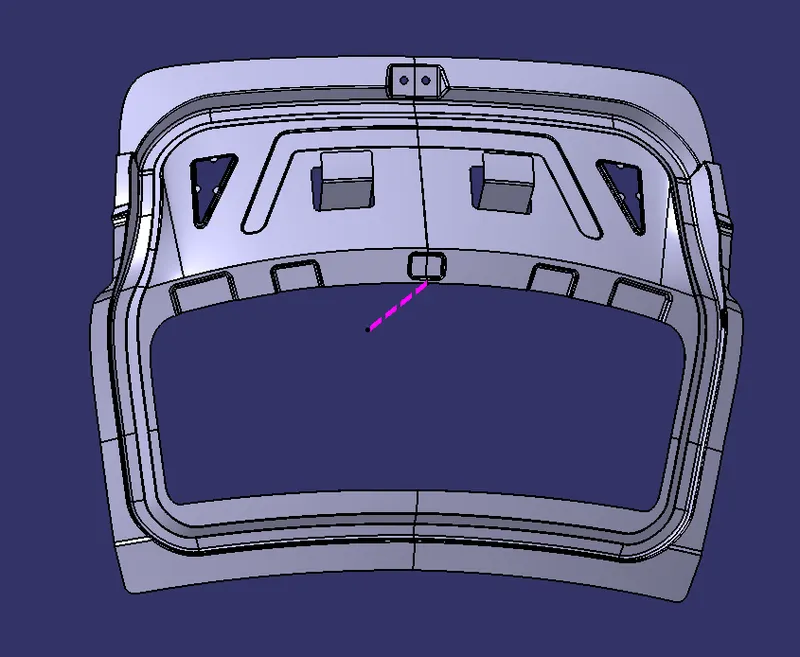
Inner panel is designed based on the outer panel, because it should provide necessary strength to the outer panel, embosses are added wherever necessary, via the deep drawing operation. A minimum draft angle of 7 degree is provided to get the smooth deep drawing operation.
Inner panel is made of 0.75 mm thick.
4. Hinge reinforcement :-
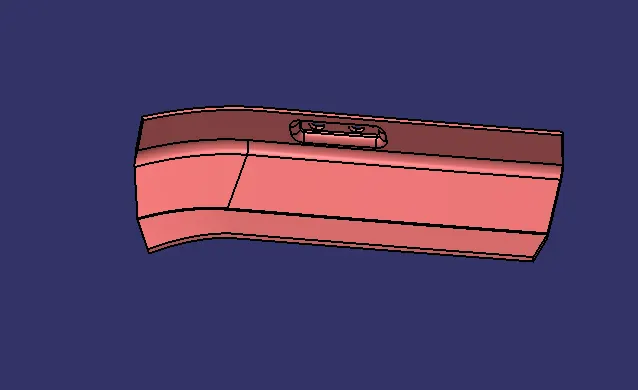
Hinge reinforcement is to enable swing (open and close) to the back door. It also increases the strength of the part locally. It has two parts one part is mounted with the car body and another is mounted with the back door.
5. Gas stay reinforcement :-
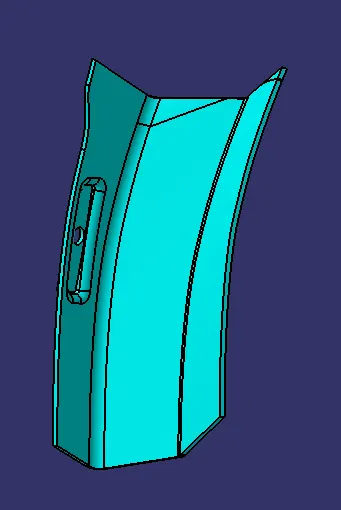
Gas stay reinforcement is used to fix the gas stay. Gas stay makes the motion of the door ease. It also helps by holding the door, while the door is open.
6. Latch and striker reinforcement :-
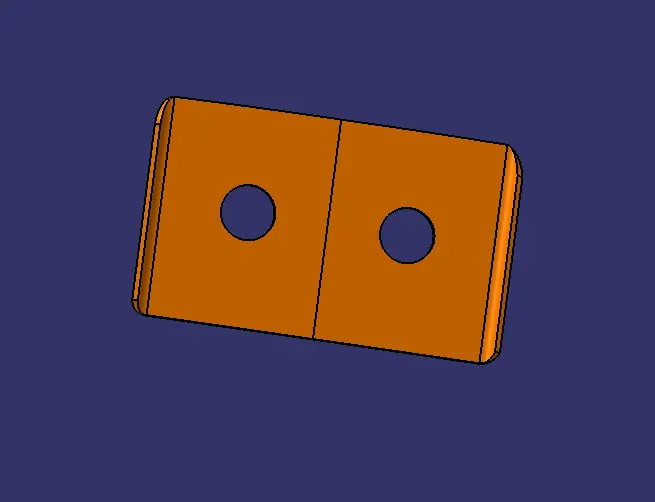
Latch reinforcement is used to fix the latch and increases the strength locally. Helps the latch to assemble with the inner panel.
7. Wiper motor reinforcement :-
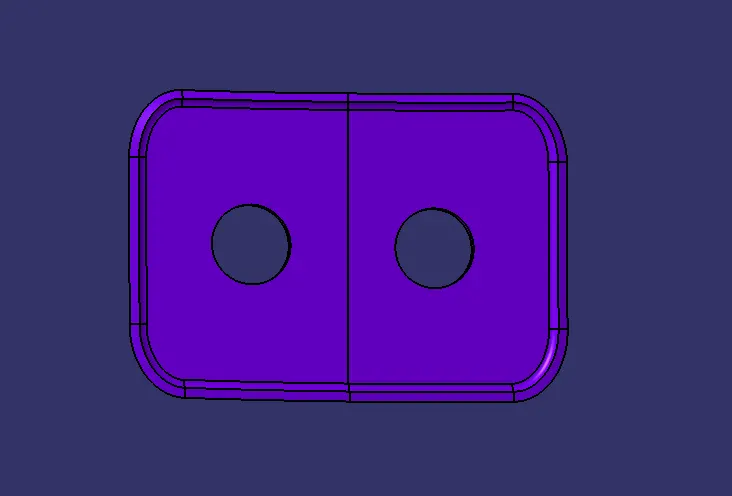
Wiper motor reinforcements is used to seat the wiper motor and is used to assemble the wiper motor with back door.
MANUFACTURING CONSIDERAIONS :-
Hemming :-
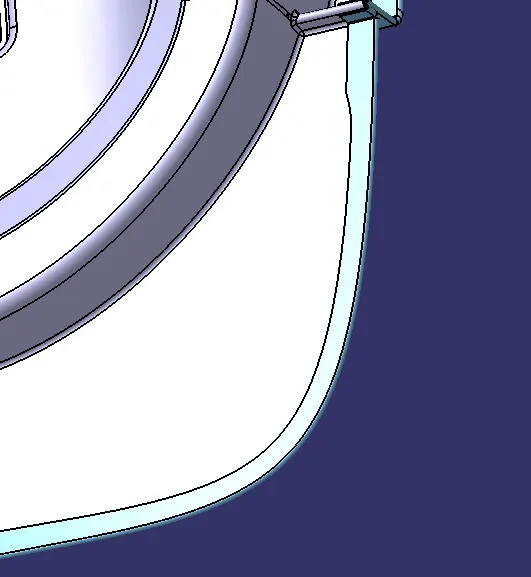
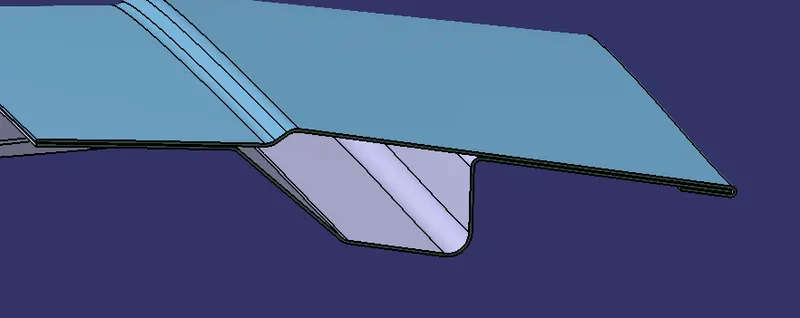
Hemming is the process in which the edge is rolled flush to itself, while a seam joins the edges of two materials. Hems are commonly used to reinforce an edge, hide burrs and rough edges, and improve appearance.
In this back door design hemming is used for joining the outer panel with the inner panel.
lazer Brazing :-
Lazer Brazing is a joining process for sheet metals where the filler material with low melting point is melted with laser beam while the base material with higher melting point does not melt. Laser beam heats up the joint surfaces but does not melt the material.
In this back door design we use lazer brazing for joining of outer upper panel and outer lower panel.
Embossing :-
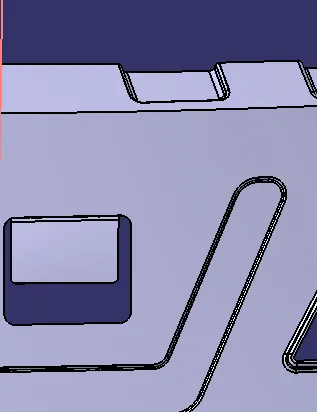
Embossing is an operation in which sheet metal is drawn to shallow depths with male and female dies. The operation is carried out mostly for the purpose of stiffening flat surface and design in inner panel. It is also made that, when the car crashed the force will be passed to cabin.
Mastic influence :-
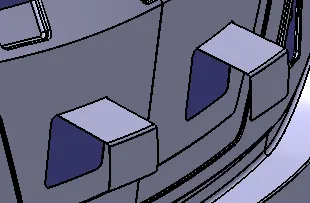
The Mastic sealant or the Mastic point is an elastic compound that behaves like a rubber. The mastic points are defined on the back door inner panel where the door can easily deform. They help the door outer panel to come back to its original shape after it gets deformed. The mastic has an influence area of 80mm.
Hinge Axis and Latch and striker postion :-
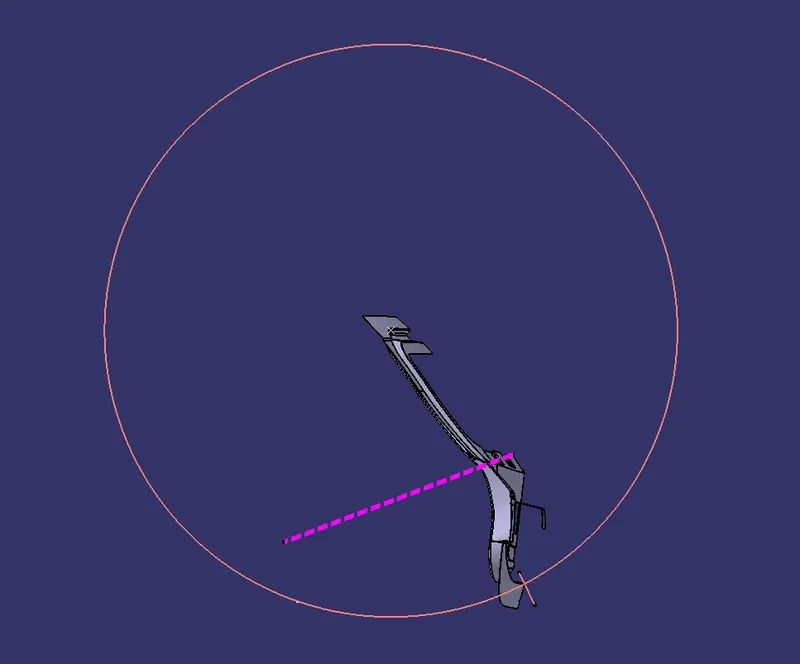
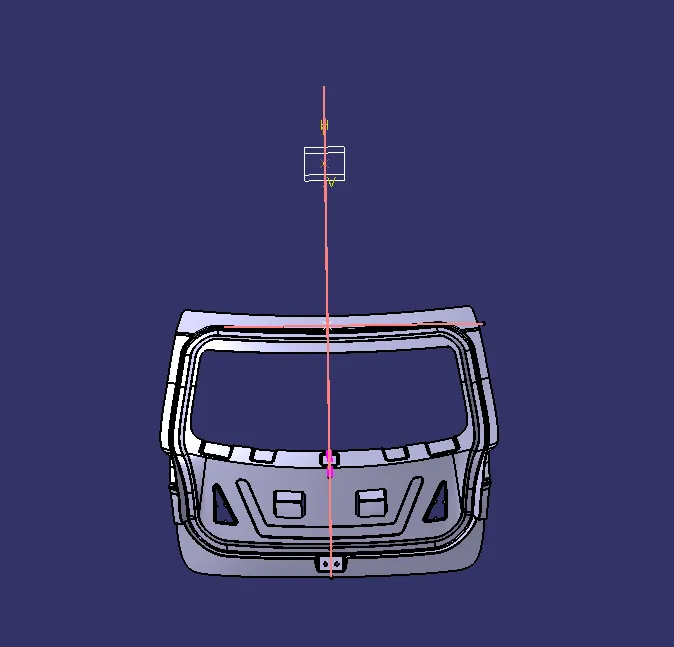
To define the opening and Closing Trajectory, the hinge and Latch are positioned based on the Hinge axis and Trajectory. The Circle drawn should perpendicular to the Latch’s Striker to satisfy the condition. Based on the Rotation trajectory the Hinge Axis, Latch Striker and predefined Gas Stay are correlated for smooth kinematics of door opening and closing.
Based on the type of Gas Stay, Door Weight and Kinematics the distance between the Gas Stay and Hinge axis is 60-90mm and an angle of 85-90.
Draft analysis :-
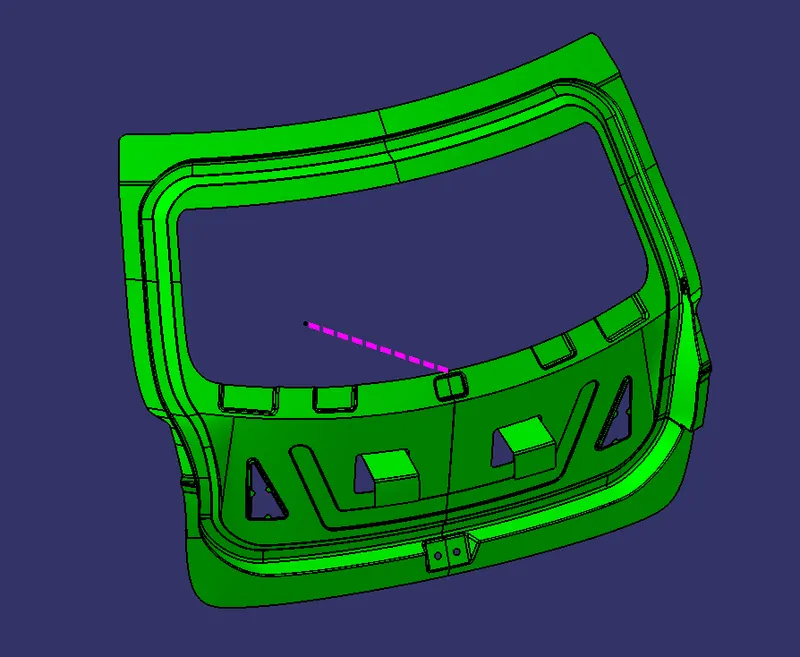
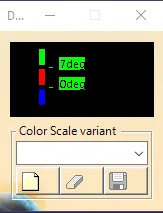
- Draft analysis is done to check whether the part is manufacturable or not. It is not a sure-shot confirmation that the part is manufacturable but it is used to check the draft angle on the part.
- The draft angle is taken as 7mm.
- The tooling direction for the analysis is perpendicular to the wiper motor area .
CONCLUSION :-
Thus by using the provided styling surface back door is designed with appropriate design methodologies and provided the necessary reinforcements and embosses.