Design of backdoor
Objective
To design and develop car backdoor/tailgate from given class A surface styling under industrial standards and also to perform draft analysis along the tooling direction and need to design reinforcements on inter panel.
Class A Surface
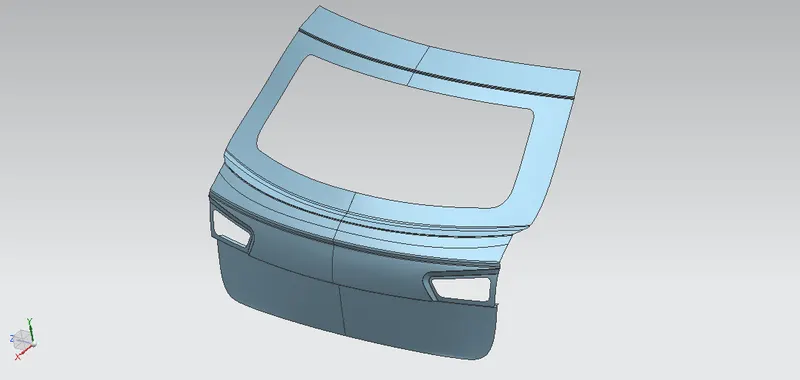
What is BackDoor?
It is a BIW component which is attached in back side of the car. Generally it's used for good visible criteria of the rear vehicle. It is also used for opening and closing of the luggage area. In generally opening and closing of the door is a co-ordinated by the Latch and Stricker position and the Gas stay position which is mounted on the body and back door of the car and these positions play a major role on ensuring the smooth opening and closing of the backdoor.
Components
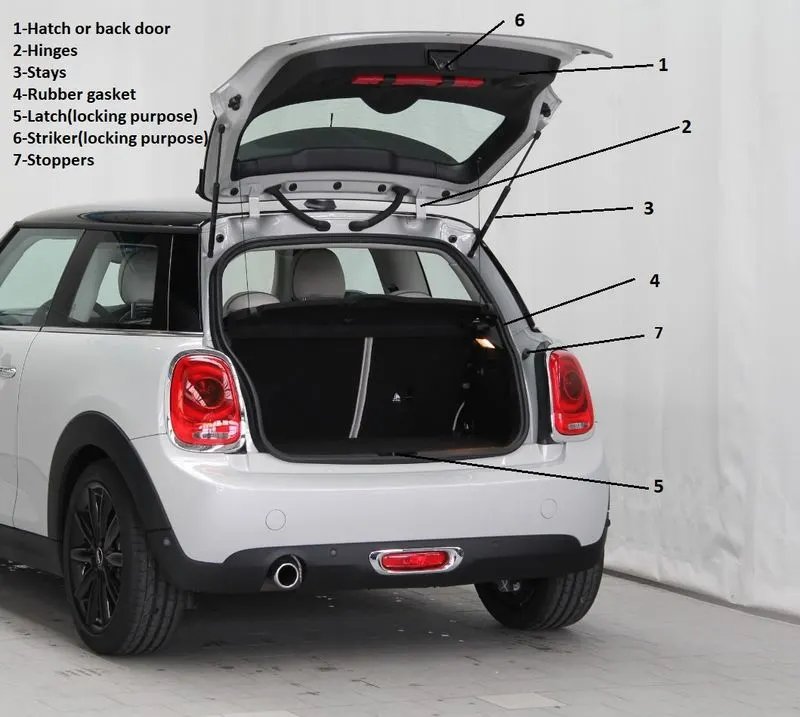
What are the Components gonna develope in the design!
- Outer upper panel
- Outer lower panel
- Inner panel
- Hinge reinforcement
- Gas stay reinforcement
- Wiper Motor reinforcement
- Latch and Striker reinforcement
Outer panel
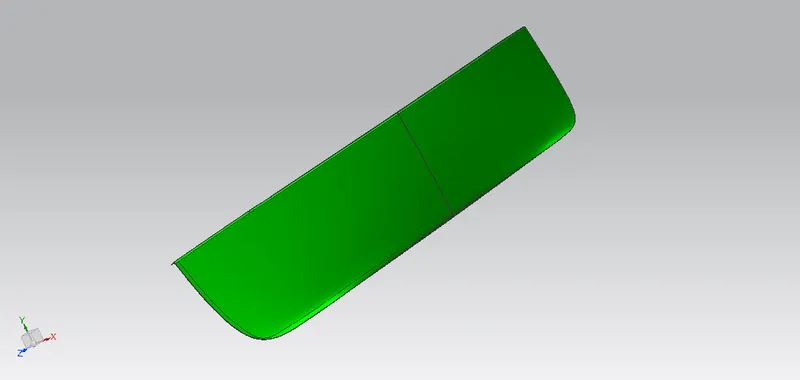
The outer panel of the backdoor is mostly responsible for aesthetics of the vehicle. Outer and inner panels are connected by mastic sealants in center and also by hemming process at edges. The outer door handle and in some cases, the number plate may also be installed on the outer panel of the back door. We have considered two part outer panel for a design. Outer panel is manufacture by forming process in sheet metal. The thickness for outer panel is 0.75 mm.
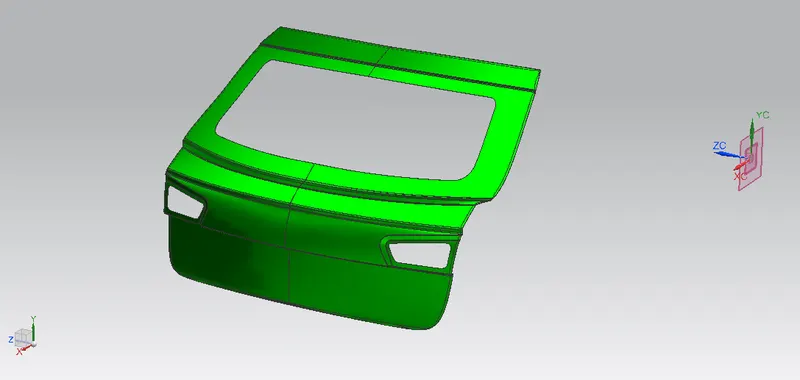
Outer Upper panel
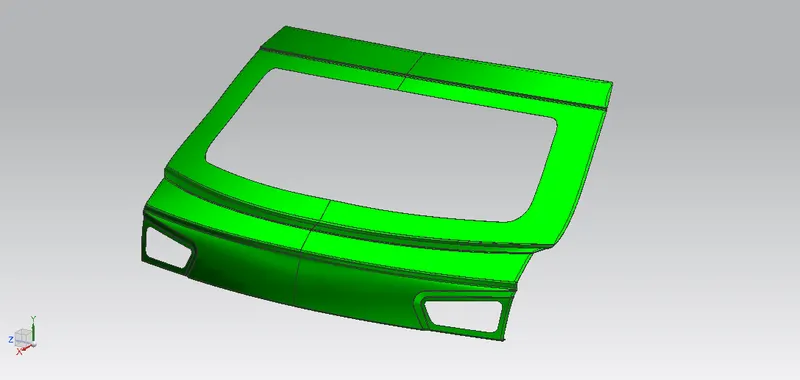
Outer Lower panel
Inner panel
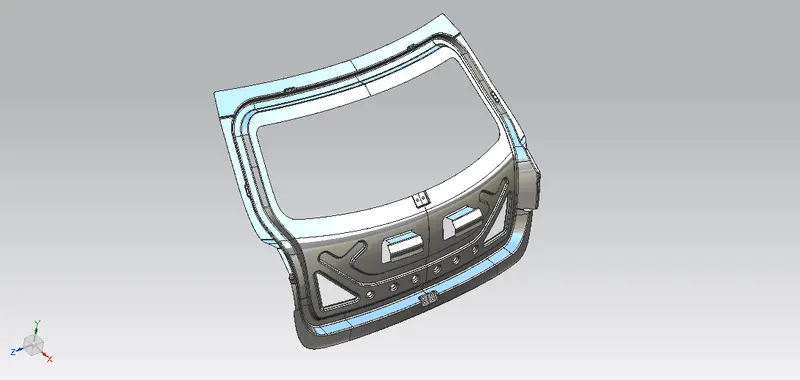
The inner panelof the backdoor where most of the reinforcements and components are mounted.It is mounted with car body by the uses of hinge, gas stay and striker. It is manufactured either by sheet metal forming process. The Thickness of inner panel is 0.75 mm.
Reinforcement
- Hinge reinforcement
- Gas stay reinforcement
- Wiper Motor reinforcement
- Latch and Striker reinforcement
Hinge Reinforcement
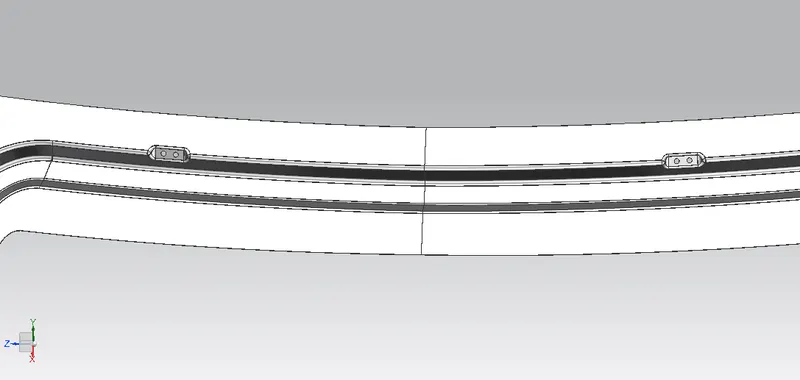
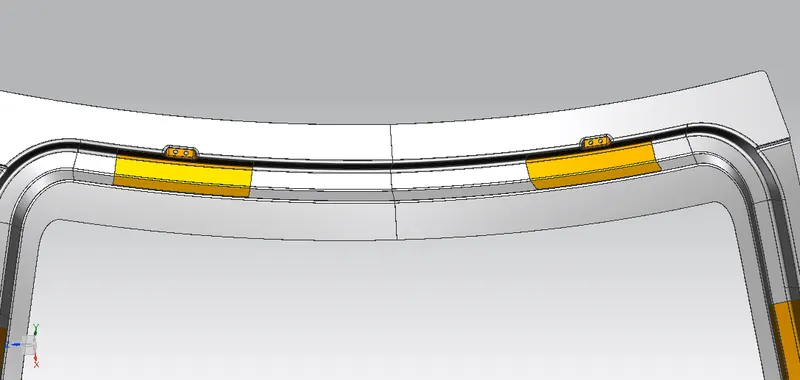
In this area the Hinge is mounted in the backdoor which access the hinge axis to opening and closing the backdoor and another end of the hinge is attached the car body. This supports the hinge in backdoor which create more strength to backdoor due to the material of sheet metal.
Gas Stay Reinforcement
In this area the gas stay is mounted in the backdoor which access the gas stay axis support to opening and closing the backdoor and another end of the gas stay is attached the car body. This supports the gas stay in backdoor which create more strength to backdoor due to the material of sheet metal.
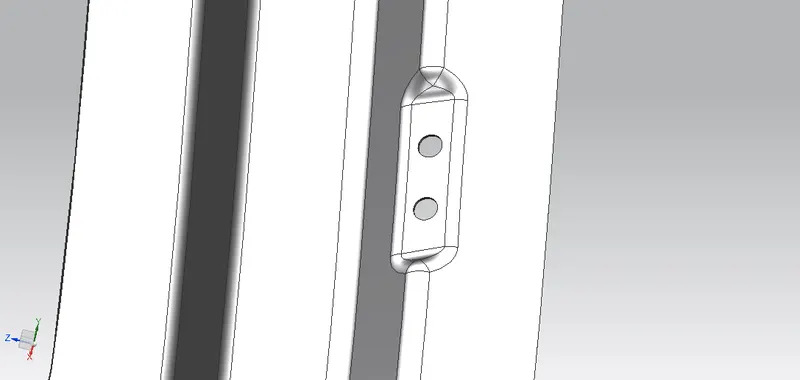
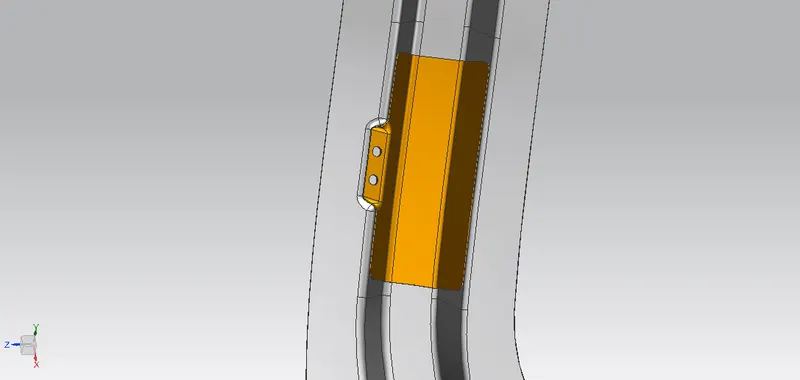
Wiper Motor Reinforcement
In this area the wiper motor is mounted in the backdoor. This supports the wiper motor in backdoor which create more strength to backdoor due to the material of sheet metal.
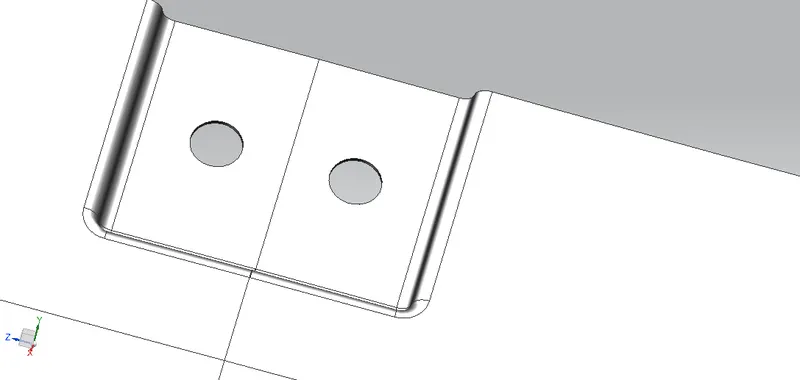
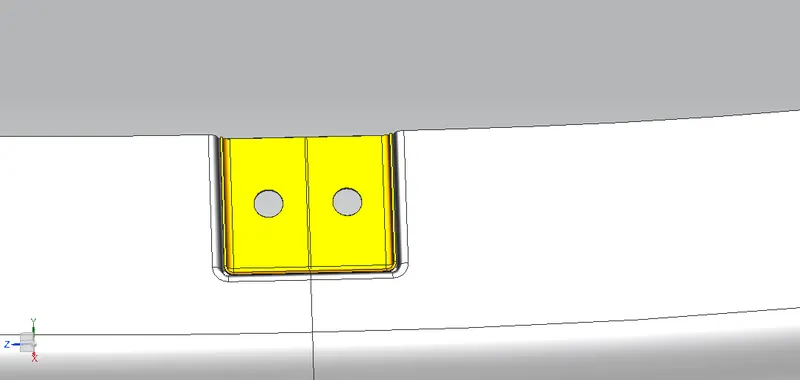
Latch and Striker Reinforcement
In this area the striker is mounted in the backdoor which access the striker axis support to lock and unlock the backdoor and latch is attached the car body to hook up. This supports the striker in backdoor which create more strength to backdoor due to the material of sheet metal.
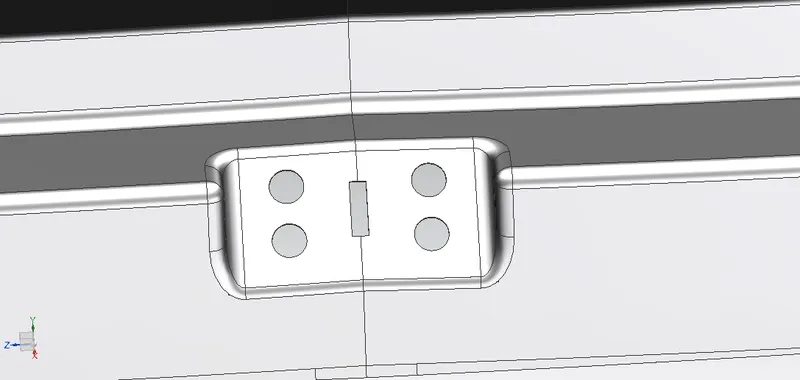
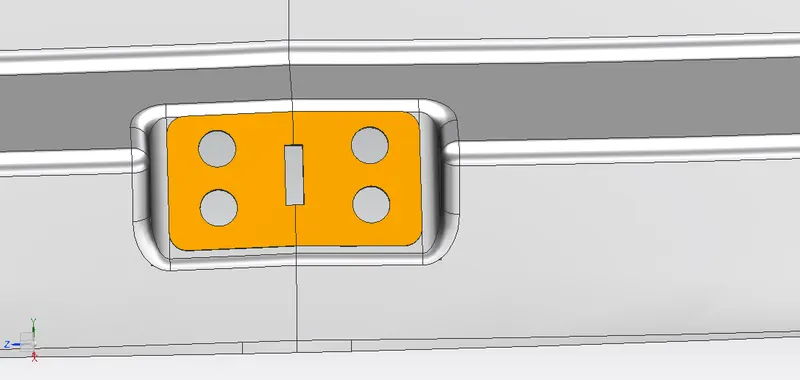
Overall view of the Reinforcement
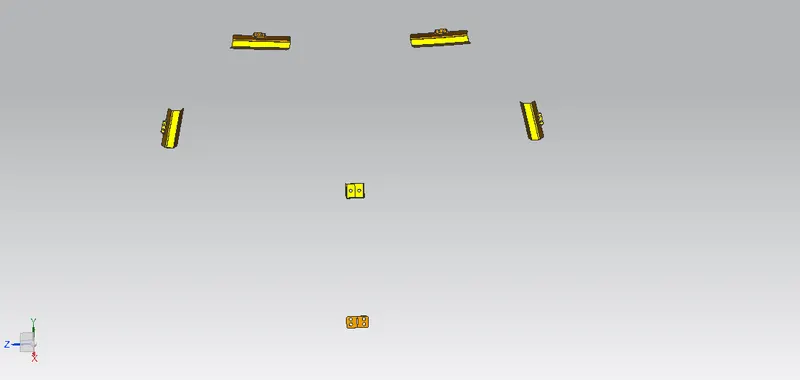
Assembly Reinforcement in Inner panel
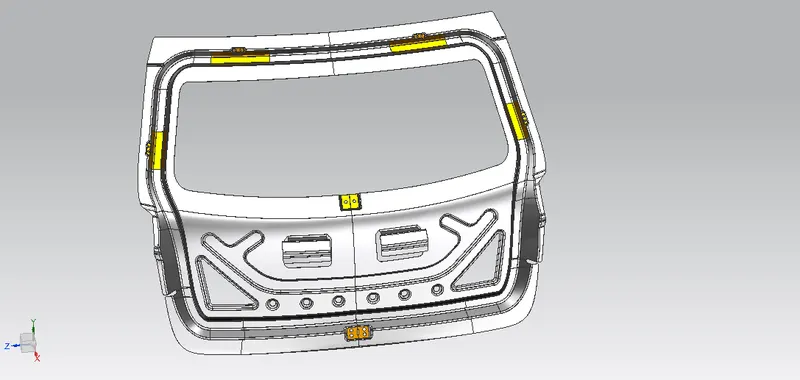
Mastic Area
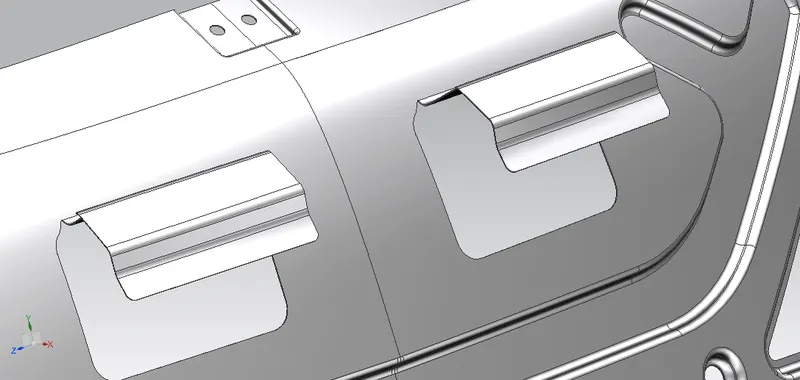
It is a high-grade construction adhesive and Mastic point are areas where the inner panel is joined with the outer panel using a mastic glue. This mastic glue keeps the inner panel stuck/hold the outer panel.
Hemming
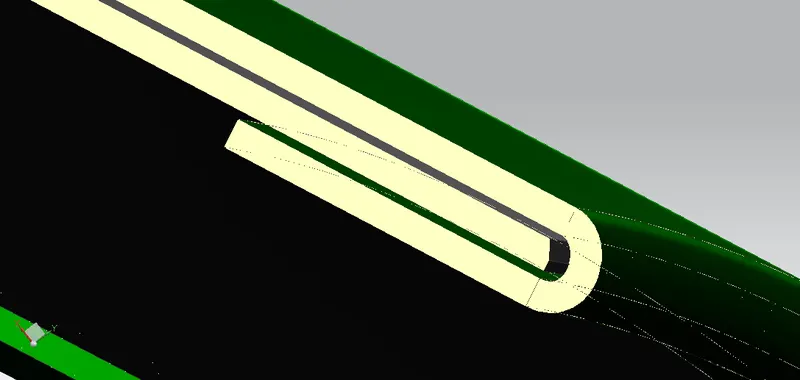
It is a sheet metal forming process in which sheets are joined by bending it to 180°. In this process, usually a sheet is bent with the help of inner sheet in three different stages are formed sequentially using appropriate tooling.

- Flanging - bending angle of nominally at 90°
- Pre- hemming - bending angle of nominally at 120°~150°
- Final hemming - bending angle of nominally at 180°
Relief
Latch Trajectory
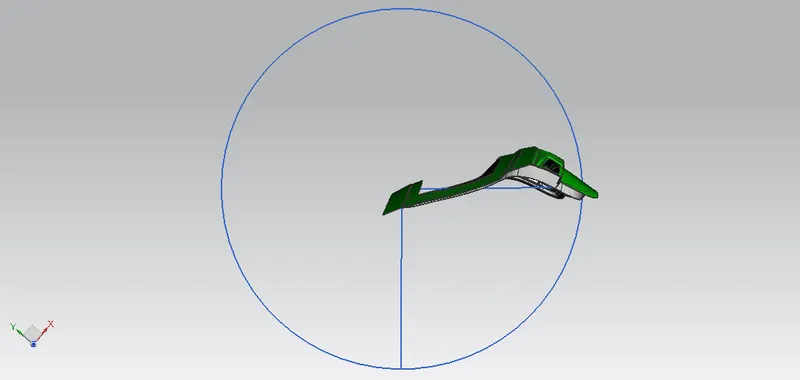
It is the path which the striker will follow when the hood is open/closed while pivoting on the hinge axis. It is taken as a circle with the hinge axis as the center of the circle. The striker is placed 90 degree such that it is tangent to the circle.
Emboss
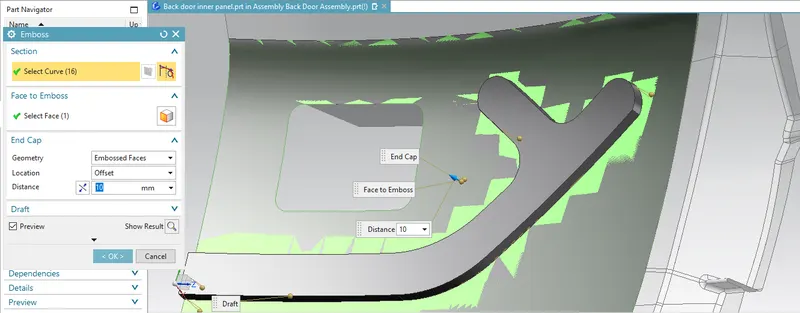
Emboss is also known as forming in manufacturing industries in department of stamping. It is a process of bending the sheet metal into a shape. It's mainly depend on draft angle of positive draft only.
Draft Analysis
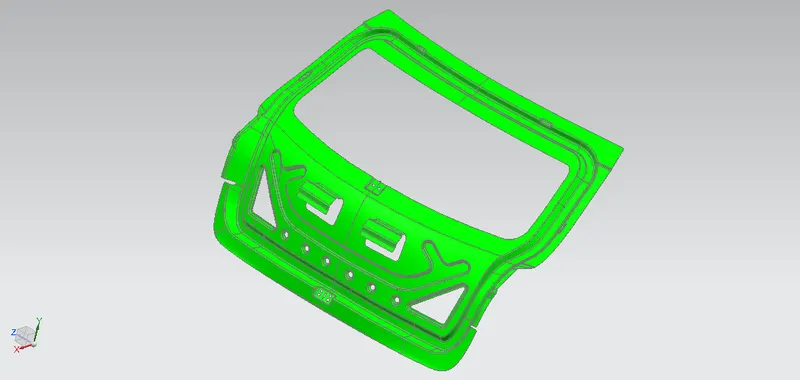
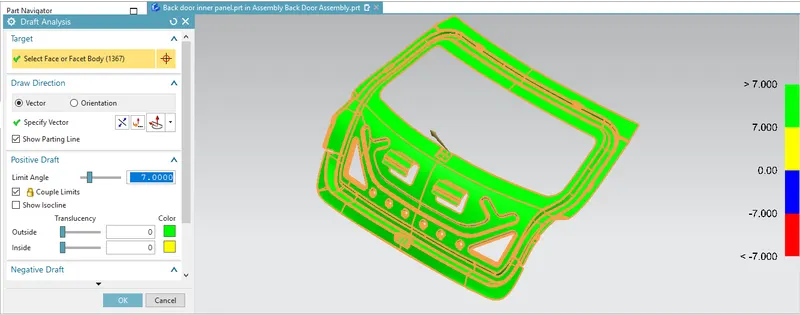
Draft Analysis is used to analyze whether our part model created in CAD is manufacturable based on the draft condition applied. Draft condition is based on draft angle which sheet metal is the minimum bend of 7° and also Draft analysis show us whether it is a Positive draft or Negative draft.
Forming Tools
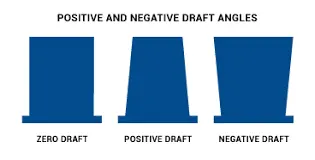
As you can see below the minimum of positive draft is 7° (for sheet metal), if 7° in yellow or greater than 7° in green are all positive draft, 0° is the Zero draft and -7° in Blue and Less than -7° in Red are all Negative draft which is complicated to manufacture.
Backdoor Assembly
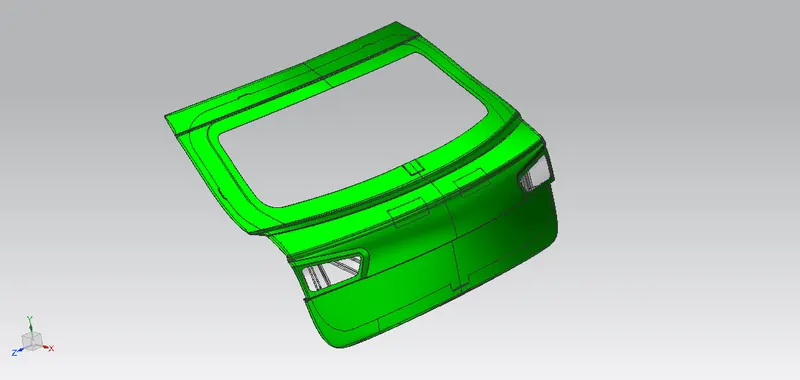
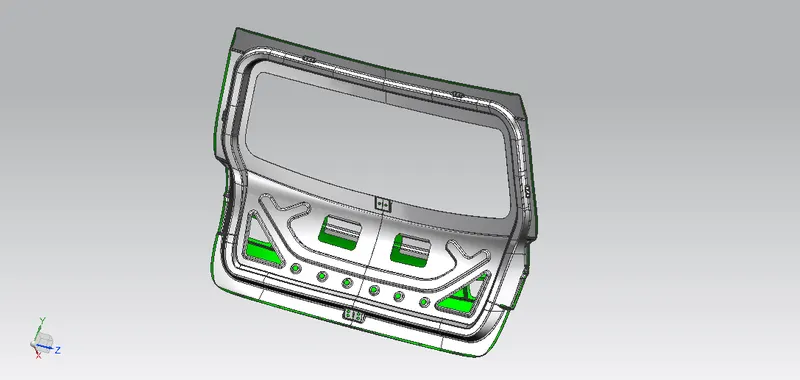
Side View
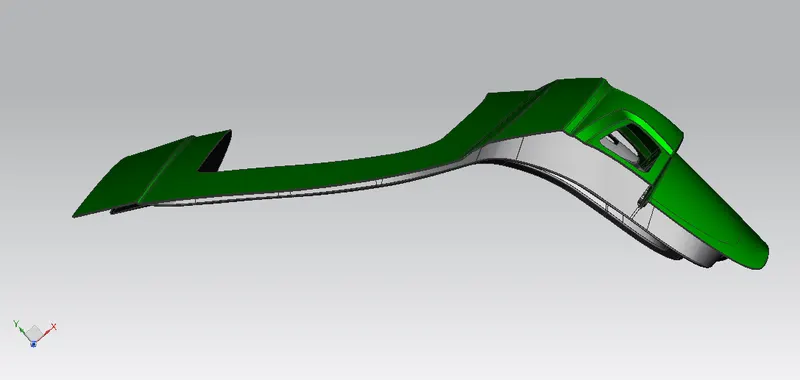
Section View
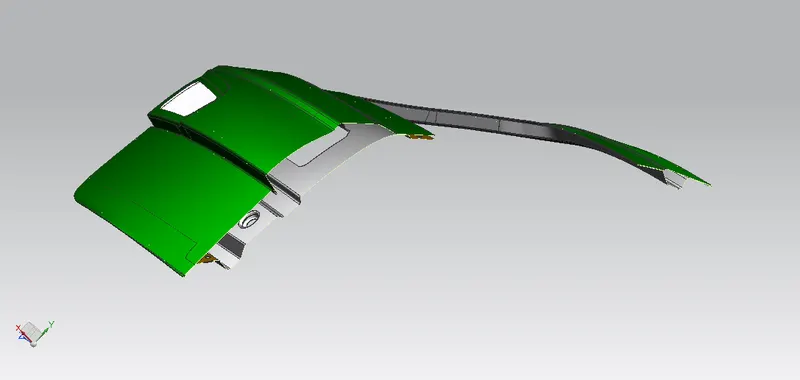
Conclusion
The given class A surface has designed and developed of the backdoor and it's components of outer panel, inner panel and reinforcements according to the industrial standards of the backdoor by assembled using NX CAD. The draft analysis has performed along the tooling direction for manufacturing.