Design of backdoor
BACK DOOR DESIGN
INTRODUCTION:
The term "back door" or "tailgate" simply refers to the opening and closing of the back of the vehicle. It encircles the back of the car. It gives access to a boot or boot that contains cargo. Hatchbacks, estates/station waggons and lift backs are characterised primarily by a tailboard that hinges at the roof. A cargo area door or entrance may hinge from the top, side, or bottom.
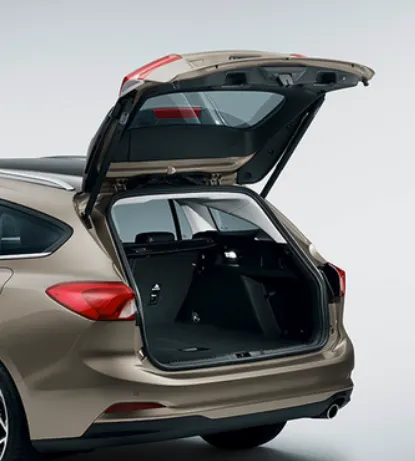
This technique is typically carried out manually in the majority of autos. To open and close the tailboard with the car key, one must exit the vehicle. These days, automakers provide cutting-edge technologies like an automatic tailboard. The electronic closing and opening of the tailboard are handled by an automatic tailboard of a vehicle.
TYPES OF THE BACK DOOR:
Top-Mounted:
This type of back doors is used in a station wagon, pickup truck and some of the sport utility vehicles. Today's modern cars use top-mounted tailgating systems which are both powered and also gas stay supported. These top mounted tailgates provide greater rear visibility compared to side-mounted or bar doors which have center pillars in it.
Side Mounted Doors:
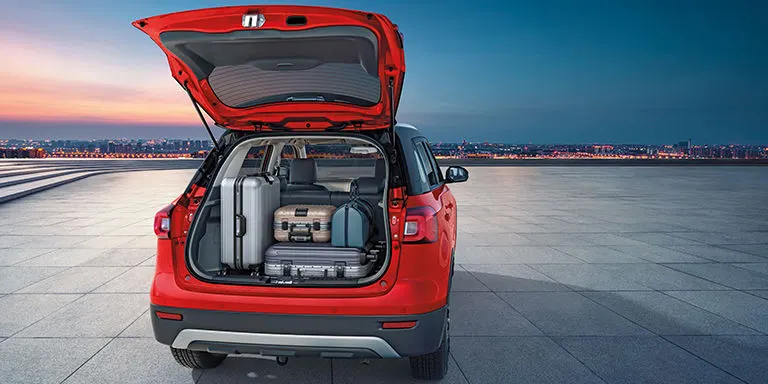
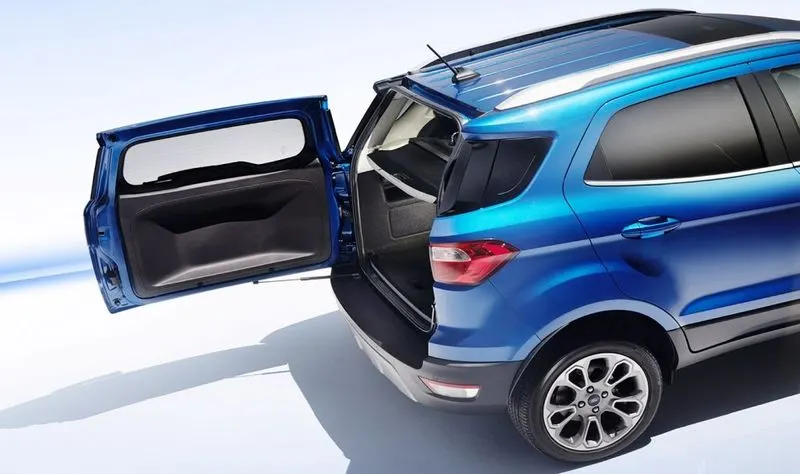
As the name signifies side-mounted doors are the one which is used in the van type MPVs, SUVs, pickup truck vehicles. These side-mounted doors or barn doors are a lot easier compared to top-mounted doors. These doors are generally smaller in size and can be easily accessed.
MANUFACTURING PROCESS:
The manufacturing process of a car back door typically involves the following steps:
Design and engineering:
The first step in the manufacturing process is designing the back door. This involves creating detailed drawings and using computer-aided design (CAD) software to create a 3D model of the back door.
Material selection:
Once the design is finalized, the materials for the back door are selected. Most car doors are made from steel, aluminium, or composite materials.
Cutting and stamping:
The selected material is cut to the required size and shape using a variety of cutting tools such as lasers, saws, and shears. The door is then formed using stamping machines and presses.
Welding and assembly:
The individual parts of the back door are welded together using specialized welding techniques such as spot welding, TIG welding, and MIG welding. The door handle, locks, hinges, and other components are also installed at this stage.
Surface treatment and painting:
The back door is then subjected to various surface treatments such as sandblasting, grinding, and polishing to remove any impurities and improve the surface finish. Finally, the door is painted using a robotic spray system to give it a smooth and durable finish.
Quality control:
Once the door is painted and assembled, it undergoes a series of quality control checks to ensure that it meets the required specifications and standards. These checks include measurements, functional tests, and visual inspections.
Packaging and shipping:
Finally, the finished back door is packaged and shipped to the car assembly plant, where it is installed on the vehicle.
PROCEDURE:
Given Class A Surface:
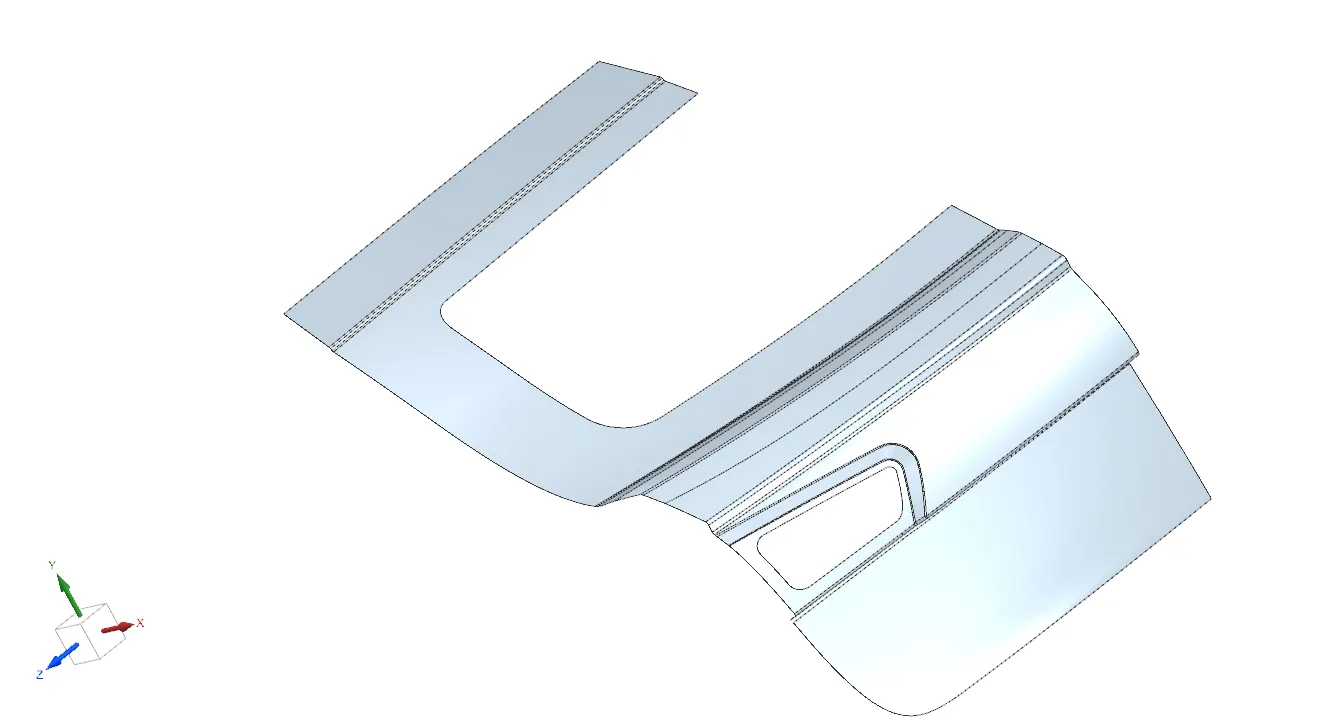
We have to improve the class A surface to get required results.
Tooling Direction:
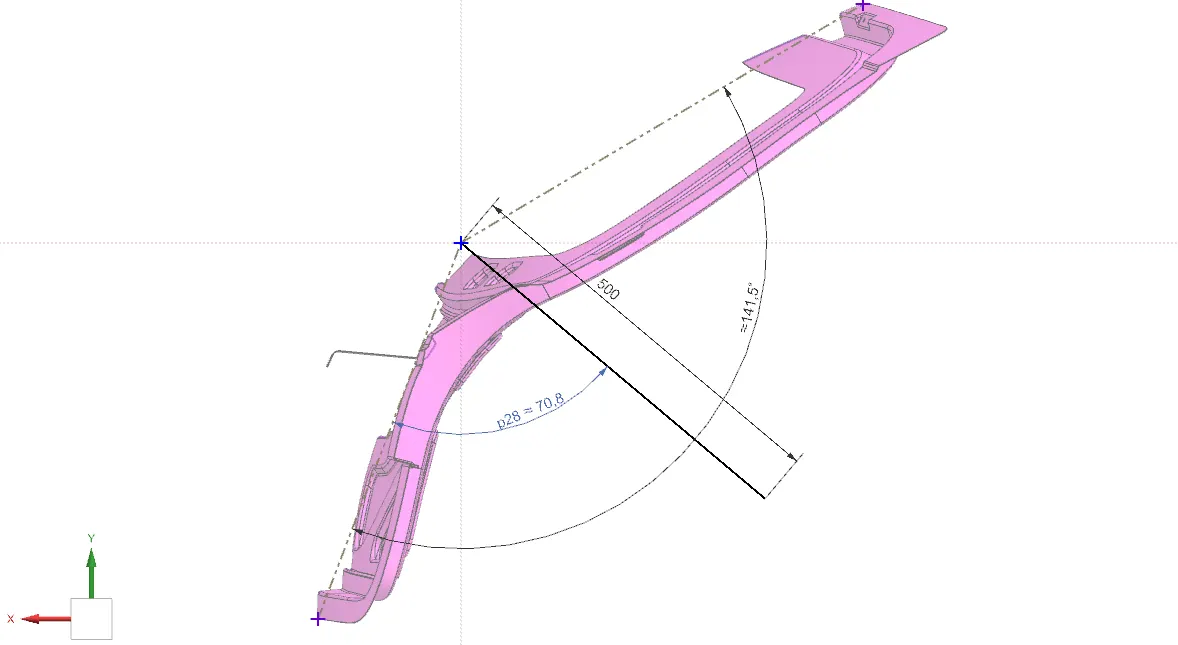
Almost parallel to the surface's path down the asymmetrical axis, draw a line from the left and right extremes and make a bisecting line.
Outer panel Upper and Lower:
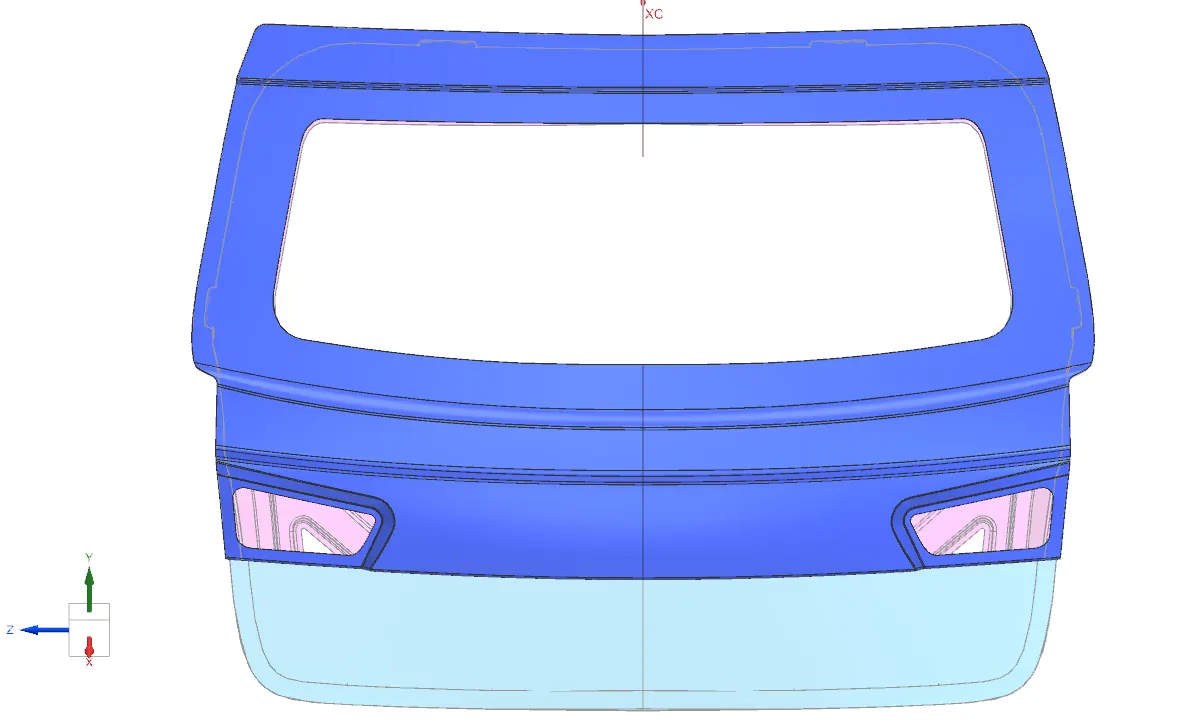
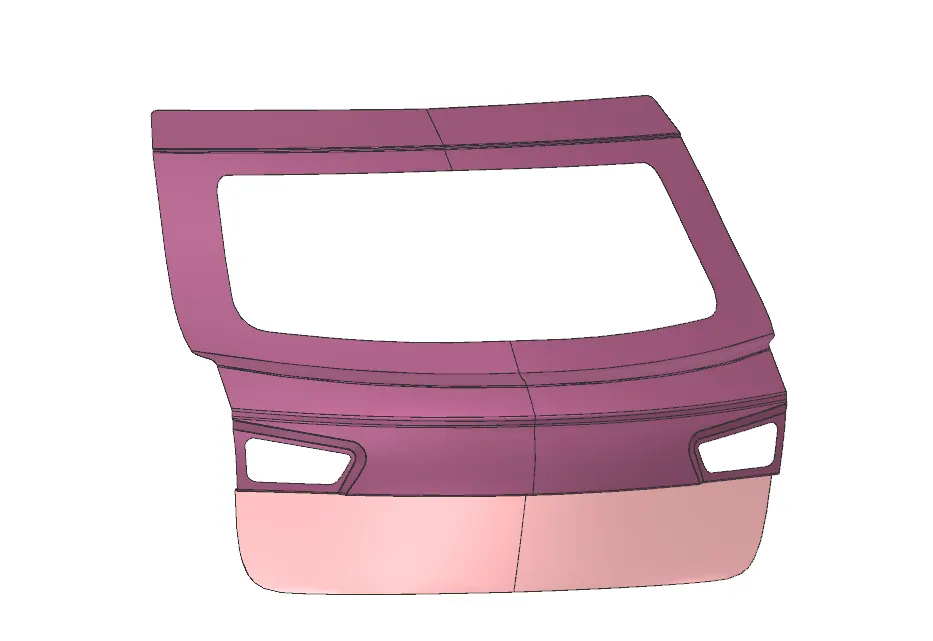
Outer panel is the styling surface of the backdoor. Glass for rear visibility is mounted on the outer panel upper. Rear lights are also mounted on the outer panel upper.
Number plate is mounted on the outer panel lower. Spot welds and other manufacturing process should be done only on the inner panel because the outer panel is the styling surface which should not have any scratches or welds. Because it affects the style of the car which leads to bad impression on the customers.
Inner Panel:
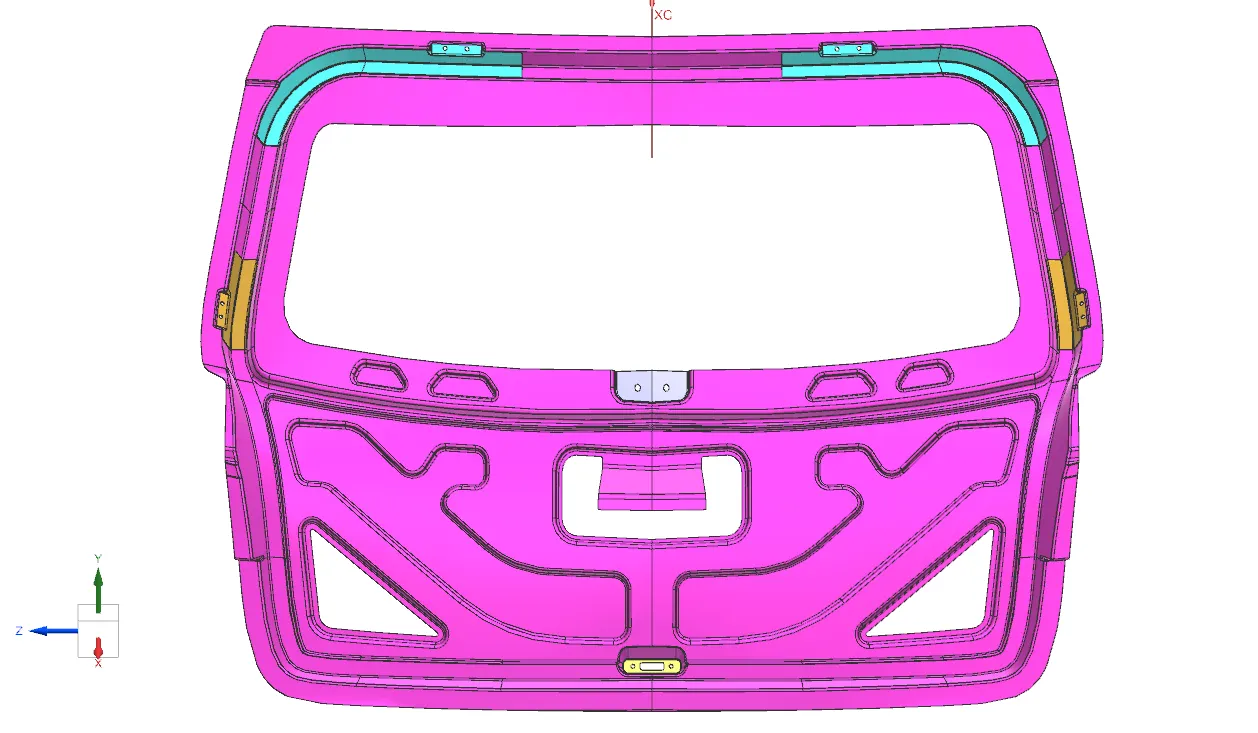
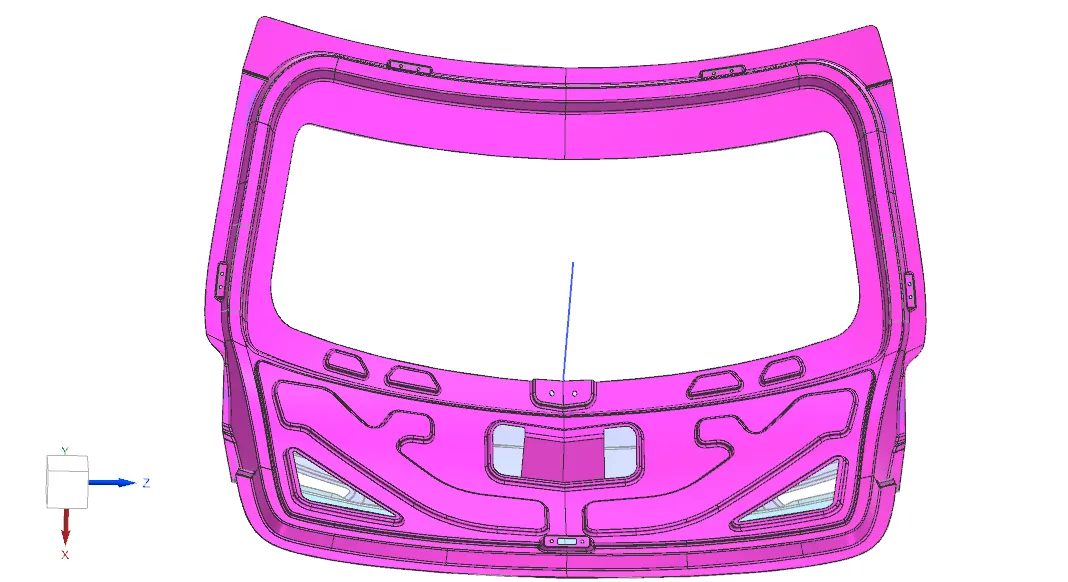
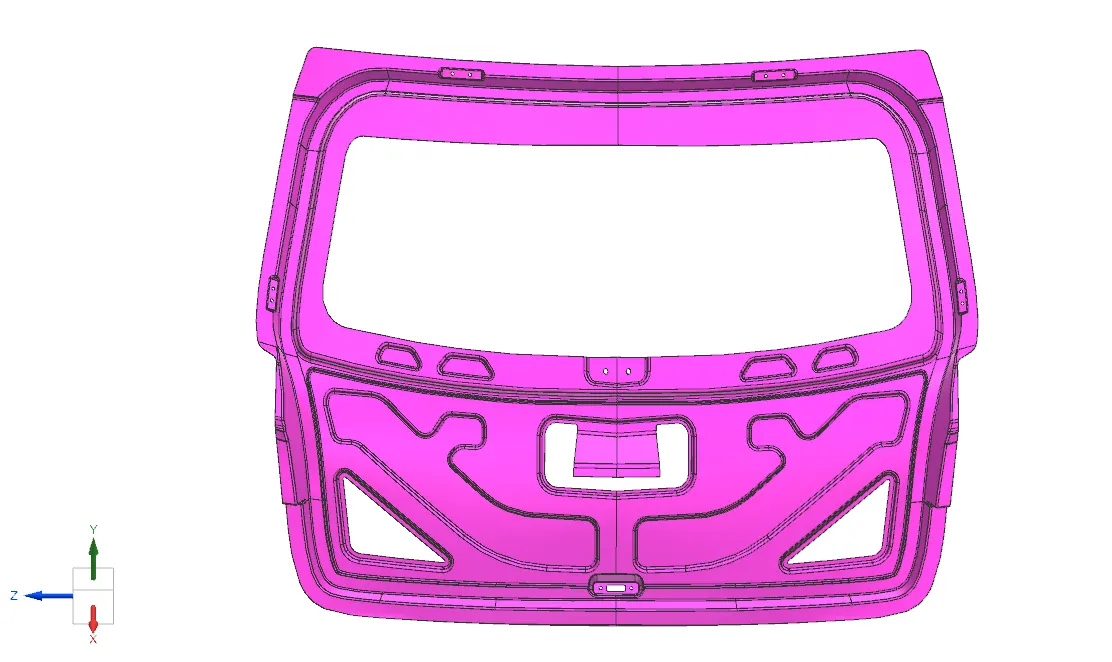
One of the most crucial parts of the backdoor assembly is the inner panel. With the aid of the embossed patterns on it, it offers strength and aids in the absorption of external pressures.
It assists in mounting accessories such as hinges, wiper motors, gas stays, latches and strikers, among others. The inner panel is made either through casting or deep drawing.
Latch Trajectory:
The latch striker path refers to the path or trajectory that the latch on a door follows as it engages with the striker plate on the door frame. The striker plate is a metal plate on the door frame that the latch engages with when the door is closed, allowing the door to be securely locked.
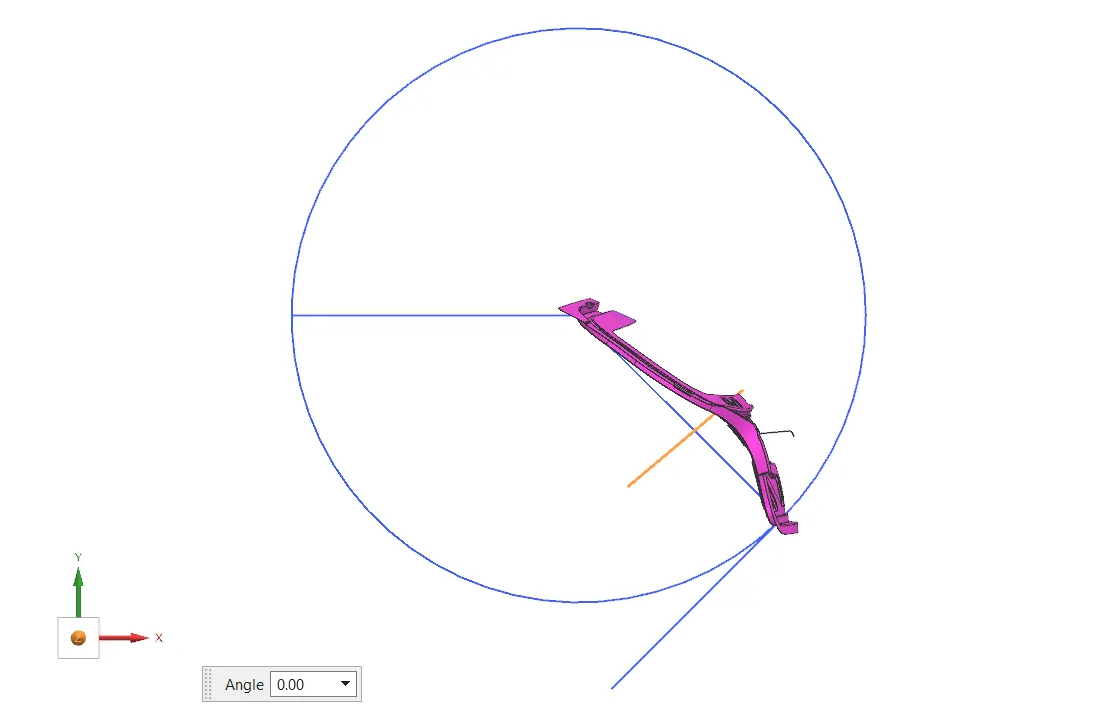
The latch striker path is important because it determines the proper alignment and positioning of the door latch with the striker plate. If the latch striker path is misaligned or obstructed, the door may not close properly or may be difficult to lock. This can compromise the security of the door and potentially pose a safety risk.
To ensure proper alignment of the latch striker path, it is important to check that the striker plate is securely mounted to the door frame and that there is no debris or obstruction blocking the path of the latch. If the latch striker path is misaligned, it may be necessary to adjust the position of the striker plate or the latch itself to achieve proper alignment.
REINFORCEMENT:
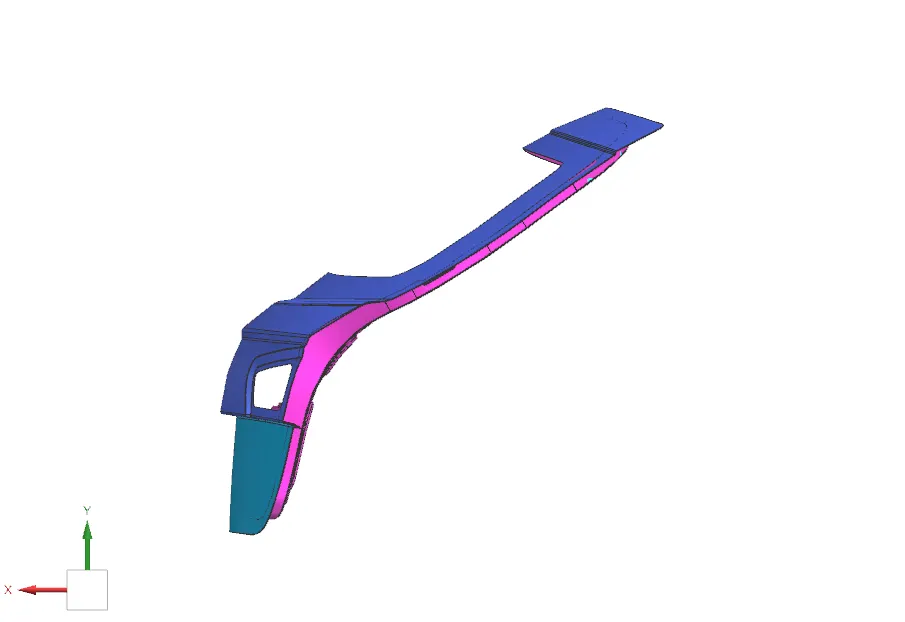
Structures for vehicle door reinforcing are offered to lessen impact during collisions. In one version, the structure will have a lower reinforcement panel that can attach to a vehicle's chassis and an upper reinforcement panel that is attached to the lower reinforcement panel by welding, with the upper reinforcement panel's front deformable wall set up to cause the lower reinforcement panel's rear deformable wall to deflect.
Latch and Striker Reinforcement:
Additional latch and hinge reinforcement has been added to the back door to lessen the impact on the passengers within the vehicle.
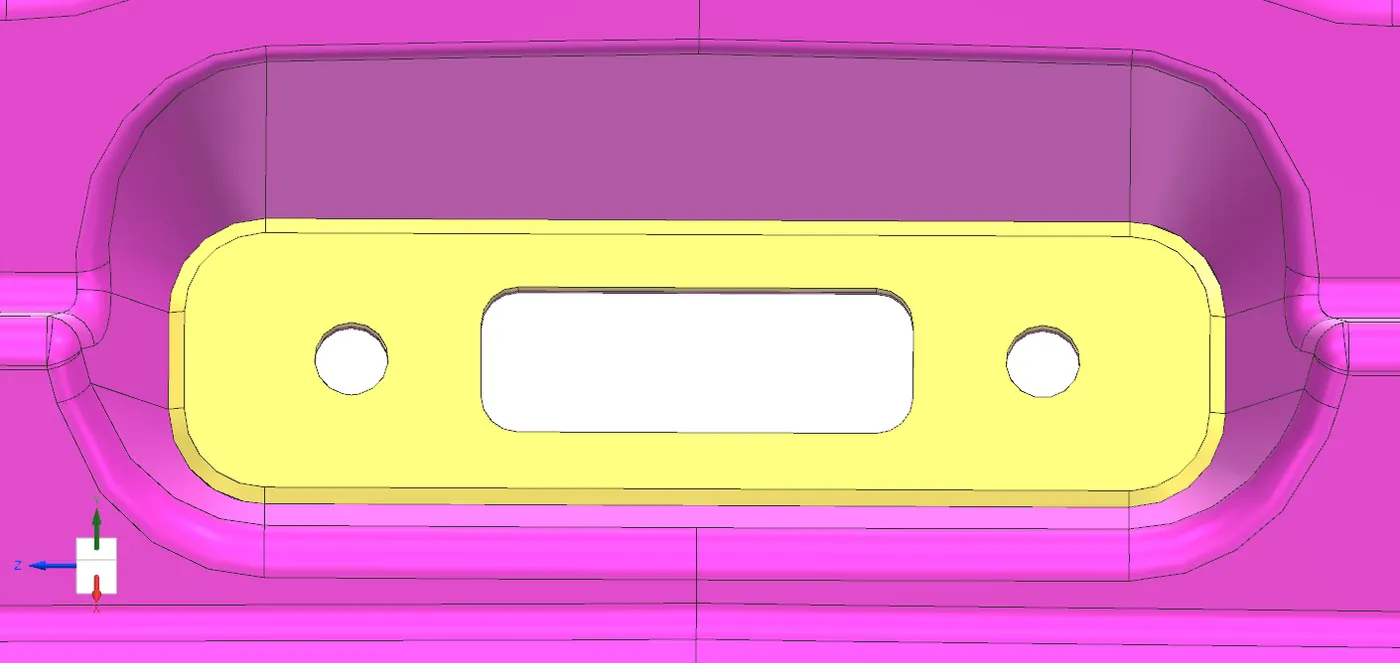
There is a loss of strength when the latch and striker are installed, necessitating strengthening. Stiffness pads are also used to lessen NVH. The thickness of the hinge and latch reinforcement is fixed at 1.5mm, however it may change.
Hinge Reinforcement:
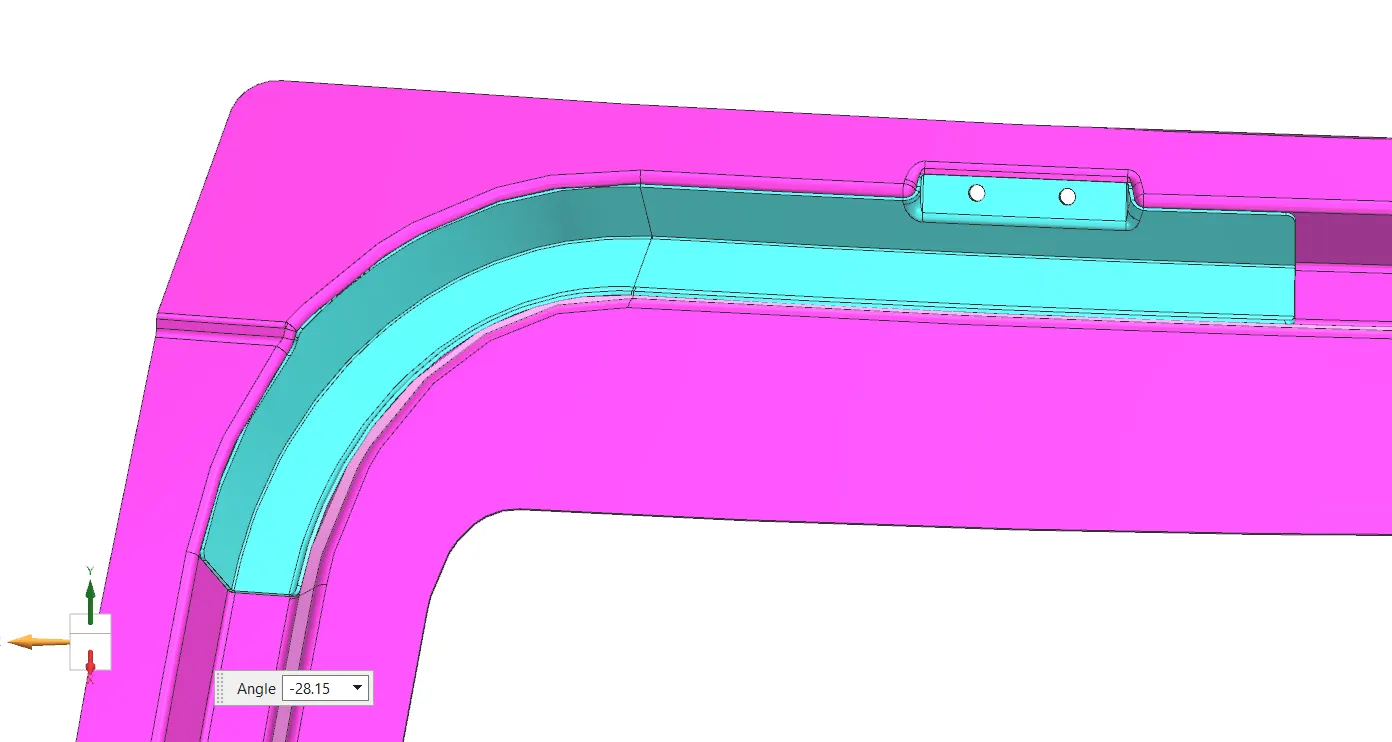
Hinge needs additional strength since it loses some strength when it rotates around the rotational axis, which implies a large back door can open using a small hinge. We provide reinforcement for this purpose.
Gas Stay Reinforcement:
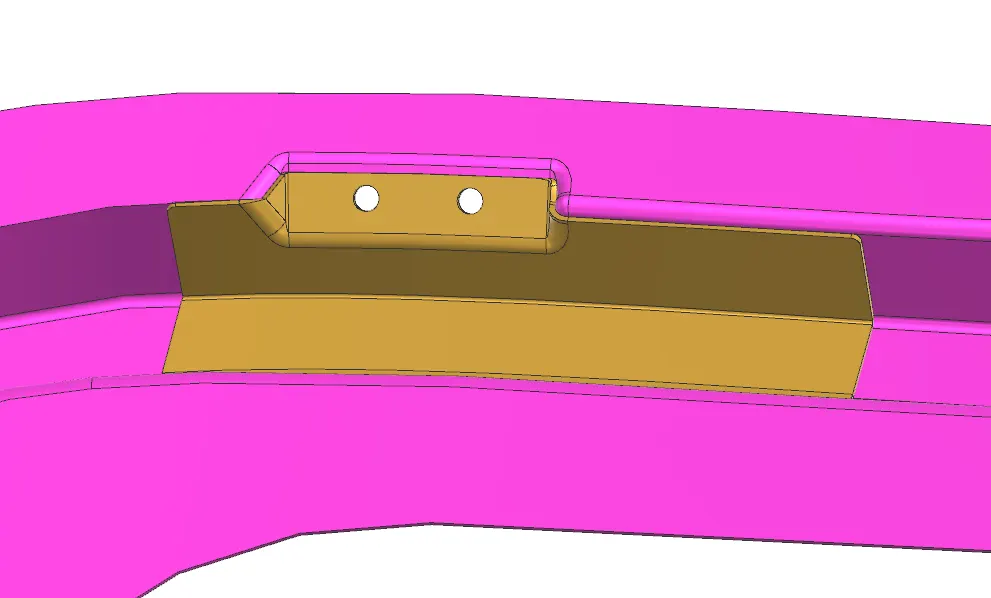
Gas stay is used to lift the backdoor automatically. There are two types of gas stay one is semi-automated and another one is fully automated. In semi automated type, the back boor needs little force to lift after that it lift the backdoor automatically. In fully automated, it has power spindle which lift the backdoor automatically.
Wiper Motor Reinforcement:
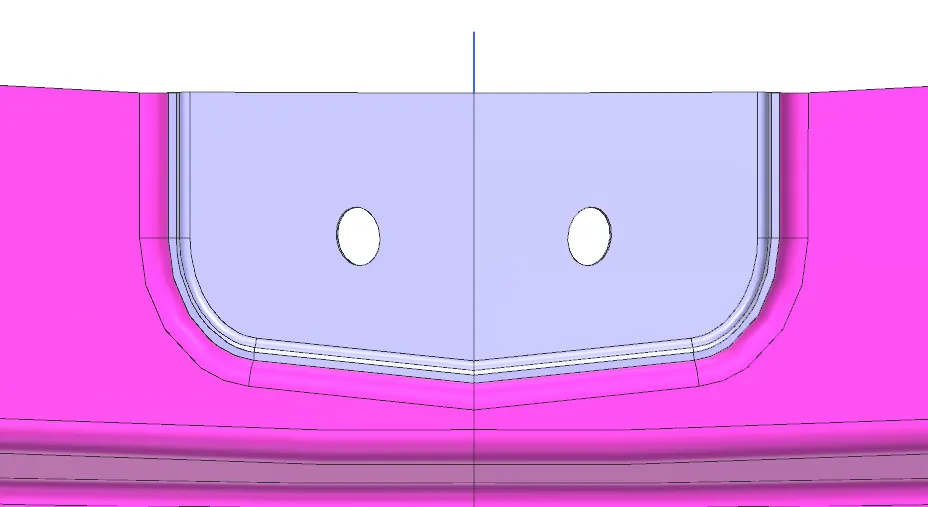
A little electric motor, typically installed on the firewall or behind the cowl (the region beneath the base of the windscreen), powers the windscreen wipers. The motor engages a linkage, which causes the wiper arms to reciprocate. When a car has a rear window wiper, the one at the back is powered by a different motor.
DRAFT ANALYSIS:
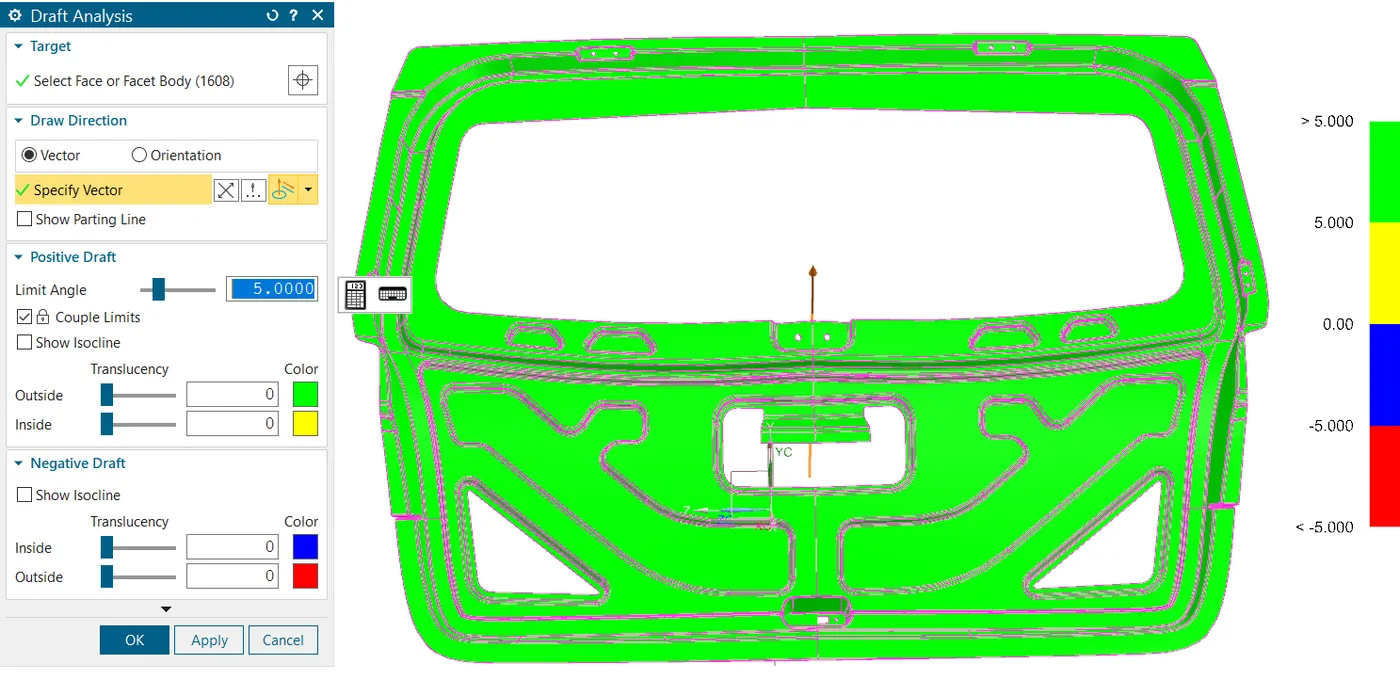
Draft analysis of inner panel is carried out through the tooling direction only. Only the green areas are acceptable and in worst cases yellow regions are accepted but the blue and red regions are never accepted.
The draft angle for aluminium casted panel is 2 to 3 degrees is enough but if it is steel then the angle is more than 7 degrees.
CONCLUSION:
The back door outer and inner panel were designed with the help of the styling surface along the tooling direction and all the reinforcements were designed and placed at appropriate position.
`