Design of backdoor
AIM :
To develop the Car Back Door with an given Class A surface and to add the necessary reinforcement to increase the structural rigidity of an vehicle.
INTRODUCTION :
The car back door, also known as the rear door or tailgate, is the door at the rear of a vehicle that provides access to the cargo area or trunk. Depending on the type of vehicle, the design and function of the car back door can vary, e.g, sedan's, coupes, Hatchbacks, SUVs, Vans and trucks. Different types of Back door's are.
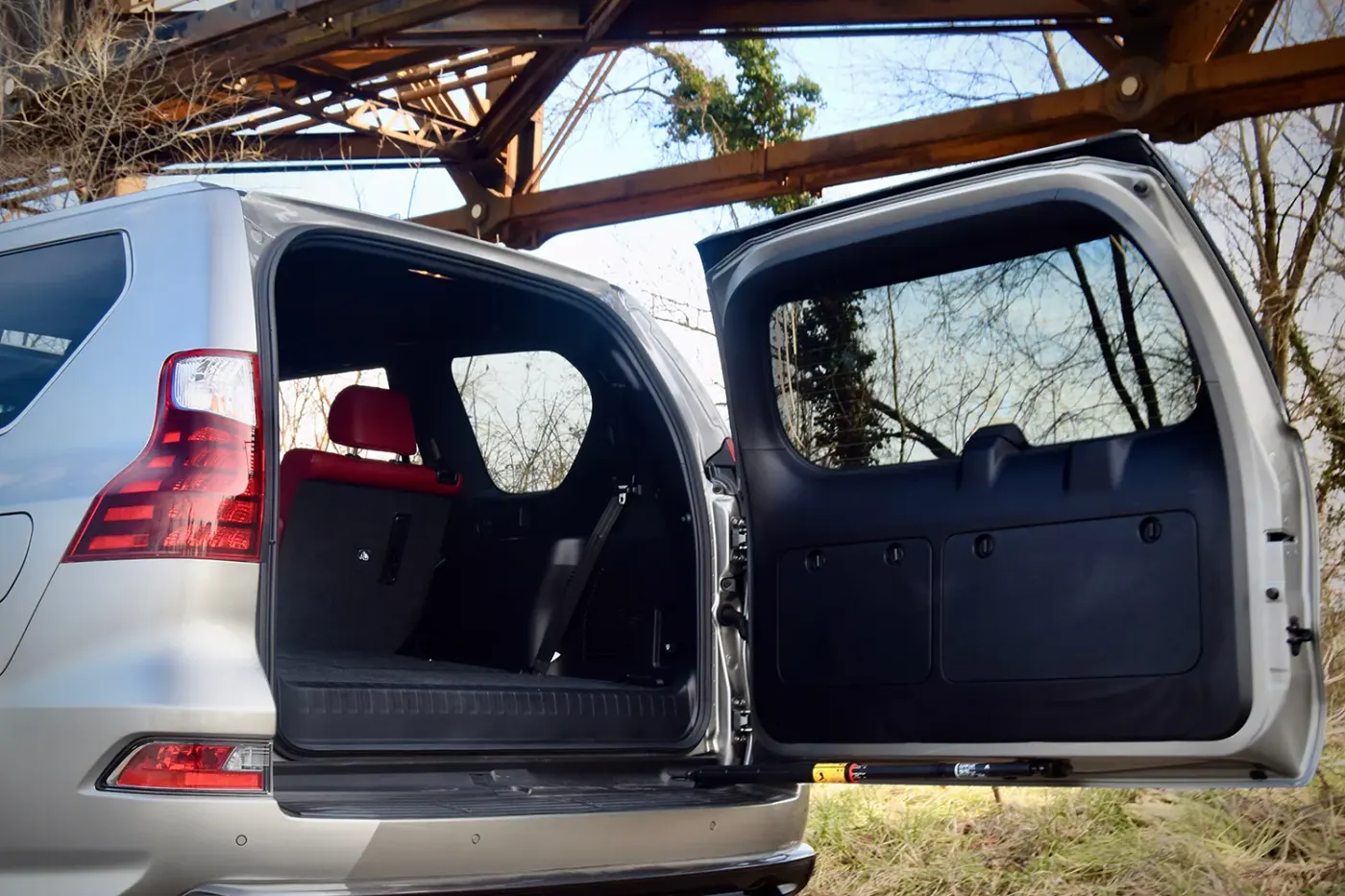
- TOP MOUNT : A car back top-mount door, often referred to as a hatchback door, liftgate, or tailgate, is a type of rear door on a vehicle that is hinged at the top, allowing it to swing upward to open. This design is commonly used in hatchbacks, SUVs, minivans, and some station wagons. The top-mount door provides easy access to the cargo area and maximizes the use of space in the rear of the vehicle.

- BOTTOM MOUNT : The tailgate is attached to the vehicle's rear frame by hinges located at the bottom edge. When opened, the tailgate pivots downward, forming a horizontal surface. The horizontal flat surface allows for easy sliding of items in and out of the cargo area. This is especially useful for heavy or bulky items that require more support when loading.
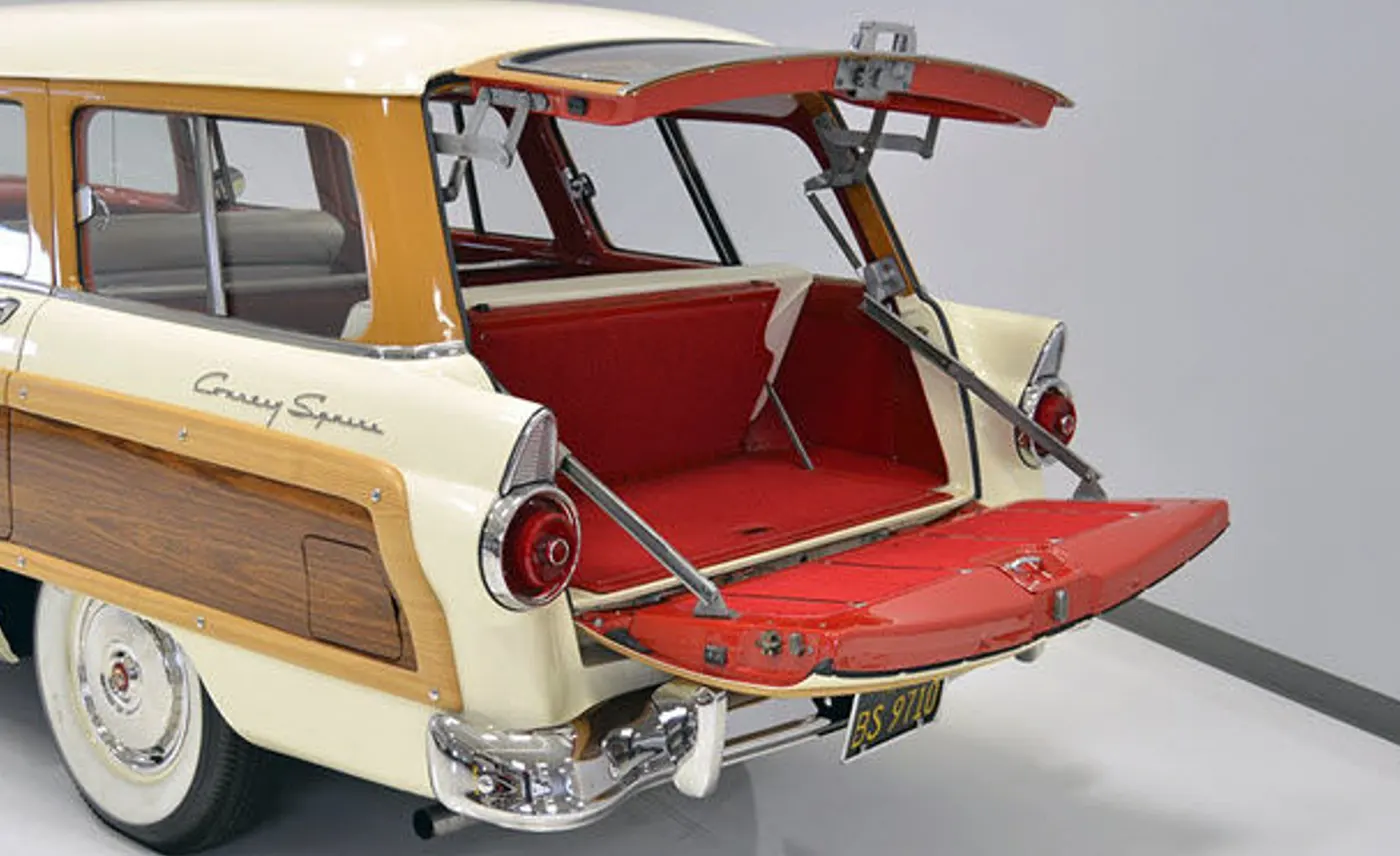
- SIDE MOUNT DOOR : car side-mounted door typically refers to a door that is installed on the side of a vehicle, as opposed to the more common rear-mounted or front-mounted doors. These types of doors can be seen in various vehicle designs, especially in specialty or custom vehicles.
DOOR TERIMINOLOGY :
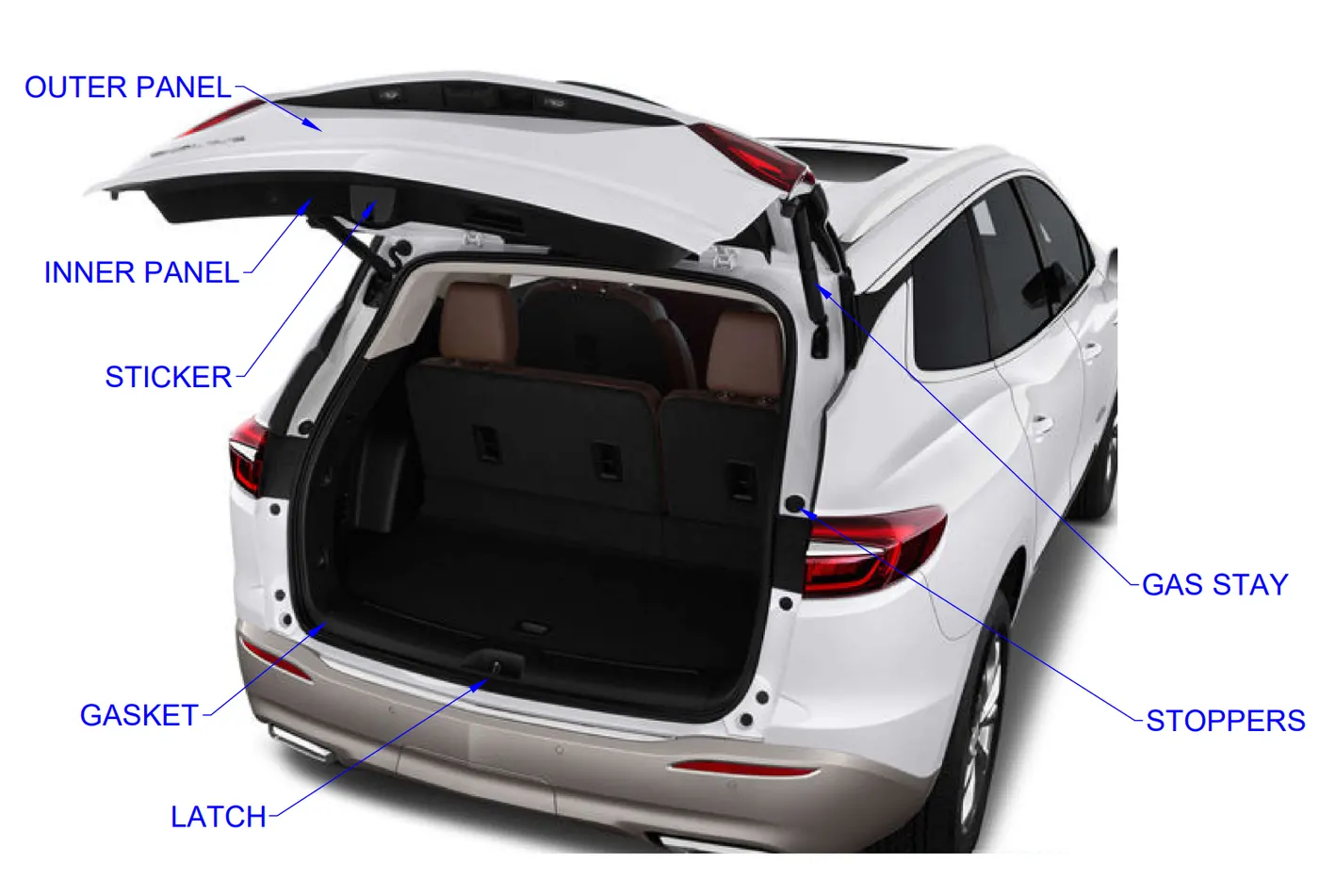
GAS STAY : A car back door gas stay, also known as a gas strut, lift support, or liftgate strut, is a small hydraulic or pneumatic device that assists in opening and holding up the back door, hatch, or liftgate of a vehicle. Gas stays are used for safety and convenience, ensuring that the door doesn’t slam shut accidentally. This is especially useful when loading or unloading items from the trunk or rear area of the vehicle. Besides car back doors, gas stays are also used in various other automotive applications, like hoods and tailgates, as well as in furniture, industrial equipment, and other machinery where controlled motion and position-holding are necessary.
STOPPERS : They help prevent the door from swinging too far, damaging the car or other objects, and ensure the door stays in a partially open position without swinging freely.
STICKER AND LATCHES : These stickers provide safety information and warnings, such as airbag deployment zones, child seat installation instructions, or reminders to wear seat belts. They are typically found on the inside of the door or door frame. Door latches are mechanical components located on the edge of a car door that engage with a striker on the car's body to keep the door securely closed. The latches are crucial for both safety and security.
HINGES : Hinges bear the weight of the car door and provide the pivot point that allows the door to open and close. A well-functioning hinge ensures that the door operates smoothly without sticking, sagging, or making noise.
SHEETMETAL MANUFACTURING PROCESSES :
Sheet metal is a flat, thin piece of metal that is widely used in manufacturing, construction, automotive, and many other industries. It is known for its versatility, durability, and ability to be easily shaped and formed into various products. Sheet metal thickness is usually measured in gauges. The gauge number indicates the thickness of the metal; the higher the gauge number, the thinner the sheet. For example, a 16-gauge steel sheet is thicker than a 20-gauge steel sheet. Thickness can also be measured in millimeters or inches. Sheet metal can be classified as foil, sheets and plates depending upon the thickness, where foil lesse than the 0.15mm, sheets is lesser than 6.35mm and thickness greater than 6.35mm is called as plates. sheet metal commonly come with Hot rolled steel and cold rolled steel.
HOT ROLLED STEEL : This steel is produced through the process of rolling the steel at a high temperature, typically above the recrystallization temperature of the material (usually above 1,000°F or 538°C). After rolling, the steel is cooled in the open air. This cooling process allows the steel to shrink slightly, which can lead to some variation in its dimensions and a rough, scaly surface finish. Hot rolled steel typically has a rough, scaly finish due to oxidation during the heating process. The surface may appear bluish or have a dark gray scale, known as mill scale.
COLD ROLLED STEEL : This steel that has been further processed after the initial hot rolling. It is rolled at or near room temperature to achieve more precise dimensions and a smoother surface finish. It has a much smoother surface finish than hot rolled steel. It is often free of scale and has a more uniform appearance.
| Feature | Hot Rolled Steel | Cold Rolled Steel |
|---|---|---|
| Production Temperature | Above recrystallization temperature | Below recrystallization temperature |
| Surface Finish | Rough, scaly, may have mill scale | Smooth, clean, uniform |
| Tolerances | Looser, less precise | Tighter, more precise |
| Strength and Hardness | Softer, more ductile | Harder, stronger due to strain hardening |
| Cost | Less expensive due to simpler processing | More expensive due to additional processing |
| Common Uses | Structural components, general fabrication | Precision parts, appliances, automotive |
All the sheet metal products are undergoes major four processes , they are cutting, forming, joining and finishing.
CUTTING :
In this operation, the material can be cutdown to the required shape and size. For simple shapes the material is cutout at the exact shape and size with the product features. the Cutting shape is called as blanks.
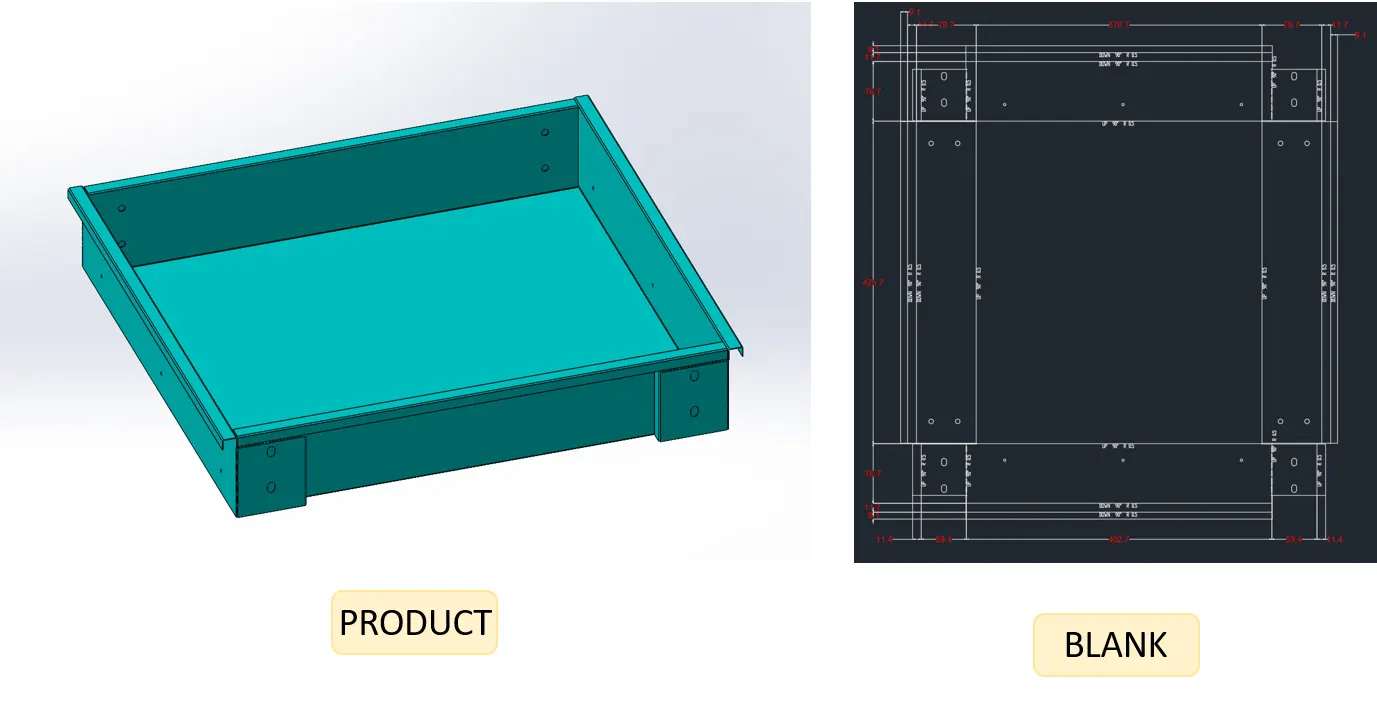
For complex shape, the overall sheet can be cutted and under the stamping or deep drawing process, where deep drawing can be done for the product which have a greater depth compared to its other dimension.
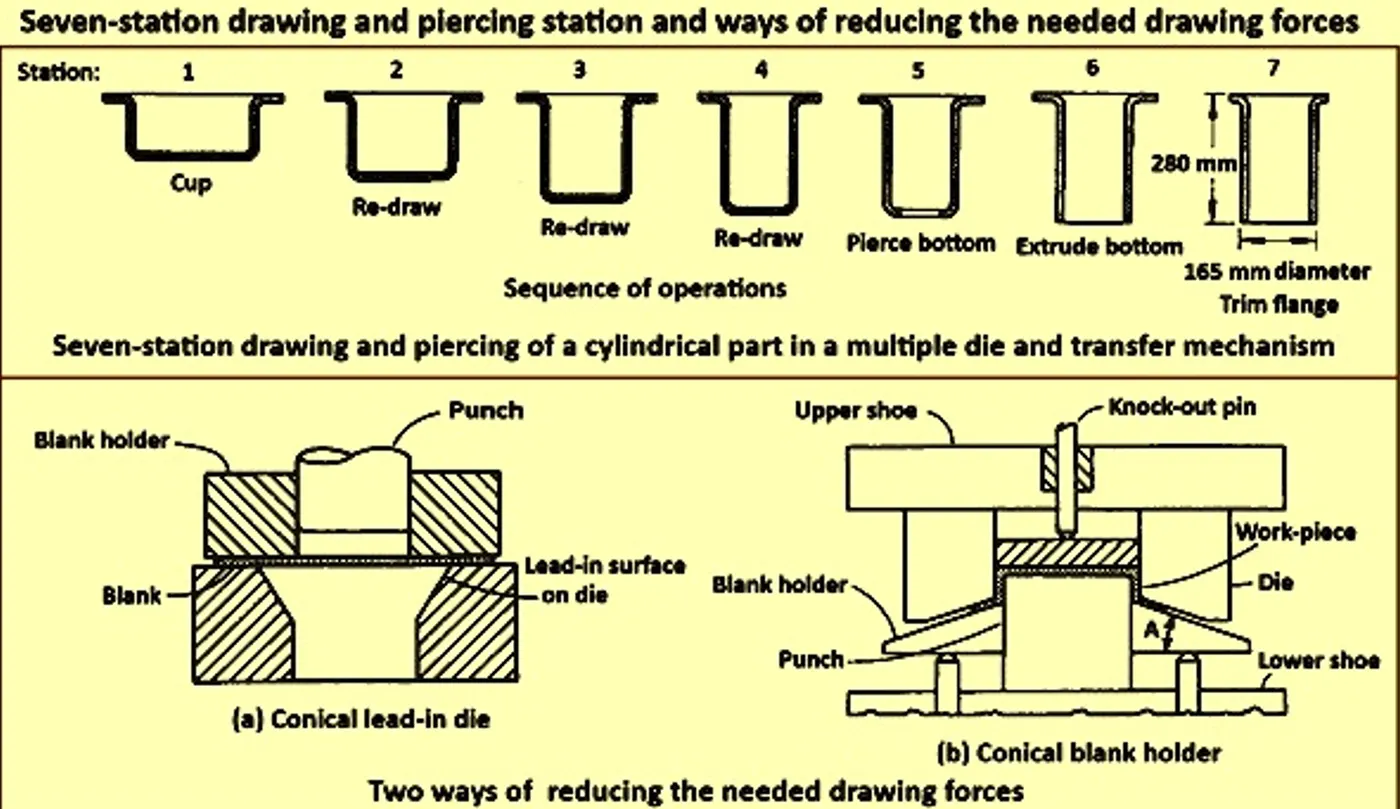
There are number of cutting operation available, some operation are low cost to manufacture and some are very high, this process can be define by the thickness, material properties and the product shapes. But they are majorly choosen by the thickness. For thin materials process like shearing, laser cutting, and water jet cutting are preferable for its effectiveness , surface finsih and cost efficient. For thicker material it is a time taking process to produce with good surface finish, the Plasma cutting is majorly used for thicker matrial with good finish but they are other porcess like oxy-fuel cutting,etc.
FORMING :
It involves shaping or altering the geometry of metal materials without removing material, typically by applying forces such as compression, tension, or bending. The goal of forming is to achieve a desired shape or dimension while retaining the material's overall mass and integrity. In automotive hydroforming is commonly used for class A parts and tube's by its precise dimension and to produce a surface with good finish.
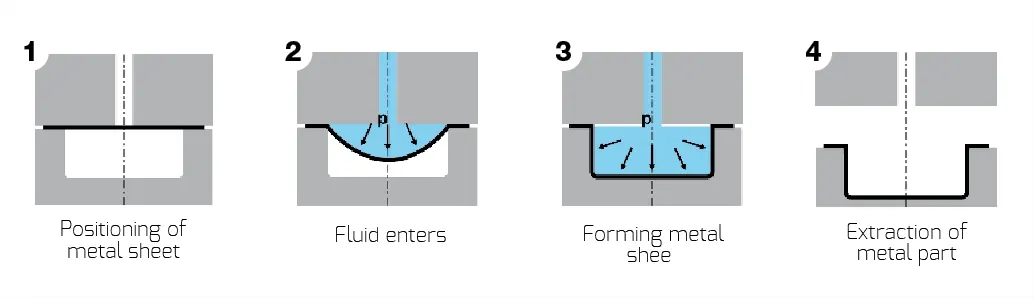
Hydrofomring uses high-pressure hydraulic fluid to shape metal sheets or tubes into complex, high-strength parts. It is a versatile and efficient technique that allows for the production of parts with intricate shapes and tight tolerances. In sheet hydroforming, a flat sheet metal is clamped between two dies and then subjected to high-pressure hydraulic fluid. The pressure forces the sheet metal into the cavity of the die, conforming to the shape of the die cavity. This process is used in the Fuel tank parts.
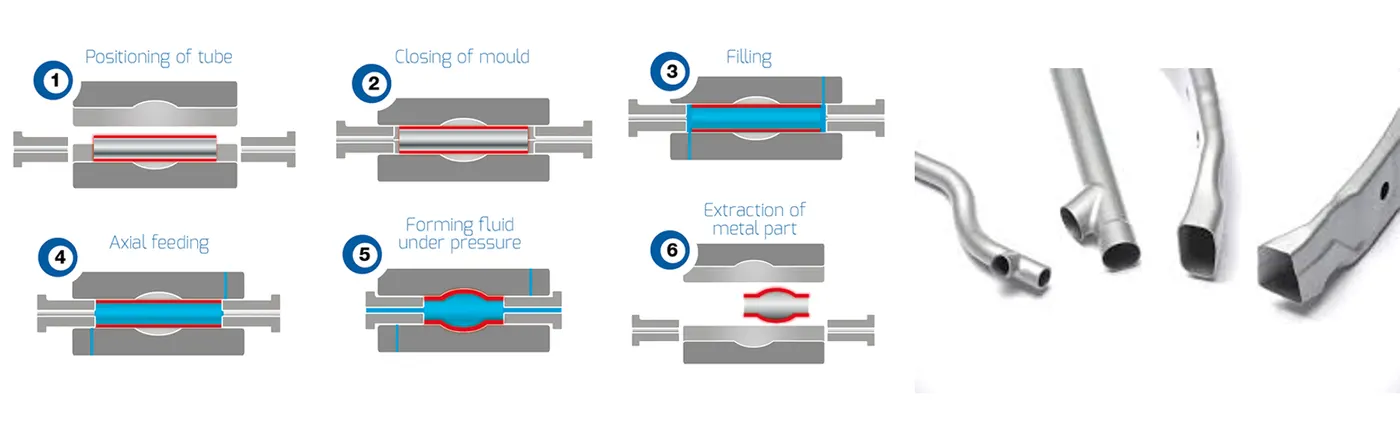
Hydroforming is used to shape the tube as well with a required dimension. In this a tube or hollow profile is placed inside a die. Hydraulic pressure is applied to expand the tube, forcing it to conform to the shape of the die cavity. This process can also involve internal pressure to maintain the shape of the tube during forming. commonly used to manufacture Silencers, mufflers, stands, etc.
JOINING :
Joining is a operation to connect two or more pieces of sheet metal together. Common joining operations like welding, reviteing, bolting, spot welding, hemming, brazing, adhesive bonding ( mastic joining ), crimping etc.
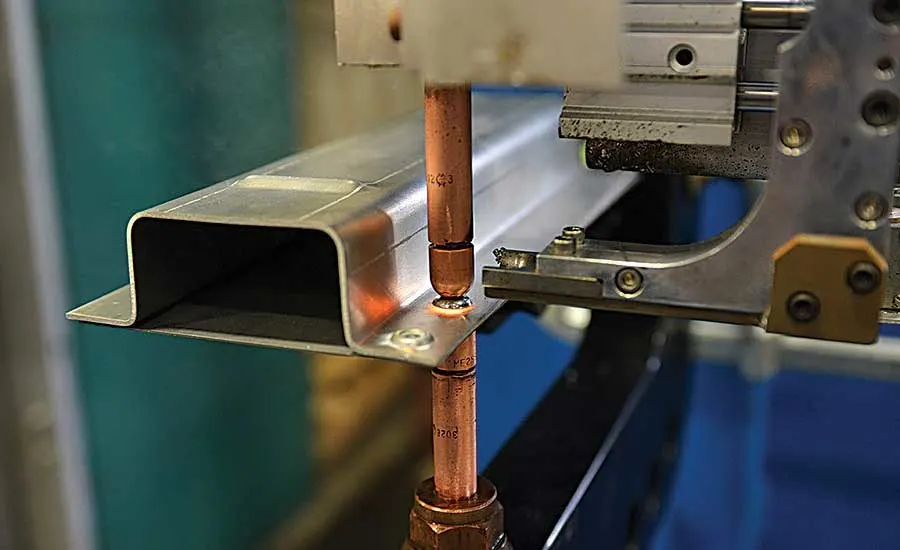
Spot welding is used for thinner material to join with high speed and with minimal cost. In automotive we use spot welding duw to its better weight joining ratio.
SURFACE FINISH :
Finishing processes are performed to improve the surface quality, appearance, and durability of the sheet metal parts. These processes include:
BACK DOOR :
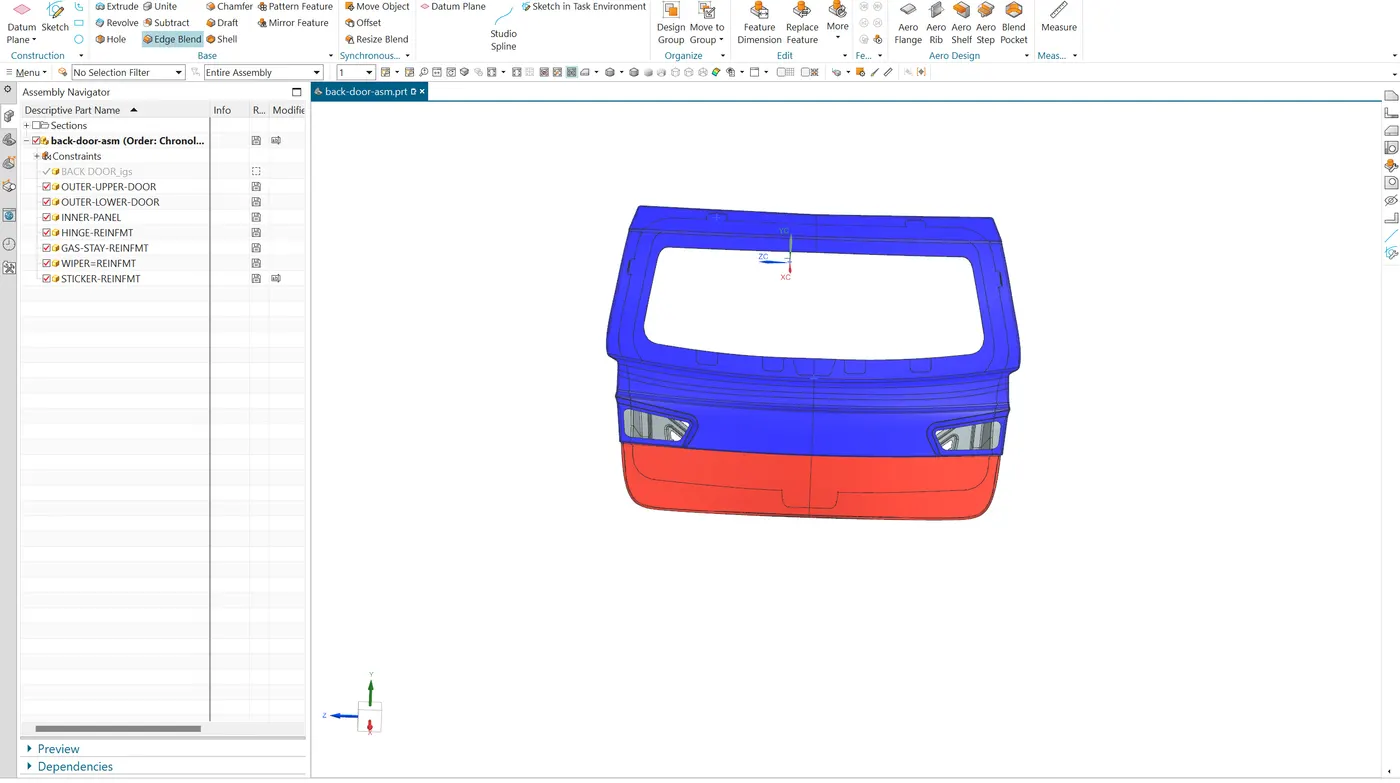
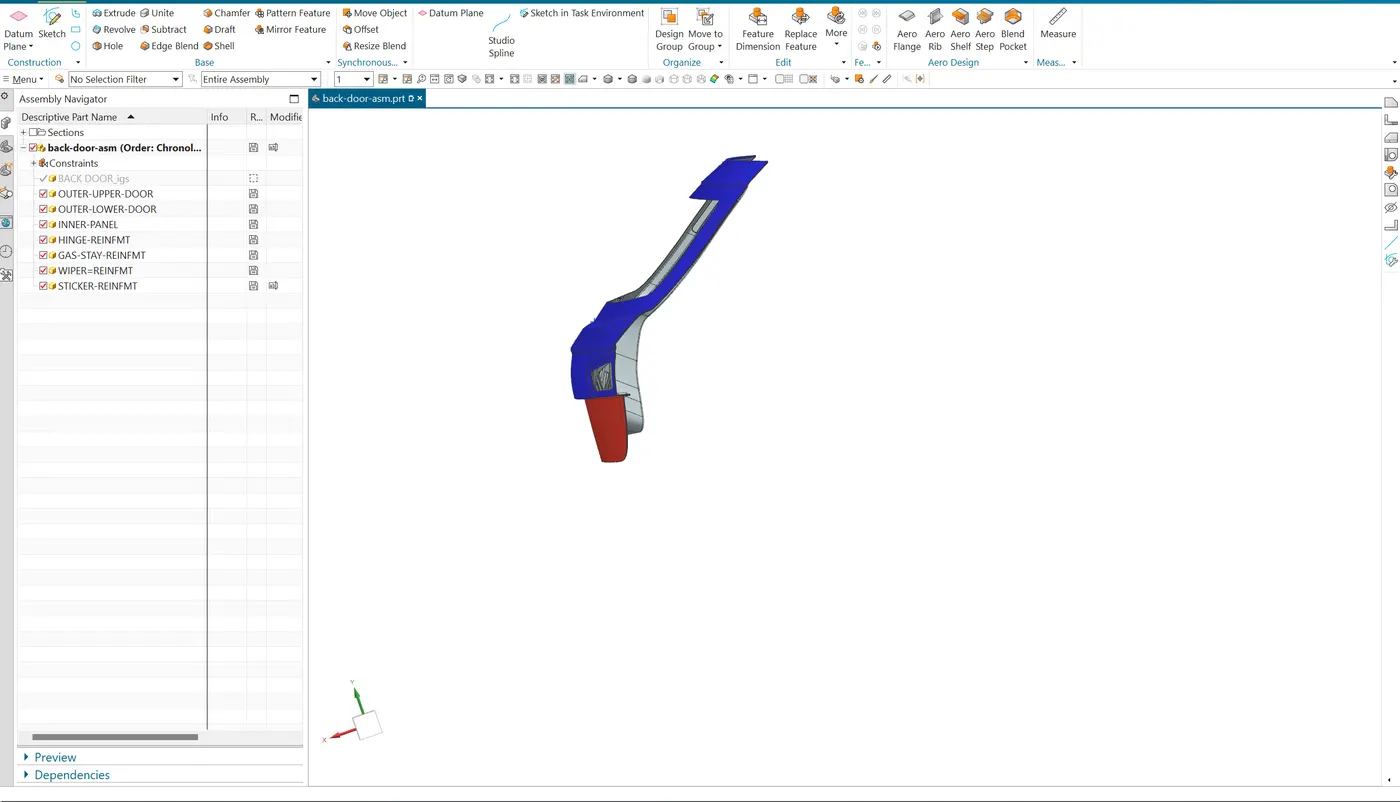
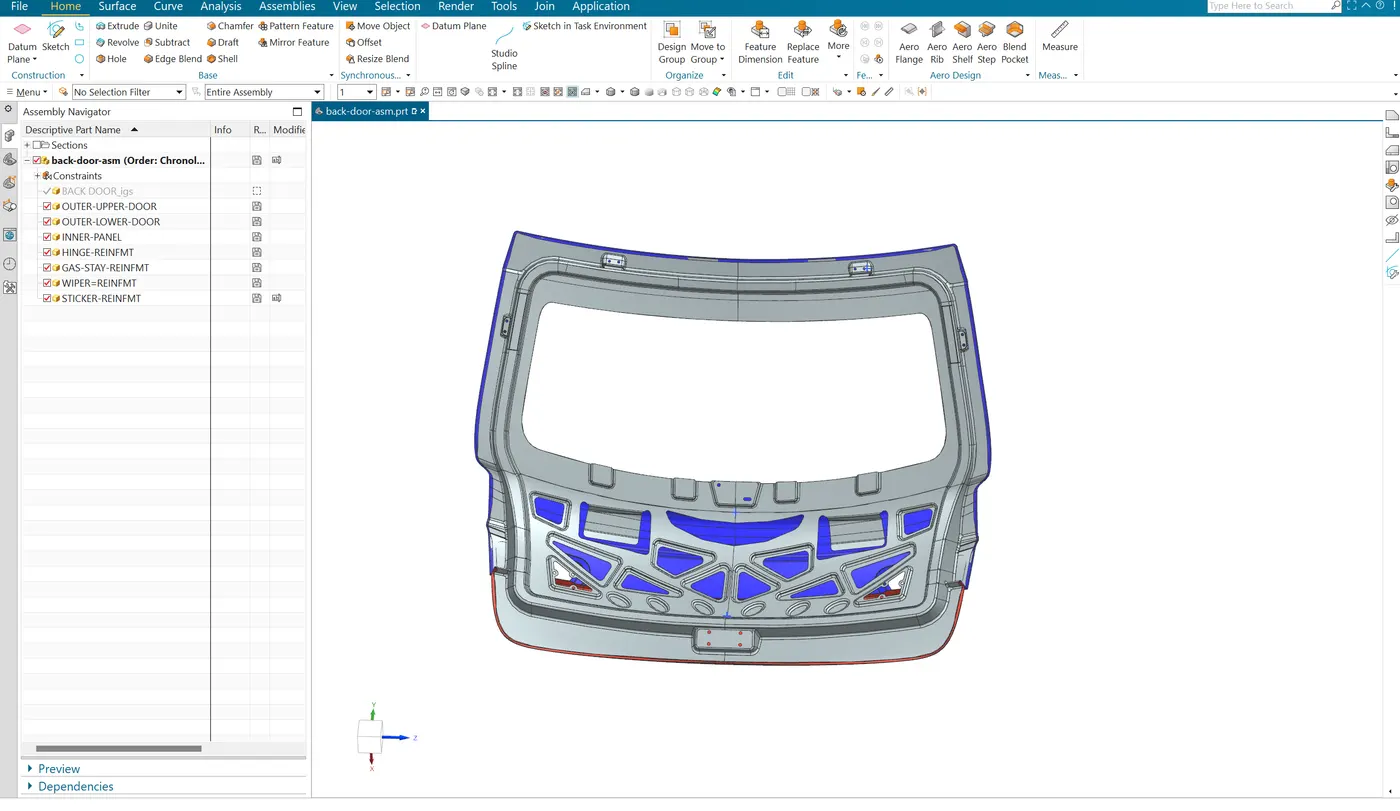
Back door is the combination of outer, inner panel's with reinforcement parts and some accessories for its opening and closing purposes. Import the Class A surface into the workspace and repair the class A surface to remove the void and sharp corner.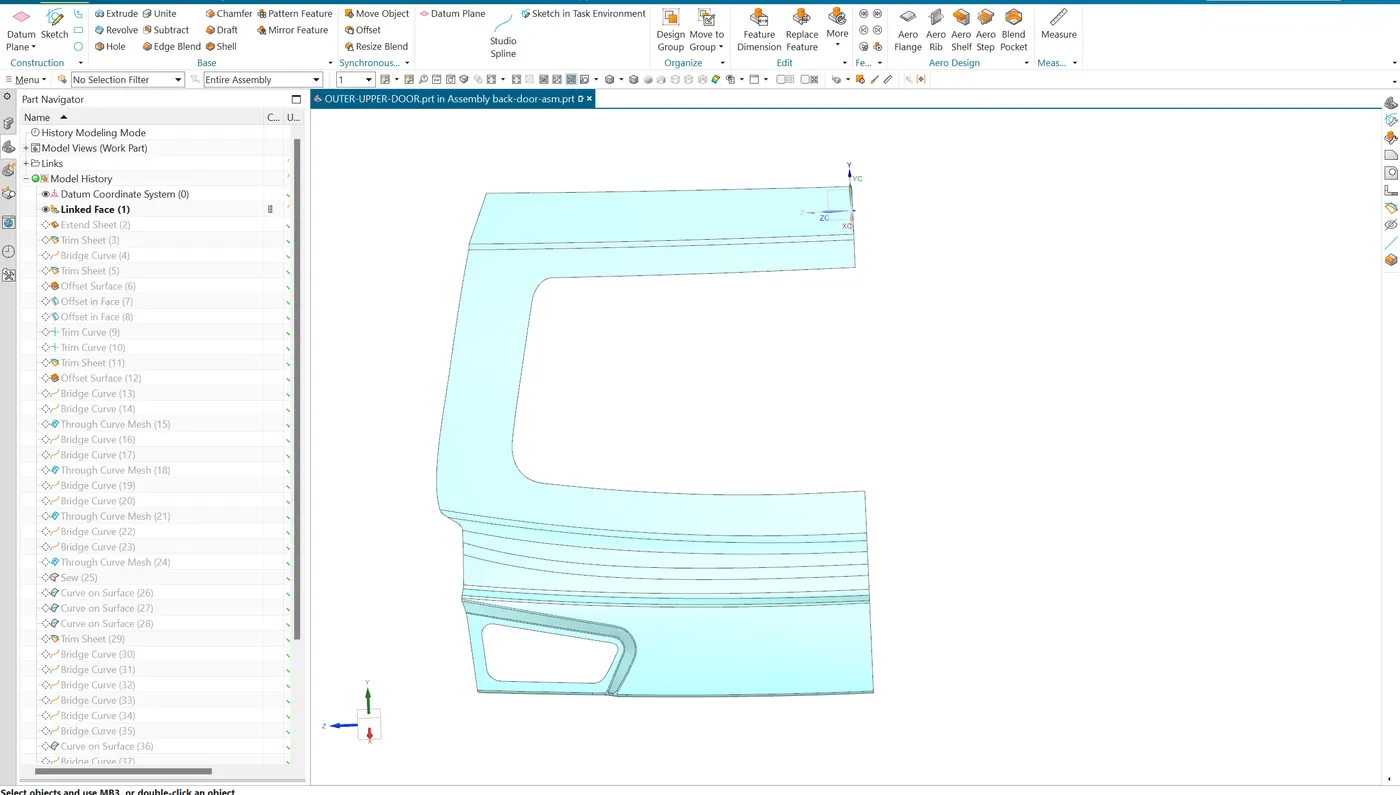
After the class A repair the hemming flanges for the outer panel can be created and thicken the material to 0.75 mm .
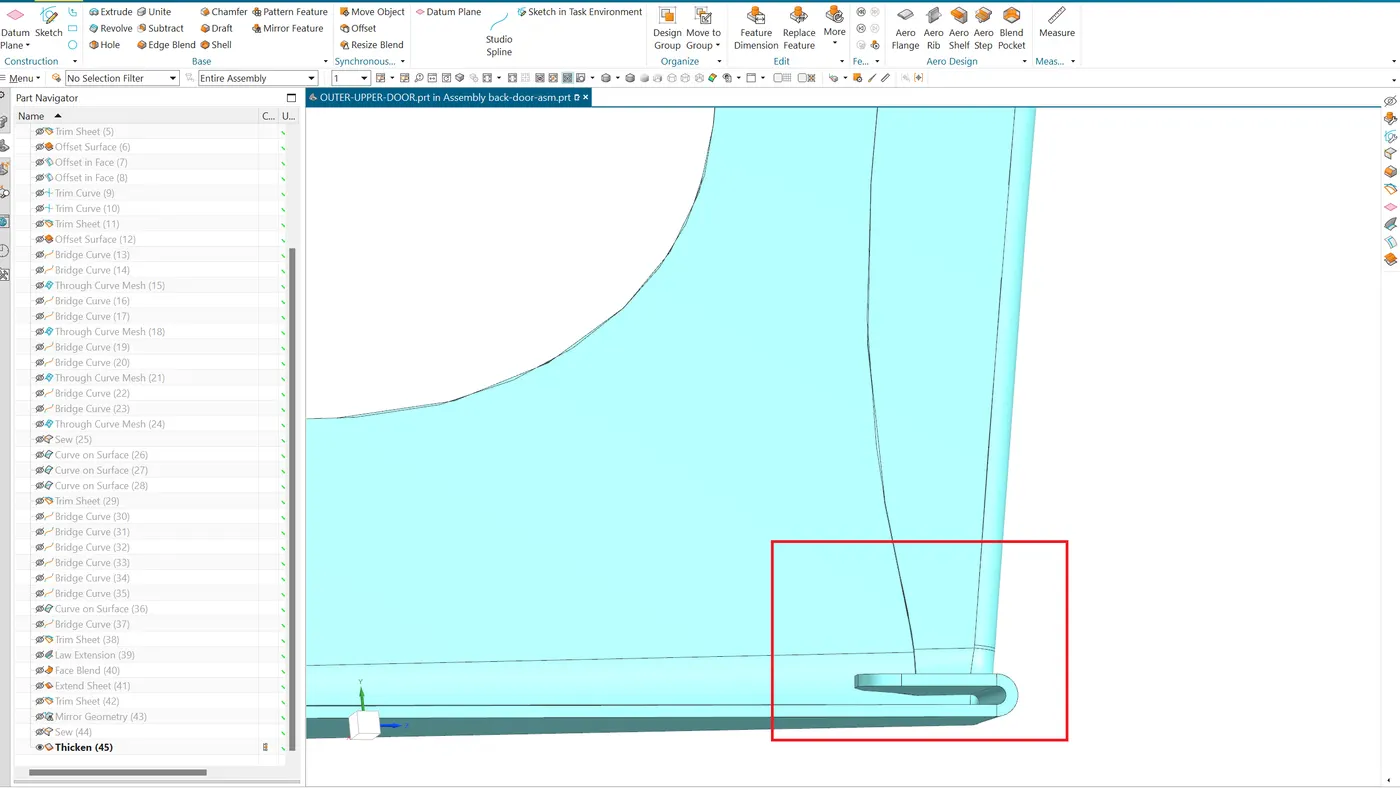
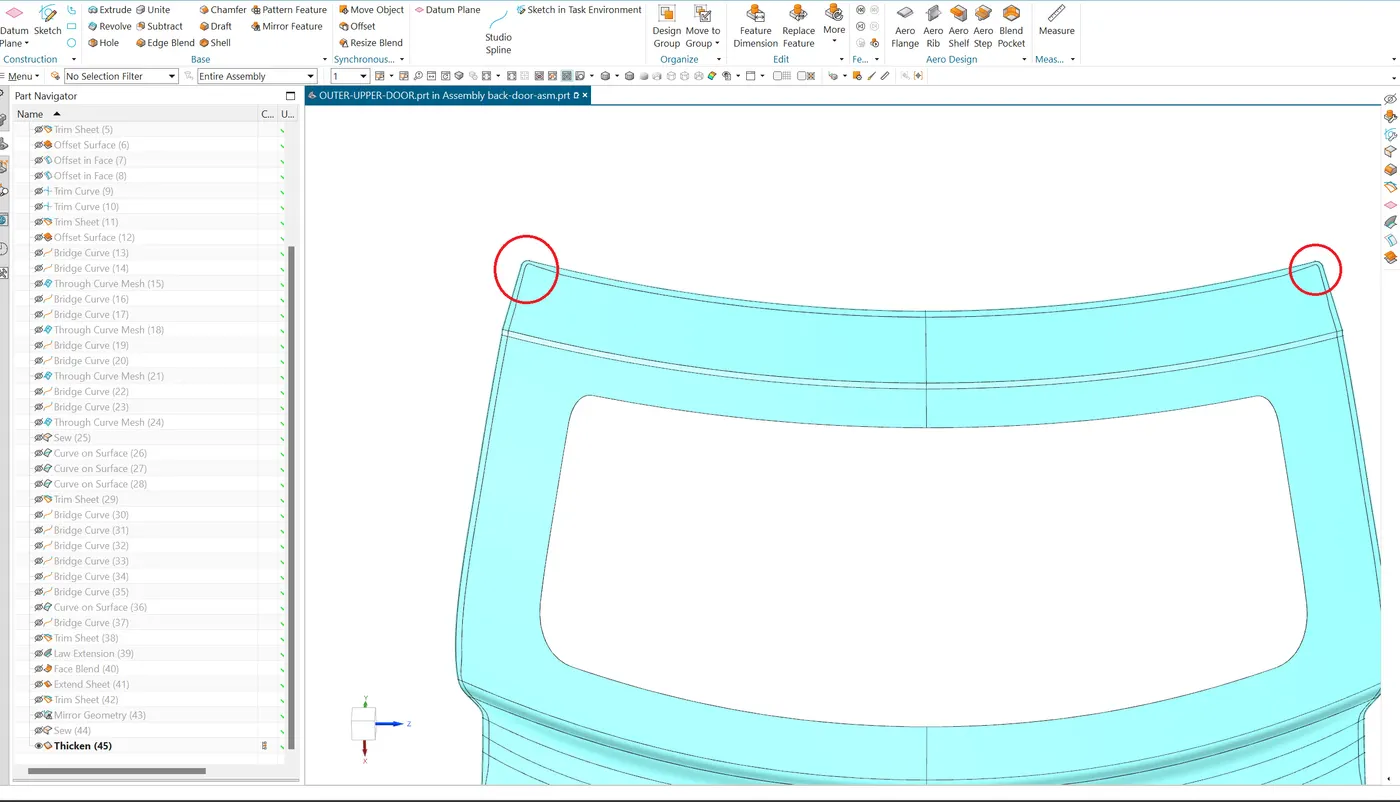
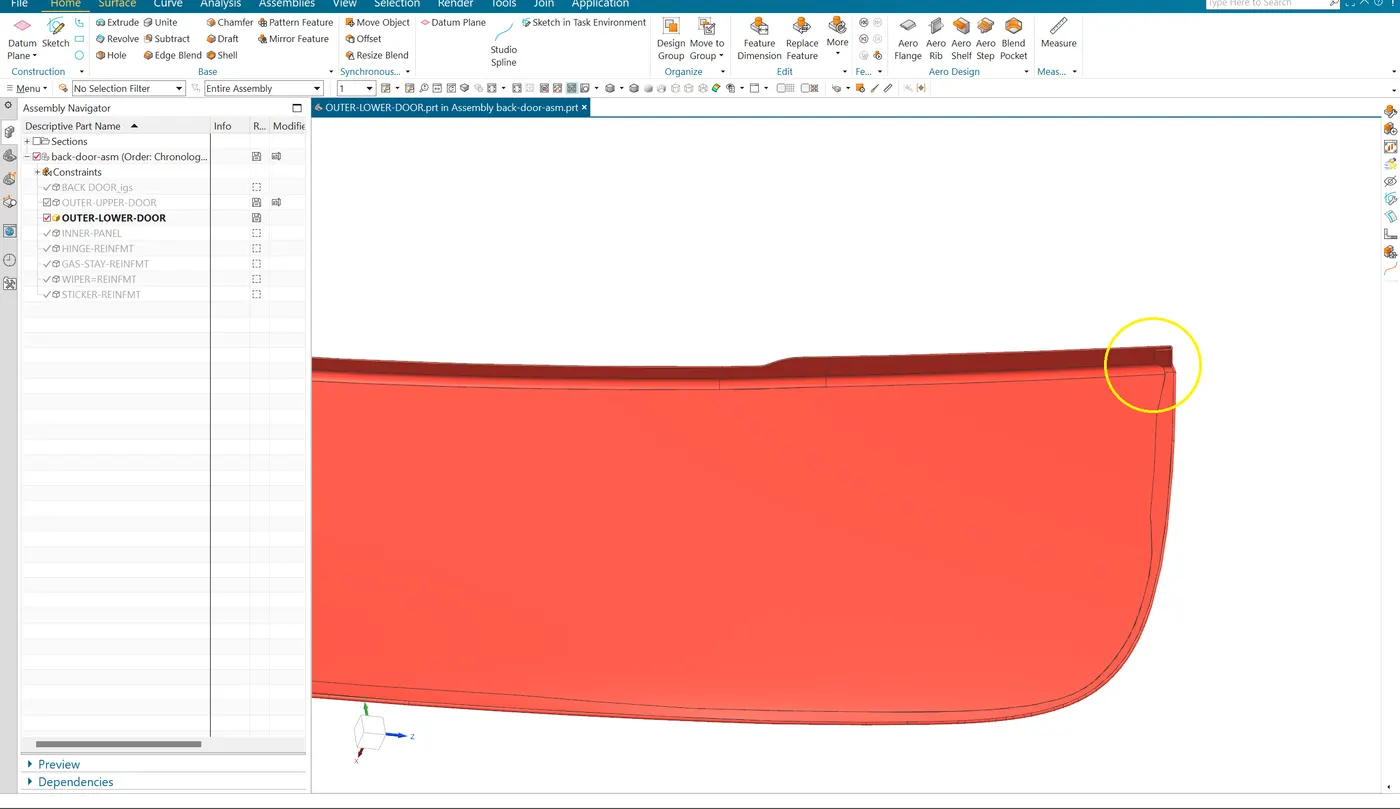
Corner relief should be provided to reduce the stress concentration. The same procedure can be done for the lower panel also.
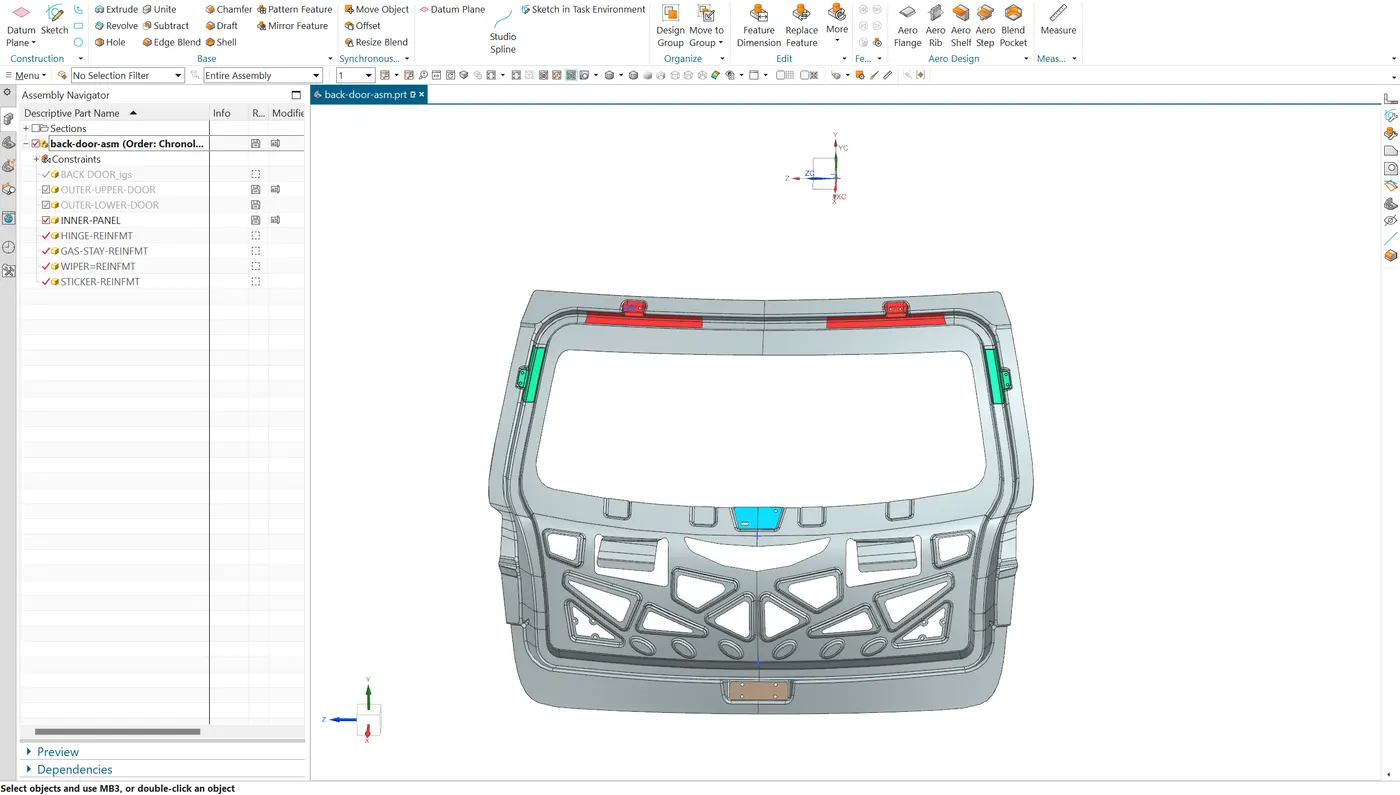
Inner panel is the important factor to increase the structural integrity of an back door. Here the toolong axis is created and the embosses , cutout, mastic flanges and wiper motor mount are created.
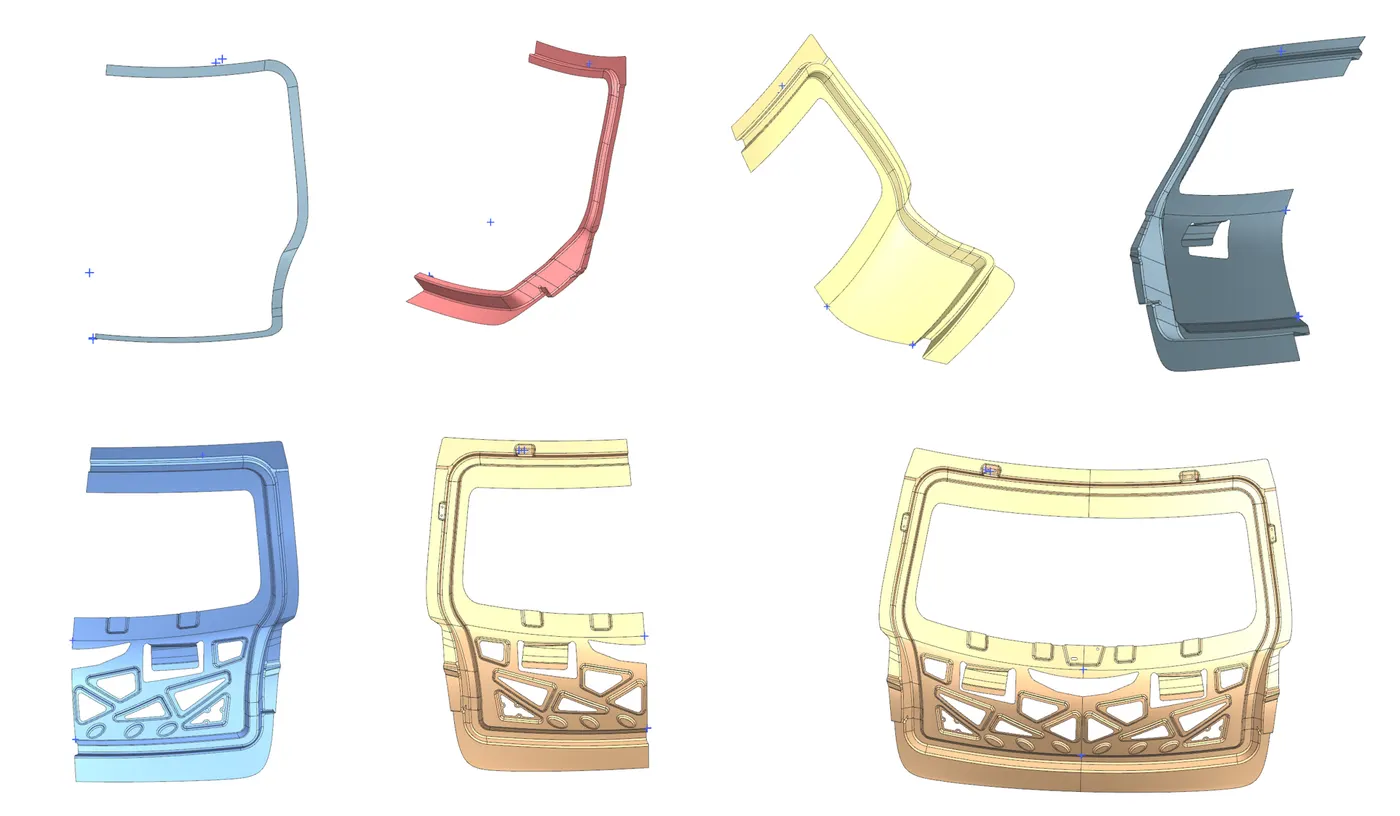
Reinforcement are added to increase the strength at the particular location due to its property.
CONCLUSION :
Hence the BIW of an Back door is developed with industrial design constraints and standards.
Link : https://drive.google.com/file/d/1xxj6R5oaN2tMOMlsahYg9WHWGSqqpWqf/view?usp=sharing