Design of backdoor
DESIGN OF BIW TAIL GATE
AIM :
To design the Automotive BiW tail gate by the given styling surface using NX Cad.
OBJECTIVE :
- Design the tail gate along with Hinge, Latch, Wiper motor & Gas stay reinforcement.
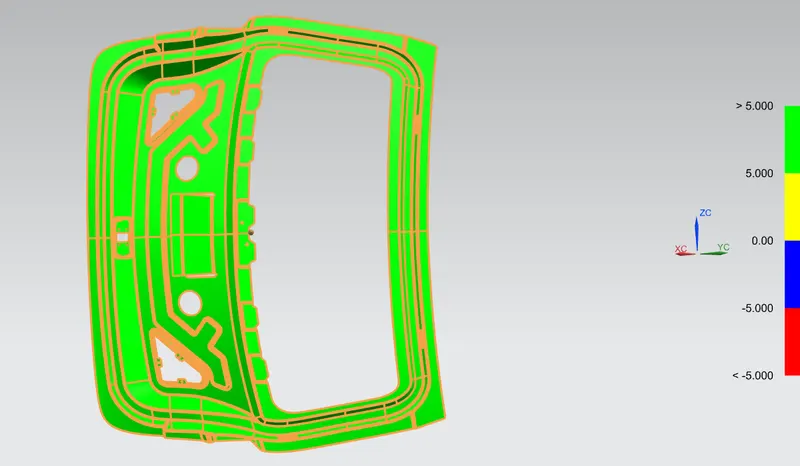
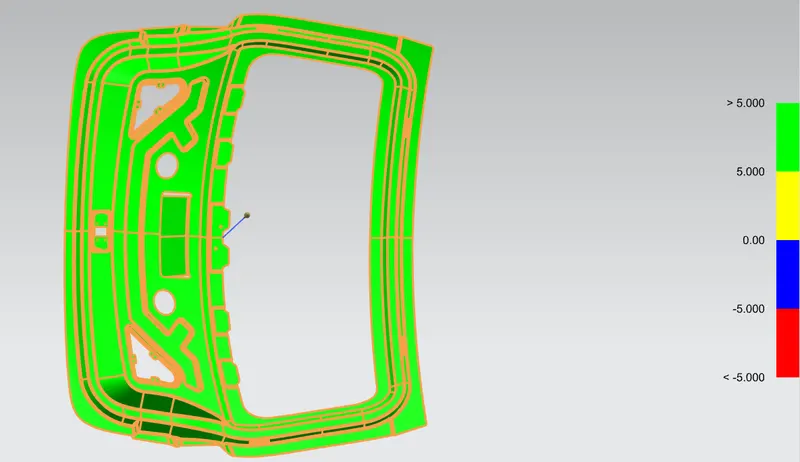
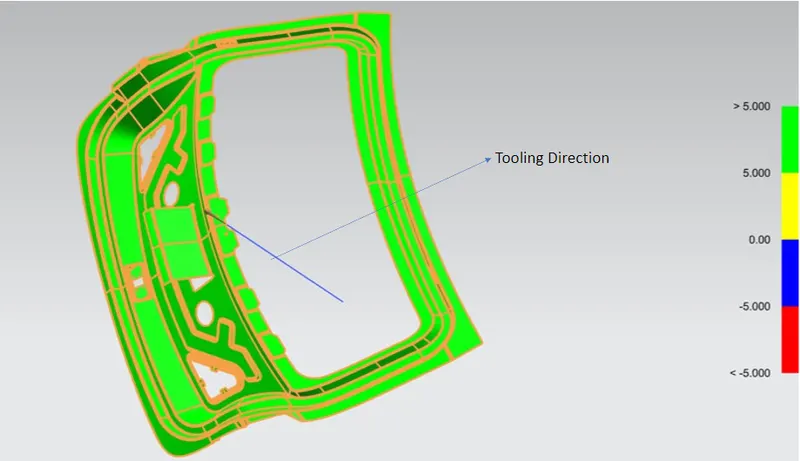
- Analyse the draft angle for the part is manufacture.
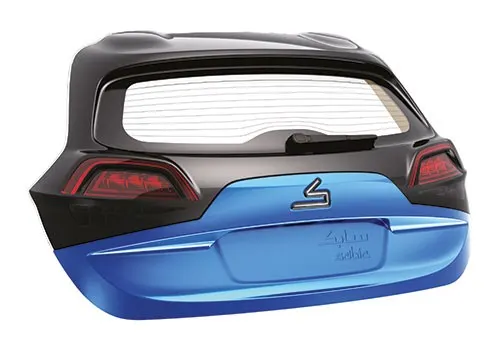
INTRODUCTION :
The tail gate is a closure component of the car which closes the back side of car.
A tailgate of a the car for being sequentially mounted by a tailgate inner panel and a tailgate out panel to a tailgate, which the tailgate outer panel is hinged to a tailgate which is vertically openable and closeable, where in the tailgate comprises a glass plate, a first mounting bracket (or a first mounting pivot) coupled to the tailgate outer panel and a second mounting bracket (or a second mounting pivot) coupled to the glass plate, where the first mounting bracket (or the first mounting pivot) and the second mounting bracket (or the second mounting pivot) are hinged together, such that the tailgate is simple in structure thereof, parts involved are reduced and assembly is easy with manufacturing cost decreased and a beautiful exterior look.
Back Door Assembly :
- Tail Gate Outer Upper Panel
- Tail Gate Outer bottom Panel
- Tail Gate Inner Panel
- Tail Gate Hinge reinforcement
- Tail Gate Latch & striker Reinforcement
- Tail Gate Gas-stay reinforcement
- Tail Gate Wiper motor reinforcement
- Tail Gate Hinge Mounting
Tail Gate Thickness :
- Outer Panel Thickness = 0.75mm
- Inner Panel Thickness = 0.75mm
- Reinforcement Thickness = 1.5mm
Tail Gate Design :
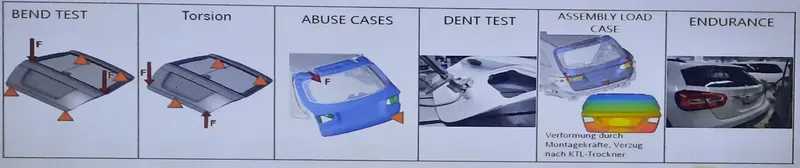
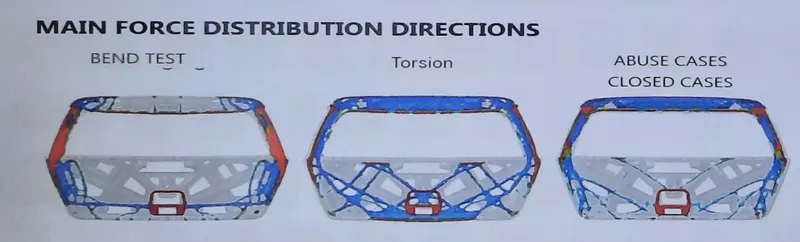
The tailgate comprises of a bonded sub-assembly of the inner and outer SMC panels, with a steel spoiler mechanism carrier bolted to the outer panel. Metallic reinforcing mounting plates for the hinges, gas struts and latch are bonded to the inside of the inner panel, with the rear screen glass bonded to the outer panel. The three main parts of the tailgate that were considered for light weighting; were the tailgate inner panel, tailgate outer panel and the spoiler mechanism carrier. The requirements of the new composite design had to meet all existing strength and stiffness performance targets, whilst also preserving existing A-surface geometry and hardware. The load cases used to assess the structural performance targets against of the tailgate were torsion, cantilevered bending, latch load and margin & flushness.
Tail Gate Load Cases :
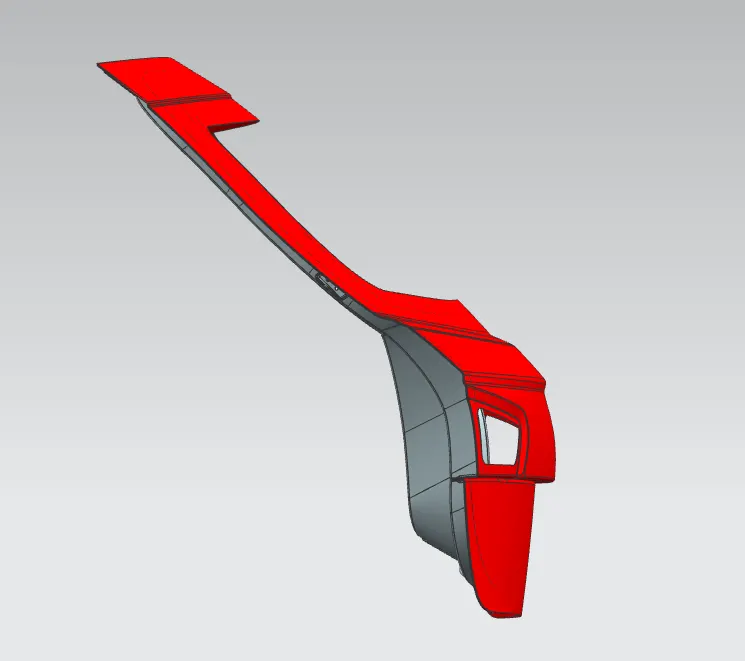
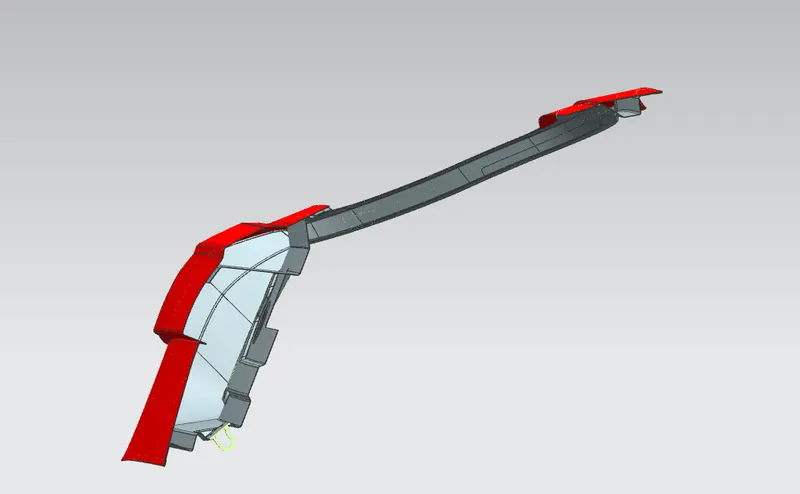
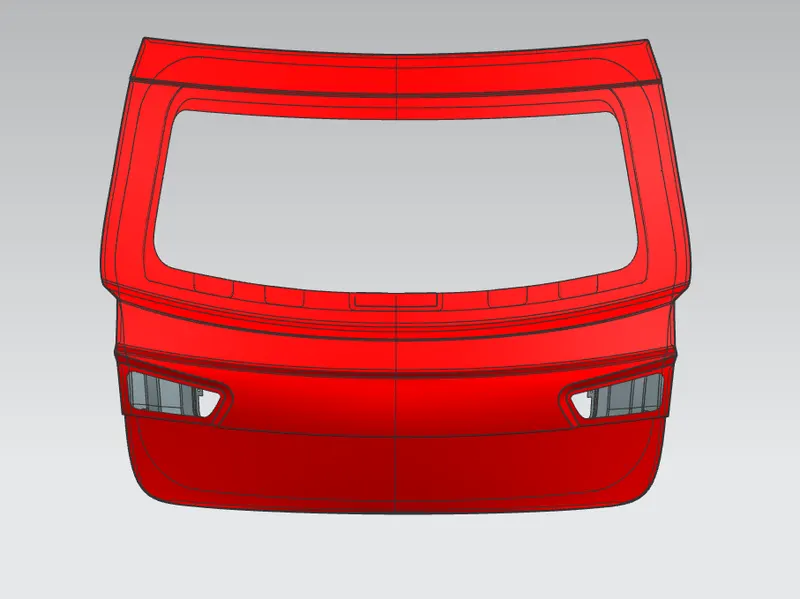
Tail gate styling surface :
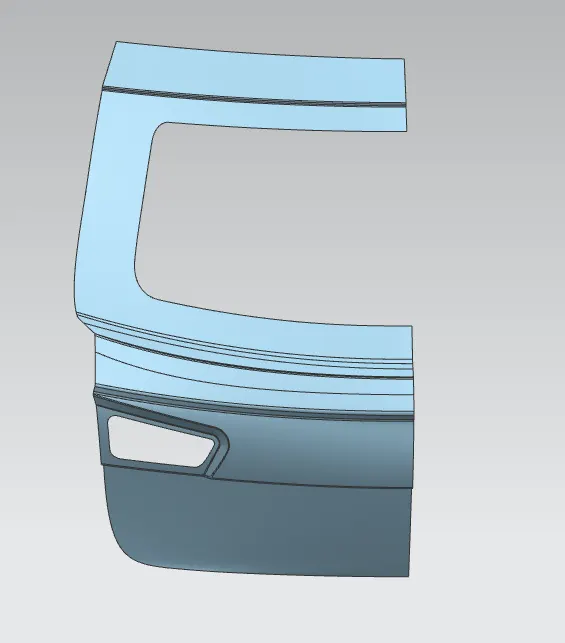
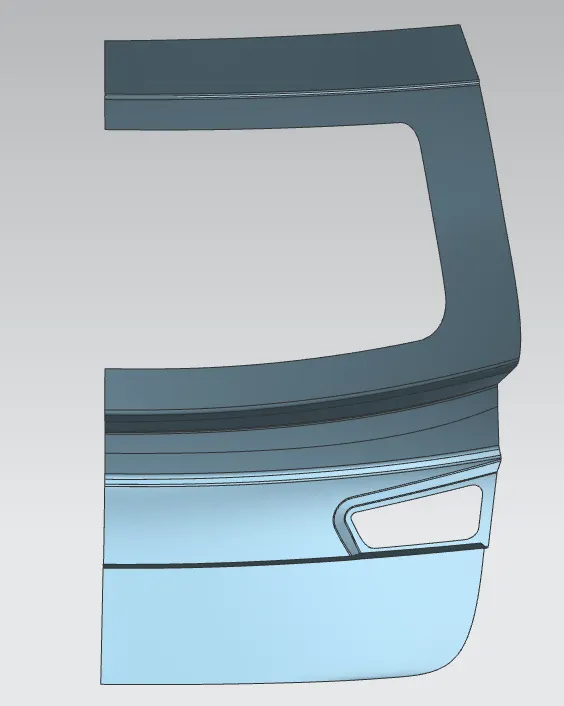
Tail Gate outer upper panel :
Tail gate outer panel is panel is the extracted model from the Styling surface also it gives proper look to the car.
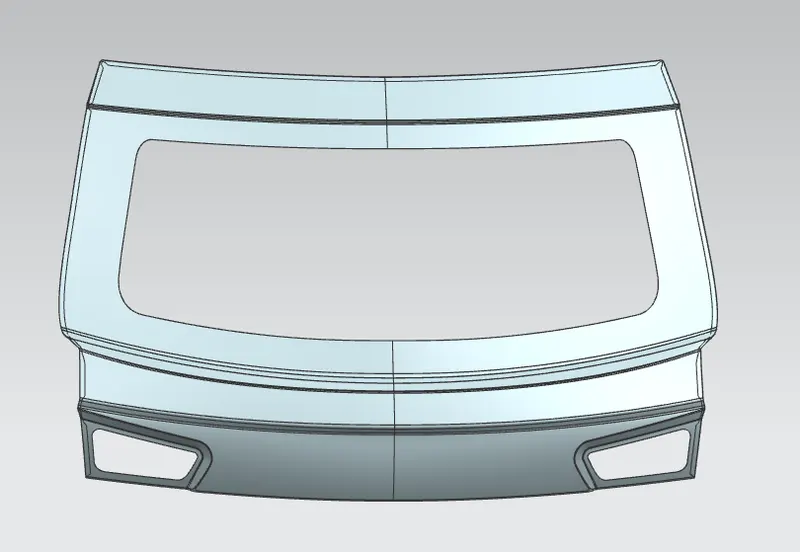
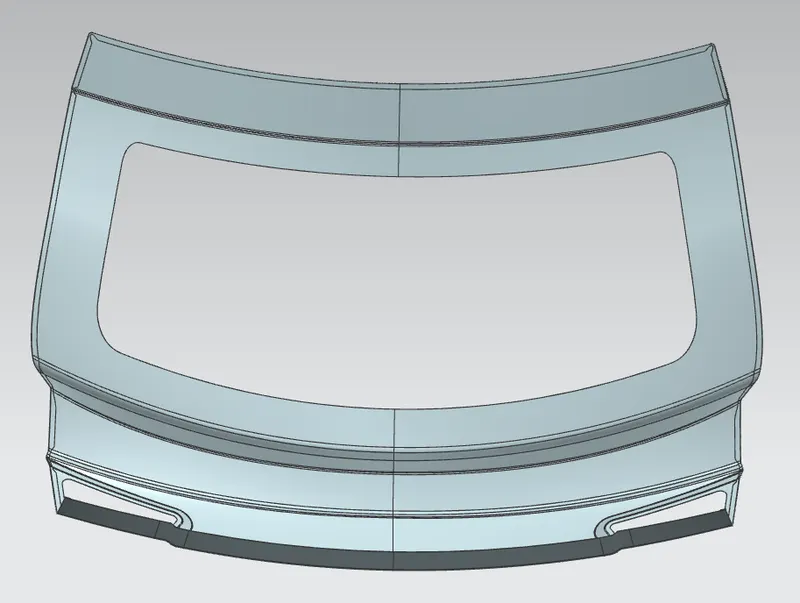
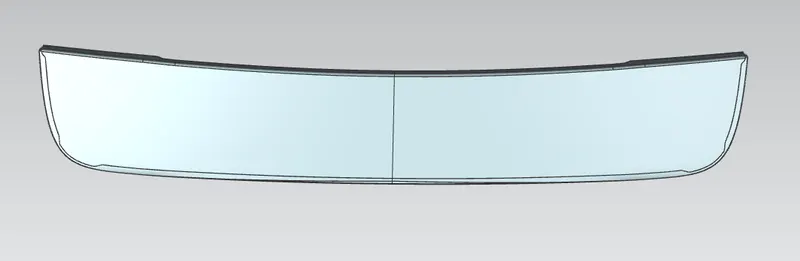
Tail Gate outer lower panel :
The both outer panels are connected by Spot welding.
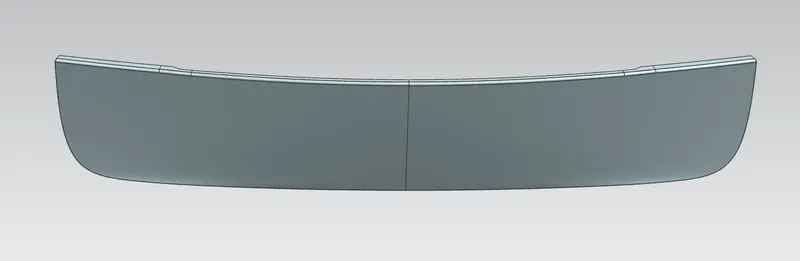
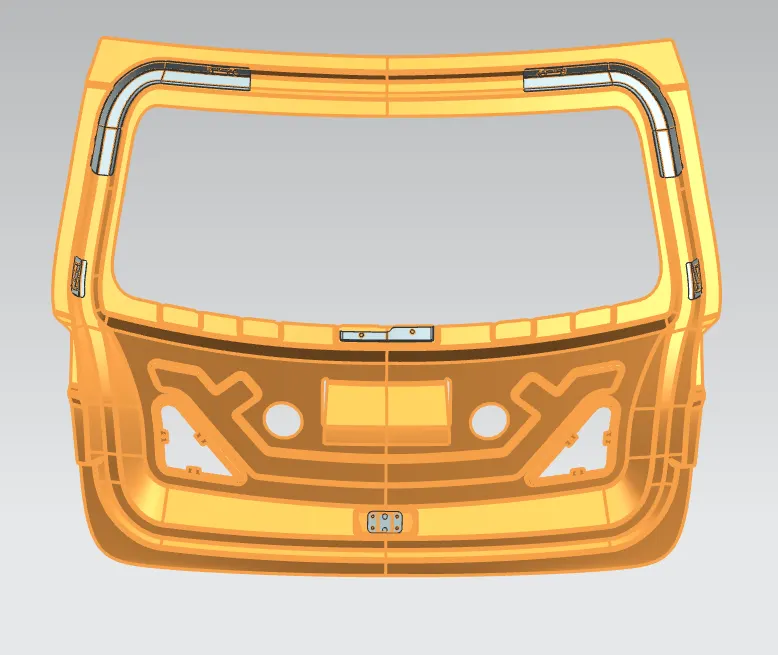
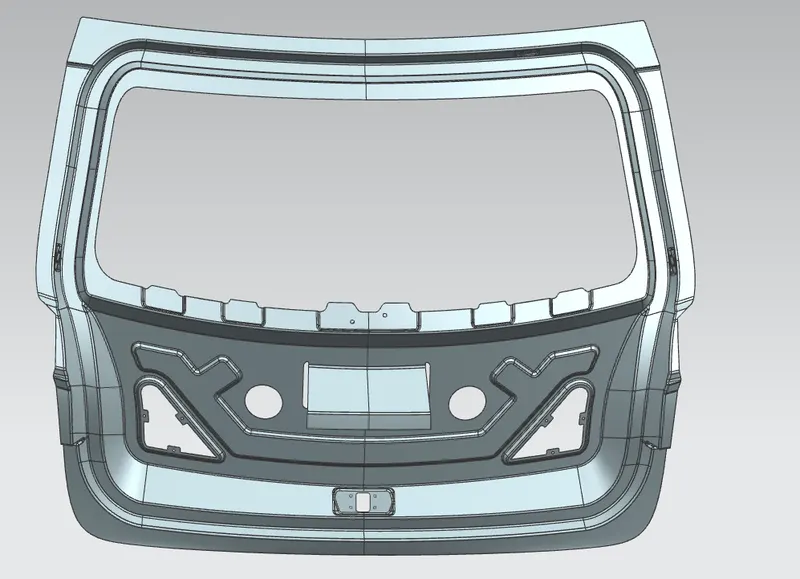
Tail Gate Inner Panel :
Tain gate inner panel which is used to give the strength to the outer panel.
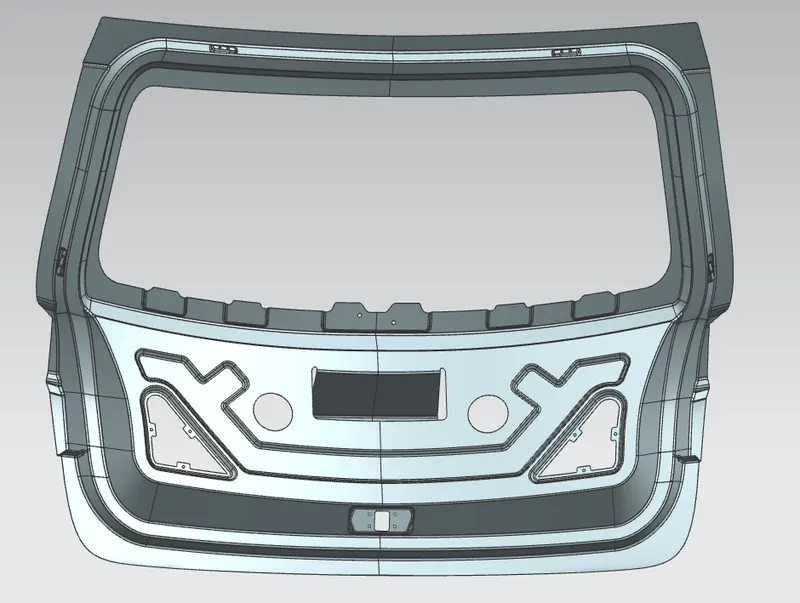
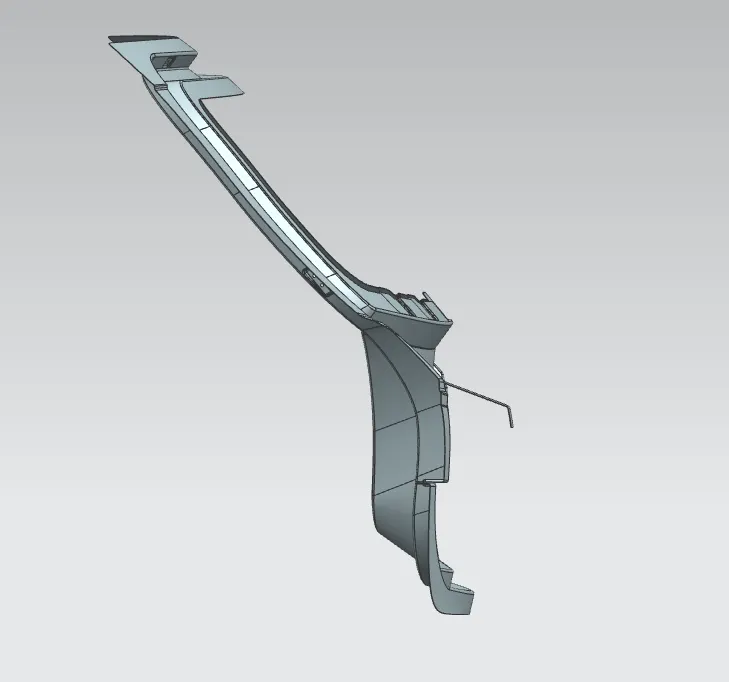
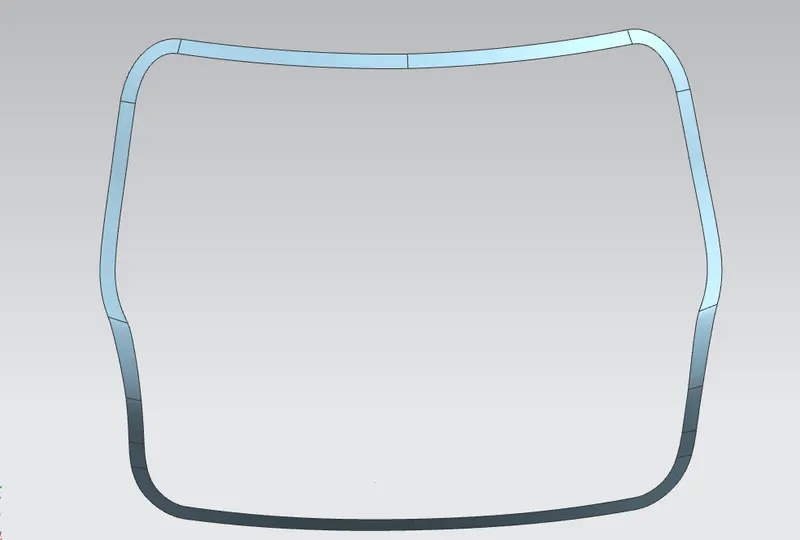
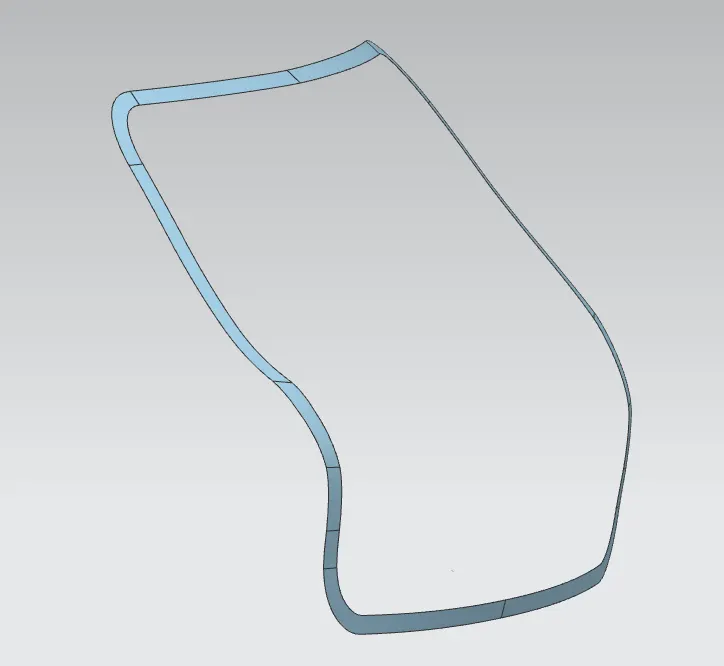
The below image is the ceiling flange which is used to prevent water to enter into the car.
The below images shows the draft angle is more than 5 degree and ready to manufacture.
Tail Gate Hinge reinforcement :
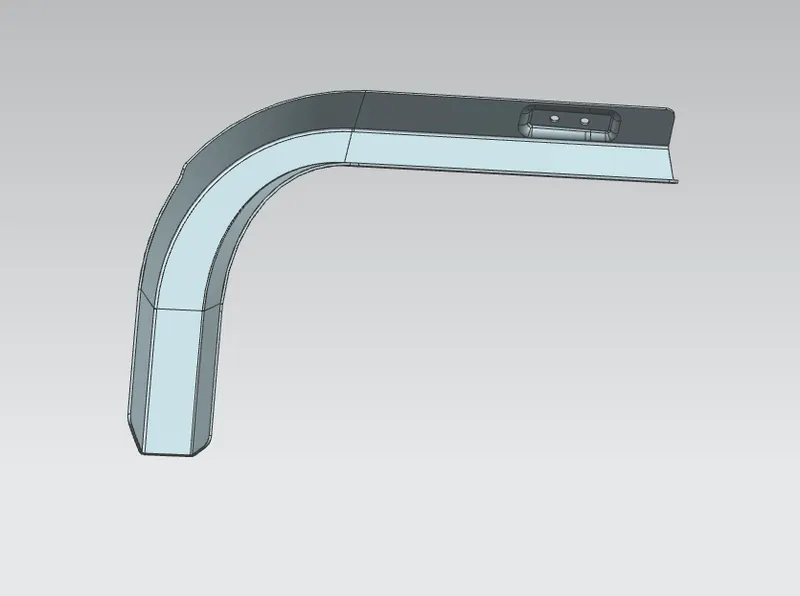
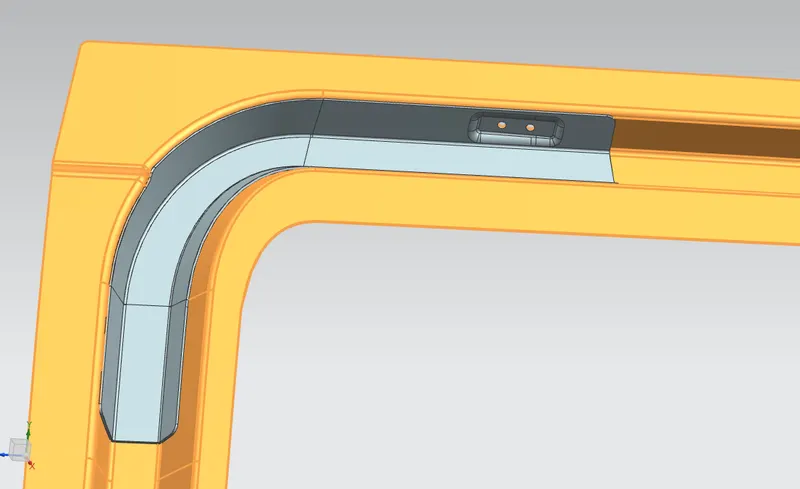
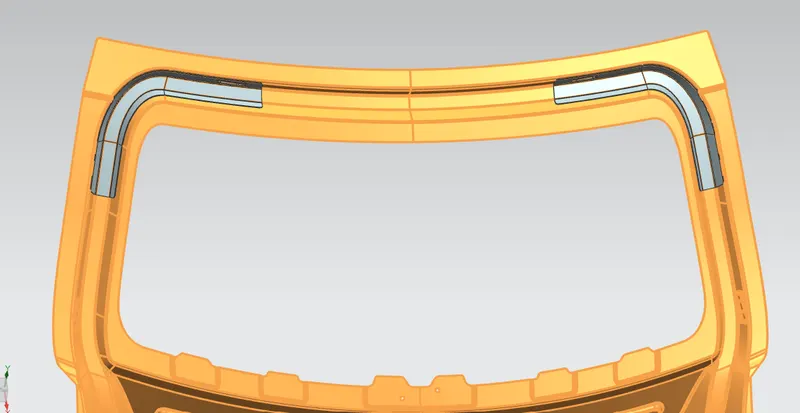
The reinforcement which is used to give the additional strength to the mounting areas.
Tail Gate Latch & striker Reinforcement :
The Tail gate release system is common on most vehicles and usually consists of an interior tail gate latch handle, tail gate release cable and tail gate latch assembly. The tail gate latch handle is usually located below the steering wheel, beside the passenger's seat or set into the door frame. On race cars or cars with aftermarket tail gates that do not use the factory latch system the tail gate may be held down by pins.
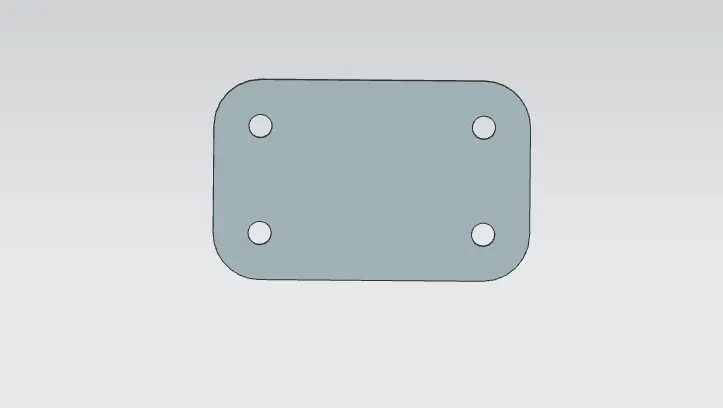
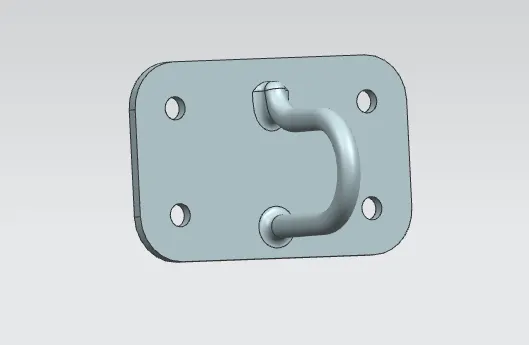
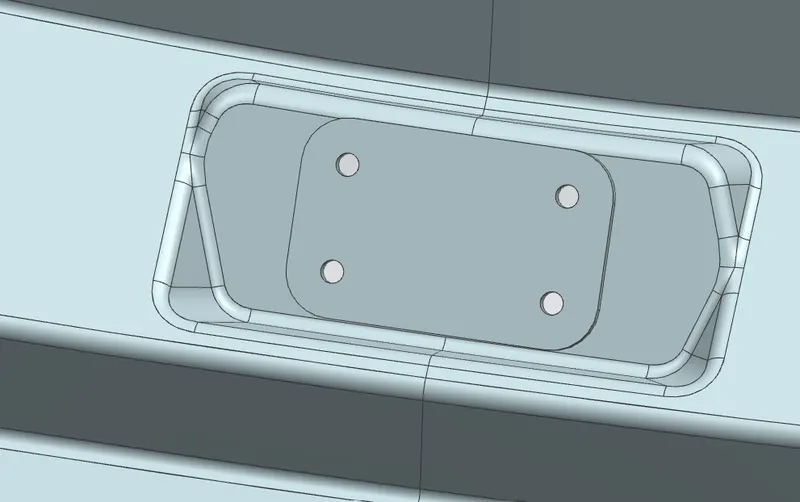
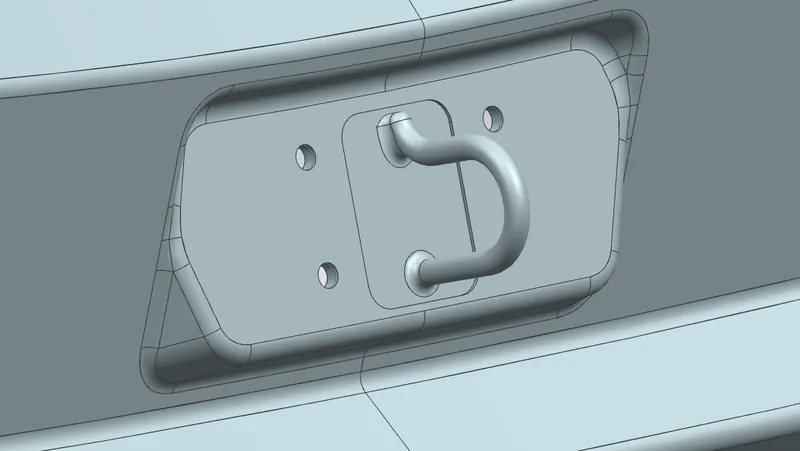
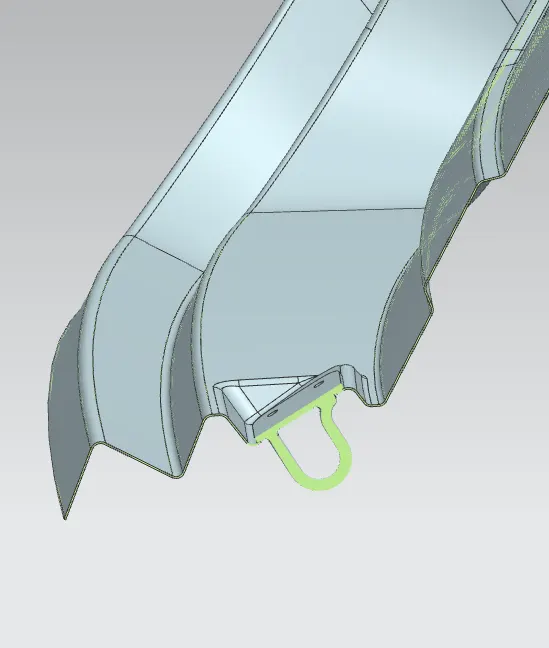
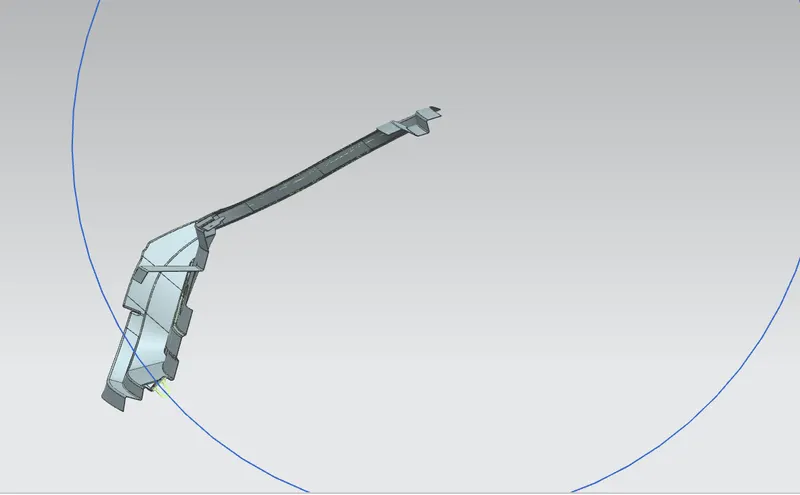
The below image shows the latch & striker which is perpendicular to the hinge axis.
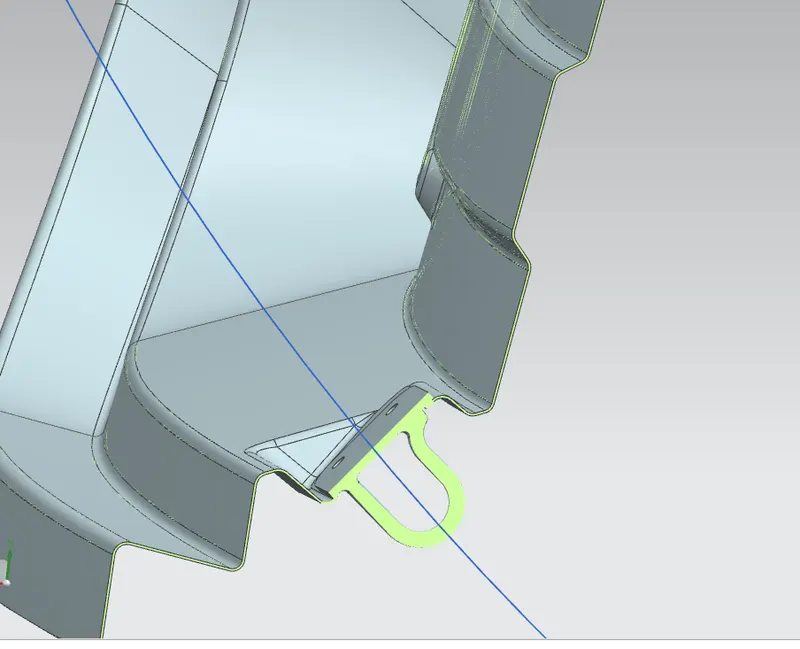
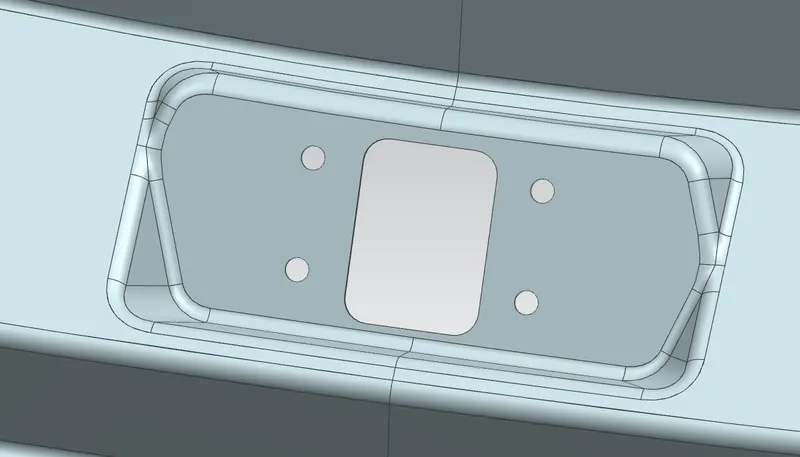
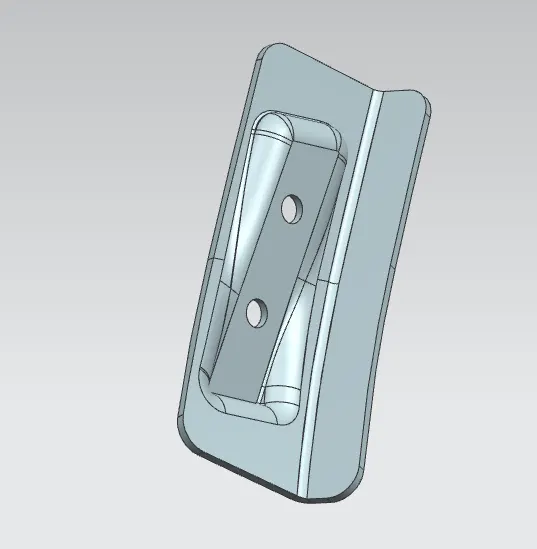
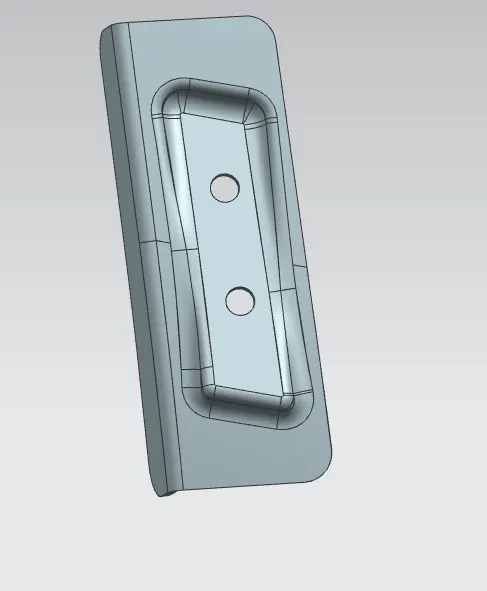
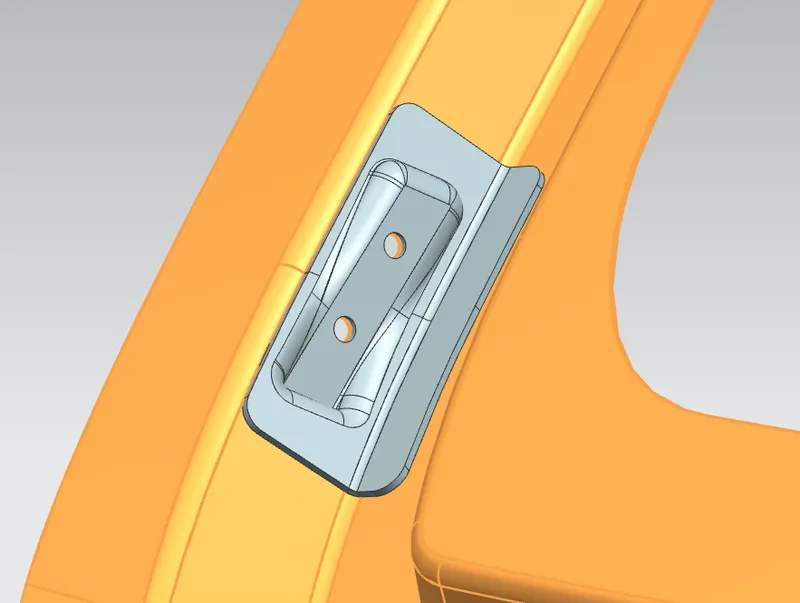
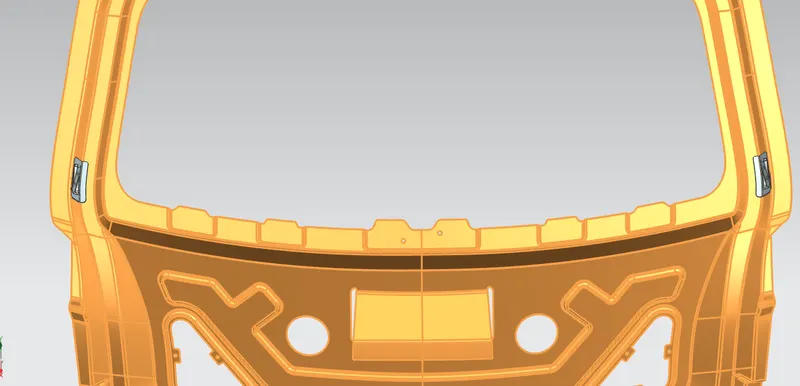
Tail Gate Gas-stay reinforcement :
The diabolo emboss which is used to mounting the gas stay to the tail gate inner panel.
Tail Gate Wiper motor reinforcement :
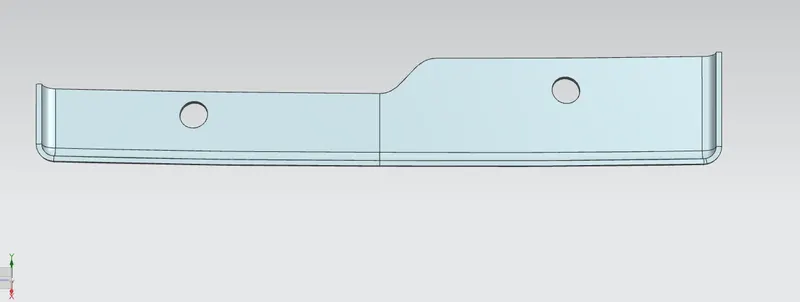
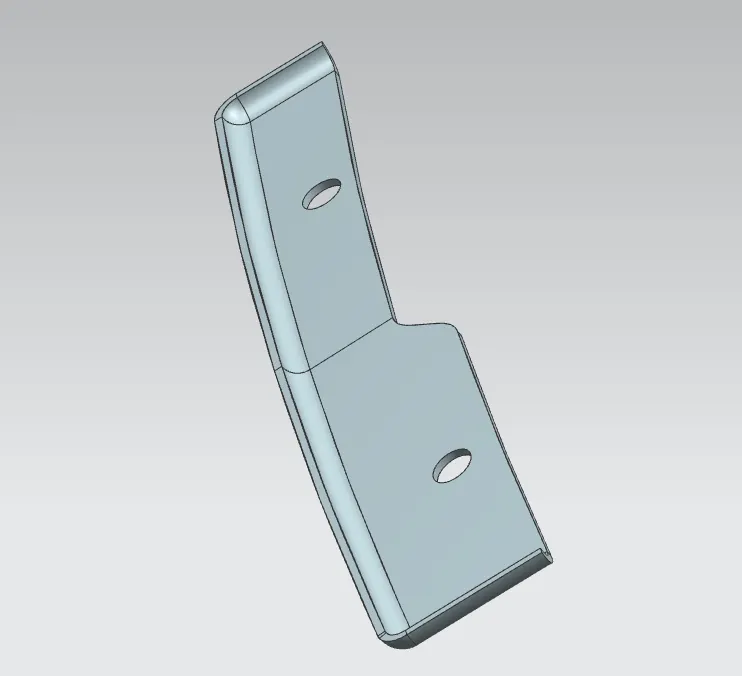
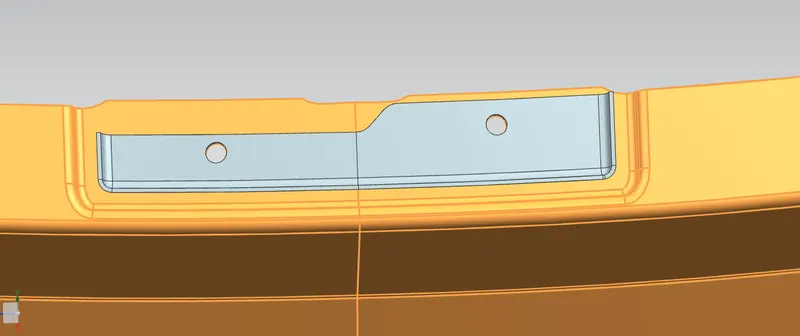
The wiper motor reinforcement is used to gives aqdditional strength to the inner panel mounting
Tail Gate Hinge Mounting :
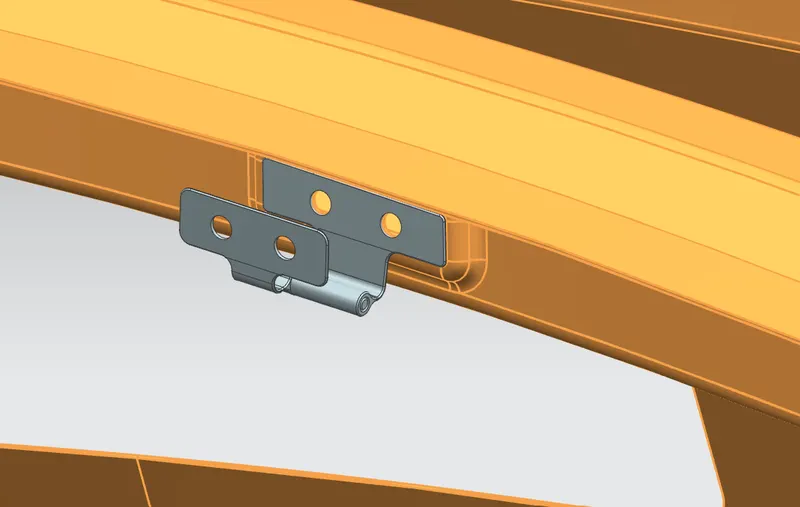
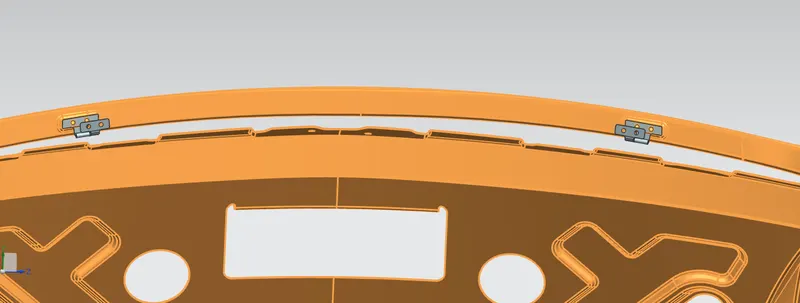
The Tail gate hinge is a mechanism that makes it possible for you to open and close your back door. This part allows the tail gate panel to move up and down, similar to how a hinge allows the movement of doors and windows. Each car typically has a pair of tail gate hinges installed in the back of the vehicle.
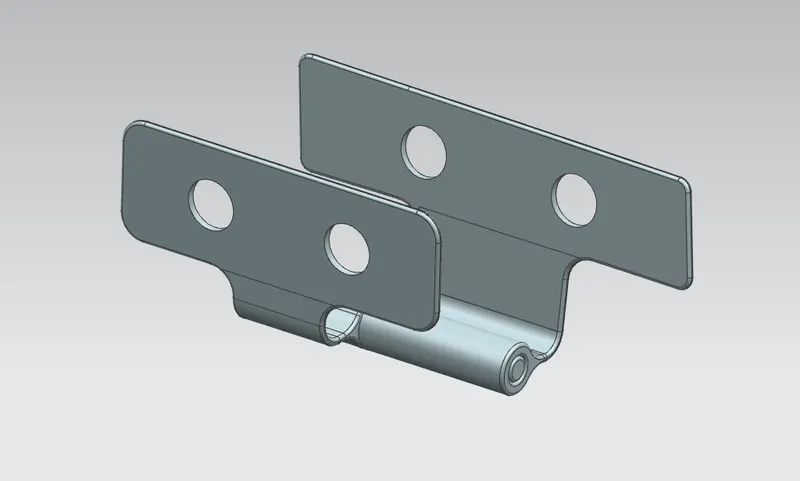
A Tail gate hinge mechanism includes upper and lower brackets interconnected by pivoted links. An auxiliary hinge member is pivoted to the upper bracket and secured to the tail gate. The lower bracket is secured to the body. The upper hinge bracket and auxiliary hinge member are releasably secured to each other and normally move together as the hood moves between closed and partially open positions. When the auxiliary hinge member is released from the upper hinge bracket, the tail gate can be moved to various further open positions.
Hemming :
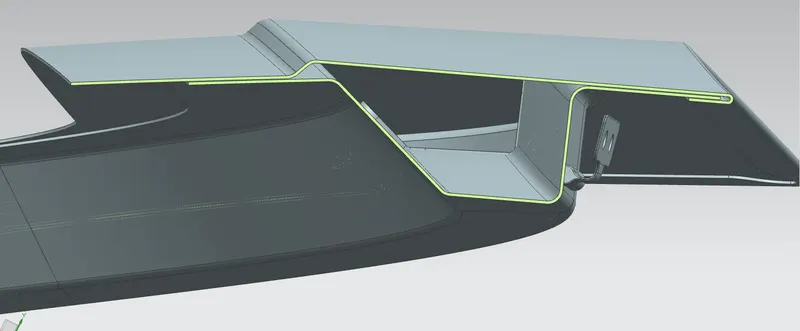
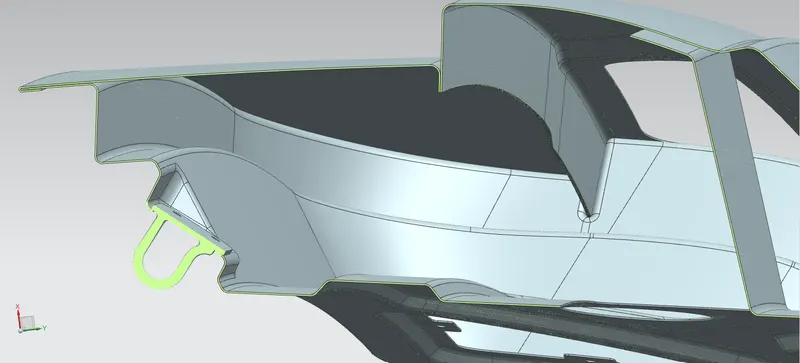
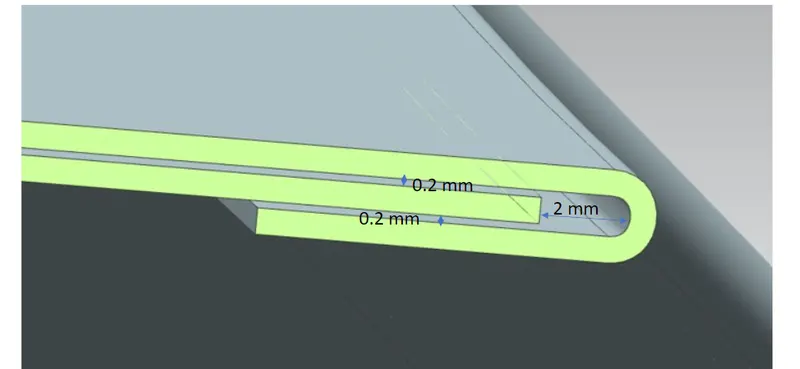
The hem are fold to edge of the part to create the round safe edge. Hems are created by bending the flange of the part in the tail gate design i used open hem to join the inner & outer tail gate panel.
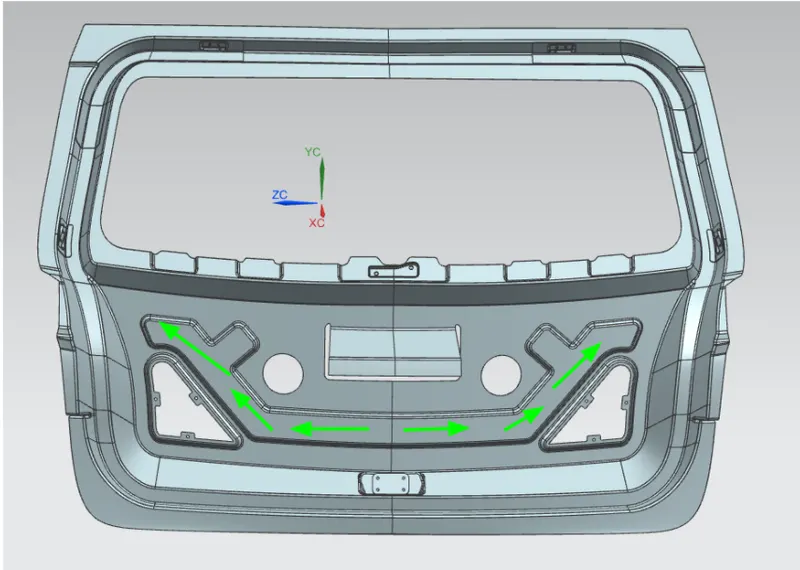
Edge Relif :
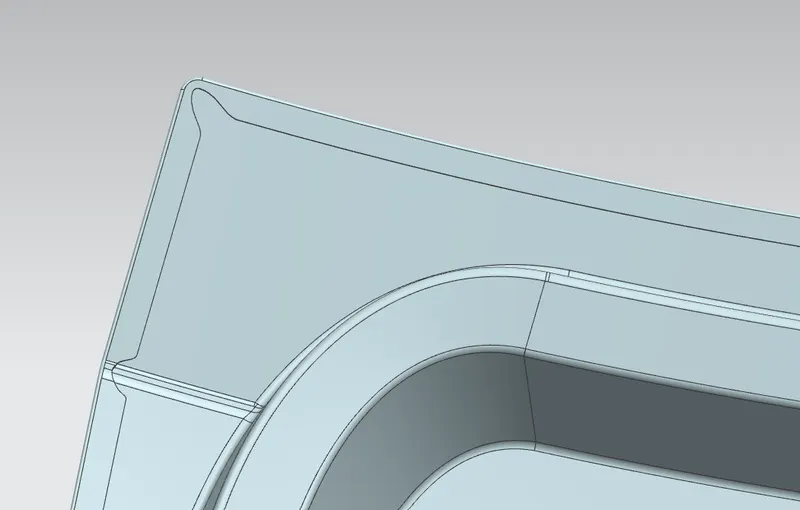
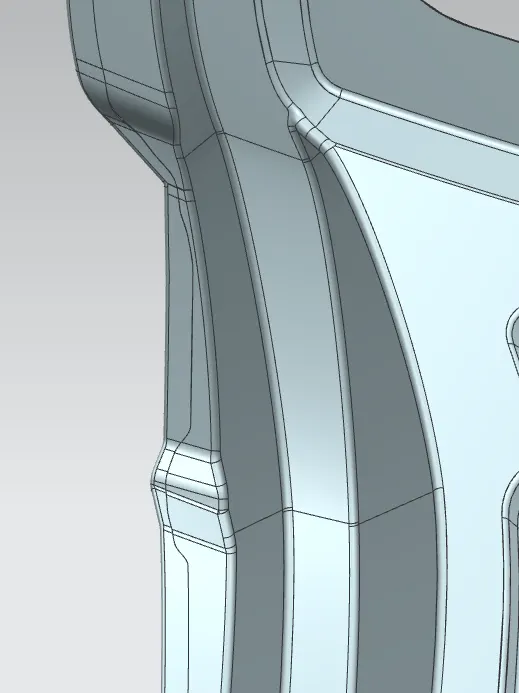
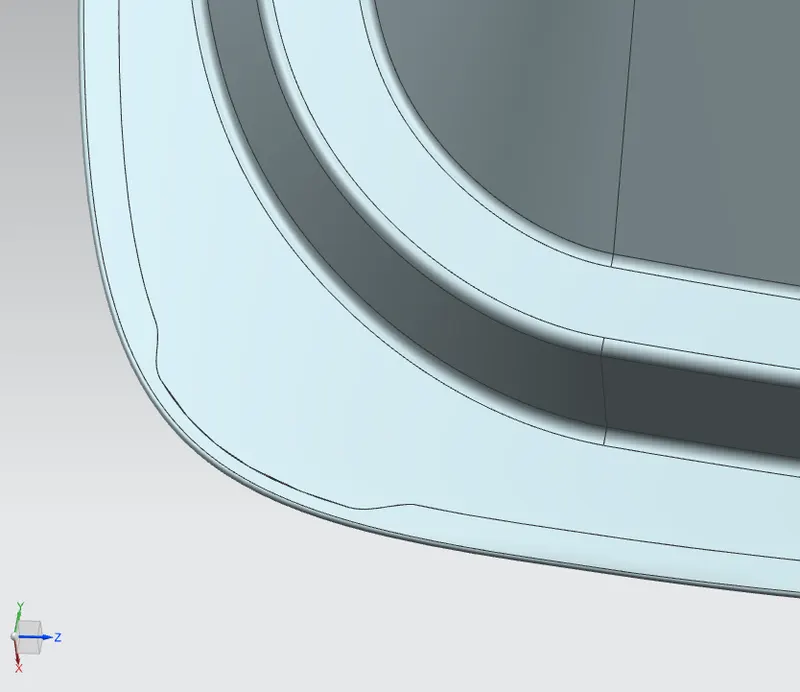
The below image shows the direction of force desipate outside.
Mastic Seal :
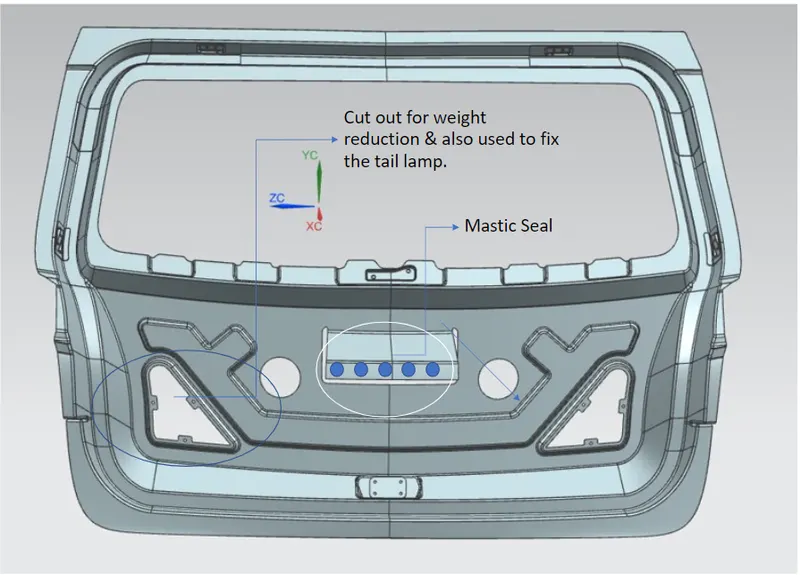
Mastic seal which is like a rubber material used join the inner & outer panel and gives the strength to the hood also it helps to decrease noise & vibration. Each mastic seal which strengthen upto the 40 mm radius.
The below image shows the position for mastic points.
Link for the Part : Tail_Gate_Assembly_Link
CONCLUSION :
Thus the design of tail gate is completed sucessfully by using NX Cad along with Hinge, Latch, Wiper motor & Gas stay reinforcement.