Design of backdoor
Design and Development of a Tail Gate Using NX-CAD
Introduction:
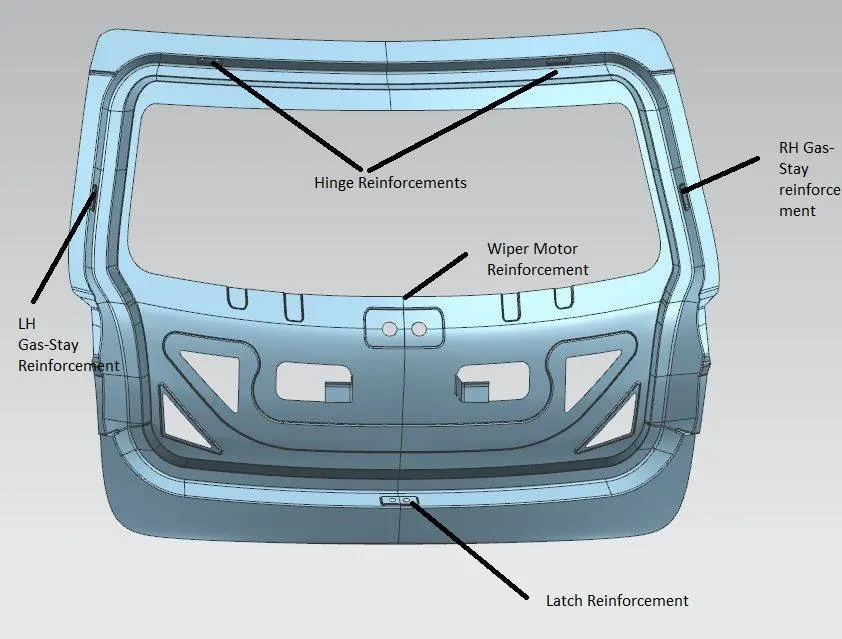
A back door or a tailgate is the rearmost part of the vehicle that can be opened and closed for loading and unloading. The back door/Tail Gate of a car is very intricate when it comes to its requirements. This part of the vehicle allows the passengers to take along heavy material/voluminous material. It also protects the passengers seated at the back from any accidents. On the tailgate, a gas-stay mounting, a latch and striker mounting, and also the wiper motor mounting is provided to ensure all the requirements are met. Each of these mountings has its own importance.
A tailgate is made up of 2-3 layers. It could be made up of 1 inner layer and two more outer layers. The inner and outer layers are spot welded or hemmed wherever necessary. The embosses on the inner layer are made such that the impact is restricted to affect the passengers at the back seat. The embosses are also designed to make sure all the parts are being mounted (tail lamps, wiper motor, latch and striker, and gas stay).
The inner layer and the outer layer of the tailgate is usually made of steel and are deep-drawn. The thickness of the sheets is between 0.6-0.8mm. Different types of material are used based on various factors such as the cost of the vehicle, customer base etc.
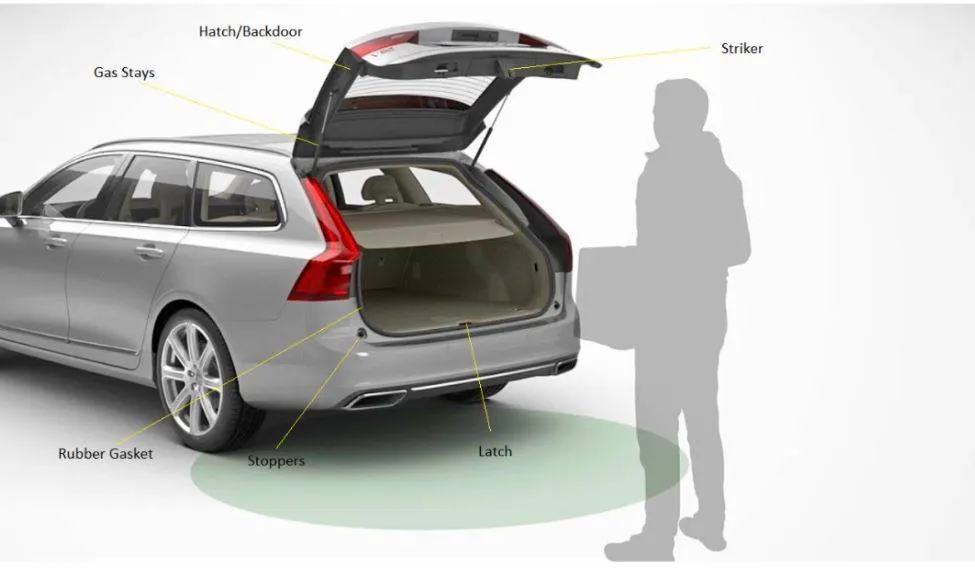
While designing the back door a design engineer must ensure
-Rear visibility and rear crash requirements and regulations
-The structures for hinge and gas stays and other reinforcements.
-The boot space and the accessibility
-Manufacturability
Types of hinges in a back door:
Some cars have hinges mounted outside the backdoor and some cars have hinges mounted inside the back door. But for most of the cars, they are mounted on the inside. Similarly, the sockets of the gas stays are either mounted on the body or on the door. Any of these combinations can be utilized to ensure the tailgate to be working with either motor or manual closing conditions. Also, these conditions would help the vehicle to determine its load conditions and reliability.
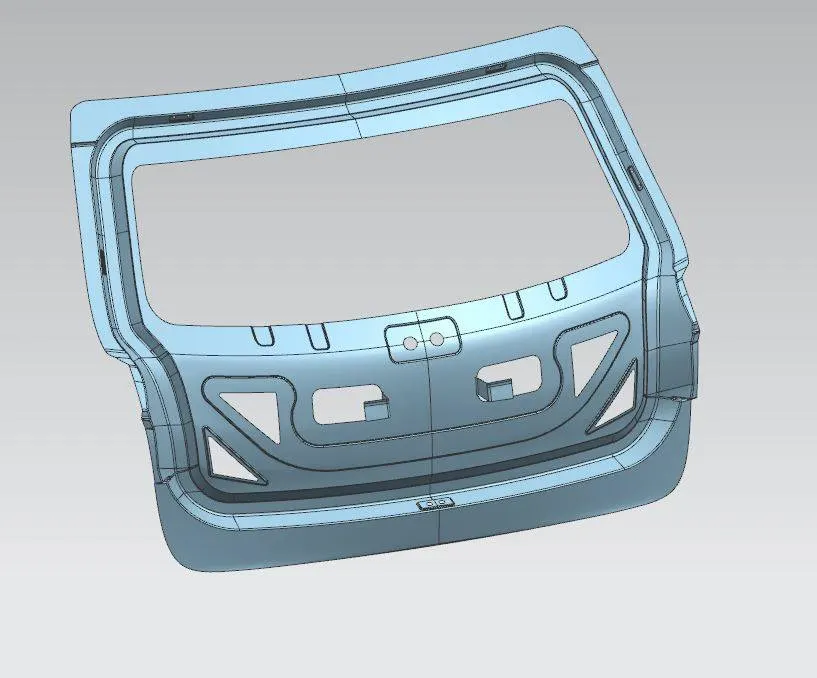
The following are the images of the back door designed, along with all the design considerations.
Thickened Assembly:
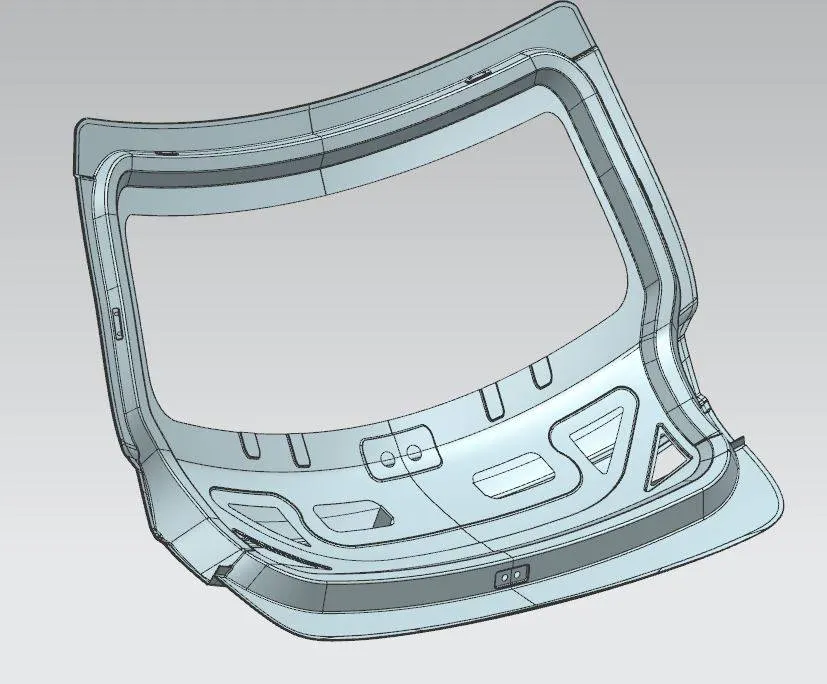
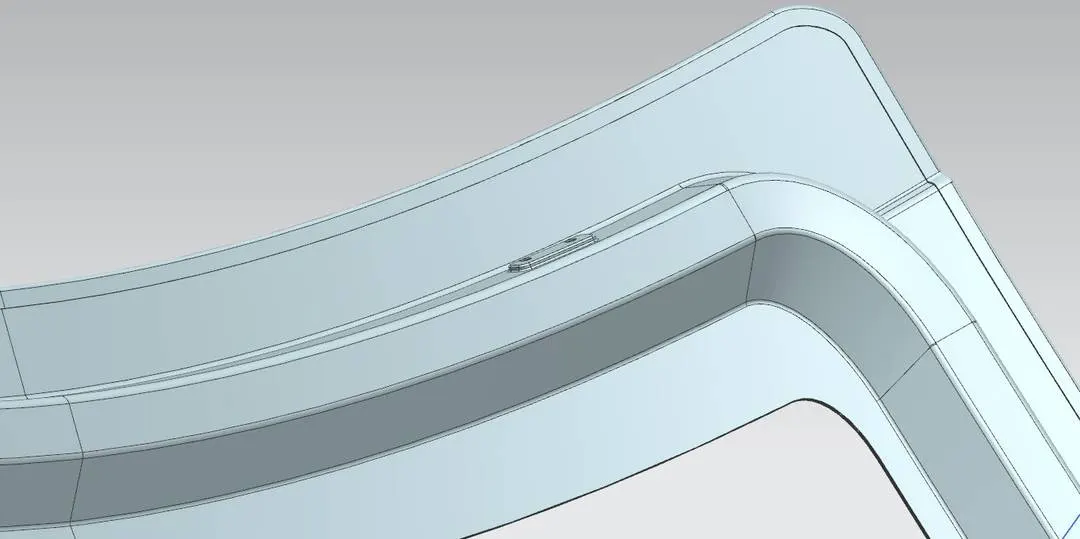
Hemming:
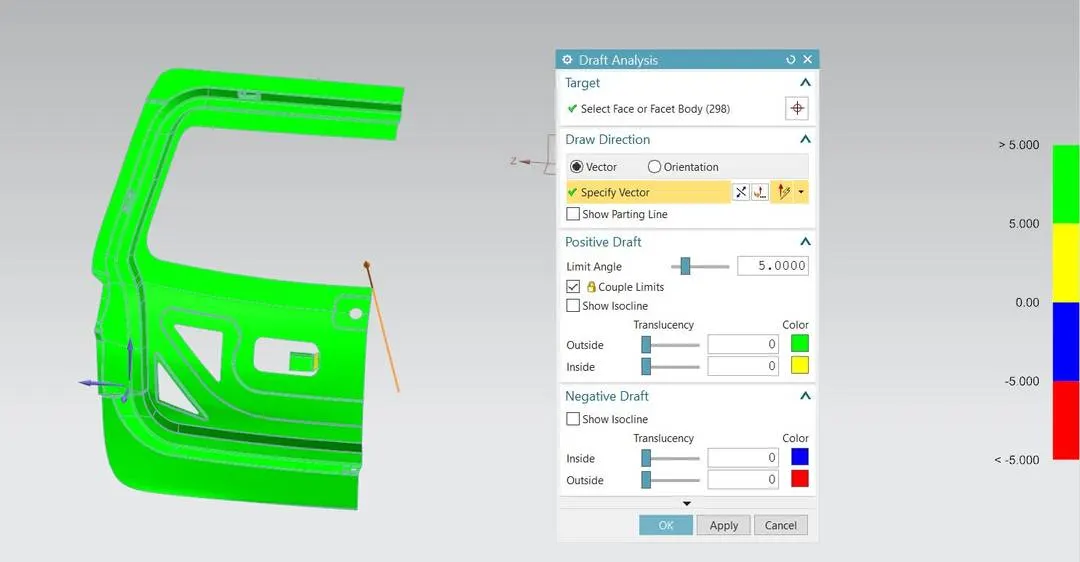
Draft Analysis:
The back door similar to other parts is sent to the FEA team and various tests are done to prove if the part is manufacturable. Various stress conditions are applied and only if concordant results are achieved, the part is sent further to the manufacturing team.
Conclusion:
The part shown above is designed after understanding the major design requirements of the tailgate. The mountings are also designed to allow all the required parts to