Design of backdoor
OBJECTIVE:
To develop the car backdoor by using a given surface method by automotive sheet metal design.
BACKDOOR:
A backdoor is located at the rear end of the car which gives access to the boot space to store luggage.,spare wheel etc. These doors can be operated manually or electric powered. The most luxurious car is electrically powered.
Back Door also called as 'Hatch', or 'Tailgate', 'Trunk-lid', 'Boot-door' is the 5 door in a 4-door car. It's the rearmost part of the vehicle which gives access to the trunk and has mounts for wiper motor, tail lamps, hinges for supporting its weight in the opened position, gas stays which help with its opening and keeping it open, radars and cameras etc.
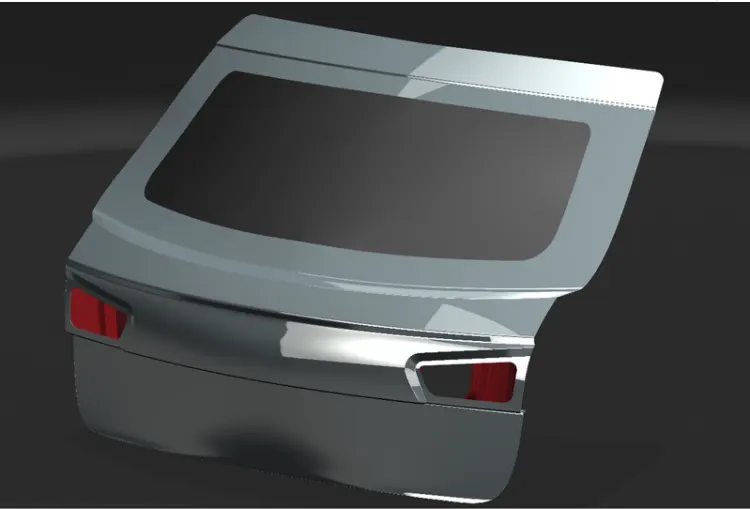
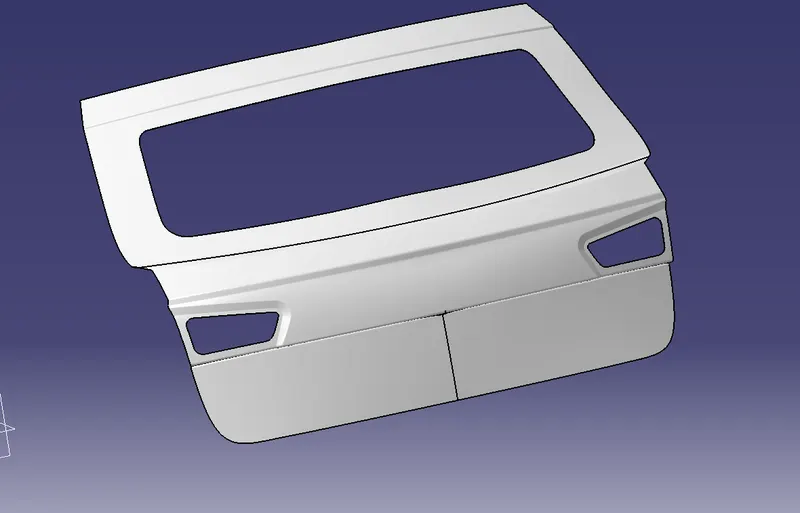
A backdoor is usually made up of 1 inner panel and 2 or 3 outer panels joined together by hemming and spot welding wherever necessary.
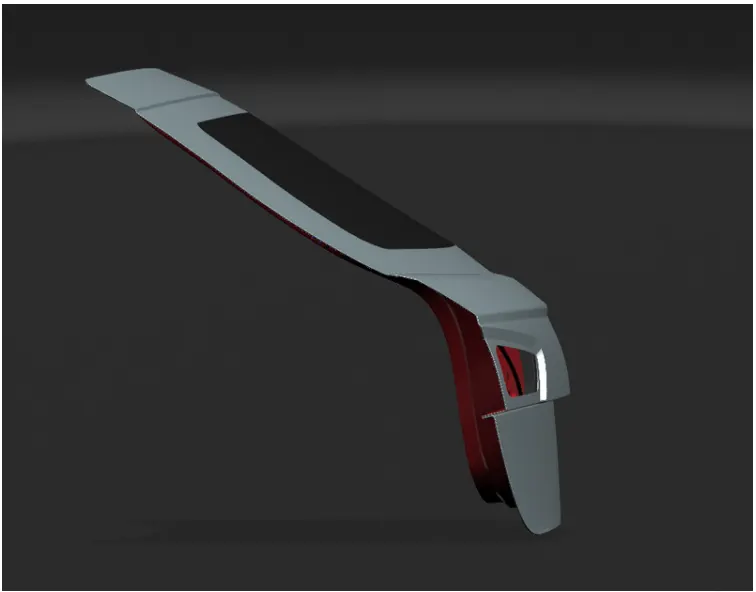
The material used for the backdoor varies as per the price range of the vehicle. Most of the low-cost vehicles use steel as it is cheaper and use parts that are stamped using moulds. These parts are usually of uniform thickness and reinforcements are added to improve local strength where needed. The premium vehicles use aluminium parts which are usually die-casted and hence can have a variable thickness. This removes the need for reinforcements hence keeping the weight even lower as aluminium parts are lighter in comparison. On the contrary, aluminium is more expensive than steel hence its applications are limited in the cheaper vehicle. Currently due to the extensive use of plastics trims and plastic parts the cost of aluminium is affordable for the manufacturers in all price brackets. The use of aluminium reduces the overall weight of the component and hence the vehicle improves its fuel efficiency.
Reinforcements
As mentioned for local strengthening reinforcements are usually provided. Instead of making the whole panel off a thicker sheet, a thinner sheet with thicker local reinforcements wherever needed is preferred. The reinforcements are usually 1-1.5mm thick whereas the panel itself is 0.55- 1 mm thick.
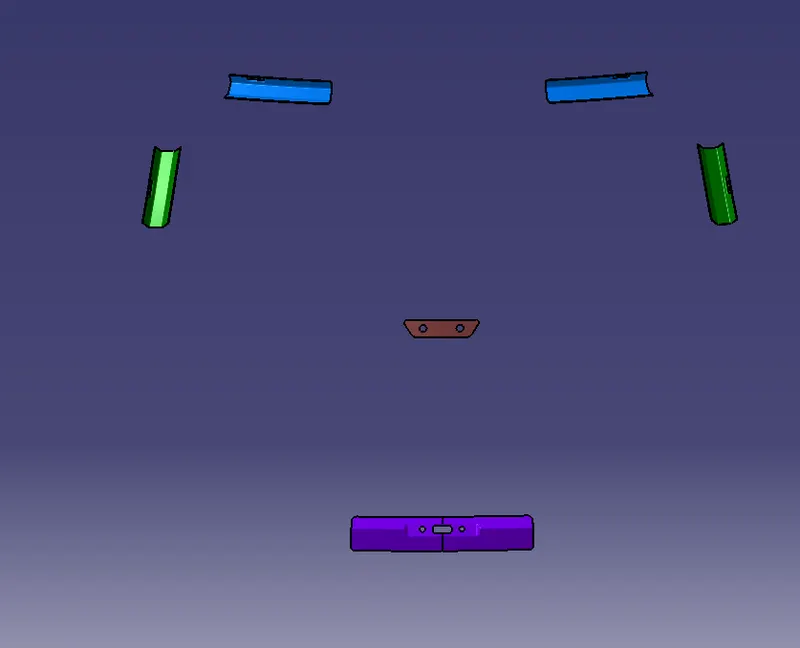
Backdoor parts thickness value used in this design:
1. Outter panel - 0.75 mm
2. Inner panel - 0.75 mm
3. Reinforcements - 1.5 mm
DESIGN CONSIDERATION FOR BACKDOOR INNER PANEL:
1. Rear Visibility.
2. Support structures like hinges and gas stays.
3. Mounts for wiper motor, tail lamps, and other wiring loops.
4. Fit and clearances.
5. Boot space
6. Rear crash regulations and requirements.
7. Sealing and its functions.
8. Joining techniques like hemming, spot welding etc.
TYPES OF DOOR OPENING:
Top-mounted door
Side-mounted door
Bottom Door
In this project, I designed a Top-mounted door, So here we discuss mainly top-mounted doors only.
COMPONENTS OF BACKDOOR:
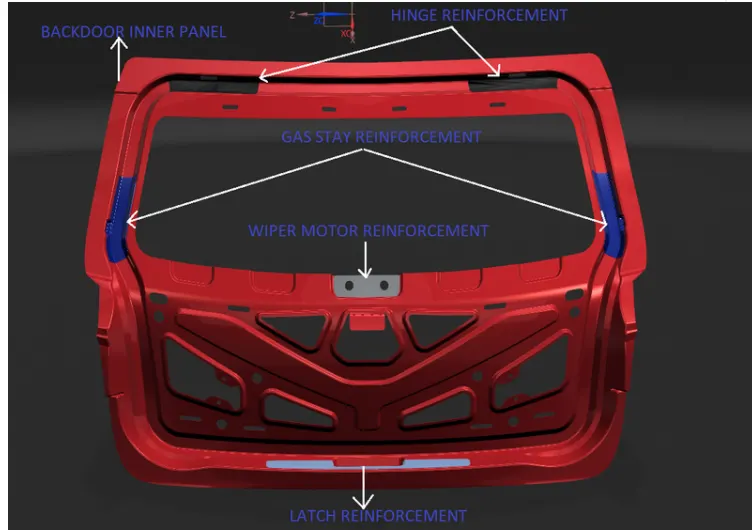
Inner panel
Outer panel upper
Outer panel lower
Hinge reinforcement LH
Hinge reinforcement RH
Gas stay reinforcement LH
Gas stays reinforcement RH
Wiper motor reinforcement
Latch reinforcement
Plastic trim
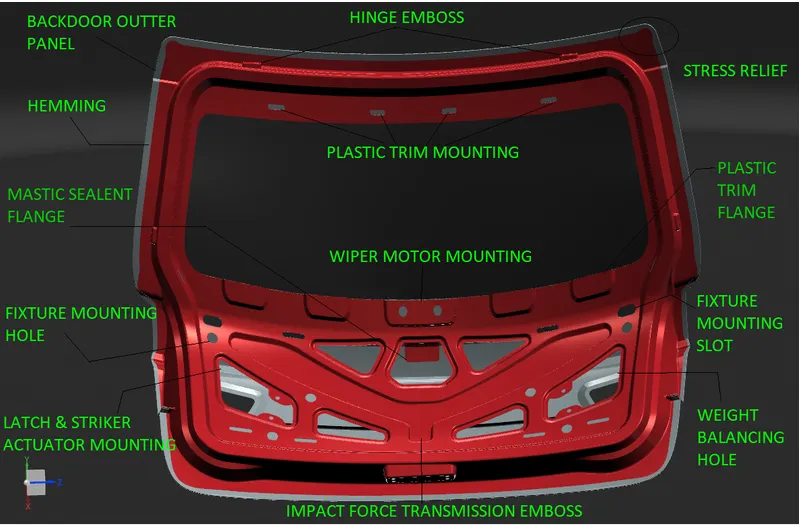
Wiper motor, latch reinforcements, hinge reinforcements and gas stay reinforcements are mounted on the inner panel of the backdoor only.
OUTER PANEL:
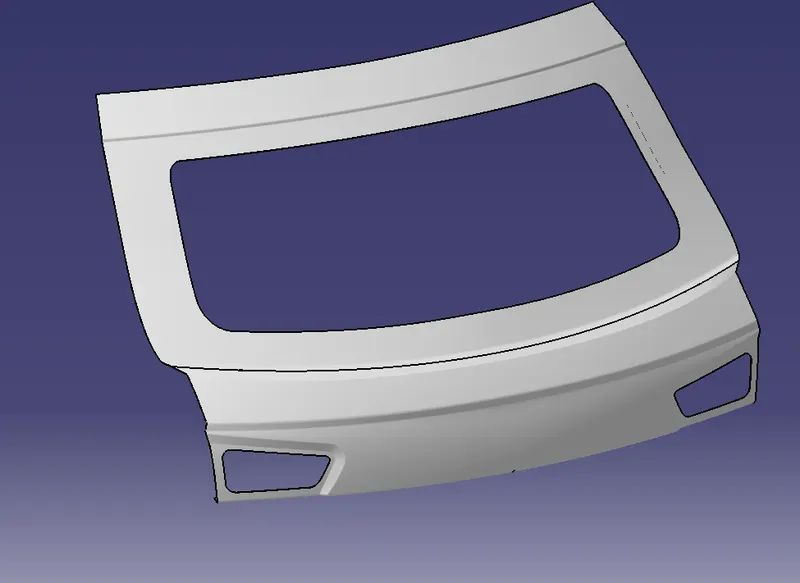
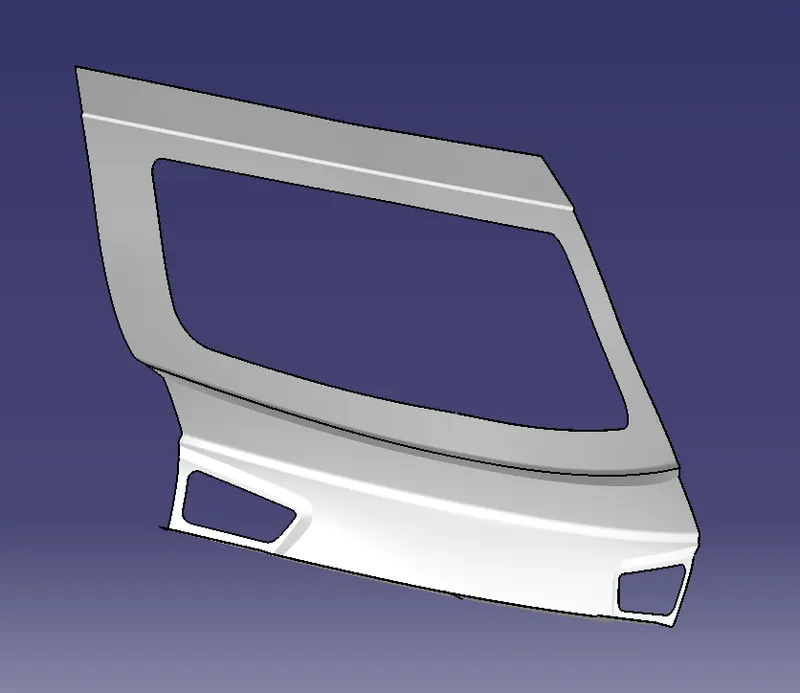
The class A surface of the outer panel is provided to us by the styling team. From this surface, we have to develop the inner panel and all the other parts and finally assemble them. Firstly we have to check for any surface discontinuity and irregularities. Small errors can be rectified but if there is any major error contact the styling team.
INNER PANEL:
Considering the class A surface as a reference we have to create the inner panel of the backdoor. The most important part of the inner panel is the sealing flange which decides how the backdoor will be mounted at the rear side of the car. It also seals the rear side of the car and prevents the entry of dust and water from entering inside the car. The width of the sealing flange should be at least 25mm.
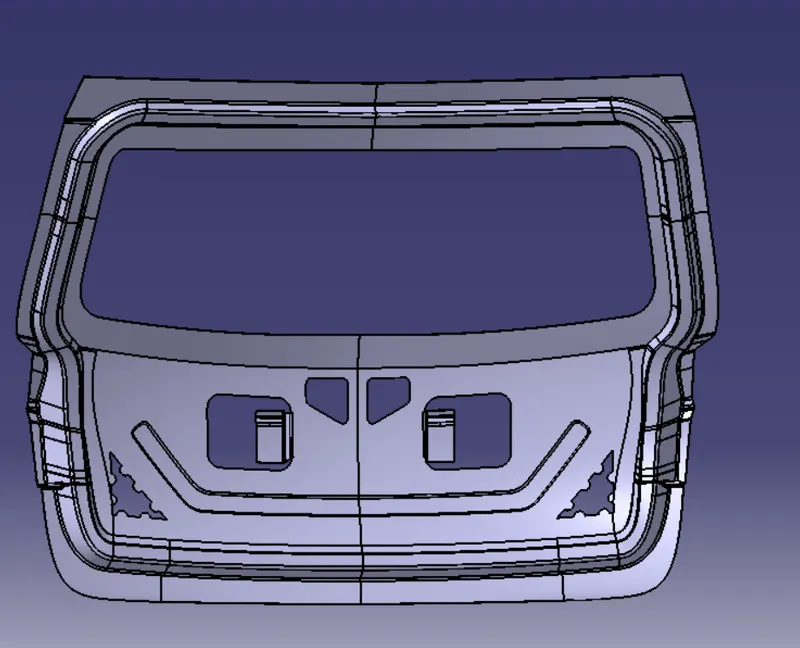
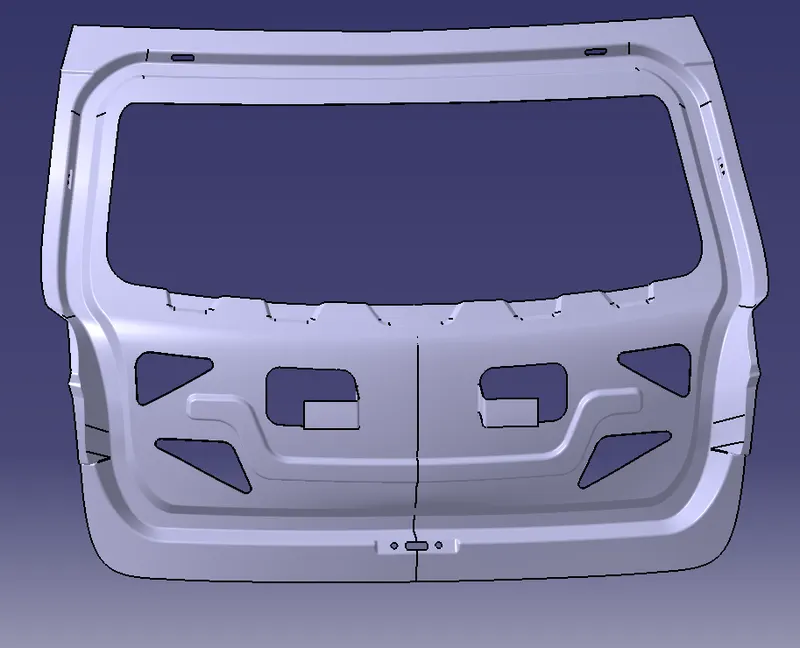
Embosses and Cut-Outs:
The embosses are provided in the inner panel for strengthening the part and also to dissipate the forces in case of a rear collision to the outside of the car. The cutouts are access holes for the fitment of the wiper motor and latch and striker motor. These are fitted mainly after the assembling of the inner panel with the outer panel. Sometimes holes are also provided in the panel to maintain the CG of the panel.
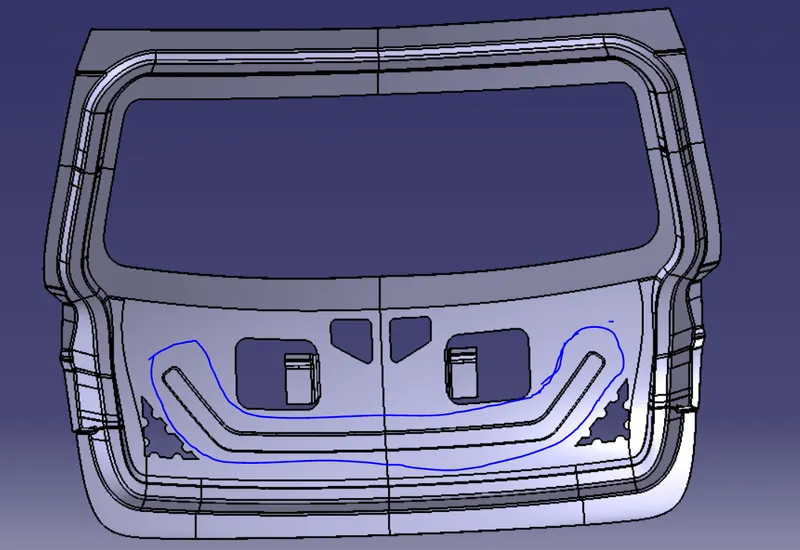
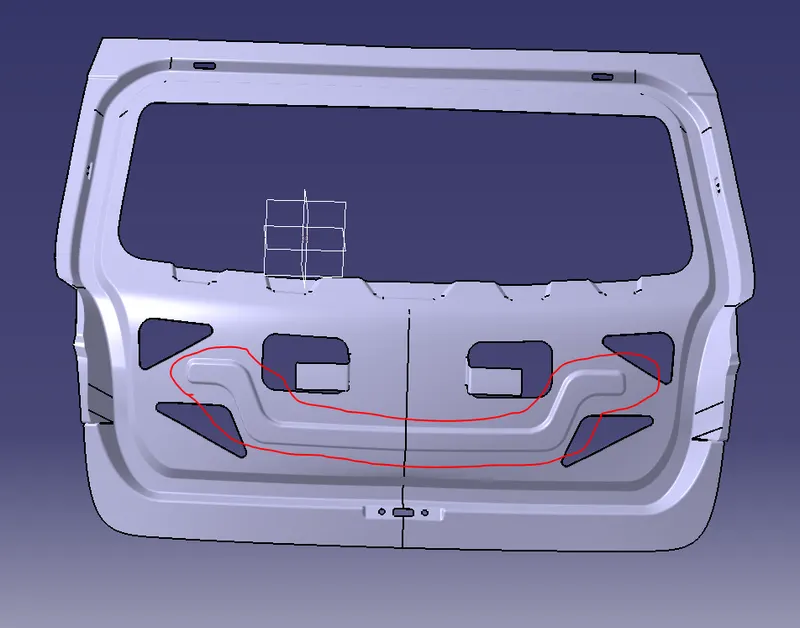
The inner panel is mainly fixed to the outer panel by the process of hemming but still, there will be rattling noise. So to avoid that extensions are created in the inner panel which is fixed to the outer panel by applying a mastic seal. While designing make sure to give 4-5 mm distance from the outer panel so that a mastic seal can be applied in that area.
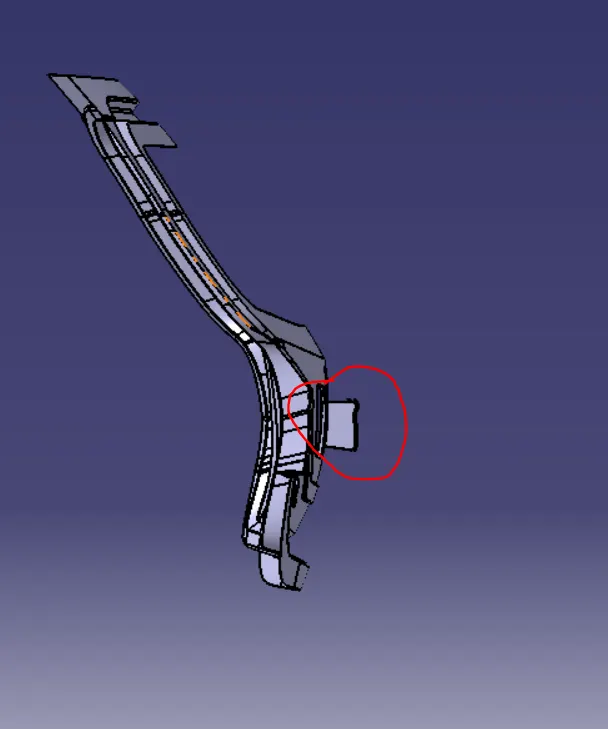
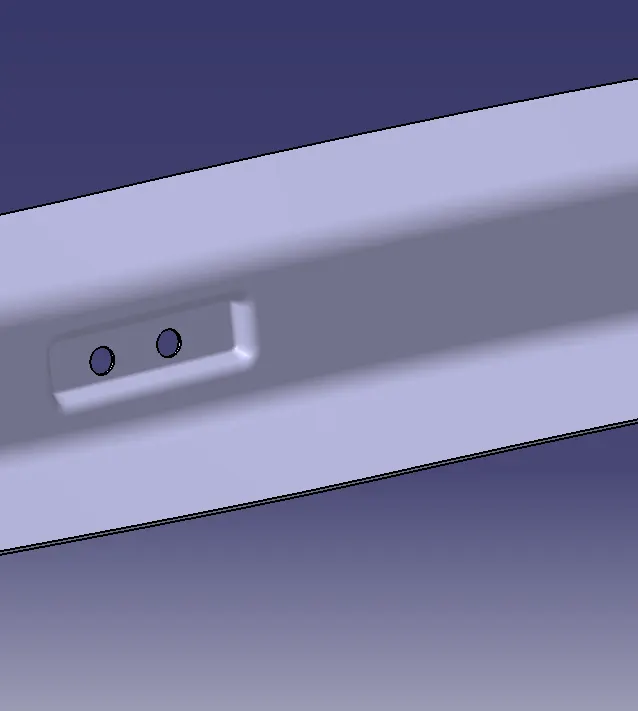
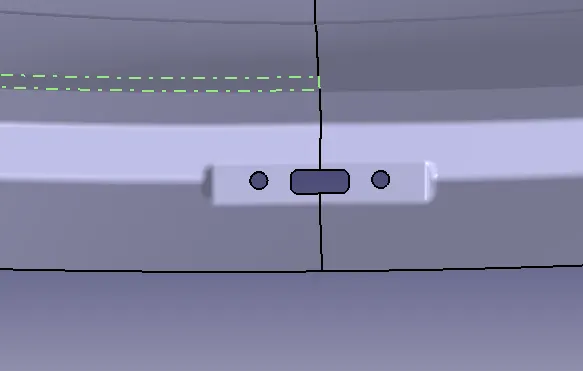
Embosses for the fitment of the hinge, gas stay, wiper motor and latch and striker are created on the inner panel.
Hinge emboss
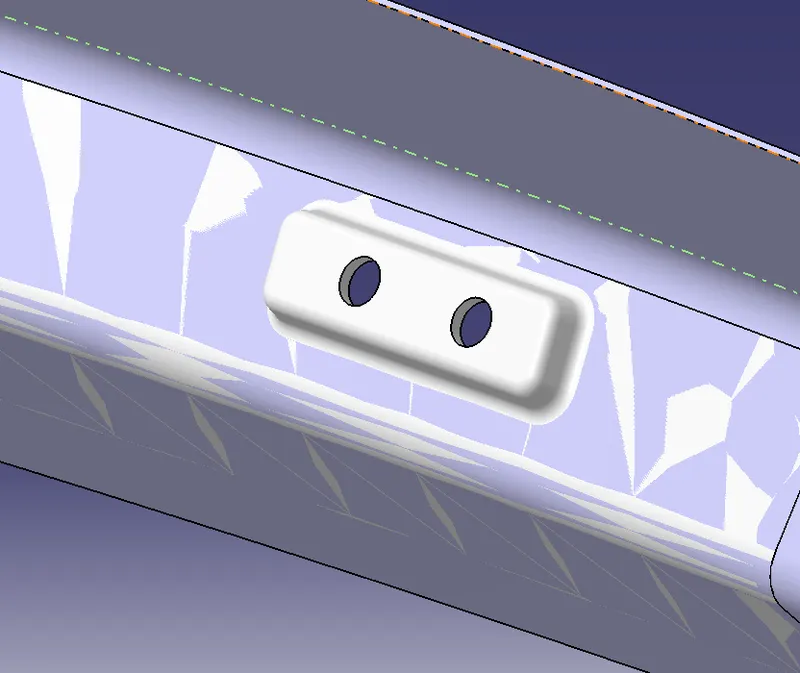
Gas stack emboss
Latch emboss
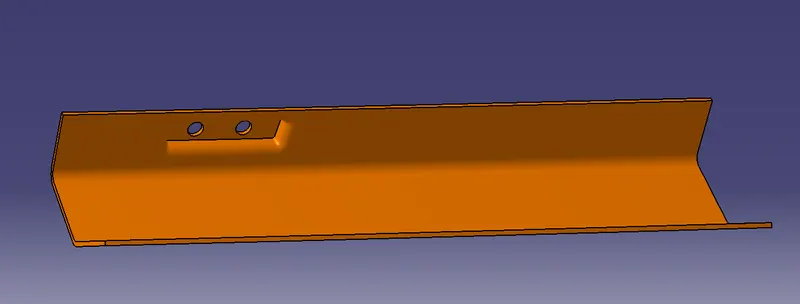
HINGE REINFORCEMENT:
The backdoor is hinged to the roof. The hinge may be fitted outside the backdoor or inside the backdoor. Reinforcements are designed to strengthen the localised part where the hinge is assembled.
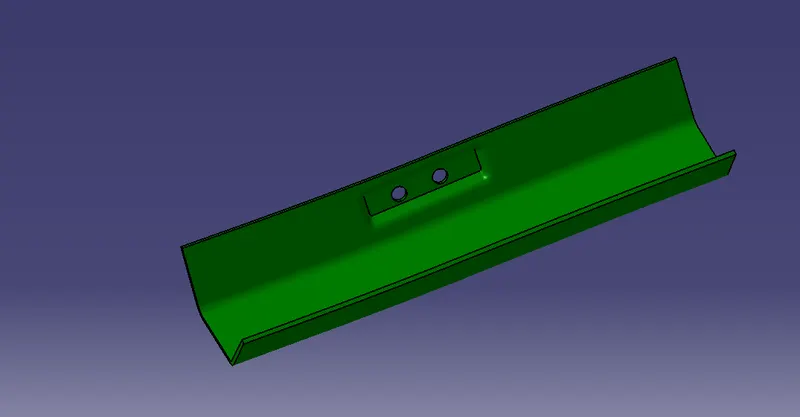
GAS STAY REINFORCEMENT:
Gas Stay is that part that helps the backdoor to stay in the open position. It is either motor-operated or manually operated.
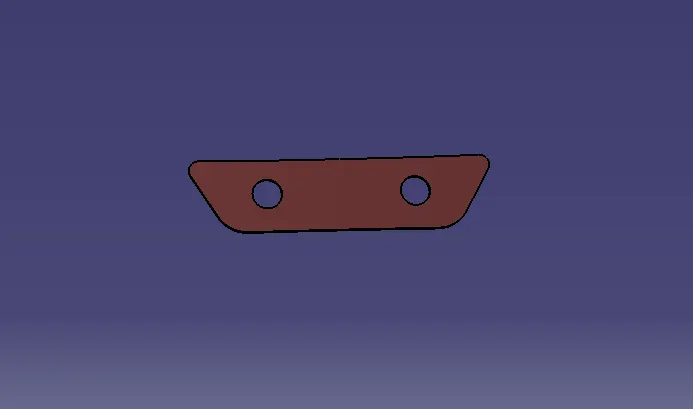
Wiper Motor Reinfocement
A wiper is used to wipe out the rainwater that falls on the backdoor window. It is actuated by the motor which is mounted on the inner panel. Due to the vibration and heat created by the motor. the inner panel where the motor is mounted gets deform and the parts attached to the motor starts to vibrate which leads to poor NVH.So we have to provide the reinforcement where the wiper motor is placed.
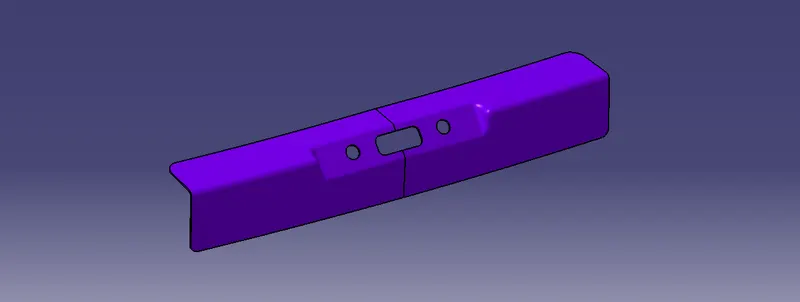
LATCH AND STRIKER REINFORCEMENT:
The fitment of latch and striker plays an important role in the designing of the backdoor. At first, the hinge is fixed, and by taking the centre point of the hinge axis and the centre point of the latch, draw a circle. the centre of the latch should be perpendicular to the circular trajectory.
HEMMING
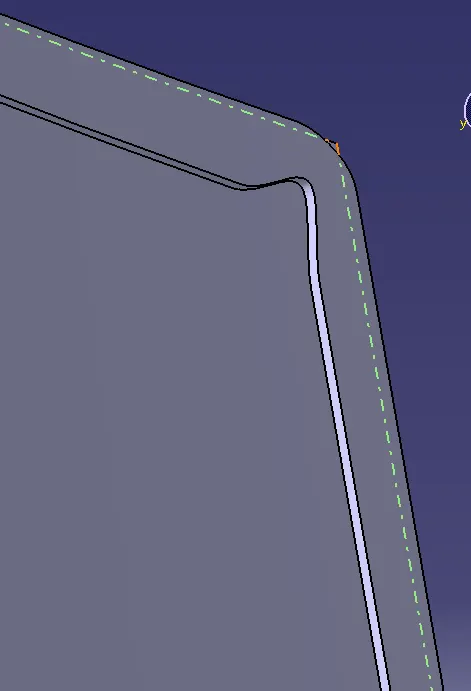
At the corners, the outer panel and the inner panel are joined together by hemming. No type of welding is done because it leaves a mark on the outer panel and damages the aesthetic beauty of the car.
Hemming is a forming operation in which the edges of the sheet are folded or folded over another part to achieve a tight fit. Normally hemming operations are used to connect parts, to improve the appearance of a part and to reinforce part edges.
After assembling all parts our final backdoor model looks like this:
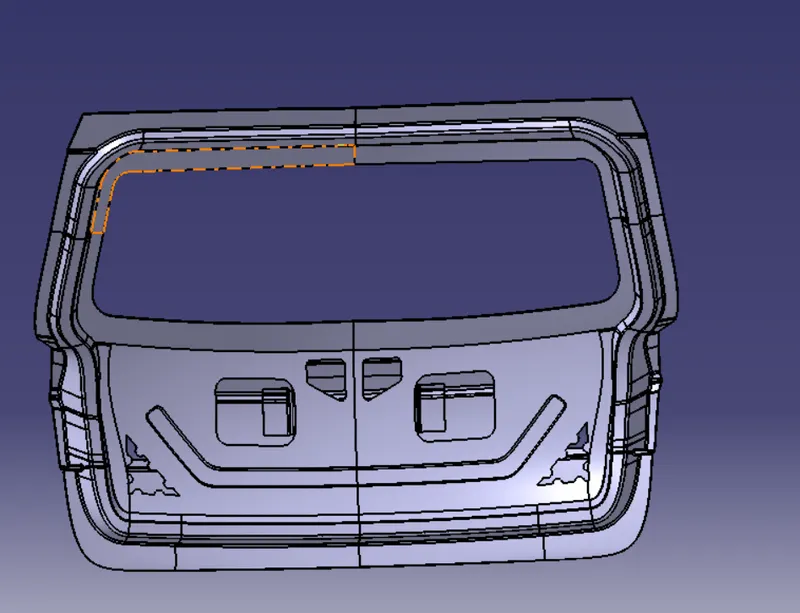
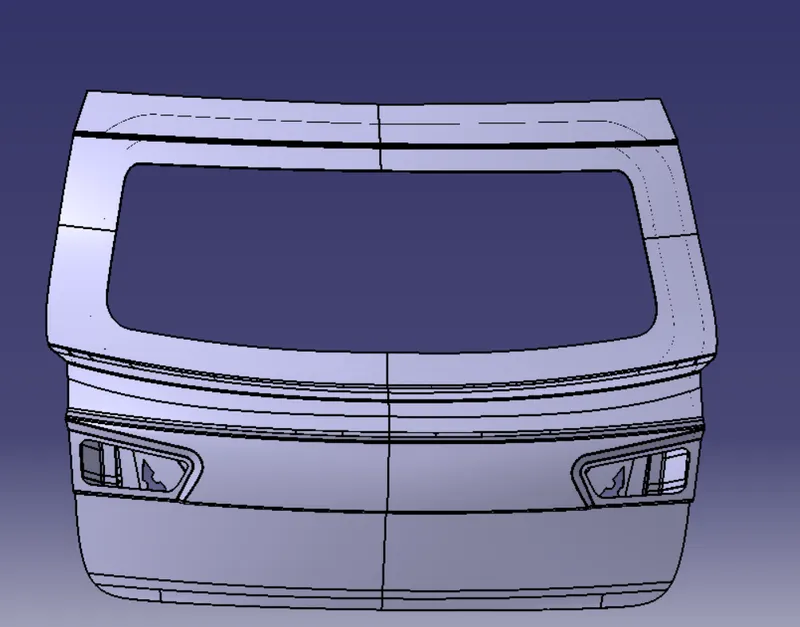
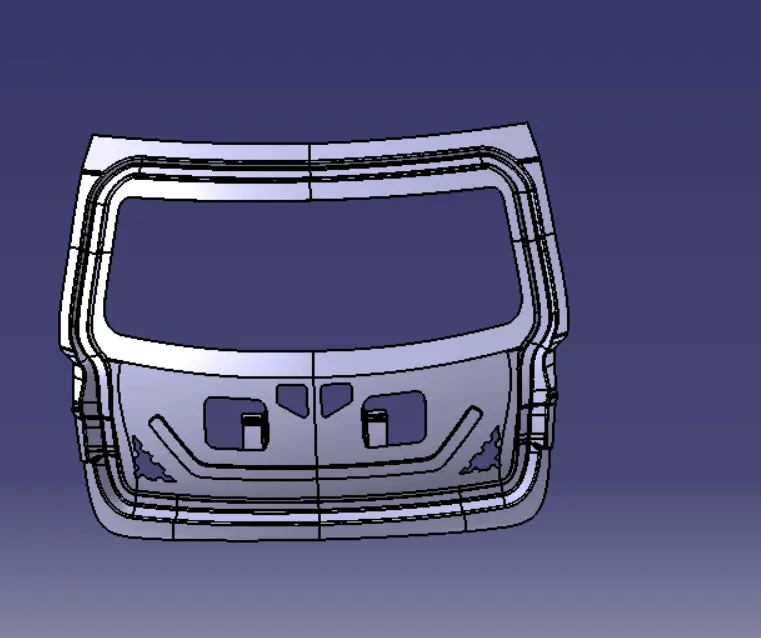
Conclusion: So as per the objective the backdoor is designed for the given panel.