Design of backdoor
Aim: To design the back door of the the car using NX CAD in accordance to the all the engineering designing criteria.
Introduction and theory :
The back door or the tail gate is used to cover the boot space.

the rear closing door of the car which will be used for the Luggage storage compartment access.It is also used to provide the support to the structure. Backdoors are often made of stamped aluminium or a stain-free steel sheet with a thickness of 0.75(min). Depending on the vehicle's budgetary limits, the backdoor is commonly fashioned from a variety of materials. Steel is the most prevalent material, but aluminium, while lighter, has a greater cost, thus it's mainly used in high-end vehicles.
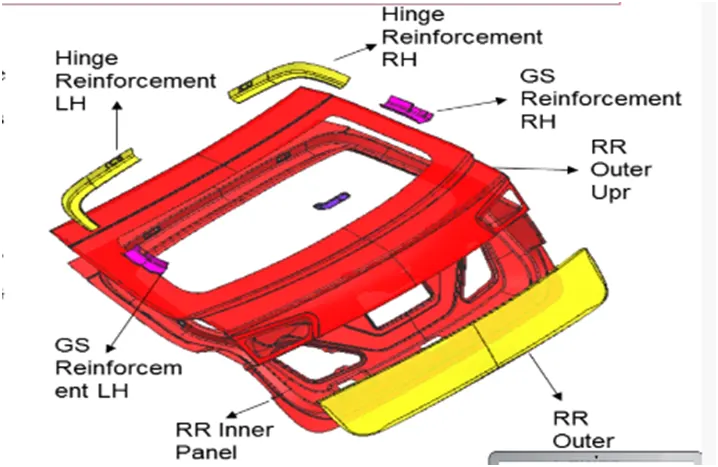
It is also a swinging commodity of the car like Hood and Side doors. The materials can be used for the Back door is Aluminium or Steel in most of the premium branded cars like Benz. Audi, Porsche, etc. uses Aluminium material for this back door. In this project we designed by considering the steel material as it is most commonly used in all companies cars.
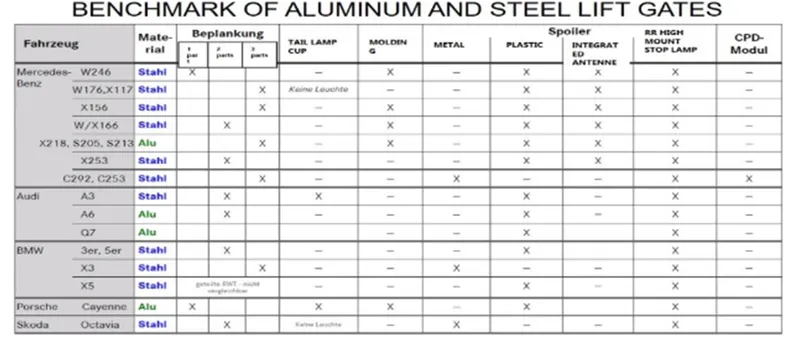
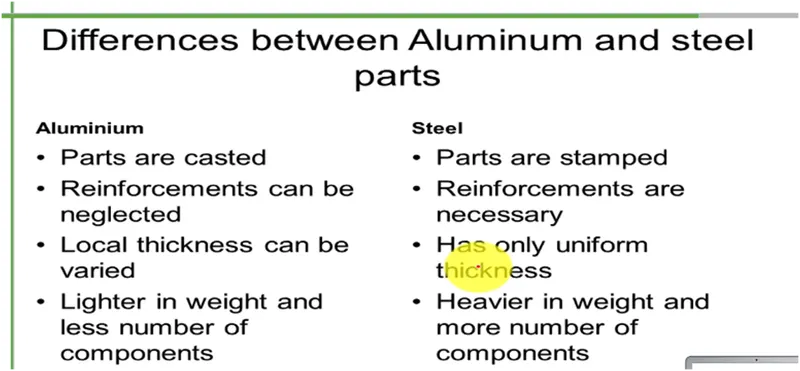
As mentienoed manufatrues uses either steel or aluminum parts here is a comparison of both
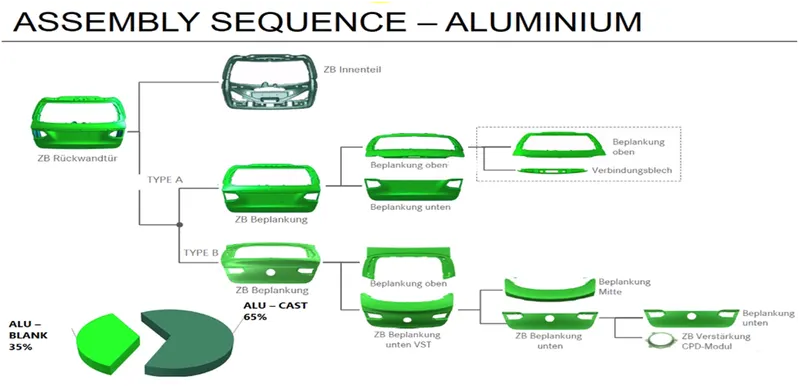
For the aluminum parts there is a assembly sequence used to manufacture the parts . as we can see the inner panel will be single part and the outer panel will have two parts.
Here is the weight comparison between the steel and aluminum parts
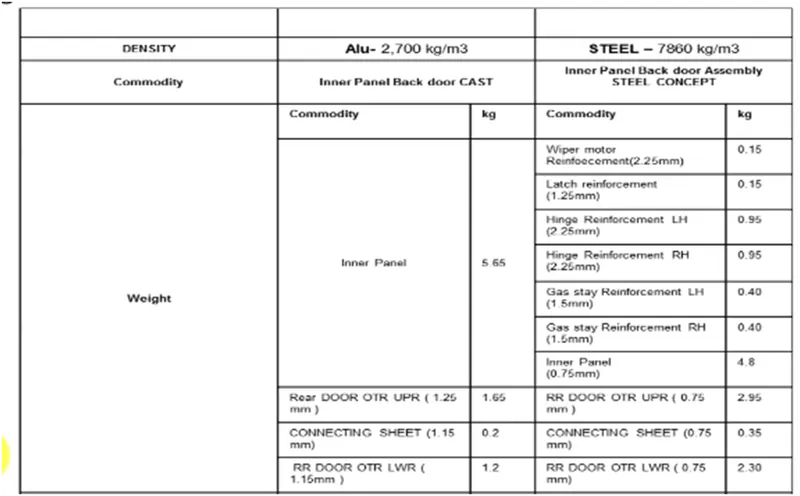
total weight difference 4.7kg
bench marking the back door and its componets:
since aluminum is better most of the high end automobile manufrature shave started using aluminum as to produce the back door
Manufacturing of the back door :
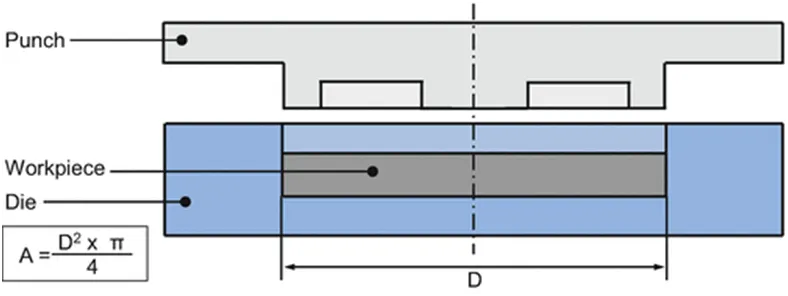
Deep drawing
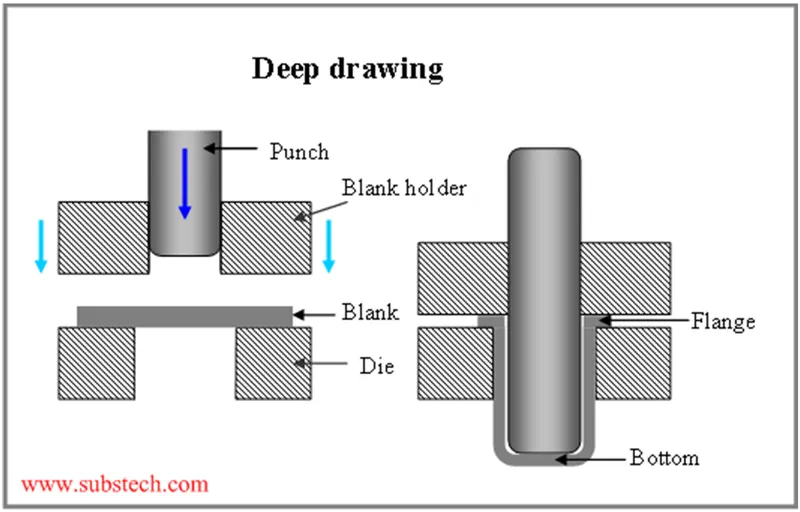
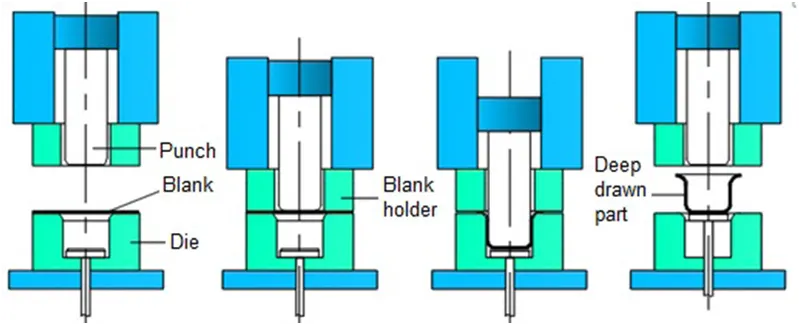
Deep drawing is a sheet metal forming process in which a sheet metal blank is radially drawn into a forming die by the mechanical action of a punch.[1] It is thus a shape transformation process with material retention. The process is considered "deep" drawing when the depth of the drawn part exceeds its diameter. This is achieved by redrawing the part through a series of dies. The flange region (sheet metal in the die shoulder area) experiences a radial drawing stress and a tangential compressive stress due to the material retention property. These compressive stresses (hoop stresses) result in flange wrinkles (wrinkles of the first order). Wrinkles can be prevented by using a blank holder, the function of which is to facilitate controlled material flow into the die radius.
Embossing (manufacturing)
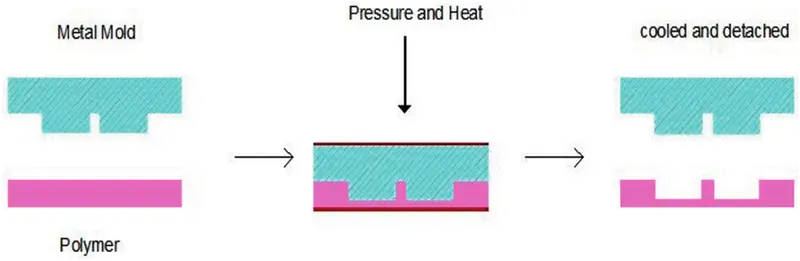
Sheet metal embossing is a stamping process for producing raised or sunken designs or relief in sheet metal. This process can be made by means of matched male and female roller dies, or by passing sheet or a strip of metal between rolls of the desired pattern. It is often combined with foil stamping to create a shiny, 3D effect.
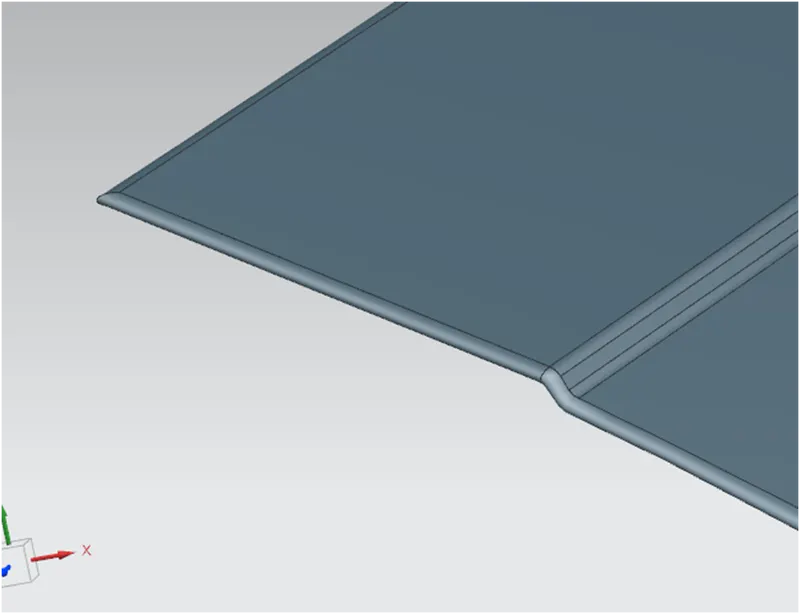
Hemming
Hemming is a forming operation in which the edges of the sheet are folded or folded over another part in order to achieve a tight fit. Normally hemming operations are used to connect parts together, to improve the appearance of a part and to reinforce part edges.
In car part production, hemming is used in assembly as a secondary operation after deep drawing, trimming and flanging operations to join two sheet metal parts (outer and inner) together. Typical parts for this type of assembly are hoods, doors, trunk lids and fenders.
The accuracy of the hemming operation is very important since it affects the appearance of the surface and surface quality. Material deformations, which occur during the hemming process, can lead to dimensional variations and other defects in parts. Typical hemming defects are splits or wrinkles in the flange, material overlaps in the corner areas or material roll-in. This is why it is important to use simulation tools in order to, on the one hand, better understand the hemming process and, on the other hand, significantly reduce the number of “trial and error” loops during tryout und production.
There are various types of hemming operations:
- Conventional die hemming
- Roll hemming
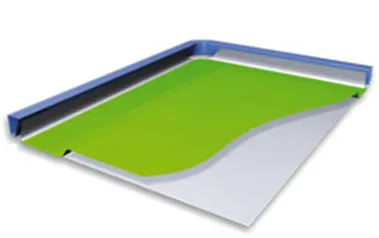
In conventional die hemming, the flange is folded over the entire length with a hemming tool.
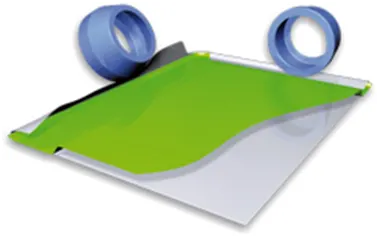
In roll hemming, the hemming roller is guided by an industrial robot to form the flange.
Conventional die hemming
Conventional die hemming is suitable for mass production. In die hemming, the flange is folded over the entire length with a hemming tool. Normally the actual hemming is a result of a forming operation in which the flange is formed with a hemming tool after the drawing and trimming operations have been completed. The formed flange is then hemmed in several process steps. These steps include, for example, the pre-hemming and final hemming depending on the respective opening angle of the flange. Production plants for conventional die hemming are very expensive, but the cycle times are very low.
Roll hemming
Roll hemming is carried out incrementally with a hemming roller. An industrial robot guides the hemming roller and forms the flange. Roll hemming operation can also be divided into several pre-hemming and final hemming process steps. Roll hemming is very flexible to use and tool costs are significantly lower as compared to those of conventional die hemming. However, the cycle times are much higher since the hemming is realized using a hemming roller which follows a defined path.

Desging of the back door:
Before desging of the back door we must follow certain criteria like:
The rear visibility criteria :
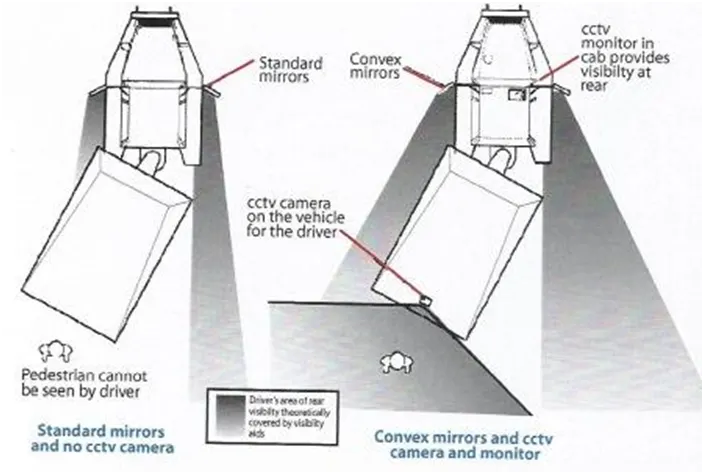
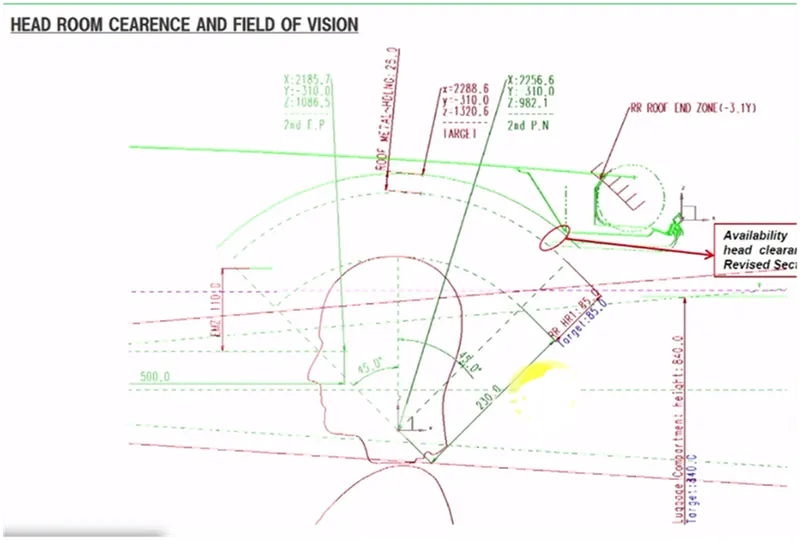
The back door visibility criteria is very much important since it helps the driver to see the traffic behind him. Also as a safety measure it is very important
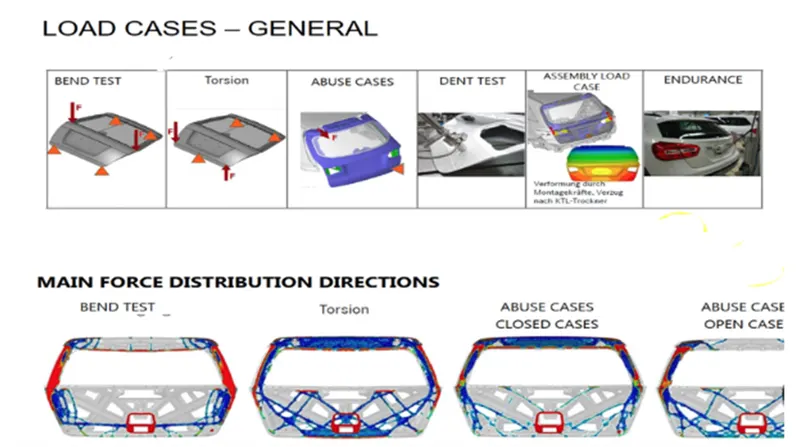
Since there will be chances of collision from behind we should consider the load case scnerios on the back door
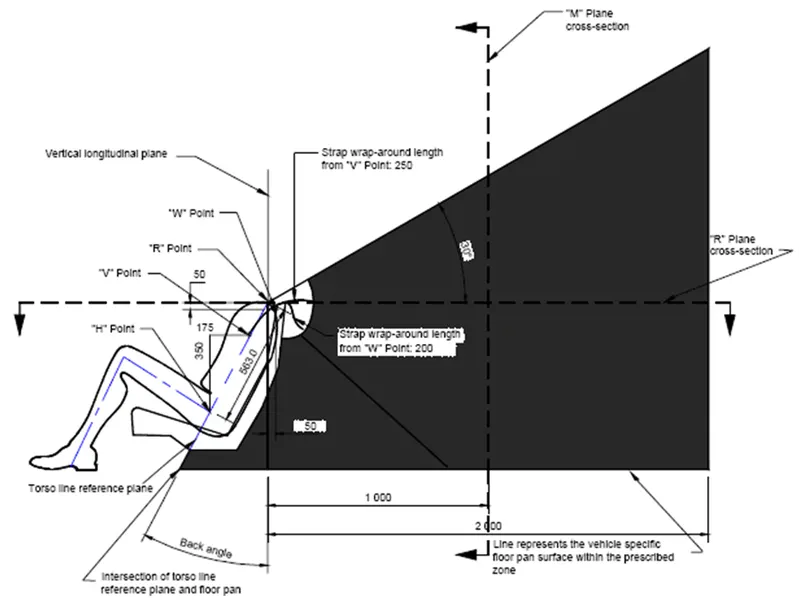
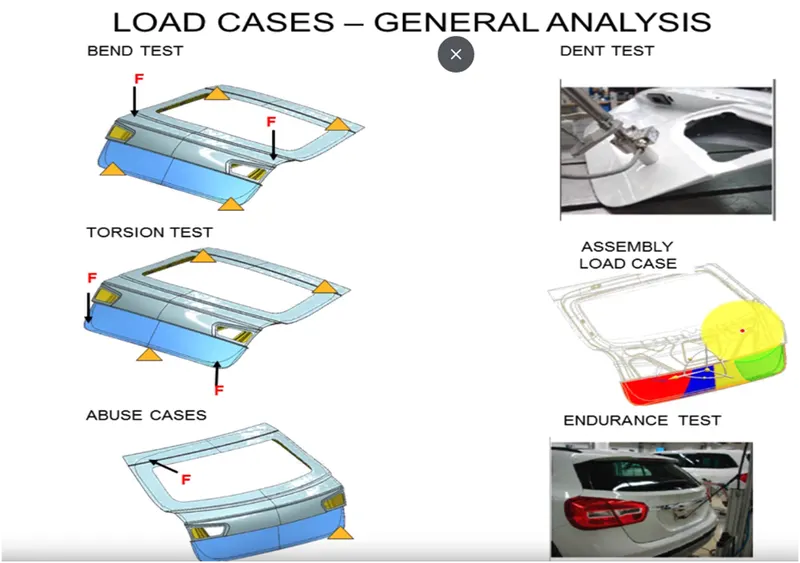
Load case tests on the back door :
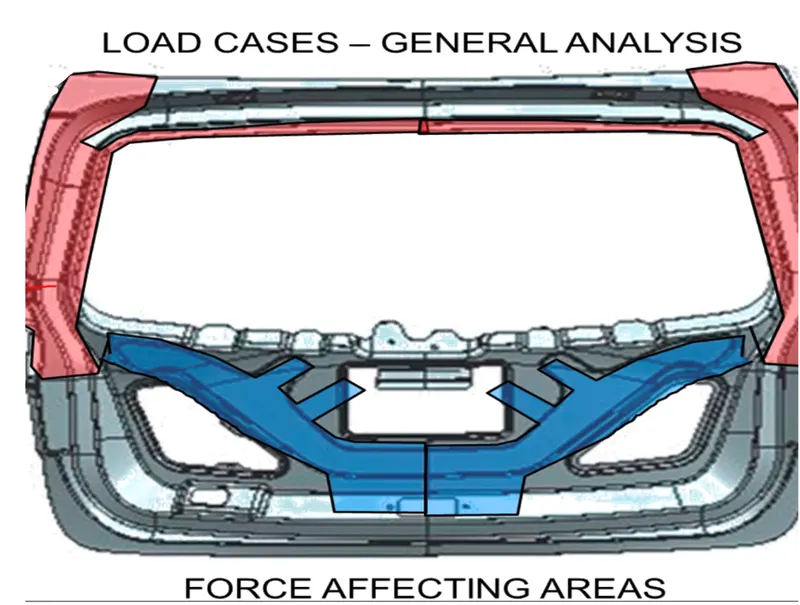
In these test the load are applied on different different locations to test the durrabilty as well as the load distrubion of the design of the car
Sinec these areas are the most coman areas which will be facing the load we have to apply special reinforcements here
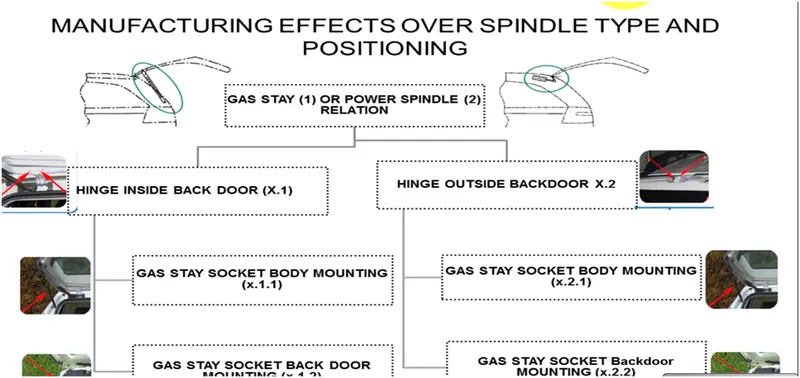
The posting of gas stay and effect
the design process:
the whole design starts with clearing the sheet meatl part of the given design. This iculdes sewing all parts and clearing out the blend conners.now we will create spetrae assembley for the inner and the outer panel
since the outer panel is to be dived in two parts we will be divinding them into two components
now to create the inner panel we will use the extract surfaces to make the surfaces like this
Since it is a vertical and as well as horizontal part we will have to create a tooling direction
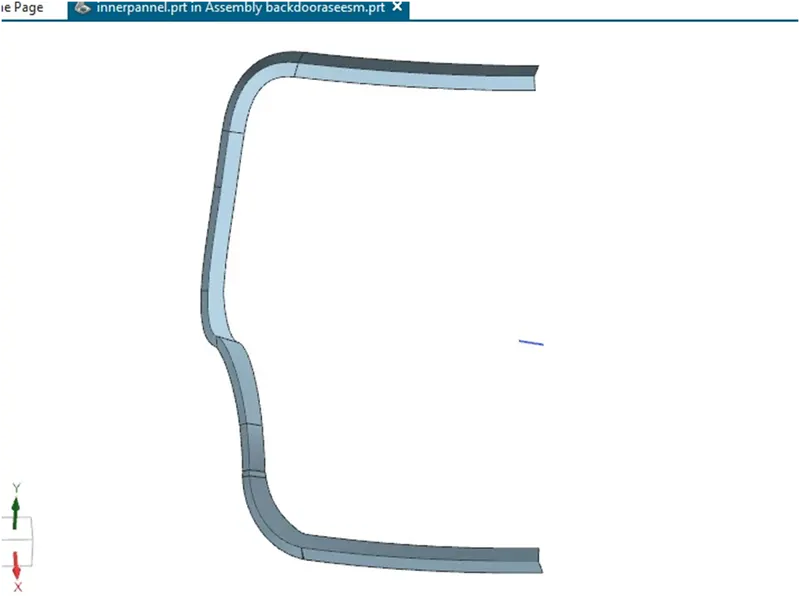
this will be our tooling direction of the model
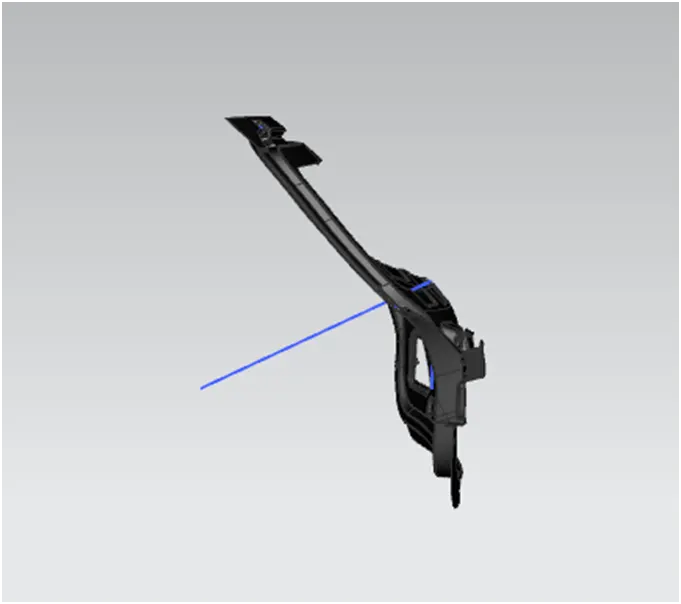
now we do the inner panel detailing and make surfaces by either using
the extact body as well as offset surface tool
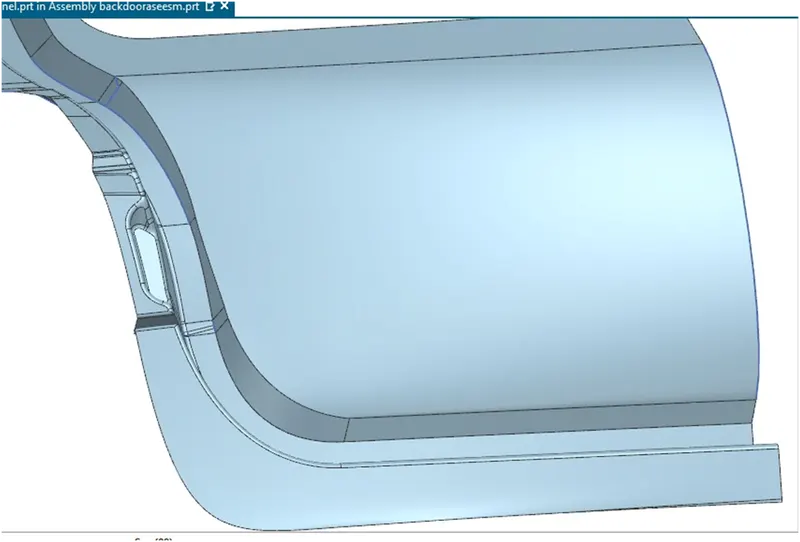
Now to make the surfaces more feasible to produce we will be using edge blends as well as making them at creating angles special considerations will be given to the area of the lights as we need to have a light mounting in the inner sealing .
Now we will be creating embosses and sleaging flanges to make it more stronger and durables
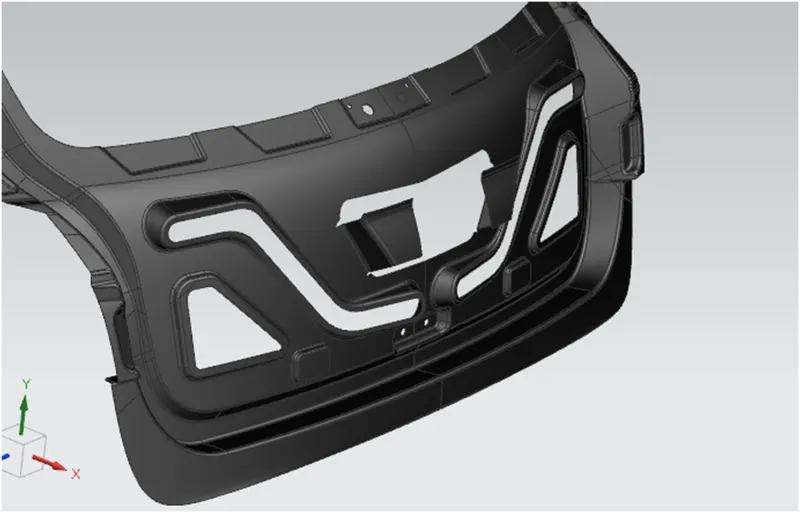
Force displacement
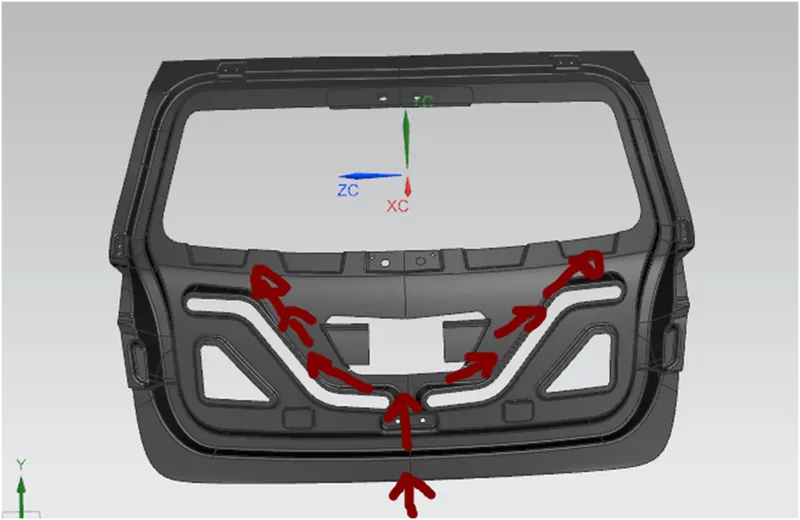
The latch and striker moment
The latch is a essential part of the back door comaidity as it will be attached to the body and help it to make it close.
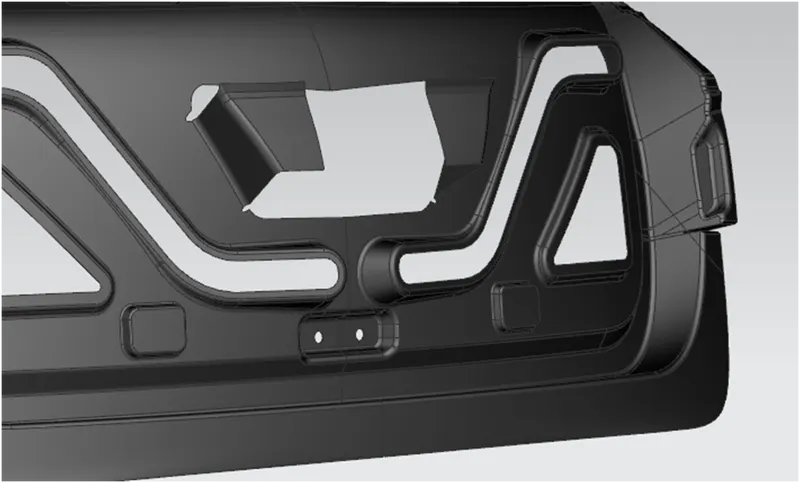
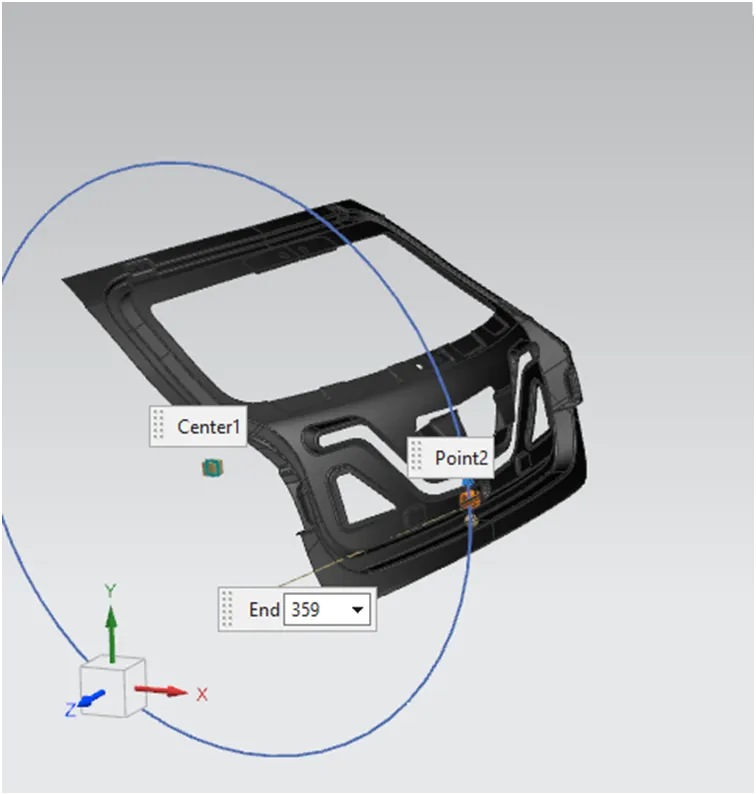
Hinge mounting:
Hinge mounting are placed on the inner panel in a way such that it gets attach to the roof mounting
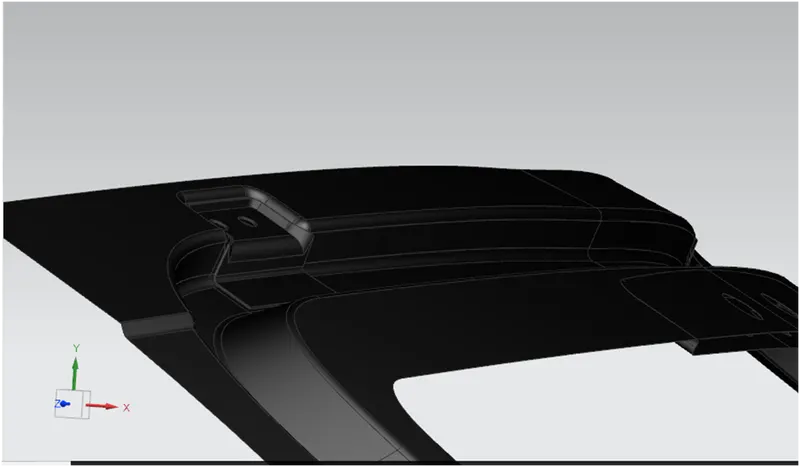
Gas stay mounting:
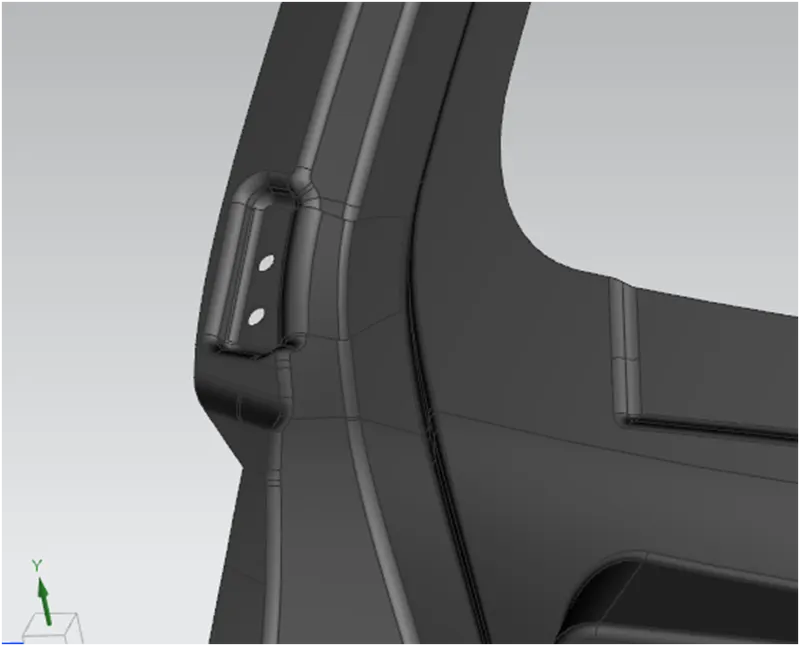
Wiper motar mounting :
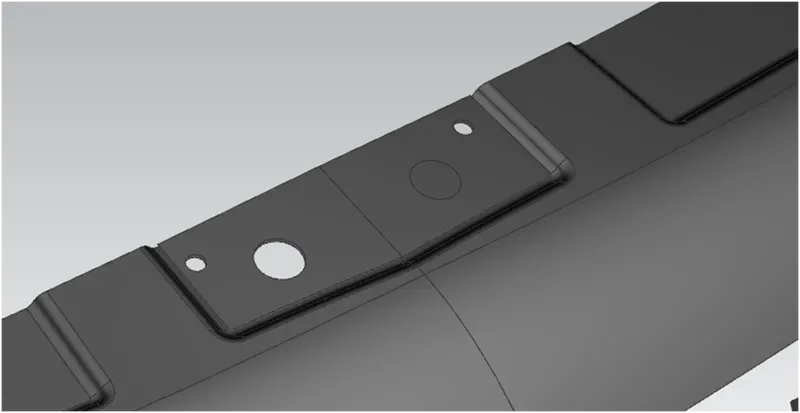
Backdoor signal lights and camera mount:
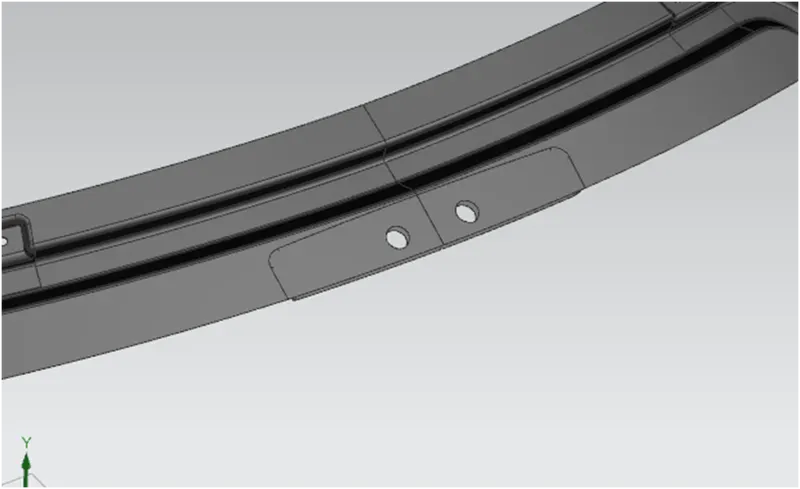
Reinforcements:
Hinge reinforcement:
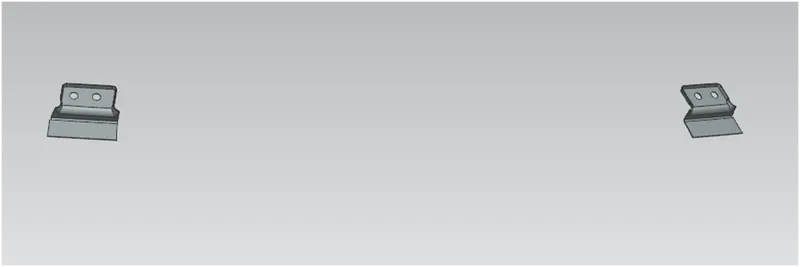
Gas stay reinforcement:
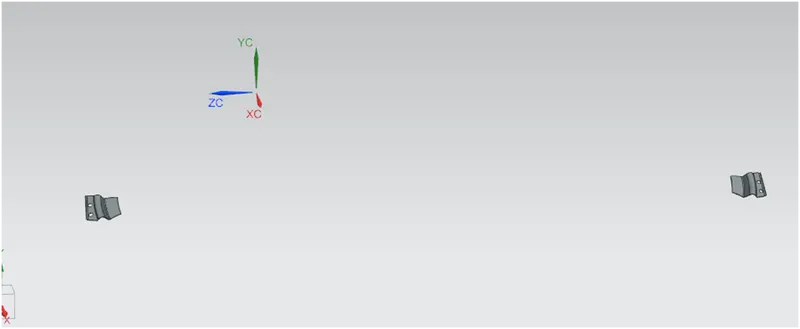
Wiper motar mouting:
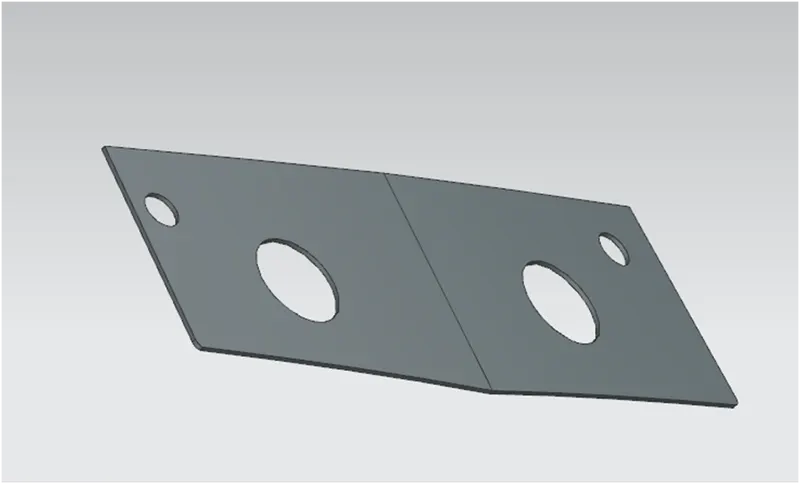
Latch and striker mounting:
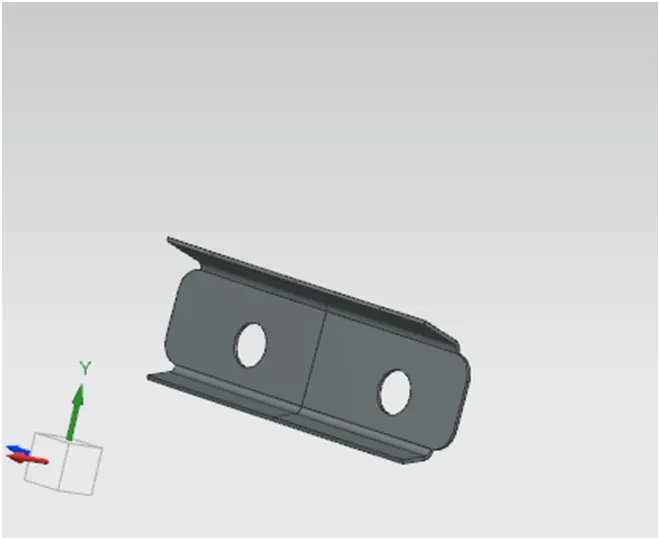
Heming :
Backdoor outer panel upper:
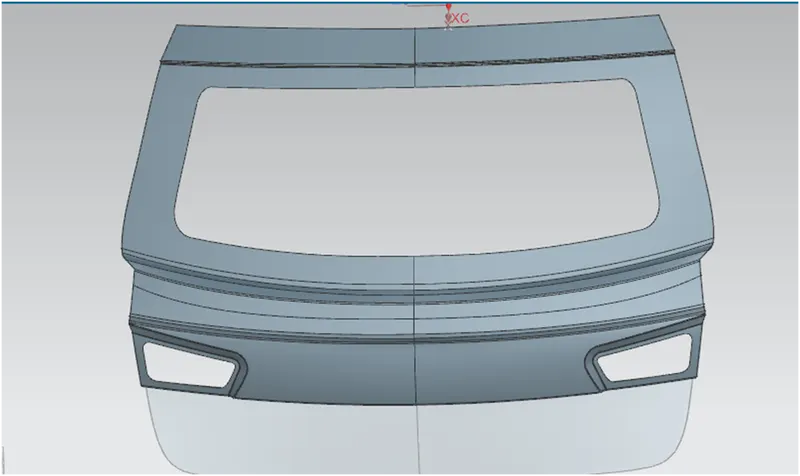
Backdoor outer panel inner:
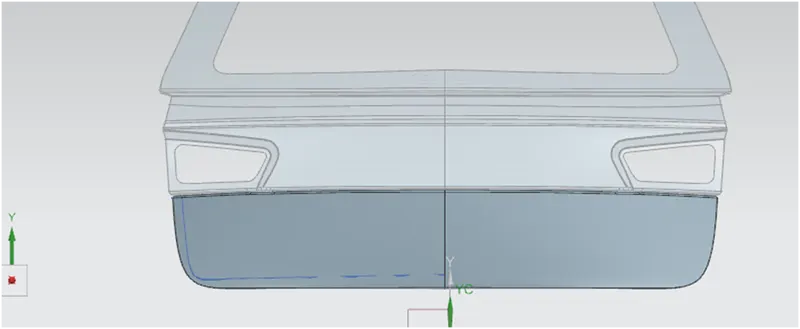
Inner panel:
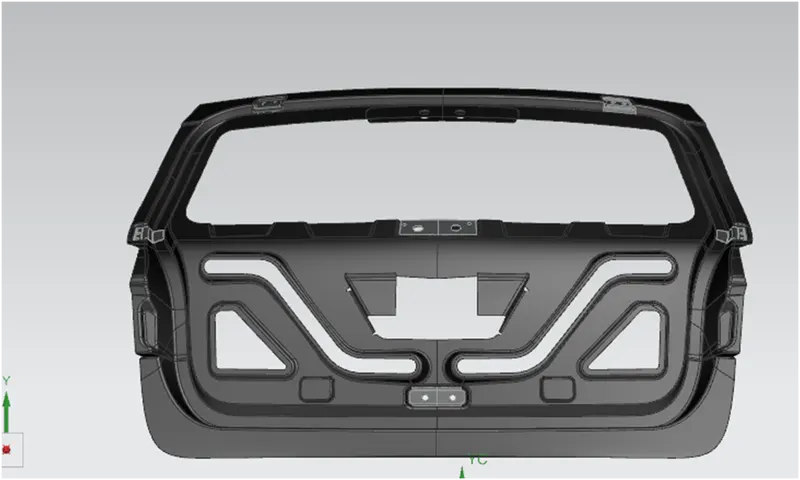
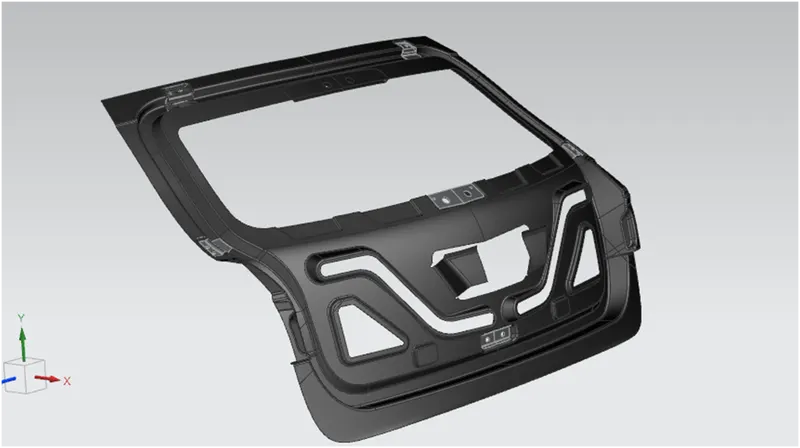
Backdoor assembly:
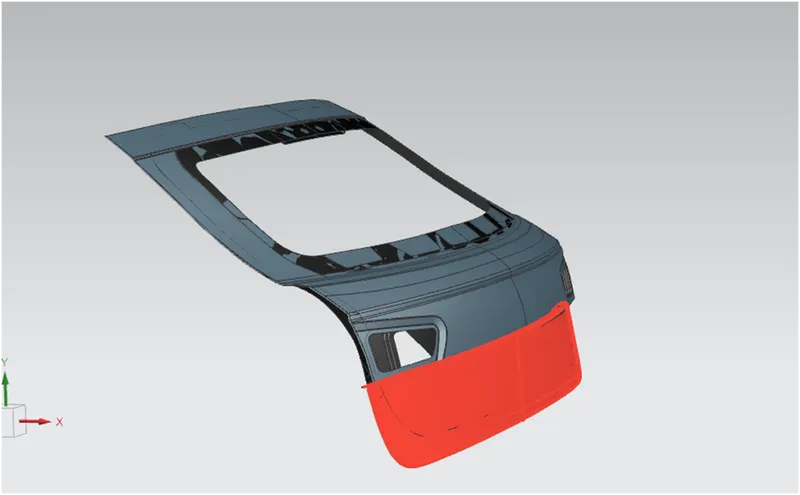
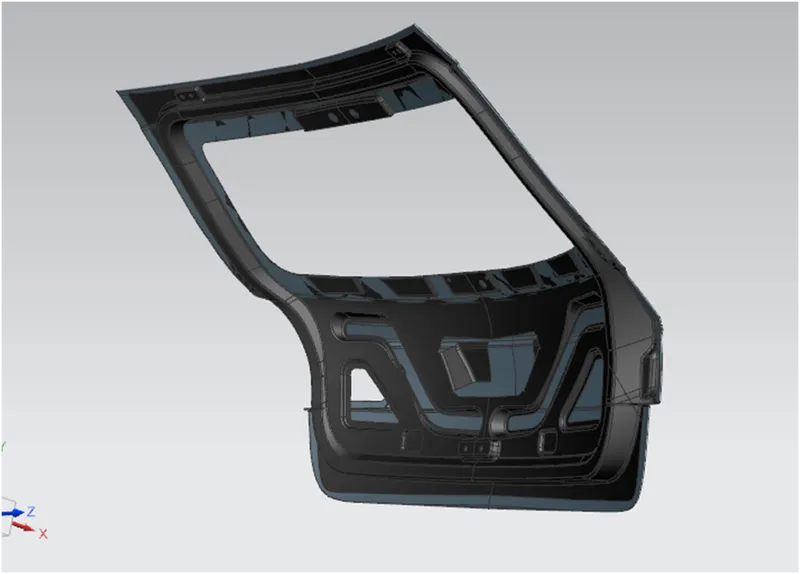
Draft analysis:
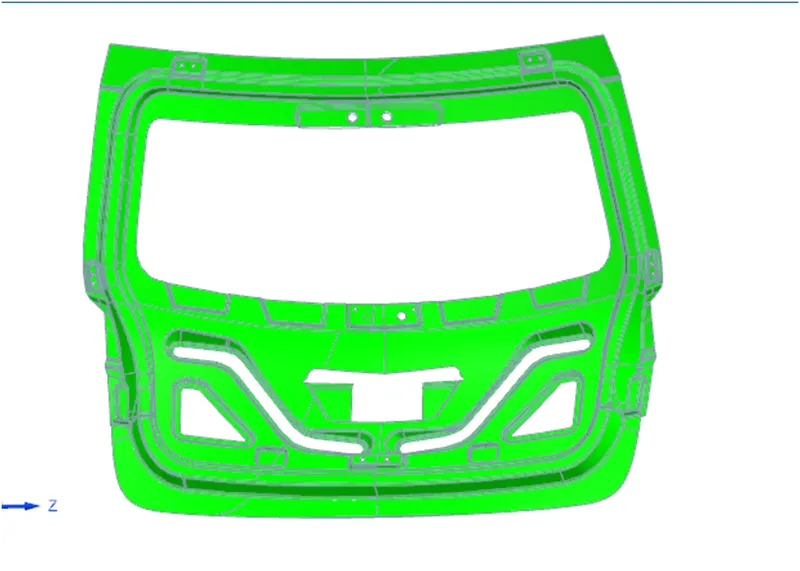
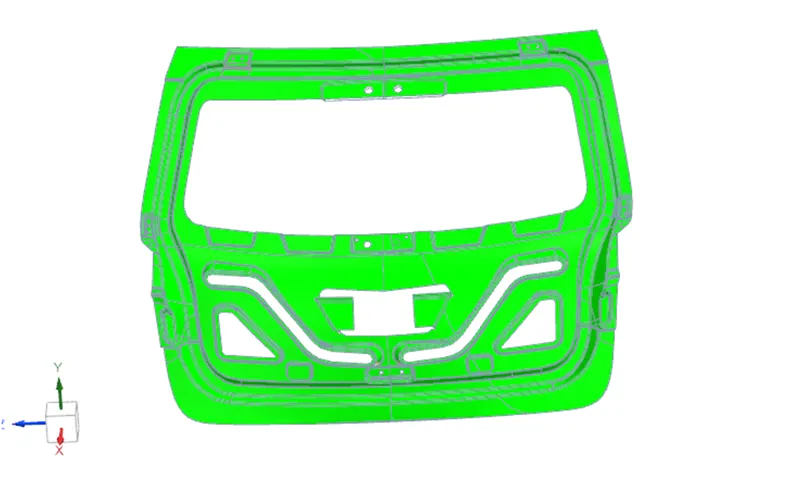
There is a drafts analysis feature in NX that we may use to see if the sheet metal item we created can be deep drawn. This method of analysis is based on colour ranges that define zones on the investigated element where deviations from the draught direction correspond to specified values at each location.
Conculsion:
The complte design of back door was complted using nx cad