Design of backdoor
OBJECTIVE:
i) From the given styling surface, develop a back door using appropriate design methodologies.
ii) The objective of this project is to design a BIW Back Door of a car with an Inner Panel, Outer Panel, and
Reinforcements for the Hinges, Gas stay, Wiper Motor, and Latch by following the engineering standards.
SOFTWARE USED:
Siemens NX CAD
INTRODUCTION:
The Back Door of a car is the rearmost part of the vehicle which gives access to the trunk space of the vehicle.
The rear door also supports the reinforcements and added weights of the Wiper Motor, Gas Stay, Tail Lamp, and Latch and Striker.
The Backdoor/tailgate is one of the closure commodities in BIW sheet metal design. The backdoor has a lot of components inside and is designed to incorporate them easily. It affects the rear visibility and luggage area.
The material used for door manufacturing depends on the budget and performance of the vehicle.
Major Parts and Reinforcements:
The backdoor consists of the following basic components:
1. Backdoor Outer Panel (Upper)
2. Backdoor Outer Panel (Lower)
3. Backdoor Inner Panel
4. Hinge Reinforcements (LH & RH)
5. Gas-Stay Reinforcements (LH & RH)
6. Latch and Striker Reinforcement
7. Wiper motor Reinforcement
DESIGN OF BACKDOOR OUTER PANEL:
The Outer Panel is the styling surface of the back door. Other components of the backdoor are designed
with reference to the outer panel. It acts as the outer cover and deals with the aesthetics of the car.
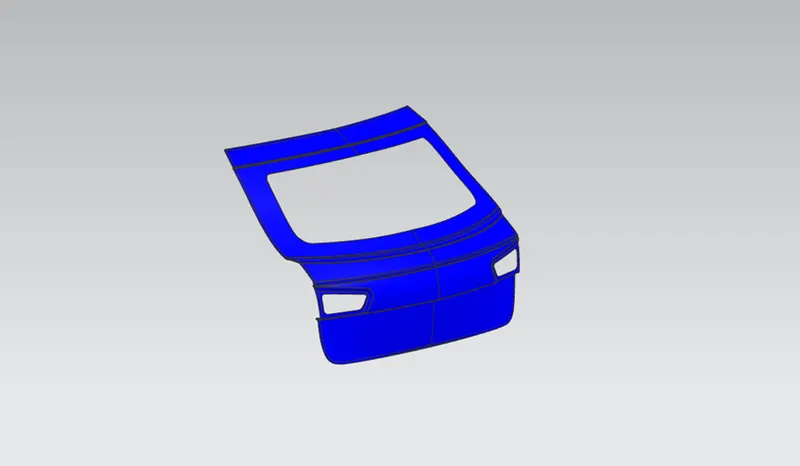
In this design outer panel is divided into two parts
1. Outer Upper Panel
2. Outer Lower Panel
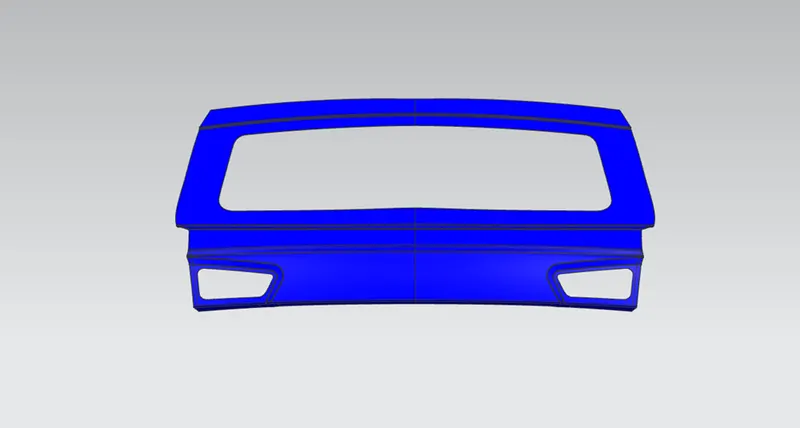
Outer Upper Panel:
The Outer Upper Panel Extracted from a styling surface.
The panel is altered for the required design with the surface tools of NX CAD
The thickness provided for the outer panel is 0.75 mm
Hemming is provided with the corner relief.
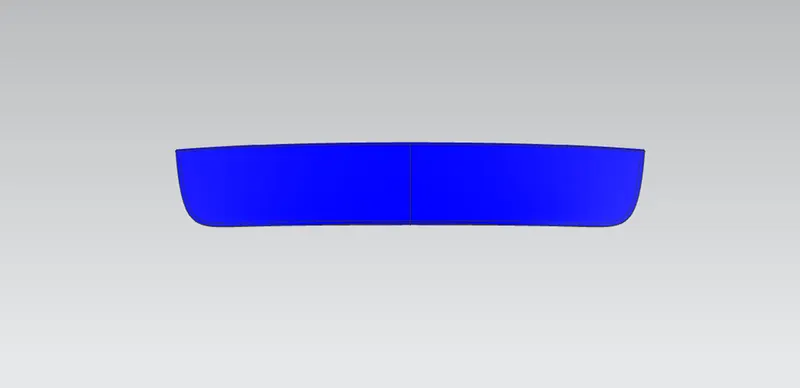
Outer Lower Panel:
The Outer Upper Panel Extracted from a styling surface.
The panel is altered for the required design with the surface tools of NX CAD
The thickness provided for the outer panel is 0.75 mm
Hemming is provided with the corner relief.
Outer Upper and Lower panel:
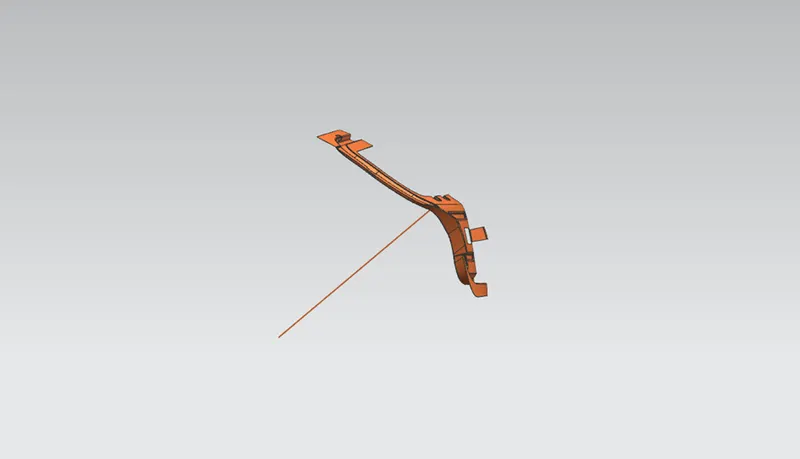
Tooling Direction:
• Before starting to design the inner panel of the back door the tooling direction for Deep Drawing
purpose should be created.
Then the styling surface needs to be checked and analysed since it might have irregularities, hence it must be fixed first.
Then the back door was designed using the top-down approach.
DESIGN OF BACKDOOR INNER PANEL:
The Inner Panel Extracted from a styling surface,
The panel is altered for the required design with the surface tools of NX CAD
The thickness provided for the outer panel is 0.75 mm
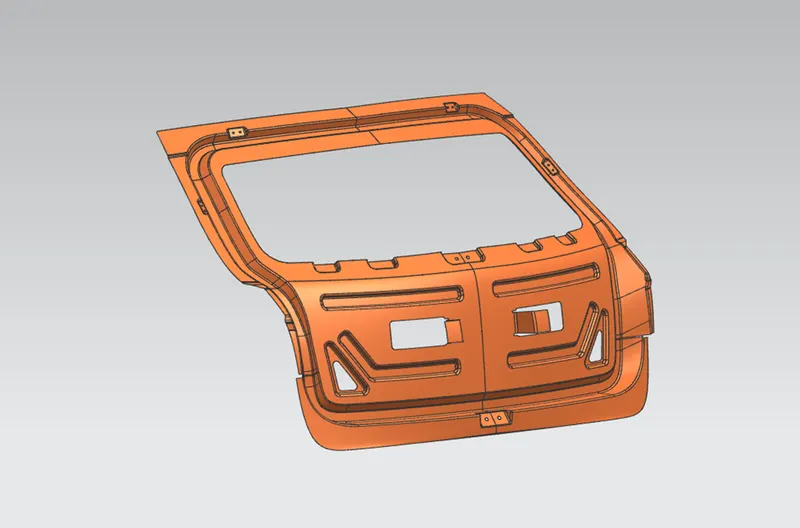
After creating the tooling direction, the design of the inner pan will begin where we will first develop an effective sealing flange by checking all the boundaries and by following the shape of the inner panel design. By creating multiple flanges and by using surface modelling techniques the concept design of the inner panel was created.
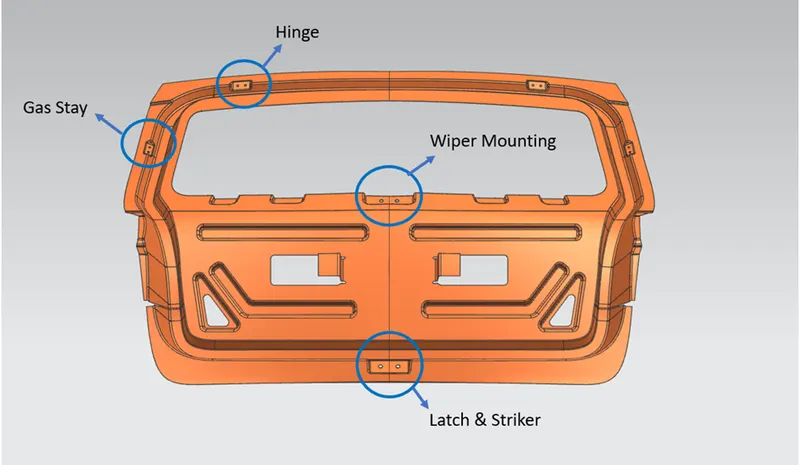
• After the concept of the inner panel is developed, then the child components like a hinge, latch, gas-stay locations, and their reinforcements must be designed. Which completes the overall design of the
tailgate.
The embosses were created in ‘V-Shape or Y-Shape' so that if the vehicle undergoes the crash, then the
force dissipates over it which reduces the damage transferred to the trunk space.
Hinge, Gas Stay, Wiper Motor and Latch & striker Locations:
HEMMING:
Hemming and seaming are two similar metalworking processes in which a sheet metal edge is rolled
over onto itself. Hemming is the process in which the edge is rolled flush to itself.
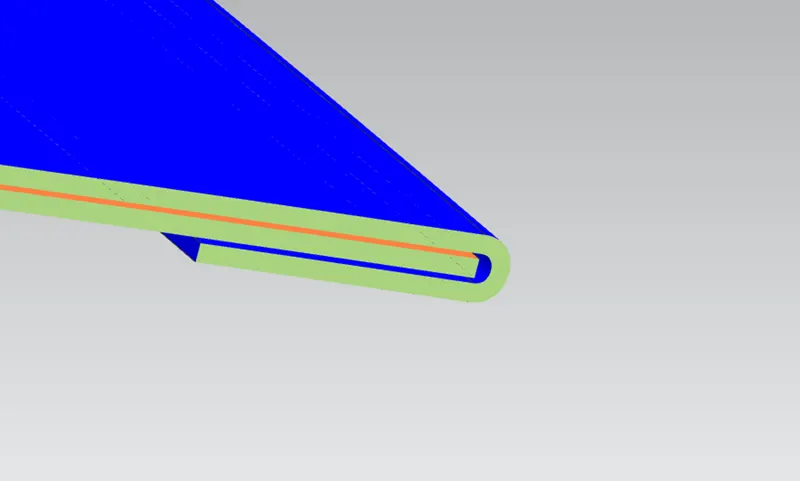
• The outer panel was designed as two separate parts named as outer panel upper and outer panel
lower.
• After designing the outer panel the Hemming was created by offsetting the surface with the help of face blend and swept surface.
• The two separate outer panels will be joined using Banking.
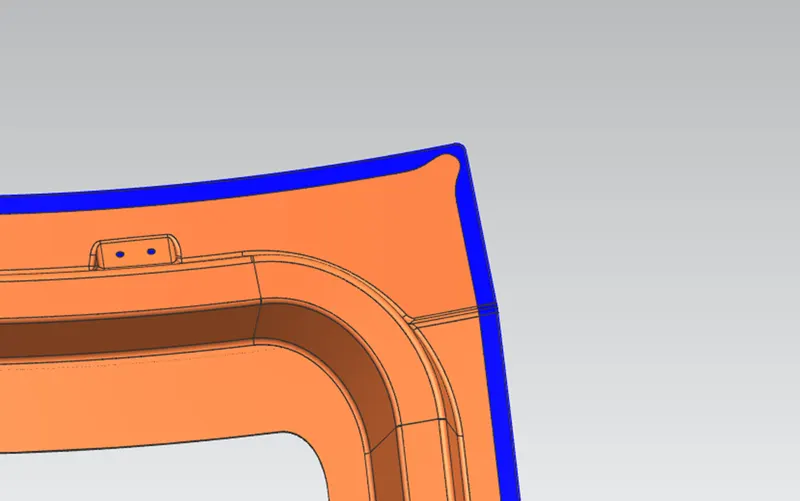
CORNER RELIEF:
During the hemming process, when giving the Corner Relief helps to control sheet metal material behaviour and to prevent unwanted deformation during unbend operations and also helps to reduce the number of passes in hemming.
DESIGNING THE REINFORCEMENTS:
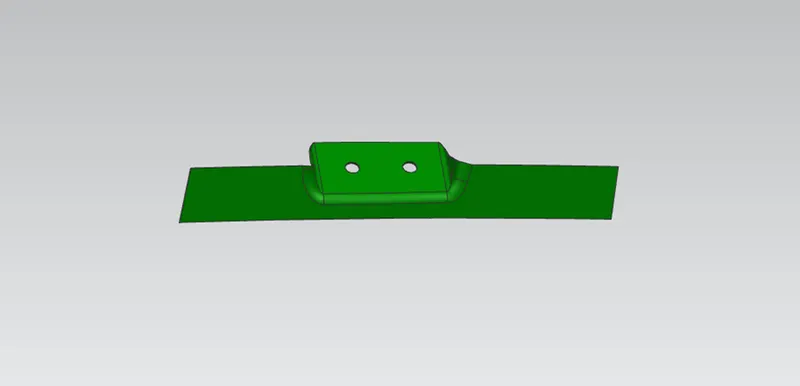
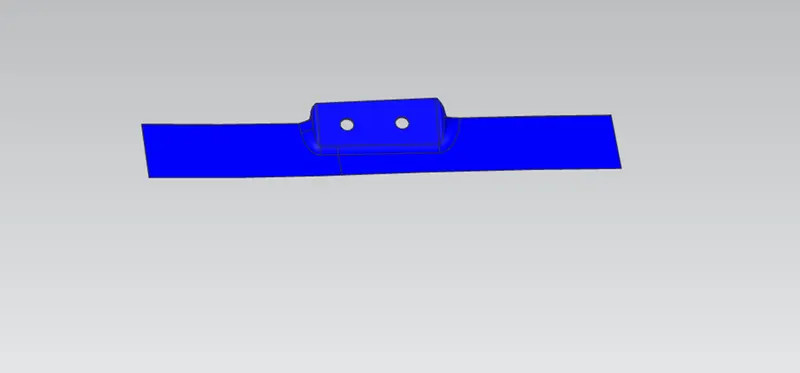
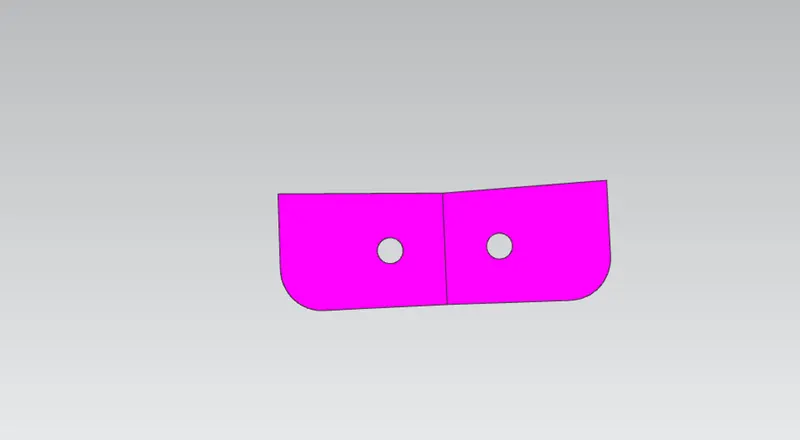
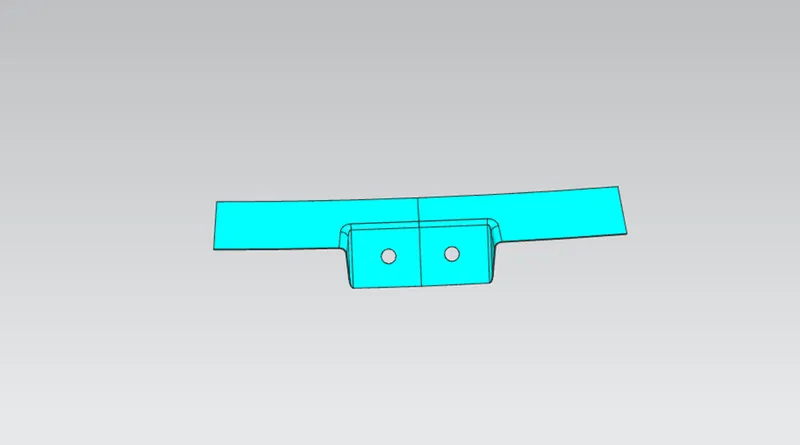
All the reinforcements were created using the same method, first, the linked body was created
separately for each with the help of extract geometry and then the required portion was trimmed out and
then thickened.
The thickness provided for all reinforcements is 1 mm.
1. HINGE REINFORCEMENT
 2. GAS STAY REINFORCEMENT
 3. WIPER MOTOR REINFORCEMENT
 4. LATCH REINFORCEMENT
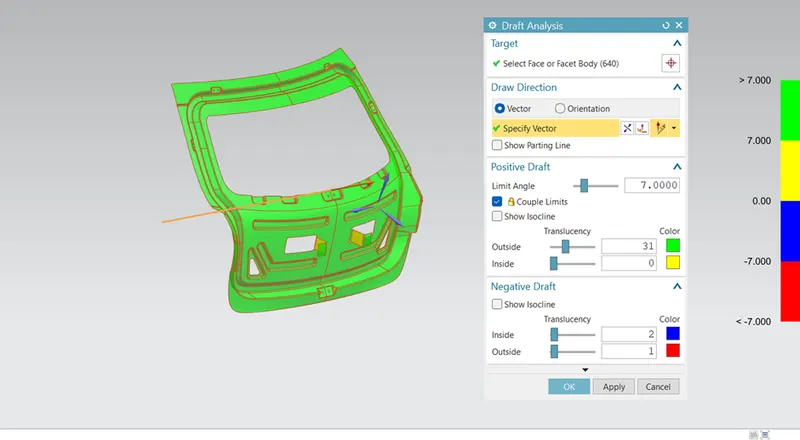
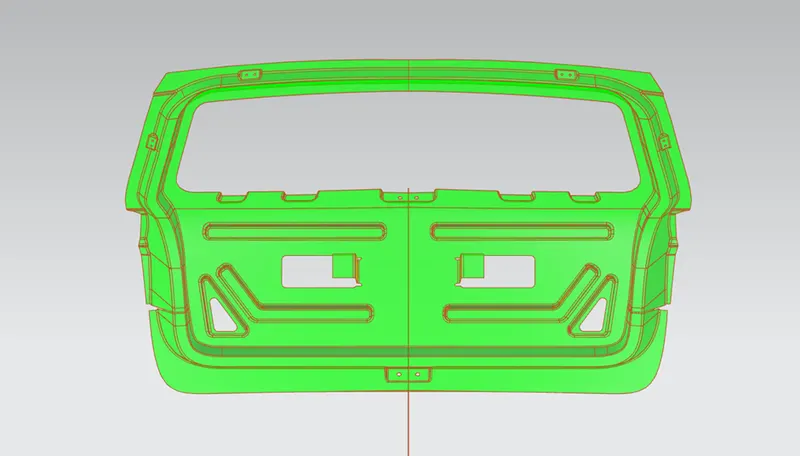
Draft Analysis for Inner Panel:
- The Draft Analysis will be performed for the tooling direction created at first and checked that the model is suitable for manufacturing.
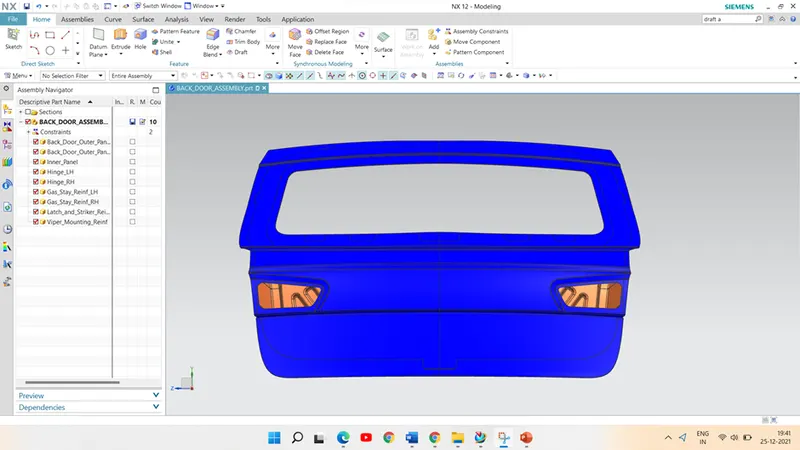
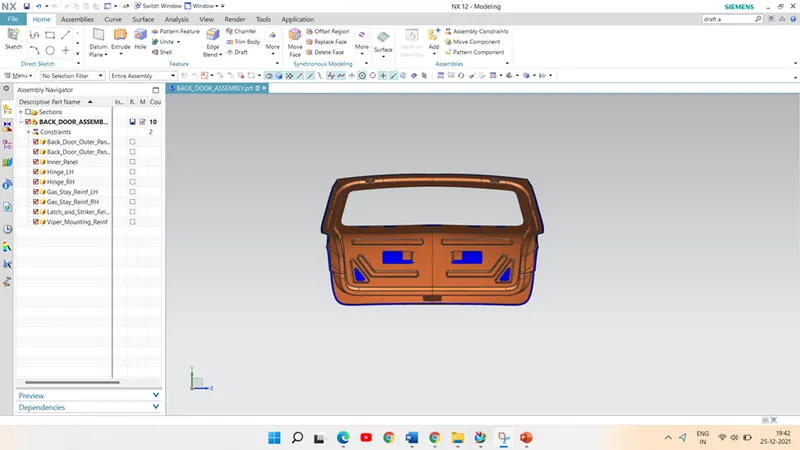
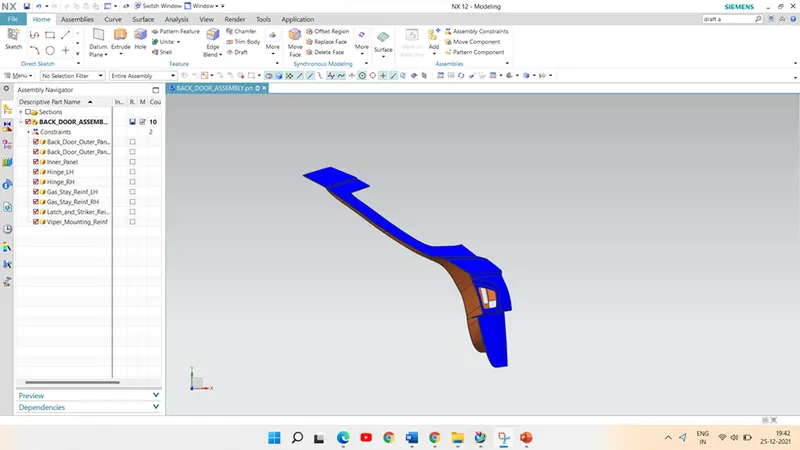
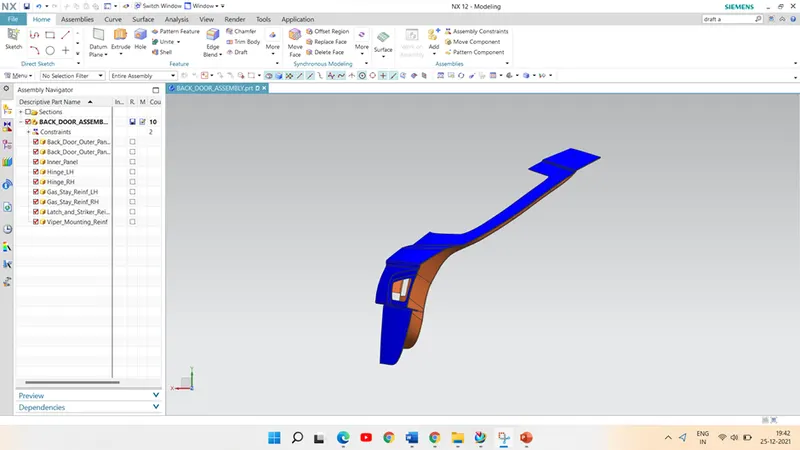
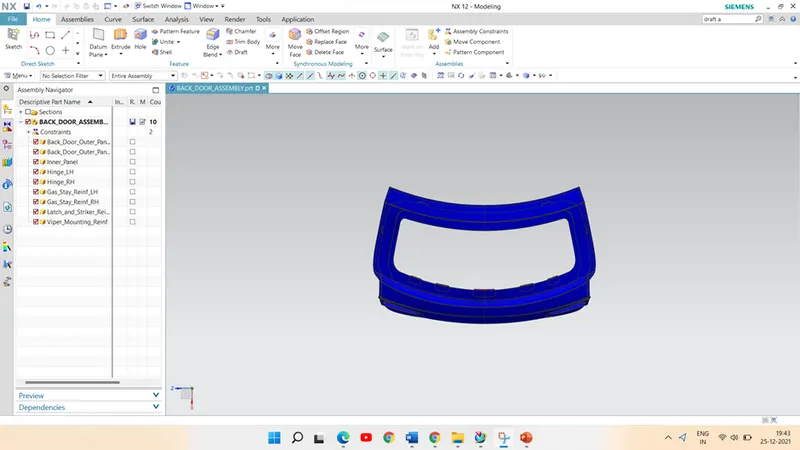
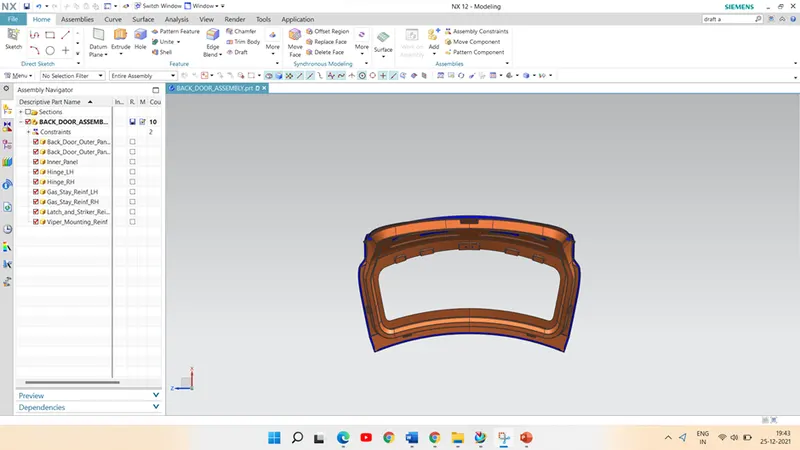
Views of the Designed Back Door:
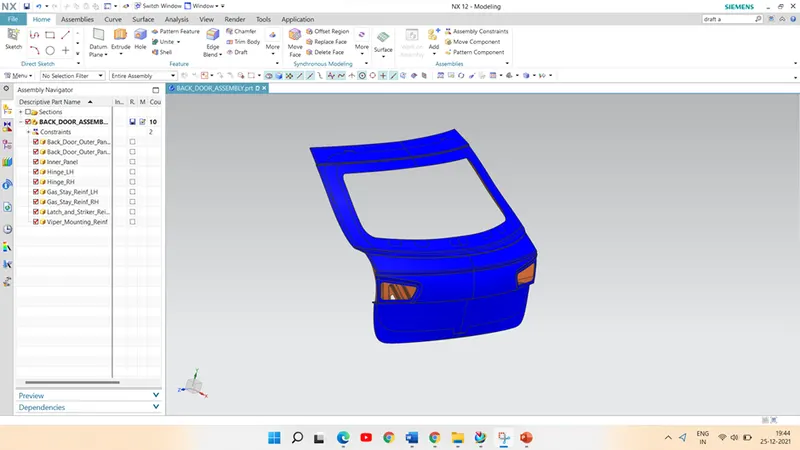
CONCLUSION:
Thus, the body in white Back Door of a car was Designed following the engineering standards and also the deep drawing requirements were satisfied.