Design of backdoor
AIM :
To design the back door using the provided styling surface to come up with a back door design by using appropriate design methodologies, and providing the necessary reinforcements and embosses.
Back Door :
A car door is a type of door opening, typically hinged on its front edge, but sometimes attached by other mechanisms such as tracks, for entering and exiting a vehicle. Doors most often integrate side windows for visibility from inside the car and can be locked to secure the vehicle.
Car doors may be manually operated or with power assist supplied by the vehicle. Powered doors or power doors may be found on minivans, luxury vehicles, or modified cars.
A vehicle typically has two types of doors: front doors and rear doors. Loosely related are: vehicle hoods and vehicle trunk lids. There are also doors known as a "hatch".
A major safety issue with opened vehicle doors is the assumption at night vehicle doors can provide a warning to other vehicle drivers. It is estimated over 50 percent of all vehicle doors have nothing applied to the interior of the vehicle door such as light and/or a reflector. These devices need not meet any US Federal Motor Vehicle Safety Standards since no standards apply. To make matters worse it was reported by the Fatal Accident Reporting System that in the year 2014 not one single death was reported with a person outside the opened vehicle door at night in the entire United States of America. New safety technology such as providing to the lower interior edge of the vehicle door a highly reflective tape provides the ability of other vehicle drivers to see the opened vehicle door at night.
Parts :
- Door card
- Door handle
- Door switch
- Glass window
- Pillar
- Power door locks, which can work on a remote system
- Interior storage compartment
Types of doors :
Top-mounted :
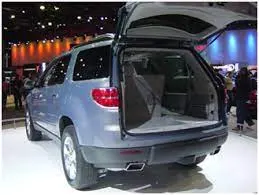
Side mounted :
Split type :
Main parts in back door assembly:
- Outter panel
- Inner panel
- Hinge reinforcement
- Gas stay reinforcement
- Wiper motor reinforcement
- Latch and Striker reinforcement
Creating of Outter panel :
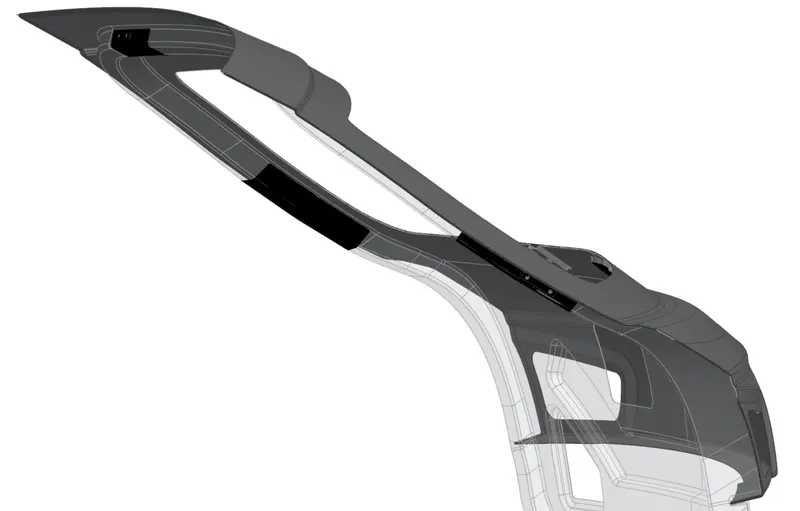
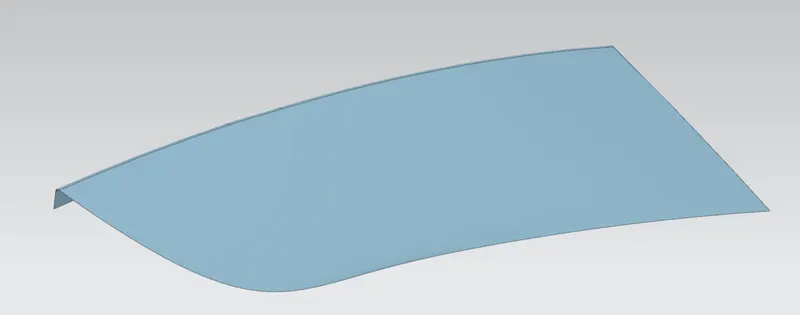
The outter panel is basically based on the class A surface given by the team. The class A surface from the team is given below.
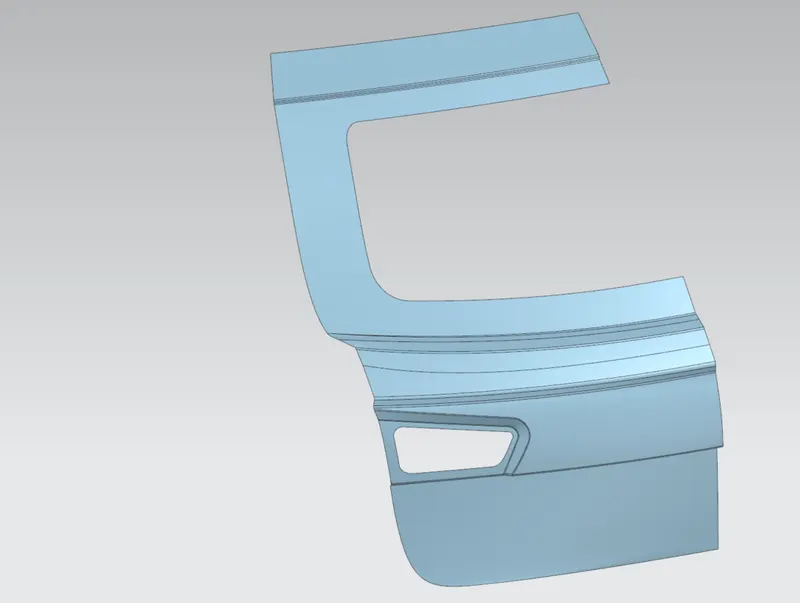
given class A surface
There were some changes to be made as per the sheet metal product manufacturing. So the changes were done to the given class A surface to make it a smooth surface.
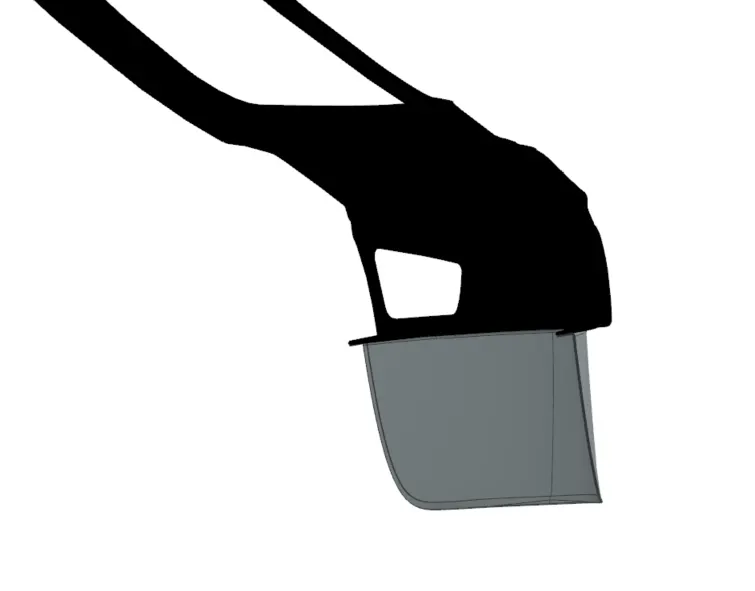
The reworked model is divided into 2 parts.
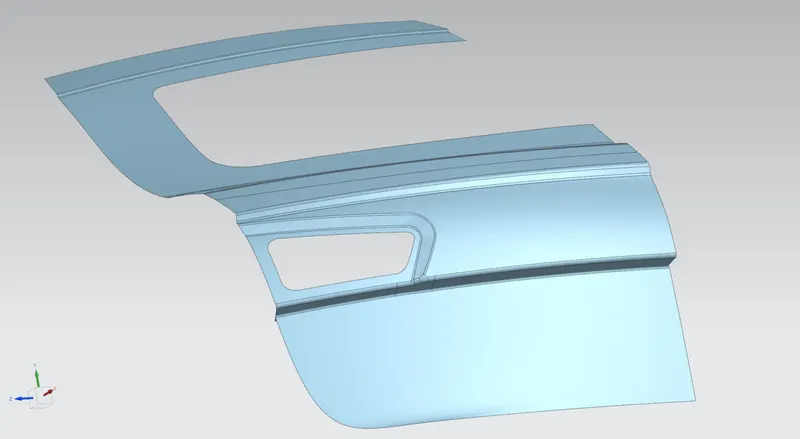
reworked class A surface
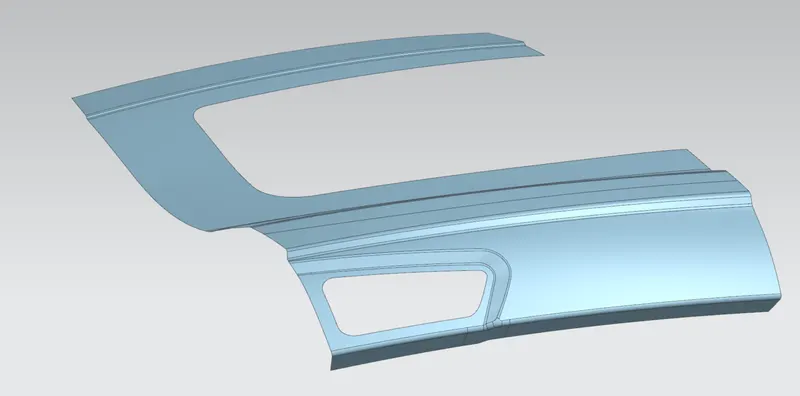
upper part of the back door surface
lower part of the back door surface
Creating of Inner panel :
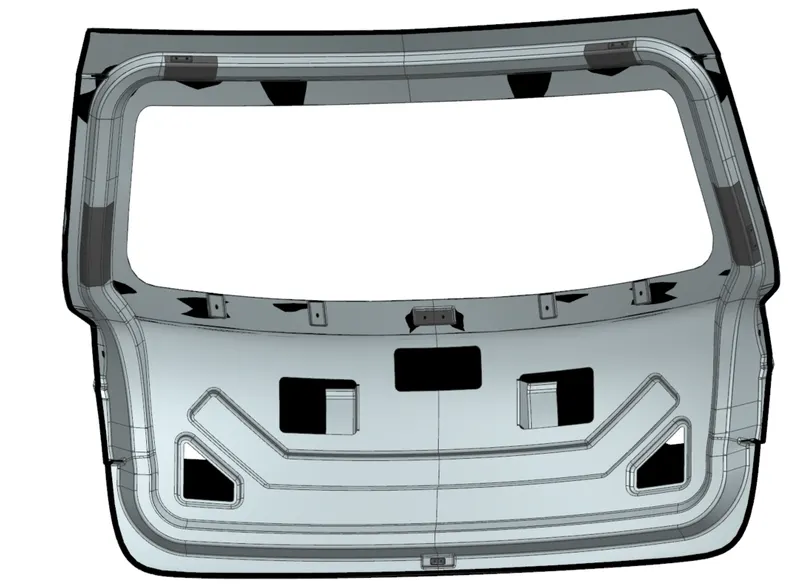
After reworking and seperating the given class A surface, we move on to creating the inner panel.
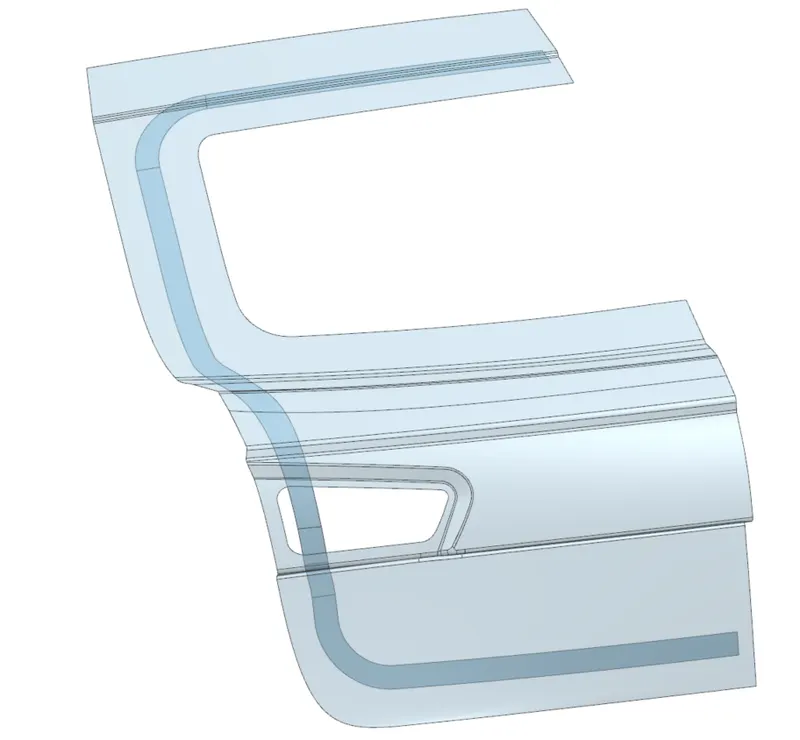
Inner panel part 1
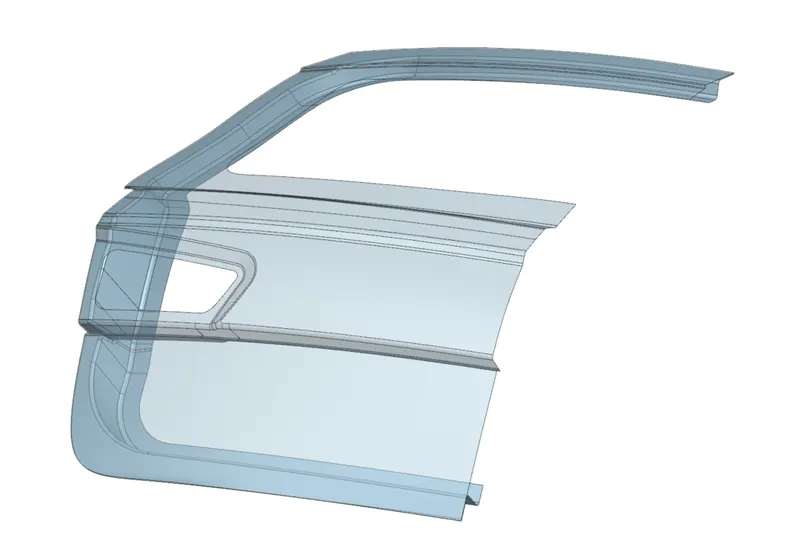
Inner panel part 2
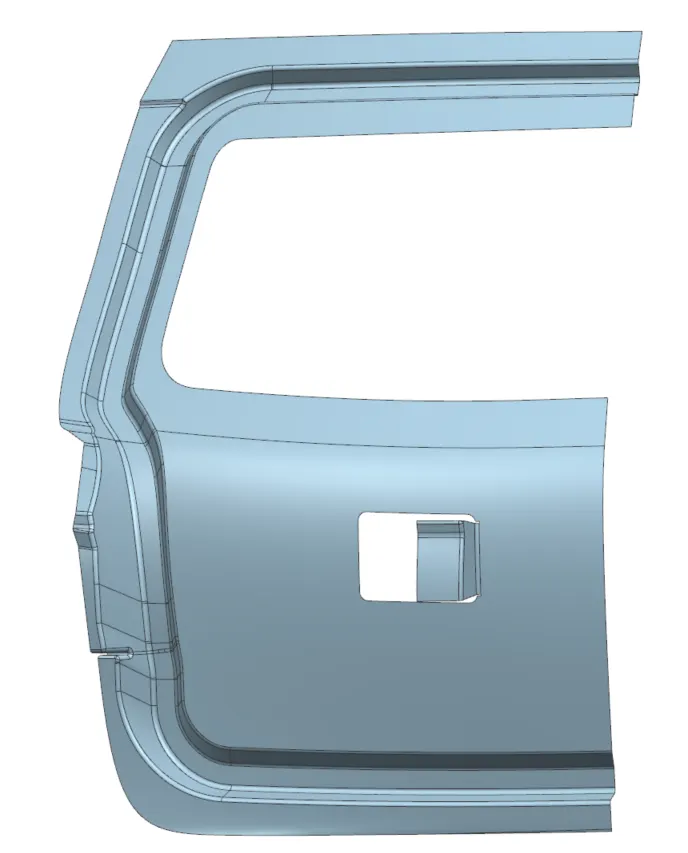
Inner panel surface
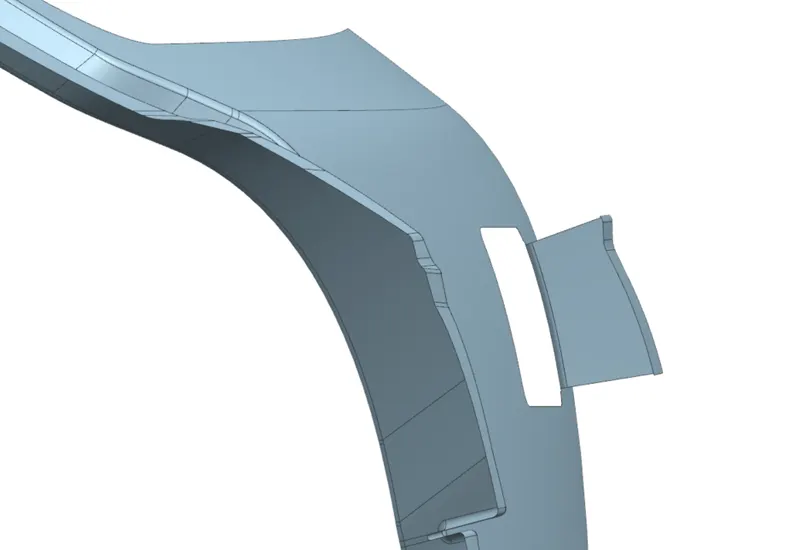
Inner panel mastic face
Emboss :
Sheet metal embossing is a stamping process for producing raised or sunken designs or relief in sheet metal. This process can be made by means of matched male and female roller dies, or by passing sheet or a strip of metal between rolls of the desired pattern. It is often combined with foil stamping to create a shiny, 3D effect. Embossing is a great technique that adds texture and dimension to your business cards, packaging, invitations, stationery, menus and more. The embossing process is used on seals to mark legal papers, on postal stamps and by jewellers as a security feature for authenticity certificates. Embossing is the process of generating a three-dimensional image on a surface through the use of pressure, sometimes combined with heat. Debossing is the opposite process and it creates a recessed image that is sunken on the paper/card surface. his can include a metal products ability to disperse liquid more effectively, reduction friction and static, increase a metal panel's stiffness and rigidity, increase a metal surface area for acoustic or heat transfer applications, and improve traction. The embossing process can produce a variety of patterns.
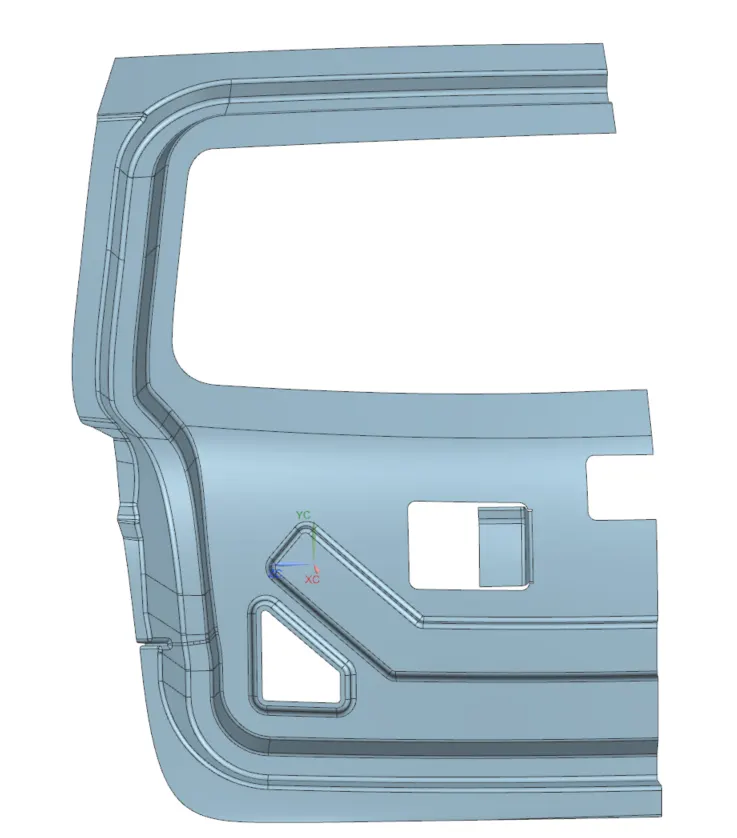
Y Emboss
The metal embossing manufacturing process has these characteristics:
- The ability to form ductile metals.
- Use in medium to high production runs.
- The ability to maintain the same metal thickness before and after embossing.
- The ability to produce unlimited patterns, depending on the roll dies.
- The ability to reproduce the product with no variation.
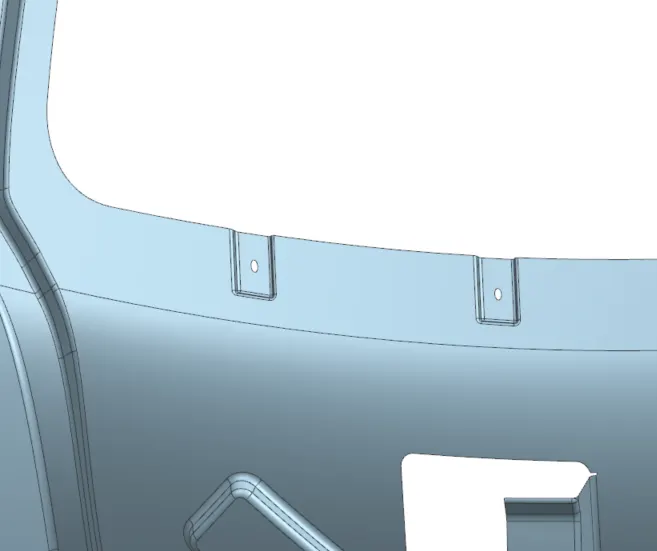
Plastic component fitment emboss
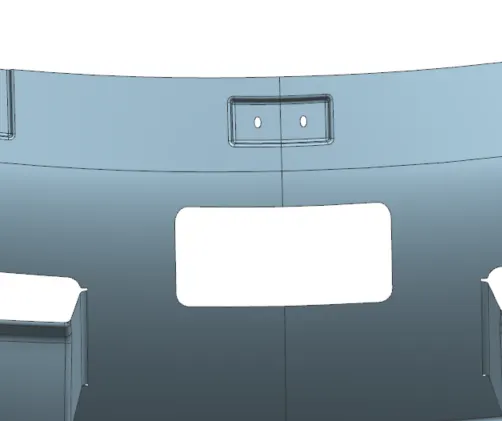
Wiper motor emboss
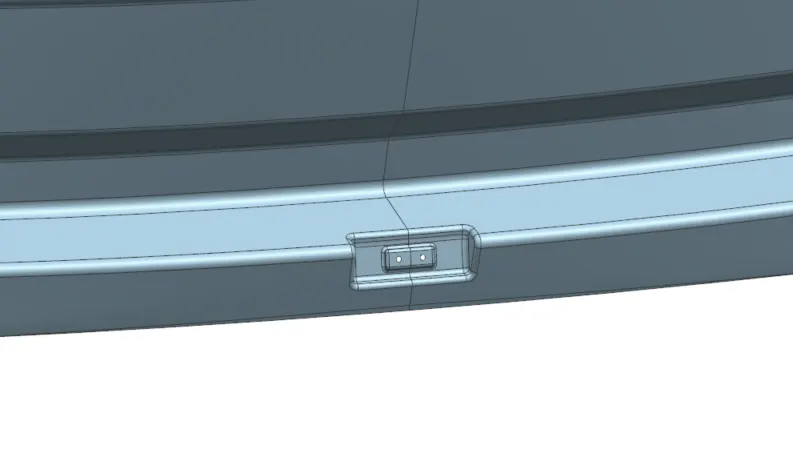
Latch and Striker emboss
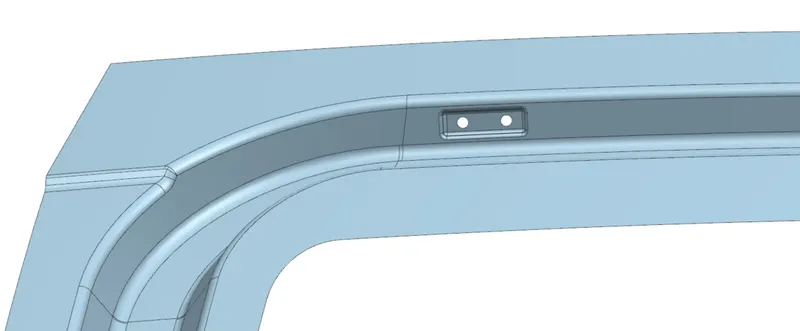
Hinge emboss
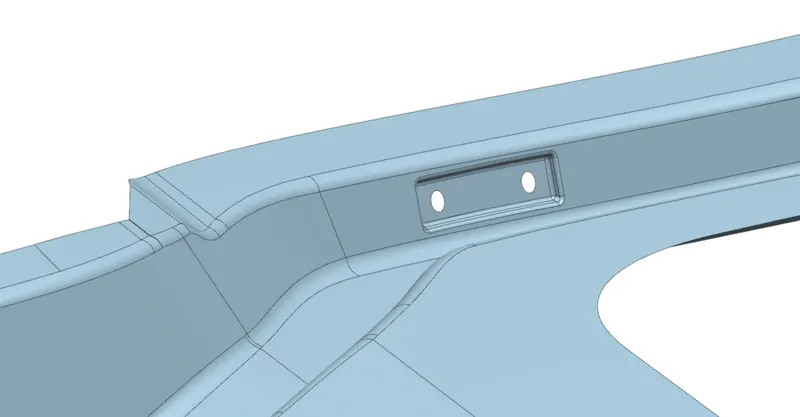
Gas stay emboss
Cutouts :
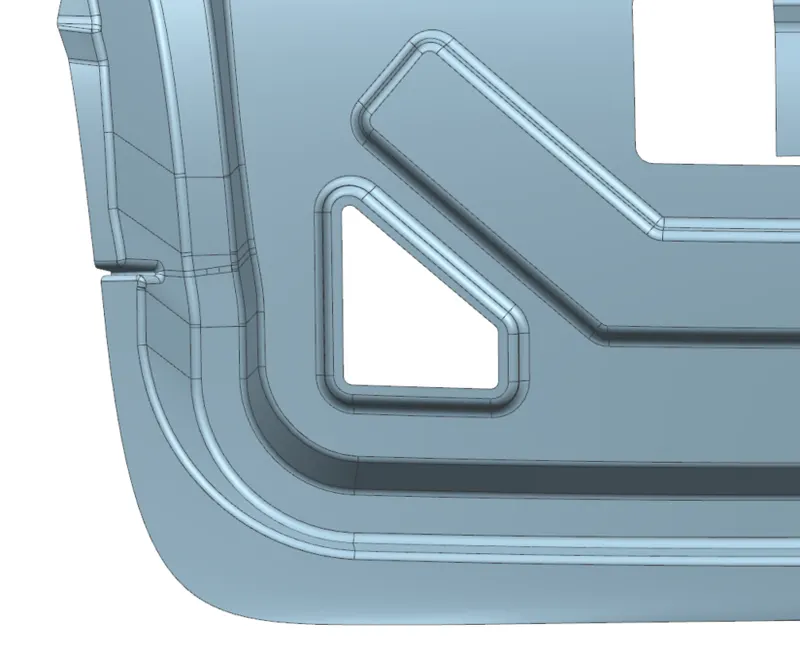
Emboss cutout
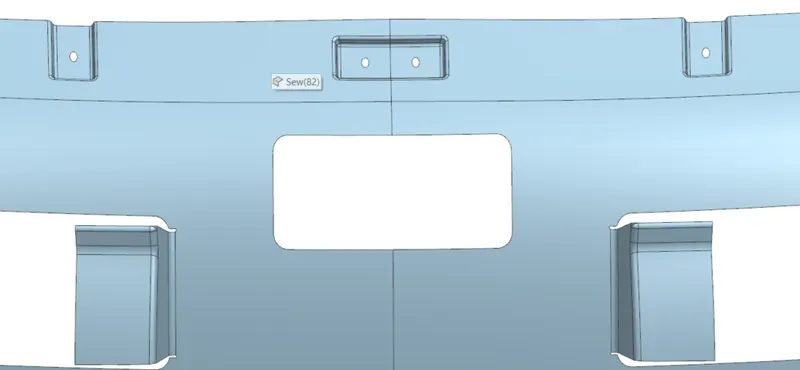
Wiper motor access hole
Final Inner panel surface :
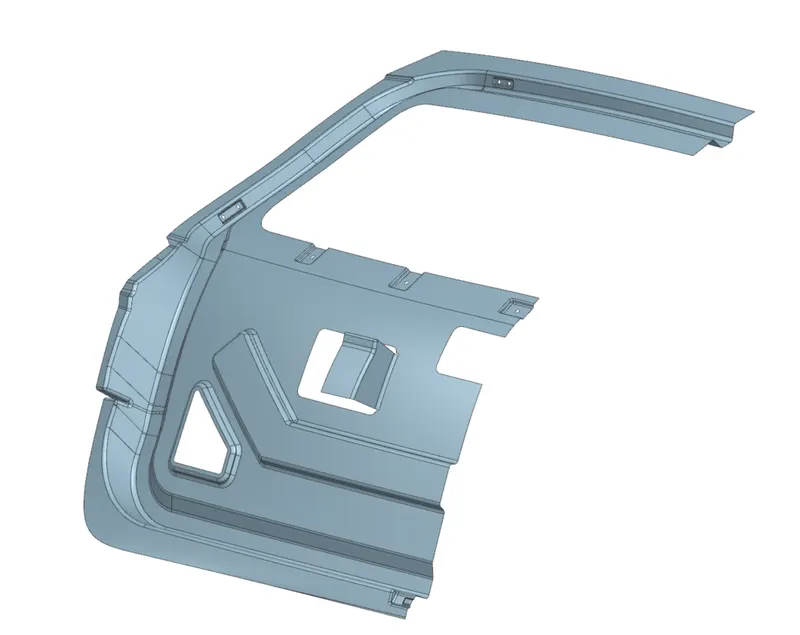
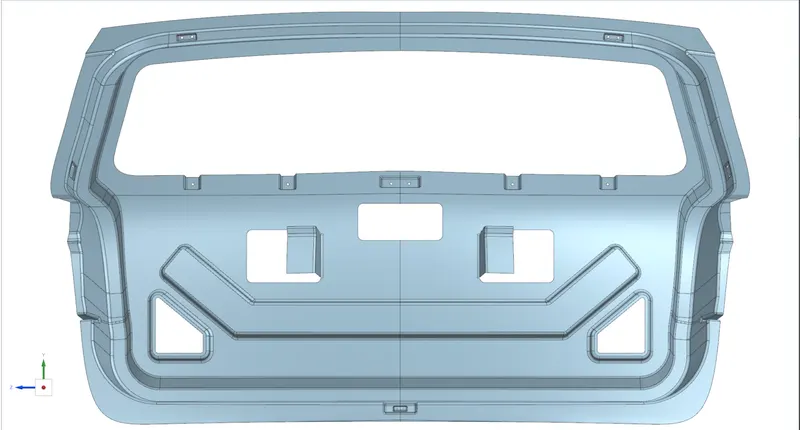
After creating all the surfaces and embosses of the Inner panel, the inner panel is thickened to 0.75 mm.
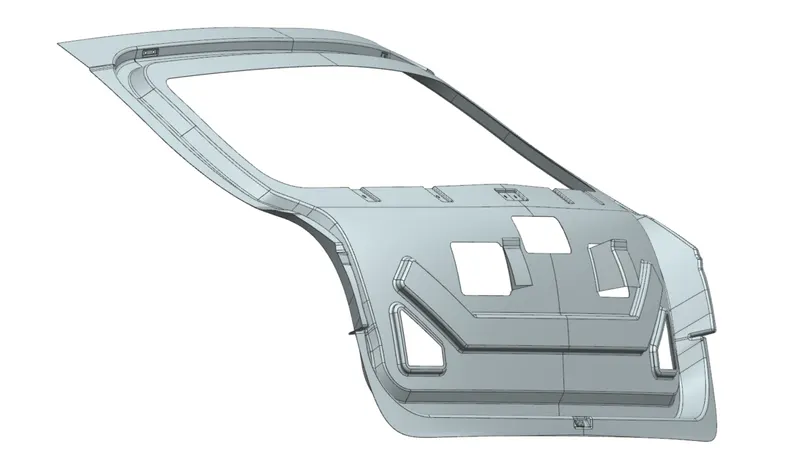
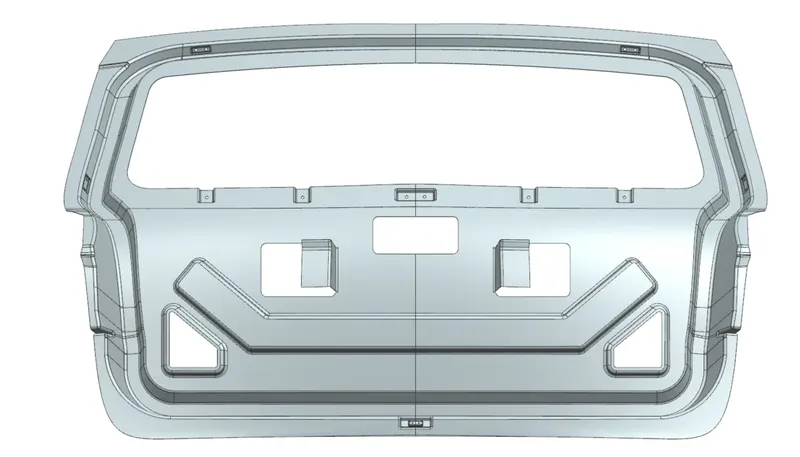
Reinforcement :
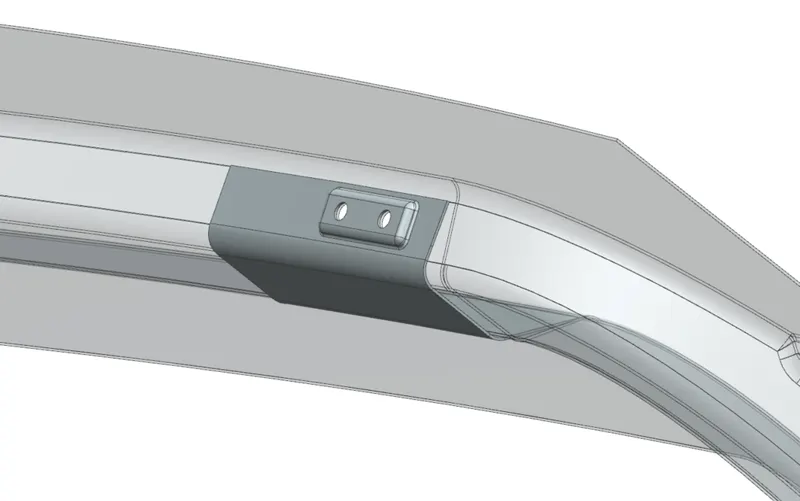
Hinge reinforcement
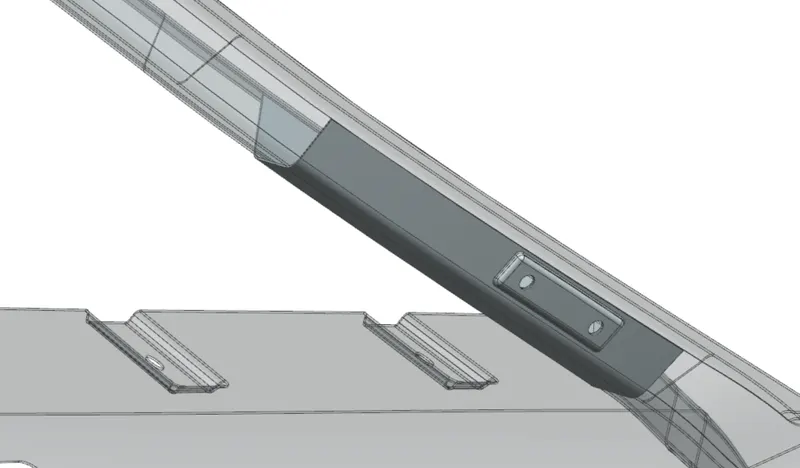
Gas stay Reinforcement
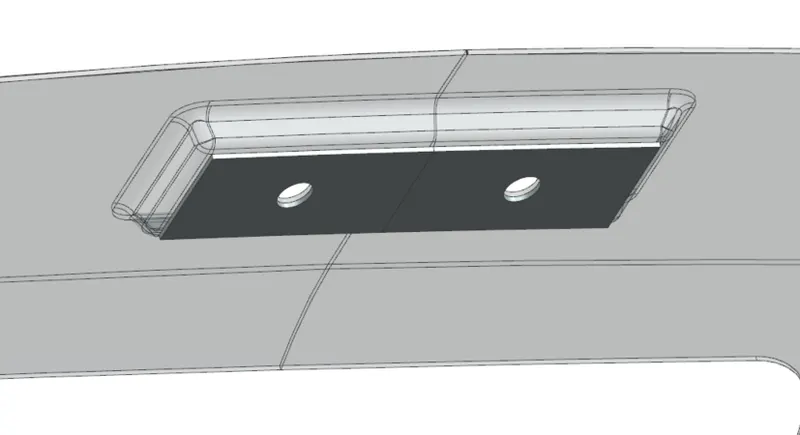
Wiper motor reinforcement
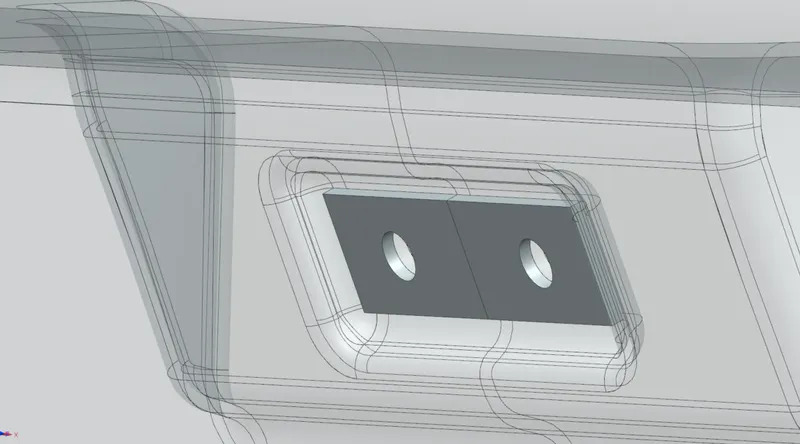
Latch and Striker reinforcement
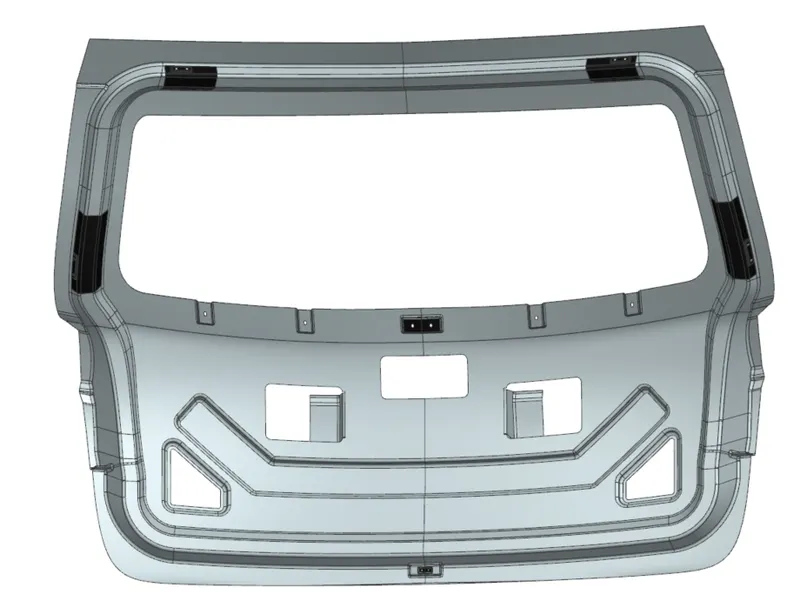
Hemming :
Hemming and seaming are two similar metalworking processes in which a sheet metal edge is rolled over onto itself. Hemming is the process in which the edge is rolled flush to itself, while a seam joins the edges of two materials.
Hems are commonly used to reinforce an edge, hide burrs and rough edges, and improve appearance.
Seams are commonly used in the food industry on canned goods, on amusement park cars, in metal roofing (with a roof seamer), and in the automotive industry.
For bending operation, there should be sufficient contact between sheet and tool. Insufficient contact may cause the sheet to shear or result in improper bending. Hence, sufficient contact area (H) should be maintained. It is recommended that return flange length to the sheet metal thickness should be greater than or equal to four times the material thickness.
The term hemming has its origins in fabric making where the edge of cloth is folded back on itself and then stitched shut. In sheet metal hemming means to fold the metal back on itself. When working with a Brake Press hems are always created in a two step process:
- Create a bend with Acute Angle Tooling in the metal, 30° is preferable but 45° will work for some circumstances.
- Place the acute bend under a flattening bar and apply enough pressure to finish closing the bend.
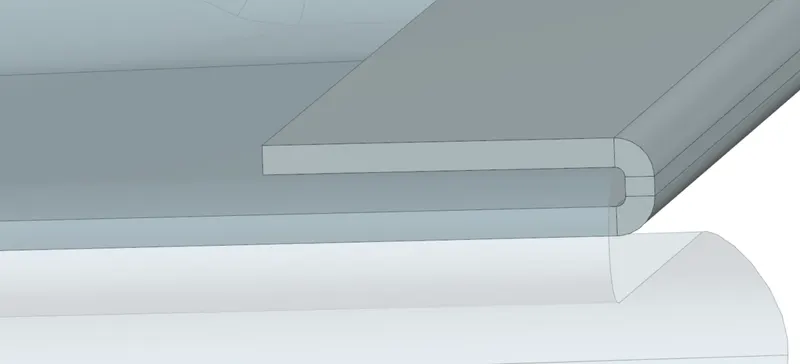
Outter body upper part Hem
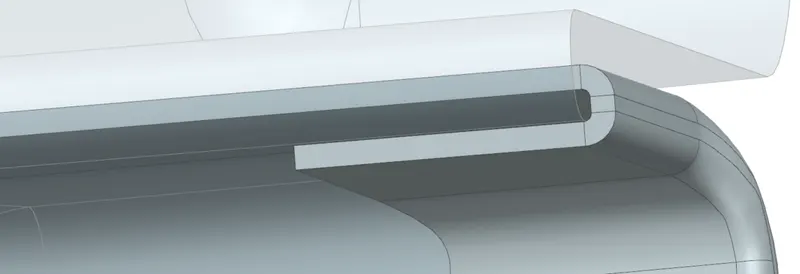
Outter body lower part Hem
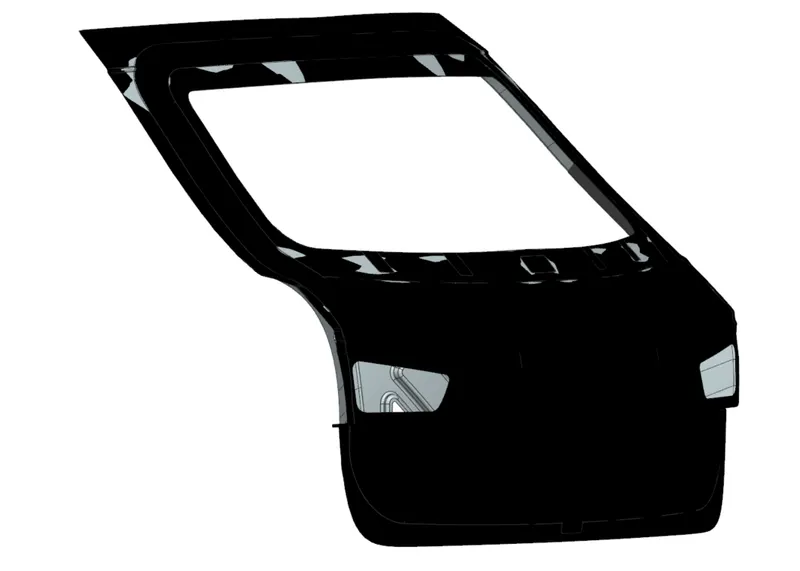
Final output body :