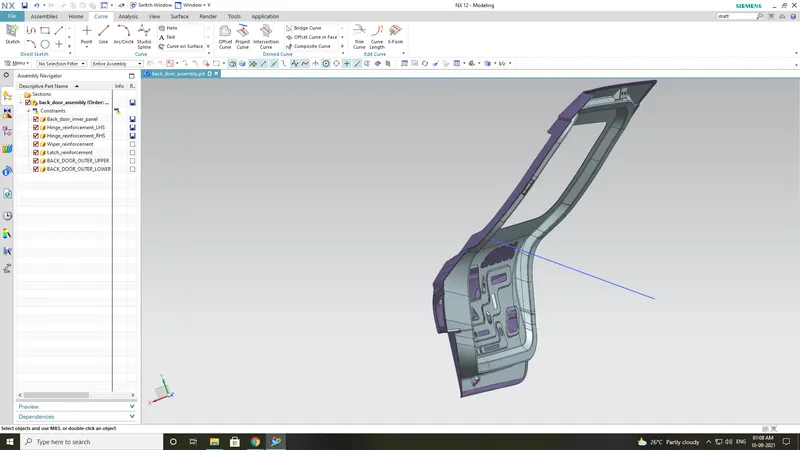
Design of backdoor
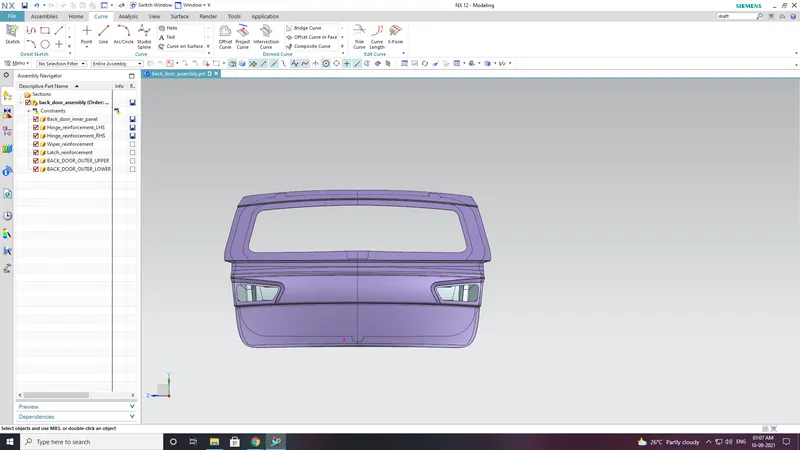
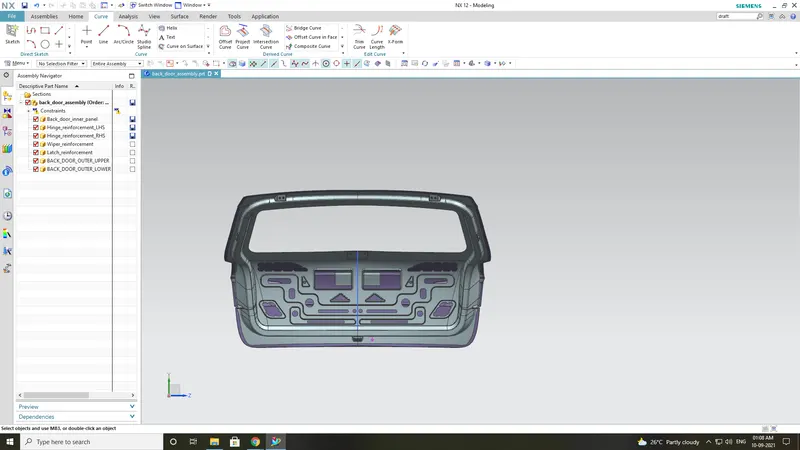
AIM : Design of backdoor Use the provided styling surface to come up with a back door design, use appropriate design methodologies, and provide the necessary reinforcements and embosses
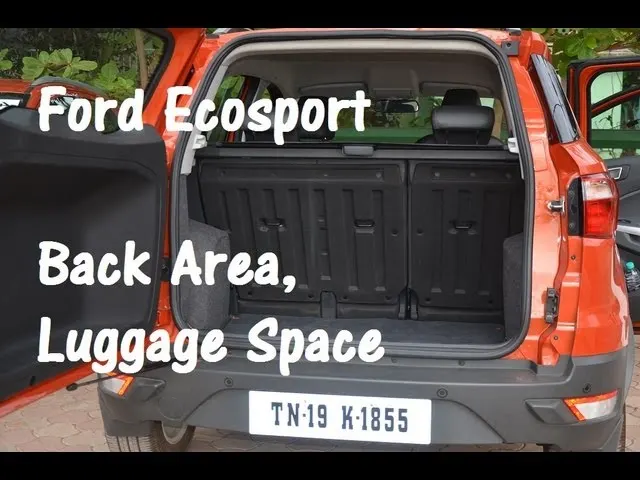
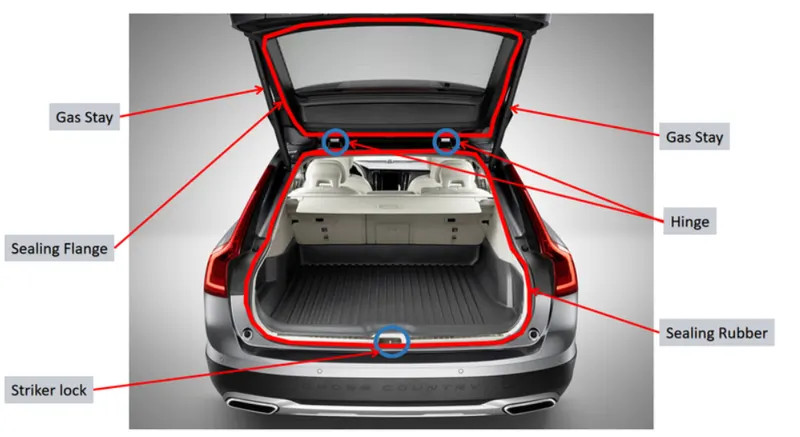
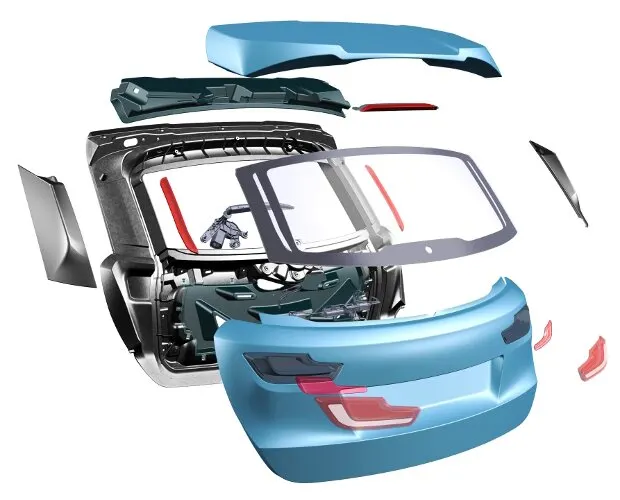
Component of the back door :
- Outer panel upper
- outer panel lower
- Iner panel
- Hinge Reinforcement
- Latch and Striker Reinforcement
- Gas stay Reinforcement
- Wiper motor Reinforcement
Checking the geometry:
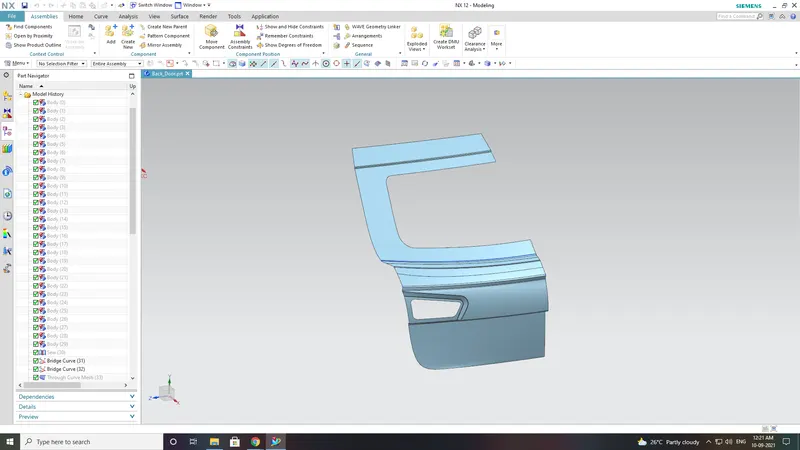
The styling surface is the surface which is provided as input in order to design the back door.
Try joining the upper surface. If the surface is sew together, that is the outer surface or working surface.If not the need to create the surface by using studio surface tool.
Create a fillet areas, tail lamps areas as those area will be unable to join.
Tooling axis:
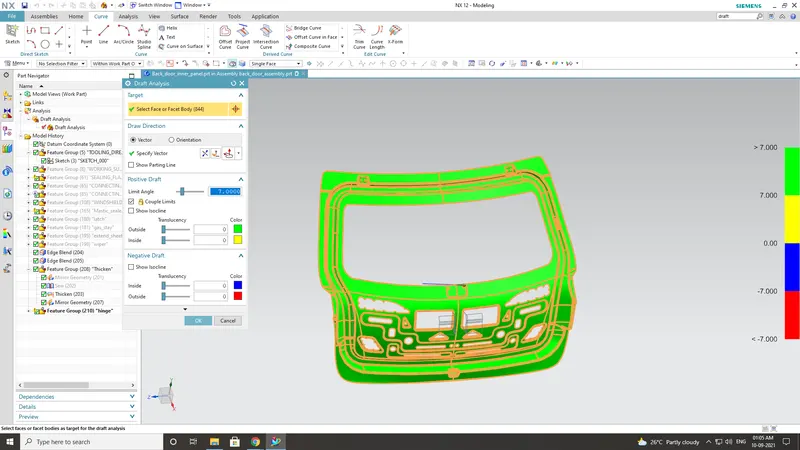
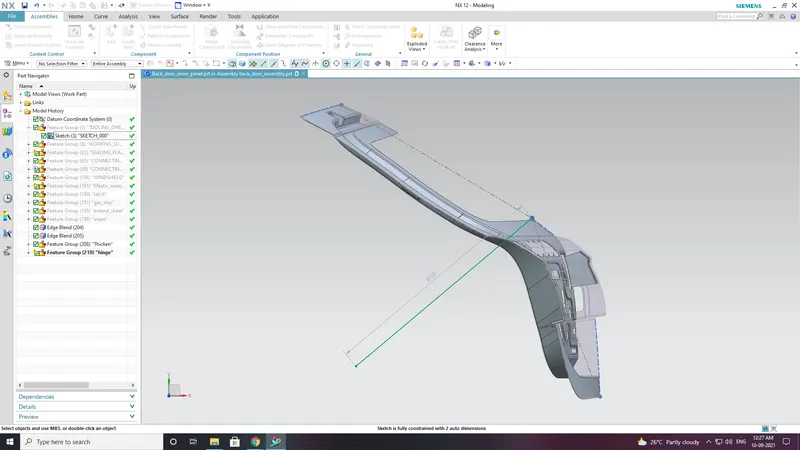
The tooling axis plays important role while making the component.Its the axis of line along which the componet will be extracted after the component is been moulded
Draw a line from left and right almost parallel to the path of the surface along the unsymmetrical axis.
Using the derived line tool, Create a bsecting line .
Emboss:
The metal sheet embossing operation is commonly accomplished with a combination of heat and pressure on the sheet metal, depending on what type of embossing is required. Theoretically, with any of these procedures, the metal thickness is changed in its composition.
Metal sheet is drawn through the male and female roller dies, producing a pattern or design on the metal sheet. Depending on the roller dies used, different patterns can be produced on the metal sheet. The pressure and a combination of heat actually "irons" while raising the level of the image higher than the substrate to make it smooth. The term "impressing" refers to an image lowered into the surface of a material, in distinction to an image raised out of the surface of a material.
In most of the pressure embossing operation machines, the upper roll blocks are stationary, while the bottom roll blocks are movable. The pressure with which the bottom roll is raised is referred to as the tonnage capacity.
As the back door opens and closes in the upward and downword direction, during the time force is generated on it which is might effect the durability.
Sheet metal embosing is the stamping process for producing raised relief in sheet metal. Embossing is done by pressing the sheet metal.
EMBOSS WORKS ONLY FOR SHEET (SURFACE MODELLING)
STEP 1: create your sheet feature.
STEP 2: create a plane offset at a distance
STEP 3: create a sketch on the plane to be embossed
STEP 4: select emboss, and select your face and sketch.
STEP 5: Emboss created
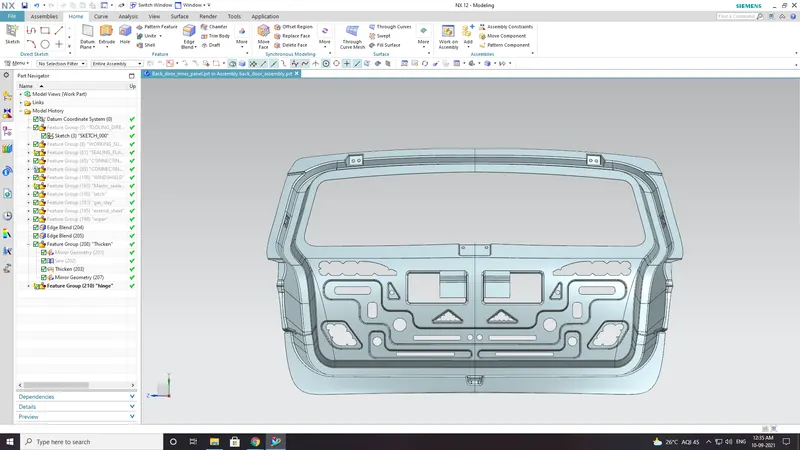
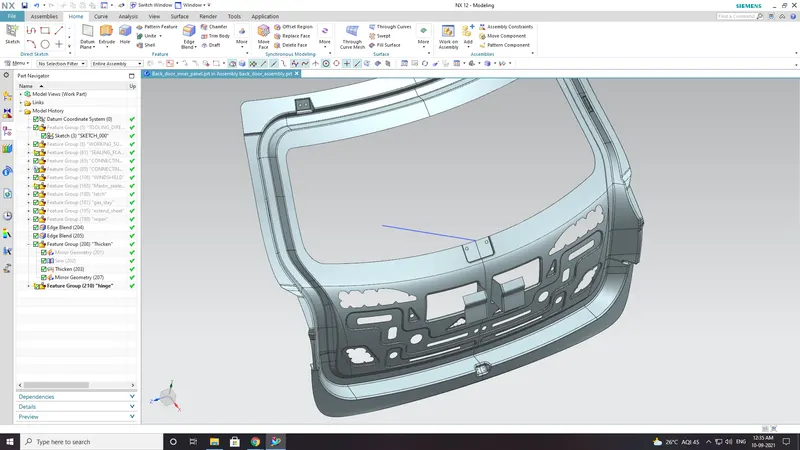
Mastic sealent is used on the surface to connect the inner and outer panel with the gap of 5mm.
In oder to fix the outer pannel to inner pannel a masric extension flange is created.
So offset the outer surface 5mm downward and create a plate from the inner panel.
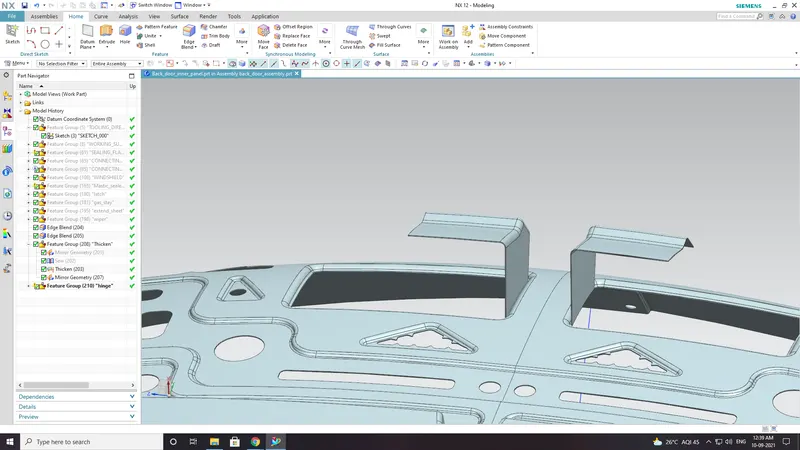
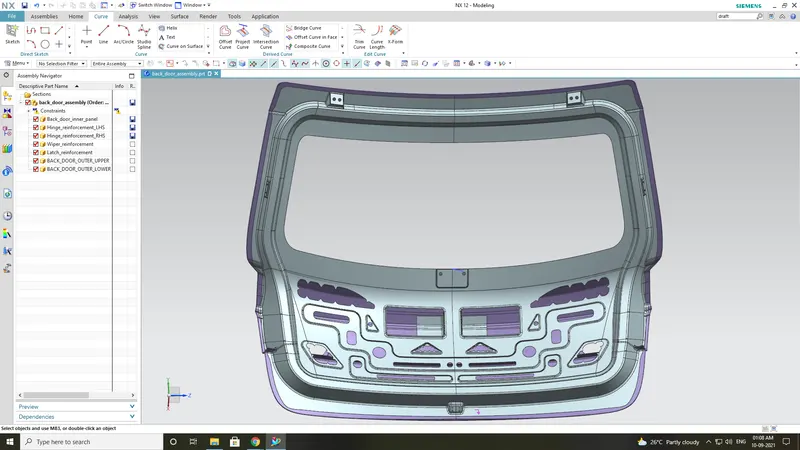
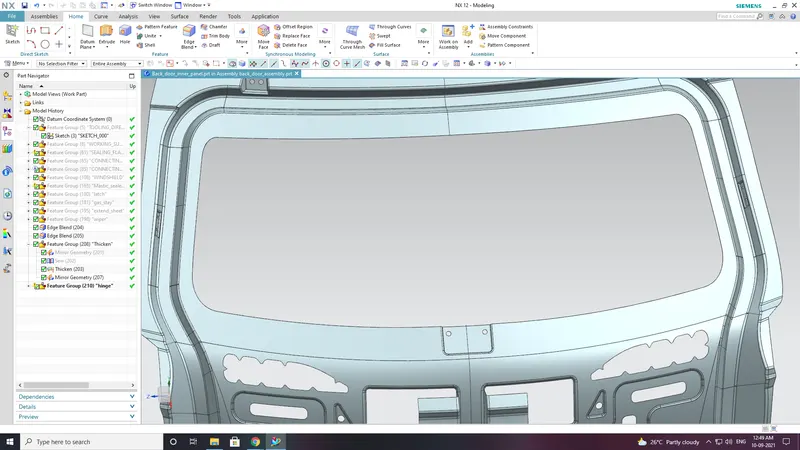
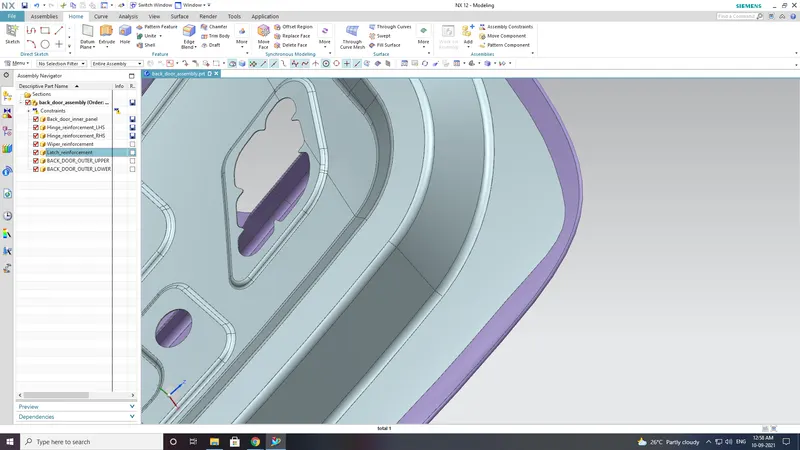
In oder to improve the strength to the inner panel various embosses are designed on it to fix the reinforcement.
Hinge emboss:
Hinge emboss will placed in the top side of the inner panel in the left and right side.
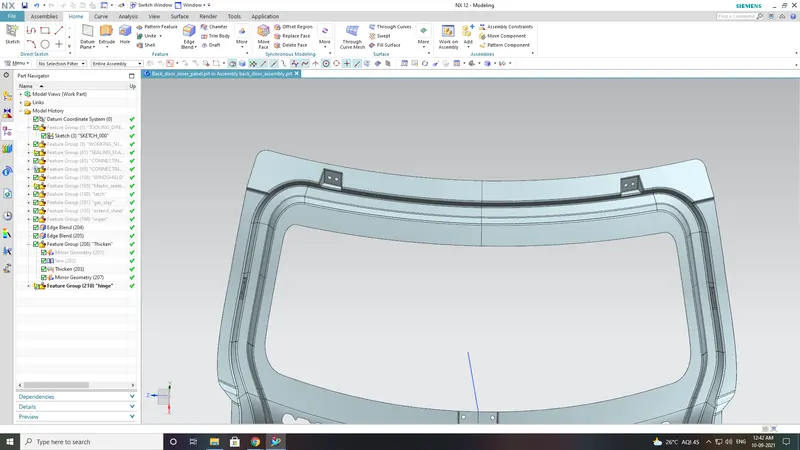
Gas stay :
Gas stay is the component which is used to lift the back door with help of pressure a button.
There are 2 types of Gas stay
Manual system
Automatic system
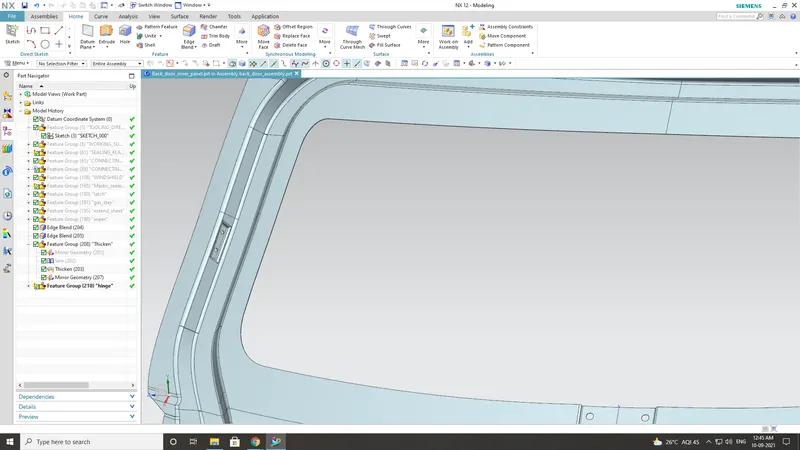
Latch emboss:
Latch emboss is designed at the bottom portion of the back door. This door is used for locking the back door of the car.
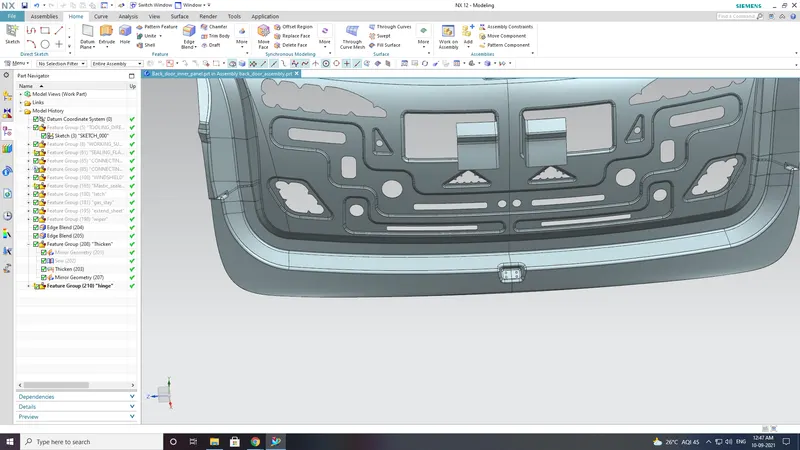
Wiper motor Emboss :
Wiper motor Emboss is the designed at the middle of the back door wher the wiper motor will be placed on the back door.
Reinforcements :
Reinforcement are the component which are used to add strength at particular region.
The reinforcement designed for the back door are
- Hinge Reinforcement
- Gas stay Reinforcement
- Latch Reinforcement
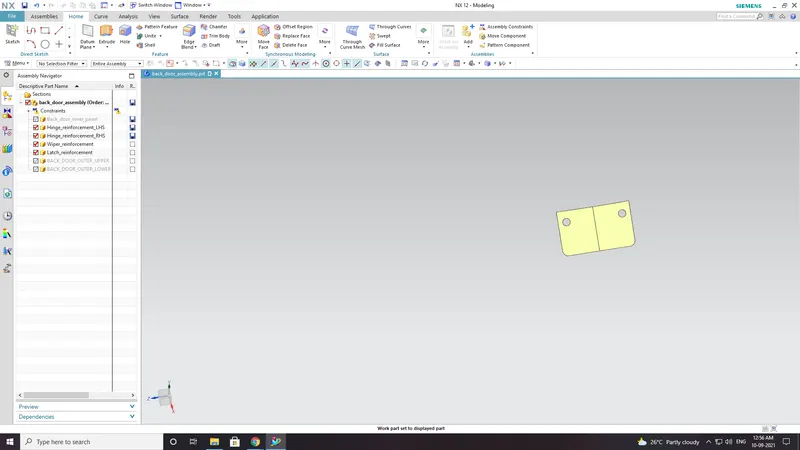
- wiper motor Reinforcement
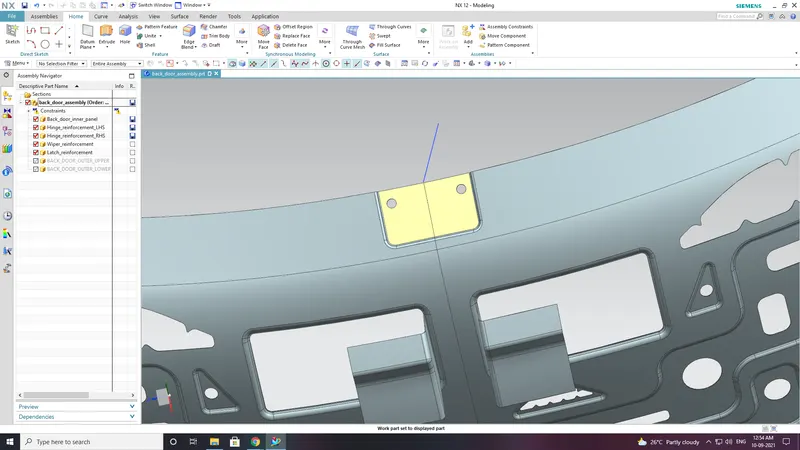
Hinge reinforcement
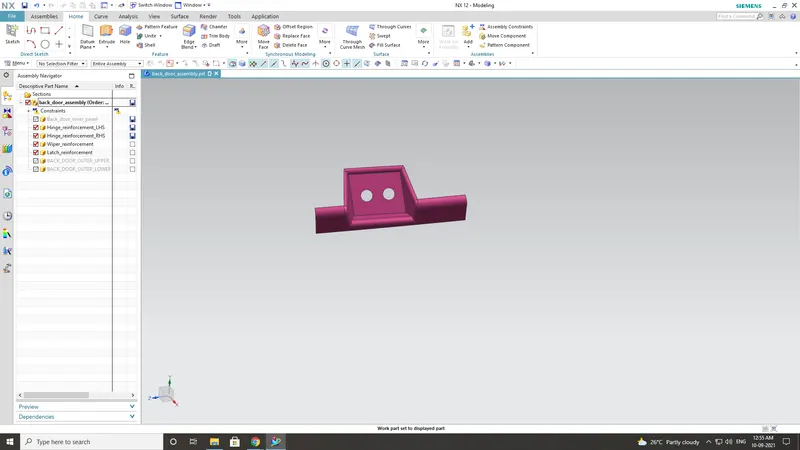
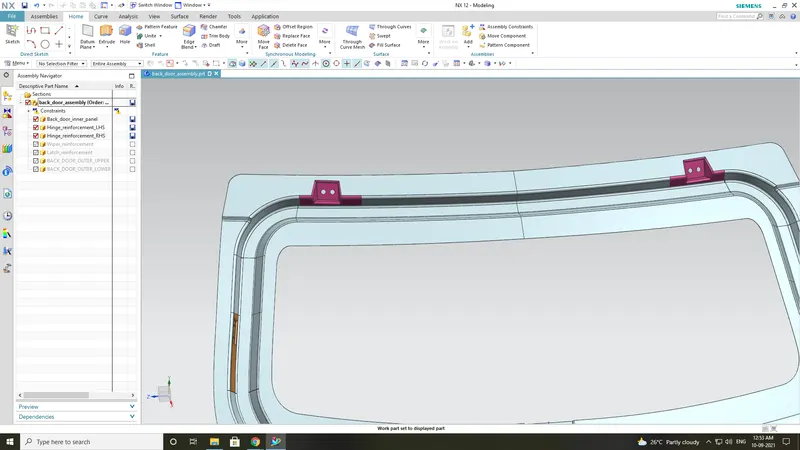
- Gas stay Reinforcement
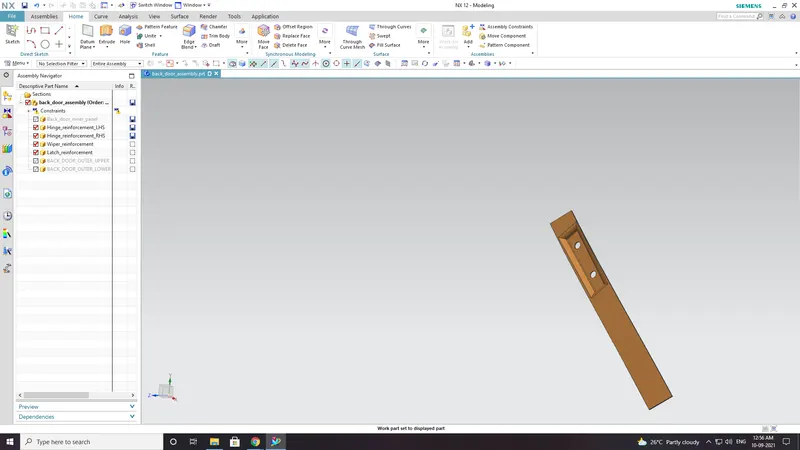
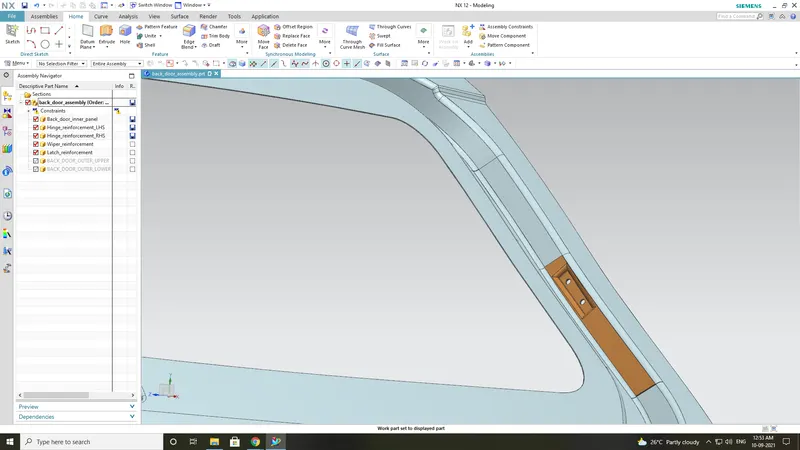
- Latch Reinforcement
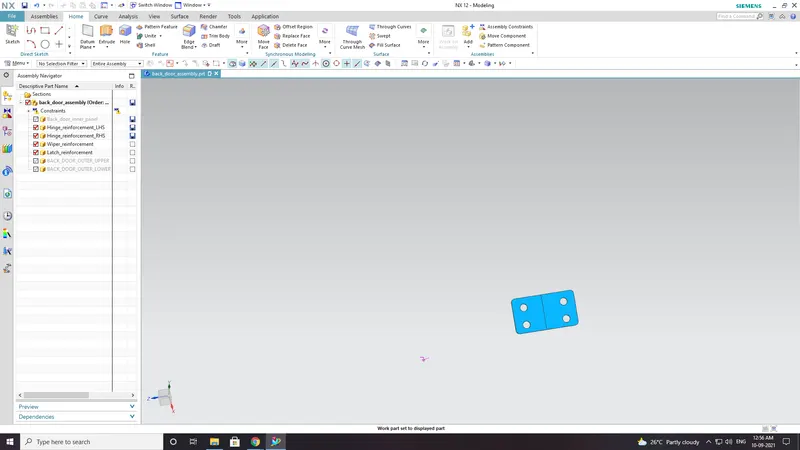
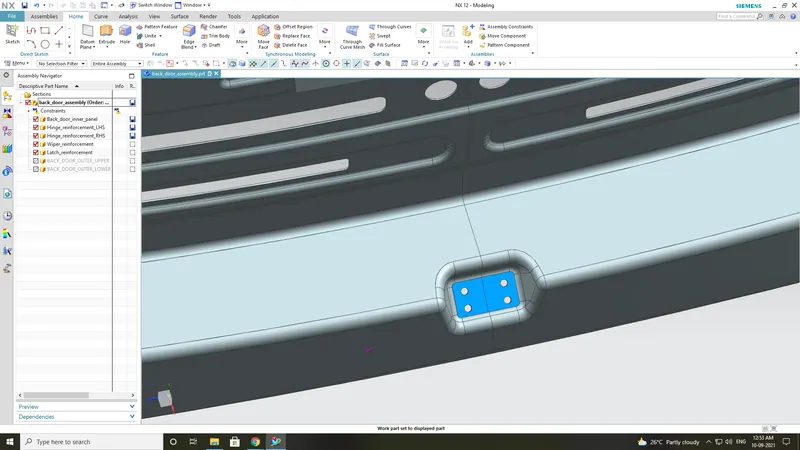
- wiper motor Reinforcement
Hemming :
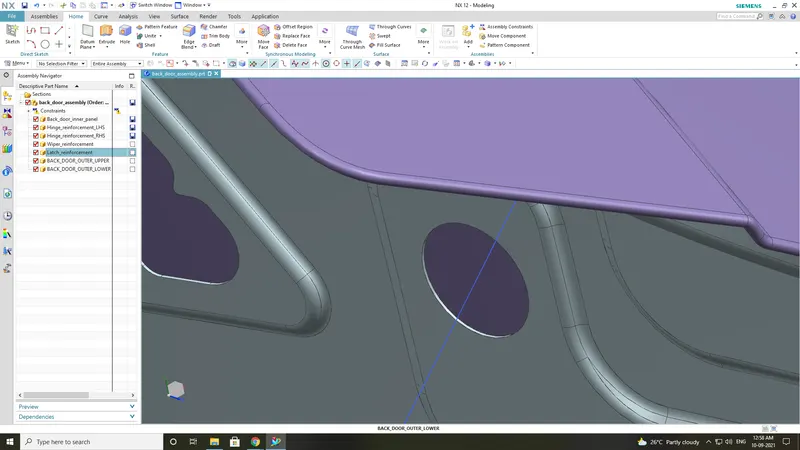
Hemming is metalworking processes in which a sheet metal edge is rolled over onto itself. Hemming is the process in which the edge is rolled flush to itself, while a seam joins the edges of two materials.
The process for both hemming and seaming are the same, except that the tonnage requirement is greater for seaming. The process starts by bending the edge to an acute angle. A flattening die is then used to flatten the hem
Hemming is a sheet metal forming process in which sheets are joined by bending it usually to 180°. Automotive body panels and automotive parts such as deck-lids, trunk-lids, doors, hoods and tailgates are formed by hemming process. This paper present a systematic review of sheet metal hemming process based on materials used in hemming process.
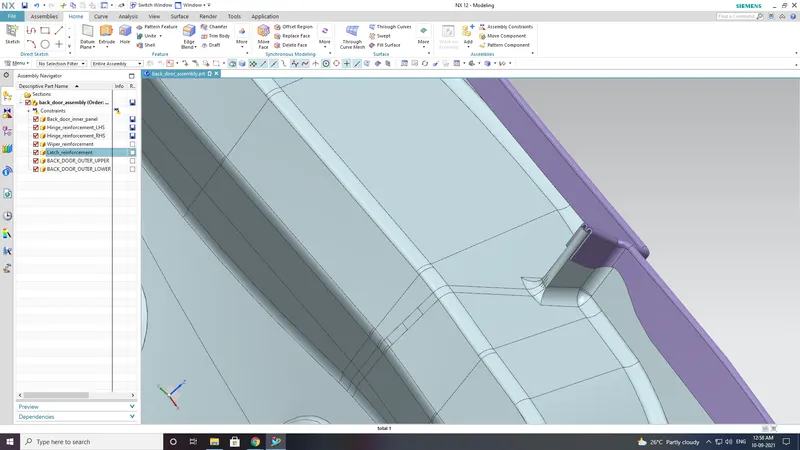
Corner relief are also provided at the corners so that the hemming can be easily performed in all the regions.
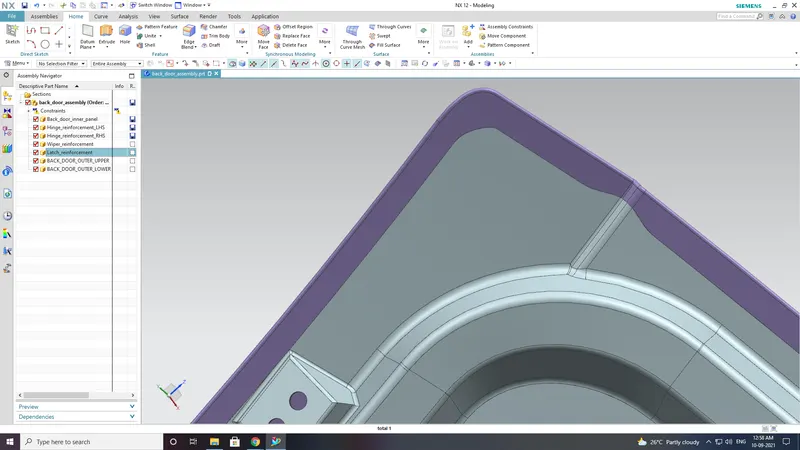
Draft angles are very important in thermoforming product design. If the product is formed onto a female or negative mold, it shrinks away from the mold sidewalls. As a result, true female or negative products can be thermoformed with vertical walls having zero draft angles.