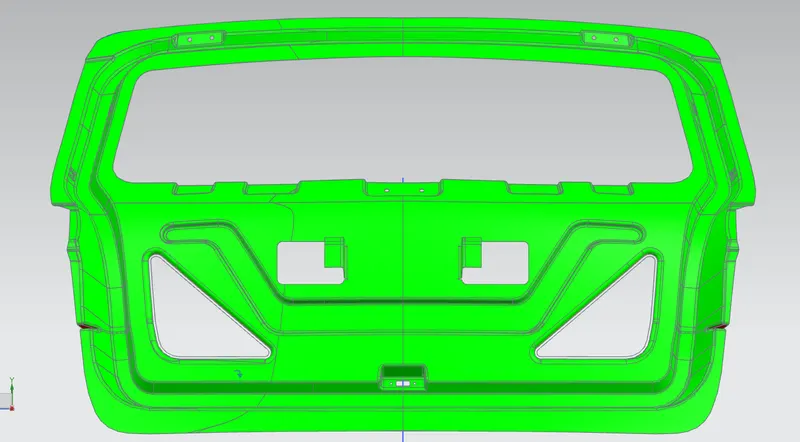
Design of backdoor
Design of back door.
Backdoor of a vehicle is a very important part from passenger safety’s point of view. Hatchback have the backdoor connected to the roof where as in sedans it is hinged below the window level. It consists of inner panel and outer panel. The outer panel can be made of two or three parts, but there is always only one inner panel.
It is made of either aluminum sheet or steel. Aluminum is lighter, but it costs more. Yet, more manufactures have started using aluminum these days in high end cars. Aluminum is cast hence the parts required for the assembly is less. Steel is deep drawn and therefore needs added reinforcements to add strength locally.
The backdoor is designed keeping in mind the luggage space of the compartment, the latch and striker and the wiper mountings. It is important that these considerations don’t affect the over strength of backdoor.
Parts and Design details
Outer panel:
It is the outer styling part. It gives the aesthetic look to the backdoor. Thickness of this component is between 0.65 to 0.75. the inner panel is designed based on this surface.
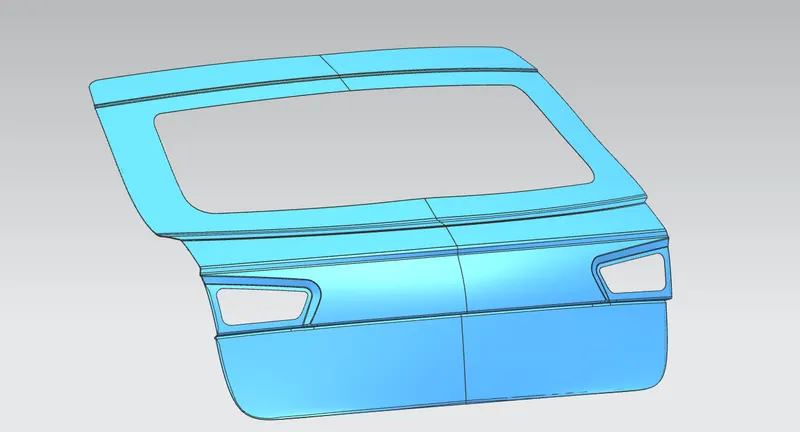
Figure: Outer panel of back door.
Hemming is done to join the inner panel and outer panel. Hemming is a sheet metal process where the sheet is rolled over another sheet or over itself. Hemming is preferred over spot welding. The hem is then sealed for water tightness as well as prevent it from corrosion. Hemming relief is provided to reduce stress and wrinkling of the sheet.
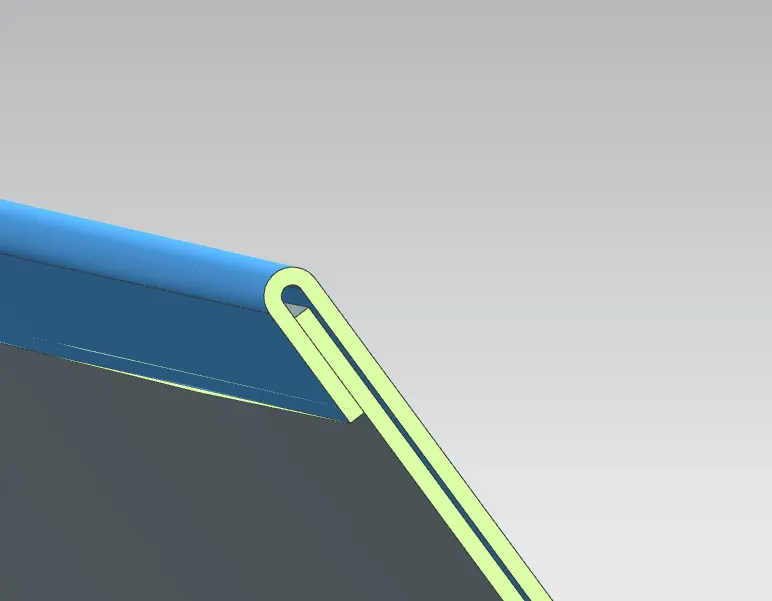
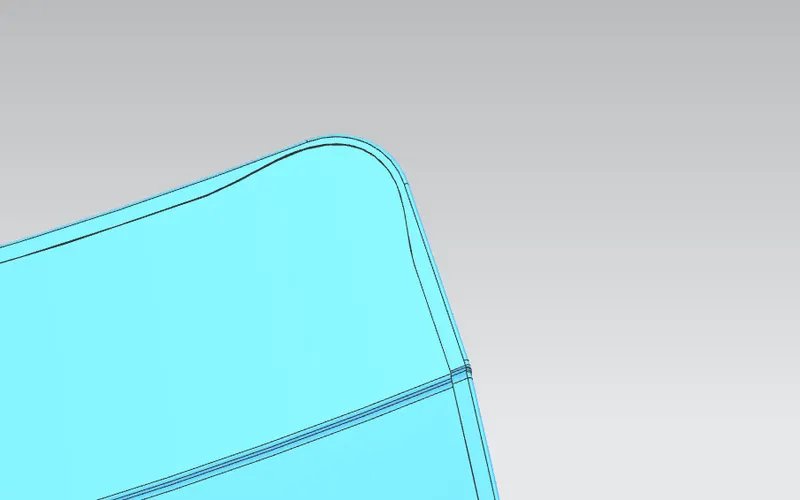
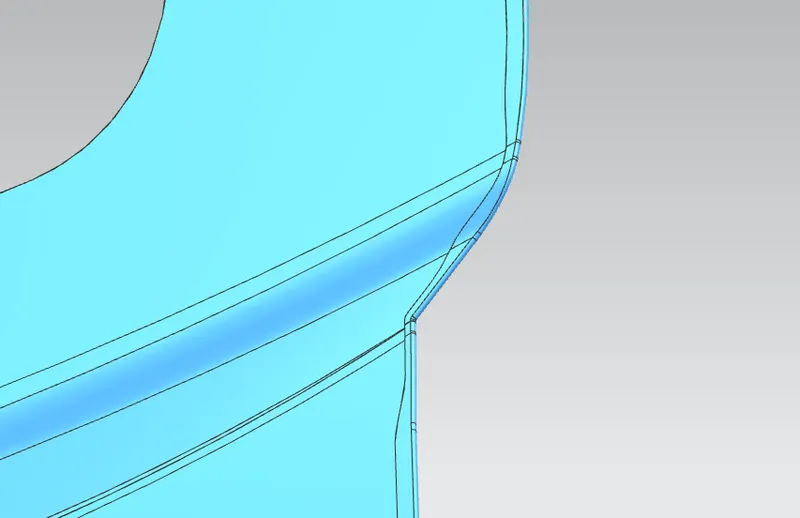
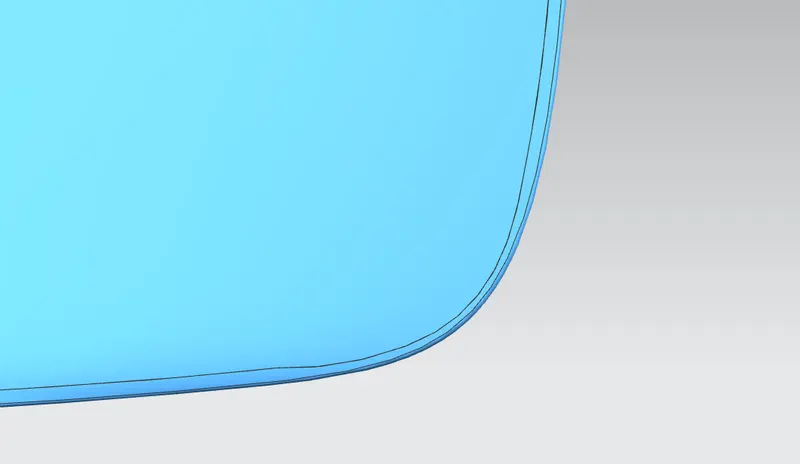
Figure: Hem and hemming reliefs.
The area where wind shield is mounted in joined using brazing operation.
Inner Panel:
The inner panel provide strength to the assembly. It has the same thickness range as outer panel. The inner panel is subjected to a lot of stress when it the backdoor is slammed shut frequently. Hence, for adding strength, inner panel is given embosses and reinforcements.
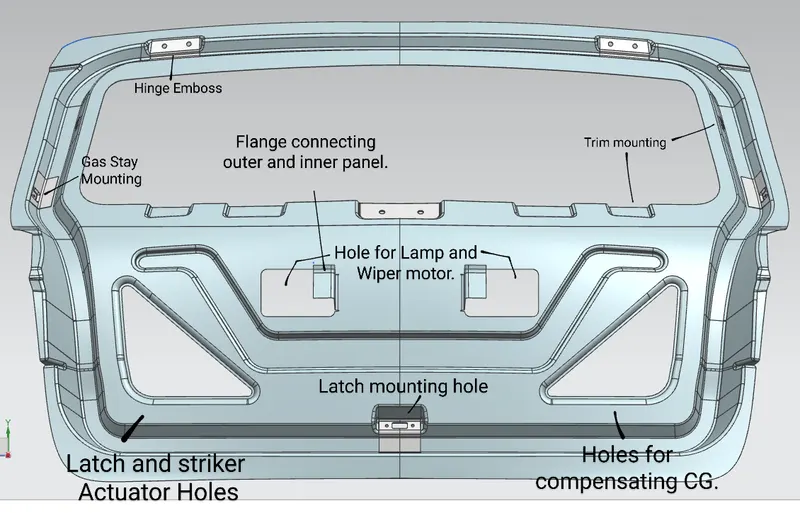
Figure: Inner panel embossing
The inner panel accommodates latch and striker actuator, wiper mounting, gas stay mounting and hinge attachments. Hence various embosses are provided to compensate for the strength losses locally with reinforcements which are spot welded.
Reinforcements:
Various loads act on the back door, to compensate for these loses reinforcements and embossing is done. These loads are determined by various tests.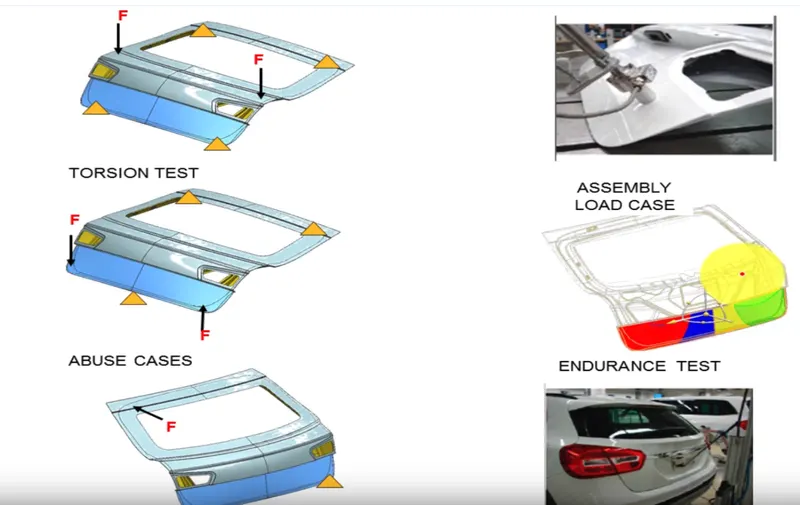
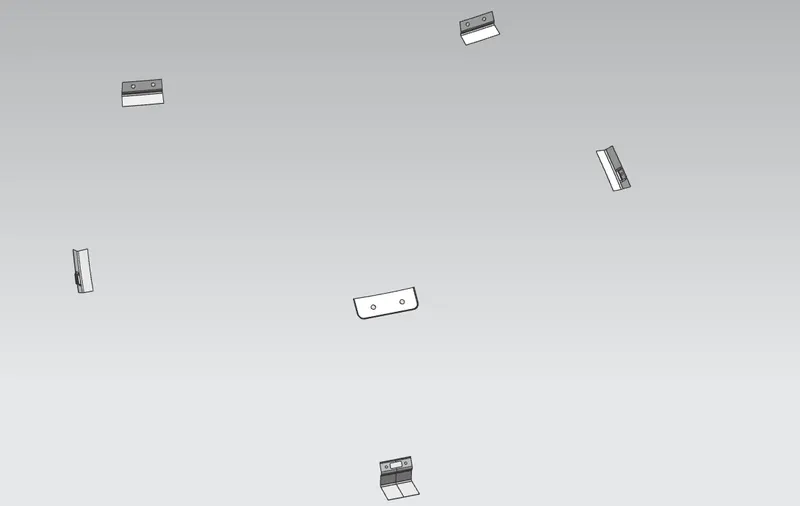
Figure: Reinforcements
- Hinge reinforcements: The hinge helps with the opening and closing of the swinging components. The hinges are aligned to the latch such that it is perpendicular to the hinge trajectory.
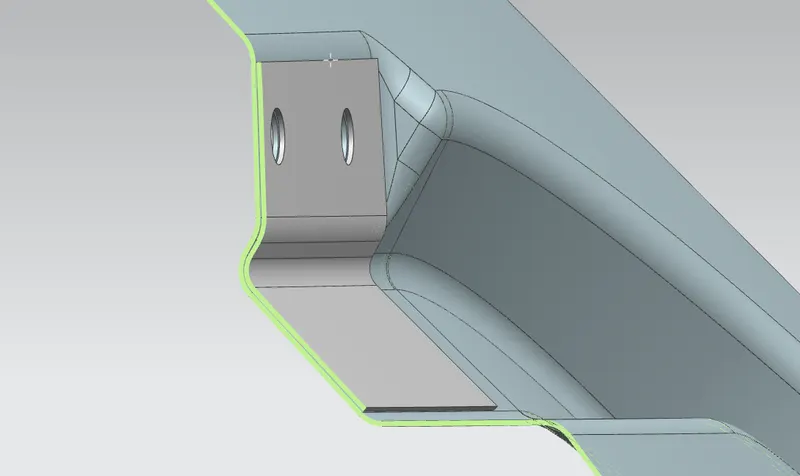
Figure: Hinge reinforcement cross-section
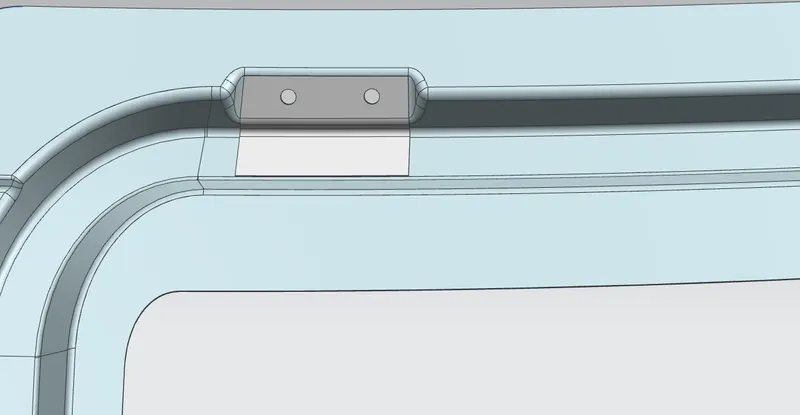
Figure: Hinge reinforcement
- Gas stay reinforcement: gas stay is a component which keeps the backdoor in open position. Its one end is attached to the backdoor and other end is joined to the body side. Embossing is done to provide for the punch hole.
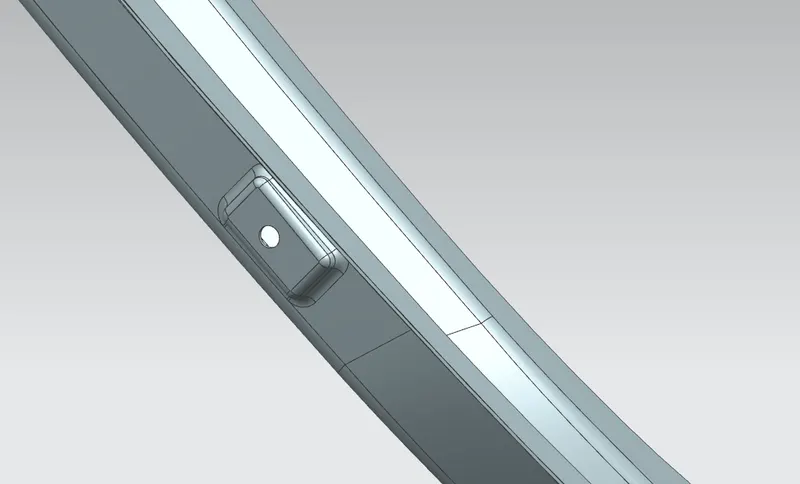
Figure: Gas stay emboss
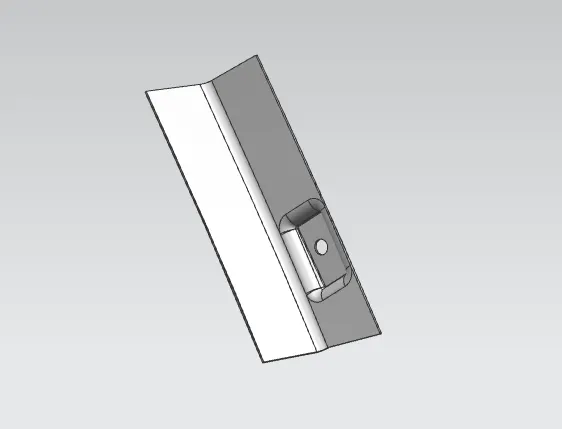
Figure: Gas stay reinforcement
- Latch reinforcement: it is the locking mechanism of the backdoor and due to frequent opening closing and slamming of the backdoor added strength is provided in the form of reinforcements.
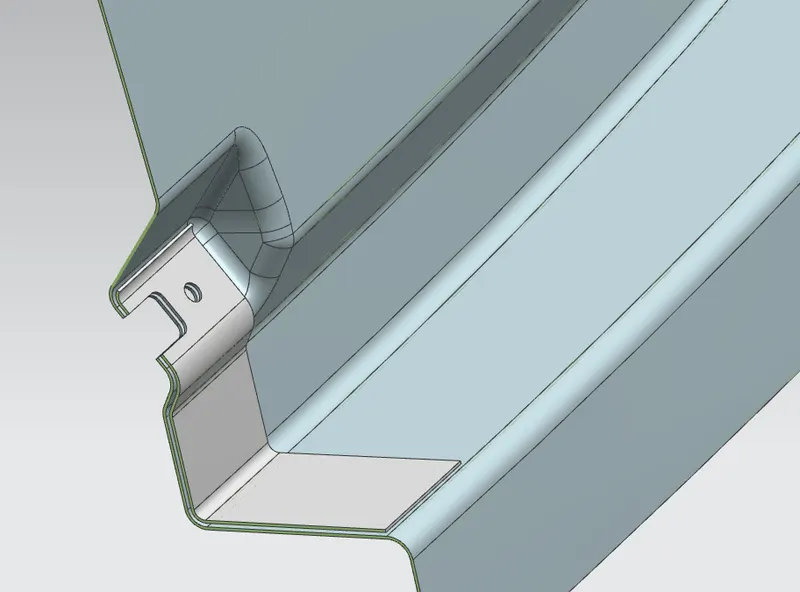
Figure: Latach and striker reinforcement cross-section.
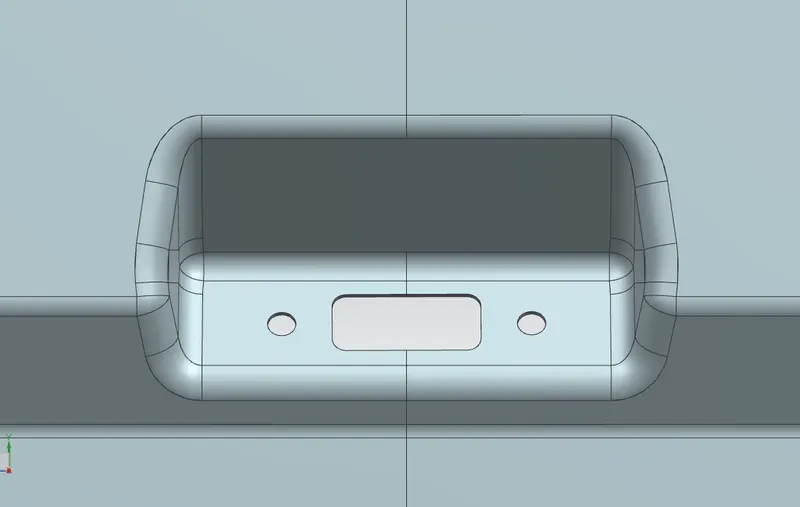
Figure: Provision for latch mounting.
- Wiper reinforcement: It is provided to mount the wiper motor.
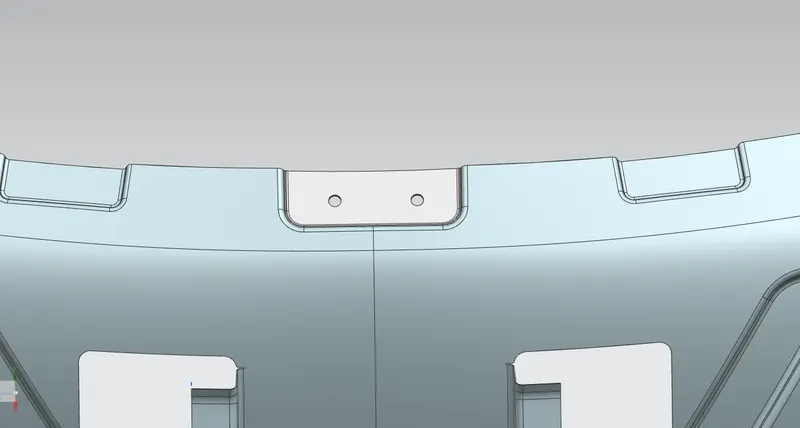
Mastic sealant:
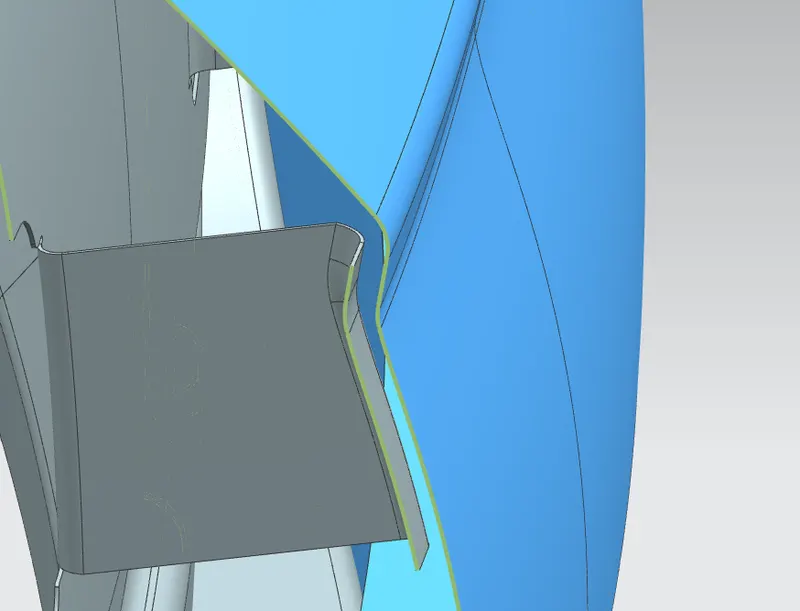
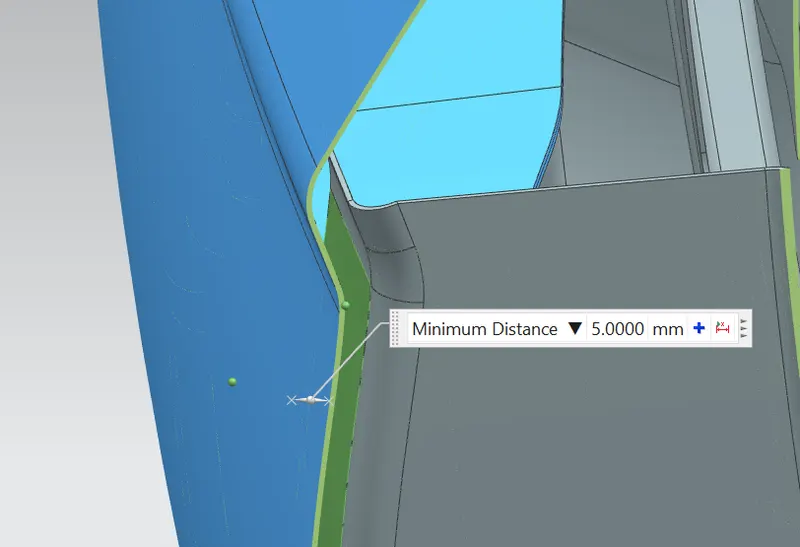
To reduce the noise caused by vibration, the inner panel is joined to the outer panel with the help of mastic sealants. Mastic seal are made of rubber and needed a gap of about 5mm to 7mm. Mastic sealants are preferred over spot welding.
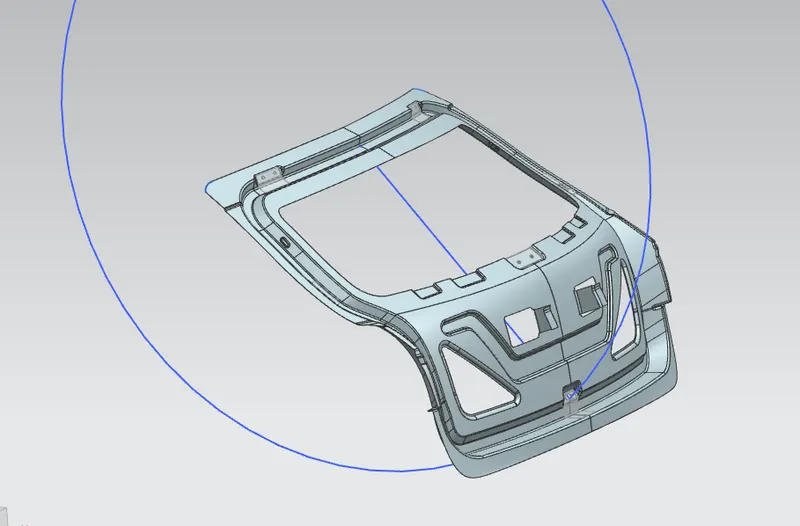
Latch Position: The hinge position are deremined by the hinge axis point. It is aligned with the latch and striker position such that the latch is always perpendicular to the hinge trajectory. Thus, the hinges can be positioned resepectively.
Draft Analysis:
It is done to check the draft angle. It helps determine the manufacturability of the part. When a part is worked on, it needs a little clearance for the tool to retract easily. For this a slight angle is given which is called draft angle.